

Early 20th Century Balkan Steamed Beech Plant Stand with Brass Rivets – 123 cm / 48.4 in
Price: € 229,00
Antique Balkan three-tier plant stand from the early 20th century, made from steamed beech with brass rivets. Tall slender construction with decorative vertical cutouts and restrained Secession / Jugendstil influence. Approx. 123 cm (48.4 in) high. Provenance from a historic Sofia interior.
1 in stock
Description
Early 20th Century Balkan Steamed Beech Plant Stand
A distinctive antique three-tier plant stand from the early 20th century, made from steamed beech wood and assembled with visible brass rivets.
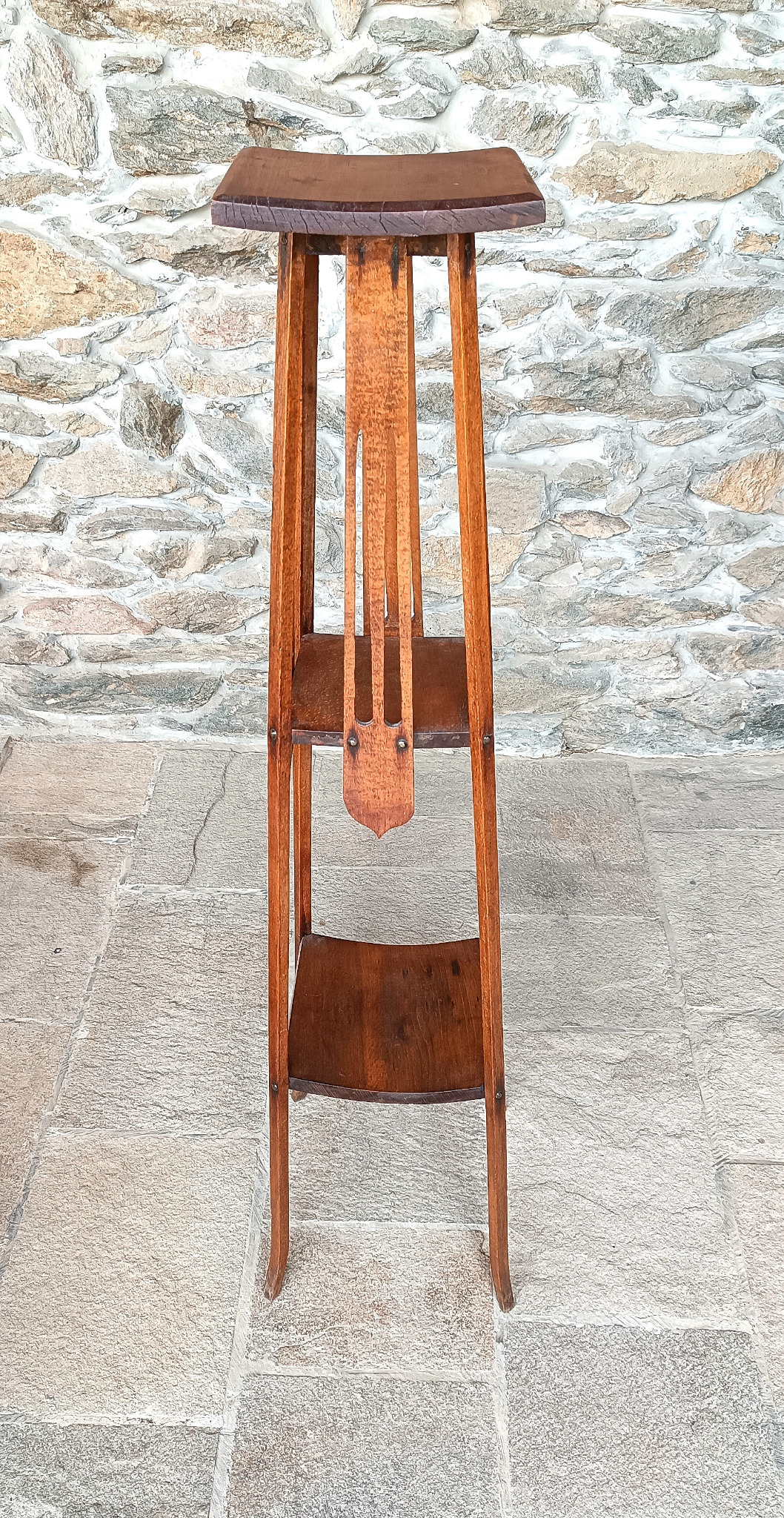
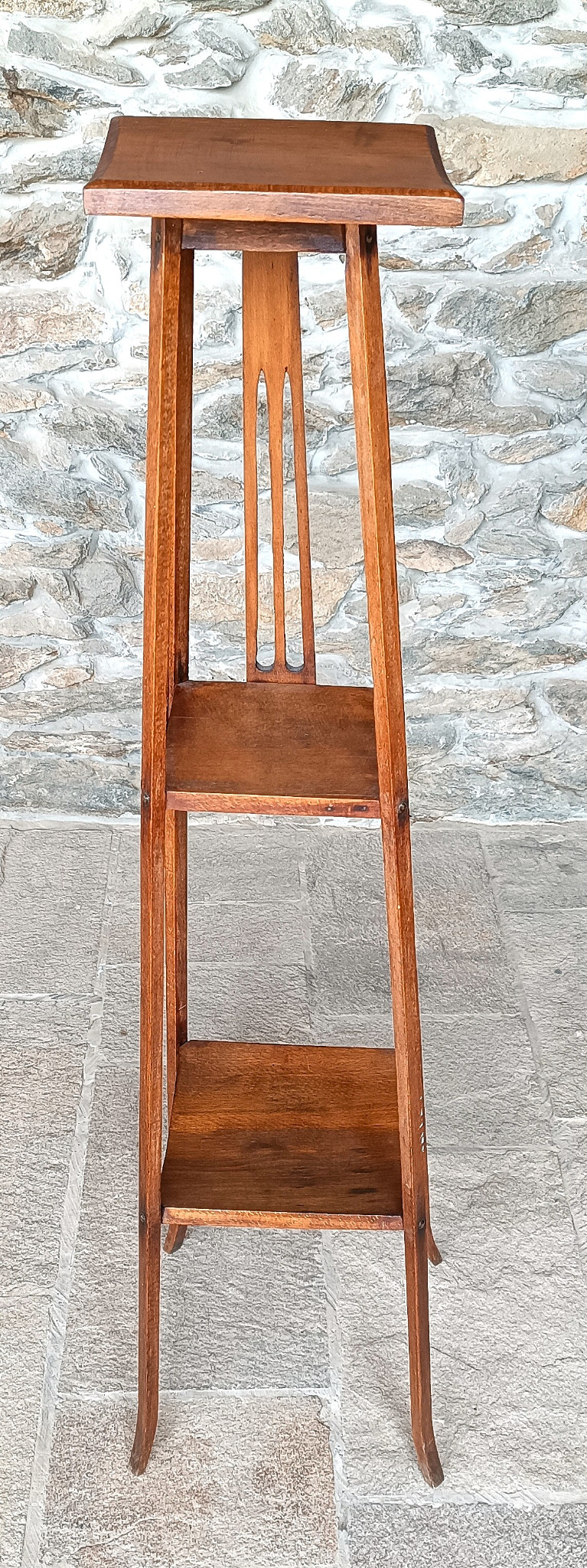
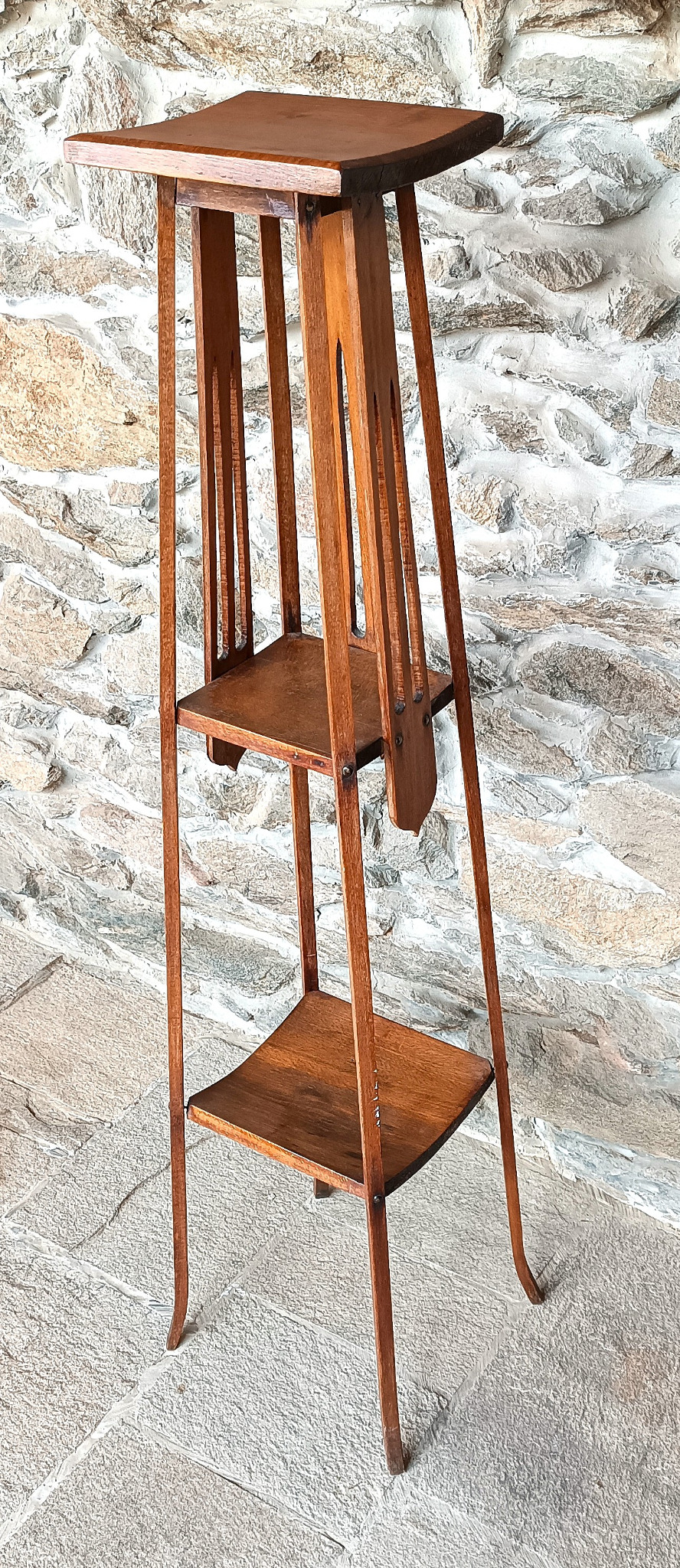
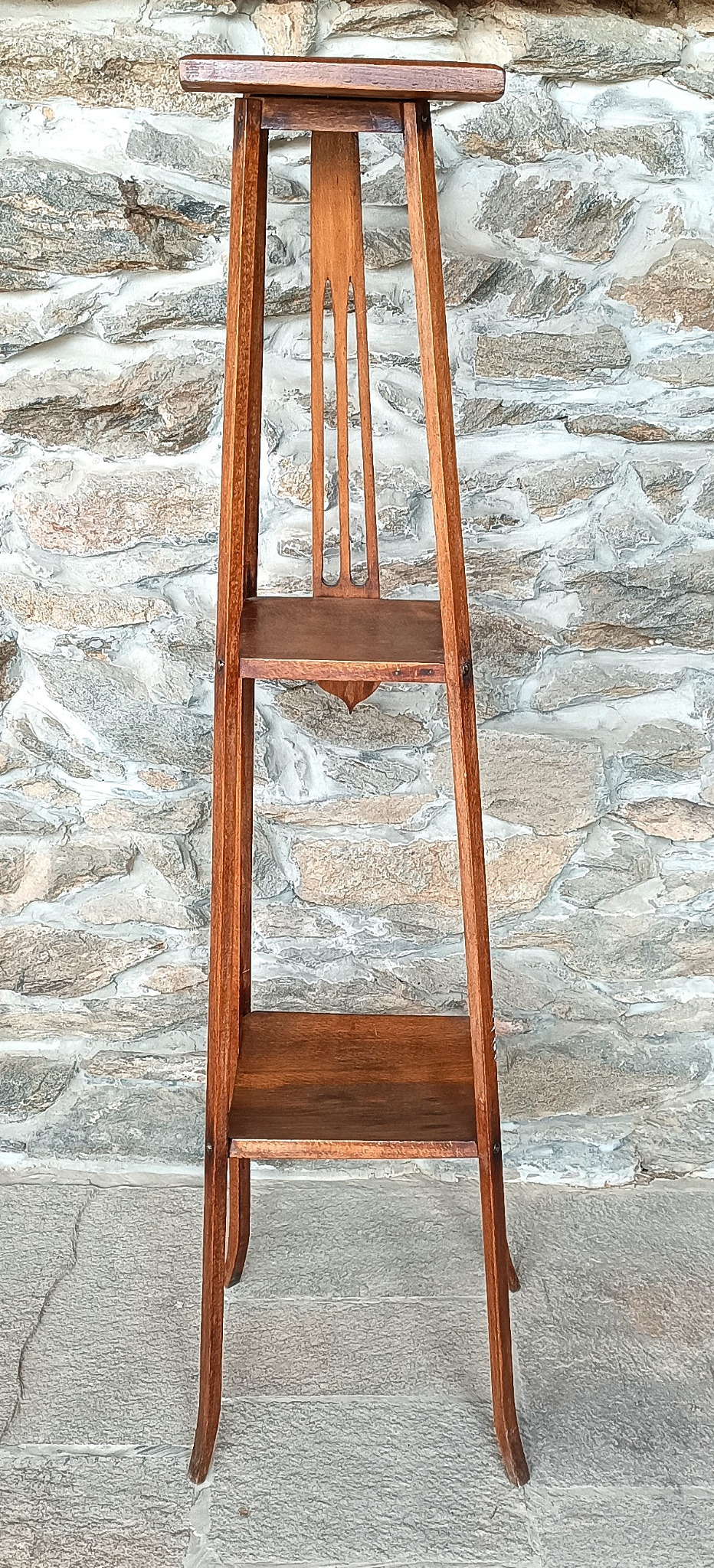
The stand has a tall, elegant silhouette with three display levels, lightly splayed legs and elongated decorative cutouts. Its restrained geometric decoration reflects the influence of European Secession and Jugendstil design while retaining the character of regional Balkan furniture manufacture.
With an overall height of approximately 123 cm (48.4 in), a base spread of approximately 31 cm (12.2 in), and a top platform measuring approximately 22 cm (8.7 in), this is an unusually tall and visually striking decorative piece.
Its vertical proportions make it particularly suitable for displaying plants, flowering pots, ceramics, vases or other decorative objects while occupying relatively little floor space.
Key Details
- Type: Antique plant stand / flower stand / jardinière stand
- Period: Early 20th century, approximately 1900–1920
- Origin: Balkan manufacture
- Material: Steamed beech wood
- Metal fittings: Brass rivets
- Construction: Three display levels
- Height: Approx. 123 cm (48.4 in)
- Base spread: Approx. 31 cm (12.2 in)
- Top platform: Approx. 22 cm (8.7 in)
- Style influence: Secession / Jugendstil-inspired
- Maker: Unidentified
- Markings: No factory stamp, label or maker’s mark found
Design & Construction
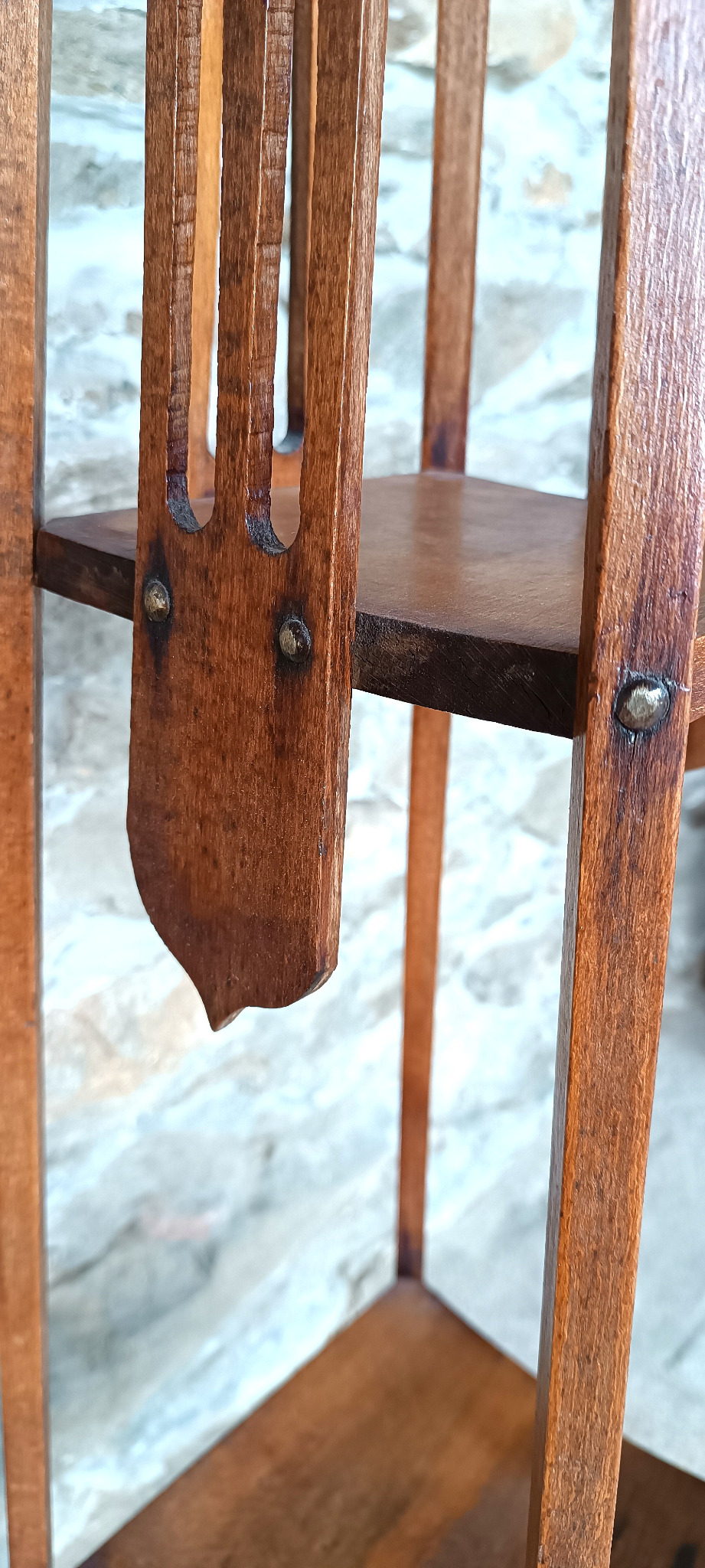
The stand combines practical construction with a distinctive decorative language. The narrow vertical supports are enhanced by elongated cutout details, while the central decorative elements terminate in softly pointed forms.
The use of steamed beech allowed the maker to create relatively slender structural elements while maintaining strength and stability. The visible brass rivets are functional parts of the construction while also contributing to the period appearance of the piece.
The lightly splayed legs create a graceful vertical profile and provide a stable base measuring approximately 31 cm (12.2 in) across.
Rather than being presented as a work by a known Western European manufacturer, the stand is described conservatively as Balkan manufacture. Its form represents a regional interpretation of fashionable European design ideas circulating during the early decades of the 20th century.
Three-Tier Display
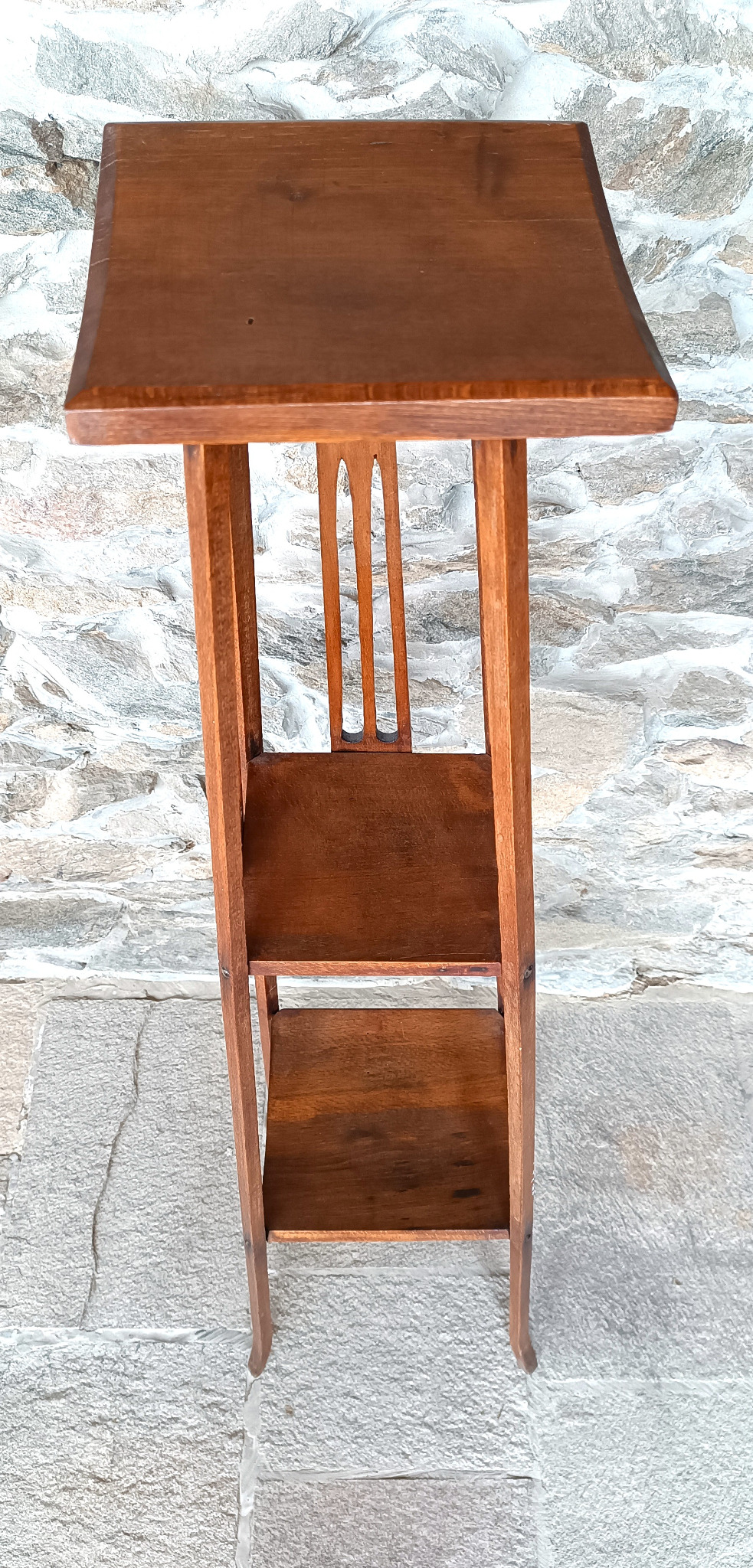
The stand provides a top platform and two additional shelves, allowing several plants or decorative objects to be arranged vertically.
The upper platform measures approximately 22 cm (8.7 in), making it suitable for a medium-sized flower pot, decorative vase, ceramic vessel or small sculptural object.
Its overall height of approximately 123 cm (48.4 in) gives the stand a strong architectural presence despite its narrow footprint.
It can be placed in a corner, beside a window, in an entrance hall, conservatory, living room or used as a freestanding decorative accent.
Condition
The stand is in good antique condition with visible signs of age and long-term use.
The upper and lower wooden platforms show slight age-related warping, most likely caused by historical changes in humidity. This is visible in the photographs and is consistent with the age of the piece.
The wood also shows small marks, scratches, surface wear and variations in finish acquired during more than a century of use.
These age-related characteristics have been retained as part of the stand’s authentic antique appearance rather than being aggressively restored.
Please examine all photographs carefully, as they form an important part of the description and show the actual surface, condition, proportions and construction details.
Provenance
The stand was acquired from a historic house in Sofia, Bulgaria, built in 1891, where it formed part of the property’s period interior furnishings.
The stand itself is believed to date from the early 20th century, approximately 1900–1920.
No factory label, stamp or maker’s mark has been discovered. For this reason, the piece is described conservatively as Balkan manufacture rather than attributed to a specific workshop or factory.
Secession & Jugendstil Influence
The elongated vertical cutouts, geometric construction, slender proportions and lightly splayed legs show restrained influence from Secession and Jugendstil design, both important European decorative movements around 1900.
These stylistic ideas have been interpreted here in a simpler and more functional regional form rather than as a formal Western European designer piece.
For Classic & Modern Interiors
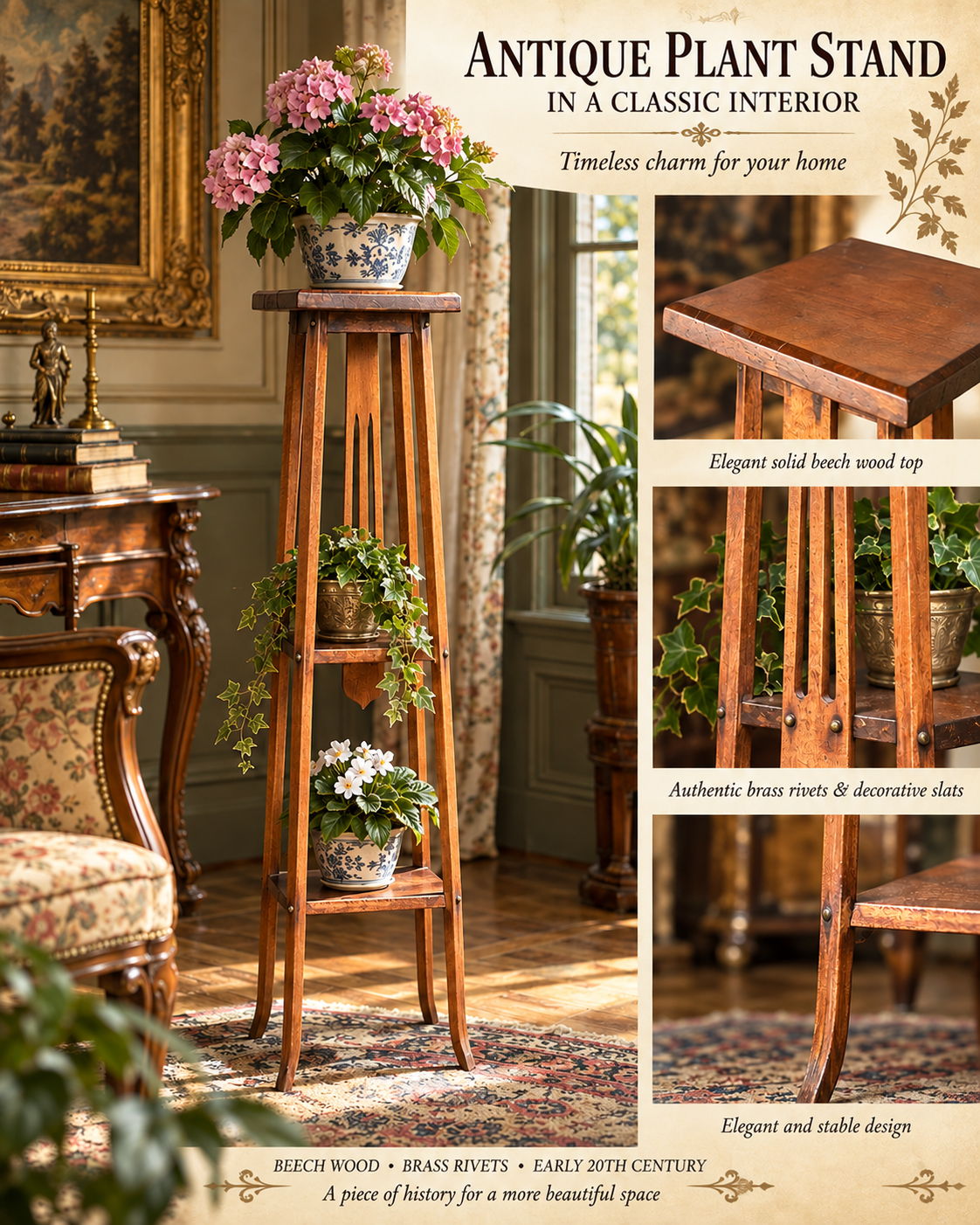
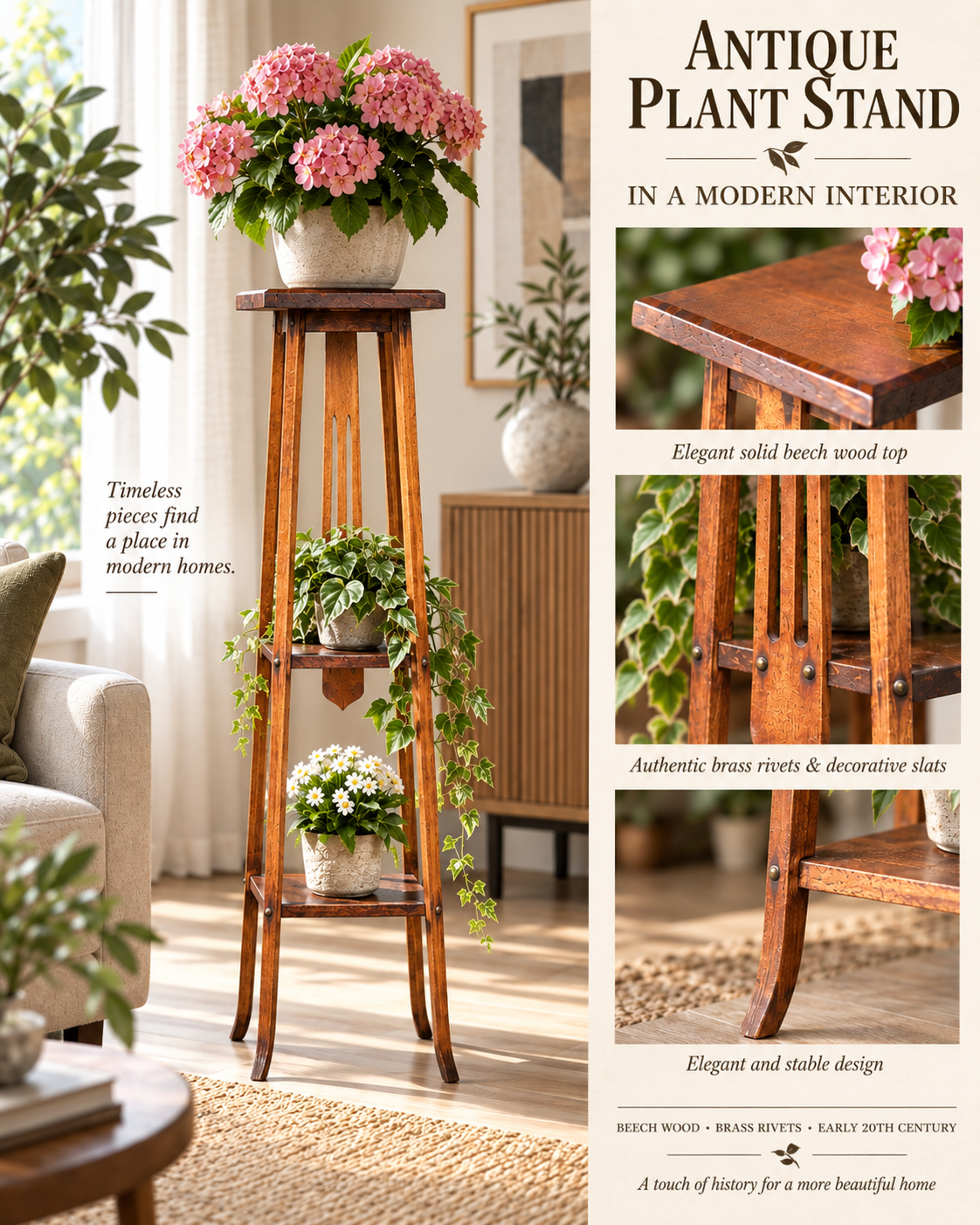
The stand works naturally in a period, traditional or antique interior, but its narrow proportions and clean vertical geometry also allow it to function as a distinctive accent in a modern home.
It is particularly effective with flowering plants, trailing greenery, decorative ceramics, porcelain, glass or small collectible objects.
At approximately 123 cm (48.4 in) high, the stand creates vertical interest without requiring a large amount of floor space.
An attractive original piece for collectors and decorators interested in antique Balkan furniture, early 20th-century interiors, steamed beech furniture, antique plant stands and Secession-inspired design.
Additional information
| Period | Early 20th century, approximately 1900–1920 |
|---|---|
| Origin | Balkan manufacture |
| Material | Steamed beech wood |
| Metal Fittings | Brass rivets |
| Height | Approx. 123 cm (48.4 in) |
| Base Spread | Approx. 31 cm (12.2 in) |
| Top Platform | Approx. 22 cm (8.7 in) |
| Number of Tiers | 3 |
| Style | Balkan furniture with restrained Secession / Jugendstil influence |
| Condition | Good antique condition with visible age-related wear and slight warping to the upper and lower platforms |
| Maker | Unidentified |
| Markings | No factory stamp, label or maker’s mark found |
| Provenance | From the period interior furnishings of a historic Sofia house built in 1891 |

Reviews
There are no reviews yet.