
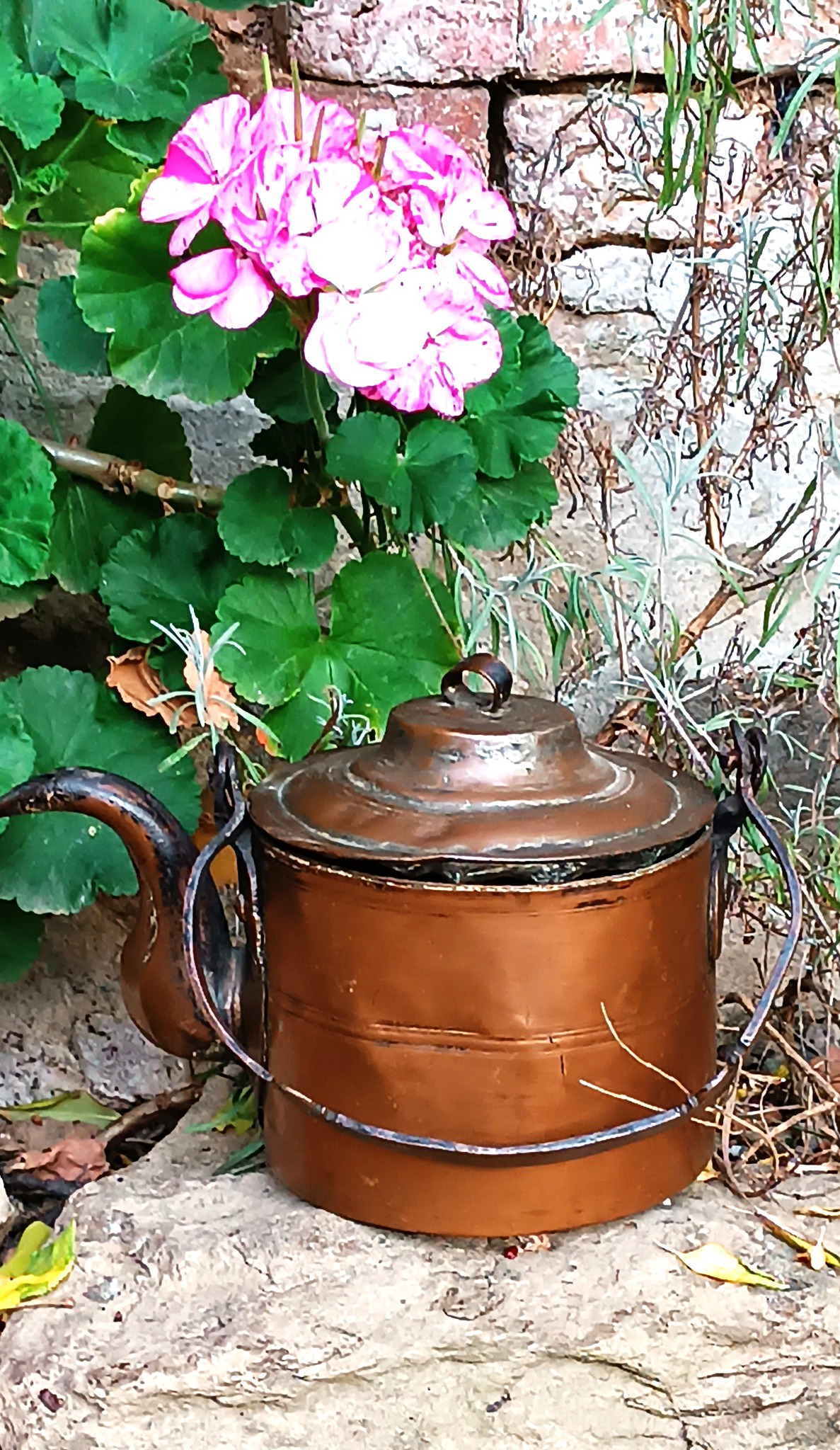

Antique Copper Kettle with Gooseneck Spout & Iron Handle – 19th–Early 20th Century
Price: € 120,00
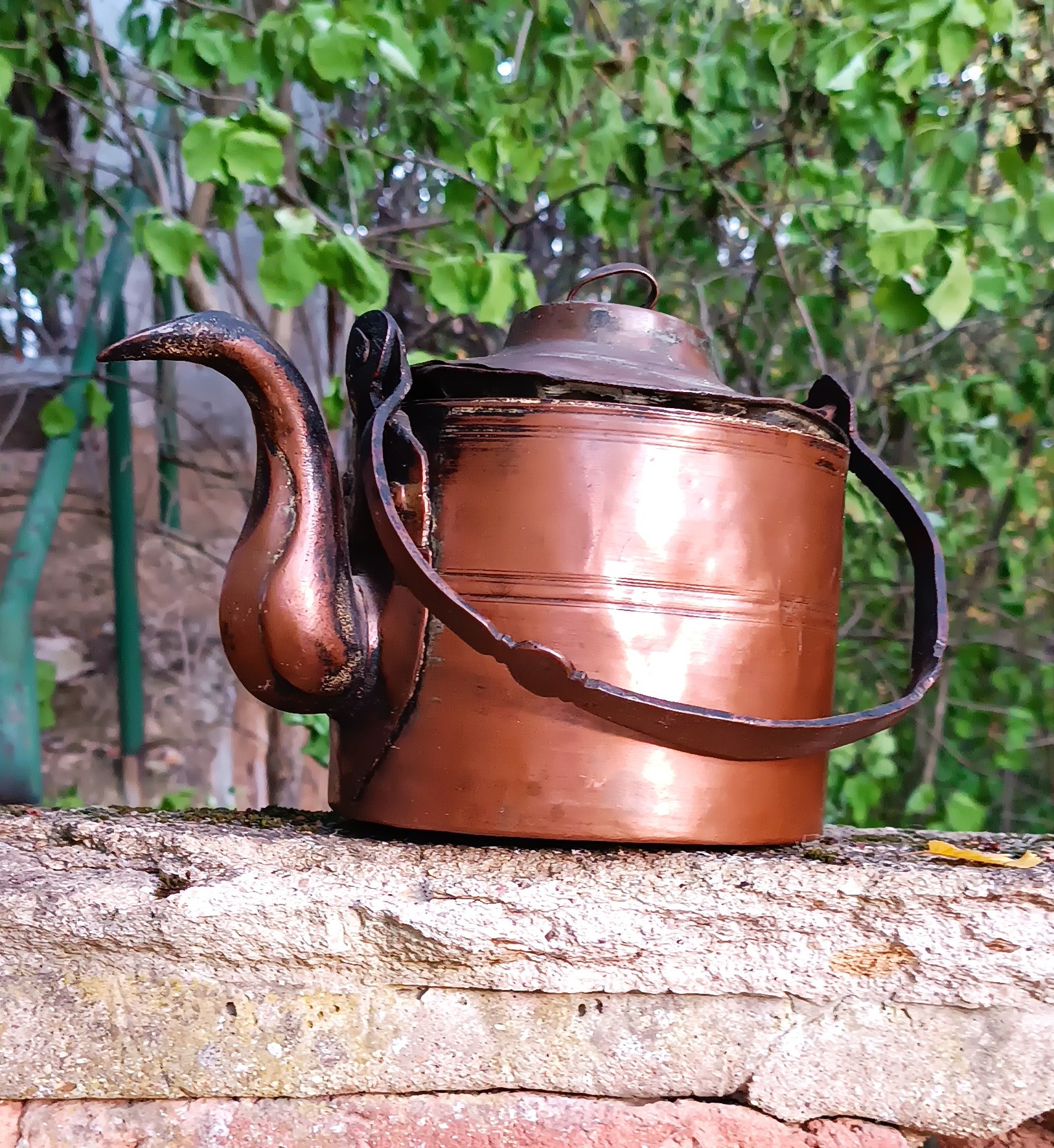
Discover a distinctive antique copper kettle with a curved bird-shaped gooseneck spout, removable stepped lid and movable iron carrying handle. A historic European household vessel with a possible Dutch origin, tentatively dated to the second half of the 19th or early 20th century, approximately 1850–1910.
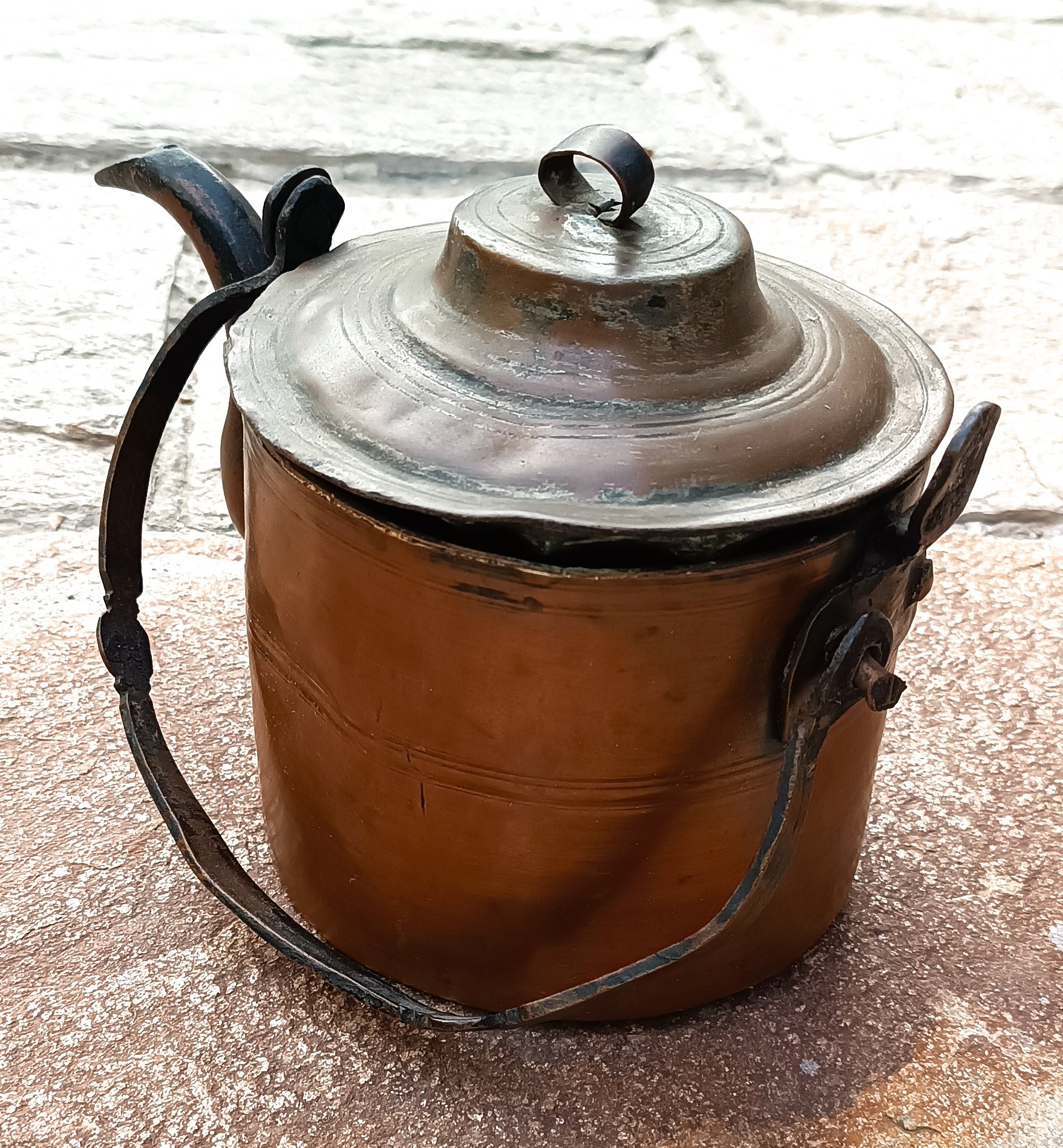
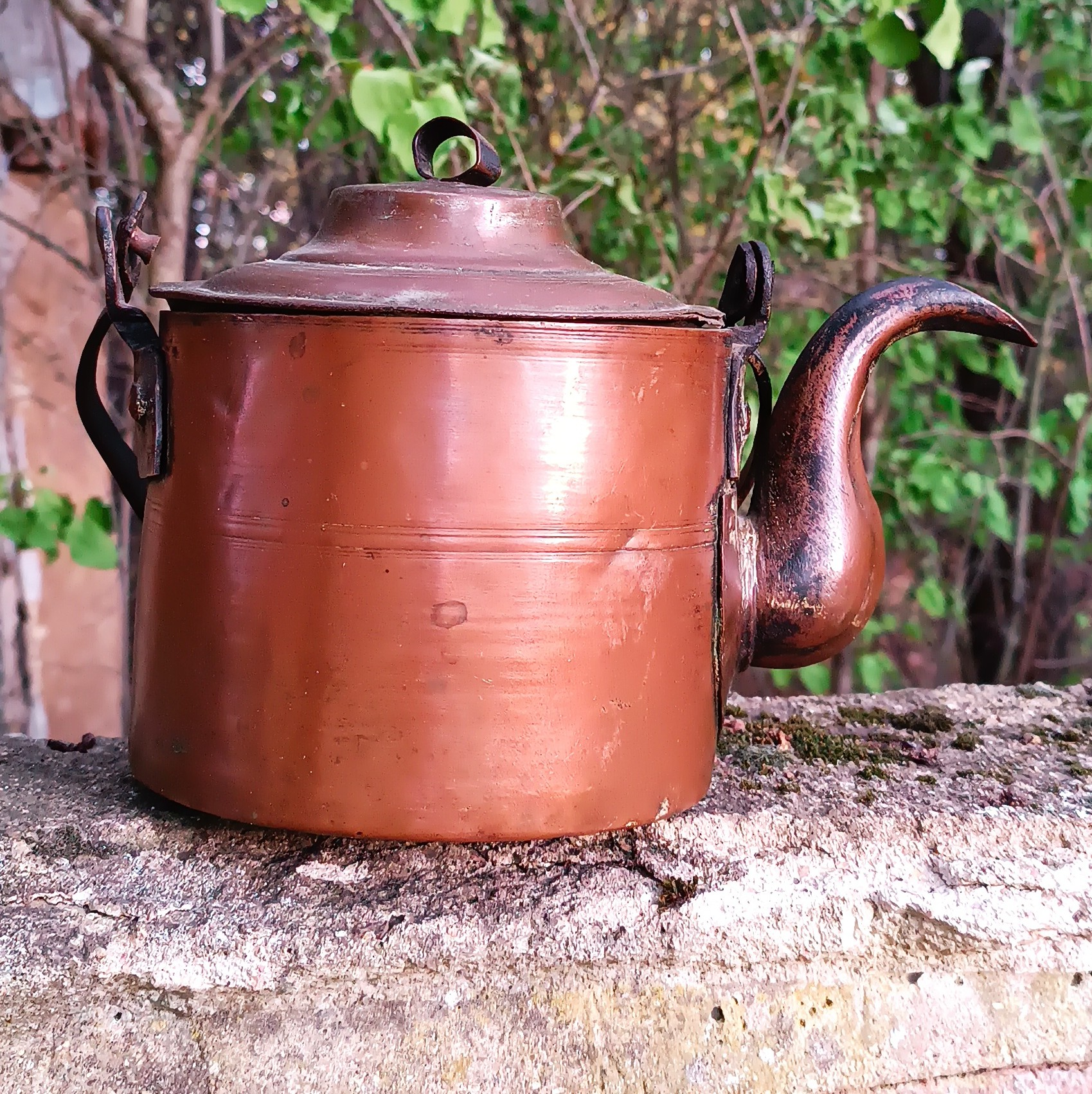
The kettle features a cylindrical copper body, riveted metal fittings and an elegantly curved pouring spout. Its warm reddish-brown surface retains aged patina, oxidation and visible traces of historic use. The original maker and exact manufacturing date remain unidentified.
A characterful decorative antique and collectible copper kettle, ideal for rustic farmhouse interiors, country-house displays and collections of traditional European metalware. Includes the removable lid and iron carrying handle. Due to interior corrosion, this item is offered for decorative and collectible use only, not for preparing beverages.
1 in stock
Description
Antique Copper Kettle with Gooseneck Spout & Iron Handle – 19th–Early 20th Century
An impressive antique copper kettle with a distinctive bird-shaped gooseneck spout, removable stepped lid and movable iron carrying handle. This historic household vessel combines the practical craftsmanship of traditional European metalworking with the character of naturally aged copper, darkened iron fittings and visible traces of long-term use.
Believed to have a possible Dutch origin, the kettle is tentatively dated to the second half of the 19th or early 20th century, approximately 1850–1910. Its cylindrical copper body, curved pouring spout, riveted mounting plate and wide iron bail handle are consistent with construction methods found in traditional European coppersmithing.
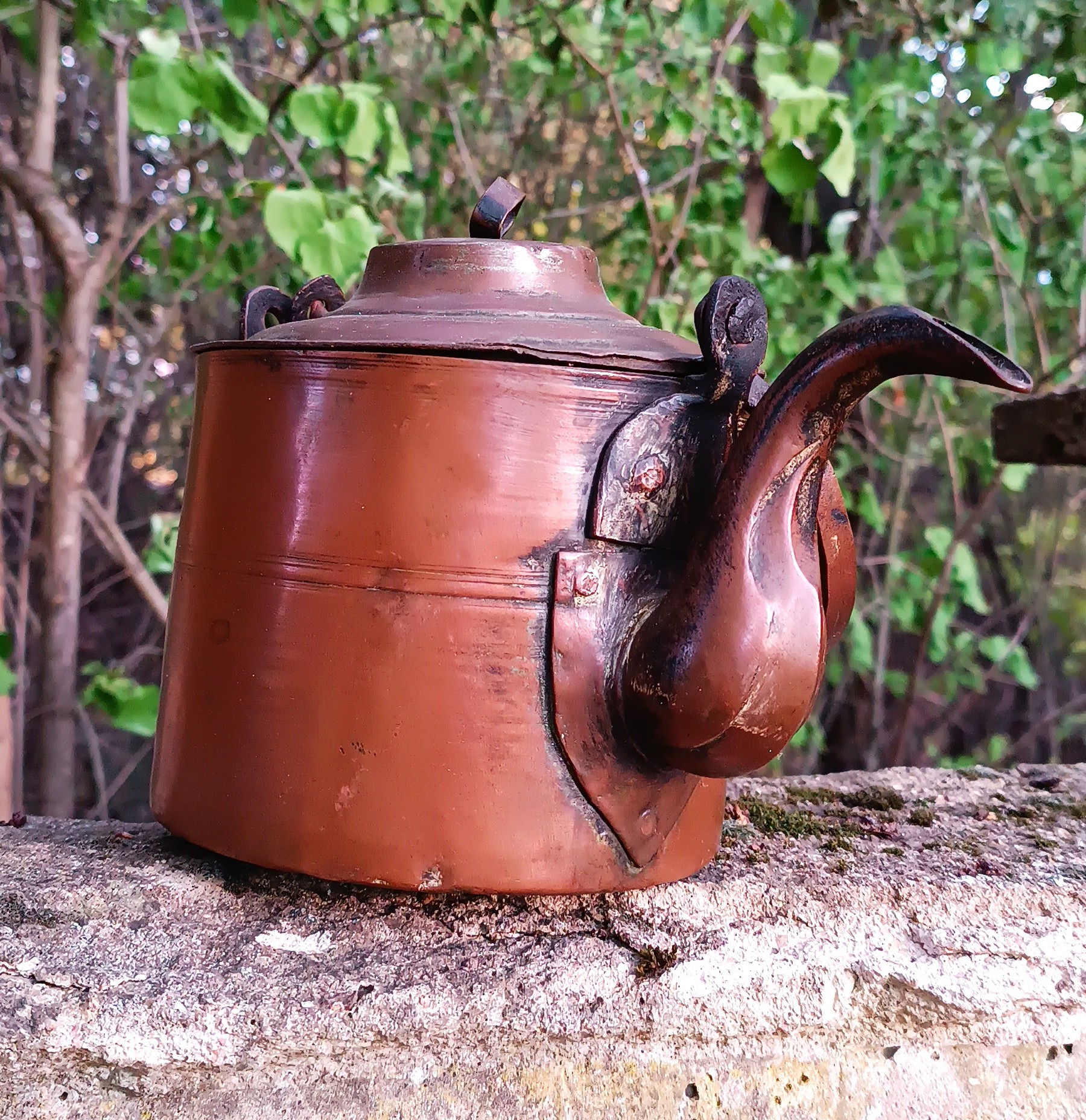
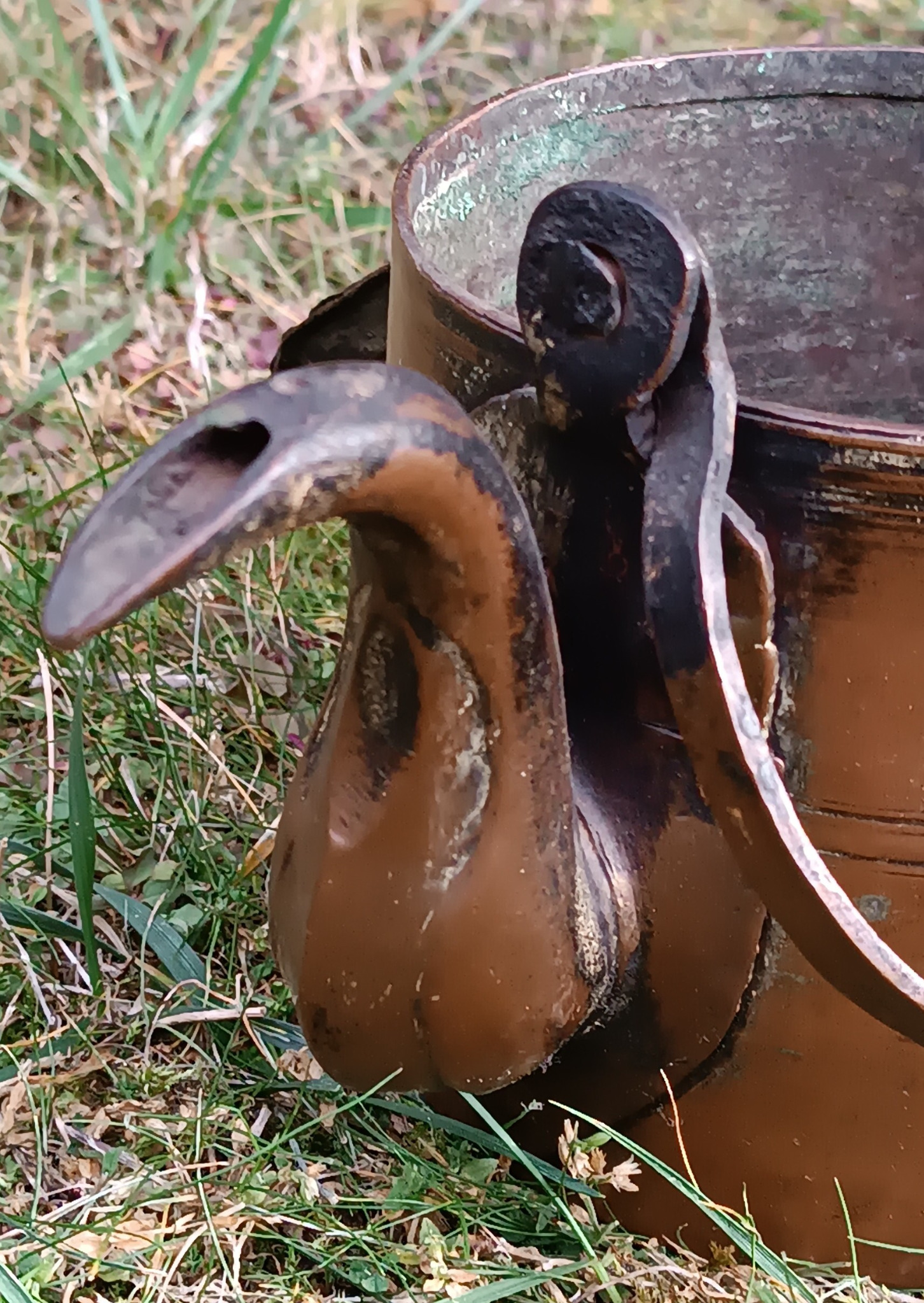
The kettle’s most distinctive feature is its elegantly curved bird-shaped pouring spout, which rises from a rounded base and tapers towards a narrow tip. Together with the profiled copper lid and original-looking iron fittings, this creates a striking silhouette suited to antique collections and rustic interiors.
The vessel retains an aged surface with natural darkening, scratches, oxidation and areas of greenish copper corrosion. Originally designed as a household water kettle, it is now offered exclusively as a decorative antique and historical collectible, not as functional cookware.
Key Details
| Type | Antique copper water kettle / historic household vessel |
| Historical Period | 19th to early 20th century, tentatively attributed |
| Estimated Date | Possibly c. 1850–1910; not independently verified |
| Possible Origin | Netherlands (Holland), according to the supplied provenance information; unconfirmed |
| Maker | Unidentified coppersmith or metalworking workshop |
| Manufacturing Tradition | Traditional European copperware with separately formed and riveted fittings |
| Material | Apparently copper body with iron or other metal fittings; composition not laboratory tested |
| Body | Cylindrical copper vessel with fine horizontal decorative lines |
| Spout | Curved bird-shaped / gooseneck pouring spout |
| Spout Attachment | Separate shaped metal mounting plate with visible rivets |
| Handle | Movable iron bail handle, apparently forged, with shaped metal fittings |
| Lid | Removable stepped metal lid with concentric rings and central loop handle |
| Colour | Reddish-brown copper with dark iron fittings and aged patina |
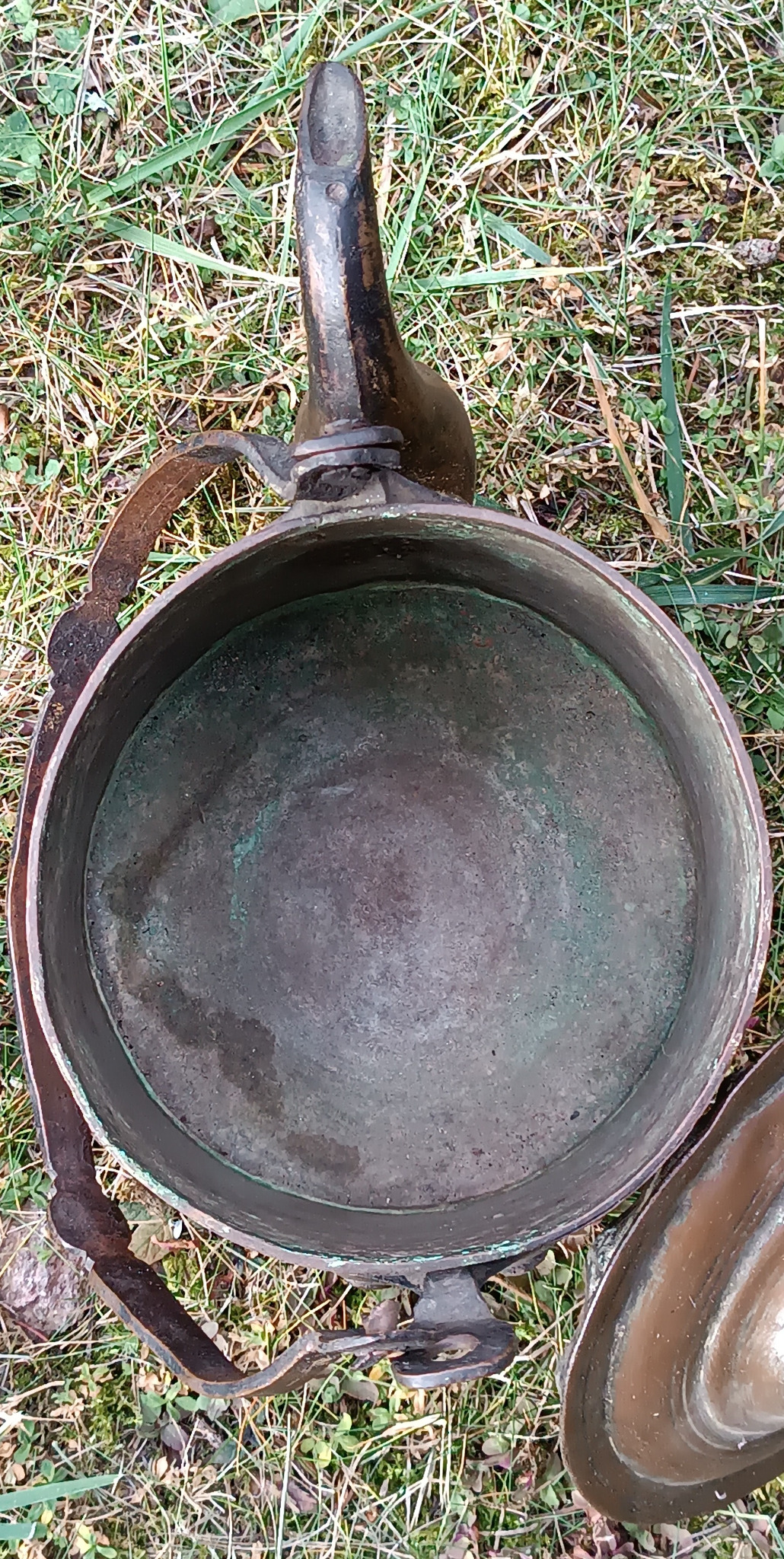
| Interior | Darkened surface with grey-brown deposits and visible greenish corrosion |
| Maker’s Marks | No confirmed maker’s mark or factory attribution established |
| Condition | Antique condition with patina, oxidation, scratches, surface wear, visible interior corrosion and uneven lid seating |
| Present Use | Decorative and collectible use only |
| Availability | One individual antique kettle with removable lid and carrying handle |
Antique Copper Kettles in European Household History
Copper water kettles were important household objects in Europe long before electric appliances became commonplace. Used for heating and carrying water, they combined functional construction with the skills of specialist metalworkers.
During the 18th and 19th centuries, European coppersmiths produced kettles in a wide variety of forms. Copper was valued for its excellent thermal conductivity and its ability to be shaped into practical domestic vessels.
Traditional examples often feature separately formed spouts, removable lids, riveted fittings and movable carrying handles. Such construction details remain useful for collectors studying the history of household metalware.
Today, surviving historic copper kettles are collected both as examples of traditional craftsmanship and as decorative objects reflecting everyday European domestic life.
Possible Dutch Origin and the Netherlands Coppersmithing Tradition
The Netherlands has a long tradition of copper and brass household metalwork. Historic Dutch water kettles are documented in museum collections and may feature movable handles, curved spouts, fitted lids and riveted construction.
Among these objects are traditional Dutch kettles known as appelketels. Some examples have a hinged flap at the end of the spout, associated with their historic method of use. The term provides relevant cultural context, although the kettle offered here has not been positively identified as an appelketel.
The present vessel shares several characteristics with historic European and Dutch copper water kettles, including its cylindrical form, shaped pouring spout, metal carrying handle and decorative lid.
Its Dutch origin has been suggested on the basis of the available provenance information and stylistic comparison. However, no specific Dutch workshop, manufacturer or archival record has been established for this individual object.
Possible French Cultural and Stylistic Influences
European coppersmithing developed through centuries of exchange between regional workshops, craft traditions and decorative fashions.
During the 19th century, French culture and applied arts influenced aspects of European domestic design. Historical Dutch terminology associated with certain water kettles also reflects the period of French cultural influence around the beginning of the 19th century.
The pronounced curve of this kettle’s spout resembles forms found in several Western European metalworking traditions. A French stylistic connection is therefore possible, but it should be regarded as an interpretation rather than a documented attribution to a French design or maker.
The Distinctive Bird-Shaped Gooseneck Spout
The most visually striking feature of this antique copper kettle is its unusually curved pouring spout.
Beginning with a broad, rounded lower section, the spout rises in a graceful curve before narrowing towards its pouring tip. Its silhouette resembles a bird’s neck and beak, giving the kettle an expressive decorative character.
The spout is connected to the cylindrical body through a separately formed mounting plate with a shaped lower edge and visible riveted attachments.
These fittings are particularly interesting to collectors examining antique copperware construction and traditional workshop methods.
The spout retains darkened surfaces, scratches and oxidation, creating a distinctive contrast with the warm copper colour of the body.
Movable Iron Handle and Stepped Copper Lid
The kettle is fitted with a broad, movable metal bail handle, apparently made from iron. Its curved form and shaped sections show the functional and decorative approach of traditional metalworking.
The handle is attached through metal fittings on opposite sides of the kettle, allowing it to move between raised and lowered positions.
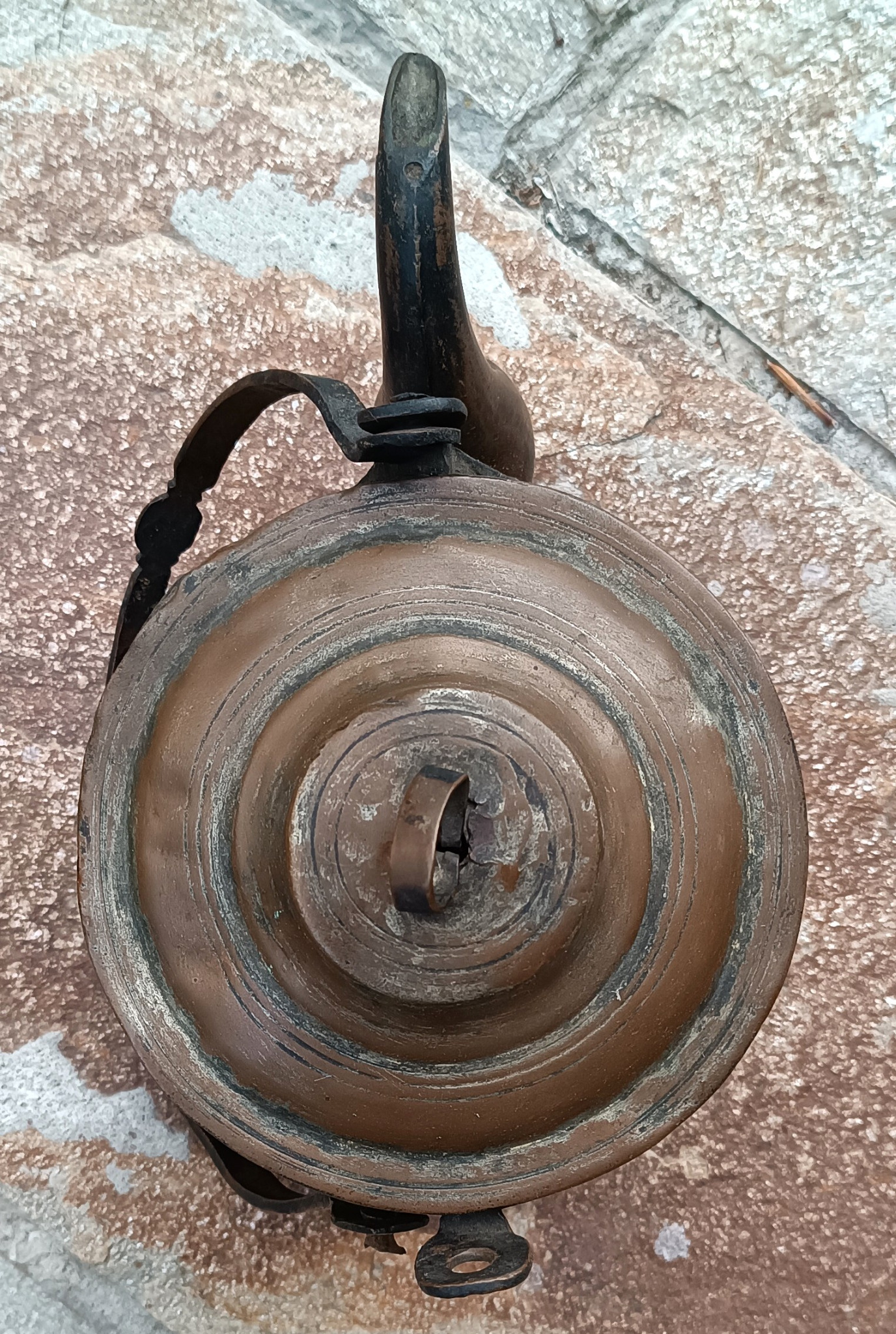
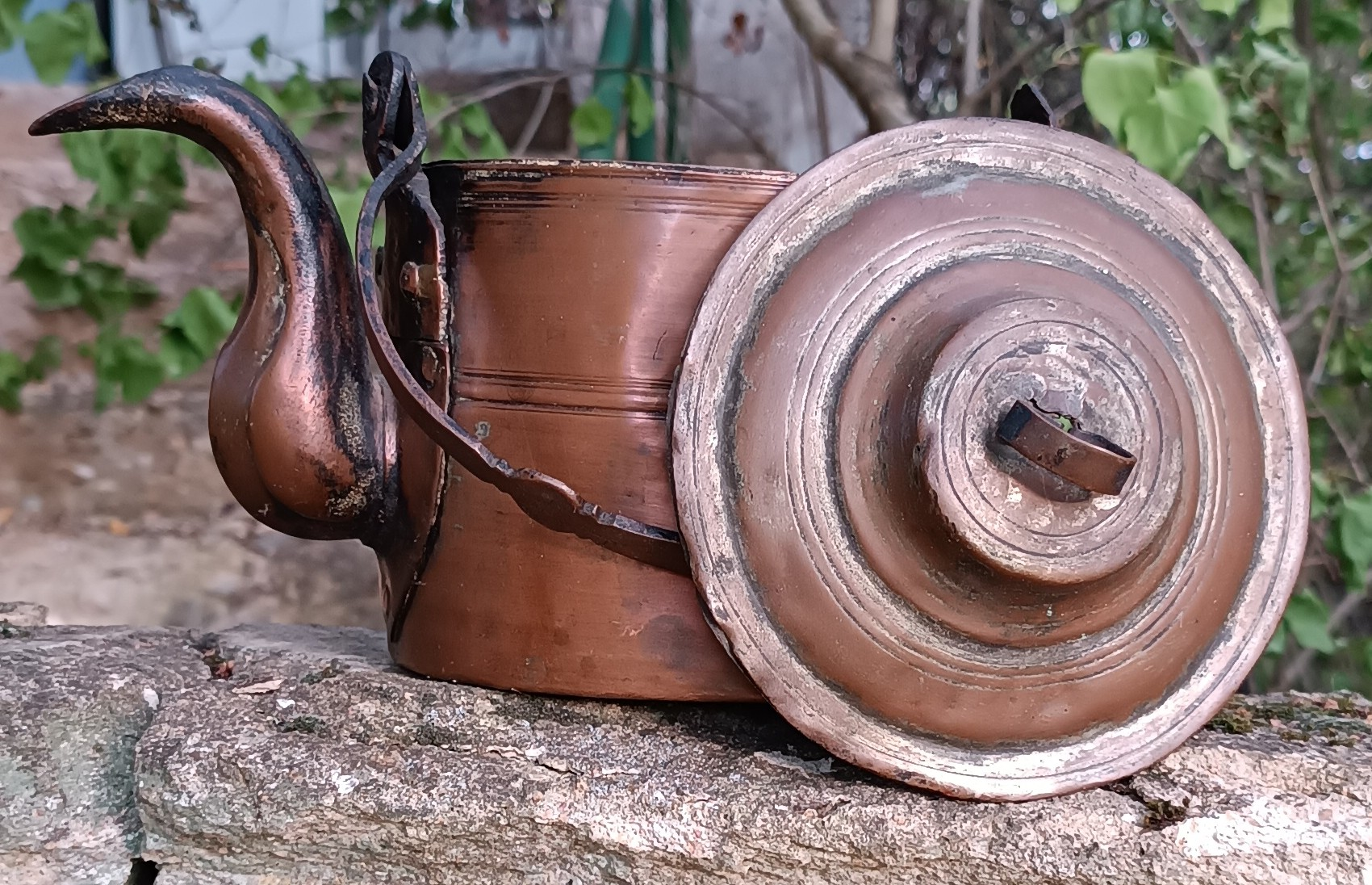
The removable lid has a stepped circular profile decorated with several concentric rings. A small metal loop is positioned at its centre for lifting.
The surviving lid displays surface wear, patina and minor deformation around its edge. Its fit against the upper rim is visibly uneven, an important detail documented in the photographs.
Together, the spout, handle and lid create the distinctive appearance of this historical European household vessel.
Ideas for Display and Modern Decorative Use
Although no longer suitable for normal kitchen use, this antique copper kettle offers many possibilities for thoughtful decorative display:
- Rustic farmhouse kitchen – a characterful accent on a wooden dresser, vintage cupboard or open shelving.
- French country-style interior – complements natural wood, old ceramics, linen and traditional decorative accessories without requiring a confirmed French origin.
- Country-house decoration – suitable for traditional cottages, rural homes and interiors featuring historical household objects.
- Fireplace display – an atmospheric decorative object on a mantelpiece or nearby shelf, positioned safely away from heat and flames.
- Dried flower arrangement – display lavender, dried grasses, wheat stems or decorative branches without adding water.
- Decorative plant holder – use a separate inner flowerpot and protective saucer to prevent moisture and soil from contacting the antique metal.
- Antique copperware collection – combine with historical copper jugs, kettles, pitchers and other traditional household vessels.
- Historical and educational exhibition – illustrates nineteenth-century domestic material culture and European metalworking traditions.
- Period photography and interior styling – an attractive historical prop for antique displays and rustic decorative compositions.
Decorative uses that do not require drilling, repainting, modification or prolonged moisture exposure are recommended to help preserve the existing historical surfaces.
Condition, Patina and Signs of Age
The kettle is preserved in antique condition with visible traces of long-term use.
The cylindrical copper body shows surface scratches, darkening, small marks and areas of uneven patina. The spout, handle and surrounding fittings exhibit stronger oxidation and darker surface deposits.
The stepped lid retains wear, discolouration and minor deformation around its perimeter. The lid does not sit completely evenly against the upper rim of the vessel.
The interior shows grey-brown discolouration, dark deposits and patches of greenish copper corrosion. The presence, original composition and remaining condition of any historic tin lining have not been independently verified.
These features are documented in the product photographs. Buyers are encouraged to examine the full gallery, including close-up views of the spout, riveted mounting plate, iron handle, lid and interior.
No claim is made that the kettle is watertight, safe for food contact or suitable for heating liquids.
Maker, Dating and Provenance
This kettle is catalogued as an antique European copper water kettle with a possible Dutch origin.
Its working date is approximately 1850–1910, based on general stylistic and construction comparisons rather than a verified manufacturing date.
The vessel may have originated from a traditional coppersmith’s workshop or early metalworking manufactory. The individual maker, precise place of manufacture and production date remain unidentified.
The absence of a confirmed maker’s mark does not diminish the vessel’s decorative interest, but it does limit the precision of its historical attribution.
One individual antique kettle is available. The sale includes the copper vessel, its removable metal lid and the movable carrying handle shown in the photographs.
Flowers, plants, garden furniture, stone surfaces and other photographic accessories are not included.
Explore further examples of
antique and vintage brass, copper and bronze objects
in The Old Antiquarian collection.
Important Safety and Conservation Information
This antique kettle is offered exclusively as a decorative and collectible historical object.
Due to its age, visible interior corrosion and the unverified condition of any former protective lining, it must not be used for boiling water, preparing tea or coffee, storing drinking water or handling food and beverages.
Avoid direct heating, prolonged moisture exposure and contact with food. Do not use acidic cleaning mixtures, salt, abrasive polishing materials or aggressive household chemicals on its historic surfaces.
The existing patina and construction details should be preserved wherever possible. If active corrosion requires treatment, consultation with a qualified metal conservator is recommended.
Learn more about protecting historical objects in our guide to
antique conservation and preservation.
A distinctive antique copper kettle with a bird-shaped gooseneck spout, removable stepped lid and movable iron handle, combining traditional European metalworking, a possible Dutch provenance and the authentic character of a nineteenth-century household object. An appealing addition to historical copperware collections, rustic interiors and decorative antique displays.
Additional information
| Type | Antique Copper Kettle |
|---|---|
| Period | 19th – Early 20th Century |
| Estimated Date | Possibly c. 1850–1910 |
| Possible Origin | Netherlands (Holland) |
| Maker | Unidentified Coppersmith |
| Material | Copper with Iron Fittings |
| Spout | Bird-Shaped Gooseneck |
| Handle | Movable Iron Bail Handle |
| Lid | Removable Stepped Lid |
| Condition | Antique Patina & Interior Corrosion |
| Intended Use | Decorative & Collectible |

Related products
-
Sale!
Antique Kashmiri Cup and Saucer – Anglo-Indian, Silver-Plated, c. 1900
Add to cartPrice: Original price was: € 349,00.€ 295,00Current price is: € 295,00.
-
Vintage Three-Legged Copper Cauldron – Swing Handle, c. 1930–1960
Add to cartPrice: € 49,00
-
Pair of Vintage Dutch Copper Coal Scuttles – Delft Handles & Lion Heads
Add to cartPrice: € 149,00
Reviews
There are no reviews yet.