
What Is a Gold Hallmark? (24K, 22K, 18K, 14K, 9K and More)
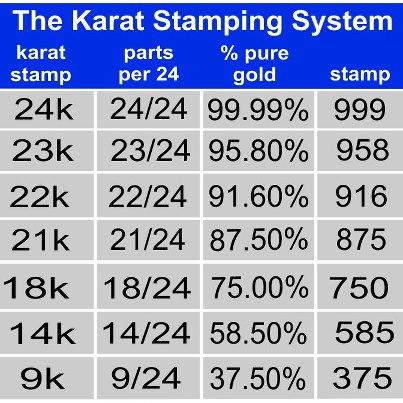
A gold hallmark indicates how much pure gold is contained in a piece of jewelry or another gold item. It can be expressed in two ways: by karats (K) or by a purity mark such as 999, 916, 750, 585, or 375. Both systems represent the same thing—the proportion of pure gold within the alloy. The higher the karat or purity mark, the greater the amount of pure gold the item contains.
Gold purity marks are often accompanied by a workshop symbol, manufacturer’s stamp, or maker’s mark, which can provide additional information about the origin and creator of the object.
What Does 24K Mean?
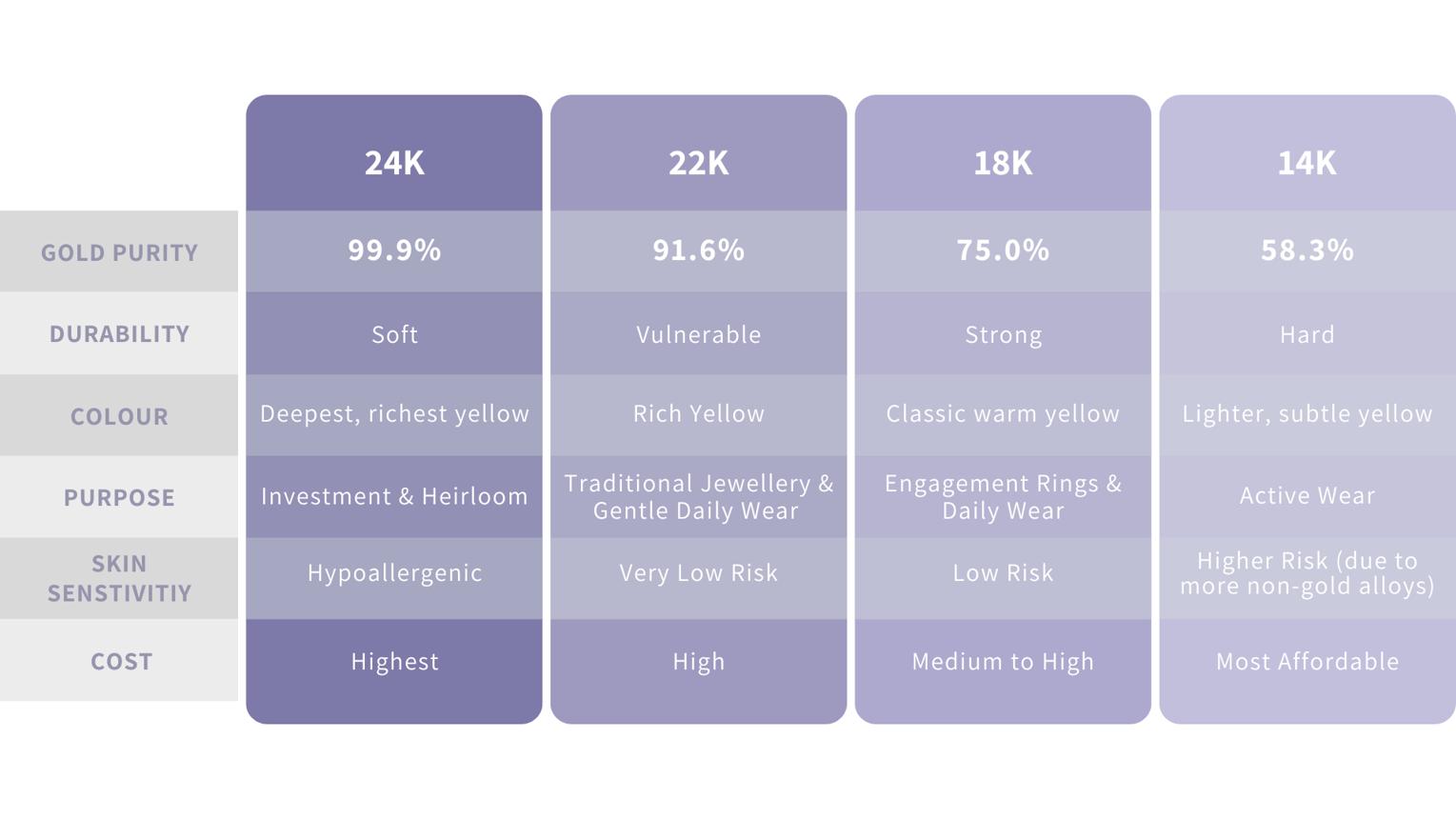
24K is virtually pure gold with a purity mark of 999 or 999.9. It contains approximately 99.9% pure gold and is mainly used for investment bars, bullion coins, and premium-quality jewelry. Because of its exceptional purity, it is relatively soft and scratches more easily than lower-karat gold.
Gold bullion coins may also appeal to collectors interested in historic and precious-metal currency. Related objects can be explored in our Coins & Banknotes collection.
What Does 22K Mean?
22K corresponds to the 916 purity mark and contains approximately 91.6% pure gold. It is widely used for traditional jewelry and investment pieces, offering an excellent balance between purity and durability.
What Does 18K Mean?
18K is equivalent to the 750 purity mark and contains 75% pure gold. It is one of the most popular choices for luxury jewelry because it combines beauty, value, and long-lasting durability.
Antique and vintage 18K jewelry may be valued not only for its gold content but also for its design, craftsmanship, maker, age, gemstones, and provenance. You can browse related pieces in our Antique & Vintage Watches & Jewelry collection.
What Does 14K Mean?
14K corresponds to the 585 purity mark, meaning the jewelry contains 58.5% pure gold. It is one of the most common gold standards in Europe thanks to its excellent durability for everyday wear.
What Does 9K Mean?
9K is marked 375 and contains 37.5% pure gold. It is especially common in the United Kingdom and is frequently used for more affordable gold jewelry.
Most Common Gold Purity Marks
| Karat | Purity Mark | Pure Gold |
|---|---|---|
| 24K | 999 | 99.9% |
| 22K | 916 | 91.6% |
| 21K | 875 | 87.5% |
| 18K | 750 | 75% |
| 14K | 585 | 58.5% |
| 10K | 417 | 41.7% |
| 9K | 375 | 37.5% |
Where Can You Find a Gold Hallmark?
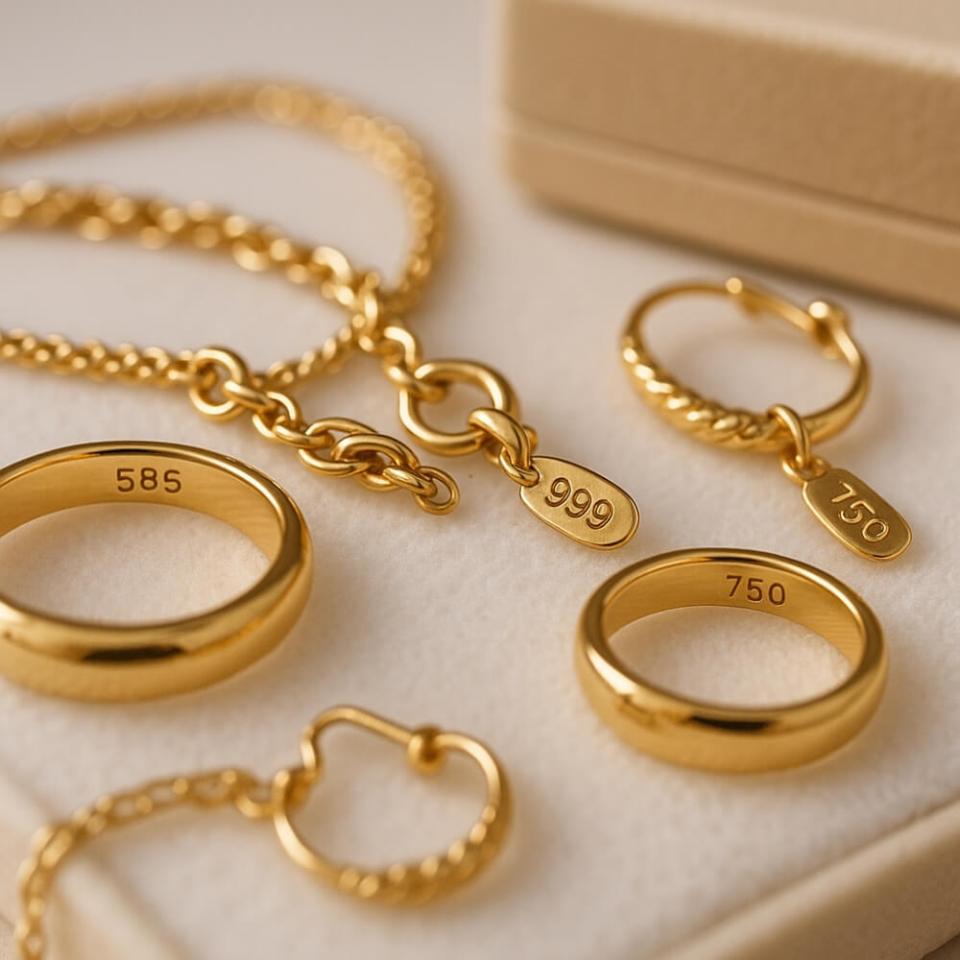
Gold hallmarks are typically stamped inside rings, on the clasps of necklaces and bracelets, on earring posts or backs, or on the reverse of pendants. Alongside the purity mark, you may also find an official assay office hallmark or a maker’s mark identifying the workshop or manufacturer.
On decorative gold objects, cases, boxes, watches, and other antique pieces, marks may be placed in less visible areas such as the underside, interior, clasp, hinge, or back of the object.
How Can You Tell if Gold Is Genuine?
A hallmark alone is not always sufficient proof of authenticity. Marks can be worn, misread, added later, or even falsified. The complete object should therefore be examined, including its construction, weight, surface, craftsmanship, age, condition, and any accompanying marks.
If you are unsure, the safest option is to have the item professionally examined using methods such as acid testing, XRF analysis, or other specialist testing techniques. These tests can help determine both the purity and authenticity of the metal without relying exclusively on the visible hallmark.
➡️ Request a professional evaluation of your item
Does Gold Purity Determine Value?
A higher purity mark means a higher percentage of pure gold, but it does not always determine the item’s overall value. For antique gold objects, factors such as age, origin, craftsmanship, rarity, historical significance, condition, and collector demand can have an even greater impact on value.
A finely crafted antique ring, pocket watch case, presentation box, religious object, or signed piece of jewelry may be worth substantially more than its precious-metal content alone. A professional antique valuation considers the complete object rather than calculating value solely from its weight and purity.
Gold Hallmarks on Antique and Decorative Objects
Gold and gold-mounted details may also appear on antique boxes, clocks, picture frames, religious objects, decorative accessories, writing instruments, and luxury personal items. In these cases, the hallmark should be studied together with the object’s style, materials, construction, and historical context.
Collectors interested in decorative and historically significant pieces can also explore our Antique Interior Items collection.
Conclusion
Gold purity marks and karats are the primary indicators of gold content. Understanding markings such as 999, 916, 875, 750, 585, and 375, along with their corresponding 24K, 22K, 21K, 18K, 14K, and 9K ratings, makes it much easier to identify quality gold jewelry and valuable antique items.
Whether you are buying, selling, collecting, or inheriting a gold object, correctly interpreting its hallmark is an important first step. However, the purity mark should always be considered alongside the maker, age, condition, craftsmanship, provenance, and collector interest before reaching a conclusion about authenticity or value.
Related Articles
-
What Is a Silver Hallmark? 925, 900, 875, 835, 800 and Other Silver Marks
-
What Is a Maker’s Mark? Identification, Meaning and History
-
Explore More Antique Guides, Stories and Collector Knowledge
Explore Related Collections
