
Bing & Grøndahl Porcelain : Identification Guide
Bing & Grøndahl Porcelain: History, Marks, Figurines, Seagull Service, Christmas Plates & Value Guide
Last Updated: September 2026 | The Old Antiquarian
Quick Answer
Bing & Grøndahl was one of Denmark’s most important historic porcelain manufacturers.
Founded in Copenhagen in 1853, the factory became internationally known for artistic underglaze porcelain, naturalistic figurines and animal models, Fanny Garde’s famous Seagull Service and the annual Christmas Plate tradition begun in 1895.
To identify Bing & Grøndahl porcelain, begin with the underside. Examine the exact B&G or Three Towers factory mark, country wording, model numbers, painter or artist marks, quality grade, decoration and condition. The mark is an important dating clue, but reliable identification should never depend on the backstamp alone.
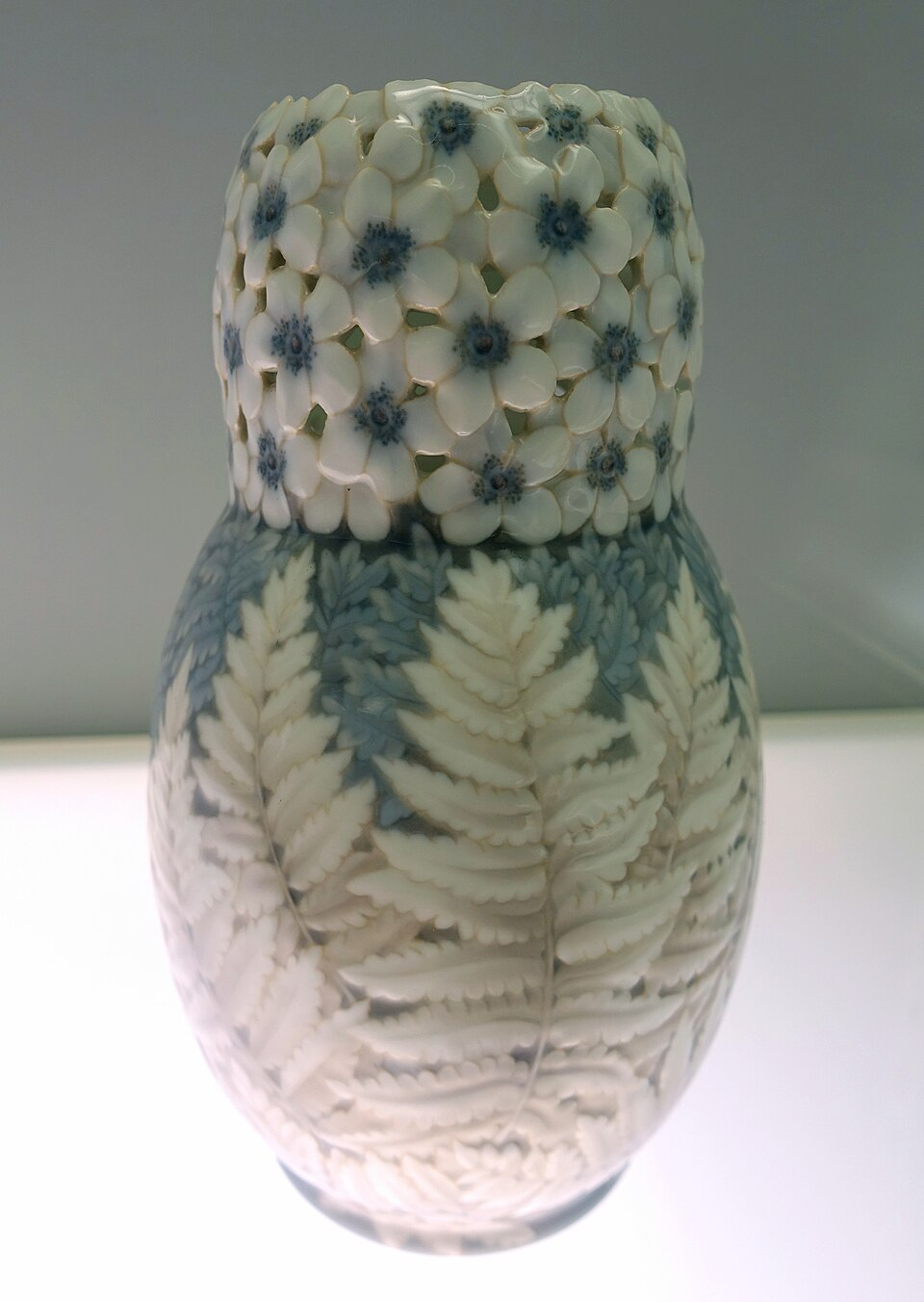
At a Glance
Bing & Grøndahl Porcelain – Key Facts
| Feature | Collector Reference |
|---|---|
| Founded | 1853 |
| Location | Copenhagen, Denmark |
| Founders | Frederik Vilhelm Grøndahl, Meyer Hermann Bing and Jacob Herman Bing |
| Early Specialty | Biscuit porcelain figures and reliefs |
| Early Mark | Blue B&G initials |
| Three Towers Trademark | Introduced in 1898 |
| Seagull Service | Fanny Garde, 1895 |
| First Annual Christmas Plate | 1895 – Behind the Frozen Window |
| Important Sculptor | Jens Peter Dahl-Jensen |
| Merger | Royal Copenhagen, 1987 |
| Major Collecting Areas | Figurines, animals, art porcelain, Seagull Service, Christmas Plates and rare artist pieces |
What Is Bing & Grøndahl Porcelain?
Bing & Grøndahl was a Copenhagen porcelain manufacturer whose work became closely associated with the artistic development of Danish ceramics during the nineteenth and twentieth centuries.
The factory produced both functional and decorative porcelain, including table services, vases, dishes, biscuit sculpture, figurines, animal models, writing accessories and annual collector plates.
Bing & Grøndahl belongs to the broader history of
Danish porcelain
,
a tradition internationally admired for refined craftsmanship, underglaze decoration, naturalistic modelling and distinctive Scandinavian design.
This distinction is useful for collectors: Danish porcelain is the wider national tradition, while this guide concentrates specifically on identifying, dating and collecting Bing & Grøndahl.
THE OBJECT MUST CONFIRM THE MARK
A Three Towers backstamp is valuable evidence, but genuine identification also requires the model, porcelain body, decoration, craftsmanship and production period to tell the same story.
History
The History of Bing & Grøndahl
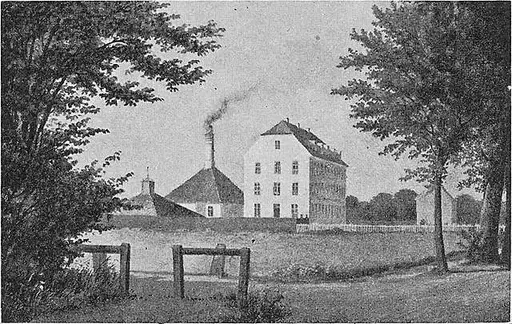
1853 – The Factory Is Founded
Bing & Grøndahl was established in Copenhagen in 1853 by sculptor Frederik Vilhelm Grøndahl together with the brothers Meyer Hermann Bing and Jacob Herman Bing.
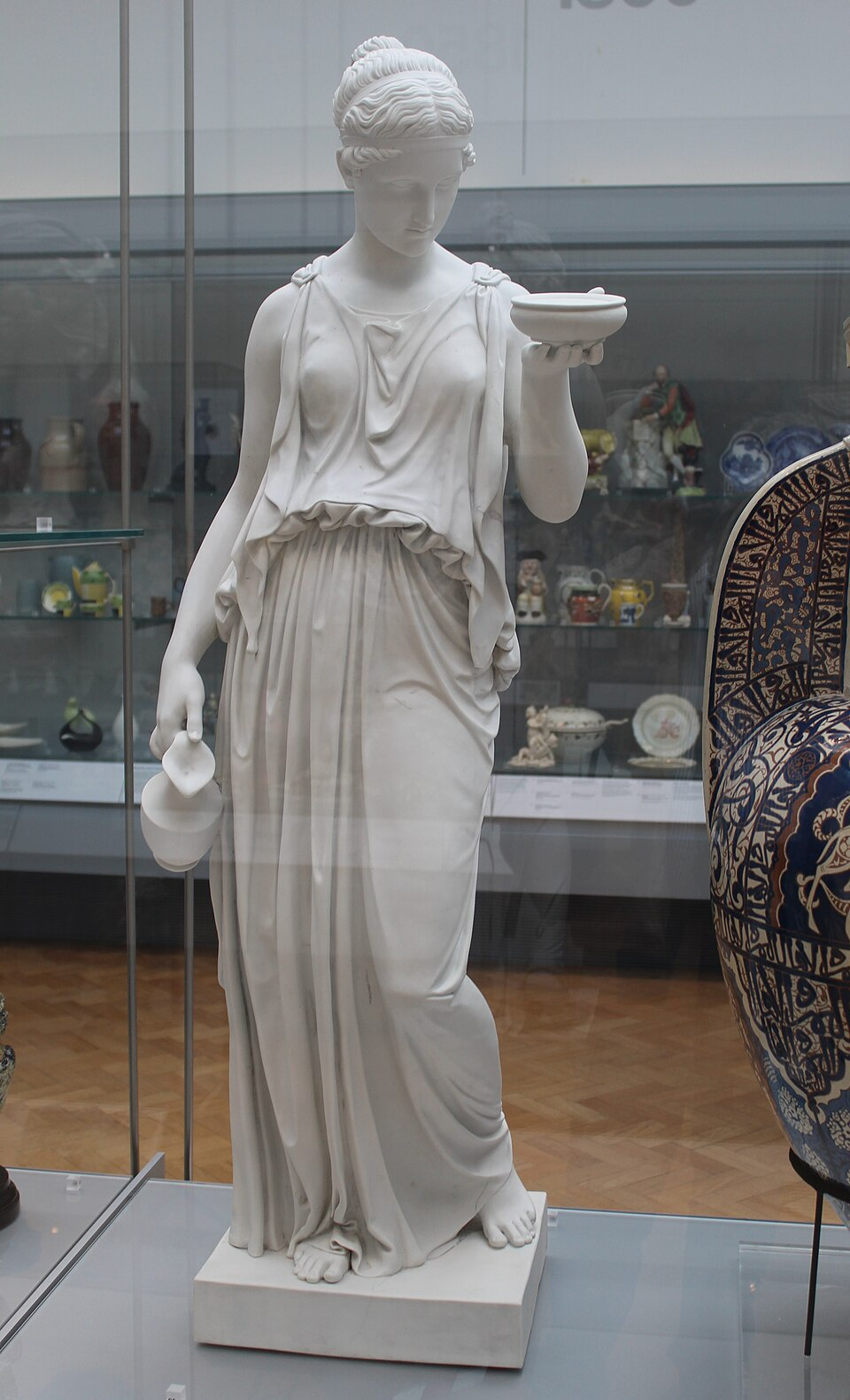
Grøndahl initially proposed a factory specialising in figures and reliefs made from unglazed porcelain, known as biscuit porcelain. Among the inspirations were sculptural works associated with Denmark’s celebrated Neoclassical artist Bertel Thorvaldsen.
The project quickly developed into a wider porcelain enterprise producing both artistic and functional objects.
Biscuit Porcelain and Neoclassical Sculpture
Biscuit porcelain was especially suitable for sculptural reproduction because its unglazed white surface could visually resemble fine marble.
Large and small sculptural forms therefore became an important part of early Bing & Grøndahl production.
From Factory Porcelain to Danish Art Porcelain
During the late nineteenth century Bing & Grøndahl developed an increasingly distinctive artistic identity. Natural forms, birds, animals, landscapes and atmospheric colours became important elements of the factory’s visual language.
Underglaze decoration was especially influential because it allowed muted colours to appear beneath the transparent glaze, creating the soft blue and grey tones now strongly associated with Danish art porcelain.
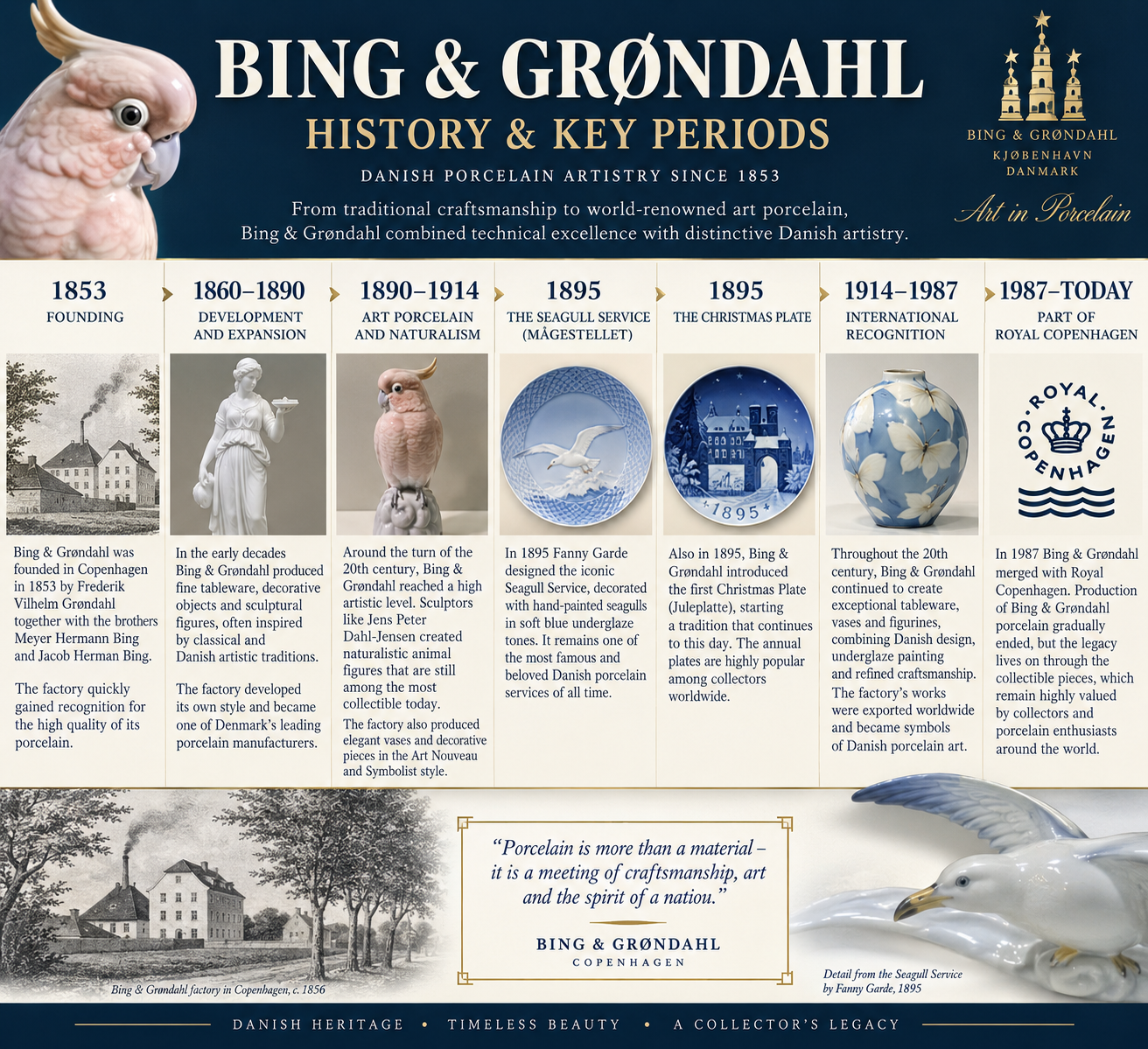
1987 – Merger with Royal Copenhagen
In 1987 Bing & Grøndahl merged with its historic Danish competitor
Royal Copenhagen
,
bringing together Denmark’s two most internationally recognised historic porcelain traditions.
After the merger, a number of former Bing & Grøndahl designs continued within the Royal Copenhagen organisation. The B&G annual collectible tradition also continued, which means collectors may encounter later examples connected with historic Bing & Grøndahl production.
The two manufacturers should nevertheless be identified separately. Historic Bing & Grøndahl pieces are associated with B&G initials and the Three Towers trademark, while Royal Copenhagen is best known for its Three Blue Waves. For detailed Royal Copenhagen marks, dating systems and model numbers, use the dedicated Royal Copenhagen guide above.
Artistic Porcelain
Bing & Grøndahl Art Porcelain and Underglaze Decoration
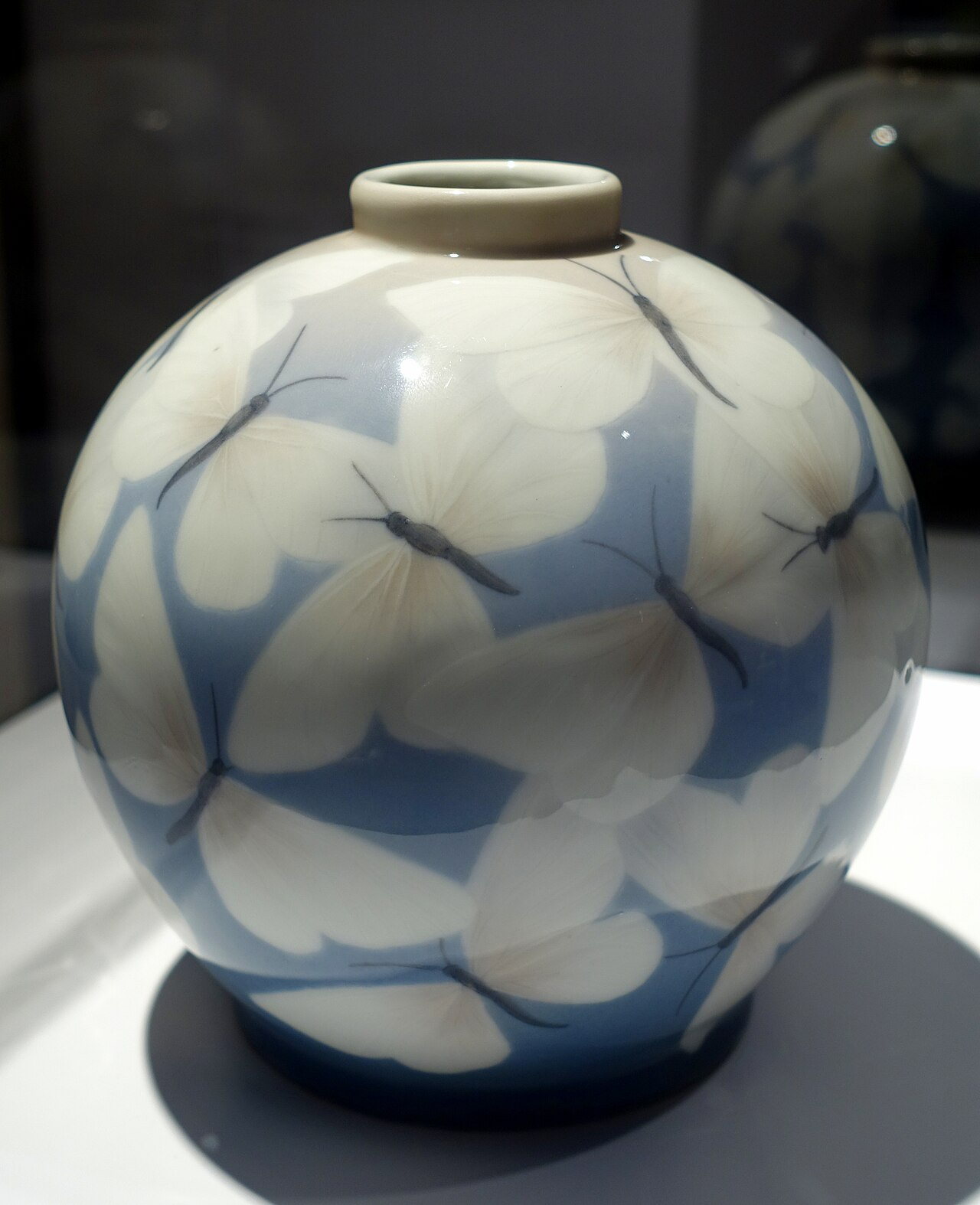
Bing & Grøndahl’s artistic reputation was built not only on figurines but also on vases, bowls and decorative objects that explored natural forms, subtle glazes and underglaze colour.
Fanny Garde and Effie Hegermann-Lindencrone
Two of the most important artists connected with the development of Bing & Grøndahl underglaze porcelain were Fanny Garde and Effie Hegermann-Lindencrone.
Both joined the factory in 1886 and worked closely together for decades. Their experimentation with natural motifs, relief decoration, glazing and painted surfaces helped establish a sophisticated artistic character that was distinctly Danish.
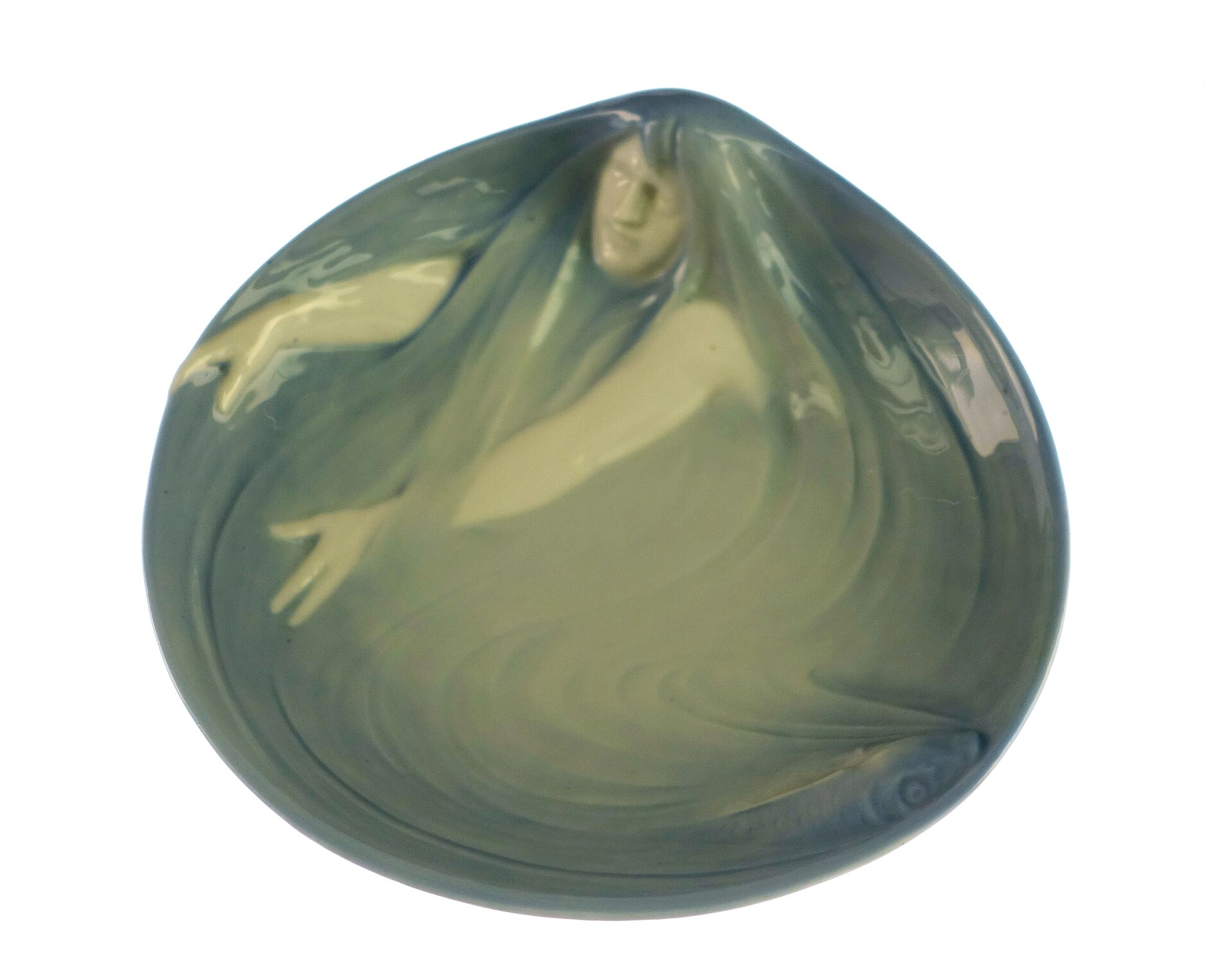
Hegermann-Lindencrone became particularly admired for technically complex works incorporating plants, flowers and forms inspired by marine life.
Artistic Objects Beyond Tableware
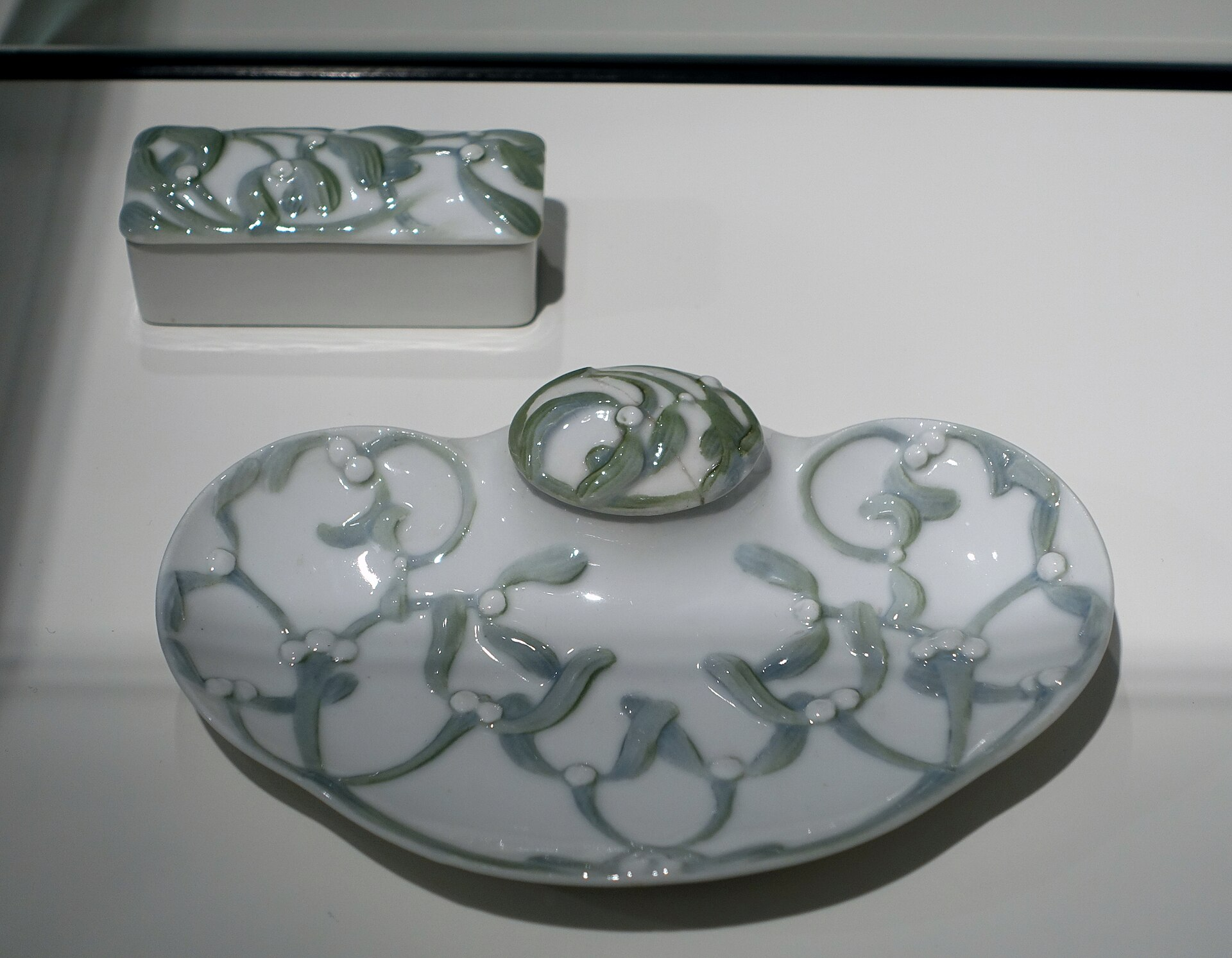
Bing & Grøndahl artist production was not limited to traditional services or figurines. Designers also created desk accessories, boxes, decorative dishes and sculptural vessels.
For a wider overview of materials, factories and identification principles, see our
complete Guide to Antique Porcelain
.
Marks & Backstamps
Bing & Grøndahl Porcelain Marks – How to Read the B&G Backstamp
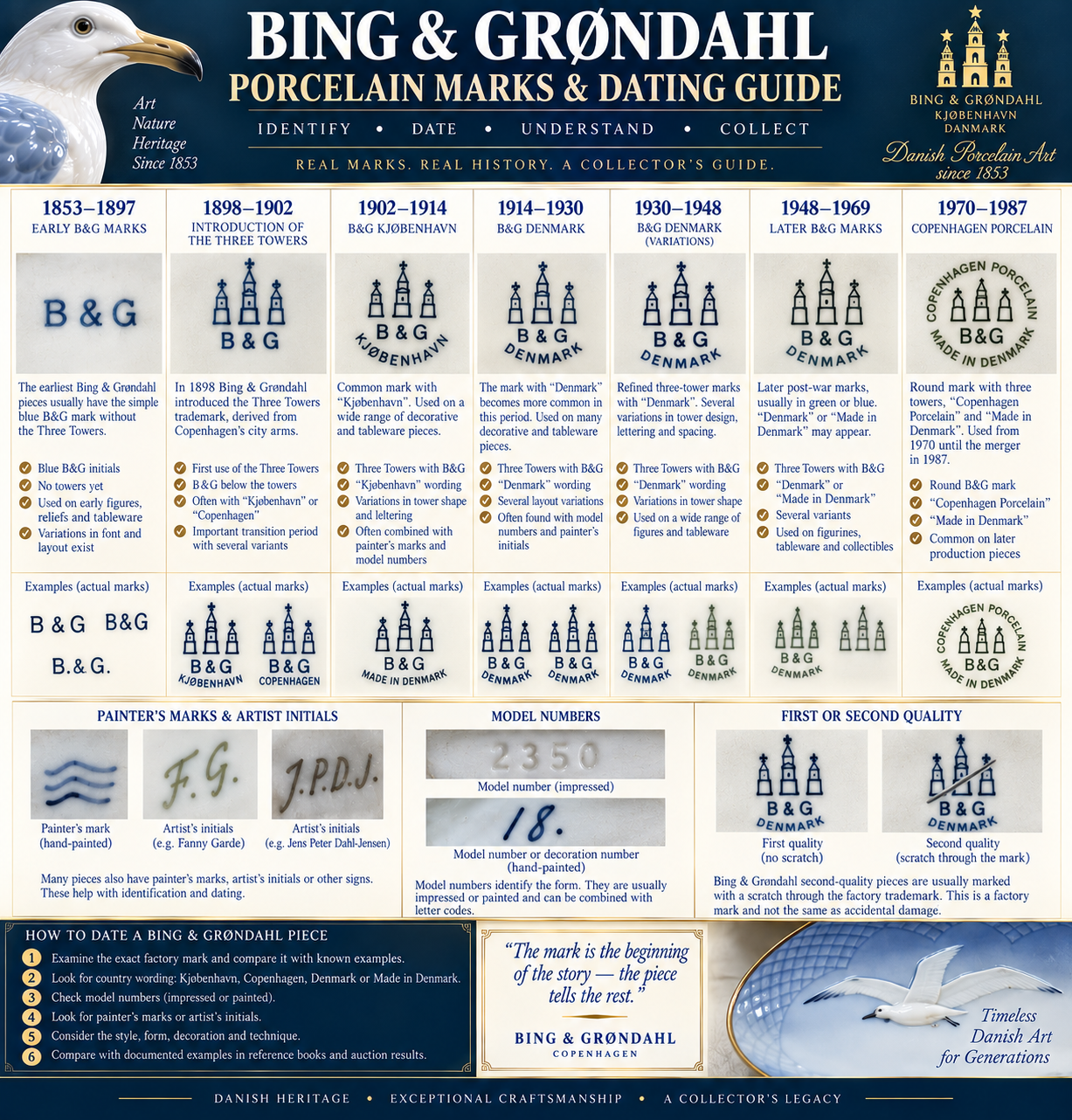
Bing & Grøndahl porcelain marks are among the most useful tools for estimating a production period.
The most important distinction is between the early blue B&G initials and the later Three Towers trademark.
Before 1898 the factory mark generally consisted of B&G initials in blue. In 1898 Bing & Grøndahl adopted the Three Towers derived from the heraldic imagery of Copenhagen.
Bing & Grøndahl Marks by Period
| Period | Typical Mark | Useful Dating Clue |
|---|---|---|
| 1853–1897 | Blue B&G initials | No Three Towers. |
| 1898–1899 | Three Towers, B&G, Copenhagen, Danish China Works | Early use of the Three Towers. |
| 1899–1902 | Three Towers, B&G, Kjøbenhavn, Danish China Works | Kjøbenhavn wording appears. |
| 1902–1914 | Three Towers, B&G, Kjøbenhavn, Made in Denmark | Blue B&G may accompany the green towers. |
| 1914–1915 | Kjøbenhavn / Copenhagen transitional wording | Short overlapping transition. |
| 1915–1947 | Three Towers, B&G, Kjøbenhavn, Danmark | Blue B&G continued through this period. |
| 1948–1951 | Green Three Towers, B&G, Kjøbenhavn, Danmark | B&G now appears in green. |
| 1952–1965 | Three Towers with Kjøbenhavn and Made in Denmark variants | Exact typography narrows the period further. |
| 1966–1969 | Three Towers, B&G, Kjøbenhavn, Denmark | English-language country wording. |
| 1970–1982 | Round Three Towers mark, Copenhagen Porcelain, Made in Denmark | Distinctive modern circular backstamp. |
| 1983–1987 | Later Copenhagen Porcelain / Bing & Grøndahl wording | Final pre-merger B&G production. |
| After 1987 | Royal Copenhagen marks on many continued designs; B&G marks retained for annual collectibles | A historic B&G model can therefore exist with a later Royal Copenhagen mark. |
Bing & Grøndahl or Royal Copenhagen?
Do not confuse the Bing & Grøndahl Three Towers trademark with the Three Blue Waves used by Royal Copenhagen. If the base carries three painted blue wavy lines rather than B&G initials or the Three Towers, continue with our
Royal Copenhagen identification guide
.
Collector warning:
a Three Towers mark does not automatically prove authenticity or a specific production year. Copied marks, later production and long-running models make it essential to examine the entire object.
For the general principles behind factory marks, backstamps and secondary symbols, see our
Porcelain Marks Identification Guide
.
Bing & Grøndahl Model Numbers, Painter Marks and Artist Initials
Many B&G objects carry additional markings beyond the main factory backstamp. These can be extremely useful when identifying the exact model or decoration.
| Marking | Possible Meaning | Collector Use |
|---|---|---|
| Impressed Number | Model or form reference | Helps identify the exact object. |
| Painted Number | Decoration or internal production reference | Do not automatically interpret it as a date. |
| Painter Mark | Individual decorator or workshop reference | Can help identify specialised decoration. |
| Artist Initials | May identify an artist or modeller | Only use an attribution when supported by documented references. |
Do not assume every number is a date.
Model, decoration and production numbers are far more common than literal manufacturing years.
Dating
How to Date Bing & Grøndahl Porcelain
The safest approach is to combine several independent clues rather than relying on a single mark chart.
B&G DATING FORMULA
exact backstamp + country wording + model number + artist + form + decoration + manufacturing technique + documented comparison
- Photograph the complete underside.
- Identify whether the mark is early B&G or Three Towers.
- Record wording such as Kjøbenhavn, Copenhagen, Danmark, Denmark or Made in Denmark.
- Record all impressed and painted numbers.
- Look for painter or artist marks.
- Compare the form and decoration with documented examples.
- Confirm that condition, glaze and manufacturing technique are consistent with the proposed period.
The same method is explained more broadly in our
complete guide to dating antique porcelain
.
First Quality vs. Second Quality Bing & Grøndahl
Quality classification is another important collector clue.
Bing & Grøndahl second-quality porcelain is generally identified by a deliberate factory scratch through the trademark. This should not be confused with accidental scratches elsewhere on the base.
| Quality | Factory Clue | Collector Effect |
|---|---|---|
| First Quality | No deliberate quality scratch through the factory trademark | Generally preferred when all other factors are equal. |
| Second Quality | Factory scratch through the B&G trademark | Usually less desirable than an otherwise identical first-quality example. |
Second quality does not necessarily mean that the object is damaged today. It indicates that the piece did not meet the factory’s first-quality standard when it was graded.
Figurines & Animals
Bing & Grøndahl Figurines and Animal Models
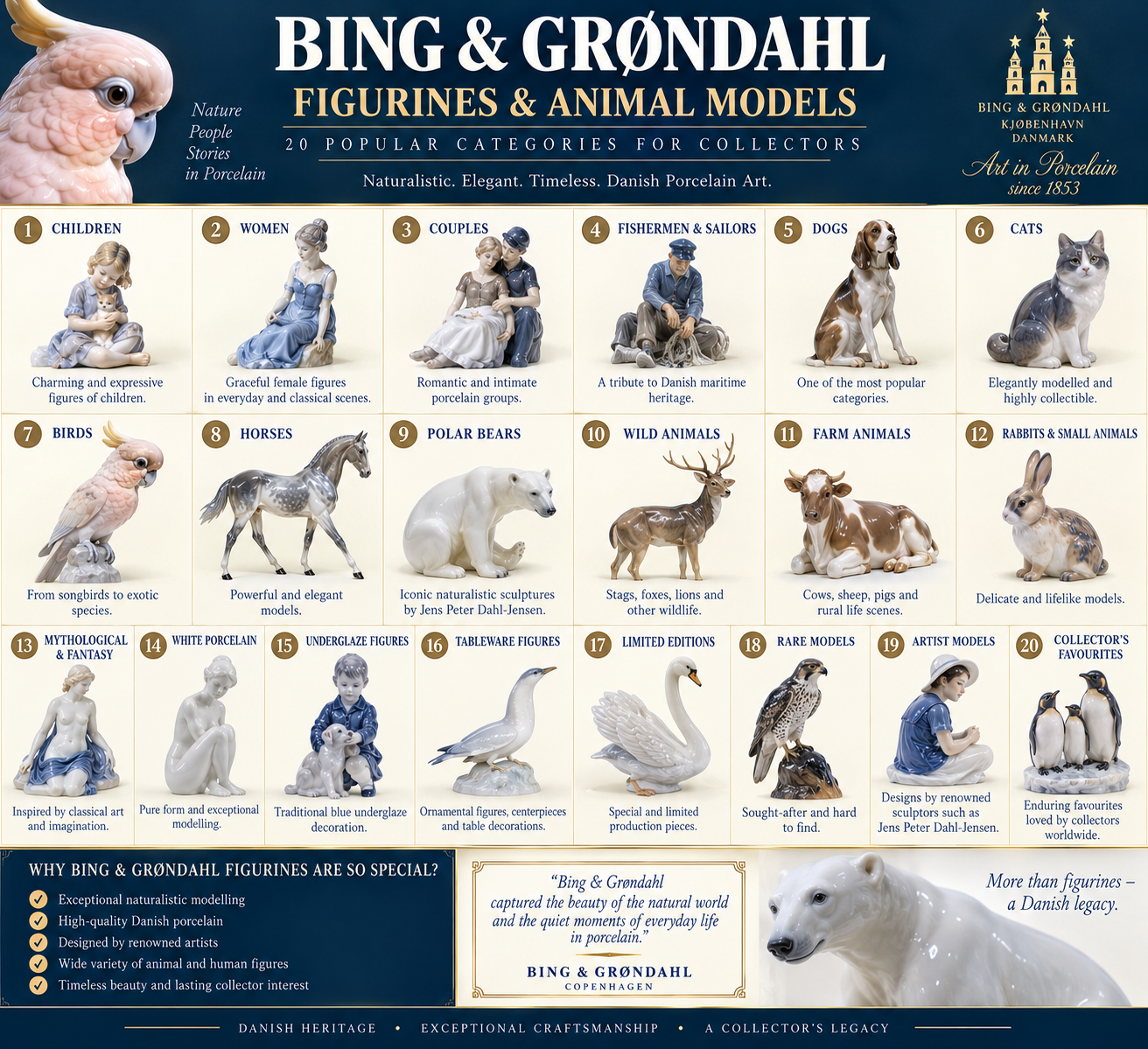
Naturalistic figures became one of Bing & Grøndahl’s most recognisable collecting areas.
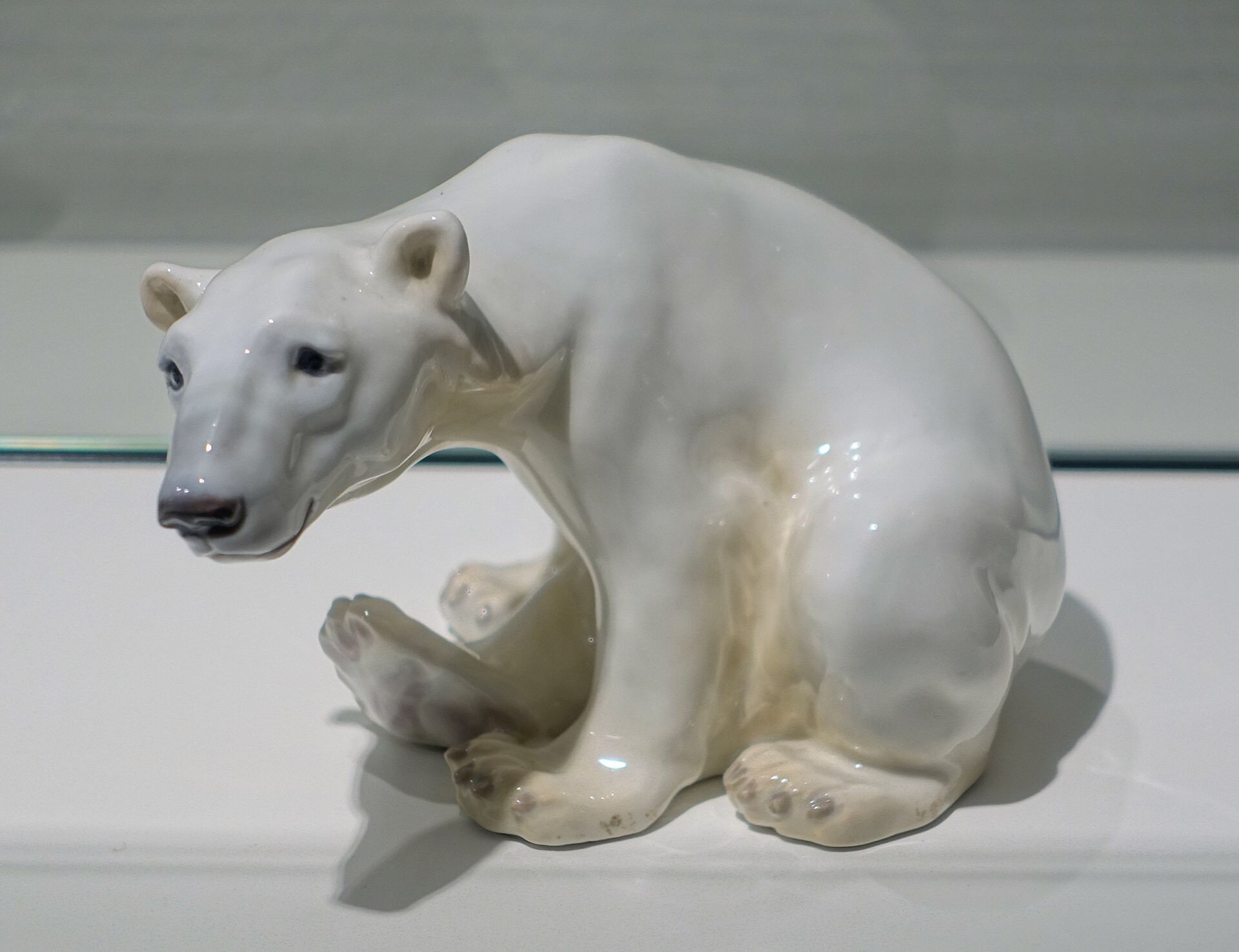
Subjects include children, women, couples, fishermen, sailors, birds, dogs, cats, horses, polar bears and many other animals.
Jens Peter Dahl-Jensen
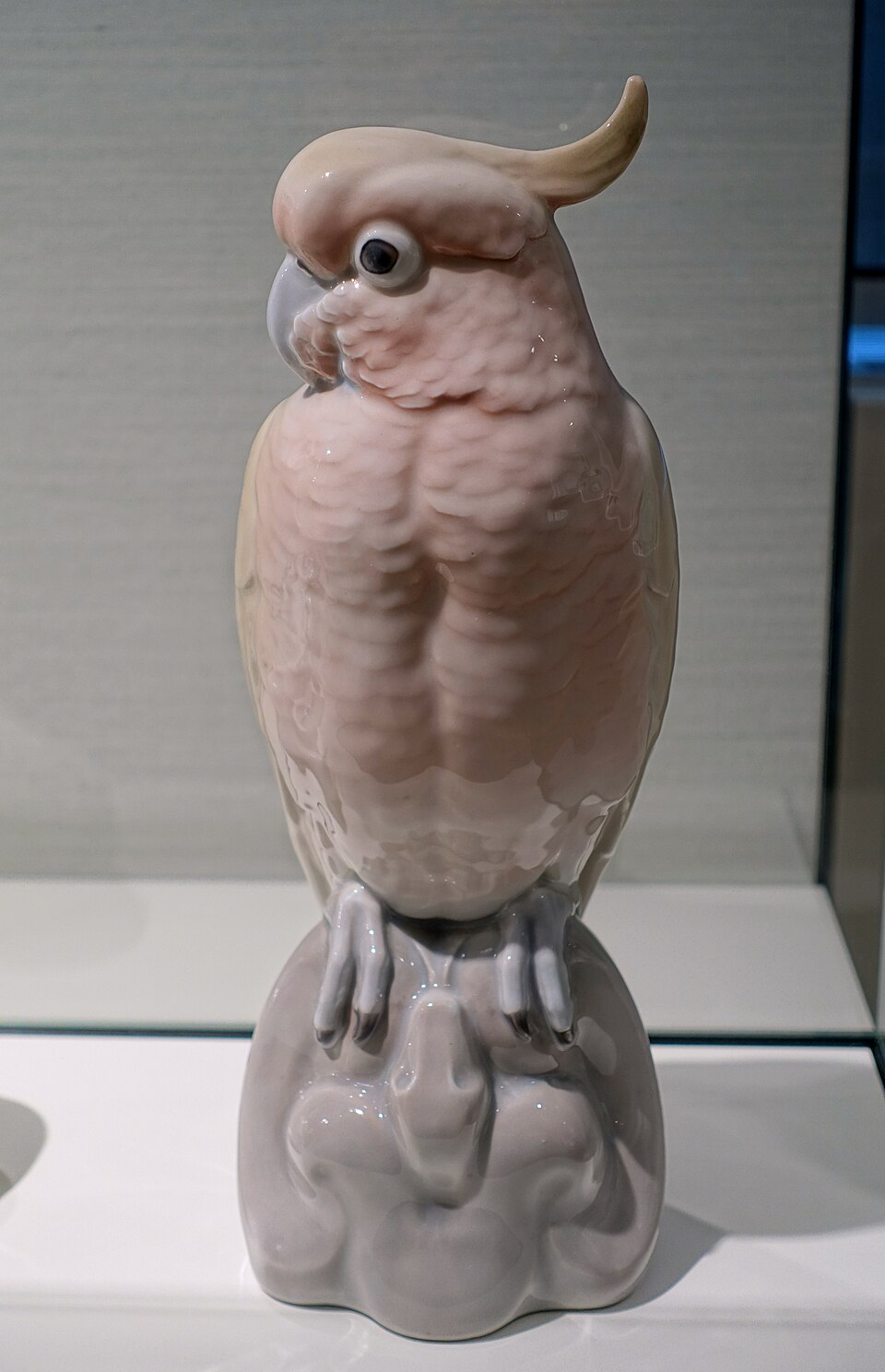
One of the artists most closely associated with Bing & Grøndahl animal sculpture is Jens Peter Dahl-Jensen.
He worked at Bing & Grøndahl from 1897 to 1917 and became especially well known for naturalistic animal statuettes decorated in underglaze colours.
What to Check on a Bing & Grøndahl Figurine
- model number;
- exact factory mark;
- original modeller;
- size and pose;
- first or second quality;
- colour and decoration;
- chips to ears, tails, wings, fingers or foliage;
- restoration or repainting;
- original box or documentation.
Iconic Pattern
Bing & Grøndahl Seagull Service – Mågestellet
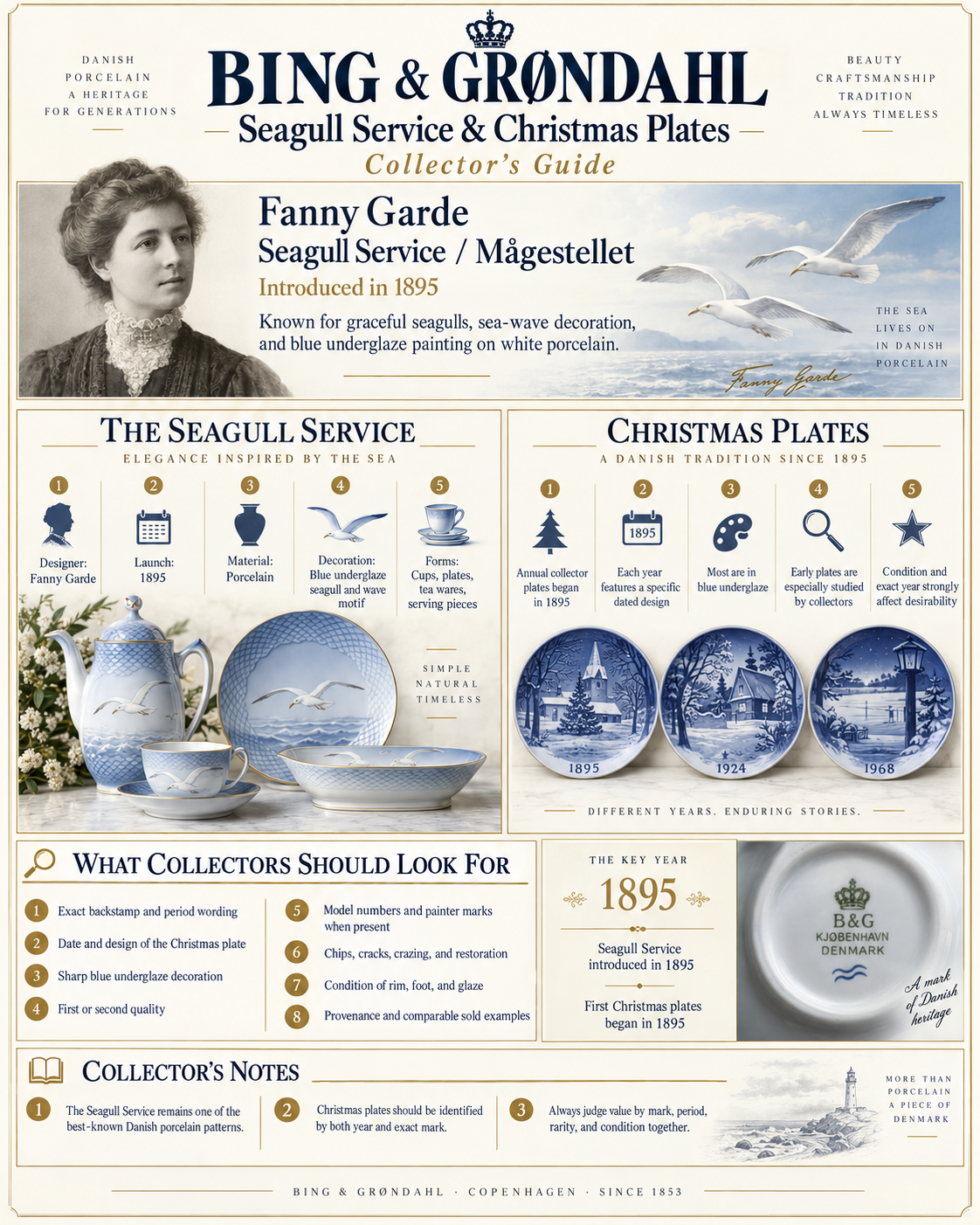
The Seagull Service, or Mågestellet, is probably the most famous tableware design associated with Bing & Grøndahl.
Fanny Garde created the service in 1895. Its visual identity combines flying seagulls, soft blue underglaze colour and a characteristic relief pattern.
The service developed into an exceptionally extensive range. Historical research records more than 700 different forms, available in versions with or without a gold rim.
| Feature | Collector Clue |
|---|---|
| Seagull Motif | Naturalistically painted flying gulls. |
| Underglaze Colour | Soft blue tonal variation beneath the glaze. |
| Relief Border | Characteristic moulded surface pattern. |
| Gold Rim | Some versions were gilded; others were not. |
| Factory Mark | Helps estimate when an individual service piece was produced. |
| Model / Form | The range includes plates, cups, coffee and tea pieces, bowls, tureens and numerous serving forms. |
Annual Collectibles
Bing & Grøndahl Christmas Plates
Bing & Grøndahl has a special place in the history of annual collector porcelain.
In 1895 artist Frans August Hallin brought a relief-based production technique to Bing & Grøndahl. Harald Bing developed the idea of using this method for an annual plate with a different subject every year.
The result was the first annual Bing & Grøndahl Christmas Plate, Behind the Frozen Window, issued in 1895.
The First Bing & Grøndahl Christmas Plates
| Year | Title | Designer |
|---|---|---|
| 1895 | Behind the Frozen Window | F. A. Hallin |
| 1896 | New Moon Over Snow-covered Trees | F. A. Hallin |
| 1897 | Christmas Meal of the Sparrows | F. A. Hallin |
| 1898 | Christmas Roses and Christmas Star | Fanny Garde |
| 1899 | The Crows Enjoying Christmas | Jens Peter Dahl-Jensen |
| 1900 | Church Bells Chiming in Christmas | Jens Peter Dahl-Jensen |
Are Old Bing & Grøndahl Christmas Plates Valuable?
Some early Christmas Plates and scarce years attract strong collector interest, but age alone does not make every plate valuable.
Later plates were produced in much greater quantities and can often remain affordable despite being attractive collectible objects.
The strongest value indicators are:
- exact year and design;
- rarity;
- correct factory mark;
- first-quality production;
- excellent condition;
- original packaging or documentation;
- actual recent sold comparisons.
Collector Value
What Determines the Value of Bing & Grøndahl Porcelain?
There is no single price guide that can reliably value every Bing & Grøndahl object.
Two pieces bearing similar marks can have very different market values because the model, artist, rarity, decoration, quality grade and condition differ.
| Factor | Why It Matters |
|---|---|
| Exact Mark | Helps determine the production period. |
| Model Number | Identifies the exact model or form. |
| Artist / Modeller | Documented artists can significantly influence collector interest. |
| Production Period | Early or artistically important production may be scarcer. |
| Rarity | Rare models and decorative variants can attract stronger demand. |
| Quality Grade | First-quality examples are generally preferred. |
| Decoration | Artist decoration and exceptional underglaze work may add desirability. |
| Condition | Chips, cracks, losses and heavy wear usually reduce value. |
| Restoration | Repaired or repainted areas can materially affect collector interest. |
| Provenance | Documented history can strengthen confidence and significance. |
| Comparable Sold Examples | Completed sales show what comparable buyers actually paid. |
Do not value porcelain from asking prices alone.
Compare completed sales for the same model, production period, size, quality grade, decoration and condition whenever possible.
Collector Checklist
12 Steps for Examining Bing & Grøndahl Porcelain
| 1. Photograph the complete object | Front, back, sides and underside. |
| 2. Photograph the full mark | Do not crop country wording or secondary numbers. |
| 3. Record all numbers | Impressed, painted and handwritten. |
| 4. Measure the piece | Height, width, depth or diameter. |
| 5. Identify the model | Compare model number, shape and pose. |
| 6. Research the artist | Verify claimed artist or modeller attribution. |
| 7. Check quality grade | Look for a factory scratch through the trademark. |
| 8. Examine decoration | Underglaze colour, painting and gilding. |
| 9. Inspect fragile details | Wings, tails, ears, fingers, handles and applied elements. |
| 10. Look for restoration | Glue, filler, overspray and repainting. |
| 11. Preserve provenance | Boxes, receipts, labels and collection records. |
| 12. Compare completed sales | Use genuinely comparable pieces. |
The Old Antiquarian
Do You Have Bing & Grøndahl Porcelain?
Send clear photographs of the complete object, underside, B&G mark, model numbers and any signatures. For figurines, include the exact height and photographs from several angles.
Frequently Asked Questions
Bing & Grøndahl Porcelain FAQ
When was Bing & Grøndahl founded?
Bing & Grøndahl was founded in Copenhagen in 1853 by Frederik Vilhelm Grøndahl and the brothers Meyer Hermann Bing and Jacob Herman Bing.
What was Bing & Grøndahl originally created to produce?
The original plan focused on biscuit porcelain figures and reliefs, although production quickly expanded into a broader range of porcelain.
What is the Bing & Grøndahl Three Towers mark?
The Three Towers are the famous Bing & Grøndahl factory trademark derived from Copenhagen heraldry. The trademark was introduced in 1898.
Did early Bing & Grøndahl porcelain have Three Towers?
Not necessarily. Pieces made before 1898 commonly carry the simpler blue B&G initials.
What does Kjøbenhavn mean on B&G porcelain?
Kjøbenhavn is an older Danish spelling of Copenhagen. Its presence can help narrow the approximate production period when compared with the complete backstamp.
What do numbers on Bing & Grøndahl porcelain mean?
They may identify the model, form, decoration or another production reference. They should not automatically be read as a production year.
How is second-quality Bing & Grøndahl porcelain marked?
Second-quality B&G porcelain is generally identified by a deliberate factory scratch through the trademark.
Who designed the Seagull Service?
Fanny Garde designed the Seagull Service, or Mågestellet, for Bing & Grøndahl in 1895.
How many pieces existed in the Seagull Service?
Historical research records more than 700 different forms, available in versions with or without a gold rim.
When was the first Bing & Grøndahl Christmas Plate produced?
The first annual Christmas Plate was issued in 1895 and was titled Behind the Frozen Window.
Was Bing & Grøndahl the first maker of annual Christmas Plates?
Bing & Grøndahl is credited with launching the first annual Christmas Plate series in the form familiar to collectors today in 1895.
Who was Jens Peter Dahl-Jensen?
Jens Peter Dahl-Jensen was a Danish sculptor employed by Bing & Grøndahl from 1897 to 1917. He became particularly known for naturalistic underglaze-painted animal figures.
When did Bing & Grøndahl merge with Royal Copenhagen?
Bing & Grøndahl and Royal Copenhagen merged in 1987.
What is the difference between Bing & Grøndahl and Royal Copenhagen?
They were historically separate Copenhagen porcelain manufacturers. Bing & Grøndahl is associated with B&G initials and the Three Towers trademark, while Royal Copenhagen is best known for the Three Blue Waves. The companies merged in 1987. For detailed Royal Copenhagen identification, see our
Royal Copenhagen Porcelain guide
.
Is old Bing & Grøndahl porcelain valuable?
Some B&G pieces can be highly collectible, particularly rare models, early production, artist-designed works and exceptional examples in excellent original condition. More common later pieces may be considerably more affordable.
How do I value Bing & Grøndahl porcelain?
Compare the exact model, production period, artist, rarity, quality grade, decoration, condition, restoration, provenance and recent comparable completed sales.
Continue Exploring
Related Porcelain Guides
To understand where Bing & Grøndahl fits within Denmark’s wider ceramic tradition, read
What Is Danish Porcelain?
.
If your piece carries the Three Blue Waves, a Royal Copenhagen crown mark or Royal Copenhagen wording, continue with
Royal Copenhagen Porcelain: Marks, Dating, Models & Identification
.
For a broader overview of manufacturers, materials and collecting principles, continue with our
Guide to Antique Porcelain
.
If you are researching an unfamiliar backstamp, read our
Porcelain Marks Identification Guide
.
For general chronological research, see
How to Date Antique Porcelain
.
Sources & Further Research
Sources and Reference Material
Historical chronology, artist information, mark dating and collector-plate information in this guide were checked against Danish biographical references, museum research, Royal Copenhagen archives and specialist Danish porcelain references.
-
Dansk Biografisk Leksikon / Lex – F. V. Grøndahl
-
Lex / Designmuseum Danmark – Fanny Garde
-
Lex – Effie Hegermann-Lindencrone
-
Lex – Jens Peter Dahl-Jensen
-
Royal Copenhagen – History of the Christmas Plate
-
Royal Copenhagen – Bing & Grøndahl Collectibles Timeline
-
Danish Porcelain House – Bing & Grøndahl Mark Dating
-
Danish Porcelain House – Bing & Grøndahl Second Quality
Research note:
Bing & Grøndahl backstamps changed repeatedly and some factory-mark transitions overlap. Mark charts are therefore best used as chronological reference tools rather than automatic proof of authenticity.
About the Author
The Old Antiquarian
The Old Antiquarian combines more than 35 years of practical experience with antiques and collectibles with historical, museum and comparative research. When examining porcelain, we consider the manufacturer, exact mark, model, material, artist, decoration, craftsmanship, condition, restoration and provenance as interconnected evidence rather than relying on any single characteristic.
With Bing & Grøndahl, the mark begins the story — the object completes it.
The strongest identification comes when the exact B&G backstamp, model number, artist, form, decoration, quality grade, condition and documented history all support the same attribution and production period.
Last Updated: September 2026
