
What Is Royal Albert Bone China?
Royal Albert Bone China: History, Marks, Patterns, Dating & Identification Guide
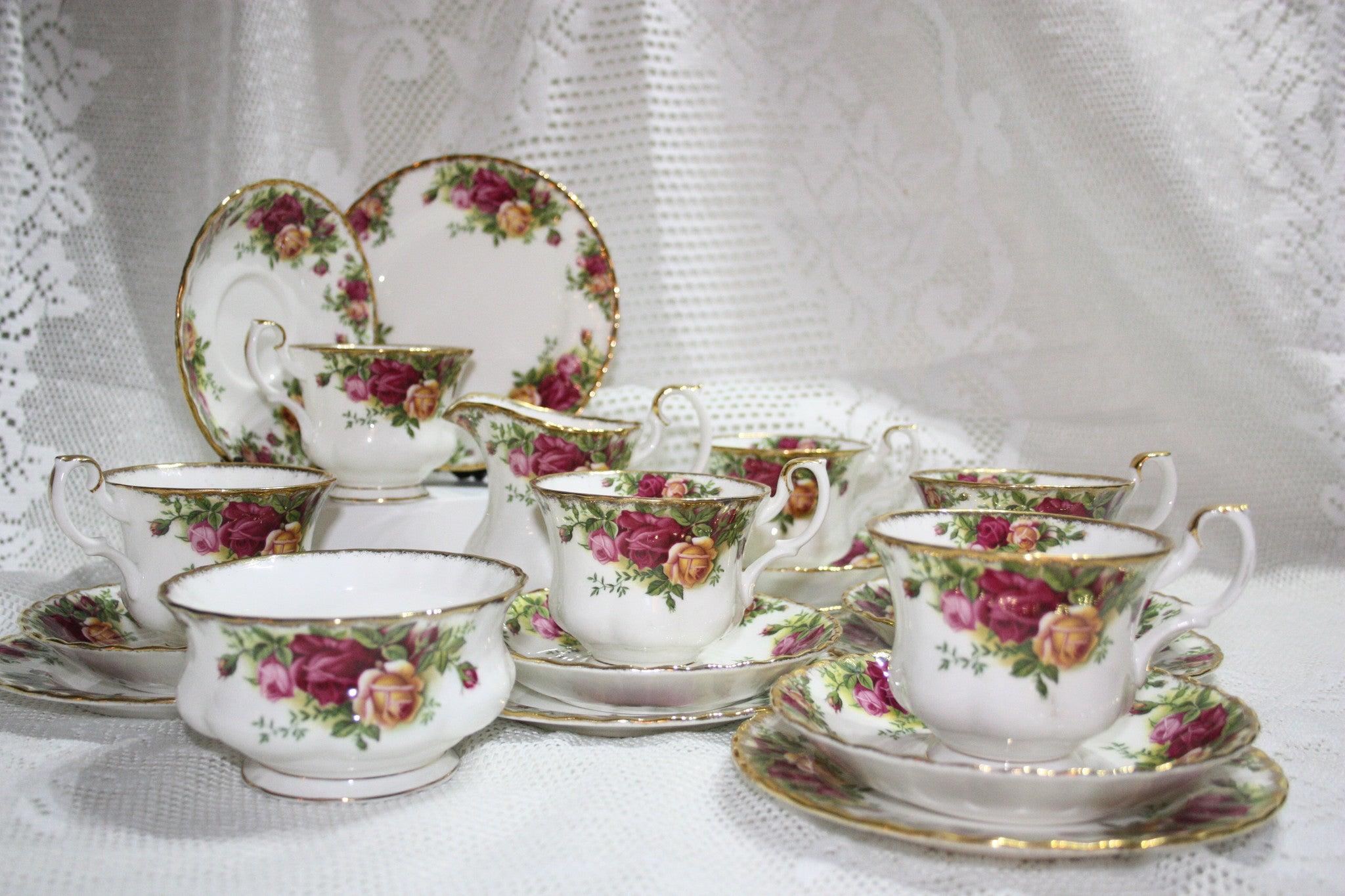
Royal Albert is one of the most recognisable names in English bone china, admired around the world for its romantic floral decoration, elegant tea services and distinctly British character. From delicate early twentieth-century patterns to the internationally famous Old Country Roses, Royal Albert china has become a major field of interest for collectors of vintage English ceramics.
But identifying an older Royal Albert piece is not simply a matter of finding the name on the base. Backstamps changed, patterns remained in production for different periods, shapes were reused, ownership evolved and manufacturing locations changed. A reliable identification therefore requires the same multi-clue approach used when identifying antique porcelain generally: mark, material, shape, decoration, pattern, production details, condition and historical consistency.
This collector’s guide explores the history of Royal Albert, its backstamps and marks, famous patterns, Old Country Roses, dating clues, authenticity, manufacturing origins and factors affecting value.
Royal Albert at a Glance
| Feature | Royal Albert |
|---|---|
| Country of origin | England |
| Ceramic tradition | English bone china |
| Historic production centre | Longton, Stoke-on-Trent, Staffordshire |
| Best known for | Tea services, floral patterns and fine bone china |
| Most famous pattern | Old Country Roses |
| Important identification clues | Backstamp, wording, pattern, shape, decoration and manufacturing origin |
| Collector interest | Vintage patterns, discontinued designs, complete services and unusual forms |
What Is Royal Albert?
Royal Albert belongs to the great tradition of British fine china associated with the Staffordshire Potteries. The name became particularly associated with elegant bone china tea and tableware, often decorated with roses, botanical motifs, gilding and richly coloured borders.
Understanding the material is important. Bone china is not simply another name for all porcelain. Its composition and visual qualities differ from many continental European hard-paste porcelains. If you are beginning your research, our broader Guide to Antique Porcelain provides useful background on porcelain traditions, manufacturers and identification.
The History of Royal Albert
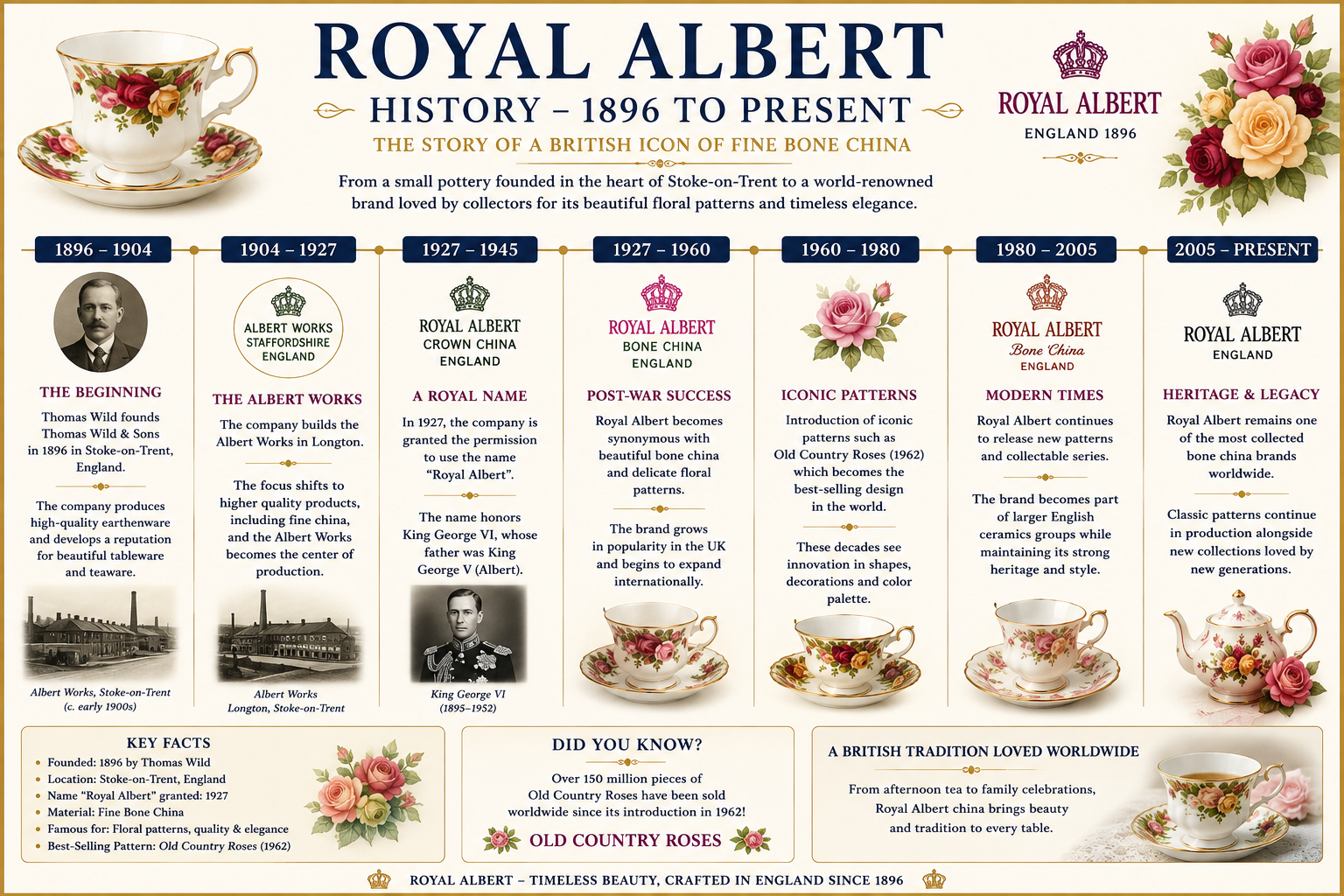
The history behind Royal Albert is closely connected with the development of the Staffordshire pottery industry around Stoke-on-Trent, one of the world’s most important historic centres of ceramic production.
The Albert Works at Longton became associated with Thomas Wild and the production of fine English china around the turn of the twentieth century. Over the following decades the Royal Albert name developed into an internationally recognised brand, particularly celebrated for floral tea services and traditional English designs.
Changes in company structure, branding and production are important to collectors because they can be reflected in the wording and appearance of Royal Albert backstamps.
Royal Albert History Timeline
| Period | Development | Why It Matters to Collectors |
|---|---|---|
| Late 19th century | Development of the Albert Works tradition in Longton | Provides the historical background to early production |
| Early 20th century | Expansion of fine china and tea ware production | Early marks and patterns can differ significantly from later Royal Albert |
| Interwar period | Growing range of decorative and floral patterns | Important period for vintage pattern research |
| Mid-20th century | Royal Albert becomes increasingly recognised internationally | Many highly collectible patterns belong to this era |
| 1960s onward | Old Country Roses becomes a defining Royal Albert design | Pattern variations and production periods become especially important |
| Late 20th century | Corporate and manufacturing changes | Backstamp wording and country of manufacture require closer attention |
| Modern production | Royal Albert continues as an internationally recognised tableware name | Modern pieces must not automatically be confused with older English production |
Why Royal Albert Became Famous
Royal Albert’s success was built around an instantly recognisable aesthetic: elegant forms, abundant flowers, rich colour and a sense of traditional English refinement. Tea drinking was central to the brand’s identity, which explains why collectors encounter so many cups, saucers, tea plates, milk jugs, sugar bowls and teapots.
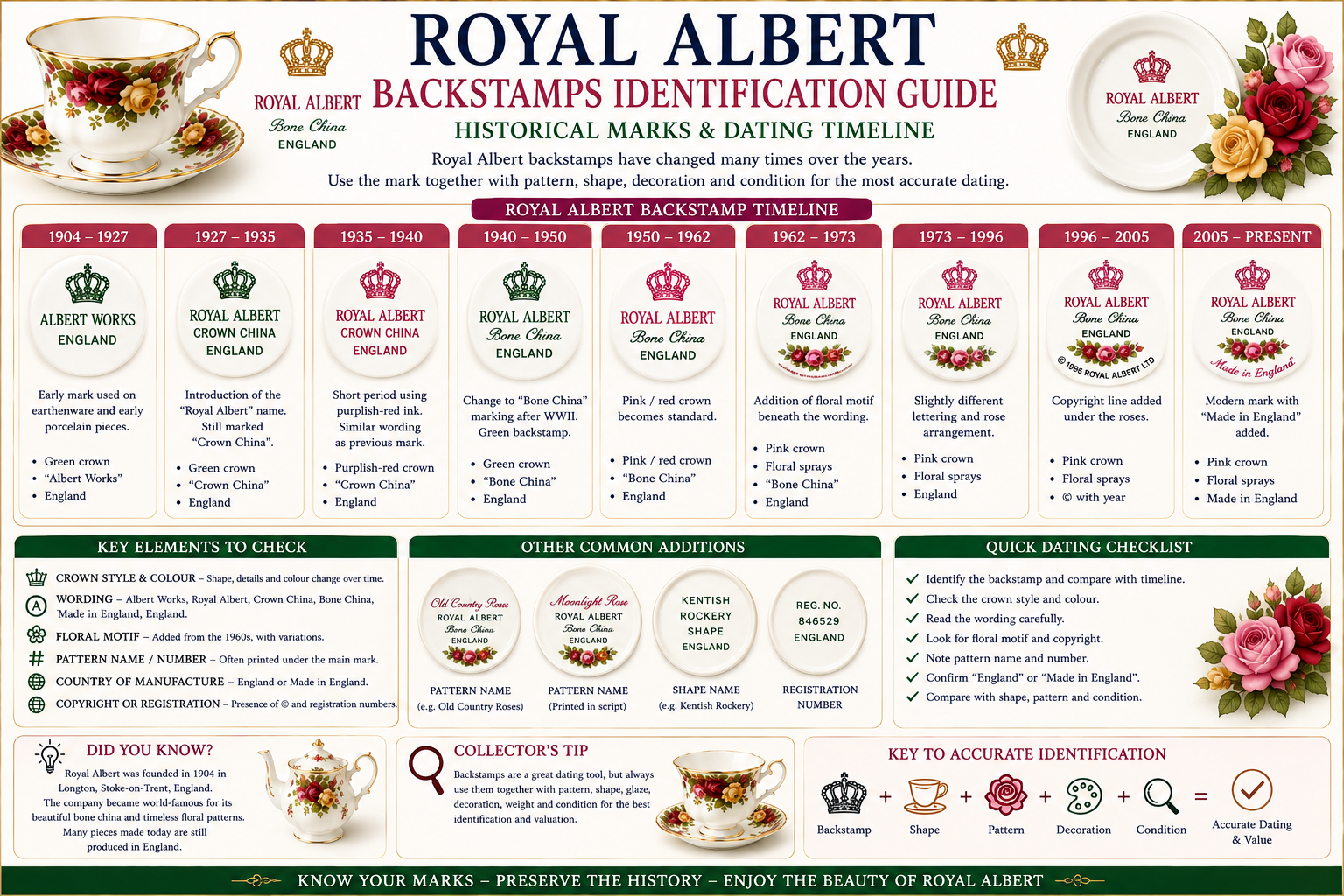
Royal Albert Marks and Backstamps
For collectors, the backstamp is usually the natural starting point. It may provide clues about the manufacturer, brand name, pattern, country of manufacture and approximate production period.
However, a Royal Albert mark should never be interpreted in isolation. This is a fundamental principle of porcelain identification. As explained in our guide to porcelain marks and backstamps, manufacturers frequently changed marks and wording over time, while marks themselves can also be copied or misunderstood.
A convincing identification compares the backstamp with the body, decoration, shape, pattern and manufacturing characteristics of the object.
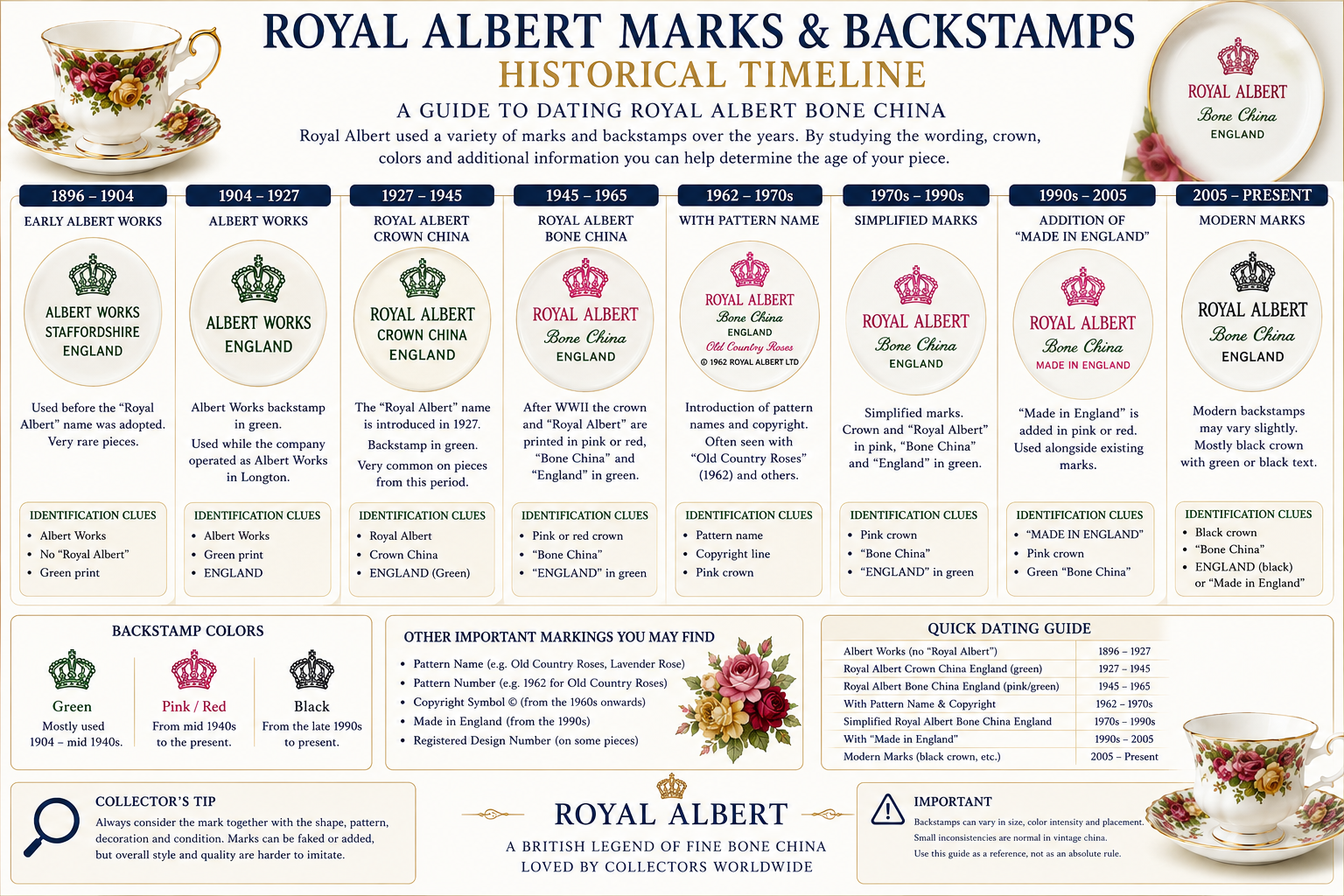
What to Look for on a Royal Albert Backstamp
| Backstamp Feature | What It May Reveal |
|---|---|
| Royal Albert name | Brand and period clues |
| Crown or decorative emblem | Variation of the factory backstamp |
| Bone China wording | Material and branding information |
| England / Made in England | Manufacturing-origin and dating evidence |
| Pattern name | Identification of the decorative design |
| Registration or pattern numbers | Potential pattern, design or production information |
| Additional company wording | Possible clue to corporate period |
How to Date Royal Albert China by Backstamps
Dating Royal Albert is best approached by identifying the exact version of the backstamp, rather than merely seeing the words “Royal Albert”.
Collectors should examine typography, crowns, floral devices, the arrangement of words, references to bone china, country-of-origin wording and any pattern or registration information.
This follows the same methodology used for dating antique porcelain: several independent characteristics should point toward the same period before a date is treated with confidence.
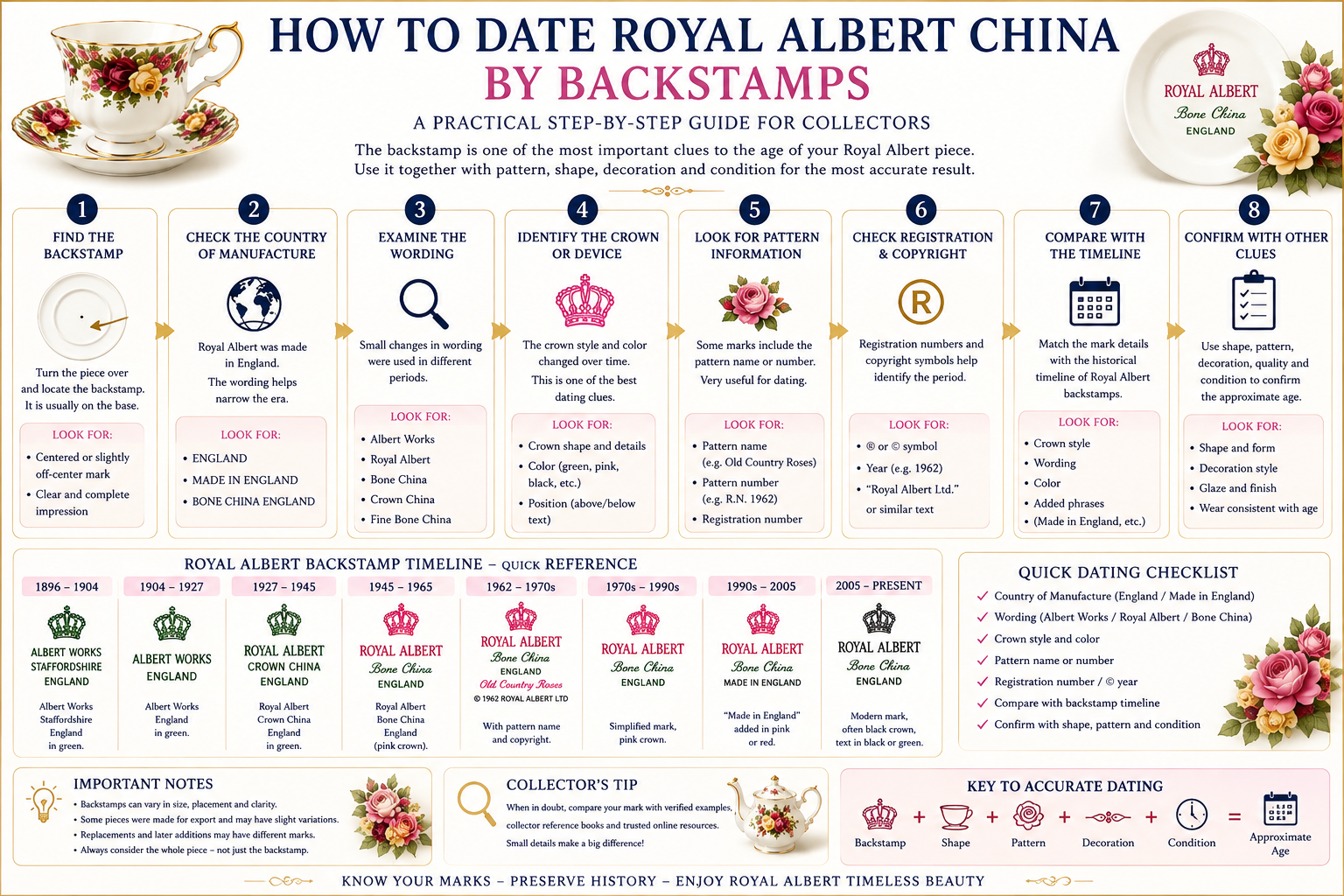
A Practical Royal Albert Dating Checklist
| Step | Examine | Question to Ask |
|---|---|---|
| 1 | Backstamp | Which exact Royal Albert mark is present? |
| 2 | Wording | Does it say England, Made in England or another country? |
| 3 | Material | Does the body correspond to fine bone china? |
| 4 | Pattern | Can the decoration be matched to a documented Royal Albert pattern? |
| 5 | Shape | Is the cup, teapot, plate or serving form consistent with the proposed period? |
| 6 | Numbers | Are pattern, registration or production numbers present? |
| 7 | Wear | Does the wear appear natural and consistent with use? |
| 8 | Condition | Are there repairs, cracks, staining or replacement components? |
| 9 | Cross-check | Do all clues support the same approximate date? |
Royal Albert Patterns
Patterns are among the most fascinating parts of collecting Royal Albert. The company produced a vast range of floral, botanical and decorative designs, and the desirability of individual patterns can vary considerably.
Pattern identification can also help with dating. A backstamp may indicate one period while the documented introduction and production history of a pattern provides another independent clue.
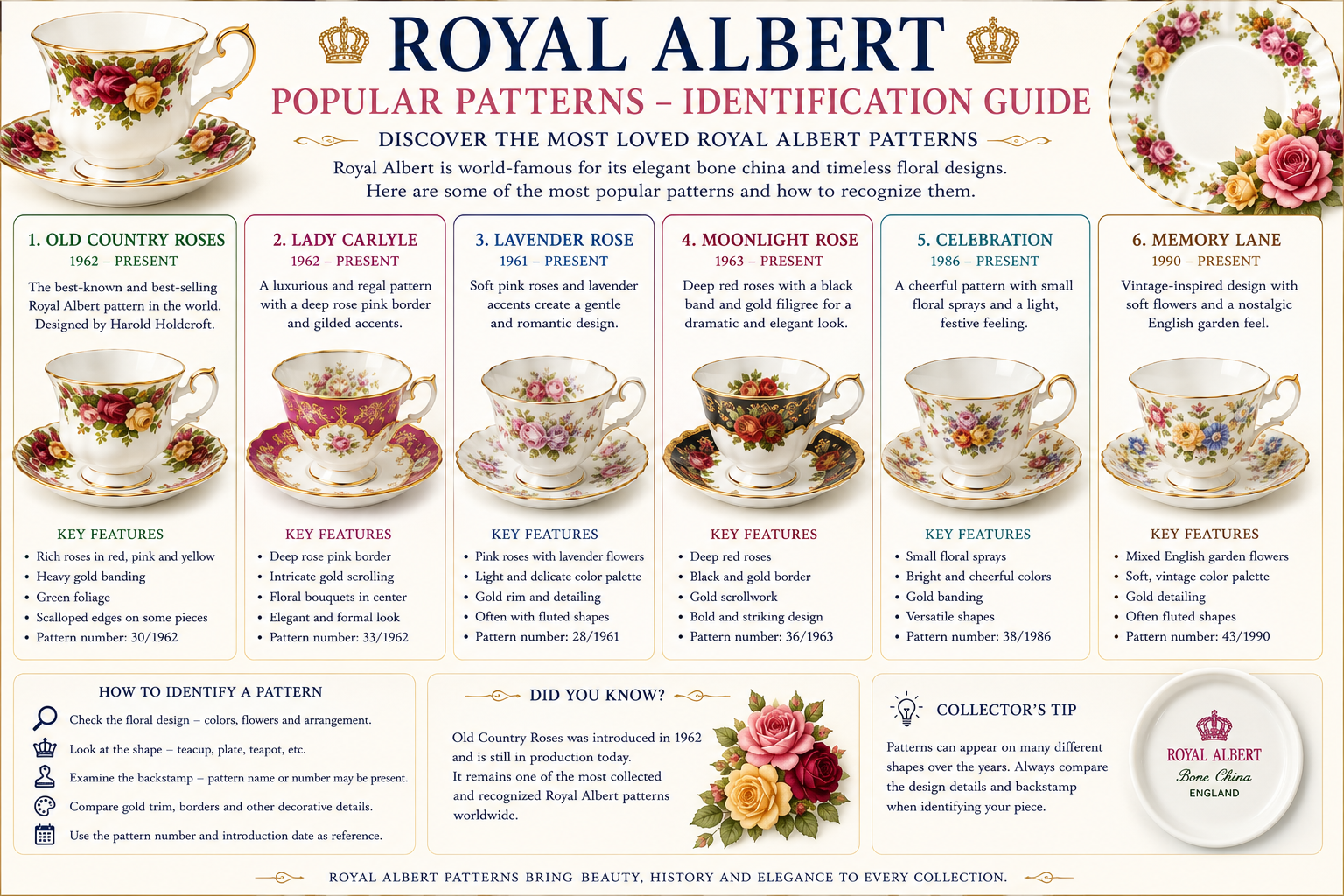
Well-Known Royal Albert Patterns
| Pattern | Typical Character | Collector Interest |
|---|---|---|
| Old Country Roses | Rich red, pink and yellow roses with gilded details | Iconic and internationally recognised |
| Lady Carlyle | Romantic floral decoration with elaborate borders | Popular with collectors of traditional Royal Albert |
| Lavender Rose | Delicate rose decoration in softer tones | Strong vintage appeal |
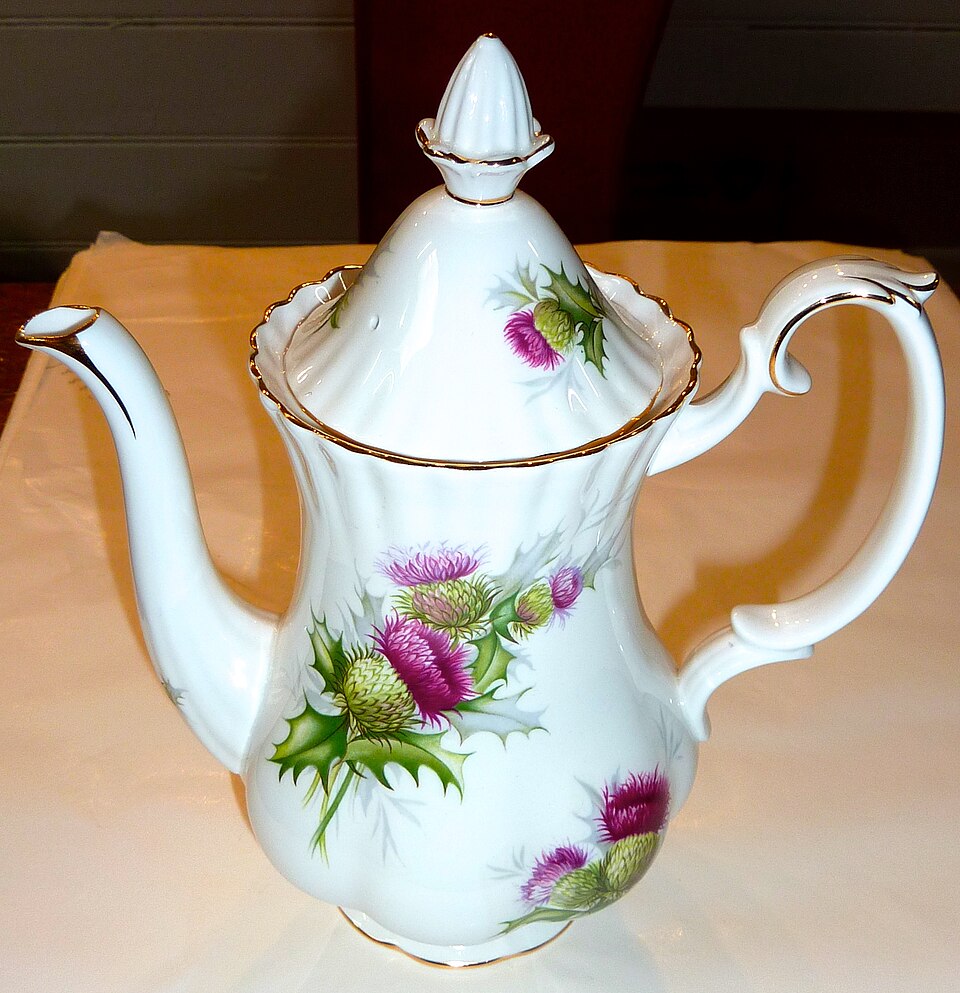
| Highland Thistle | Distinctive botanical decoration | Interesting to pattern specialists |
| Masquerade | Decorative mid-century character | Collectible vintage design |
| Beatrice | Traditional floral English china | Collected as individual pieces and tea sets |
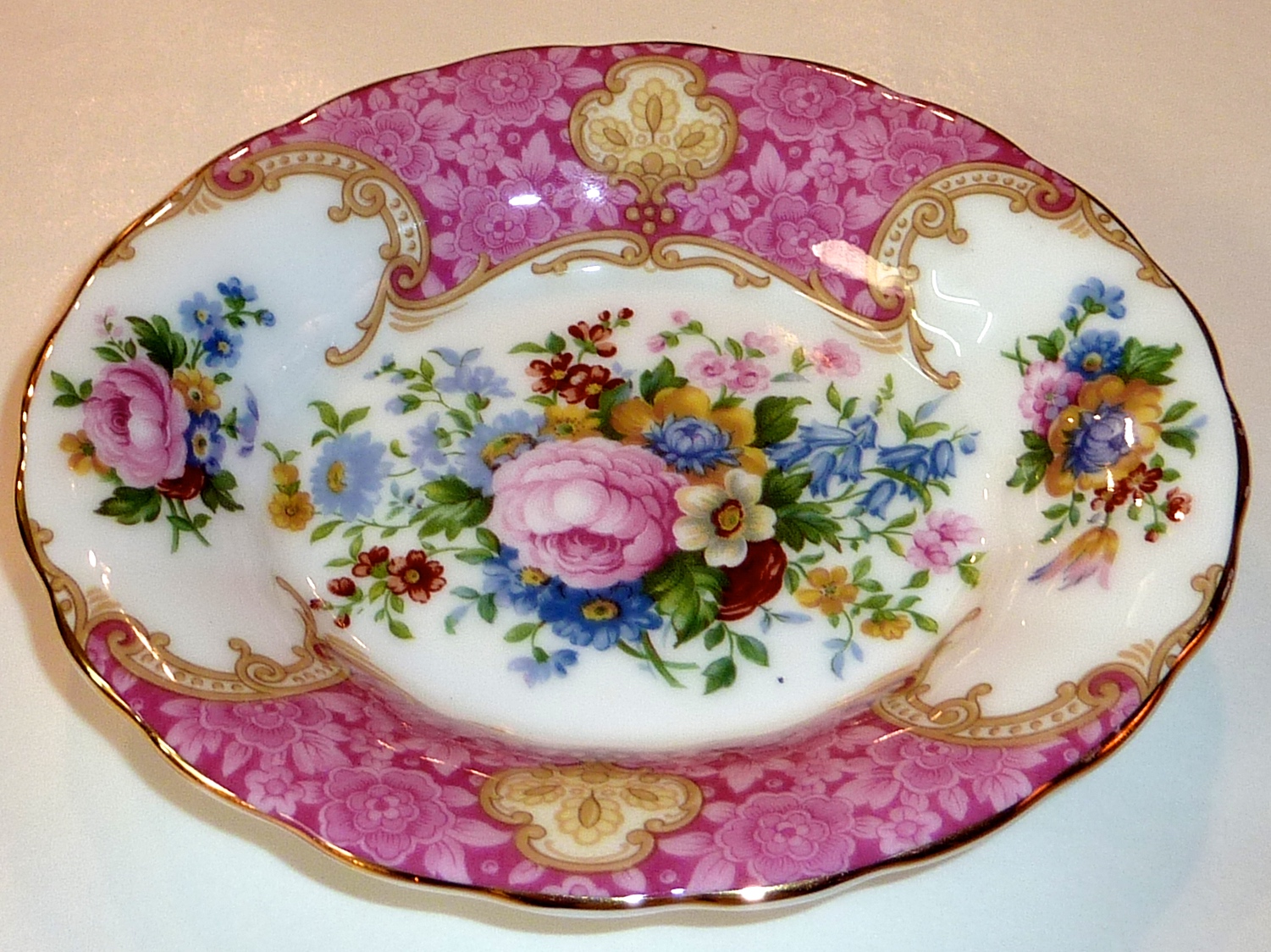
Old Country Roses: Royal Albert’s Most Famous Pattern
No discussion of Royal Albert would be complete without Old Country Roses. Its luxuriant arrangement of roses and gilded details became one of the defining images of traditional English bone china.
For collectors, however, the words “Old Country Roses” are only the beginning. Pieces can belong to different periods and manufacturing contexts, and sets assembled over time may contain components with different backstamps.
This is why two apparently identical Old Country Roses plates should not automatically be assumed to have the same age or production origin.
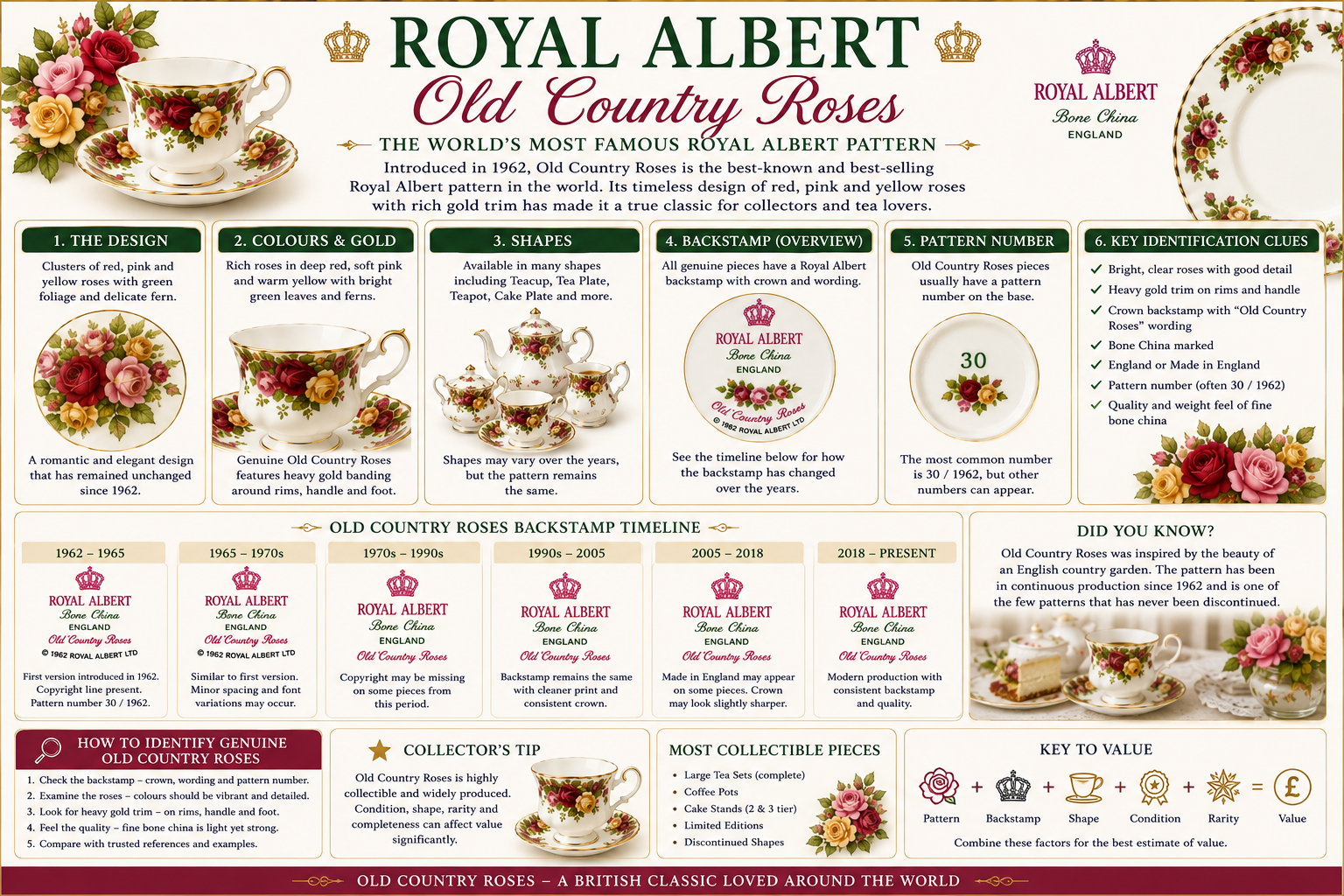
How to Identify Old Country Roses
Examine the floral arrangement, gilding, shape, backstamp and manufacturing information together. Look particularly carefully at mixed tea and dinner services: replacement pieces purchased decades apart can produce a visually matching set containing several generations of manufacture.
Royal Albert Shapes and Forms
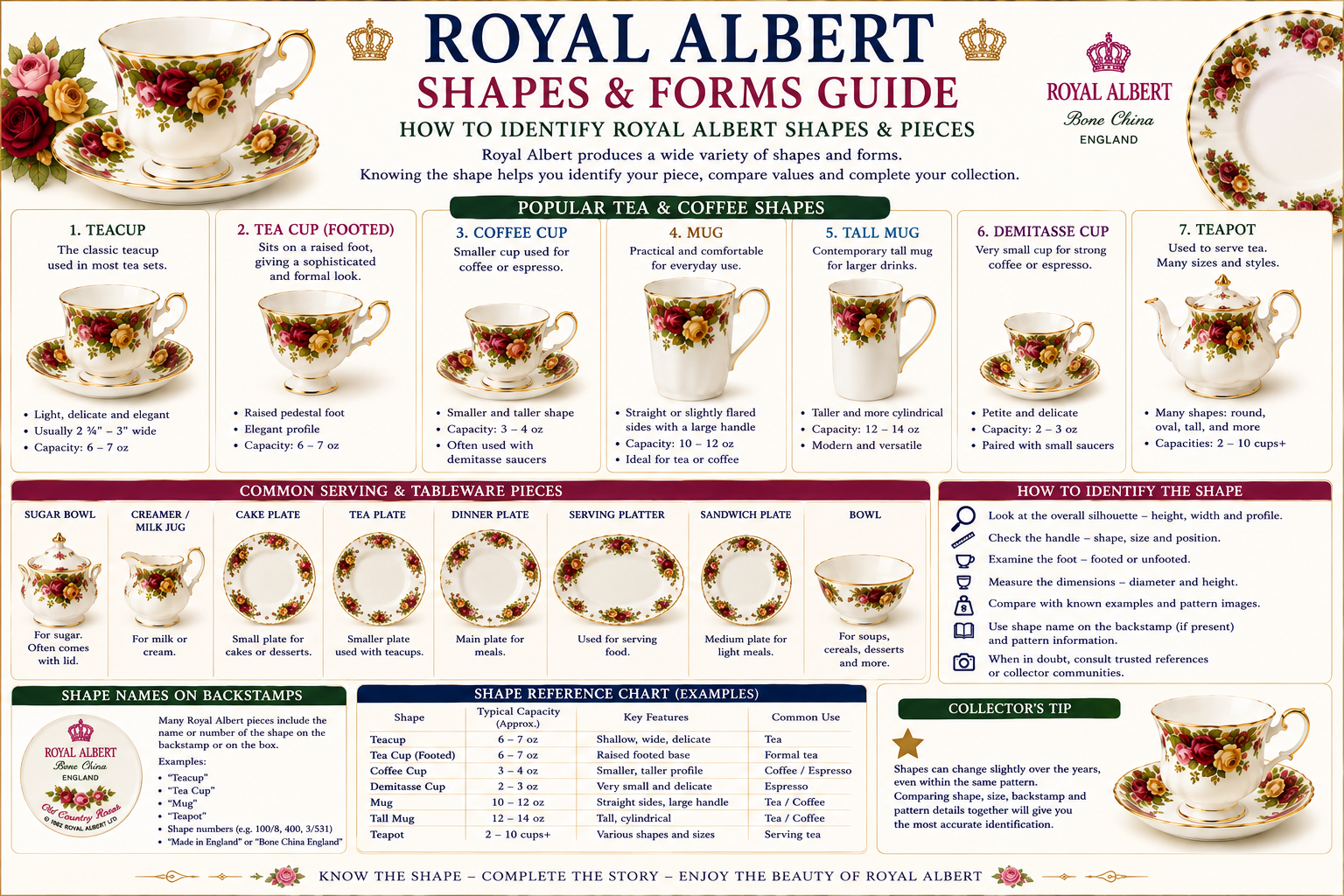
Shape is an underrated identification tool. Cup profiles, handles, rims, teapot bodies, lids and serving pieces changed as tastes and production methods evolved.
A backstamp that appears old should therefore be compared with the physical form. If the mark suggests one period while the shape corresponds to a substantially later production style, further research is necessary.
Is Every Royal Albert Piece Made in England?
No. This is one of the most important points for modern collectors.
The Royal Albert name has a long British heritage, but collectors should distinguish that heritage from the manufacturing origin of an individual piece. Production arrangements changed over time, and later pieces may carry different country-of-origin information.
Therefore, never date an object simply because the pattern looks traditional. Turn it over and record the complete backstamp exactly as it appears.
Country-of-manufacture wording can be especially useful when distinguishing older English production from later examples.
How to Identify Authentic Vintage Royal Albert
There is no single test that proves a Royal Albert piece is vintage or establishes its precise period. The strongest identification comes from a combination of mutually consistent evidence.
This is particularly important because collectors sometimes place too much confidence in a familiar backstamp. The broader principles explained in our Porcelain Marks Identification Guide apply equally to Royal Albert: marks should always be cross-checked against the object itself.
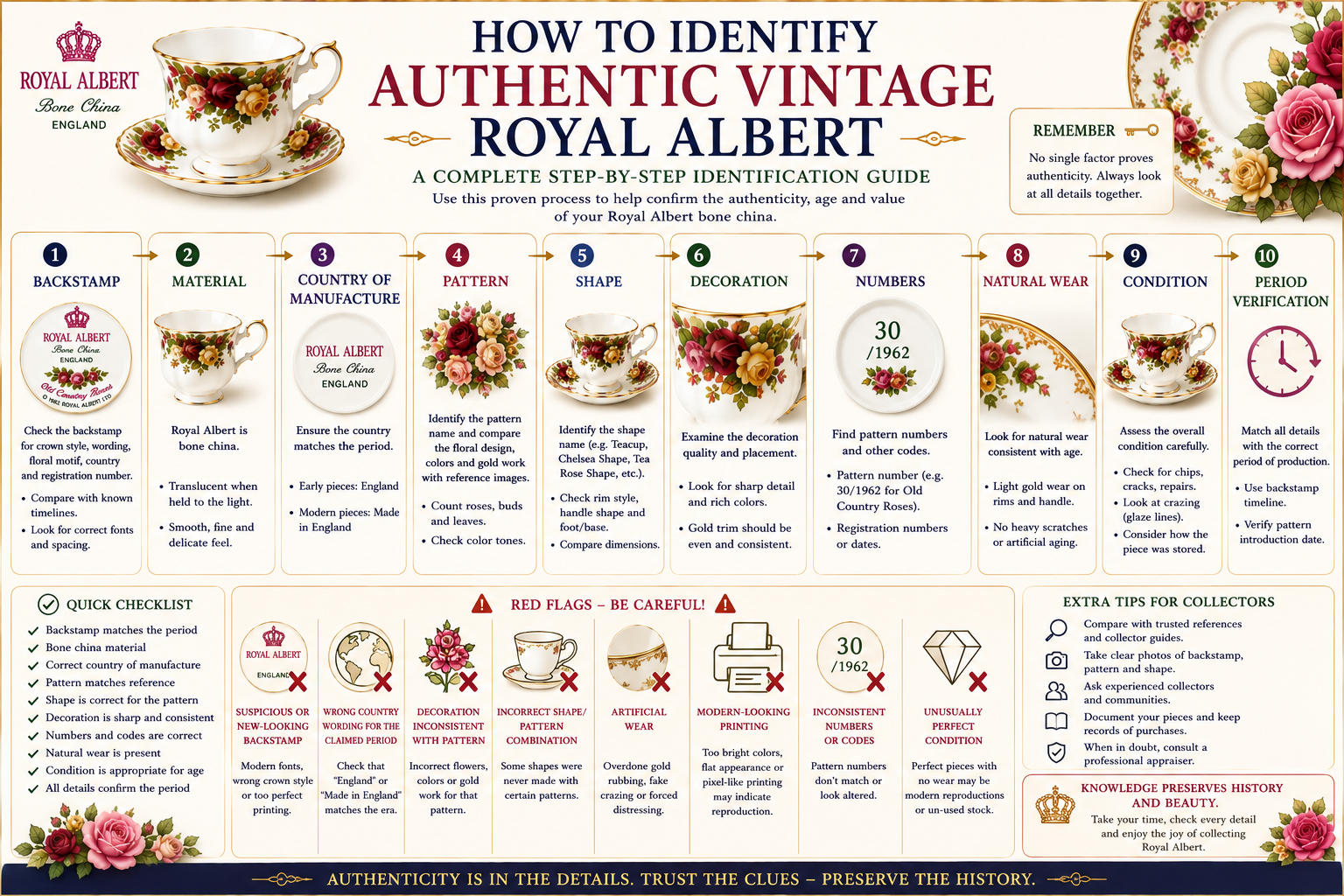
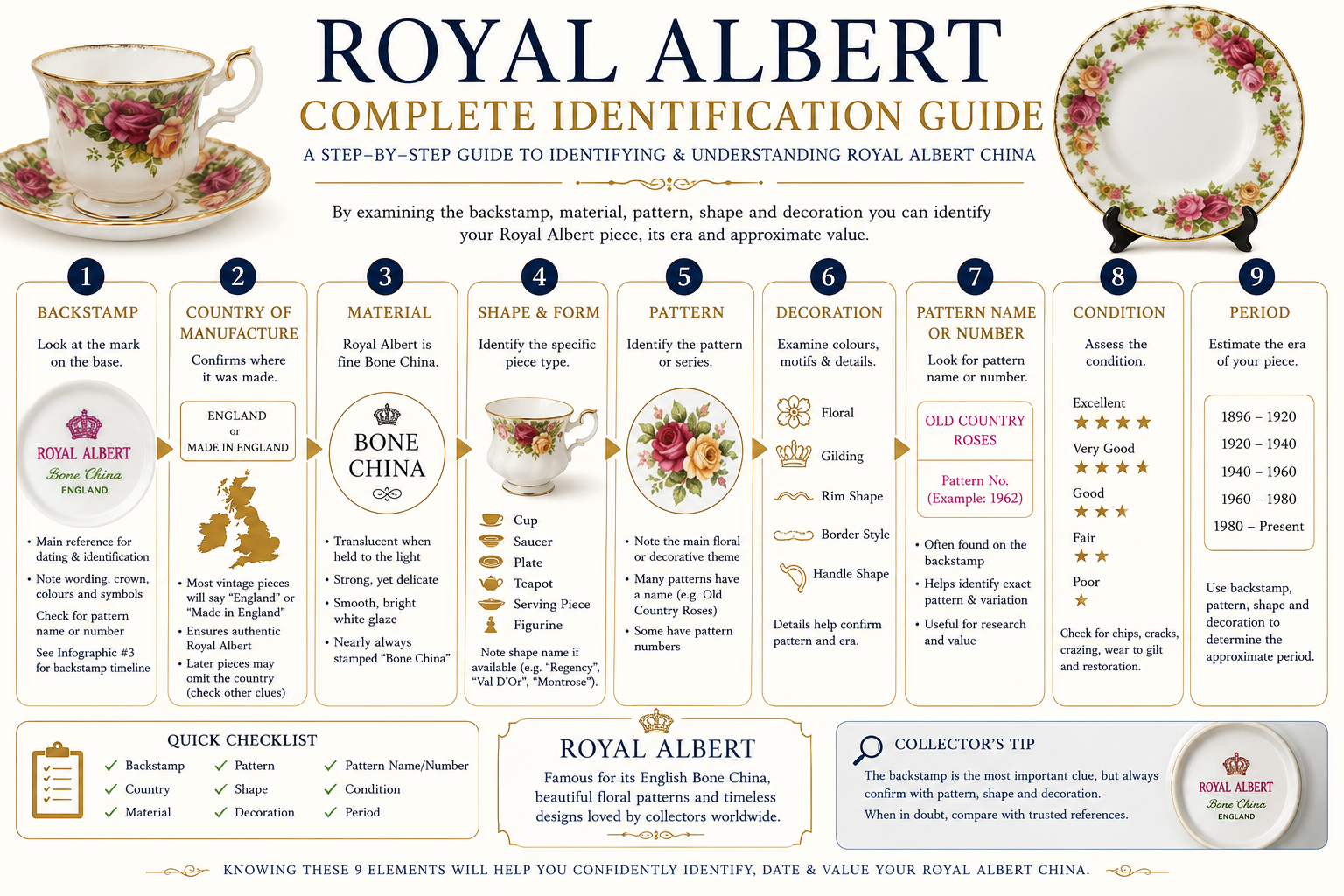
The Royal Albert Identification Formula
Backstamp + Material + Country of Manufacture + Pattern + Shape + Decoration + Numbers + Natural Wear + Condition + Period Verification
When all of these characteristics agree, an attribution becomes considerably stronger. When one important characteristic contradicts the others, investigate before assigning a date or value.
Royal Albert Red Flags
- A backstamp inconsistent with the claimed production period.
- Country-of-origin wording that conflicts with the proposed age.
- A known pattern combined with an inappropriate shape.
- Decoration noticeably different from documented examples.
- Artificial-looking wear or staining.
- Suspiciously modern printing on an allegedly early piece.
- Numbers or codes inconsistent with the pattern.
- Major restoration hidden beneath decoration or gilding.
A red flag is a reason to investigate further, not automatic proof that an object is fake. Genuine pieces can have unusual characteristics, replacement components, later decoration or restoration.
What Is Royal Albert Bone China?
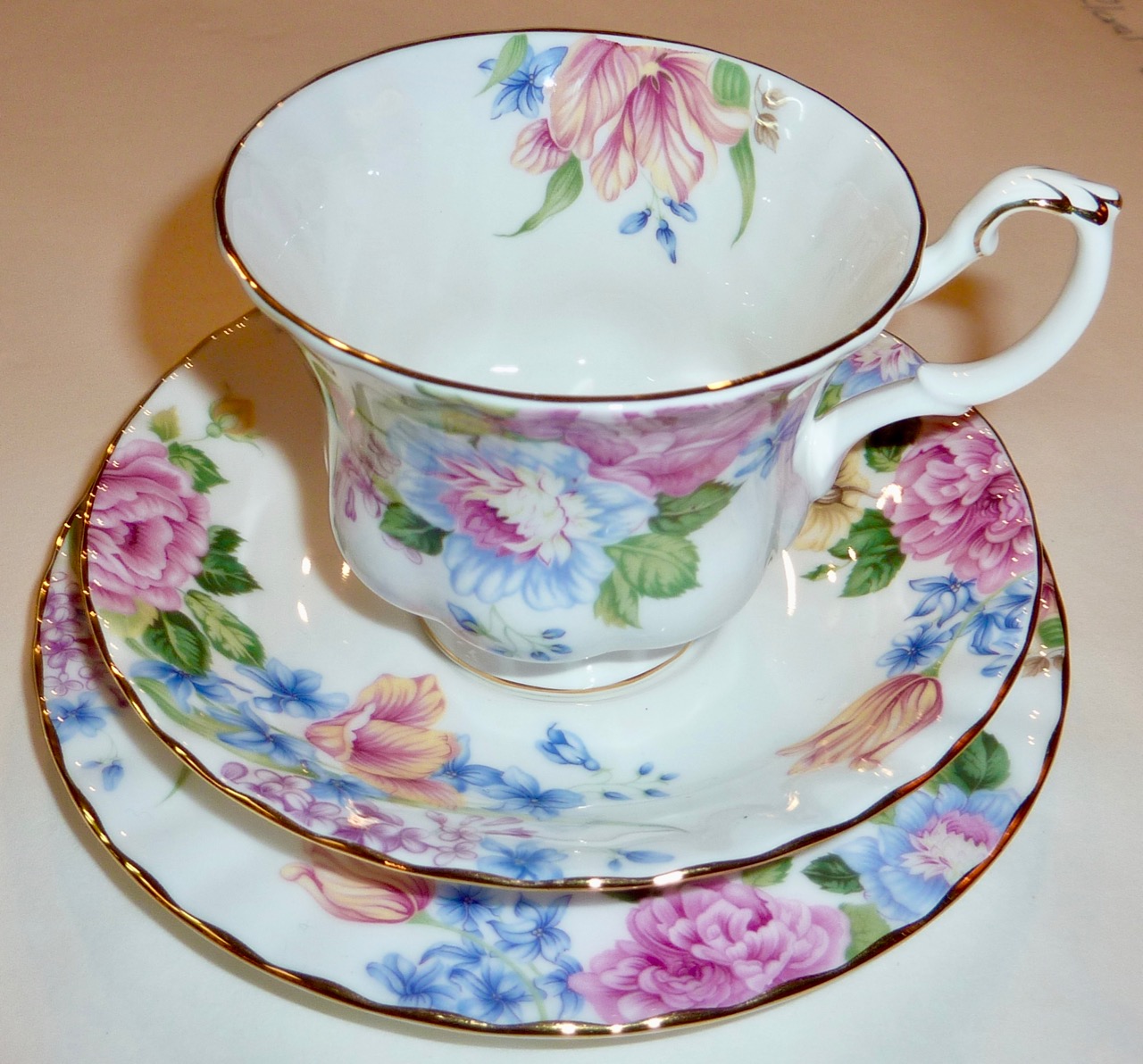
Royal Albert is especially associated with fine English bone china. Bone china differs from many traditional hard-paste porcelains in its composition and characteristic appearance. Well-made examples can have a refined white or warm-toned body, delicate translucency and a light but strong feel.
Material alone, however, cannot establish the age of a Royal Albert piece. It should be considered together with the factory mark and backstamp, pattern, shape, decoration and manufacturing origin.
Characteristics to Examine
| Feature | What to Look For | Why It Matters |
|---|---|---|
| Body | Fine, dense and carefully finished ceramic body | Helps assess material and manufacturing quality |
| Translucency | Thin areas may transmit light | Useful material clue, but not a dating test |
| Glaze | Smooth and consistent surface | Can reveal quality, wear and restoration |
| Weight | Often relatively light for its dimensions | Useful when compared with documented examples of similar form |
| Decoration | Transfers, painted details, gilding and floral designs | Can help identify pattern and period |
| Backstamp | Brand, wording, origin and pattern information | One of the strongest identification clues |
Translucency should never be treated as evidence of age. It is primarily a clue to the ceramic body. The same principle applies when identifying antique porcelain from other manufacturers.
Decoration, Floral Designs and Gilding
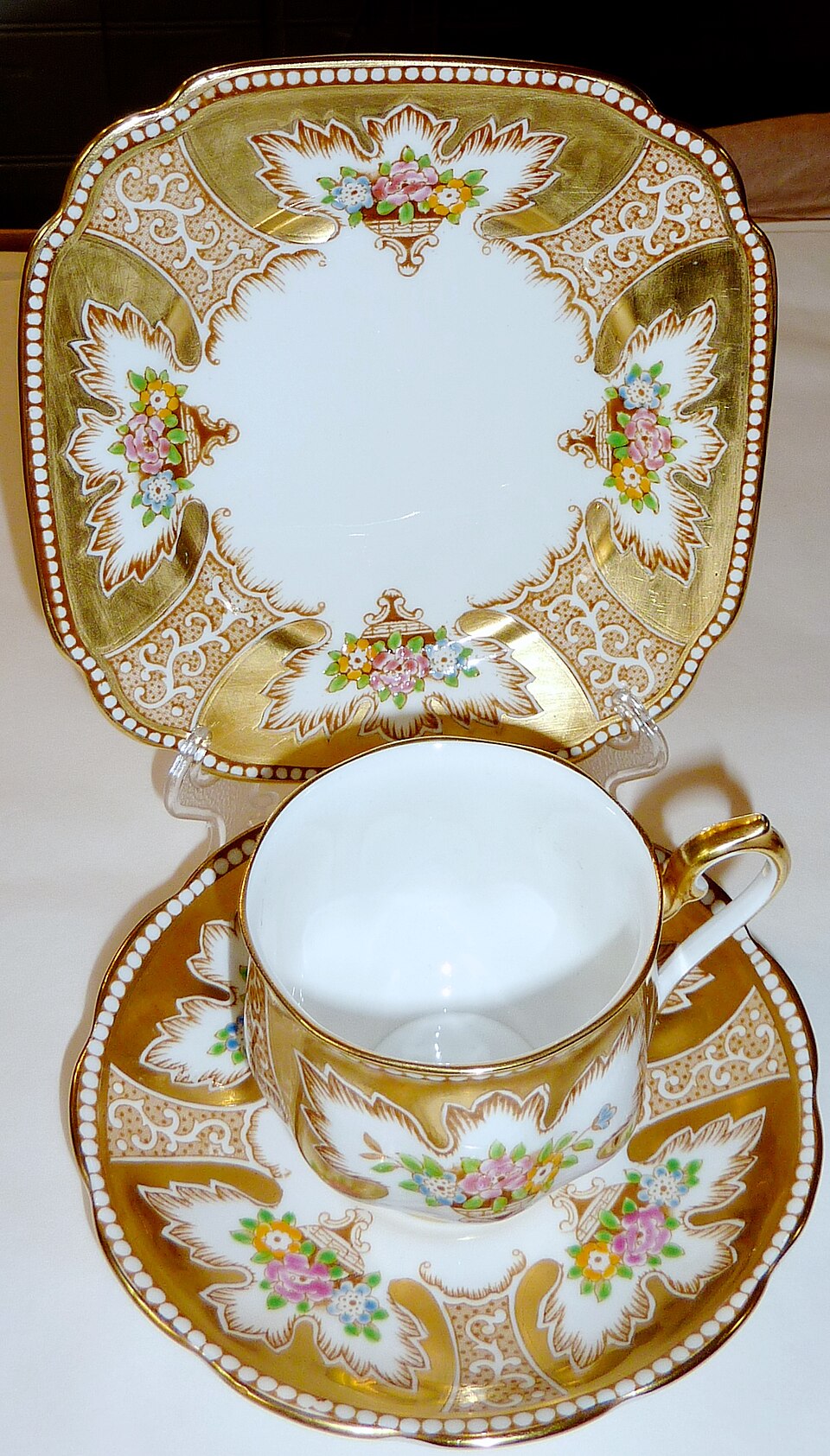
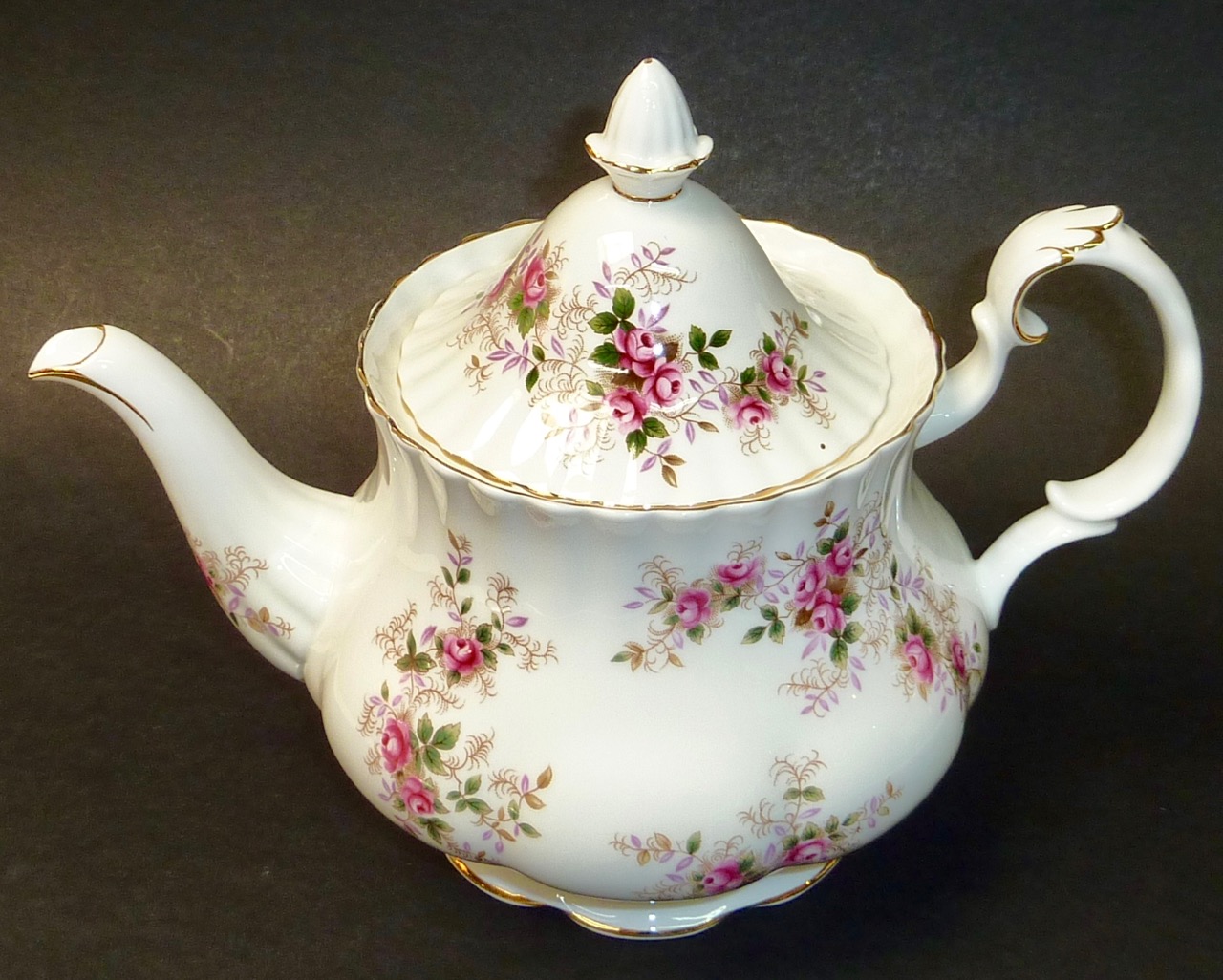
Decoration is central to the visual identity of Royal Albert. Roses and other flowers appear repeatedly, but the factory also produced patterns ranging from restrained botanical designs to richly ornamented tea services with elaborate borders and gilding.
When identifying an unknown piece, do not simply ask whether the flowers “look like Royal Albert”. Examine how the decoration relates to the shape, border, colours and backstamp.
Hand-Painted or Transfer-Printed?
Collectors sometimes assume that every attractive floral Royal Albert design was completely painted by hand. In reality, ceramic decoration can involve transfer printing combined with painted details, coloured accents and gilding.
Under magnification, printed decoration may reveal repeating characteristics or a more mechanically consistent image, while manually applied details can show subtle variation.
This distinction does not automatically determine value. A desirable documented pattern can be highly collectible regardless of whether every decorative element was painted entirely by hand.
Pattern Names and Numbers
Pattern identification is one of the most useful steps in Royal Albert research. Look carefully at the underside of the piece for a printed pattern name, numbers, letters or other production information.
Record everything before researching it. A number that initially appears unimportant may help distinguish a shape, decoration or production variant.
| Information Found | Possible Meaning | How to Use It |
|---|---|---|
| Pattern name | Name of the decorative design | Compare with documented examples |
| Printed number | Pattern, shape or production information | Research together with the backstamp |
| Handwritten number | Possible decorator or production notation | Do not interpret without supporting evidence |
| Registration information | Possible design-registration clue | May help narrow the chronology |
| Country wording | Manufacturing-origin information | Compare with the claimed period |
Natural Wear: What Should Vintage Royal Albert Look Like?
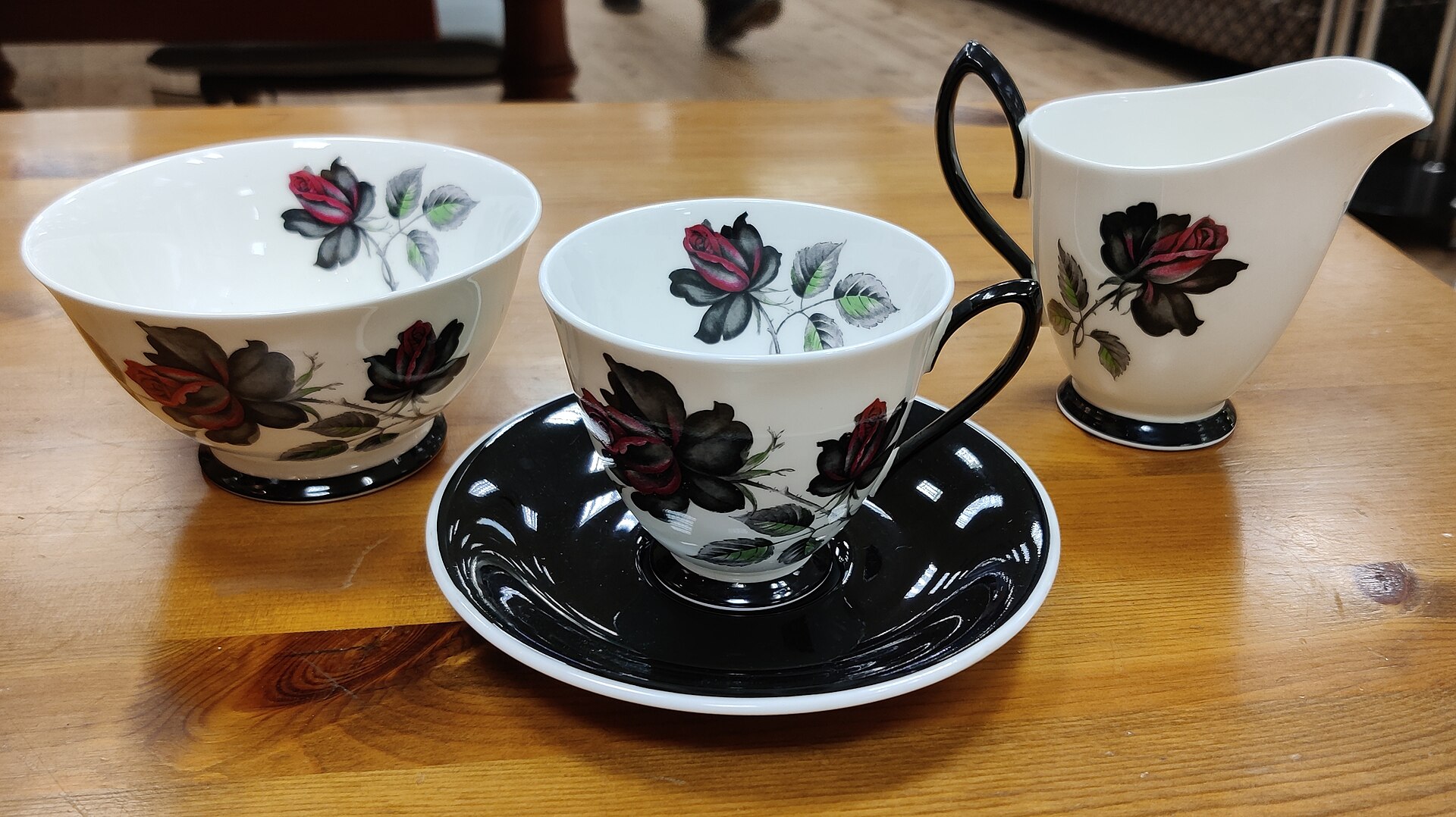
A genuinely older object does not necessarily need to look heavily worn. Fine china may have spent decades inside a cabinet and show remarkably little use.
At the same time, normal use can leave subtle evidence. The key is whether the wear is consistent with the construction and function of the object.
Possible Signs of Natural Use
- Light rubbing to gilded rims and handles.
- Fine utensil marks on plates.
- Minor surface wear on frequently handled areas.
- Small manufacturing irregularities.
- Age-consistent wear around the foot rim.
- Minor staining associated with genuine use.
None of these characteristics proves age individually. Artificial ageing exists, while carefully preserved vintage pieces may show very little wear.
Crazing Is Not Proof of Age
Fine networks of glaze cracks, commonly called crazing, are frequently interpreted as evidence that ceramics are old. This is unreliable.
Crazing can result from differences between the ceramic body and glaze and may develop under different environmental conditions. Some genuinely old pieces show little or no crazing, while considerably newer ceramics can develop extensive crazing.
For this reason, Royal Albert should be dated using the same multi-factor approach described in our complete guide to dating antique porcelain.
Condition: What Collectors Should Check
Condition can have a major effect on desirability and market value. Before purchasing or valuing Royal Albert, examine the piece carefully under good natural or neutral light.
| Condition Issue | Where to Check | Possible Effect |
|---|---|---|
| Hairline cracks | Rims, handles, bases and around handles | Usually negative |
| Chips | Rims, feet, spouts and lids | Can significantly affect desirability |
| Gilding wear | Rims, handles and raised areas | Depends on severity and rarity |
| Staining | Interior of cups, pots and crazed areas | May reduce appeal |
| Restoration | Handles, spouts, rims and decorative elements | Important to disclose and assess |
| Replacement parts | Lids, saucers and set components | May affect originality and completeness |
How to Examine a Royal Albert Cup and Saucer
Cups and saucers are among the most frequently encountered Royal Albert pieces, but a matching decoration does not necessarily mean both components left the factory at exactly the same time.
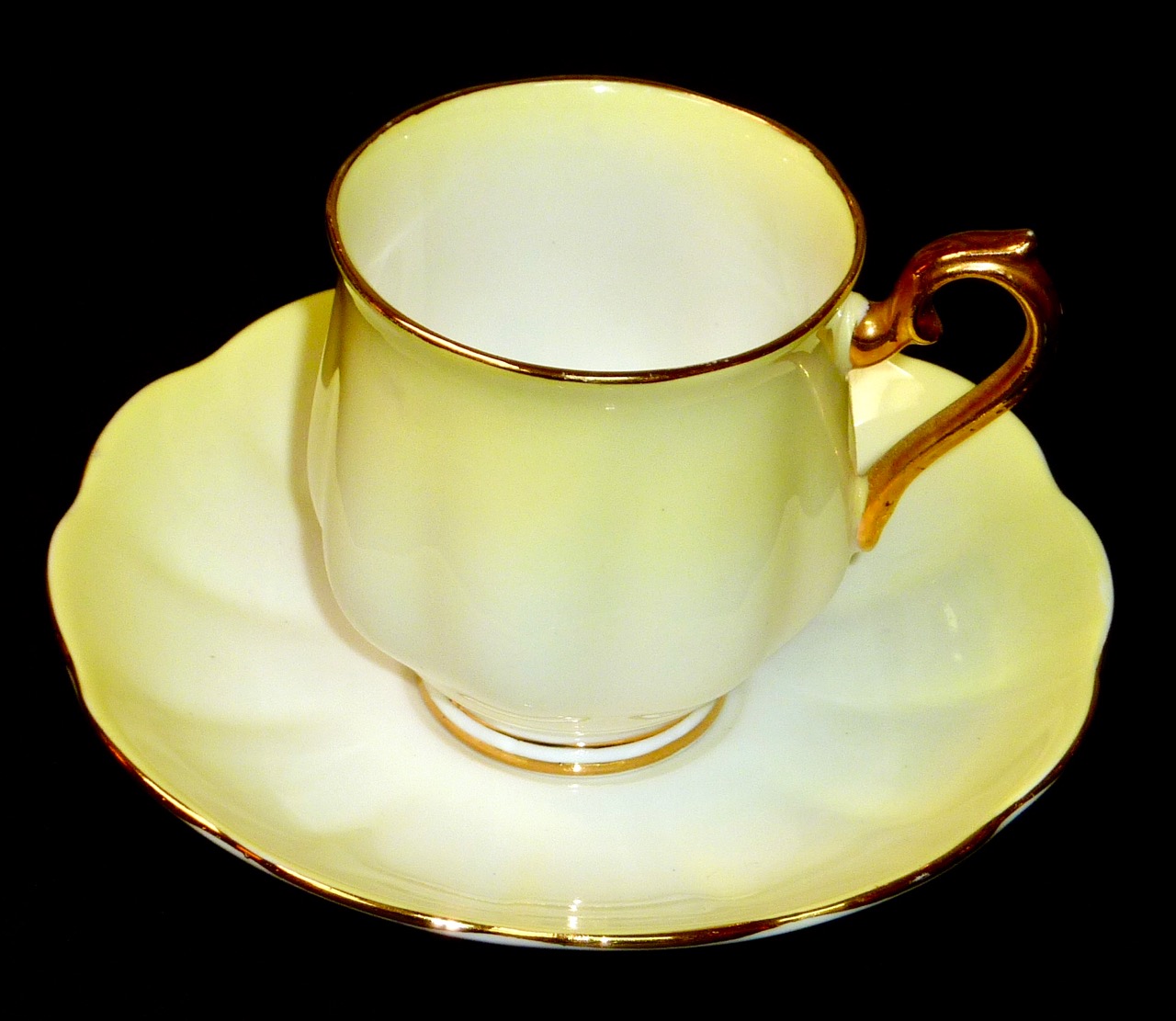
Turn over both the cup and the saucer. Compare their backstamps, pattern wording, country of manufacture and overall style. A replacement saucer may have been added years later while still appearing visually compatible.
Complete Sets vs Individual Pieces
A complete Royal Albert tea or dinner service can have a different collector appeal from isolated pieces, but completeness alone does not guarantee high value.
Collectors should determine whether all components genuinely belong together. Large services assembled over many years may contain replacement cups, saucers or plates from different production periods.
When Examining a Royal Albert Set
- Compare the backstamp on multiple pieces.
- Check whether the pattern colour is consistent.
- Compare gilding and border details.
- Look for different countries of manufacture.
- Check cup and saucer shapes.
- Confirm that lids fit correctly.
- Look for replaced or restored pieces.
What Makes Royal Albert Valuable?
There is no universal price for “old Royal Albert”. Value depends on the exact object and on current collector demand.
Two pieces carrying the Royal Albert name may have very different values because one belongs to a scarce discontinued pattern while another comes from a widely available production run.
Royal Albert Value Factors
| Factor | Why It Matters | Potential Importance |
|---|---|---|
| Pattern | Some discontinued and sought-after patterns attract stronger demand | Very High |
| Production period | Earlier or historically interesting production may be more desirable | High |
| Rarity | Scarce shapes and patterns can be difficult to replace | Very High |
| Condition | Chips, cracks and poor restoration can reduce desirability | Very High |
| Form | Teapots, large serving pieces and unusual forms may attract more interest | High |
| Completeness | Complete matching services may appeal to collectors | Medium–High |
| Backstamp | Helps establish production context and origin | High |
| Provenance | Documented history can add confidence and significance | Variable |
| Current demand | Collector tastes change over time | Very High |
Is Old Country Roses Valuable?
Some Old Country Roses pieces are collectible, but the pattern name alone does not establish a high value.
Because Old Country Roses was produced extensively, collectors should determine the production period, country of manufacture, exact form, condition and completeness of the piece or service.
Earlier production, unusual forms, well-preserved large sets and harder-to-find components may attract different levels of demand from common individual pieces.
The safest rule is simple: never value Royal Albert from the pattern name alone.
Which Royal Albert Pieces Are Most Interesting to Collectors?
Collector preferences vary, but interest often concentrates around pieces that combine attractive design with scarcity, good condition and a clearly identifiable production history.
| Type | Collector Appeal |
|---|---|
| Discontinued patterns | Can appeal strongly when replacements are difficult to find |
| Vintage tea services | Classic Royal Albert collecting category |
| Large teapots and coffee pots | Decorative and practical focal pieces |
| Unusual serving pieces | Often scarcer than standard plates and cups |
| Earlier production | Interesting for specialist collectors |
| Complete matching services | Desirable when genuinely consistent and well preserved |
| Rare pattern variations | Can attract specialist interest |
Royal Albert Identification: Quick Reference
| Question | What to Examine |
|---|---|
| Who made it? | Backstamp and manufacturer wording |
| Where was it made? | Country-of-origin information |
| What is it made from? | Ceramic body, translucency and glaze |
| Which pattern is it? | Decoration, pattern name and numbers |
| How old might it be? | Exact backstamp + pattern + shape + origin |
| Is it authentic? | Consistency of all physical and historical clues |
| Is it valuable? | Rarity + period + pattern + condition + demand |
Common Mistakes When Identifying Royal Albert
Many identification errors happen because one attractive clue is given too much importance.
- “It says Royal Albert, therefore it is old.” — The name has been used across different periods.
- “It says England, therefore it must be rare.” — Origin is important, but rarity requires additional evidence.
- “It has crazing, therefore it is antique.” — Crazing does not establish age.
- “It is Old Country Roses, therefore it is valuable.” — Production period, form, condition and demand matter.
- “The cup and saucer match, therefore they are original partners.” — Check both backstamps.
- “The mark looks correct, therefore it is authentic.” — Marks should never be evaluated alone.
- “Perfect condition means reproduction.” — Carefully stored vintage china can survive in excellent condition.
How to Research Royal Albert Like a Collector
Start by photographing the entire object, then photograph the base and backstamp clearly. Record the dimensions and every visible word, number or symbol.
Next, identify the pattern and compare the exact shape with documented examples. Only after this should you attempt to establish a likely period.
The principle is the same across serious porcelain research:
identify first, date second, value last.
Our complete porcelain marks identification guide explains how factory symbols, country names, numbers and secondary marks can be interpreted without relying on the logo alone.
Royal Albert vs Other English Porcelain Manufacturers
Royal Albert belongs to a much broader British ceramic tradition. Comparing an unidentified object with other English manufacturers can be particularly useful when a backstamp is damaged, incomplete or unfamiliar.
| Manufacturer | Often Associated With | Useful Identification Clues |
|---|---|---|
| Royal Albert | Bone china, floral tea services, Old Country Roses | Backstamp, pattern, shape, origin |
| Royal Doulton | Tableware, figures and decorative ceramics | Crown/lion marks, names and production codes |
| Royal Worcester | Fine porcelain and decorative wares | Factory marks, date systems and decoration |
| Spode | Tableware, transferware and historic patterns | Backstamps, pattern numbers and forms |
| Wedgwood | Jasperware and fine tableware | Impressed marks, wording and date codes |
| Minton | Luxury ceramics and elaborate decoration | Factory marks, pattern numbers and quality |
Explore Other Famous Porcelain Makers
Royal Albert is only one chapter in the history of European and international porcelain. Comparing factories is one of the best ways to develop identification skills, because manufacturers differed in their materials, decoration, marks and production traditions.
For a broad introduction to the major factories, start with our
Guide to Antique Porcelain: Identification, Marks, Manufacturers, History & Values.
English Porcelain
Collectors researching Royal Albert should also study Royal Doulton, Royal Worcester, Spode, Wedgwood, Minton and Royal Crown Derby. Their marks and production histories provide useful comparisons with Royal Albert, particularly when identifying English bone china and tableware.
German Porcelain
Important German names include Meissen, KPM Berlin, Rosenthal, Hutschenreuther and Villeroy & Boch. German factories developed very different traditions of hard-paste porcelain and ceramics, making them particularly useful for comparison with English bone china.
French Porcelain
Collectors should become familiar with Sèvres and the many Limoges manufacturers. Remember that Limoges describes a porcelain-producing region rather than a single factory, so the individual manufacturer’s mark remains important.
Italian Porcelain
Italy developed a distinctive tradition represented by Capodimonte and Richard Ginori. Our
Italian Porcelain Guide
explores their history, marks and identification in greater detail.
Danish and Hungarian Porcelain
Royal Copenhagen and Herend are also essential names for collectors. Their distinctive marks, hand decoration and long manufacturing traditions make them useful reference points when studying European porcelain.
Essential Porcelain Guides for Collectors
If you want to continue researching Royal Albert or another unidentified porcelain object, these guides form a useful identification sequence:
- Guide to Antique Porcelain: History, Identification, Marks & Manufacturers
- How to Identify Antique Porcelain
- What Are Porcelain Marks?
- How to Identify Porcelain Marks & Backstamps
- How to Date Antique Porcelain
- Italian Porcelain: Capodimonte, Richard Ginori, Marks & Identification
Frequently Asked Questions About Royal Albert
How can I identify old Royal Albert china?
Begin with the backstamp, but do not stop there. Compare its exact wording and design with the material, country of manufacture, pattern, shape, decoration, numbers and natural wear. The strongest identification occurs when all of these clues are historically consistent.
How do I date a Royal Albert backstamp?
Study the exact typography, symbols, wording and country information rather than simply looking for the Royal Albert name. Backstamps usually indicate a period rather than one exact year, so pattern and shape should be used as supporting evidence.
Is Royal Albert always bone china?
Royal Albert is strongly associated with fine bone china, but collectors should identify the actual object rather than assuming its material from the brand name alone. Examine the body, translucency, glaze and backstamp.
Is Royal Albert Made in England valuable?
English manufacture can be an important collector characteristic, particularly when establishing the production context of older pieces. However, “Made in England” alone does not establish rarity or value. Pattern, period, form, condition and market demand must also be considered.
How can I tell whether my Royal Albert is vintage?
Compare the exact backstamp with the pattern, shape, manufacturing origin and physical characteristics. A vintage-looking floral design or signs of wear are not sufficient evidence by themselves.
Is Old Country Roses collectible?
Yes. Old Country Roses remains Royal Albert’s best-known design and has a large collector following. Because it was produced extensively, however, different pieces can vary considerably in age, origin, scarcity and value.
Are older Royal Albert pieces worth more?
Not automatically. Age can contribute to desirability, but rarity, pattern, condition, form and collector demand may be more important. A scarce later piece can sometimes be more desirable than a common older one.
Are Royal Albert tea sets valuable?
They can be. Value depends on the exact pattern, production period, number of pieces, consistency of the set, condition and current demand. Check several pieces to determine whether all components carry compatible backstamps.
Can a Royal Albert cup and saucer have different marks?
Yes. A set may have been assembled or a broken component replaced later. Different marks do not automatically mean either component is fake, but they should be researched separately.
Does crazing mean Royal Albert is old?
No. Crazing can occur for several reasons and should not be used as proof of age. Genuine older china may have little crazing, while newer ceramics can sometimes develop it.
Can Royal Albert backstamps be copied?
Factory marks should never be treated as proof of authenticity on their own. Always compare the mark with material, decoration, shape, manufacturing quality and the proposed production period.
What should I photograph for Royal Albert identification?
Photograph the entire object, its underside, the complete backstamp, all numbers and inscriptions, the decoration, handles, rim and any damage or restoration. For sets, photograph the marks on several different components.
Quick Answer: How Do You Identify Royal Albert?
To identify Royal Albert china, examine ten clues:
- Backstamp
- Material
- Country of manufacture
- Pattern
- Shape and form
- Decoration
- Pattern or production numbers
- Natural wear
- Condition and restoration
- Historical period consistency
Never rely on the Royal Albert mark alone. The most reliable attribution is produced when the mark, material, pattern, shape and manufacturing history all support the same conclusion.
Final Collector’s Checklist
| ✓ | Identification Check |
|---|---|
| □ | Photograph the complete Royal Albert backstamp |
| □ | Record every word, number and symbol |
| □ | Determine the country of manufacture |
| □ | Examine the ceramic body and glaze |
| □ | Identify the pattern |
| □ | Compare the exact shape |
| □ | Study the decoration and gilding |
| □ | Check pattern and production numbers |
| □ | Look for natural wear |
| □ | Inspect for chips, cracks and restoration |
| □ | Cross-check all evidence before dating or valuing the piece |
Conclusion
Royal Albert bone china represents one of the most recognisable traditions of twentieth-century English tableware. Its elegant forms, floral patterns and famous tea services have created an international collecting field that extends far beyond Old Country Roses.
Correct identification begins with the backstamp but should never end there. Material, manufacturing origin, pattern, shape, decoration, numbers, natural wear and condition all contribute evidence about when and where an object was produced.
For collectors, the most useful principle is simple:
one clue suggests; several matching clues identify.
By combining careful observation with documented references, Royal Albert pieces can be researched much more accurately — whether you are examining an inherited tea service, a single vintage cup and saucer or an unusual pattern discovered at an antiques market.
About This Guide
This guide was prepared by The Old Antiquarian as part of our independent educational series on antique porcelain, ceramics, factory marks and collecting.
Our identification guides are designed to help collectors understand the evidence found on an object rather than identify or value porcelain from a single mark alone. Historical attribution should always consider the complete piece and, where necessary, be compared with museum collections, specialist catalogues, factory documentation and established reference works.
