
What is Romanian Porcelain ? Identification Guide
Romanian Porcelain: History, Marks, IRIS Cluj, Apulum, ARPO & STIPO Identification Guide
Romanian porcelain is one of the lesser-known yet increasingly fascinating areas of European ceramics collecting. From elegant floral tableware and hand-painted vases to decorative figurines and porcelain produced during the socialist period, Romania developed a distinctive ceramic tradition during the twentieth century.
For collectors, names such as IRIS Cluj, Apulum, ARPO and STIPO are particularly important. Their porcelain can be found today throughout Romania, Central and Eastern Europe, and increasingly on the international antiques market.
Identifying Romanian porcelain, however, requires more than simply finding the word Romania on the base. Factory marks, model numbers, decoration, porcelain quality, production period, shape and condition should all be considered together.
This complete guide explores the history of Romanian porcelain, its major factories, porcelain marks and backstamps, dating methods, vintage figurines, identification clues and collector value.
If you are new to porcelain collecting, our broader
Guide to Antique Porcelain
provides a useful introduction to porcelain history, manufacturers, marks and identification.
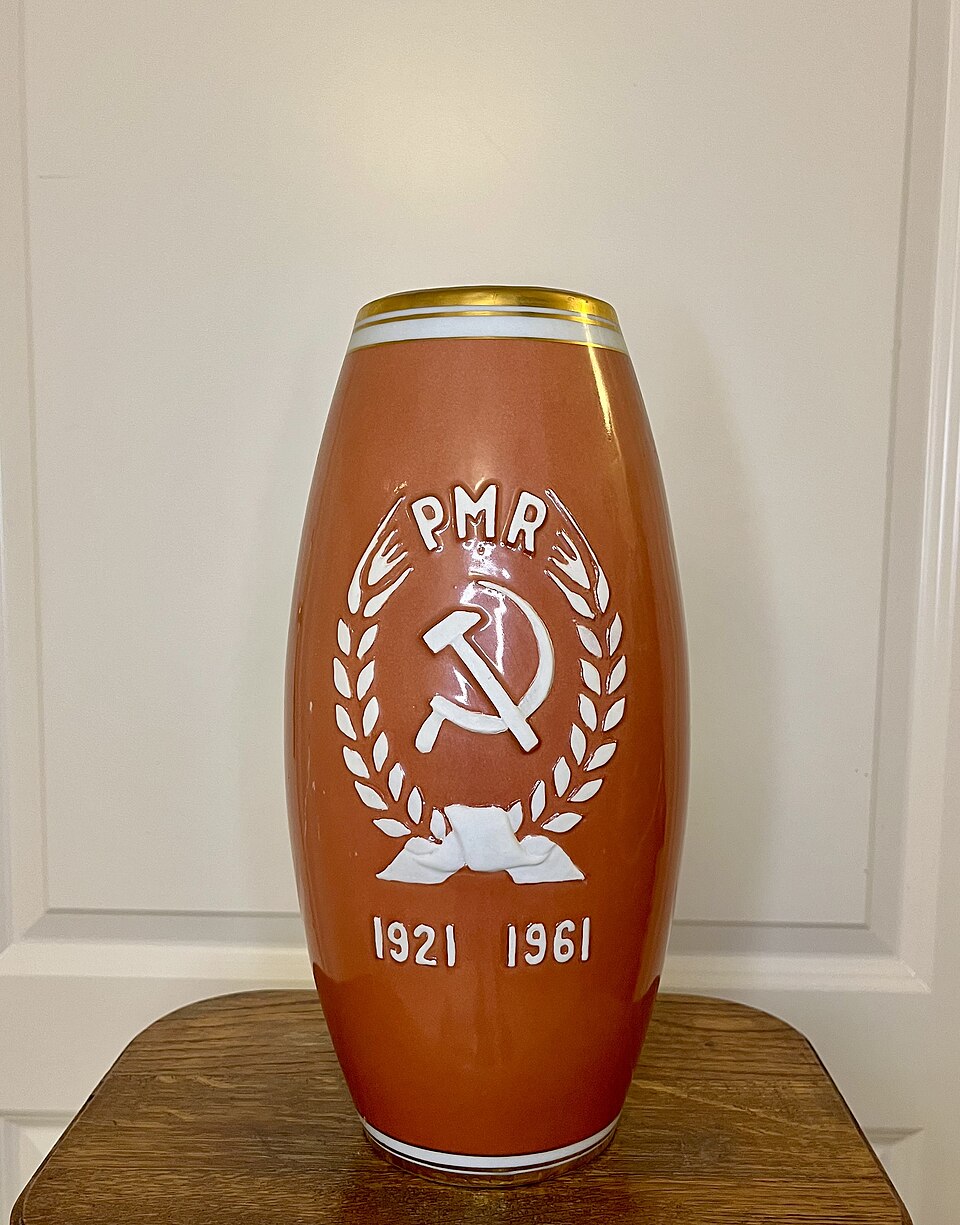
What Is Romanian Porcelain?
Romanian porcelain generally refers to porcelain and related fine ceramic wares manufactured in Romania, particularly during the twentieth century. Production included domestic tableware, tea and coffee services, decorative plates, vases, figurines and objects intended for export.
Romanian manufacturers worked within the wider European ceramic tradition while developing styles influenced by changing artistic, political and economic conditions.
Collectors may encounter everything from restrained modernist forms to elaborate floral decoration, gilding and traditional figurative designs.
| Characteristic | What Collectors May Encounter |
|---|---|
| Material | Fine porcelain, semi-porcelain and other ceramic bodies |
| Decoration | Floral motifs, gilding, transfers and hand-painted details |
| Objects | Tea sets, coffee sets, plates, vases and figurines |
| Marks | Factory names, logos, Romania / Made in Romania and model numbers |
| Main collecting period | Primarily twentieth-century and vintage production |
How to Identify Romanian Porcelain
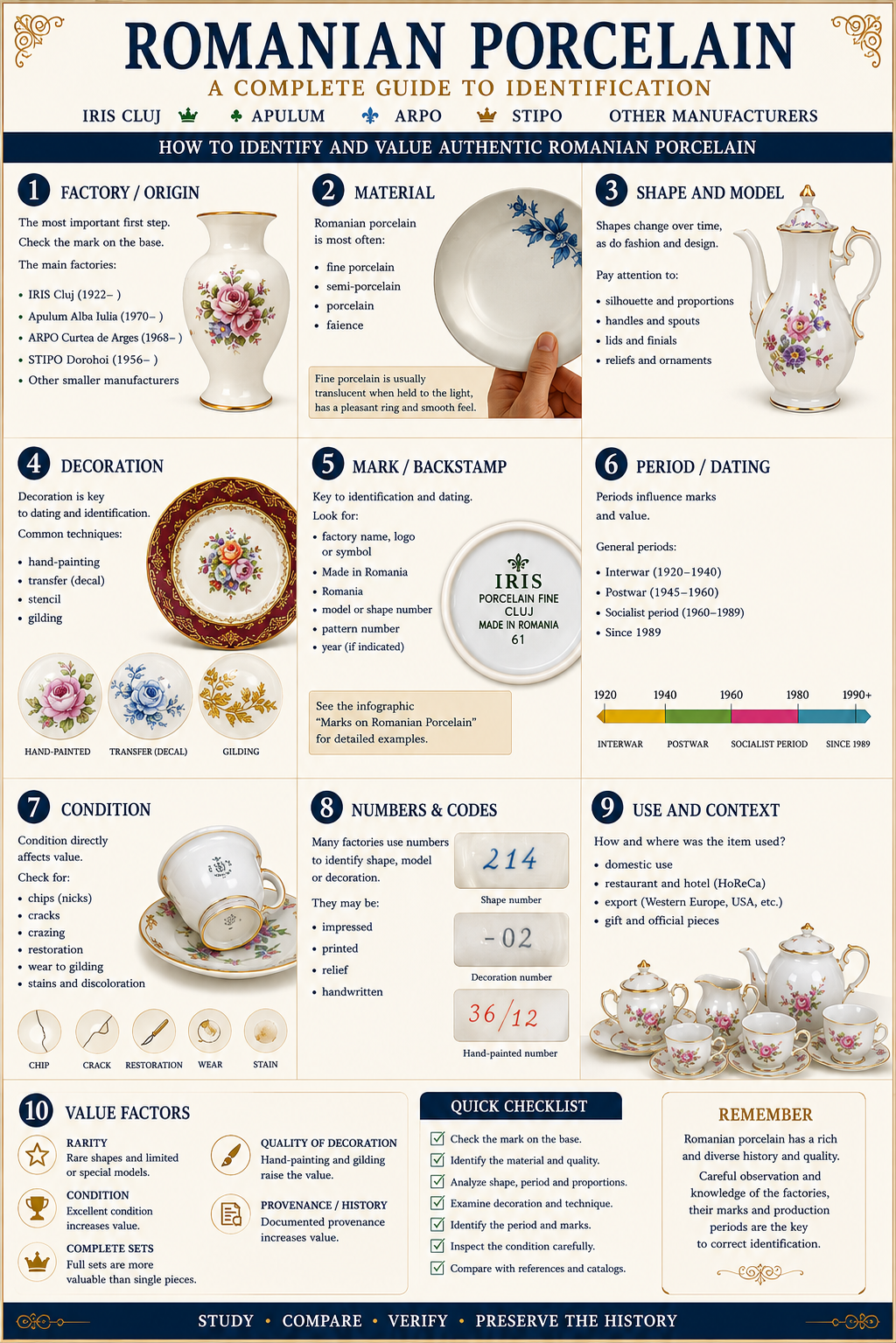
The most reliable way to identify Romanian porcelain is to examine the entire object rather than relying on one characteristic.
Start with the factory mark or backstamp, but then compare it with the porcelain body, shape, decoration, manufacturing technique and condition.
1. Examine the Factory Mark
Turn the object over and carefully inspect the underside. Romanian porcelain marks can provide clues to the manufacturer and sometimes to the production period.
Look for:
- factory name;
- factory logo or symbol;
- Romania;
- Made in Romania;
- model or shape numbers;
- decorator numbers;
- handwritten codes;
- impressed numbers or symbols.
As with other European porcelain, the mark should never be treated as absolute proof of age or authenticity. Changes in factory ownership, export requirements and production systems can result in several different marks being used over time.
Our guide to
dating antique porcelain
explains why small changes in wording, symbols and factory marks can be important when estimating production periods.
2. Examine the Porcelain Body
Good-quality porcelain normally has a smooth, hard body and a refined glazed surface. Depending on thickness, fine porcelain may show some translucency when held against a strong light.
However, not every Romanian ceramic object is true porcelain. Some factories also produced related ceramic bodies, so material identification should always be part of the examination.
3. Study the Shape
Shape can provide valuable clues. Cups, handles, finials, vase profiles and figurine bases often reflect the period in which an object was designed.
Romanian factories produced both traditional European-inspired forms and more modern shapes during the post-war decades.
4. Examine the Decoration
Decoration is particularly useful when comparing Romanian porcelain.
Collectors commonly encounter:
- floral bouquets;
- individual roses and botanical motifs;
- gold borders and gilded handles;
- transfer-printed decoration;
- hand-painted details;
- geometric and modernist patterns;
- traditional and folkloric motifs;
- commemorative decoration.
5. Check Natural Wear and Condition
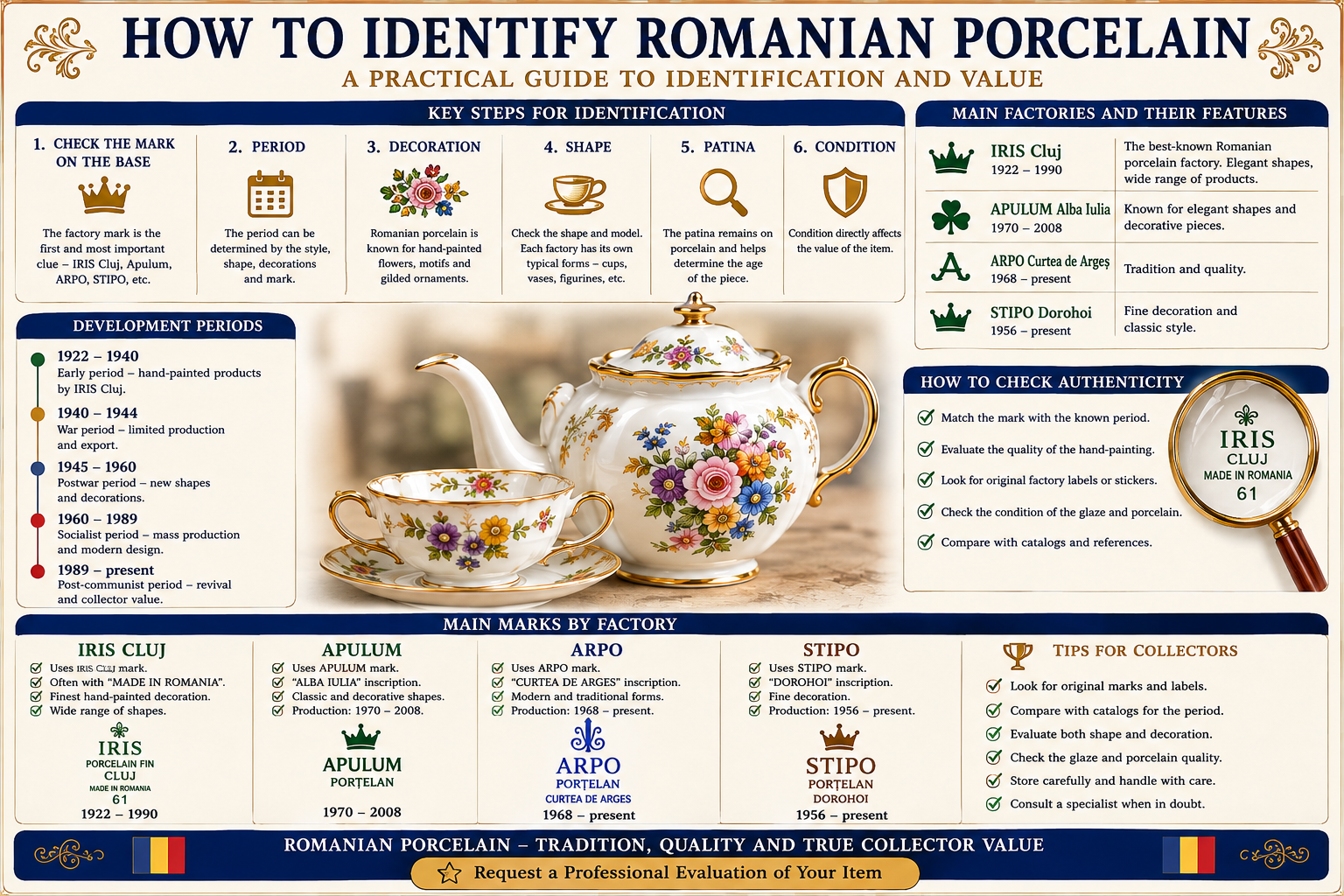
Wear should make sense for the claimed age of the object.
Look carefully at the foot rim, gilding, handles and raised decoration. Natural wear often develops gradually on exposed surfaces, whereas artificial ageing can appear inconsistent.
Also inspect for:
- hairline cracks;
- chips;
- crazing;
- staining;
- gilding loss;
- old repairs;
- repainting;
- restoration.
Major Romanian Porcelain Manufacturers
Romania had several important porcelain and ceramic manufacturers during the twentieth century. Four names are especially useful for collectors researching vintage Romanian porcelain:
| Manufacturer | Location | Known For |
|---|---|---|
| IRIS Cluj | Cluj-Napoca | Fine porcelain, floral decoration, tableware, vases and figurines |
| Apulum | Alba Iulia | Tableware, decorative porcelain and household ceramics |
| ARPO | Curtea de Argeș | Decorative and household porcelain |
| STIPO | Dorohoi | Tableware and decorative ceramic production |
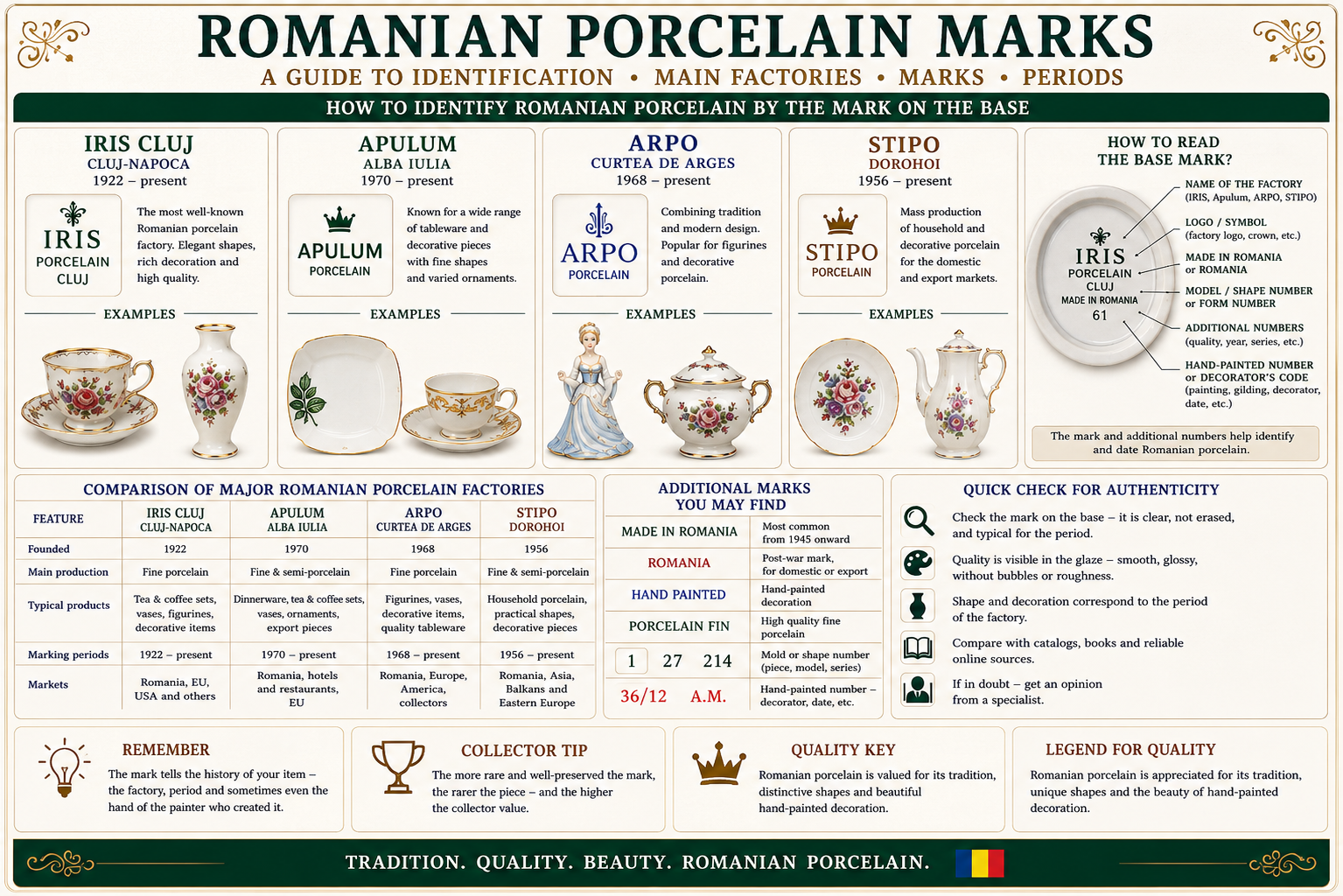
IRIS Cluj Porcelain
Among the names encountered by collectors of Romanian porcelain, IRIS Cluj deserves particular attention.
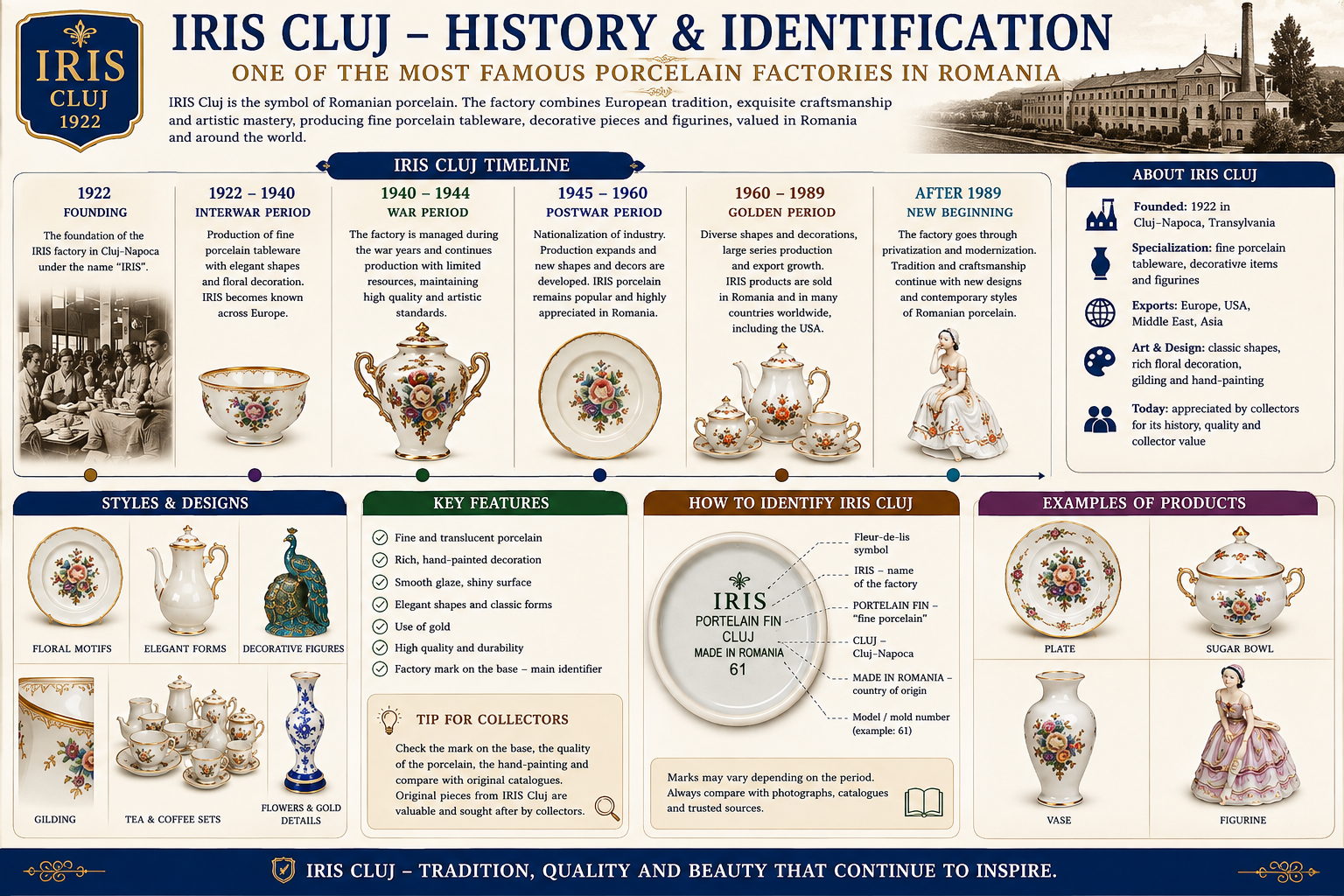
The factory is associated with Cluj-Napoca in Transylvania and became known for a broad range of porcelain objects, including tableware, decorative vessels and figurines.
IRIS pieces can vary considerably in style. Some display restrained forms, while others feature colourful floral bouquets, gilded borders and elaborate decorative details.
How to Recognize IRIS Cluj Porcelain
The base is normally the best place to begin. Depending on the object and production period, collectors may encounter combinations of wording and symbols associated with IRIS and Cluj.
Possible information may include:
- IRIS;
- CLUJ;
- factory symbols or logos;
- PORTELAN FIN or related wording;
- ROMANIA;
- MADE IN ROMANIA;
- model or mould numbers;
- handwritten production or decoration codes.
Collectors should compare the mark with the quality and style of the entire object. A backstamp is a powerful identification clue, but porcelain identification is strongest when several characteristics agree.
What Types of IRIS Cluj Pieces Can Be Found?
IRIS production is varied enough to make the factory particularly interesting to collectors.
| Type | Typical Collector Interest |
|---|---|
| Tea & coffee sets | Complete decorated services can be especially attractive |
| Vases | Floral, gilded and unusual forms |
| Plates | Decorative and table-service examples |
| Figurines | Human figures, animals and decorative subjects |
| Serving pieces | Sugar bowls, creamers, platters and covered vessels |
Apulum Alba Iulia
Apulum, associated with Alba Iulia, is another important name encountered on Romanian tableware and decorative ceramics.
Collectors may find dinner services, cups and saucers, decorative plates, serving pieces and ornamental objects bearing Apulum marks.
Because production spans different designs and periods, the factory mark should be compared with shape, decoration and manufacturing quality before attempting to date an individual piece.
ARPO Curtea de Argeș
Porcelain and decorative ceramics marked ARPO are also encountered on the vintage market.
ARPO pieces can include household tableware as well as more decorative forms. Model numbers and base markings may provide useful identification information, particularly when compared with documented examples.
STIPO Dorohoi
STIPO Dorohoi represents another strand of Romania’s twentieth-century ceramic production.
Its products can include functional tableware and decorative objects, often reflecting the styles and manufacturing priorities of the period in which they were produced.
As with IRIS, Apulum and ARPO, collectors should avoid dating a STIPO piece from the logo alone. Material, form, decoration and condition provide important supporting evidence.
The History of Romanian Porcelain
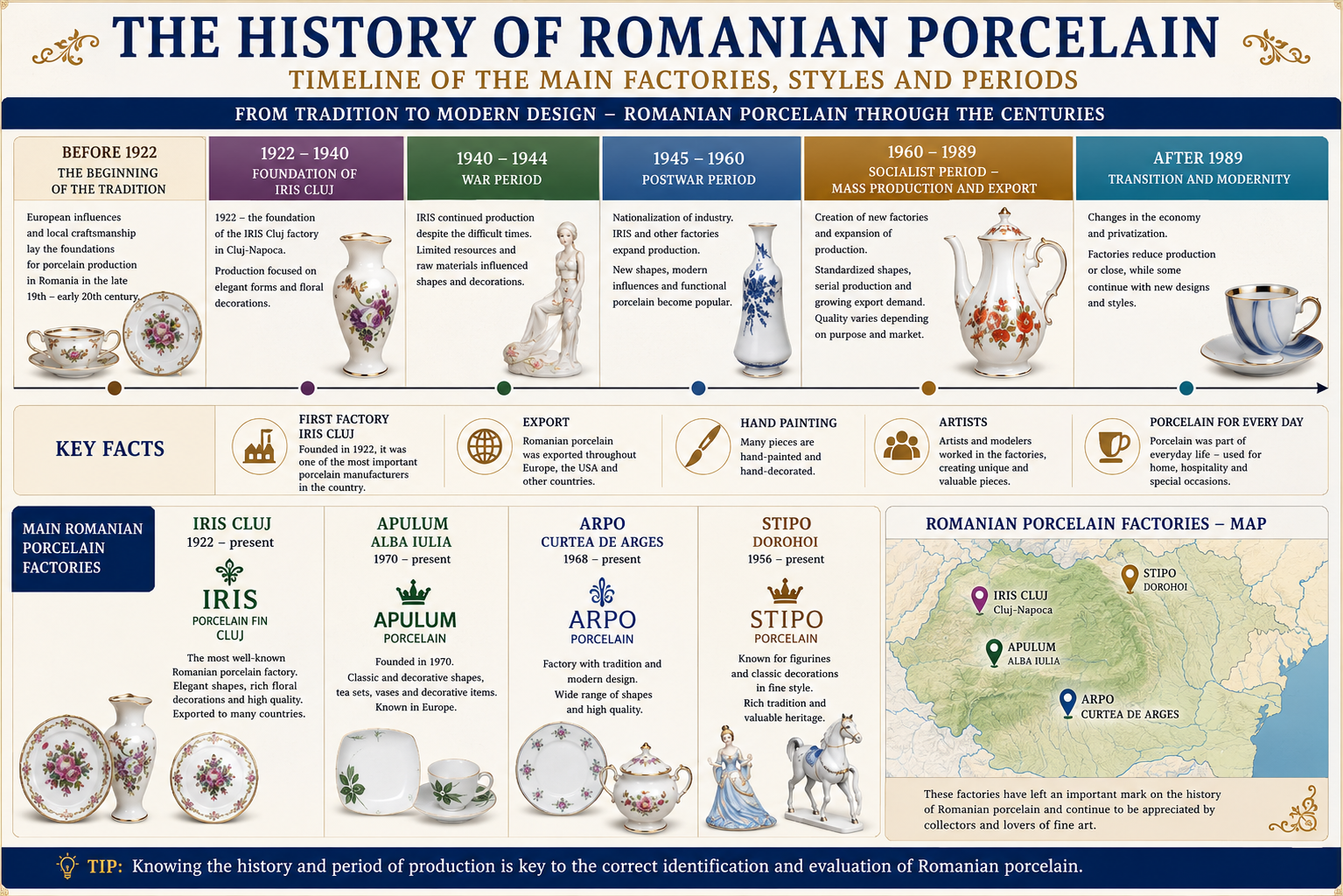
Romanian porcelain developed within the broader history of Central and Eastern European decorative arts. Imported European porcelain and neighbouring ceramic traditions influenced local taste before larger-scale domestic production became established during the twentieth century.
The political and economic changes experienced by Romania also affected manufacturing. Interwar production, wartime disruption, post-war nationalisation, socialist industrialisation and the economic transition after 1989 all left their mark on Romanian decorative arts.
Romanian Porcelain by Period
| Period | General Context |
|---|---|
| Early 20th century | European ceramic influences and growth of domestic production |
| Interwar years | Development of factories, decorative styles and tableware |
| Post-war period | Industrial restructuring and expansion of production |
| 1960s–1980s | Large-scale domestic production and export |
| After 1989 | Economic transition, changing ownership and renewed collector interest |
Romanian Porcelain During the Socialist Period
Porcelain from the socialist era forms an important part of Romania’s material history.
Factories produced large quantities of household wares, institutional tableware, decorative porcelain and export goods. At the same time, commemorative pieces were created for anniversaries, organisations and political occasions.
These objects are particularly interesting because they can combine porcelain collecting with twentieth-century social and political history.
Why Romanian Porcelain Is Interesting to Collectors
Romanian porcelain occupies an interesting position within European collecting. It is far less extensively documented internationally than famous traditions such as Meissen, Sèvres, Royal Copenhagen or English bone china, yet it offers considerable variety in design, decoration and historical context.
For collectors willing to study marks and compare examples carefully, this relative lack of documentation can make the field especially rewarding.
Romanian porcelain also fits naturally into the broader collecting history of Central and Eastern Europe — a region shaped by changing borders, cultural exchange, industrialisation and political transformation.
That makes each surviving object more than simply decorative tableware. Its mark, design and manufacturing history can reveal part of the wider story of twentieth-century Europe.
Romanian Porcelain Marks and Backstamps
For collectors, Romanian porcelain marks are among the most useful clues for identifying a piece. Factory names, logos, country-of-origin inscriptions, model numbers and handwritten codes can help determine where an object was produced and sometimes narrow its approximate production period.
However, a backstamp should never be interpreted in isolation. Factories could change logos, colours, wording and production codes over time, while different marks could sometimes appear on objects produced during overlapping periods.
For this reason, the best approach is to compare the mark with the shape, porcelain body, decoration, manufacturing technique and natural wear of the object.
What Can a Romanian Porcelain Mark Tell You?
| Marking | Possible Information |
|---|---|
| Factory name | Helps identify the manufacturer |
| Factory logo | May help distinguish factories and mark variations |
| ROMANIA | Indicates Romanian origin |
| MADE IN ROMANIA | Country-of-origin wording often associated with export production |
| Model number | May identify a particular shape, mould or product |
| Handwritten number | May relate to decoration, production or internal factory control |
| Impressed number | Can sometimes relate to mould, shape or production information |
IRIS Cluj Marks
Marks associated with IRIS Cluj porcelain are particularly important because IRIS is one of the best-known names encountered by collectors of Romanian porcelain.
Depending on the period and object, a base mark may include combinations such as IRIS, CLUJ, ROMANIA, MADE IN ROMANIA and wording referring to fine porcelain.
Numbers appearing below or beside the principal mark should also be recorded. They may represent mould, model, decoration or other production information.
Do not clean the base aggressively in an attempt to reveal a faint mark. Original marks, labels, handwritten numbers and traces of production can all form part of an object’s historical evidence.
How to Date Romanian Porcelain
Dating Romanian porcelain precisely can be difficult. Unlike some extensively documented European manufacturers, Romanian factory marks are not always supported by easily accessible chronological catalogues.
The safest method is therefore to combine several independent clues.
1. Start with the Backstamp
Record the exact wording, logo, colour and position of the mark. Even minor differences may eventually prove useful when comparing documented examples.
2. Check Country-of-Origin Wording
Wording such as Romania or Made in Romania provides useful context, particularly for pieces intended for foreign markets. It should not, however, be used alone to assign an exact year.
3. Compare the Shape
Shapes changed with fashion. Traditional floral tea services, streamlined post-war forms and later mass-produced tableware may reflect very different periods.
4. Study the Decoration
Decoration can also help establish a broad period. Examine floral composition, gilding, transfer printing, hand-painted details and colour palette.
5. Look for Numbers and Codes
Model, mould and decoration numbers can be valuable when matching a piece with documented examples or surviving catalogues.
6. Consider Natural Ageing
Wear to gilding, foot rims and exposed surfaces should be compatible with the proposed age of the object.
For a broader explanation of porcelain dating methods, see our
guide to dating antique porcelain
.
Romanian Vintage Porcelain Figurines
Romanian porcelain figurines form one of the most visually interesting areas of Romanian ceramic collecting.
Examples can include elegant ladies and gentlemen, children, animals, birds, flowers, baskets, traditional costumes and decorative groups.
How to Identify a Romanian Porcelain Figurine
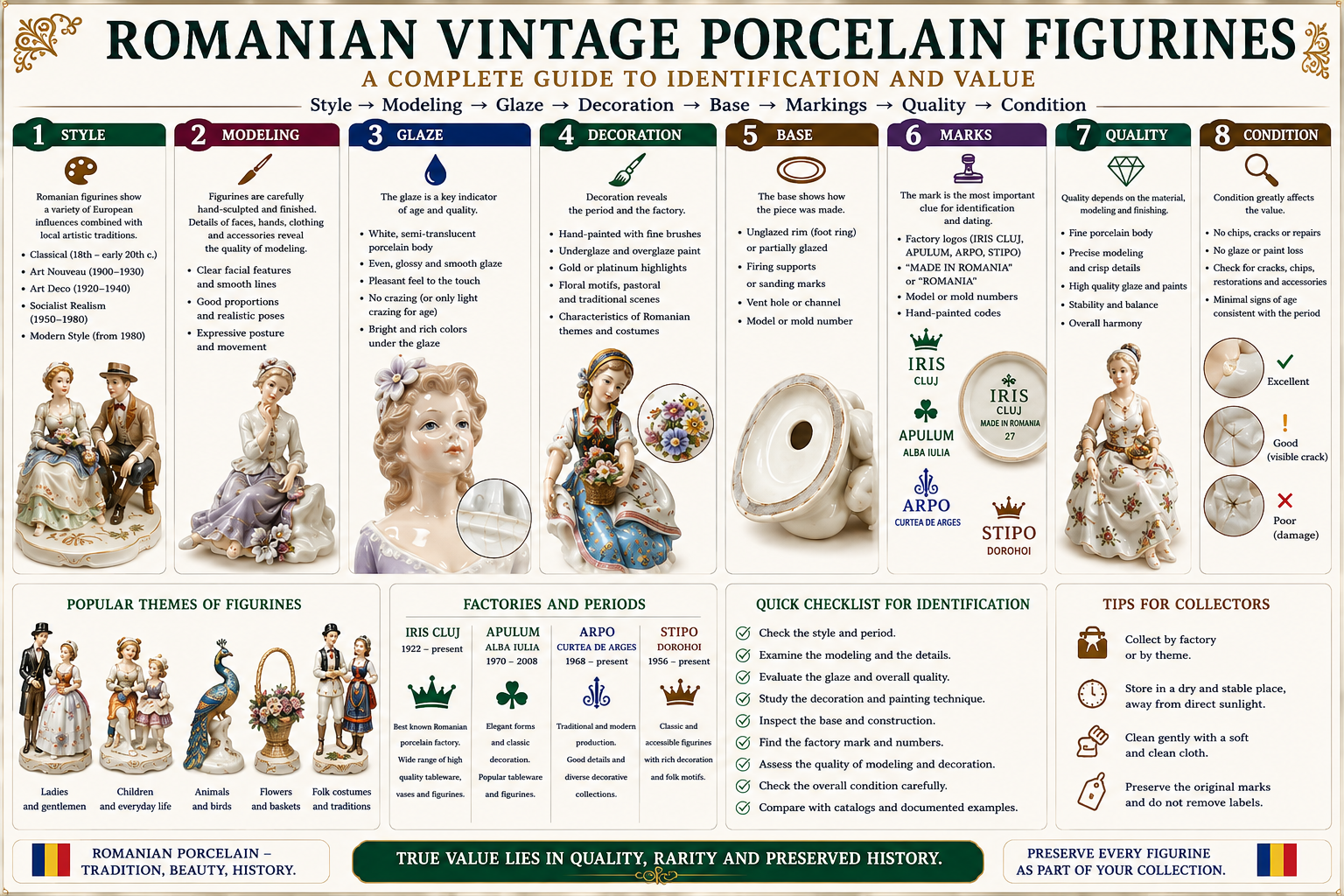
A figurine should be examined systematically from top to bottom.
| Feature | What to Examine |
|---|---|
| Style | Costume, pose, subject and artistic influence |
| Modelling | Faces, hands, folds of clothing and proportions |
| Glaze | Surface quality, gloss, crazing and firing defects |
| Decoration | Hand painting, transfers, gilding and colour quality |
| Base | Construction, firing hole, foot rim and mould characteristics |
| Mark | Factory logo, country of origin and model numbers |
| Condition | Chips, cracks, repairs and missing elements |
Quality of Modelling
Better-quality figurines generally show greater precision in facial features, fingers, clothing and small decorative elements. Transitions between surfaces tend to be cleaner and the composition more balanced.
Collectors should also inspect delicate projecting elements such as fingers, flowers, ribbons and accessories. These are among the areas most frequently damaged or restored.
Hand-Painted Decoration
Hand-painted details can increase the visual and collector appeal of a figurine, particularly when the decoration is sophisticated and well preserved.
Brushwork should be examined under magnification. Small irregularities are not necessarily defects; they can sometimes provide evidence of manual decoration.
Which Romanian Porcelain Is Most Collectible?
Not every old Romanian porcelain object is rare or valuable. Collector interest generally increases when several desirable characteristics occur together.
Particularly interesting categories can include:
- unusual IRIS Cluj pieces;
- complete tea and coffee services;
- high-quality porcelain figurines;
- large decorative vases;
- hand-painted porcelain;
- elaborately gilded objects;
- unusual or discontinued forms;
- commemorative porcelain;
- pieces with documented provenance;
- objects retaining original labels or documentation.
Romanian Porcelain Value
One of the most common questions is: How much is Romanian porcelain worth?
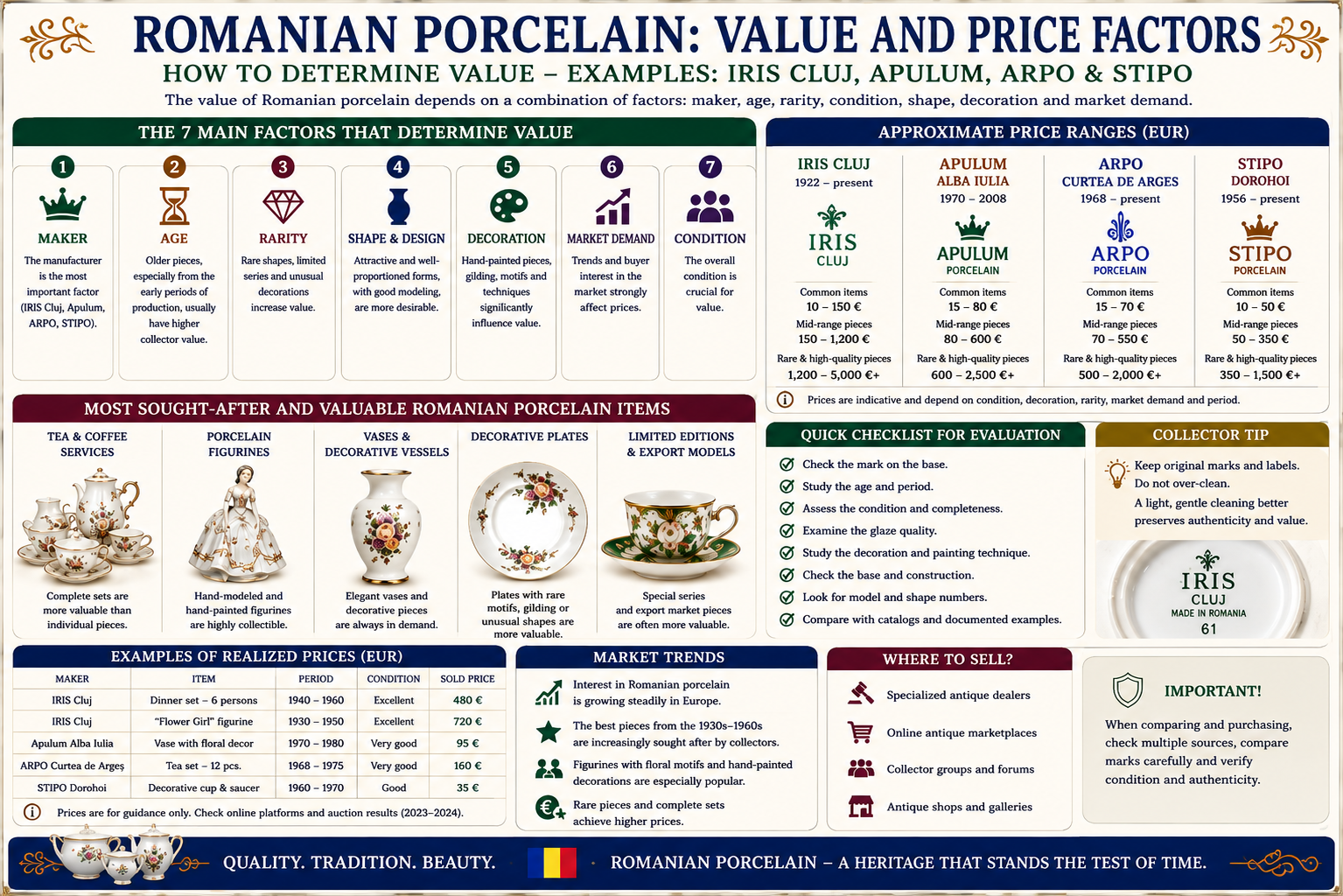
There is no universal price. Value depends on the manufacturer, period, rarity, decoration, quality, condition, completeness and current collector demand.
Factors That Influence Romanian Porcelain Value
| Factor | Why It Matters |
|---|---|
| Manufacturer | Some factories and product lines attract stronger collector interest |
| Age | Earlier production can be scarcer, although age alone does not guarantee value |
| Rarity | Unusual models and limited production can command greater interest |
| Decoration | Fine hand painting and elaborate gilding can increase desirability |
| Shape | Large, unusual or difficult-to-find forms may be more collectible |
| Condition | Damage and restoration can substantially affect value |
| Completeness | Complete services and complete figurine groups may outperform incomplete examples |
| Provenance | Documented ownership or history may add significance |
| Market demand | Collector tastes and availability change over time |
Does Old Romanian Porcelain Automatically Have Value?
No. Age is only one part of valuation.
A relatively common older plate with significant damage may be worth less than a later but rare figurine in exceptional condition.
Likewise, a complete service can have considerably more collector appeal than a single cup from the same pattern.
Are IRIS Cluj Pieces Valuable?
Some IRIS Cluj porcelain can attract collector interest, particularly unusual forms, high-quality figurines, decorative vases, complete services and pieces with attractive hand-painted or gilded decoration.
The IRIS name alone, however, does not establish value. The individual object must still be assessed for rarity, quality, condition and market demand.
Condition and Its Effect on Value
Condition is one of the most important factors in porcelain valuation.
Before buying or valuing a piece, inspect it in strong indirect light and examine both the decorated surfaces and the underside.
Look for:
- chips around rims and bases;
- hairline cracks;
- crazing;
- staining;
- loss of gilding;
- missing figurine elements;
- glued repairs;
- overpainting;
- professional restoration.
A repaired object is not necessarily undesirable. Rare pieces can remain collectible after restoration, but the repair should be identified and considered when estimating value.
How to Check Romanian Porcelain for Restoration
Begin by examining the object under different angles of light. Restored areas can sometimes have a slightly different gloss, colour or surface texture.
Pay particular attention to handles, rims, figurine fingers, flowers, finials and other projecting elements.
A magnifying glass can reveal repainting, filled cracks or changes in surface texture that are difficult to see with the naked eye.
Romanian Porcelain: Original, Reproduction or Misidentified?
The growing availability of vintage ceramics online means that identification should always be approached carefully.
A seller’s description is not evidence of origin. An object advertised as “IRIS Cluj,” “Romanian antique porcelain” or even “hand painted” should be independently examined.
Check whether:
- the mark corresponds with the manufacturer;
- the mark is compatible with the proposed period;
- the porcelain body matches the expected quality;
- the shape is historically plausible;
- the decoration is consistent with known production;
- wear corresponds naturally with age;
- numbers and codes make sense in context.
Romanian Porcelain Identification Checklist
When examining an unidentified Romanian porcelain object, use this quick checklist:
- Photograph the entire object.
- Photograph the base and backstamp clearly.
- Record all words, numbers and symbols.
- Identify the likely factory.
- Examine the porcelain body and glaze.
- Study the shape and construction.
- Determine whether decoration is hand painted, transferred or mixed.
- Check gilding and decorative details.
- Inspect for damage and restoration.
- Compare the piece with documented examples.
Romanian Porcelain in the Wider European Tradition
Romanian porcelain should not be studied in isolation. Its development belongs to the broader story of European ceramics, where ideas, craftsmen, technologies and decorative fashions repeatedly crossed political borders.
Collectors researching Romanian pieces may therefore benefit from comparing them with porcelain from neighbouring Central and Eastern European traditions as well as major Western European manufacturers.
Our
complete guide to antique porcelain
provides the wider historical context for understanding European porcelain manufacture and collecting.
Frequently Asked Questions About Romanian Porcelain
Is Romanian porcelain collectible?
Yes. Romanian porcelain has an established collecting interest, particularly among collectors of twentieth-century European ceramics, Central and Eastern European decorative arts, porcelain figurines and factory-specific wares.
What are the best-known Romanian porcelain factories?
Names frequently encountered by collectors include IRIS Cluj, Apulum, ARPO and STIPO, although Romanian ceramic production extends beyond these manufacturers.
How can I identify Romanian porcelain?
Begin with the mark on the base. Then compare the factory name or logo with the material, shape, decoration, numbers, manufacturing technique and condition. Identification should be based on several matching clues rather than a single backstamp.
What does “Made in Romania” mean on porcelain?
It identifies Romania as the country of manufacture. Such wording is particularly common on goods intended for international distribution, but by itself it normally cannot provide an exact production date.
How do I identify IRIS Cluj porcelain?
Look for IRIS-related factory markings on the base, including the factory name, Cluj references, country-of-origin wording and associated model or production numbers. Compare these details with the object’s decoration, form and manufacturing quality.
Are Romanian porcelain figurines valuable?
Some can be collectible, especially well-modelled examples, unusual subjects, scarce models and figurines with fine decoration in excellent condition. Manufacturer, rarity and condition should always be considered together.
Does a factory mark prove that Romanian porcelain is authentic?
No. A mark is an important clue, but it should be supported by the material, manufacturing technique, decoration, shape and appropriate signs of age.
Do model numbers help identify Romanian porcelain?
They can. Mould, shape, decoration and production numbers may help connect an object with documented examples, particularly when combined with a recognizable factory mark.
Is all Romanian porcelain antique?
No. Much of the Romanian porcelain encountered by collectors today is better described as vintage rather than antique. The terms should not be used interchangeably simply because an object appears old.
What is the best way to value Romanian porcelain?
Identify the manufacturer and approximate period first. Then assess rarity, decoration, size, completeness, condition and provenance before comparing the piece with relevant recent market evidence.
Final Thoughts
Romanian porcelain deserves a more prominent place within the history of twentieth-century European ceramics. Factories such as IRIS Cluj, Apulum, ARPO and STIPO produced everything from everyday tableware to decorative vases, elaborate services and collectible figurines.
For collectors, the key is systematic identification. Begin with the backstamp, but never stop there. Study the material, shape, decoration, model numbers, condition and historical context before reaching a conclusion.
The more clues that agree, the stronger the identification becomes.
And because Romanian porcelain remains less extensively documented internationally than many famous Western European traditions, careful research can still lead to interesting discoveries.
Related Porcelain Guides
Continue exploring porcelain history, identification and collecting:
-
Antique Porcelain: History, Identification, Marks & Manufacturers
-
How to Date Antique Porcelain
-
Explore Stories & Knowledge
Do you own a Romanian porcelain piece?
Clear photographs of the entire object, its decoration, base, backstamp and any numbers or inscriptions are the most useful starting point when researching its manufacturer, period and possible collector interest.
