
Bulgarian Rugs in Modern Interiors: 6 Styling Ideas
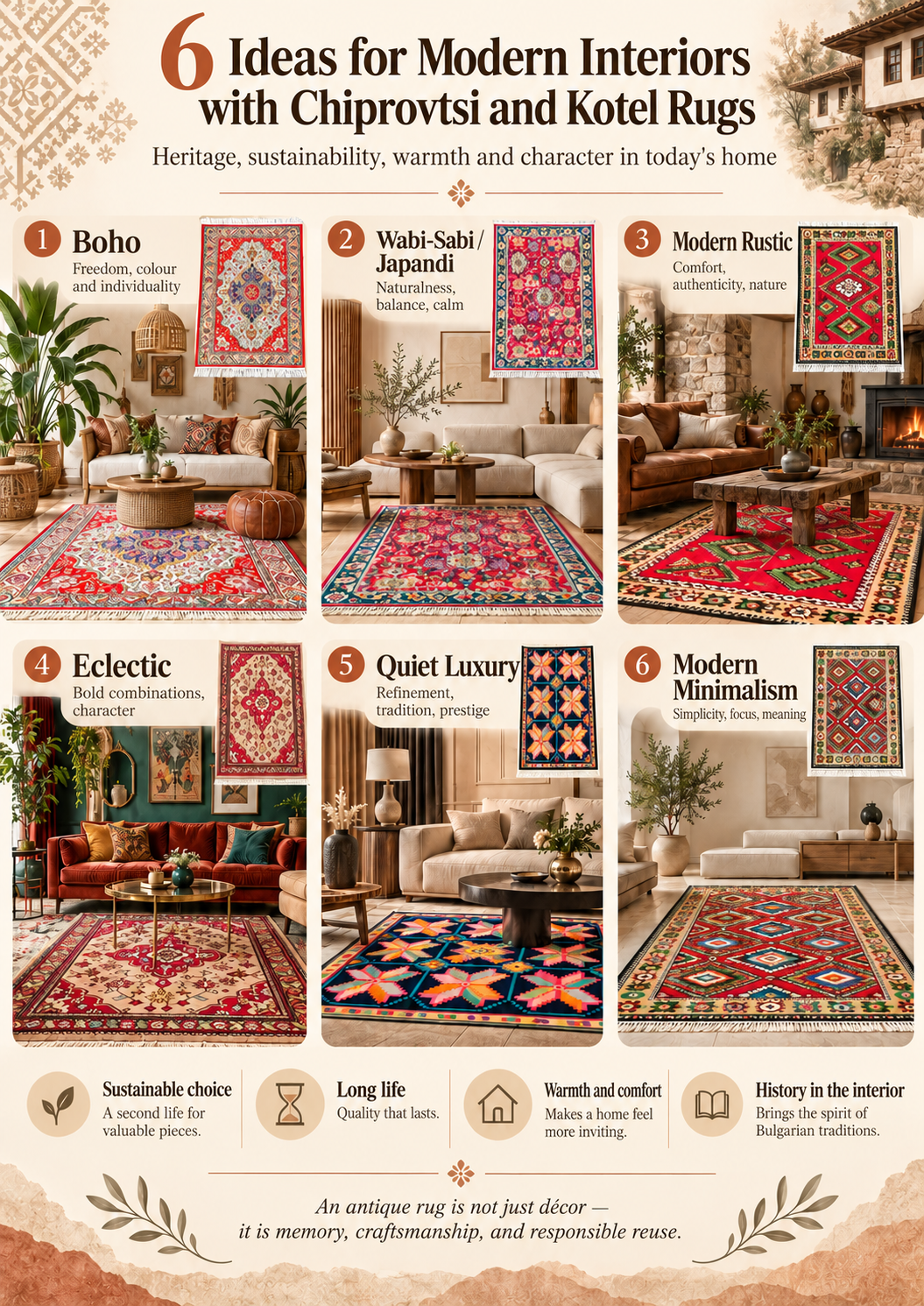
6 Ideas for Modern Interiors with Chiprovtsi and Kotel Rugs
Heritage, sustainability, warmth, and character in today’s home
Last Updated: October 16, 2026
Quick Answer
Yes—traditional Chiprovtsi rugs and Kotel rugs work beautifully in modern interiors. Their strong design language, handmade texture, and long life make them ideal for styles such as boho, eclectic, wabi-sabi, Japandi, quiet luxury, modern classic, rustic farmhouse, and even modern minimalism. A historic Bulgarian rug is not just decoration; it is a sustainable, character-rich piece that brings warmth, memory, and lasting value into a home.
When a room feels too anonymous, too polished, or too temporary, a truly handmade rug can change everything. In contemporary interior design, people are increasingly looking for objects with meaning, craft, and longevity. This is exactly where traditional Bulgarian rugs find their place.
In this article, we use six verified examples from our collection—three Kotel rugs and three Chiprovtsi rugs—to show how old textiles can live naturally in present-day interiors. Whether the goal is a layered bohemian room, a calm Japandi-inspired space, a refined quiet-luxury salon, or a warm mountain home, these rugs bring more than colour: they bring history, atmosphere, sustainability, and emotional depth.
For modern homeowners, collectors, designers, and families who value responsible living, such rugs also represent something deeply relevant today: thoughtful reuse. A well-made rug can live for generations. In many homes—especially refined, responsible homes—heirloom textiles are not seen as outdated. They are appreciated as part of a cultured, lasting, and environmentally aware way of living.
At a Glance
| Main Topic | How Chiprovtsi and Kotel rugs fit into modern interiors |
| Rug Types Used | 3 Chiprovtsi rugs and 3 Kotel rugs from verified examples |
| Key Design Styles | Boho, eclectic, wabi-sabi, Japandi, rustic farmhouse, mountain home, quiet luxury, modern classic, modern minimalism |
| Why They Work | Warmth, craft, texture, pattern, sustainability, heirloom value, and strong visual identity |
| Best Rooms | Living room, study, library, dining room, bedroom, guest room, mountain lodge, townhouse, apartment |
| Main Benefit | A historic rug brings beauty and authenticity while encouraging responsible long-term use |
The Six Verified Rugs Used in This Article
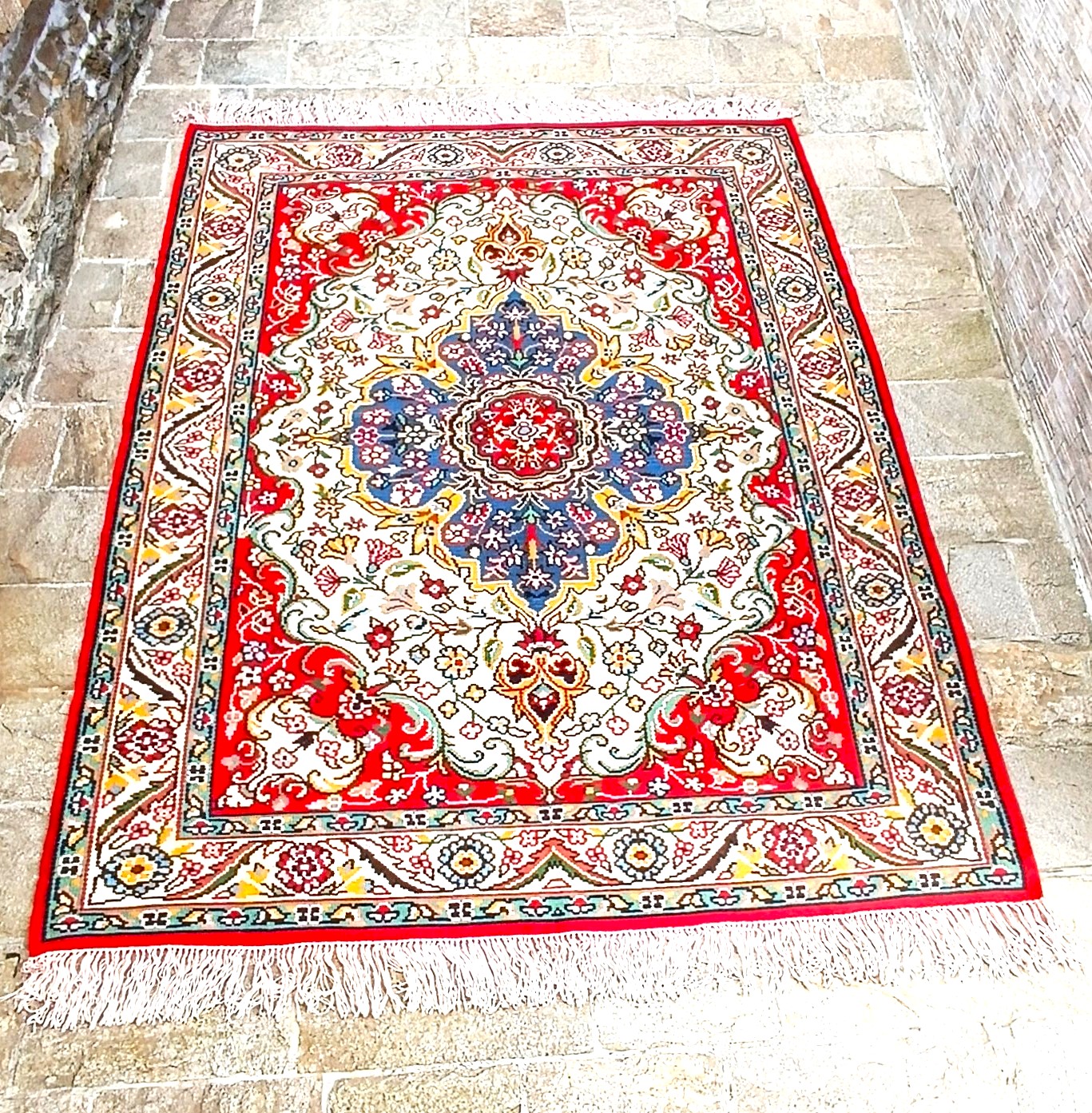
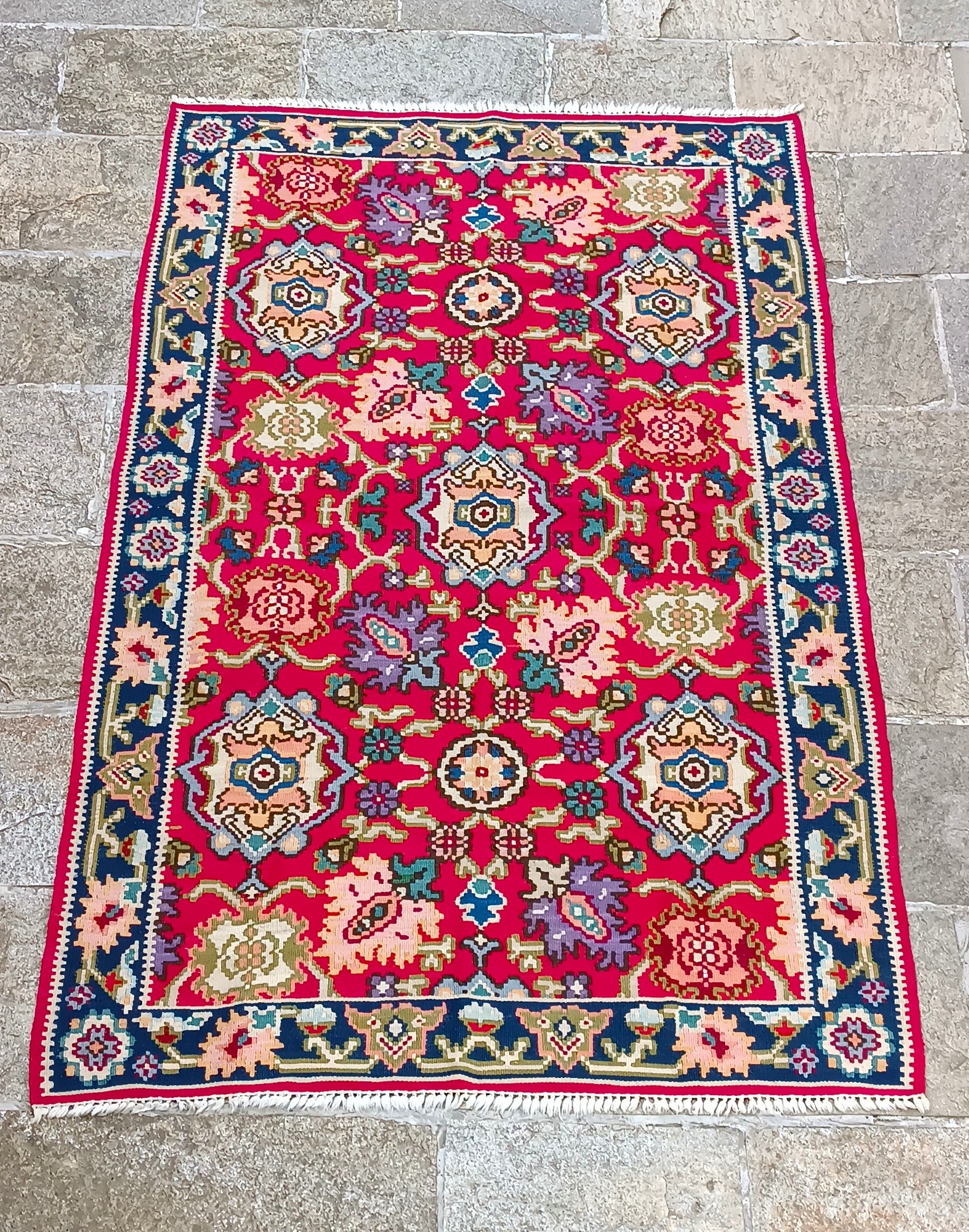
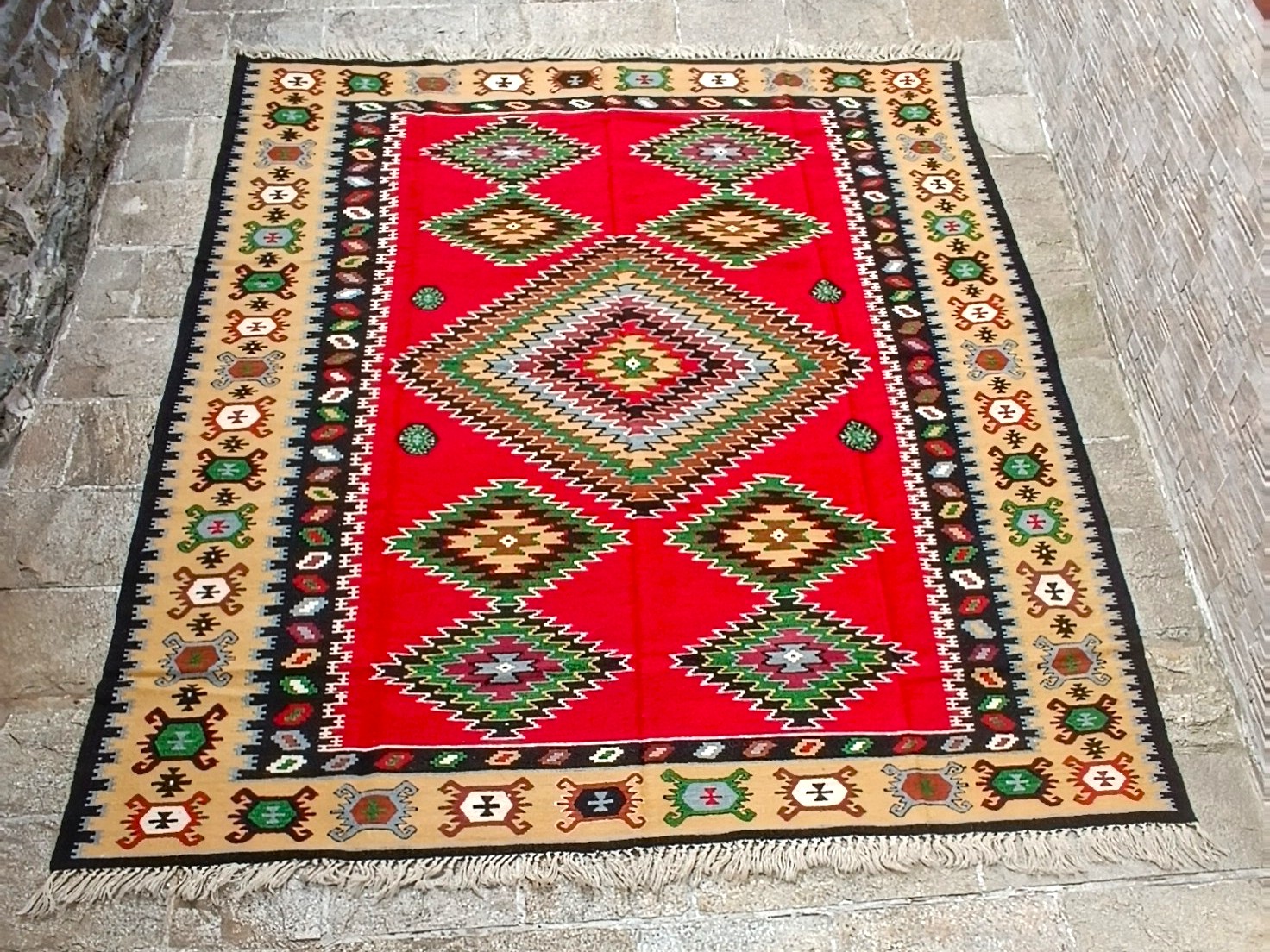
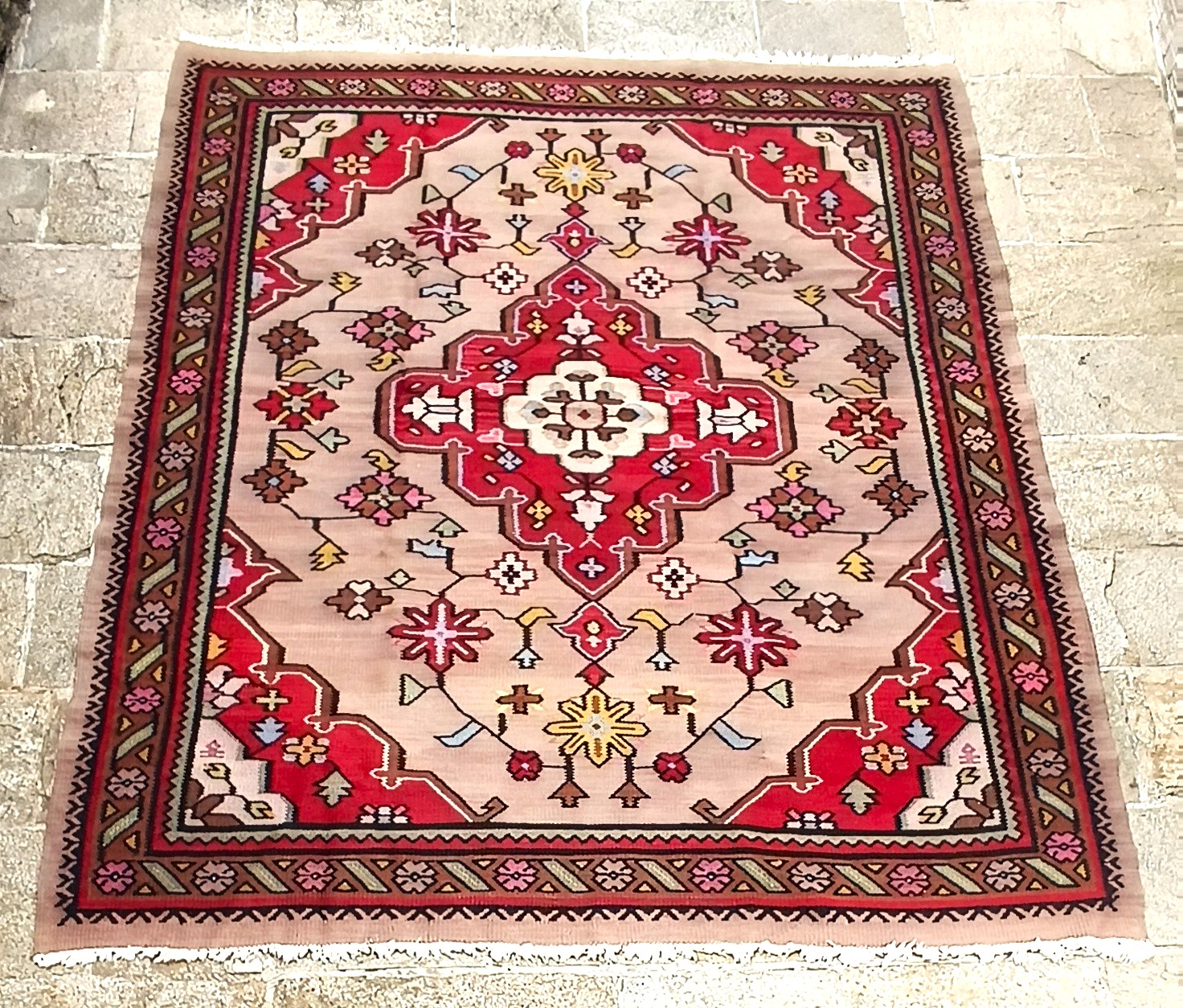
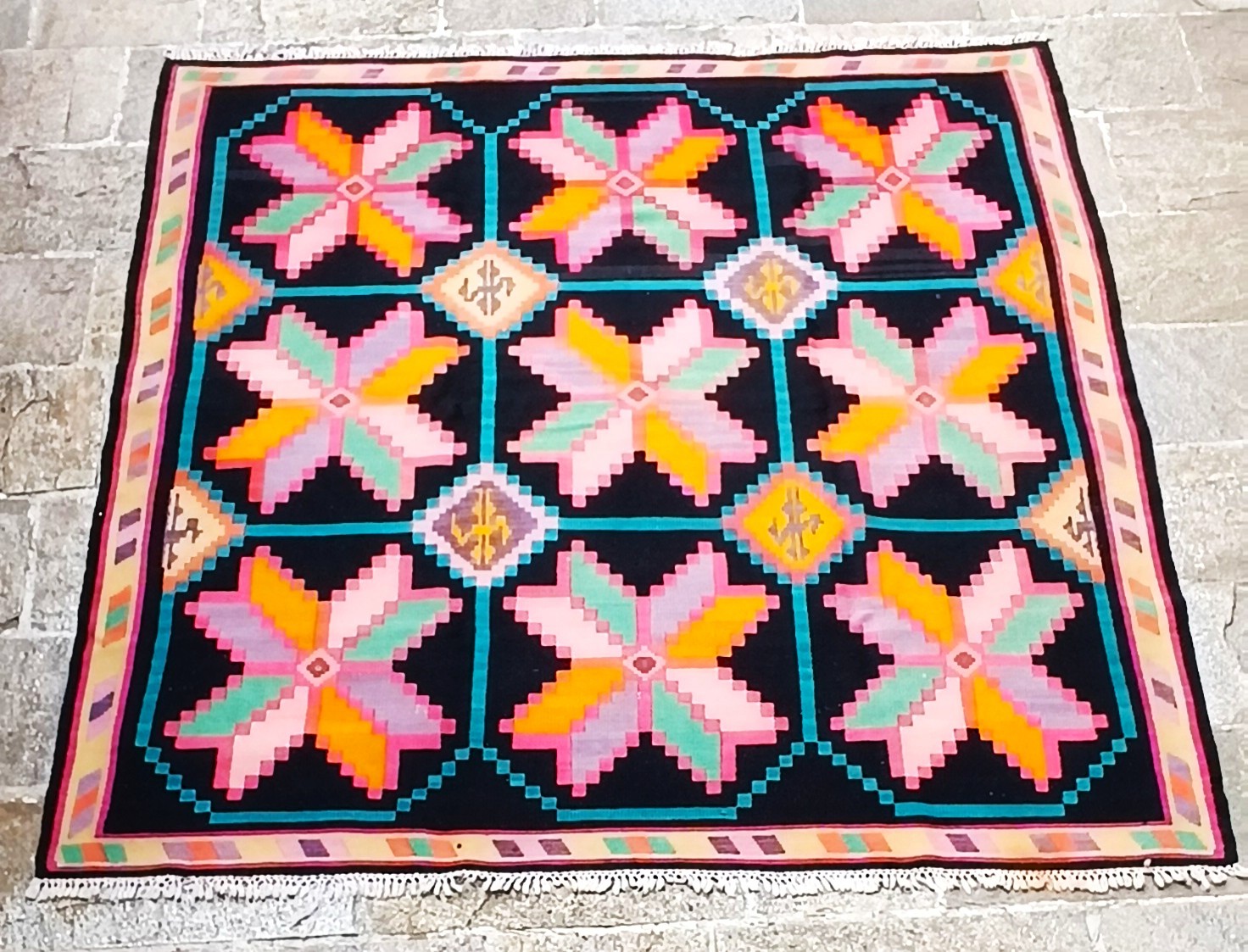
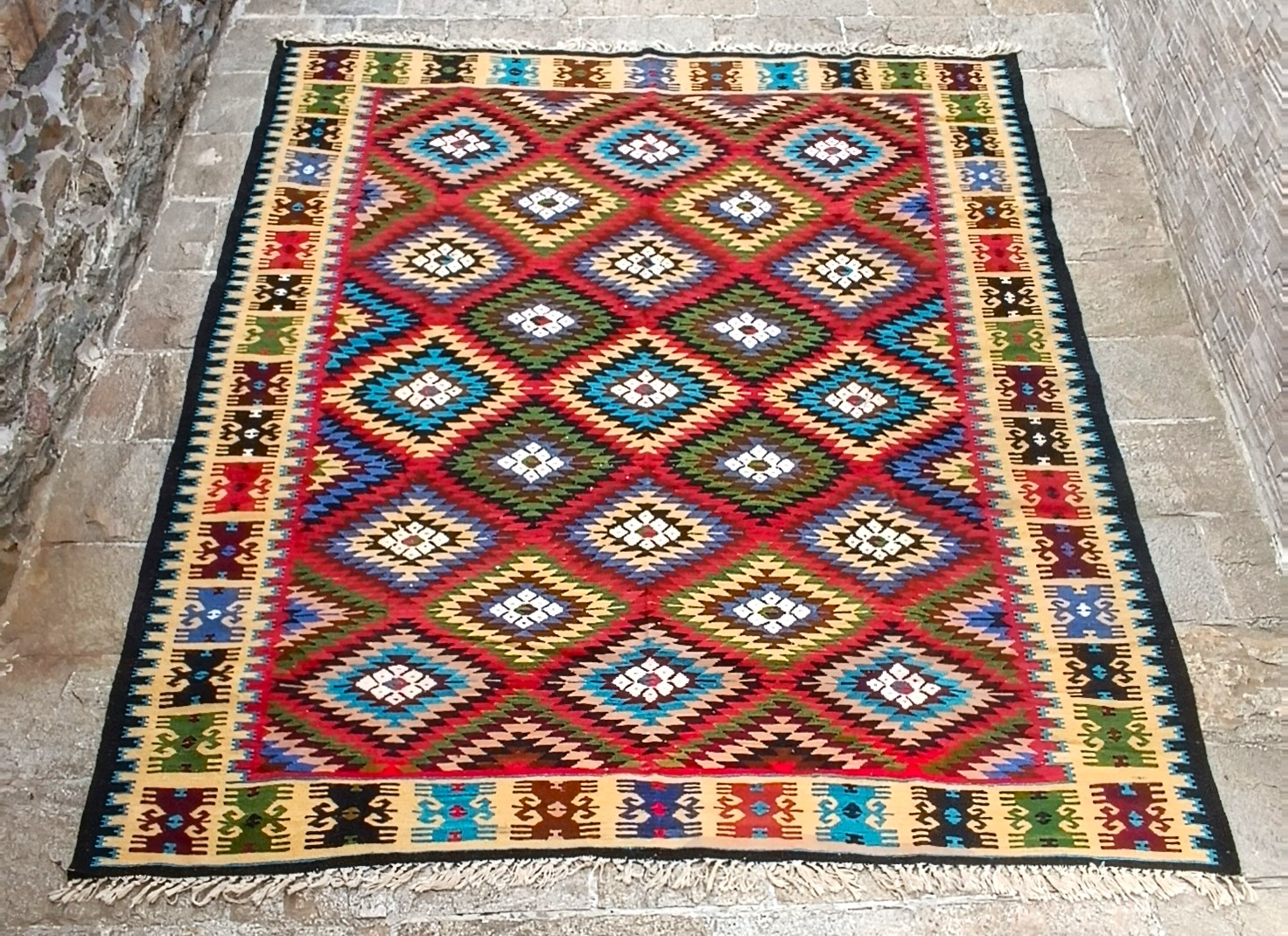
To keep the article grounded, we are using six confirmed examples from our collection. These are not generic mood images—they are actual rugs that help illustrate how Bulgarian textile heritage can enter a modern home.
Why Chiprovtsi and Kotel Rugs Belong in Modern Interiors
Modern design is often associated with clean lines and edited spaces, but that does not mean a home should feel empty or impersonal. What many contemporary interiors actually need is a strong grounding element—something tactile, authentic, and visually rich. Traditional Bulgarian rugs do exactly that.
- They add warmth: both visual and physical warmth, especially in stone, wood, plaster, or minimalist rooms.
- They introduce texture: handmade woven surfaces soften sleek interiors and create a more human atmosphere.
- They give a room identity: a historic rug often becomes the emotional centre of the room.
- They support sustainable living: reuse and preservation are deeply meaningful alternatives to fast decoration cycles.
- They hold memory: heirloom textiles connect the present-day home with family continuity, place, and cultural heritage.
6 Interior Styles Where These Rugs Work Beautifully
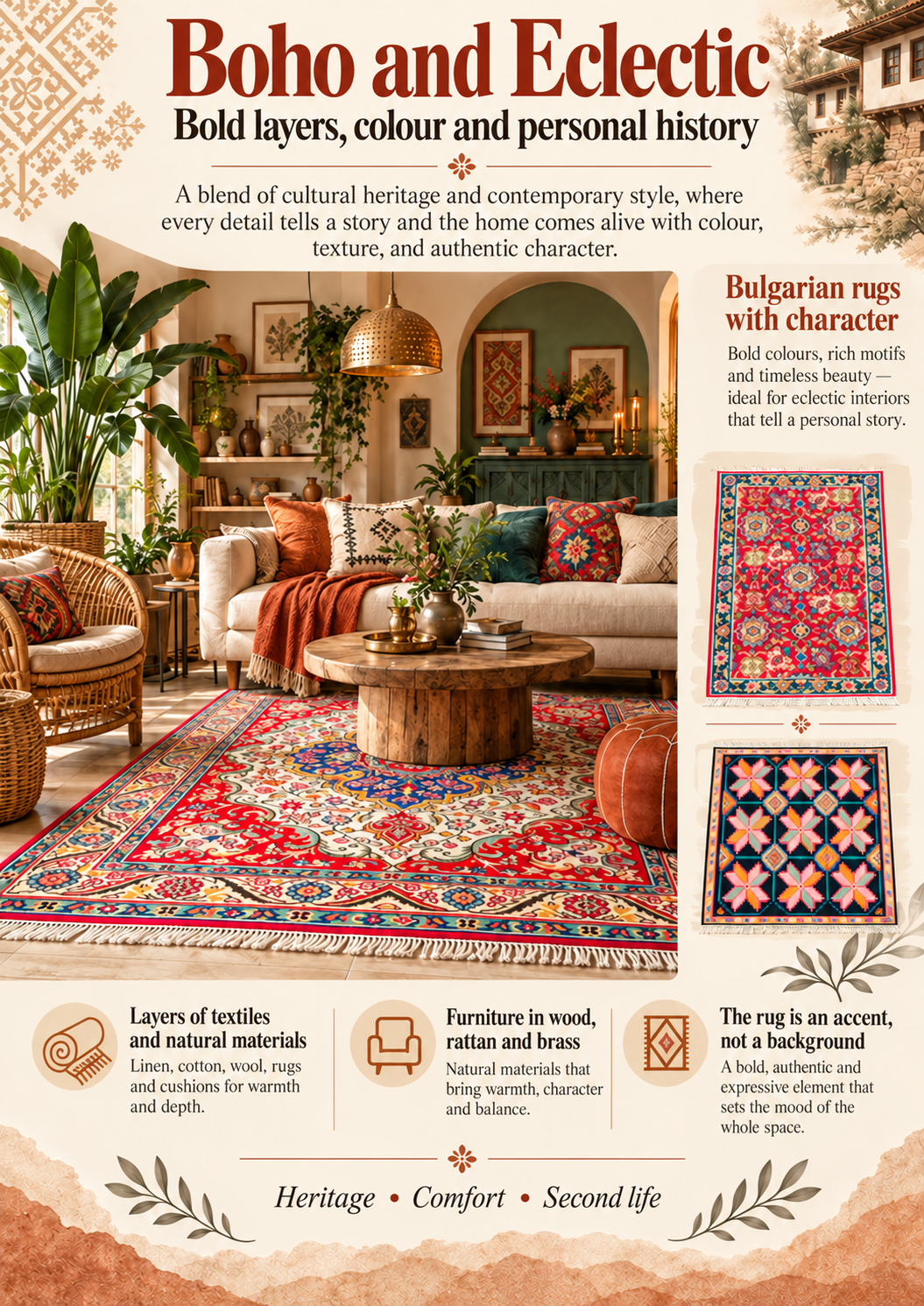
1) Bohemian Interiors: Freedom, Colour, and Personal Story
Boho spaces celebrate layered materials, collected objects, plants, handmade furniture, and a relaxed sense of individuality. This makes them a natural setting for both Kotel and Chiprovtsi rugs. The floral richness of a Kotel rug can anchor a room full of linen, wood, rattan, pottery, and warm natural light. Meanwhile, the more graphic geometry of a Chiprovtsi rug can energise a softer boho palette.
In a bohemian setting, the rug should not feel too controlled. Let it converse with textiles, cushions, throws, and collected objects. The goal is not perfection but atmosphere—an interior that feels lived in, travelled, and deeply personal.
2) Eclectic Rooms: Confident Mixing with Cultural Depth
Eclectic design is not random collecting; at its best, it is a deliberate composition of different periods, textures, and references. A rug with a clear historical voice brings order and intention to that mix. Kotel rugs, with their medallions and floral rhythm, work beautifully among vintage furniture, brass accents, framed art, painted walls, and decorative textiles. Chiprovtsi rugs, with their geometric strength, offer contrast and graphic clarity.
In an eclectic room, a Bulgarian rug can act as the thread that unites seemingly different pieces. It introduces colour, but also coherence. This is especially valuable in homes where the interior is meant to reflect a personal journey rather than a trend.
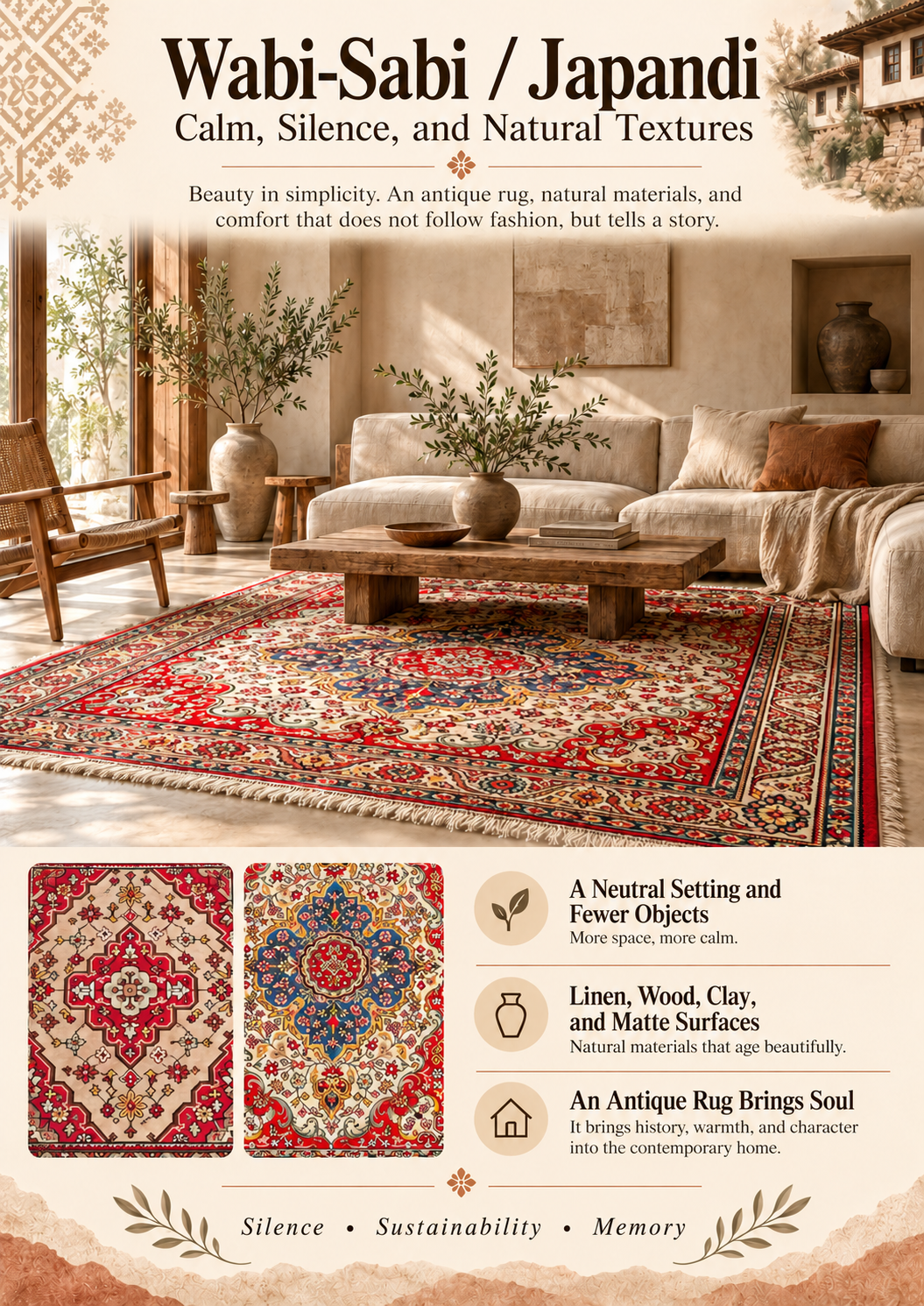
3) Wabi-Sabi and Japandi: Calm, Honest, and Grounded
At first glance, people may think an old patterned rug is too expressive for wabi-sabi or Japandi interiors. In reality, a carefully chosen historic rug can be exactly the right counterbalance. These styles value simplicity, natural materials, and quiet atmosphere—but they also value authenticity. A truly handmade rug belongs here because it carries human touch and the beauty of imperfection.
For this direction, choose spaces with a restrained palette: limewashed walls, muted plaster, pale wood, linen, clay, stone, and open breathing room. A rug such as the cream-field Kotel example can sit beautifully in such an environment. Even a stronger red-based Kotel rug can work if the surrounding materials are calm enough.
The key is restraint. Let the rug be one meaningful accent rather than one element among many competing statements.
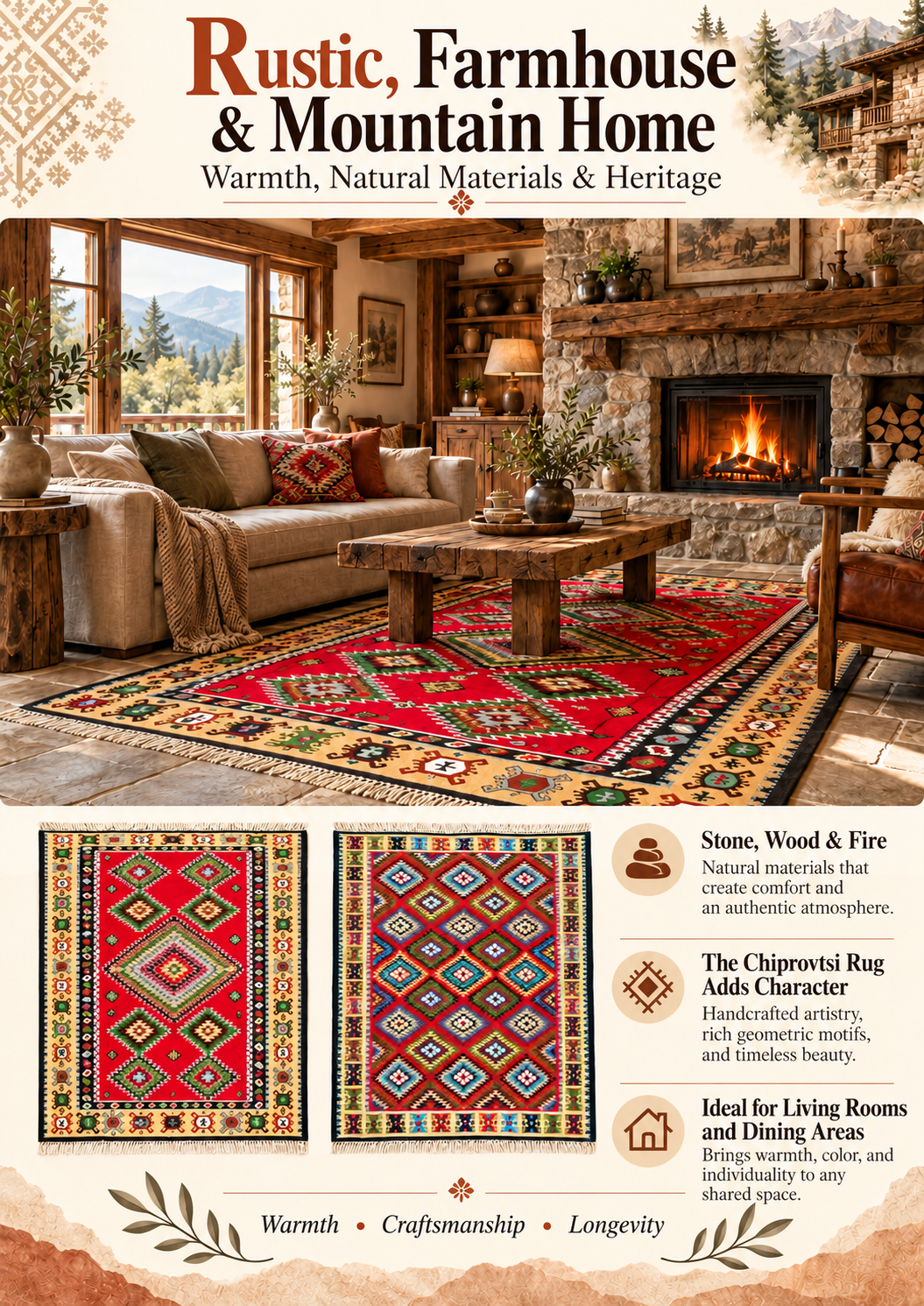
4) Rustic, Farmhouse, and Mountain Homes: Natural Warmth and Enduring Craft
This is one of the most intuitive homes for traditional rugs. Rustic interiors already rely on wood, stone, firelight, woven textures, and a sense of shelter. In such settings, a Chiprovtsi rug can look especially powerful. Its geometry stands confidently against timber beams, farmhouse tables, hand-thrown ceramics, and wool blankets.
The red stepped-diamond Chiprovtsi rug and the multicoloured diamond example both feel particularly suited to this interior language. They bring a sense of structure and strength while still feeling handmade and warm. This is also a style where long-lasting textiles make perfect ethical sense: a mountain or country home often celebrates durability and continuity.
If a home is meant to feel welcoming, grounded, and connected to landscape, a Bulgarian rug can become one of its most convincing design elements.
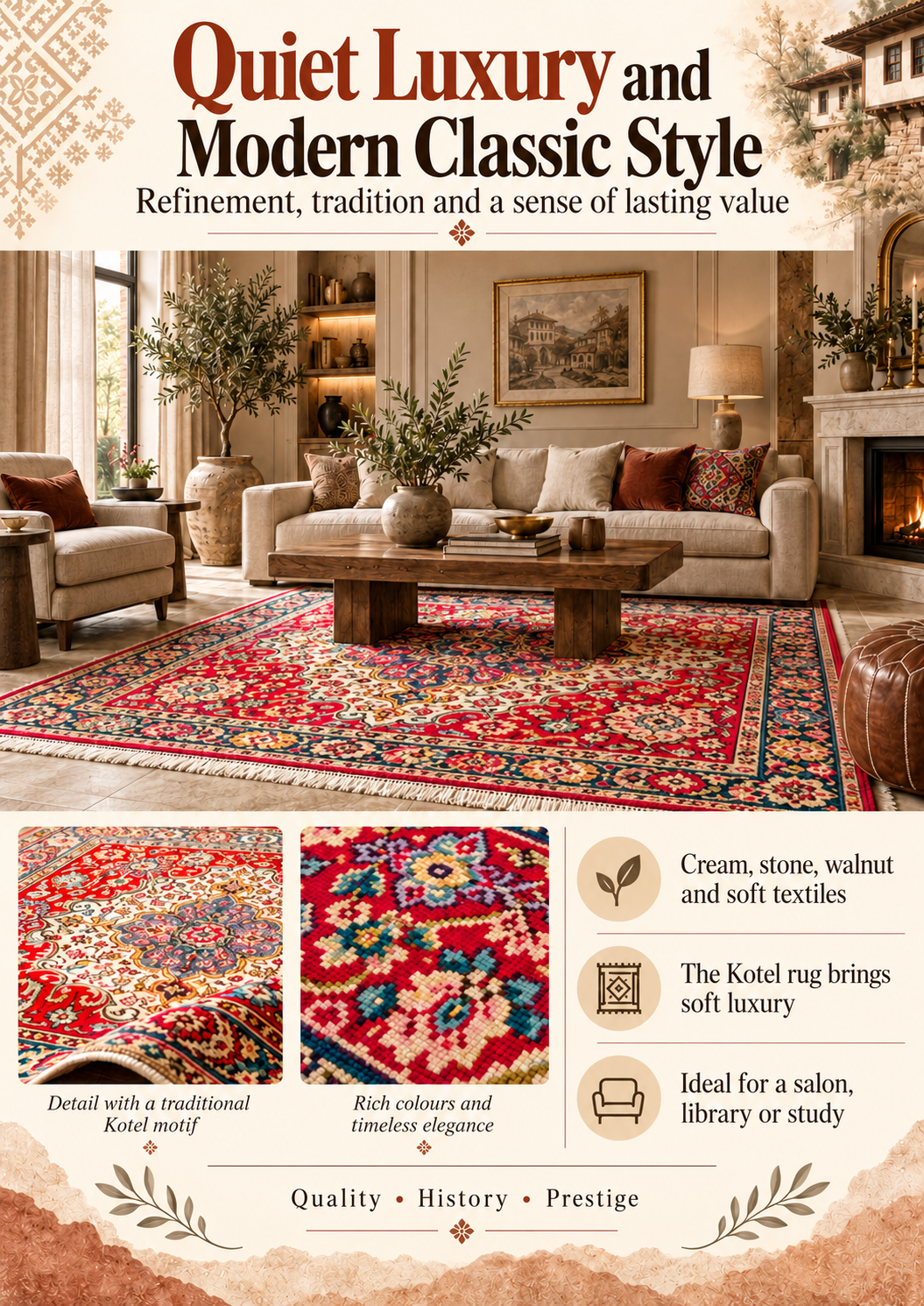
5) Quiet Luxury and Modern Classic Rooms: Soft Prestige, Not Display
Quiet luxury is not about logos or visual noise. It is about quality, restraint, excellent materials, and a sense of things that will remain beautiful over time. In that context, a Kotel rug can be extraordinary. The floral sophistication, medallion structure, and nuanced colour palette feel perfectly at home among oak, stone, cream upholstery, soft drapery, aged brass, and carefully chosen art.
The Kotel examples with medallion-centred designs especially suit salons, reading rooms, libraries, formal sitting rooms, and elegant apartments. They add richness without feeling brash. More importantly, they communicate a different idea of luxury: not newness, but discernment.
A room like this does not need many decorative pieces. One fine rug, a few beautiful materials, and space around them are often enough.
6) Modern Minimalism: One Strong Element in a Clean Space
Minimalism does not have to mean visual emptiness. In fact, one of the most effective ways to make a minimalist room feel memorable is to introduce a single object with substance. A geometric Chiprovtsi rug works especially well here because it reads clearly in space. Against plaster walls, pale wood, clean-lined furniture, and few accessories, it becomes both focal point and source of warmth.
The multicoloured stepped-diamond rug and the black-ground star-pattern rug both have the graphic confidence that minimal interiors need. The room stays clean, but it gains depth, story, and humanity.
Kotel vs Chiprovtsi: Which One Suits Your Interior Better?
| Feature | Kotel Rugs | Chiprovtsi Rugs |
| Visual language | Often floral, medallion-based, rhythmic, decorative | Geometric, bold, structured, highly graphic |
| Best style match | Quiet luxury, modern classic, boho, eclectic, soft Japandi | Rustic, farmhouse, minimalism, contemporary, eclectic, mountain home |
| Mood | Elegant, warm, rich, refined | Strong, energetic, grounded, architectural |
| Ideal rooms | Living room, salon, library, bedroom | Living room, dining room, study, lodge, everyday family space |
Sustainability, Reuse, and the Long Life of a Rug
One of the most important reasons to use historic rugs in modern interiors is not aesthetic alone—it is ethical. A well-made rug has a remarkably long life. Unlike disposable home décor, it can remain useful and beautiful for decades, even generations. Choosing such a piece is a quiet but meaningful act of resistance against short-term consumption.
In responsible homes, inherited or carefully selected older textiles are not seen as “old-fashioned.” They are recognised as objects of substance. They show that beauty can be preserved, that quality deserves care, and that comfort does not need to come from constant replacement. A rug passed down from grandparents, or selected with the same seriousness as an heirloom, gives a home more than style. It gives it continuity.
This is especially true in high-quality interiors. The most thoughtful homes often combine restraint with memory. A beautiful old rug in such a setting feels entirely natural—because it represents permanence, responsibility, and a deeper kind of luxury.
Collector Checklist
- Choose the rug first if it will be the emotional centre of the room.
- Let one historic textile carry the strongest pattern in minimalist or quiet interiors.
- Repeat one or two colours from the rug elsewhere in the room for balance.
- Use natural materials—wood, wool, linen, clay, stone—to support the handmade character.
- Avoid overcrowding; even rich rugs need visual breathing space.
- Treat the rug as a long-term object, not a seasonal accessory.
- If the rug is an heirloom, allow its story to become part of the room’s identity.
Practical Styling Tips
- For boho: combine with layered textiles, rattan, plants, ceramics, and warm earth tones.
- For Japandi: keep the room quiet, use pale woods and matte surfaces, and let the rug provide the soul.
- For rustic homes: pair with oak, walnut, stone floors, fireplaces, and wool throws.
- For quiet luxury: surround the rug with high-quality but understated materials—linen, velvet, stone, antique brass, soft cream upholstery.
- For minimalism: limit visual clutter and allow the rug to function as the room’s main statement.
- For family or heirloom homes: keep the narrative alive—let the rug be a piece that is remembered, discussed, and cared for.
A Rug Is More Than Décor
A historic rug is not simply a floor covering. It is a form of memory, workmanship, and responsible reuse. In a modern home, it can carry warmth, identity, and continuity in a way that few objects can.
If you are looking for a Bulgarian rug that fits your interior or want help choosing between Chiprovtsi and Kotel pieces, you can contact us here.
FAQ
Do Bulgarian heritage rugs work in modern homes?
Absolutely. They work especially well when the rest of the room allows the rug to breathe. Modern interiors often benefit from one strong handmade element.
Which is better for minimal interiors: Kotel or Chiprovtsi?
Chiprovtsi rugs often work especially well because their geometry reads clearly in clean spaces, but a more restrained Kotel rug can also be beautiful in a calm room.
Are old rugs a sustainable choice?
Yes. Reusing a long-lasting handmade textile is one of the most meaningful forms of sustainable decorating. It reduces waste and honours craftsmanship.
Can a valuable rug still be used in daily life?
Yes, if used with awareness and proper care. Many refined homes use inherited or collectible textiles as part of everyday living rather than treating them only as untouchable display pieces.
What rooms are best for these rugs?
Living rooms, studies, libraries, bedrooms, mountain homes, and quiet sitting rooms are all excellent choices. The best placement depends on the rug’s scale, palette, and pattern strength.
Why do heirloom rugs matter in interior design today?
Because they carry more than pattern. They carry memory, family continuity, material culture, and a slower, more thoughtful approach to beauty.
Sources and References
- Verified Chiprovtsi and Kotel rug examples from The Old Antiquarian collection.
- Visual analysis based on the six documented rugs presented in this article.
- Styling interpretation focused on sustainable interiors, long-life objects, and responsible reuse.
About the Expert
The Old Antiquarian combines long experience in antiques, collecting, and object-based storytelling. Our work focuses on authenticity, cultural continuity, and helping historic objects find meaningful places in present-day homes.
Related Guides
Continue Exploring
If you are interested in interiors with memory, sustainable decorating, and authentic historic textiles, continue exploring our guides and collection. A well-chosen rug does not simply complete a room—it can define how that room feels for years to come.
