
How to Restore Porcelain? Expert Guide to Antique & Vintage Porcelain Restoration
Porcelain is one of the most refined and valuable ceramic materials ever produced. From elegant dinner services and decorative vases to delicate figurines and museum-quality masterpieces, porcelain has been admired for centuries for its beauty, craftsmanship, and durability. Unfortunately, even the finest porcelain can be damaged by accidental impacts, improper handling, or age.
Professional porcelain restoration is the art of preserving and repairing damaged porcelain while maintaining as much of the original material as possible. Whether you own an antique Meissen figurine, a Royal Copenhagen plate, a Limoges vase, or a cherished family heirloom, proper restoration can significantly extend the life of your porcelain without compromising its historical integrity.
Quick Answer: Antique porcelain restoration is the professional process of stabilising, repairing and visually reintegrating damaged porcelain while preserving as much original material, decoration and historical evidence as possible. Valuable porcelain should normally be identified and assessed before restoration, because unnecessary or poorly executed work can reduce collector value.
What Is Porcelain Restoration?
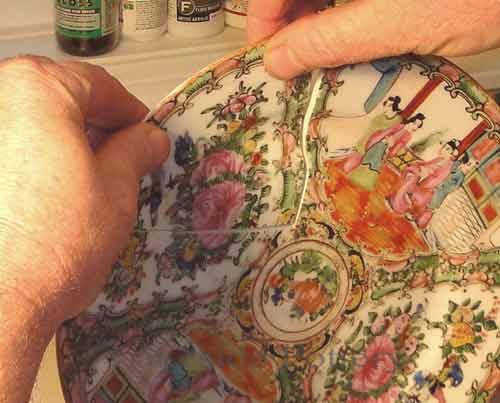
Porcelain restoration is the professional process of repairing broken, chipped, cracked, or damaged porcelain objects. Unlike simple household repairs, museum-quality restoration focuses on preserving the object’s authenticity, structural stability, artistic appearance, and historical significance.
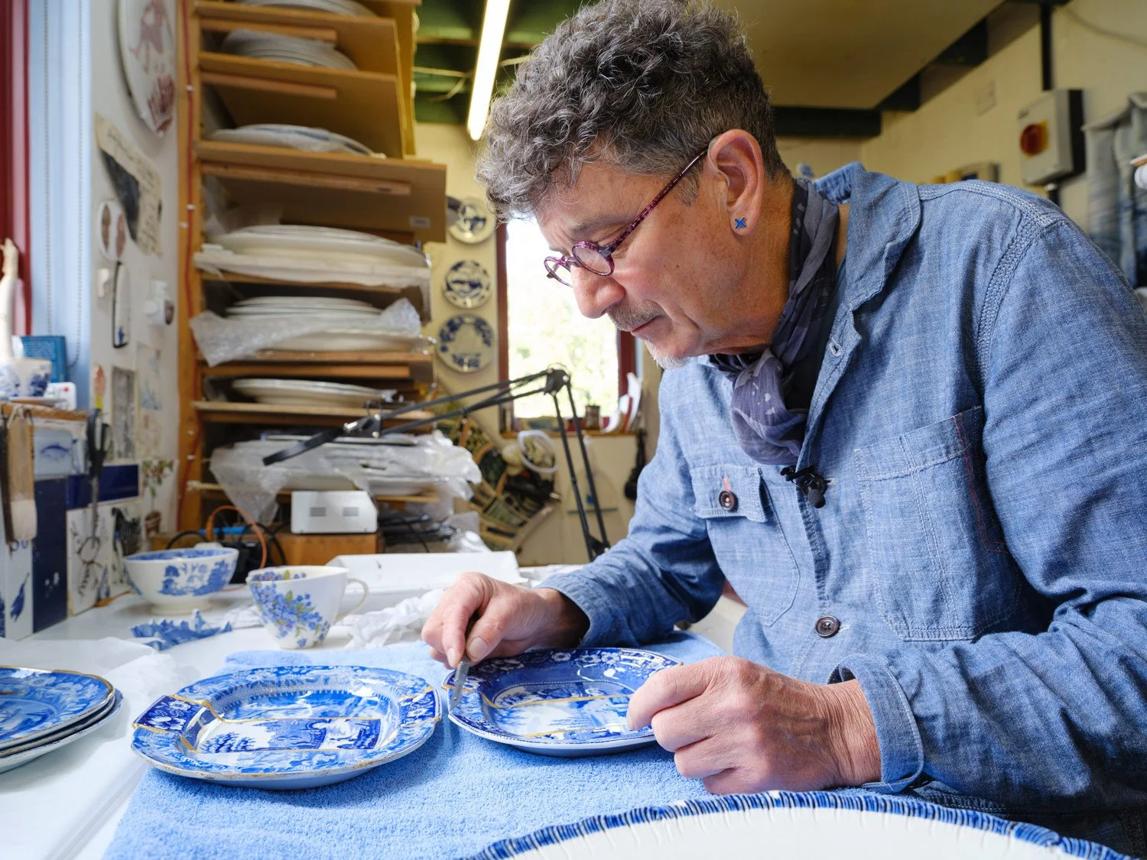
Professional restorers carefully clean each fragment, remove unsuitable old repairs, reassemble broken pieces, reconstruct missing areas when necessary, and perform delicate color retouching that blends naturally with the original decoration.
The goal is not to make an antique look brand new, but to preserve its history while restoring its appearance and preventing further deterioration. This responsible approach follows the principles of professional conservation, which prioritize stability, original materials, and minimal intervention.
Porcelain Restoration vs Porcelain Repair
A simple porcelain repair usually focuses on physically joining broken parts or making an object usable again. Porcelain restoration is broader: it may include condition assessment, documentation, removal of unsuitable old repairs, fragment alignment, conservation-grade bonding, filling losses, reconstruction of missing elements, controlled retouching and final documentation.
For the broader definition of restoration across furniture, paintings, metalwork and other antiques, see our separate guide What Is Restoration?. This page focuses specifically on antique porcelain restoration and porcelain-specific repair techniques.
When Should Porcelain Be Restored?
Not every antique requires restoration. Many collectors appreciate minor signs of age because they reflect the object’s history. However, restoration becomes advisable when damage threatens the structural stability, usability, or long-term preservation of the porcelain.
Professional restoration is commonly recommended for:
- broken porcelain plates;
- damaged porcelain figurines;
- cracked tea and dinner sets;
- broken handles on cups and teapots;
- chipped decorative vases;
- missing sculptural elements;
- damaged gilding;
- poor-quality previous repairs.
Before any intervention, it is often wise to understand how antique porcelain is valued. An expert assessment can help determine whether restoration will protect the object or unnecessarily reduce its originality and collector appeal.
What Types of Damage Can Be Repaired?
Modern conservation and restoration techniques allow specialists to repair many different types of porcelain damage. The final result depends on the quality of the porcelain, the number of surviving fragments, the complexity of the decoration, and the historical importance of the object.
| Damage | Can It Be Restored? |
|---|---|
| Broken into several pieces | Yes, in most cases |
| Small chips | Usually yes |
| Missing fragments | Often partially reconstructable |
| Hairline cracks | Depends on severity |
| Damaged gilding | Often repairable |
| Worn decoration | Limited restoration possible |
| Old glue residues | Usually removable by professionals |
Antique Porcelain Restoration Techniques
Professional antique porcelain restoration is carried out as a sequence of controlled steps rather than a single repair. The exact treatment depends on the porcelain body, glaze, decoration, age, previous repairs and collector significance of the object.
1. Assessment
The restorer first examines the porcelain body, glaze, decoration, factory marks and backstamps, previous repairs, missing fragments and overall structural stability.
2. Documentation
Before treatment begins, the object’s condition should be recorded with photographs and written notes. Documentation is particularly important for valuable antique porcelain because it preserves evidence of the object’s pre-restoration condition.
3. Removing Old Repairs
Old household glues, discoloured adhesives, overpaint and unsuitable fillers may need to be removed when they are unstable or interfere with proper treatment. This work must be approached cautiously because aggressive removal can damage original glaze or decoration.
4. Fragment Alignment
Broken fragments are test-fitted and aligned before bonding. Accurate alignment is essential on hand-painted porcelain, gilded borders and relief decoration, where even a small error may distort the original design.
5. Conservation-Grade Bonding
Professional restorers use adhesives selected for ceramics and porcelain rather than ordinary household glue. Material choice depends on strength, ageing behaviour, appearance and, whenever practical, reversibility.
6. Filling Losses
Small chips, gaps and losses may be filled with restoration materials that can be shaped and refined without unnecessarily covering surviving original porcelain.
7. Reconstructing Missing Elements
Missing handles, flowers, fingers, leaves or sculptural details may sometimes be reconstructed. Whenever possible, reconstruction should be based on surviving fragments, factory catalogues, historical photographs or documented examples rather than guesswork.
8. Retouching
Retouching is limited to restored areas. Original hand-painted decoration, gilding and enamel should remain visible and should not be covered simply to create a visually perfect surface.
9. Final Documentation
A professional restoration record should describe the work completed and materials used. For important collector pieces, this information can be useful for future conservators, owners and appraisers.
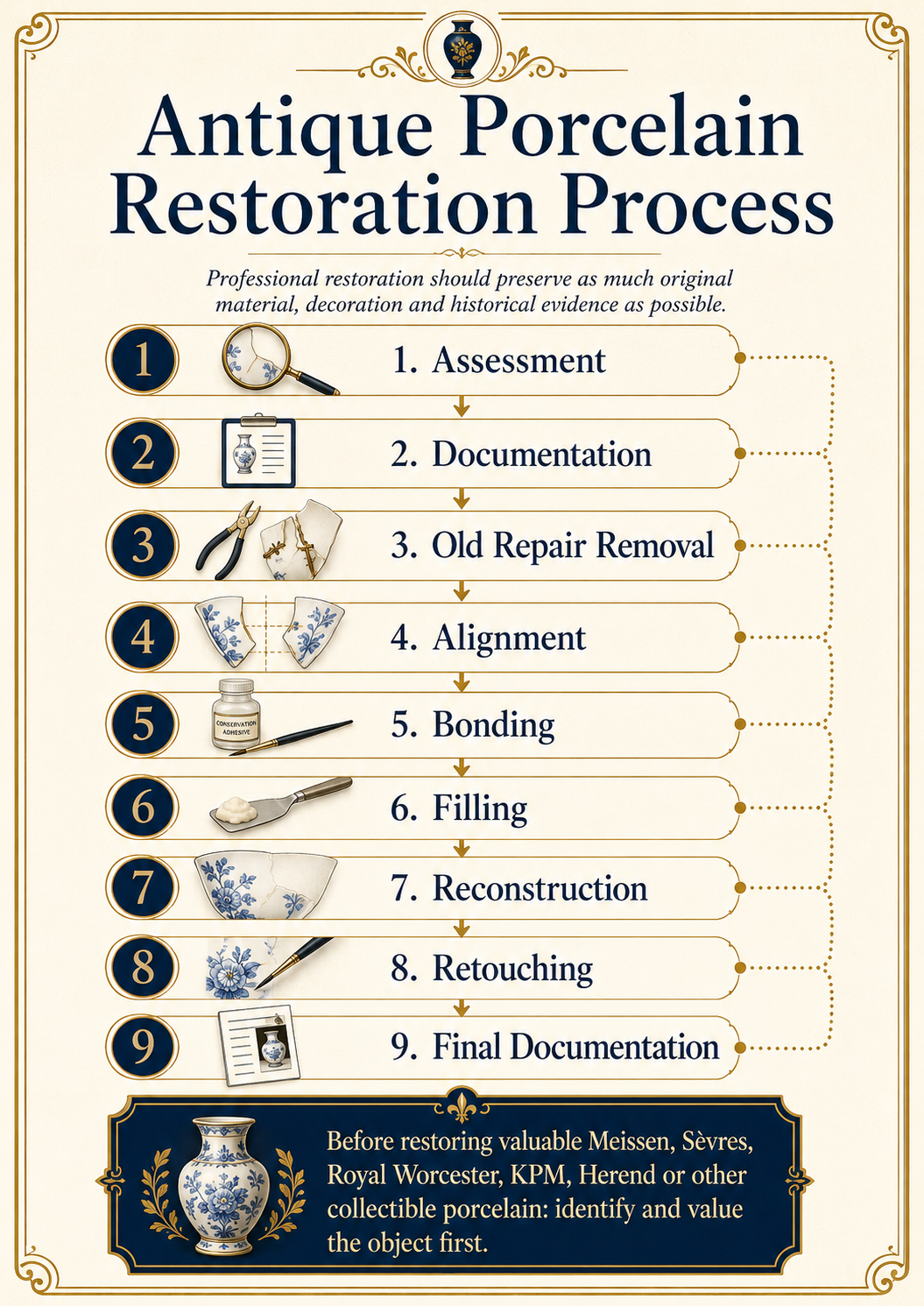
Collector Note: Before restoring valuable Meissen, Sèvres, Royal Worcester, KPM, Herend or other collectible porcelain, identify and value the object first. Restoration decisions should be based on rarity, condition, originality and the extent of surviving material—not appearance alone.
Restoring Antique Porcelain Plates
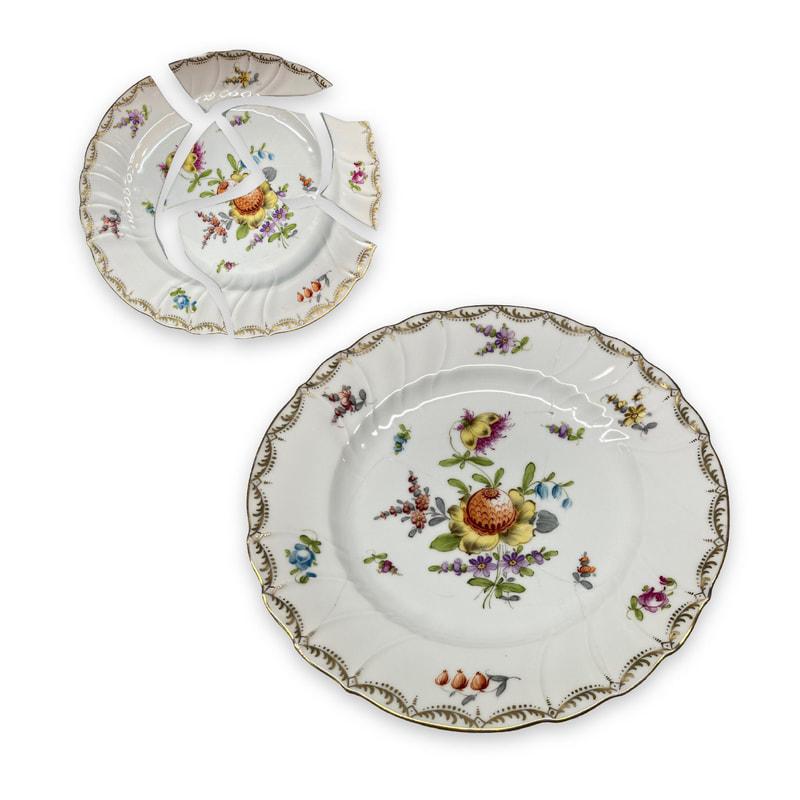
Porcelain plates often break into multiple pieces after impact. Successful restoration requires extremely accurate alignment of every fragment so that decorative patterns, gilding, and painted details match correctly after assembly.
Collectors particularly value restorations where joins are discreet and the original artwork remains largely untouched. A responsible restoration should stabilize the plate without unnecessarily covering, repainting, or replacing surviving decoration.
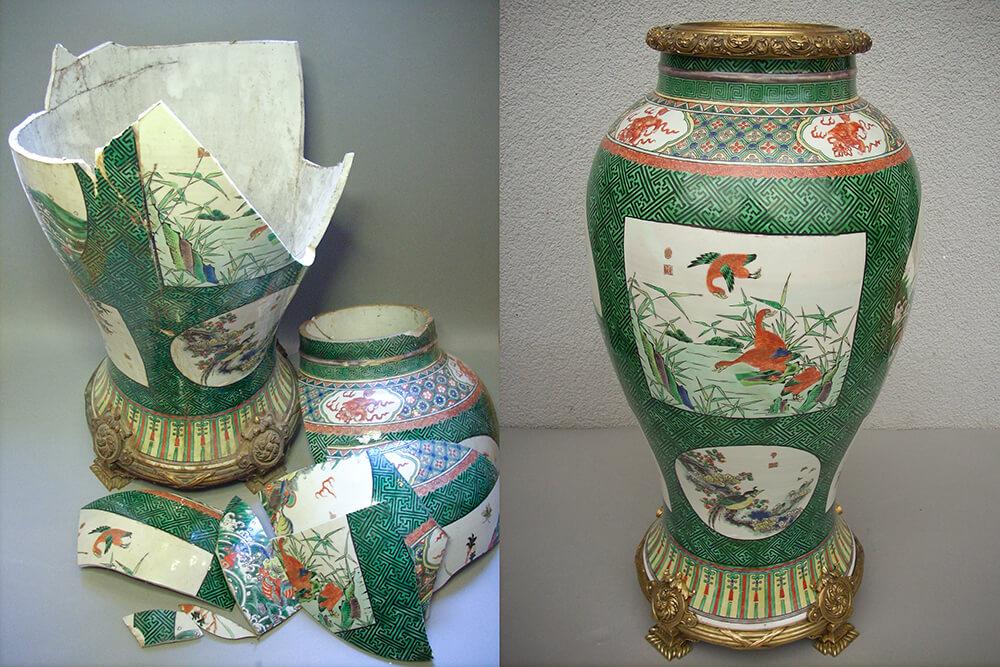
Restoring Large Porcelain Vases
Large porcelain vases present additional challenges because of their size and weight. Even slight misalignment can create stress within the ceramic body, making careful assembly essential.
Professional restorers often build temporary support systems while the adhesive cures, ensuring accurate alignment throughout the restoration process.
After restoration, correct handling and storage remain essential. Our guide on how to store porcelain safely explains how to protect vases, figurines, dinnerware, and collectible porcelain from future damage.
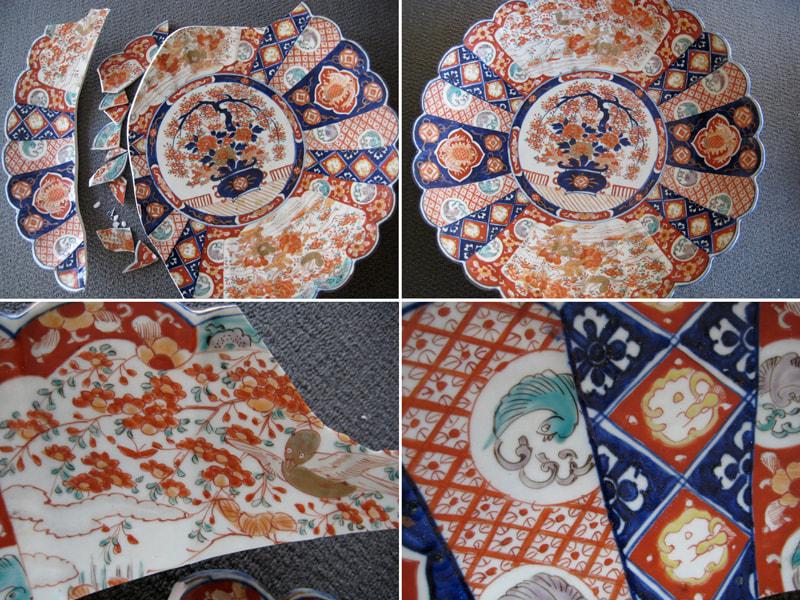
Restoring Hand-Painted Porcelain
Hand-painted porcelain requires exceptional care during restoration. Different types of porcelain may feature delicate overglaze enamels, underglaze decoration, gilding, relief details, or factory-specific painting techniques.
Decorative motifs, gold accents, enamel colors, and brushwork are often unique to each object. Professional retouching should be limited to damaged areas, allowing the original artwork to remain visible and authentic.
Materials Used by Professional Conservators
Professional porcelain restorers never rely on ordinary household glues. Instead, they use conservation-grade adhesives, restoration fillers, reversible materials, conservation pigments, and specialized finishing techniques developed specifically for museum-quality restoration.
These materials are chosen not only for strength but also for long-term stability, color consistency, and, whenever possible, reversibility—one of the fundamental principles of modern conservation.
What Should You Never Do?
- Do not use super glue on valuable porcelain.
- Never fill missing areas with plaster or construction fillers.
- Avoid sanding the original glaze.
- Do not repaint damaged areas with ordinary hobby paints.
- Avoid dishwasher cleaning after damage.
- Never restore valuable antique porcelain before obtaining a professional assessment.
This is especially important for prestigious manufacturers such as
Meissen,
Herend,
Royal Copenhagen,
Wedgwood,
Limoges,
and
Rosenthal,
where improper restoration can significantly reduce collector value.
Before making irreversible changes, it is often advisable to request a professional antique valuation to determine whether restoration is appropriate.
Restoring Meissen Porcelain
Meissen porcelain restoration deserves particular care because many pieces combine high collector value with fragile modelling, hand-painted enamels, gilding and complex applied decoration. Figurines may include delicate fingers, flowers, leaves, lacework, instruments and other elements that are easily lost or incorrectly reconstructed.
Before restoring a Meissen piece, confirm the model, approximate period, crossed swords mark, model or impressed numbers, painter’s marks and any previous restoration. The factory mark itself should never be altered, covered or “improved” during treatment.
Missing sculptural details should be reconstructed only when sufficient evidence exists. Historical photographs, documented museum examples, factory references or a matching example of the same model are far safer guides than attempting to recreate a missing detail from imagination.
Because restoration can materially affect the value of important Meissen porcelain, identification and valuation should come before cosmetic intervention.
Restoring Porcelain Figurines
Porcelain figurines are among the most difficult objects to restore because they contain numerous delicate details such as fingers, flowers, leaves, feathers, lacework, musical instruments, and other fragile elements that can easily break.
Successful restoration requires technical expertise, artistic skill, and exceptional attention to detail.
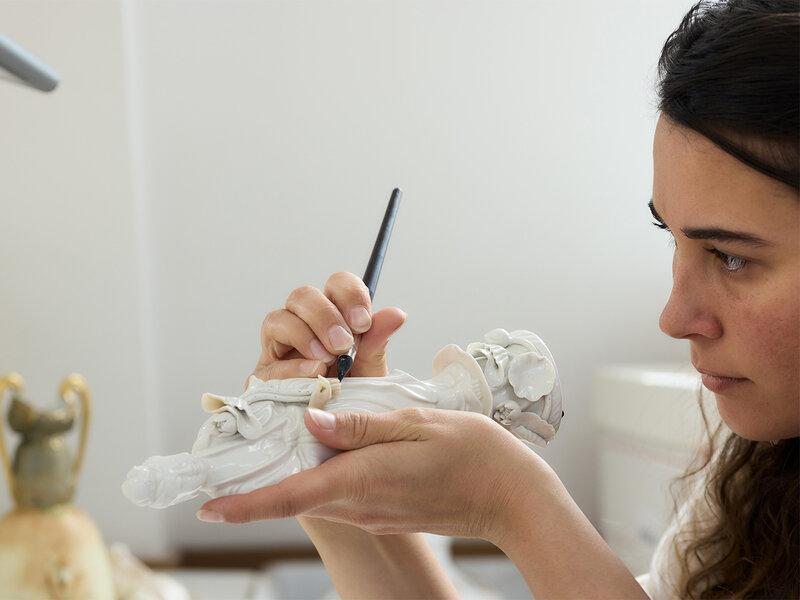
When original fragments are missing, professional restorers may carefully recreate them using conservation-grade restoration materials. Every reconstructed detail is individually shaped, refined, and color-matched so that it blends naturally with the original porcelain while remaining respectful of the object’s historical integrity.
Reconstructing Missing Pieces
One of the greatest challenges in porcelain restoration is replacing missing sections. These may include cup handles, teapot lids, sculptural ornaments, floral decorations, or decorative relief elements.
Professional restorers never estimate missing details by eye. Whenever possible, reconstruction is based on surviving original fragments, historical photographs, factory catalogues, or symmetrical elements from the same object.
Once recreated, each new section is carefully finished and color-matched to integrate naturally with the surrounding porcelain.
How to Detect Old Porcelain Restoration
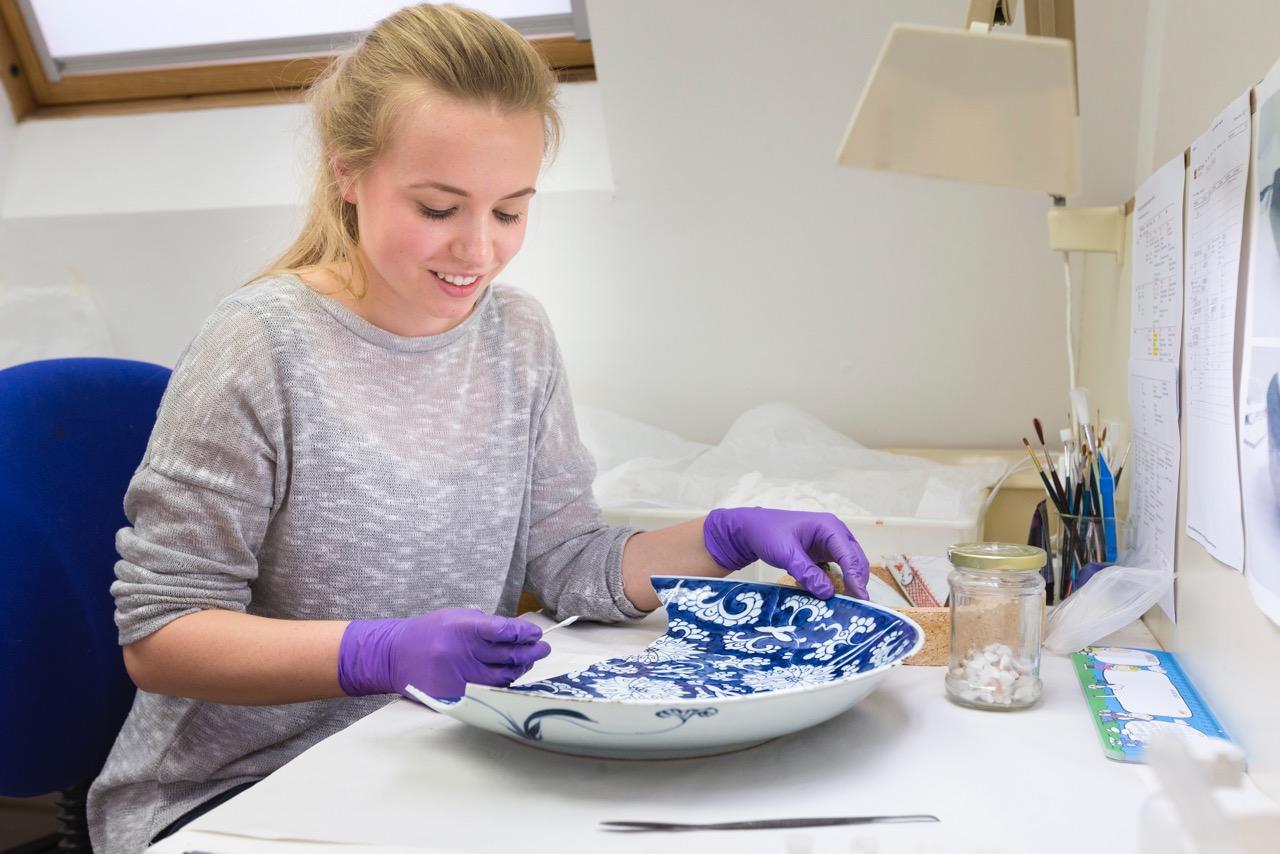
Older restorations are not always obvious. Some were executed skilfully, while others used materials that have yellowed, shrunk or become brittle over time. When examining antique porcelain, collectors should look for several clues rather than relying on a single sign.
- fine join lines visible across the porcelain body or decoration;
- areas with a different surface gloss or texture;
- colour that does not perfectly match the surrounding glaze or enamel;
- old adhesive visible inside cracks or around joins;
- overpaint extending beyond the damaged area;
- reconstructed fingers, flowers, handles or other details with slightly different modelling;
- gilding that changes colour or thickness across a repaired area;
- unexpected differences in translucency when the piece is examined against strong light.
The presence of restoration does not mean that a piece is fake. A genuine antique may have undergone one or several repairs during its lifetime. The important questions are how extensive the restoration is, whether it has been disclosed and how much original material survives.
How Much Does Porcelain Restoration Cost?
The cost of porcelain restoration varies greatly depending on the object’s condition, rarity, artistic complexity, and historical significance. Every restoration project is unique and should be evaluated individually.
The most important factors include:
- manufacturer and country of origin;
- collector value;
- number of broken fragments;
- missing sections;
- complexity of hand-painted decoration;
- gold or platinum decoration;
- required conservation work;
- previous restoration attempts.
Repairing a modern porcelain plate is usually far less complex than restoring an eighteenth-century Meissen figurine or a rare Royal Copenhagen vase.
Does Restoration Affect Value?
Yes. Professional restoration almost always influences the market value of antique porcelain. The effect depends on the rarity of the object, the extent of the damage, the quality of the restoration, and how much original material survives.
Collectors naturally prefer completely original examples whenever possible. If restoration is necessary, it should always be carried out professionally, documented properly, and limited to preserving the object rather than over-restoring it.
If you would like to understand how restoration, rarity, factory marks and condition influence collector prices, read our guide on how antique porcelain is valued.
Should Antique Porcelain Be Restored?
Not every damaged porcelain object should be restored. If a rare piece is structurally stable and has only minor historical wear, intervention may be unnecessary. By contrast, active cracks, unstable old repairs, loose fragments or serious structural damage may justify professional treatment to prevent further loss.
For valuable porcelain, a sensible order is usually:
- Identify the maker and approximate period.
- Assess rarity, originality and current condition.
- Estimate collector value before restoration.
- Decide whether conservation, structural repair or fuller restoration is appropriate.
The goal should be preservation, not visual perfection. In some cases, retaining an honest old chip or minor wear is preferable to replacing original surface simply to make the piece look new.
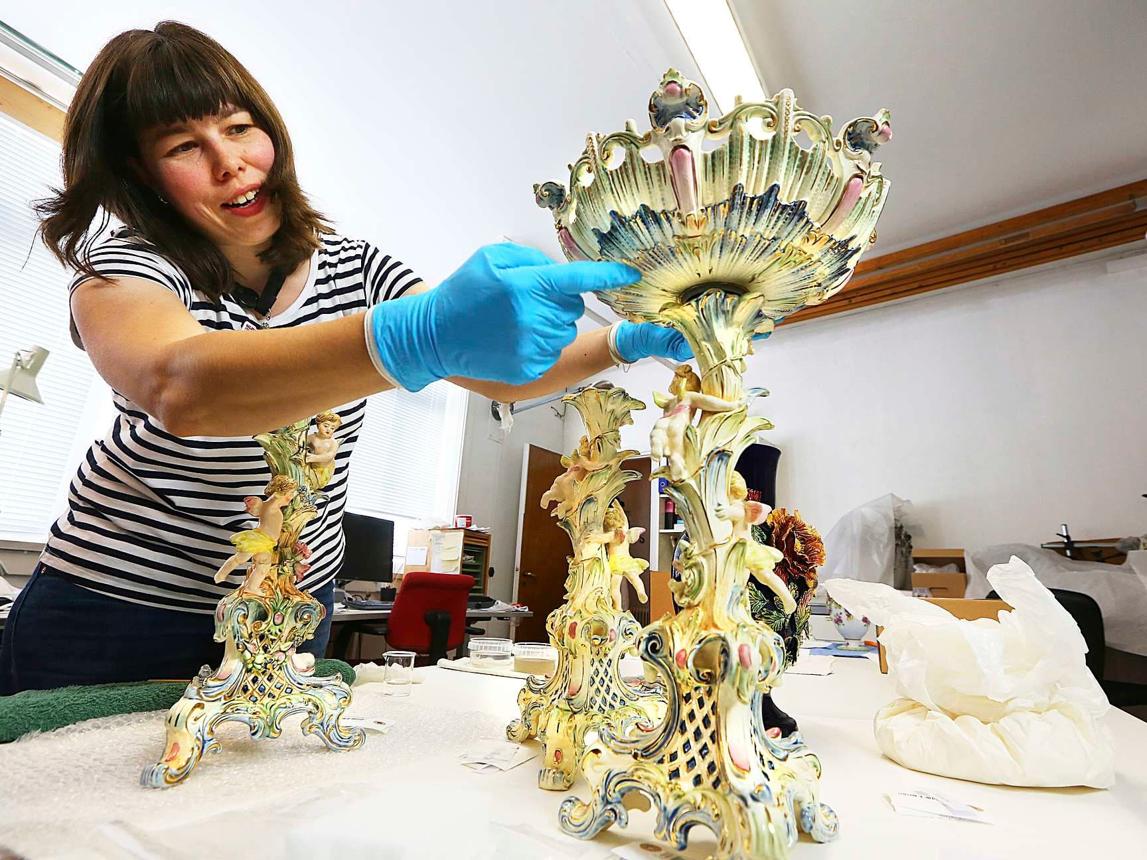
When Should You Seek a Professional Evaluation?
Before repairing any antique porcelain, it is advisable to determine its manufacturer, age, authenticity, and collector value.
Many owners unknowingly attempt to repair valuable porcelain using household adhesives, which can permanently reduce both its historical importance and market value.
Professional identification often begins with examining the porcelain marks and backstamps, followed by an assessment of craftsmanship, condition, decoration, and previous restoration.
A professional evaluation helps determine whether restoration is appropriate and which conservation methods are best suited for the object.
➡️ Contact us for a professional porcelain evaluation
Related Articles
- What Is Porcelain?
- Types of Porcelain Explained
- How to Store Porcelain
- How Is Antique Porcelain Valued?
- What Are Porcelain Marks?
- What Is Authenticity?
- What Is Conservation?
- What Is Restoration?
Continue Exploring
Continue exploring our growing Stories & Knowledge library, discover more practical advice in Restoration & Conservation, or request a professional antique valuation before restoring an important porcelain object.
Frequently Asked Questions
Can broken porcelain be fully restored?
In many cases, yes. If most of the original fragments are available, professional restoration can successfully reconstruct the object while preserving its historical integrity.
Should I use super glue on antique porcelain?
No. Household adhesives can permanently damage valuable porcelain and make future professional restoration much more difficult.
Is restored porcelain worth collecting?
Absolutely. Professionally restored antique porcelain remains highly collectible, particularly when the object is rare, historically important, or produced by prestigious manufacturers.
Can restoration become invisible?
High-quality restoration can make damage extremely difficult to detect. However, experienced collectors and conservators can usually identify restored areas under close examination.
Does porcelain restoration reduce value?
Usually, restored porcelain is worth less than an equivalent undamaged example. However, professional restoration can still be appropriate for rare or important pieces when it stabilises the object and preserves surviving original material.
Can a Meissen figurine be professionally restored?
Yes. Meissen figurines can often be restored, including broken limbs, flowers, leaves and other applied details. Because collector value may be significant, the model and factory marks should be identified before restoration begins.
How can I tell if antique porcelain has been repaired?
Look for join lines, differences in gloss or colour, old adhesive, overpaint, reconstructed details and changes in translucency. Difficult restorations may require examination by an experienced porcelain specialist.
Collector Guidance
For important antique porcelain, restoration should be documented and proportionate to the damage. A rare object with extensive original material deserves a different treatment strategy from an ordinary modern plate. When there is uncertainty, identification, condition assessment and valuation should come before irreversible work.
Editorial Note: This guide is intended for collectors and owners deciding whether professional restoration may be appropriate. It is not a substitute for hands-on examination by a qualified ceramic conservator. Last updated: 29 August 2026.
Conclusion
Porcelain restoration is a highly specialized discipline that combines conservation science, craftsmanship, and artistic expertise. Whether restoring a treasured family heirloom or an important museum-quality collectible, the ultimate goal is to preserve authenticity while extending the life of the object.
Before attempting any repair, always seek professional advice—especially for valuable porcelain produced by renowned manufacturers such as Meissen, Herend, Royal Copenhagen, Wedgwood, Limoges, or Rosenthal.
