
What Are Porcelain Marks? A Complete Guide to Identifying Porcelain Backstamps
Porcelain marks, also known as backstamps, factory marks, or maker’s marks, are symbols, logos, printed stamps, impressed marks, painted signs, or inscriptions found on the underside of porcelain objects. They are among the most valuable sources of information for identifying the manufacturer, country of origin, approximate production period, and sometimes even the decorator, artist, pattern, or production series.
For antique collectors, porcelain marks are far more than decorative symbols. They provide important clues that help establish authenticity, estimate age, identify the factory, and understand the historical background of an object. However, a porcelain mark should never be evaluated in isolation. Professional identification always combines the mark with careful examination of the porcelain body, glaze, decoration, craftsmanship, condition, and documented provenance.
If you are new to collecting porcelain, we recommend first reading What Is Porcelain? and Types of Porcelain Explained, which explain the different porcelain bodies, manufacturing techniques, and characteristics that experts evaluate alongside factory marks.
What Are Porcelain Marks?
Almost every important porcelain factory developed its own identifying mark. These marks evolved over time, often changing several times throughout a factory’s history. Because of these changes, porcelain marks are one of the most useful tools for dating antique porcelain.
A factory established in the eighteenth century may have used dozens of different marks during the following two hundred years. Even small changes in lettering, crowns, swords, shields, colours, or symbols can help specialists narrow down the production period with remarkable accuracy.
Besides the manufacturer’s trademark, porcelain may also include:
- Factory marks
- Pattern numbers
- Decorator’s marks
- Artist signatures
- Mould numbers
- Country of origin
- Date codes
- Quality grades
- Retailer’s marks
- Special edition symbols
Understanding the purpose of each mark allows collectors to build a much more complete picture of an object’s history.
Porcelain Marks, Factory Marks and Maker’s Marks – Are They the Same?
These terms are often used interchangeably, but they are not always identical.
- Porcelain mark is the general term used for identifying marks found on porcelain.
- Factory mark usually identifies the porcelain manufacturer or factory.
- Backstamp refers to any mark applied to the underside (back) of a porcelain object.
- Maker’s mark may identify an individual craftsman, decorator, workshop, or manufacturer and is also commonly found on silver, jewellery, furniture, and many other antiques.
If you would like to learn more about maker’s marks in general, see our guide What Is a Maker’s Mark?.
Where Are Porcelain Marks Found?
Most porcelain marks are located on the underside of an object, where they remain protected from everyday wear. However, their exact position varies depending on the manufacturer and the type of object.
Collectors commonly find marks on:
- The base of plates
- The underside of cups and saucers
- The foot rim of vases
- The base of figurines
- The underside of teapots
- Serving dishes
- Lids and covers
- Large decorative sculptures
Occasionally additional decorator’s marks or artist signatures may appear inside lids, beneath handles, or hidden beneath mounted components.
How Were Porcelain Marks Applied?
Manufacturers used different methods to apply their identifying marks, depending on the factory, production period, and decoration process.
Common techniques include:
- Printed under the glaze
- Printed over the glaze
- Hand-painted marks
- Ink stamps
- Impressed marks
- Incised marks made before firing
- Moulded factory symbols
Each technique can itself provide useful dating evidence. Certain factories changed from hand-painted marks to printed backstamps during the nineteenth century, while others altered colours, typography, or decorative elements as ownership changed.
The World’s Most Famous Porcelain Marks
Some porcelain factory marks have become internationally recognised symbols of quality and craftsmanship. For collectors, learning to recognise these marks is often the first step towards identifying antique porcelain.
However, it is important to remember that many famous factories changed their marks dozens of times throughout their history. Even slight differences in colour, lettering, crowns, swords, shields, or decorative details can indicate a completely different production period.
Below are some of the world’s most recognised porcelain manufacturers.
Meissen
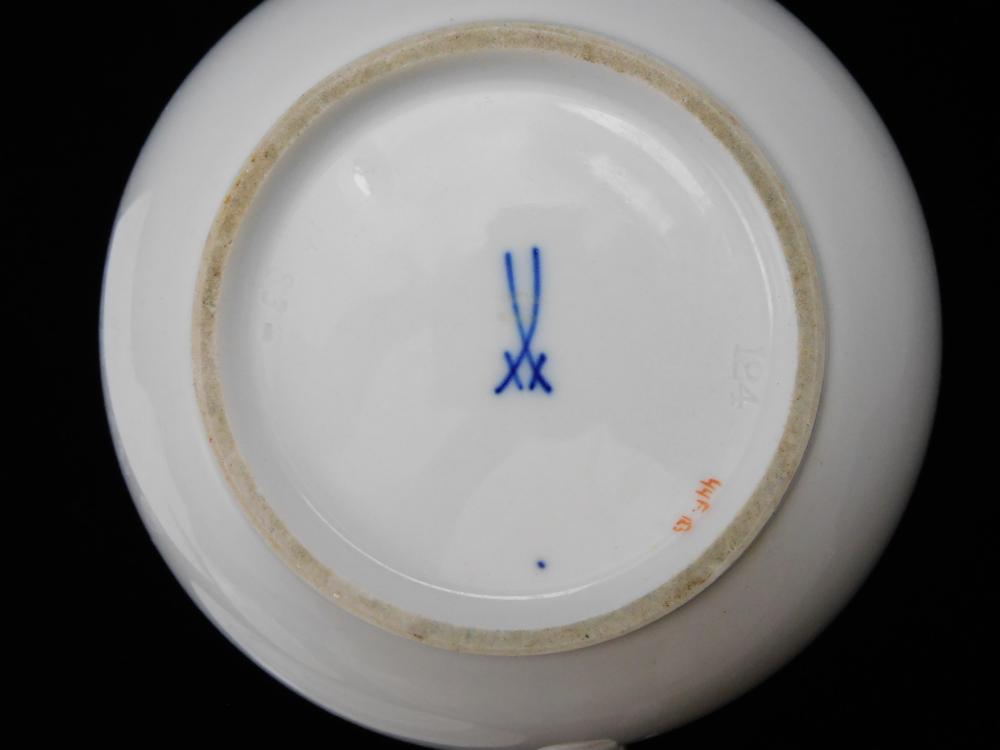
Founded in 1710, Meissen was Europe’s first successful hard-paste porcelain factory. Its famous crossed blue swords are among the world’s most recognisable porcelain marks and have appeared in many different variations over more than three centuries.
Rosenthal
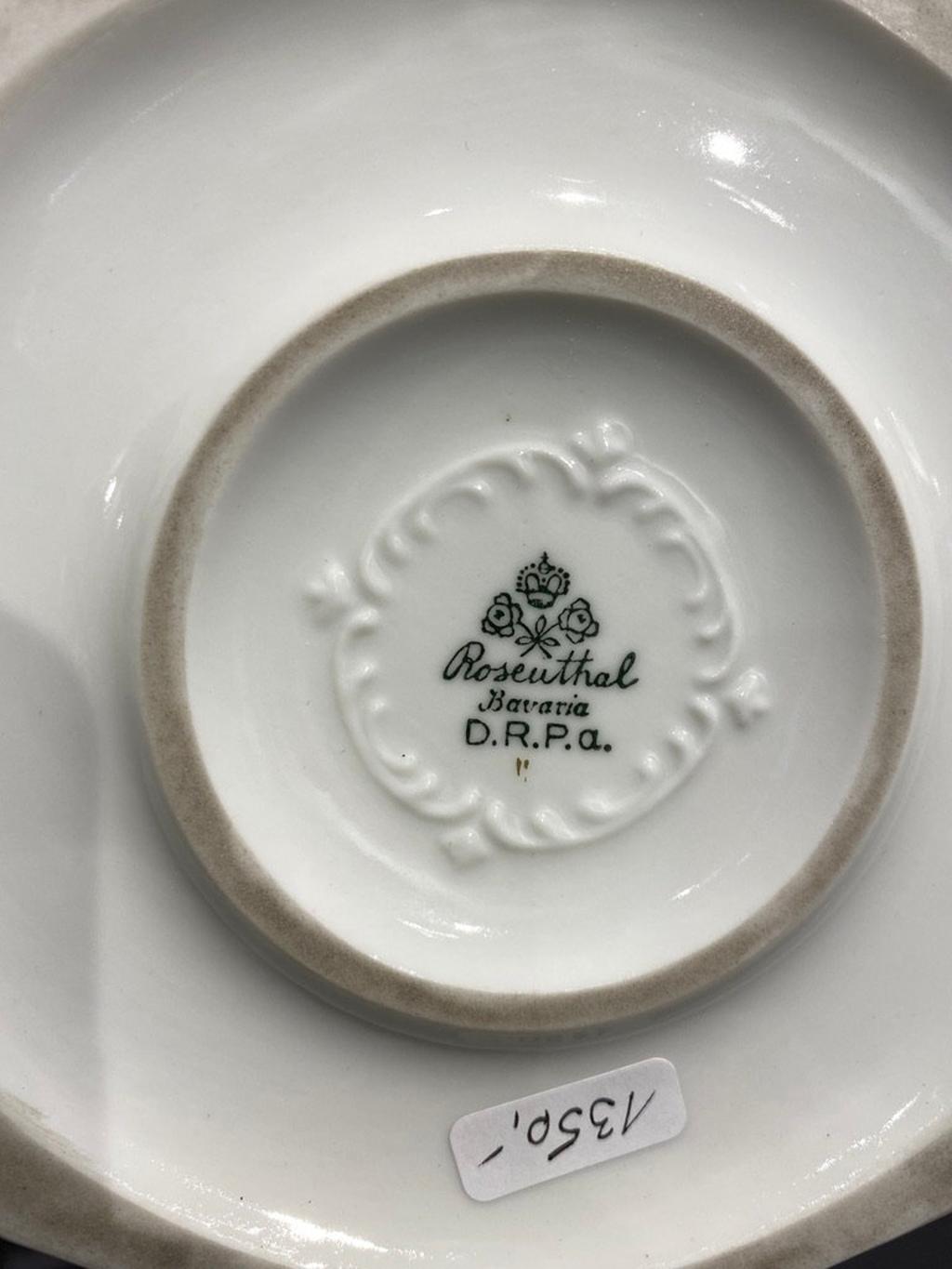
Rosenthal porcelain is usually marked with the Rosenthal name together with Germany, Selb, Studio-Line, or collection names. Small differences between marks often help specialists determine the approximate production period.
Limoges
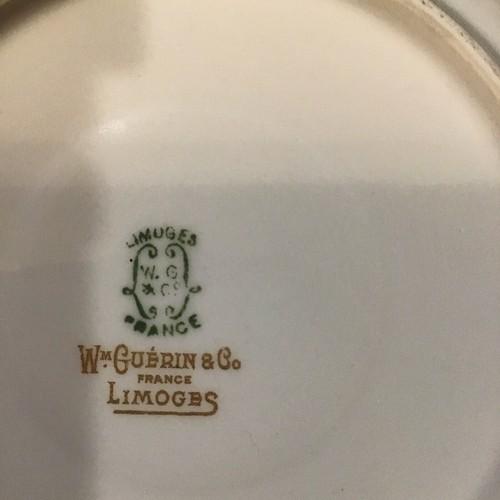
Unlike many manufacturers, Limoges is not a single factory but a porcelain-producing region in France. Numerous factories used their own variations of the Limoges France mark, making careful identification particularly important.
Herend
Herend porcelain is generally recognised by its elegant blue or green oval factory mark together with the words Herend Hungary Handpainted. Different historical marks help collectors estimate production dates.
Royal Copenhagen
Royal Copenhagen is famous for its three blue wavy lines representing Denmark’s three waterways. These waves remain one of the easiest porcelain marks to recognise.
Wedgwood
Wedgwood commonly used impressed marks reading WEDGWOOD, often accompanied by England, Made in England, or various date codes depending on the production period.
Royal Doulton
Royal Doulton porcelain is usually identified by a circular backstamp incorporating a crown, lion, and the Royal Doulton name together with England.
KPM Berlin
KPM Berlin is recognised worldwide by its elegant blue sceptre, one of the oldest and most respected porcelain factory symbols in Europe.
Many other famous manufacturers—including Villeroy & Boch, Noritake, Hutschenreuther, Bing & Grøndahl, Royal Worcester, Spode, Richard Ginori, Capodimonte, and Sèvres—also developed distinctive factory marks that changed throughout their history.
Because these marks evolved continuously, professional identification often requires comparing them with historical reference material rather than relying on memory alone.
Why Are Porcelain Marks Important?
For antique collectors, porcelain marks provide one of the strongest starting points for identification. A factory mark may immediately suggest the manufacturer, country of origin, production period, and sometimes even the quality or rarity of a particular object.
Nevertheless, experienced specialists never rely solely on the backstamp. Instead, they evaluate the complete object by examining:
- The porcelain body
- Glaze quality
- Decoration techniques
- Hand-painted details
- Factory marks
- Overall craftsmanship
- Natural ageing
- Evidence of restoration or conservation
- Historical provenance
A factory mark should always support the identification—not determine it on its own.
Can Porcelain Marks Be Faked?
Yes. Counterfeit factory marks are extremely common in today’s antiques market. Many modern reproductions carry convincing copies of famous backstamps in an attempt to imitate valuable antique porcelain.
For this reason, professionals compare the mark with the porcelain body, decoration, manufacturing quality, wear, glaze, and historical consistency before deciding whether an object is an original or perhaps a copy, replica, or fake.
Even perfectly reproduced marks often contain subtle differences that become obvious under professional examination.
How Can You Identify a Porcelain Mark?
Identifying a porcelain mark involves much more than matching a logo or symbol with an illustration in a reference book. Professional identification combines the study of factory marks with careful examination of the porcelain itself. A mark may suggest the manufacturer, but the object must always confirm the mark—not the other way around.
Experienced collectors typically follow a systematic process when identifying porcelain.
1. Examine the Entire Mark
Begin by carefully studying every detail of the backstamp. Even minor differences in lettering, colour, crowns, shields, crossed swords, sceptres, stars, numbers, or decorative borders may indicate a different production period or even a completely different manufacturer.
Many factories modified their marks dozens of times throughout their history. A slight variation that appears insignificant to a beginner may allow an expert to narrow the production date to a particular decade.
2. Compare the Mark with the Object
The mark should always match the style, decoration, manufacturing techniques, glaze, and overall quality of the porcelain.
For example, an eighteenth-century factory mark found on a porcelain body manufactured using modern techniques should immediately raise suspicion.
Professionals therefore compare:
- Factory mark
- Porcelain body
- Glaze
- Decoration
- Shape
- Manufacturing quality
- Natural ageing
- Historical consistency
3. Look for Additional Marks
Many porcelain objects contain more than one identifying mark.
Collectors may discover:
- Decorator’s marks
- Artist’s signatures
- Pattern numbers
- Mould numbers
- Retailer’s marks
- Country of origin
- Date codes
- Quality control marks
Together, these markings often provide a much clearer picture than the factory mark alone.
What Cannot Be Learned from a Porcelain Mark?
Although factory marks are extremely useful, they cannot answer every question about an antique.
A porcelain mark alone usually cannot determine:
- The exact production date
- The exact market value
- Whether decoration is original
- Whether parts have been replaced
- Whether restoration has been carried out
- The object’s complete ownership history
- Its rarity within a production series
This is why professional identification always combines the mark with careful examination of the entire object.
Common Mistakes When Reading Porcelain Marks
Many collectors make the mistake of assuming that every porcelain mark immediately identifies a valuable antique. In reality, similar-looking marks may belong to different factories, different production periods, or even modern reproductions.
Some of the most common mistakes include:
- Assuming every blue crossed swords mark is antique Meissen.
- Believing every “Limoges France” mark comes from the same factory.
- Ignoring differences in lettering and typography.
- Dating porcelain solely from the mark.
- Ignoring the porcelain body and decoration.
- Confusing printed marks with hand-painted marks.
- Overlooking later additions or altered backstamps.
These mistakes can easily lead to incorrect identification and unrealistic valuations.
Professional Identification of Porcelain Marks
When valuable porcelain is examined professionally, specialists compare the mark with documented factory records, historical catalogues, museum collections, auction archives, and published reference literature.
They also evaluate whether the porcelain remains in original condition or whether there is evidence of a later copy, replica, or fake.
If previous restoration or conservation has taken place, this is also considered during identification because later repairs may influence authenticity, appearance, and collector value.
Why Learning Porcelain Marks Is Worthwhile
Learning to recognise porcelain marks is one of the most rewarding skills for antique collectors. While a backstamp alone cannot authenticate an object, understanding how manufacturers changed their marks over time provides valuable clues about a piece’s history.
Combined with knowledge of porcelain bodies, decoration techniques, factory history, and craftsmanship, porcelain marks become an essential tool for identifying, collecting, buying, selling, and preserving antique porcelain.
When Should You Seek a Professional Appraisal?
If you own a porcelain object with a factory mark and would like to identify its manufacturer, estimate its production date, confirm its authenticity, or determine its approximate market value, obtaining a professional appraisal is often the safest and most reliable solution.
Professional identification is especially recommended before:
- Buying expensive antique porcelain
- Selling inherited collections
- Sending porcelain to auction
- Restoring damaged pieces
- Insuring valuable collections
- Donating objects to museums or institutions
During a professional appraisal, specialists evaluate much more than the porcelain mark itself. They examine the porcelain body, glaze, decoration techniques, manufacturing quality, natural ageing, historical consistency, provenance, and the relationship between the factory mark and the object as a whole.
➡️ Request a Professional Antique Valuation
Frequently Asked Questions
Do all porcelain pieces have factory marks?
No. Although most major manufacturers marked their production, some early porcelain, small workshops, studio ceramics, and certain decorative objects may be completely unmarked. Missing marks do not automatically mean an object is fake.
Can a porcelain mark identify the exact year of production?
Sometimes, but not always. Certain factories used date codes or regularly updated their marks, allowing experts to estimate the production period quite accurately. Others used the same mark for many decades, making additional examination necessary.
Can identical factory marks appear on different pieces?
Yes. Manufacturers often used the same factory mark across multiple collections, patterns, and object types. The mark identifies the factory—not necessarily a specific design.
Does every valuable porcelain object have a famous factory mark?
No. Many highly collectible porcelain pieces were produced by smaller regional factories or independent artists. Their rarity and artistic quality may make them extremely valuable despite being less widely known.
Can factory marks be copied?
Yes. Modern reproductions frequently imitate famous porcelain backstamps. This is why specialists never authenticate porcelain based on the mark alone—they examine the complete object before reaching a conclusion.
Conclusion
Porcelain marks are among the most valuable tools available to collectors, dealers, museums, and antique specialists. They provide important clues about the manufacturer, country of origin, production period, and sometimes even the artist or decorator responsible for creating an object.
However, a factory mark should always be viewed as the beginning of the identification process rather than its conclusion. Professional authentication combines the study of porcelain marks with careful examination of the porcelain body, glaze, craftsmanship, decoration, condition, provenance, and historical consistency.
Whether you are researching a family heirloom, purchasing antique porcelain, or building a serious collection, learning to understand porcelain marks will help you make more informed collecting decisions and better appreciate the remarkable history behind every genuine porcelain object.
Continue Learning
- What Is Porcelain?
- Types of Porcelain Explained
- Porcelain vs Faience vs Ceramic
- What Is Chinese Porcelain?
- What Is Japanese Porcelain?
- What Is Russian Porcelain?
- What Is a Maker’s Mark?
- What Is a Hallmark?
- What Is Restoration?
- What Is Conservation?
- What Is an Original?
- What Is a Copy?
- What Is a Replica?
- What Is a Fake?
- What Is a Certificate of Authenticity?
Explore Related Collections
