
The Unexpected Christmas Gift | Chiprovtsi Star Rug
THE OLD ANTIQUARIAN · STORIES BEHIND THE OBJECTS · A CHRISTMAS STORY
The Unexpected Christmas Gift – The Christmas Star!
A personal story from The Old Antiquarian Collection · Last Updated: October 23, 2026
QUICK ANSWER
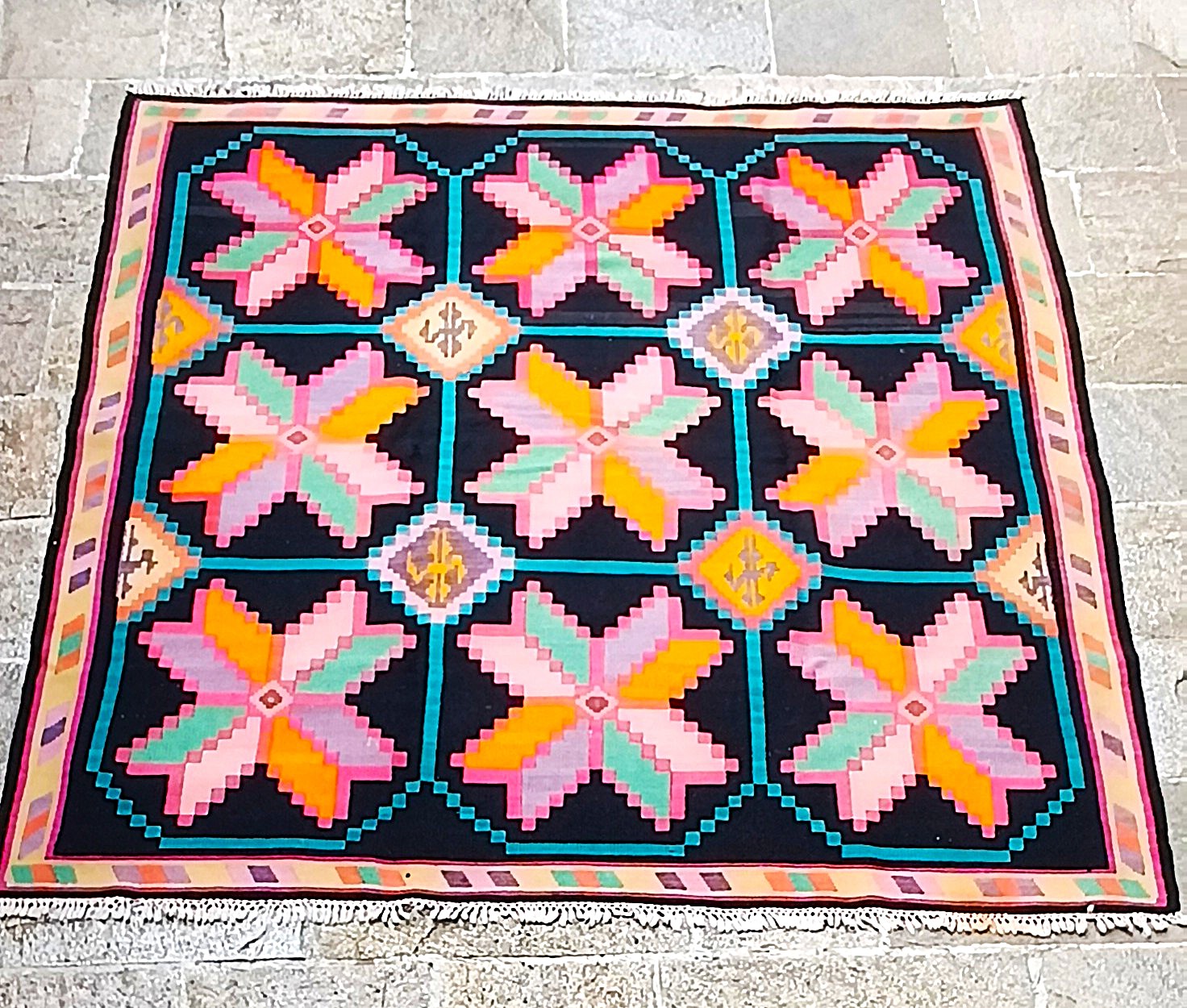
The Christmas Star is a traditional handwoven, reversible Bulgarian Chiprovtsi rug with nine radiant geometric stars on a deep black background. It was woven by Aunt Danka and given to me as an unexpected Christmas gift by the woman who created it. Its story brings together Christmas memories, a homemade Vidin banitsa scented with vanilla, the spiritual language of weaving, and the extraordinary love that can remain within an object for generations.
At a Glance – The Rug and Its Story
| Detail | Information |
|---|---|
| Object | Traditional handwoven Bulgarian Chiprovtsi rug, known in our story as The Christmas Star |
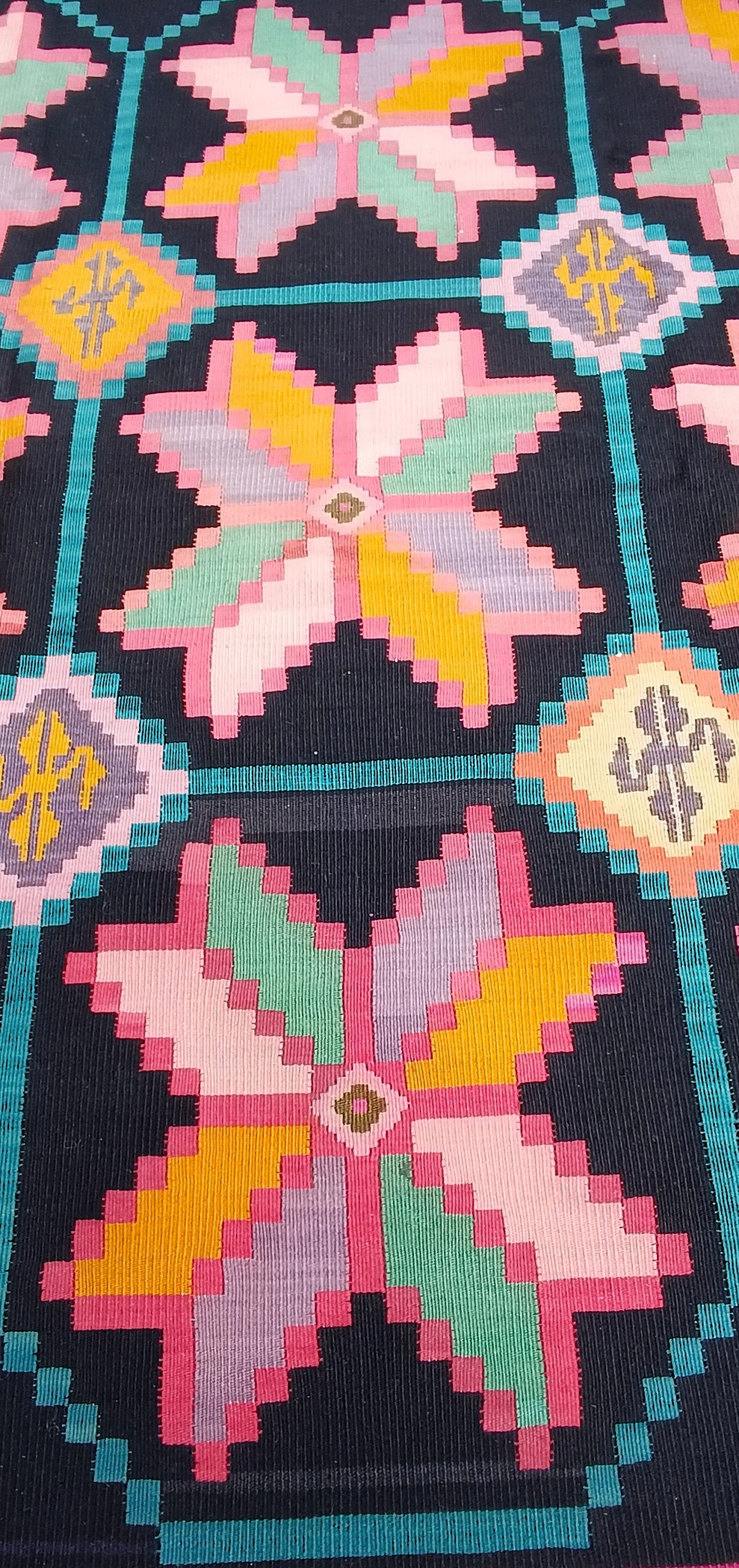
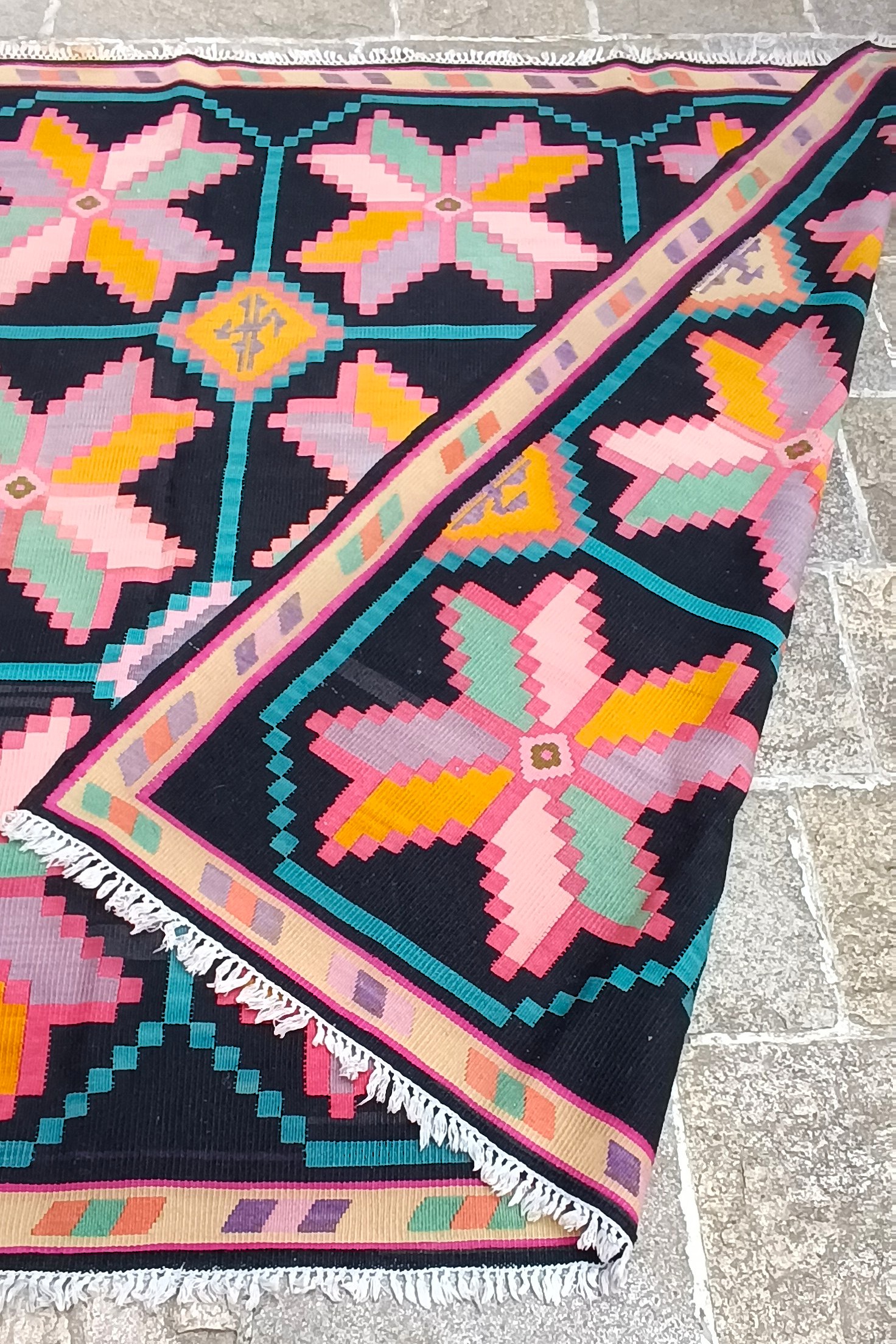
| Design | Nine large multicoloured stars, diamond-shaped medallions and connecting turquoise lines |
| Technique | Handwoven, reversible flatweave |
| Maker | Aunt Danka, who personally shared the story of weaving the rug |
| Provenance | Received directly from its maker as an unexpected Christmas gift |
| Related family memory | Preparing a traditional homemade Vidin banitsa with vanilla |
| Collection | The Old Antiquarian personal collection |
December – The Month When the World Grows Quieter
It was December. The month of crystal-clear air, blue skies and luminous winter light. The month of snow and purity. The time when we gather with our families around the fireplace, while the scent of cinnamon and apples rises from the oven. The touch of wool, the warmth, the comfort of home – all wrapped in the anticipation of Christmas.
I have always loved that expectation that something wonderful is about to happen. And the wish for it to last a little longer has always told me that the magic is not confined to Christmas Day itself. It lives in the preparations, in the excitement, in the smiles that appear when we think of others. It moves through the air throughout December.
There is a particular inner warmth at this time of year, a tender contrast to the cold outside. We human beings warm one another through love and care. Even hearts hardened by life seem to soften. Everywhere there are Christmas trees, sparkling lights, sleighs and children’s laughter. And I love watching this curious gathering of the human family, this shared desire to bring happiness to someone else.
Every homemaker wants to prepare the most festive dishes. Everyone wishes to give something to the people they love. Sometimes they even give to strangers. And I often think that if we could preserve the Christmas spirit throughout the entire year, we ourselves might become lights guiding other people.
How I love breathing in the December air! I feel renewed with every breath. I smile at children’s rosy cheeks, at branches bending under the weight of snow, at smoke curling from the chimneys. Somewhere, someone is surely curled up beside a fireplace.
Everything becomes so quiet, so peaceful, that sometimes I can almost hear the snowflakes ringing.
An Unexpected Visit to Aunt Danka’s Kitchen
And then, quite suddenly, I decided that I wanted to help Aunt Danka with her Christmas preparations. We were relatives through marriage and were going to celebrate Christmas together. She was such an energetic woman! She always prepared the most delicious dishes from her home region of Vidin, in northwestern Bulgaria – the kind of food you remember long afterwards and whose recipes you long to learn.
It was December. Memories and snow made me travel through time. One moment I was ten years old, another twenty, and then suddenly seventy. Yet happiness and playfulness always pulsed in my heart.
I set off for her house without arranging my visit in advance. I knew that with so many dishes to prepare for the festive table, she would not refuse a little help. And I would have the opportunity to learn the mystery of her wonderful Vidin banitsa.
She opened the door wearing an apron, her cheeks flushed from the heat of the stove. A beautiful scent of vanilla came towards me. I rolled up my sleeves and found myself in another world – a world of creation and balance.
The kitchen! The place where so many women create their masterpieces, offering the work of their hands to family and friends.
Aunt Danka was a true chef, as we might call her today. She cooked for days so that the festive table would offer an extraordinary variety of dishes and the family would welcome its guests with a feeling of abundance. She had no daughters to help her, and perhaps that had made her exceptionally capable and strong. I admired this woman. She managed the entire household and made it all seem effortless.
The aromas from her kitchen worked their quiet enchantment. Two women, guided by instinct, experience and the skill of their hands, began preparing a Vidin banitsa.
Aunt Danka led. I followed.
With laughter and conversation, everything happened so naturally. She was happy for the company and the help. I was grateful for the shared knowledge and the recipe.
Vidin Banitsa with Vanilla – The Taste of a Shared Christmas
I have never forgotten this banitsa: its thin homemade pastry sheets, the salty Bulgarian white brined cheese and that gentle, unexpected aroma of vanilla which filled Aunt Danka’s kitchen.
Here I preserve the recipe as part of our family memory – the version I learned and wrote down for myself. The vanilla is Aunt Danka’s special touch, the detail that makes this particular Christmas banitsa unforgettable.
Ingredients
| For the pastry | For the filling | For the topping |
|---|---|---|
| 500–600 g wheat flour 250–300 ml lukewarm water 1 tbsp vinegar 1 tbsp vegetable oil 1 tsp salt |
5 eggs 400 g Bulgarian white brined cheese 200 g plain yoghurt 1 tsp baking soda 1 sachet vanilla powder About 100 ml vegetable oil or a mixture of melted butter and oil |
50–60 ml lemonade or sparkling water Remaining filling or 1 egg yolk |
How to Make Vidin Banitsa – Step by Step
Step 1 – Prepare the dough. Sift the flour into a bowl and make a well in the centre. Add the lukewarm water, salt, vinegar and oil. Knead until the dough becomes smooth and elastic. Divide it into four or five balls, cover with a clean cloth and leave to rest for approximately 20–30 minutes.
Step 2 – Roll the pastry sheets. Roll each dough ball on a floured surface. Gradually stretch the pastry into very thin sheets, using a rolling pin and gentle, even movements. Place the finished sheets briefly on a clean cloth so that they lose their stickiness without drying out completely.
Step 3 – Prepare the filling and assemble. Beat the eggs. Add the crumbled white brined cheese, yoghurt mixed with baking soda, and vanilla. Brush the pastry sheets lightly with oil or melted butter, distribute the filling and roll them into loose cylinders. Arrange the rolls in a spiral inside a greased round baking tray.
Step 4 – Finish and bake. Mix the remaining filling, or a beaten egg yolk, with a little lemonade or sparkling water. Brush the banitsa with the mixture. Bake in a preheated oven at 180°C / 356°F, without a fan, for approximately 40–45 minutes, until beautifully golden and cooked through. After removing it from the oven, you may sprinkle it with a few drops of water and cover it with a clean cloth for about ten minutes.
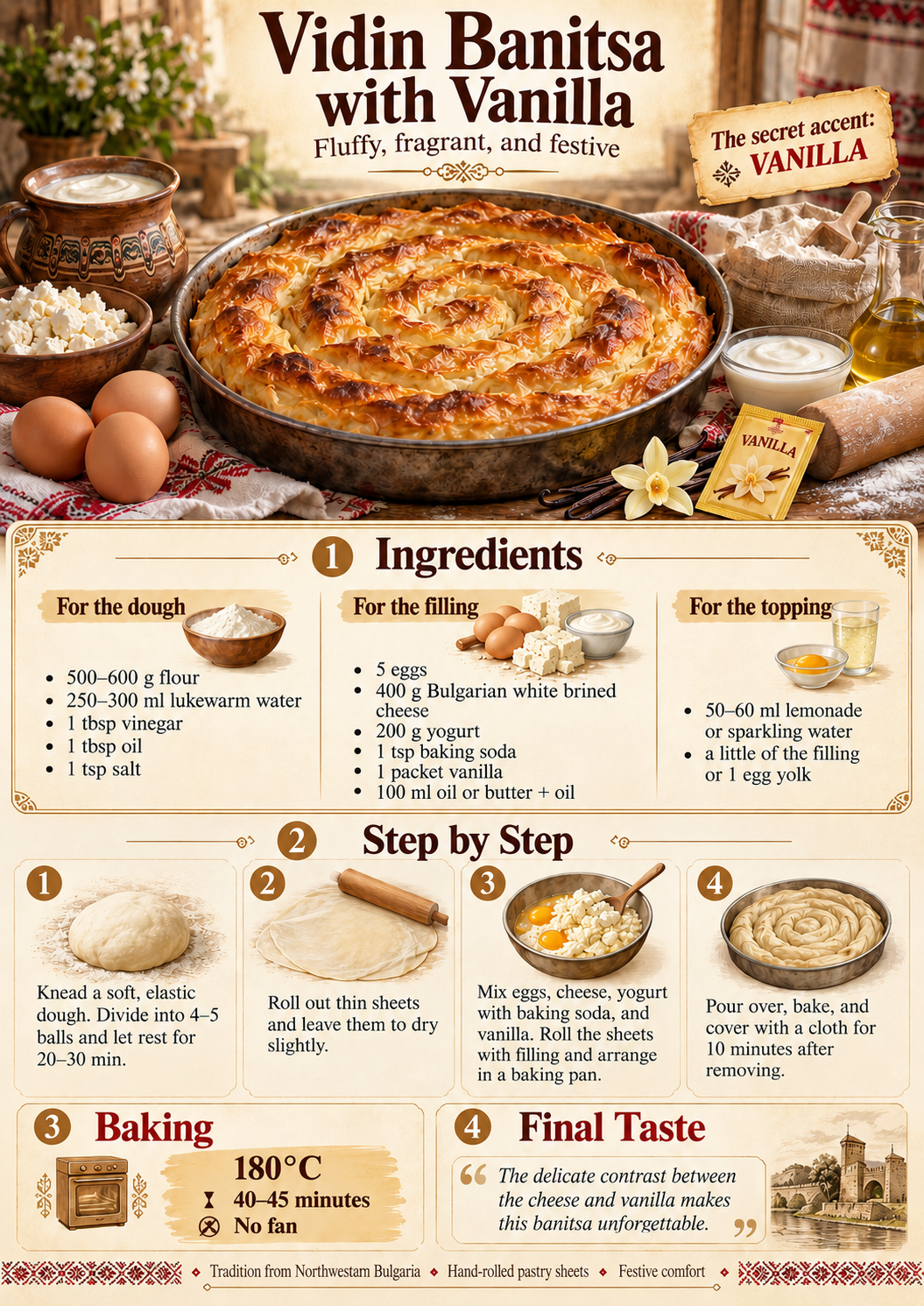
When you cut into it, the salty cheese meets the delicate fragrance of vanilla. For me, this taste will always belong to friendship between generations, to a warm kitchen and to Christmas.
The Staircase Woven with Love
It was time to cover the banitsa. But every cloth in the kitchen was already being used. Beneath them rested mysterious festive dishes, and from some, little clouds of steam were still rising.
Aunt Danka said we needed to bring down more cloths and table coverings from the second floor. She invited me to come upstairs with her.
The entire house had been dressed for Christmas and winter by her own hands. Literally.
As a young woman, she had woven her own bridal textiles. Every bed and sofa was covered with traditional Bulgarian shaggy woolen textiles, blankets and rugs she had made herself. The entire staircase leading to the second floor was covered with a fluffy white runner. An unimaginable amount of work.
I had always felt a little uncomfortable stepping on these pieces, out of respect for her labour. But she would laugh and say, “Come on, come on, step on it! We have work to do. We aren’t going to let our feet freeze!”
She had taken care of the warmth, beauty and comfort of her home.
Every room had a different atmosphere. Cream and beige beside the fireplace. Red and green in the living room to celebrate Christmas. Pink in the bedroom, so that love and tenderness might always live there.
The Room Where I Heard the Silence
And there we were. Together, we crossed the threshold of the bedroom where the cloths were kept. A room I had never entered before.
Suddenly, I was overcome by a state of light. Such an overwhelming light, such powerful energy, that all I could hear was silence.
Silence in which cosmic music seemed to play.
I listened. I surrendered to it. I smiled. I was happy.
And in that moment, I understood. It was the rug.
It lay there quietly, looking at me. And I looked at it. We saw each other. We were reflected in one another.
Aunt Danka looked at me and smiled.
“I think you two have heard each other and recognised one another, haven’t you?” she asked.
The Weaver’s Story: Hands That Remember
Then Aunt Danka began to tell me her story.
When she was a young bride, she had spent many hours weaving at the loom. All those woolen blankets, rugs and shaggy textiles in her home had passed through her hands.
Her eldest son had been seven or eight years old when he began helping her. He would hand her the yarns of different colours, looking at her with such warmth, as though he understood the mystery taking place before him.
They worked in silence, with great dedication and so much love. Always with a smile, so that their happiness could become part of the rug.
There were no unnecessary words, yet there was profound communication between mother and child. Through the craft. Through colour. Through ornament.
She spoke of what she placed into every thread: a prayer for absolute harmony, family happiness and protection. For her, weaving was never merely a task.
It was a path towards creation itself, towards that mysterious place where everything appears dark, yet where all light is born; where the sun and stars come into being, and silence has its own music.
She looked at me.
I was shining.
“It’s yours! It chose you, and you understood!”
There was no need for her to say anything more. And there was no need for me to explain.
There is no greater gift than to be shared, to be reflected in eternity. There, where the music of creation and love is heard.
Nine Stars – Geometry, Light and the Web of Life
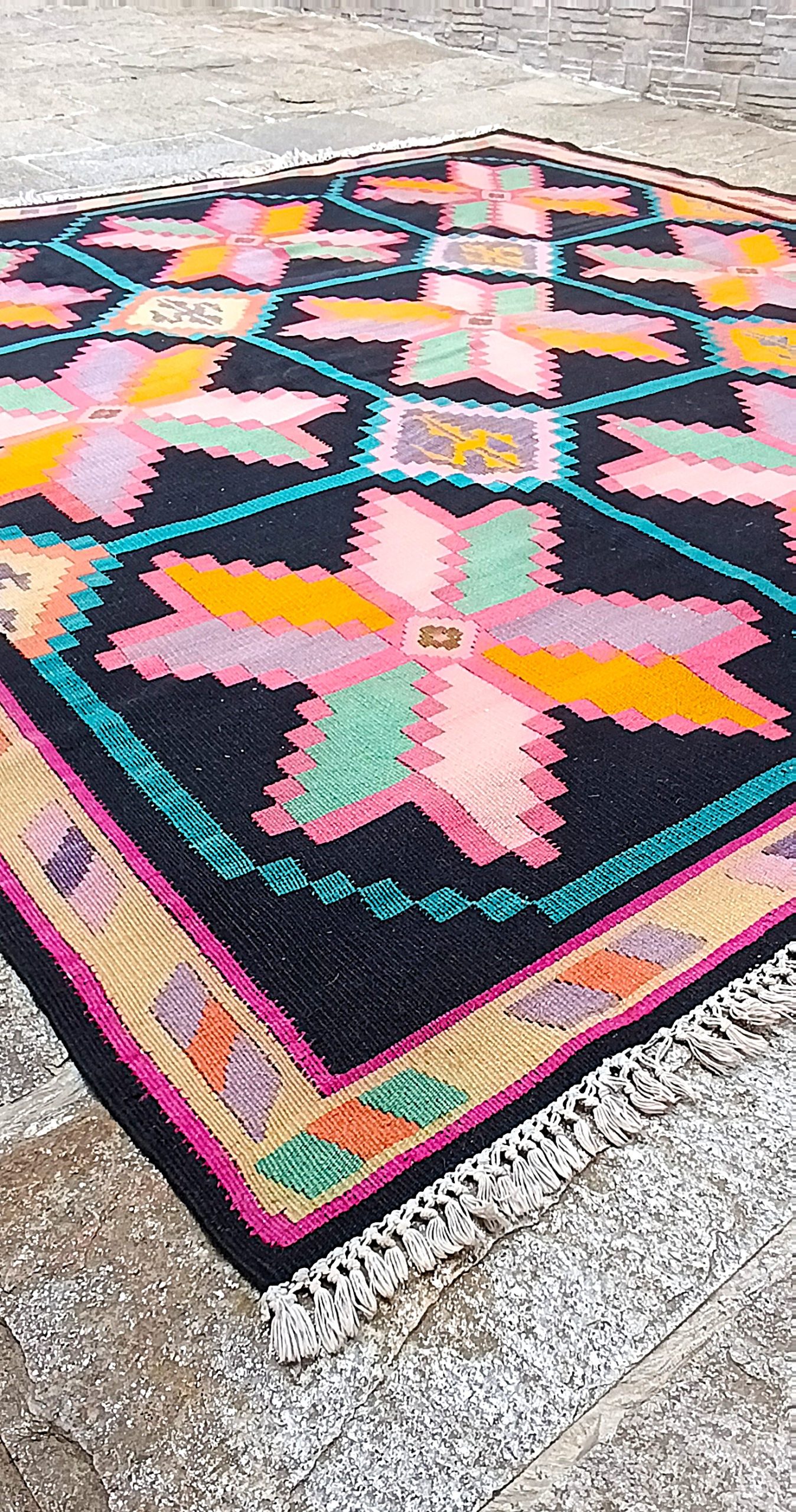
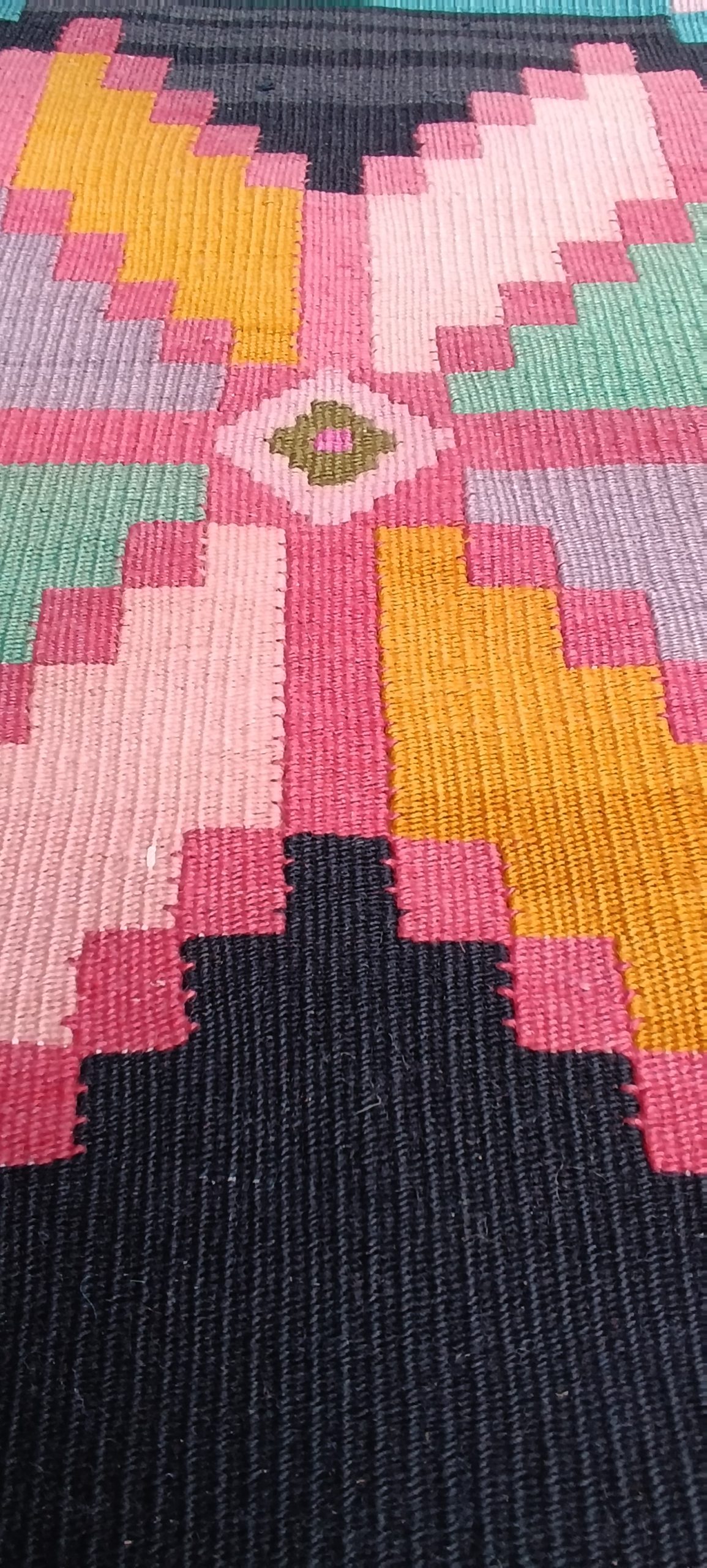
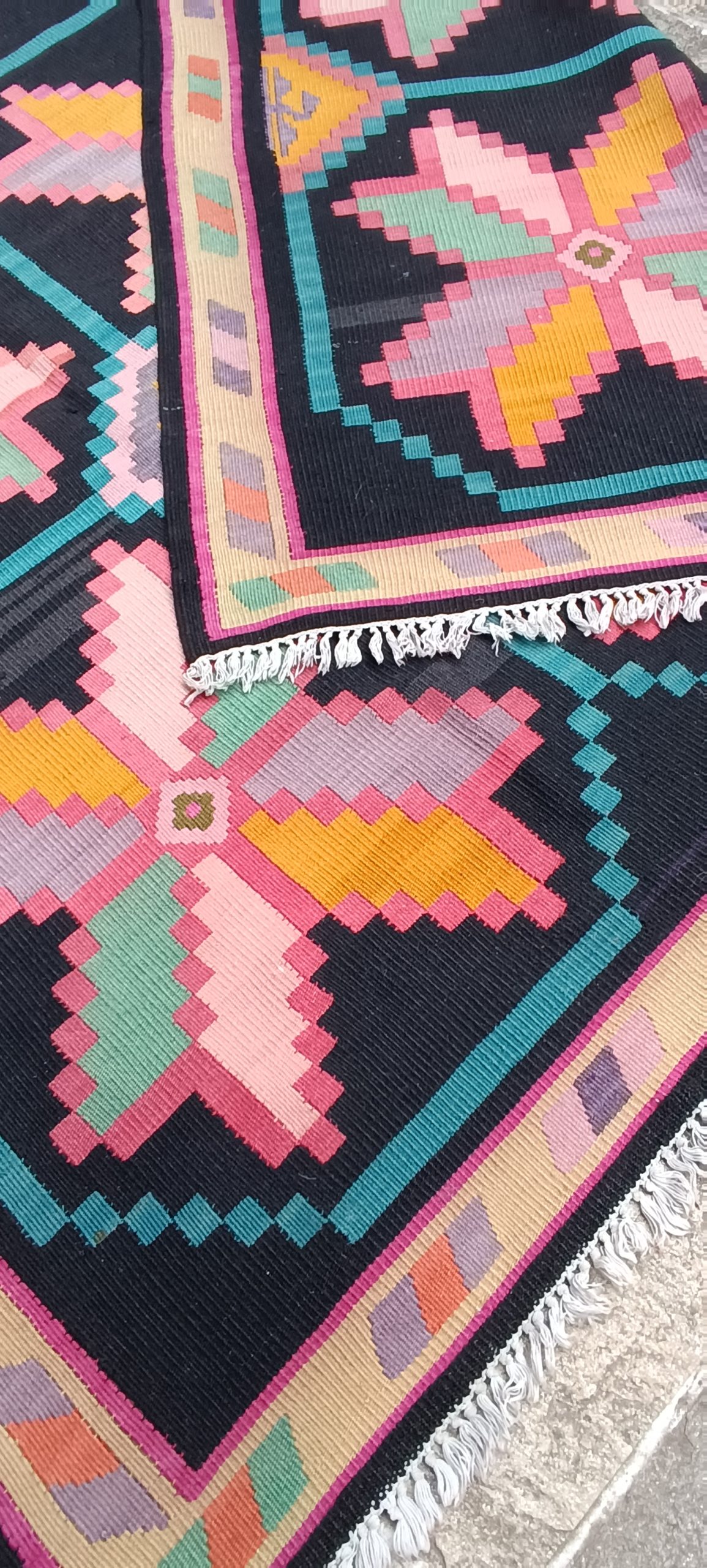
Nine great multicoloured stars unfold across the rug. Pink, pale green, yellow, orange and lavender shine against the deep black field. Turquoise lines unite the figures in a continuous rhythm, while smaller diamond-shaped symbols pulse between them.
To me, this has never been merely a composition. I see it as a Web of Life – past, present and future connected in one uninterrupted movement.
In Aunt Danka’s words, the stars represented light, joy and the eternal movement of life. The dark background was the original silence from which light is born.
Pink carried love. Yellow and orange held the warmth of the sun and the energy of creation. Green expressed renewal, health and the awakening of nature. The turquoise threads formed the invisible connections between everything alive.
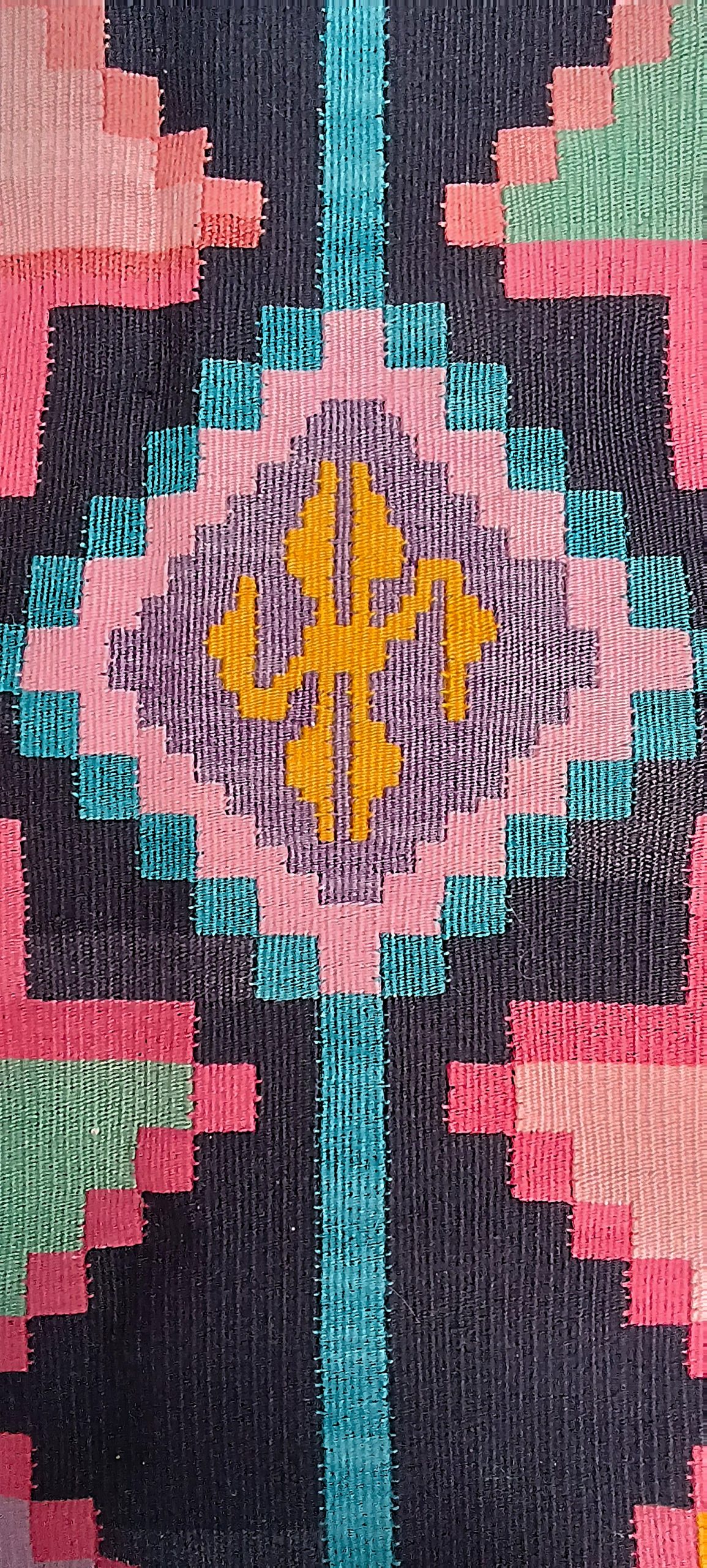
And the smaller diamonds, winged forms and branching signs were, in her understanding, blessings for the home and family. She recognised in them the feminine principle, the continuation of life, the meeting of earth and sky, and protection.
When she spoke of these signs, I was not listening to a lesson in ornamentation. I was listening to the language of her love.
The Colours and Symbols – Two Ways of Reading Them
| Element | What We See | Meaning Within Our Story |
|---|---|---|
| Black field | Deep dark background | The silence from which light is born |
| Multicoloured stars | Repeated stepped star-shaped ornaments | Love, sunlight, joy, creation and renewal |
| Diamond medallions | Small symmetrical geometric symbols | Family memory, protection and continuity |
| Turquoise lattice | Lines connecting the stars | The bond between people, generations and time |
| Pastel border and fringes | Decorative frame around the textile | The home as a place of love and shelter |
On the meaning of these symbols: These interpretations belong to the spiritual language of this personal story and to the maker’s own understanding of her work. Traditional geometric motifs may have different local names and meanings. Here, what matters is also the love and intention with which this particular rug was woven.
Chiprovtsi Carpet Weaving – A Living Cultural Heritage
Behind this personal Christmas story stands the centuries-old tradition of Chiprovtsi carpet weaving in northwestern Bulgaria.
The tradition is known for its geometric ornamentation, weaving on vertical looms and the creation of reversible flatwoven carpets. In 2014, the tradition of carpet-making in Chiprovtsi was inscribed on UNESCO’s Representative List of the Intangible Cultural Heritage of Humanity.
There is something in UNESCO’s description that touches me deeply. The weavers offer prayers and wishes before beginning a carpet, and they sing and tell stories while working. Knowledge is passed from one generation to another, sometimes at the same loom.
Whenever I remember Aunt Danka and the little boy handing yarn to his mother, I understand just how alive such a tradition can be.
For readers interested in the history, techniques and materials of these remarkable textiles, our detailed guide to Chiprovtsi rugs, weaving and UNESCO heritage explores the craft through an additional rug preserved in The Old Antiquarian Collection.
Two Sides, One Love – What the Weaving Reveals
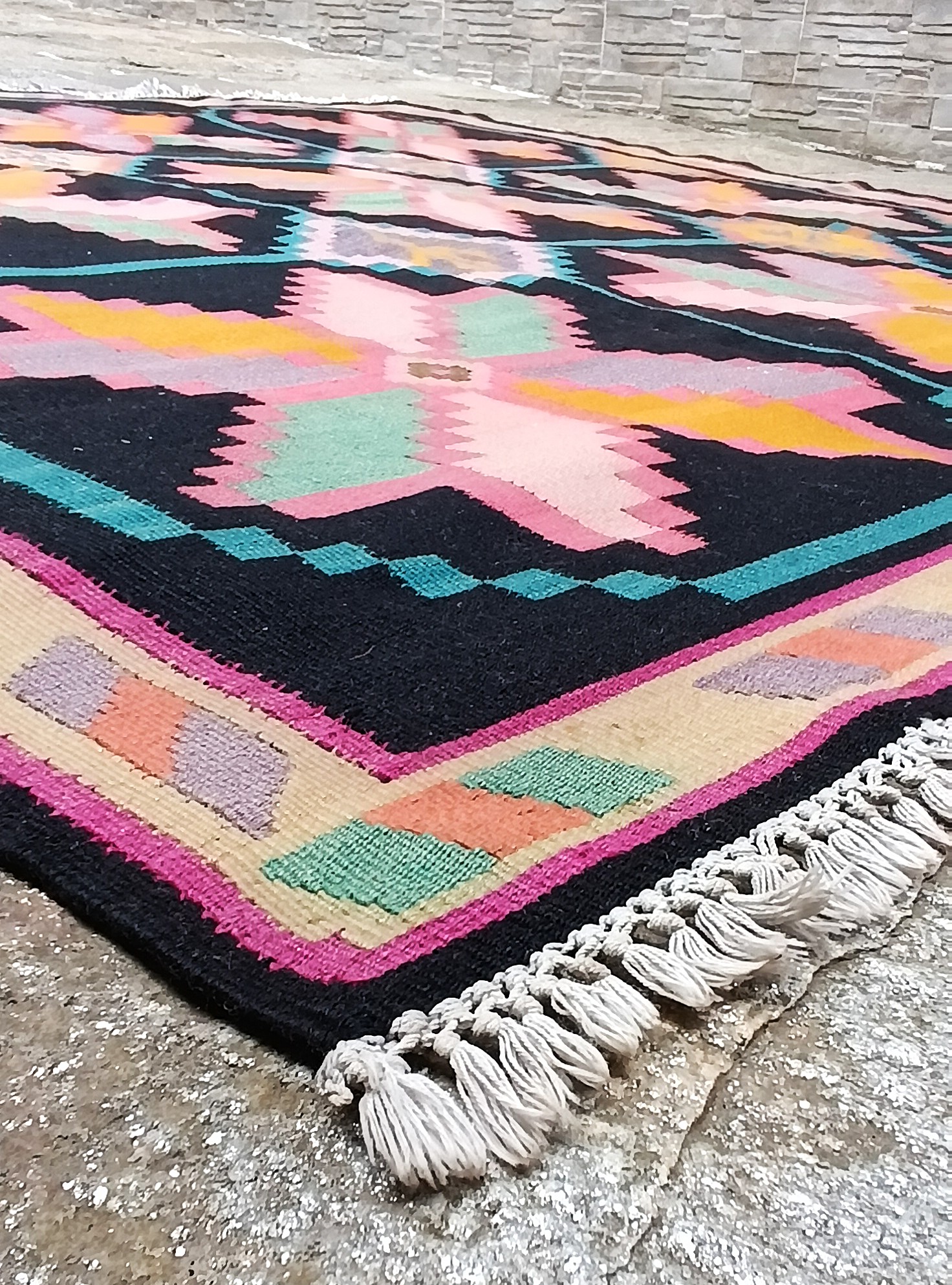
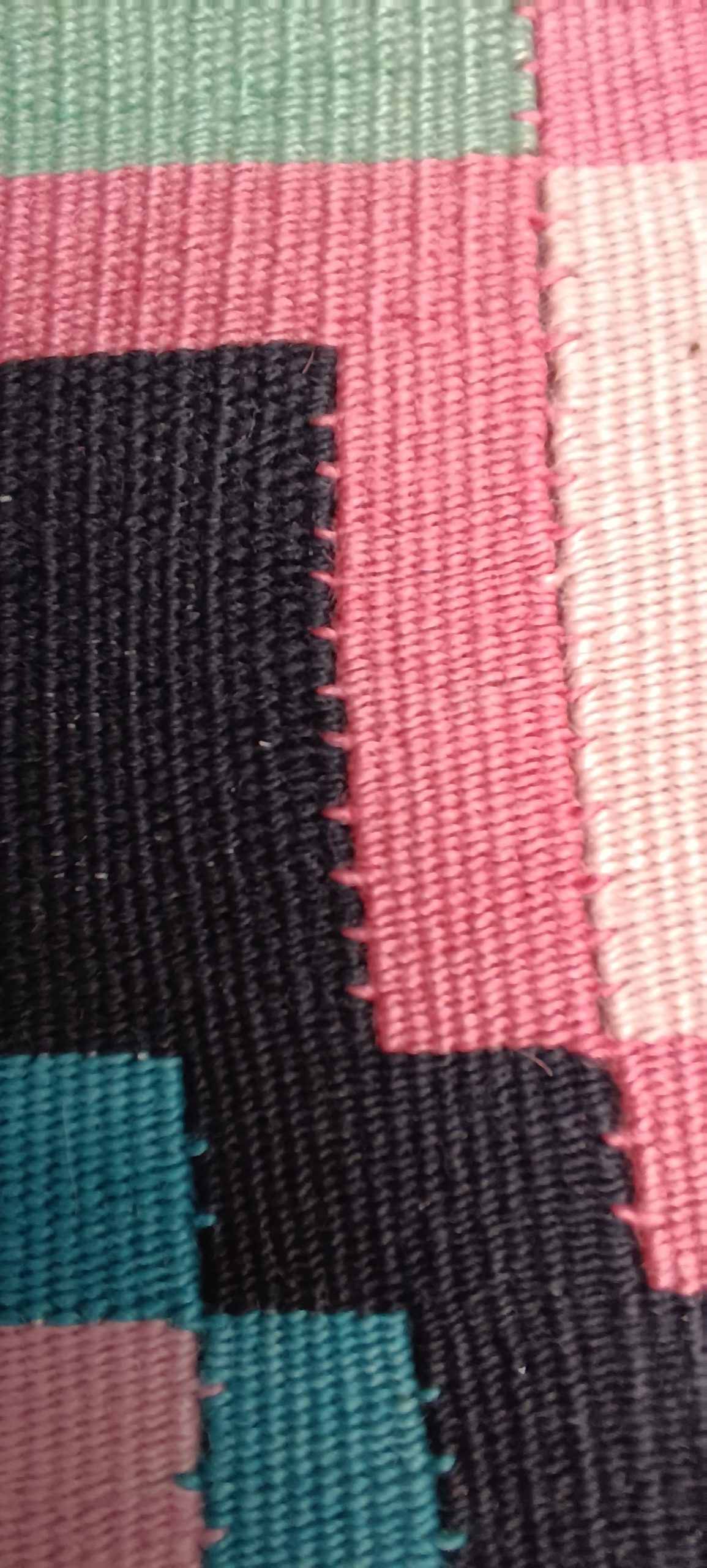
The folded corner of this rug reveals another beauty: the ornament continues on the other side.
This is characteristic of reversible flatweaving. The design is not merely an ornament attached to the surface. It is part of the textile’s own construction.
When I look closely at the white fringes, the changes of colour and the precise stepped edges, I see something else as well.
I see time.
The time of a woman. The time of her child sitting beside the loom. The time during which this textile belonged to their home, long before it entered mine.
How Do We Preserve a Rug That Carries a Story?
I would never wish to preserve such a gift merely as a beautiful object. I want to preserve the story that came with it.
I want to remember whose hands wove it, what words were spoken beside the loom, and why this particular rug became part of our home.
Collector’s Checklist
- Record the name of the weaver and the rug’s personal history.
- Photograph both sides, borders, fringes and characteristic motifs.
- Protect the textile from prolonged direct sunlight and excessive moisture.
- Avoid aggressive cleaning; consult a textile specialist if damage occurs.
- Preserve the story together with the object for the next generation.
The Christmas Gift That Could Never Be Wrapped
I went home with a rug. But in truth, I left with so much more.
With Aunt Danka’s warmth. With the taste of her Vidin banitsa. With the image of a little boy handing colourful yarn to his mother. With the memory of that bedroom, where I suddenly heard the music of creation within silence.
The Christmas Star was never simply a present.
It was love, shared.
And when I look at its nine stars, I feel that the light continues to shine. Not because someone has switched on the Christmas lights, but because a woman placed her heart into the threads.
There is no greater gift than to be shared, to be reflected in eternity. There, where the music of creation and love is heard.
Frequently Asked Questions
What is The Christmas Star rug?
It is a traditional handwoven, reversible Bulgarian Chiprovtsi rug featuring nine multicoloured geometric stars against a black background, preserved in The Old Antiquarian Collection.
Who wove The Christmas Star rug?
The rug was woven by Aunt Danka, who personally shared its history and gave it as an unexpected Christmas gift.
What do the nine stars represent?
Within the weaver’s personal spiritual interpretation, the stars represent light, love, creation, joy and renewal. Their connected pattern expresses family harmony and continuity.
Why are traditional Chiprovtsi rugs reversible?
Their handwoven flatweave technique forms the design as part of the textile structure, allowing the geometric composition to appear on both faces.
When was Chiprovtsi carpet weaving recognised by UNESCO?
The tradition of carpet-making in Chiprovtsi was inscribed on UNESCO’s Representative List of the Intangible Cultural Heritage of Humanity in 2014.
Why is a Vidin banitsa recipe included in this rug story?
Because preparing Aunt Danka’s homemade Christmas banitsa brought us together on the very day she gave me the rug. The recipe is an inseparable part of the family memory.
Sources and Further Reading
- UNESCO – The Tradition of Carpet-Making in Chiprovtsi. Official record of the tradition’s inscription in 2014.
- UNESCO – Intergovernmental Committee Decision 9.COM 10.9.
- The Old Antiquarian – Chiprovtsi Rugs: History, Weaving and UNESCO Heritage.
- Personal testimony and family memories shared by Aunt Danka, the maker of the rug; original photographs from The Old Antiquarian Collection.
Related Guides and Stories
Discover how historical textiles can continue their lives in contemporary homes in our article Bulgarian Rugs in Modern Interiors: 6 Styling Ideas.
Do You Own an Old Rug with a Story?
Every historic object deserves to be examined with care – not only for its age and craftsmanship, but also for the memories it carries. If you would like to discuss an antique or vintage textile, we would be pleased to hear from you.
About the Storyteller and the Collection
This first-person story is shared through The Old Antiquarian, a collection and editorial space dedicated to historic objects, skilled makers and the memories preserved in family possessions.
The photographs show the actual rug from the collection. The personal emotions, spiritual imagery and memories of the weaver are an essential part of the story of this Christmas gift.
