
What Is Chinese Porcelain? History, Identification & Collecting Guide
Chinese porcelain is one of the greatest achievements in the history of ceramics and decorative arts. China is universally recognised as the birthplace of true porcelain, and for more than a thousand years its manufacturing techniques remained one of the world’s best-kept secrets. Thanks to its exceptional whiteness, remarkable strength, delicate translucency, and extraordinary artistic quality, Chinese porcelain became a symbol of luxury, wealth, refinement, and imperial prestige throughout Asia and Europe.
Today, authentic antique Chinese porcelain ranks among the world’s most sought-after collectibles. Rare imperial vases, bowls, chargers, tea services, scholar’s objects, and ceremonial vessels regularly sell for hundreds of thousands—and sometimes millions—of dollars at leading international auction houses.
Whether you are an experienced collector or simply curious about an inherited porcelain vase, understanding Chinese porcelain is the first step towards identifying its age, authenticity, historical importance, and potential value.
If you are new to porcelain collecting, we recommend beginning with our complete guides What Is Porcelain?, Types of Porcelain Explained, and Porcelain vs Faience vs Ceramic before exploring the fascinating history of Chinese porcelain.
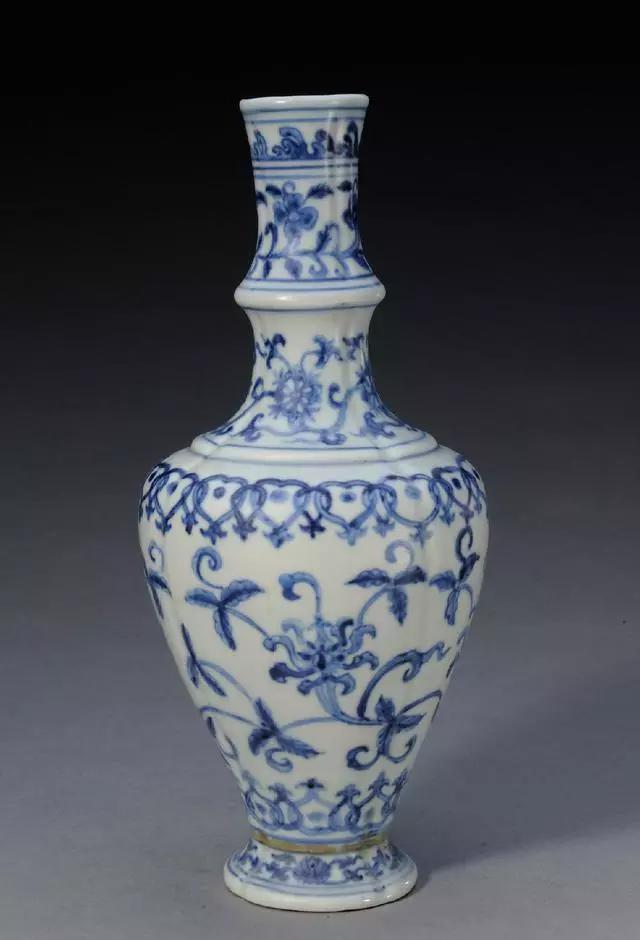
The History of Chinese Porcelain
The origins of true Chinese porcelain stretch back more than 1,300 years. Chinese craftsmen were the first to discover that combining carefully refined kaolin clay, quartz, and feldspar, followed by firing at exceptionally high temperatures, produced an entirely new ceramic material unlike anything previously known.
The result was porcelain—an exceptionally hard, dense, brilliantly white material that combined remarkable strength with elegant translucency. This technological breakthrough transformed Chinese ceramics and eventually changed the history of decorative arts throughout the world.
For centuries, Chinese potters perfected their techniques while carefully protecting the manufacturing process. European craftsmen admired imported Chinese porcelain but were unable to reproduce it successfully until the early eighteenth century.
Chinese porcelain travelled westward along the Silk Road and later by maritime trade routes, becoming one of the most desirable luxury goods owned by emperors, kings, aristocrats, merchants, and wealthy collectors.
Its influence was so profound that European factories—including Meissen, Sèvres, Royal Copenhagen, Herend, Limoges, Wedgwood, and many others—were established largely because European rulers wished to recreate the extraordinary porcelain imported from China.
Why Is Chinese Porcelain So Famous?
For over a millennium, Chinese porcelain represented the highest standard of ceramic production anywhere in the world. Its refined shapes, perfectly balanced proportions, flawless glazes, elegant decoration, and extraordinary technical quality earned it the nickname “White Gold.”
Many of the finest pieces were created exclusively for China’s Imperial Court. These magnificent objects were never intended for commercial sale and today survive mainly in museums, imperial collections, and prestigious private collections.
Collectors value antique Chinese porcelain because it combines:
- Outstanding artistic craftsmanship
- Exceptional technical quality
- Rich historical significance
- Great rarity
- Strong international demand
- Excellent long-term investment potential
Even relatively modest examples of antique Chinese porcelain often demonstrate a level of craftsmanship that continues to impress collectors centuries after they were produced.
How Is Chinese Porcelain Made?
Traditional Chinese porcelain is manufactured using three principal natural ingredients:
- Kaolin clay
- Quartz
- Feldspar
After shaping, each object is fired at temperatures generally ranging between 1300°C and 1450°C. These extremely high temperatures vitrify the porcelain body, creating exceptional hardness while preserving its refined appearance.
Many objects are then decorated by highly skilled artists using underglaze cobalt blue, overglaze enamels, or intricate hand-painted designs before undergoing further firing stages.
This combination of advanced ceramic technology and artistic mastery explains why Chinese porcelain has remained admired for centuries.
How to Identify Chinese Porcelain
Correctly identifying Chinese porcelain requires much more than simply examining the mark on the base. Professional appraisers evaluate numerous characteristics together before reaching a conclusion.
Authentic Chinese porcelain often displays:
- Dense, refined porcelain body
- Smooth, even glaze
- Slight translucency in thinner areas
- A clear ringing sound when gently tapped
- Exceptional hand craftsmanship
- Balanced proportions
- Natural signs of ageing on antique examples
- High-quality painted decoration
Specialists also examine whether the object remains an original, or whether it could be a later copy, a replica, or even a fake.
No single characteristic alone proves authenticity. Professional identification always considers the complete object, including its porcelain body, glaze, decoration, construction techniques, age, condition, and historical context.
What Do Chinese Porcelain Marks Mean?
Many Chinese porcelain objects bear marks on their bases, but these marks are often misunderstood. Unlike European factory marks, which usually identify the manufacturer, Chinese porcelain marks may commemorate an emperor, refer to a historical dynasty, identify a workshop, indicate a reign period, or simply pay tribute to an earlier artistic tradition.
Collectors frequently assume that a Ming or Qing reign mark automatically means the object was produced during that dynasty. In reality, this is not always true. Chinese potters have copied and reused famous reign marks for centuries, often as a sign of respect for earlier masters rather than as an attempt to deceive.
For this reason, specialists never identify Chinese porcelain by the mark alone. Instead, they examine the complete object together with the mark before reaching any conclusion.
To learn more about factory marks and backstamps, see our guide What Are Porcelain Marks?.
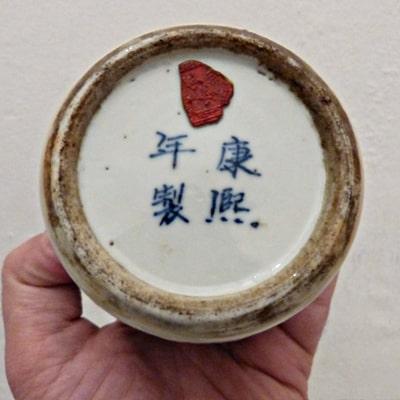
Do All Chinese Porcelain Pieces Have Marks?
No. Many genuine antique Chinese porcelain objects were produced without any mark at all. Others have marks that have faded through centuries of use, while some pieces carry marks that were added much later by collectors, dealers, or workshops.
Likewise, many modern porcelain objects legitimately display famous Ming or Qing reign marks despite having been manufactured recently. This tradition has existed for hundreds of years and should not automatically be interpreted as evidence of forgery.
A genuine antique without a mark may sometimes be considerably more valuable than a modern reproduction carrying a famous imperial inscription.
Chinese Porcelain Through the Dynasties
The history of Chinese porcelain spans more than one thousand years, with every imperial dynasty contributing new artistic styles, glazing techniques, decorative themes, and manufacturing innovations. Understanding these periods is one of the foundations of professional porcelain identification.
| Dynasty | Period | Characteristics |
|---|---|---|
| Tang | 618–907 | Early development of true porcelain and the famous sancai glazed ceramics. |
| Song | 960–1279 | Elegant forms, refined monochrome glazes, understated beauty, and exceptional craftsmanship. |
| Yuan | 1271–1368 | The emergence of the iconic blue-and-white porcelain decorated with imported cobalt. |
| Ming | 1368–1644 | Often regarded as the golden age of Chinese porcelain, admired for technical perfection and artistic excellence. |
| Qing | 1644–1912 | Rich enamel colours, highly detailed decoration, imperial commissions, and extraordinary artistic diversity. |
The Most Famous Types of Chinese Porcelain
Over the centuries, Chinese potters created many distinctive porcelain styles, each with its own artistic character and collector appeal. Some were produced exclusively for the Imperial Court, while others became famous throughout Europe and the rest of the world through international trade.
| Type | Description |
|---|---|
| Blue & White | Classic white porcelain decorated with underglaze cobalt blue designs. |
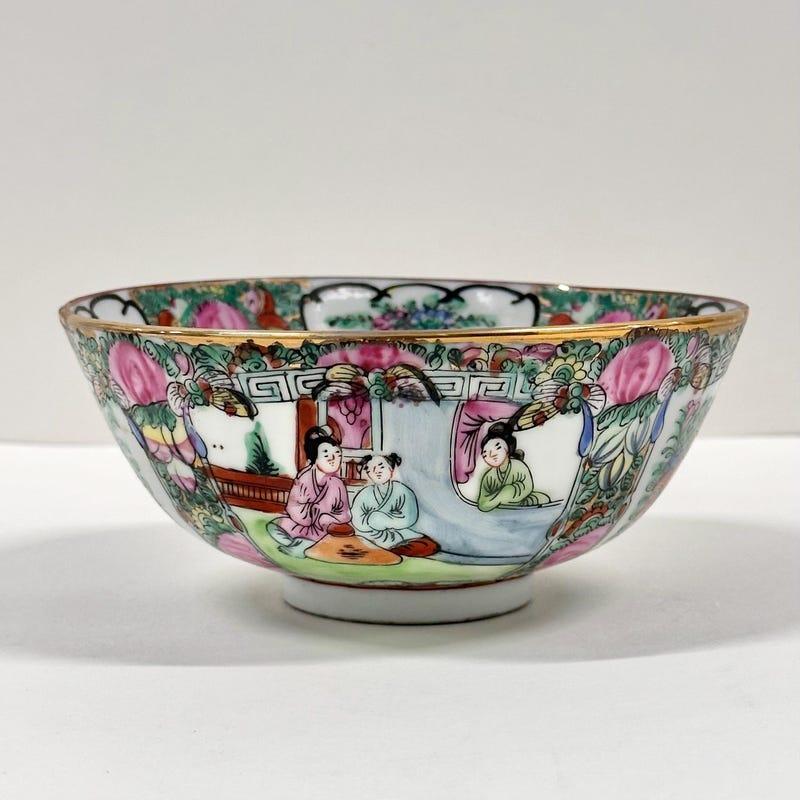
| Famille Rose | Soft pink enamels with delicate floral and figurative decoration. |
| Famille Verte | Green-dominated enamel decoration introduced during the Qing dynasty. |
| Celadon | Elegant pale green glaze admired throughout Asia for centuries. |
| Blanc de Chine | Beautiful pure white porcelain associated with Dehua kilns. |
| Doucai | Combination of underglaze cobalt blue with colourful overglaze enamels. |
| Wucai | Rich multi-coloured decorative style using several enamel colours. |
| Ru Ware | Among the rarest and most valuable porcelains ever produced in China. |
| Guan Ware | Imperial porcelain celebrated for elegant crackled glazes. |
| Ding Ware | Ivory-white porcelain with finely carved decoration. |
Each of these porcelain traditions reflects a different period in Chinese history and continues to attract museums, scholars, and collectors worldwide.
How to Tell Antique Chinese Porcelain from Modern Reproductions
One of the greatest challenges facing collectors today is distinguishing genuine antique Chinese porcelain from modern reproductions. Advances in ceramic manufacturing have made it possible to produce remarkably convincing copies, some of which imitate famous imperial wares with impressive accuracy.
However, experienced specialists never rely on a single characteristic. Instead, they evaluate the entire object, looking for consistency between the porcelain body, decoration, glaze, construction, wear, and any porcelain marks.
Professional identification usually includes examination of:
- Porcelain body and texture
- Weight and wall thickness
- Glaze colour and surface quality
- Natural ageing
- Painting techniques
- Brushwork
- Base and foot rim
- Firing characteristics
- Shape and proportions
- Porcelain marks
Many modern reproductions legitimately carry Ming or Qing reign marks, making the mark itself only one small part of the identification process. Professionals also determine whether an object remains an original or could instead be a later copy, a replica, or even a fake.
How to Recognise Hand-Painted Chinese Porcelain
Much of the world’s finest Chinese porcelain was decorated entirely by hand. Skilled painters spent years mastering brush control, colour application, and traditional decorative motifs before being allowed to work on imperial or export-quality porcelain.
Hand-painted porcelain usually displays subtle characteristics that distinguish it from transfer-printed decoration.
Collectors often look for:
- Natural variations in brush strokes
- Slight differences between repeated motifs
- Variation in colour intensity
- Fine hand-drawn outlines
- Balanced but non-identical decoration
- Exceptional artistic detail
By contrast, transfer-printed decoration tends to appear highly uniform, with identical details repeated perfectly across multiple pieces.
Of course, many later factories combined transfer printing with hand finishing, meaning that professional examination remains essential.
The Most Collectible Chinese Porcelain Objects
Chinese porcelain has been produced in countless forms over many centuries, but certain categories remain especially desirable among collectors.
- Imperial vases
- Blue and white porcelain
- Famille Rose porcelains
- Celadon wares
- Blanc de Chine sculptures
- Imperial bowls
- Tea pots and complete tea services
- Covered ginger jars
- Decorative chargers
- Buddhist figures
- Scholar’s objects
- Hand-painted export porcelain
Large palace-quality pieces from the Ming and Qing dynasties remain among the most valuable ceramics ever sold at auction.
Chinese Export Porcelain
Beginning in the seventeenth century, enormous quantities of Chinese porcelain were exported to Europe, the Middle East, and later North America. These export wares were specifically produced to suit foreign tastes while maintaining the remarkable technical quality of Chinese porcelain.
Many European aristocratic families commissioned customised dinner services featuring family coats of arms, monograms, or decorative motifs designed exclusively for overseas clients.
Today, antique Chinese export porcelain forms an important collecting category in its own right and provides valuable evidence of the global trade networks that connected China with Europe for centuries.
What Determines the Value of Chinese Porcelain?
The market value of antique Chinese porcelain depends on numerous factors working together.
- Dynasty
- Age
- Rarity
- Imperial or export production
- Artistic quality
- Painting technique
- Condition
- Documented provenance
- Authenticity
- Collector demand
Specialists also consider whether the porcelain has undergone previous restoration or conservation, since inappropriate repairs can influence both historical integrity and market value.
Some imperial porcelains from the Ming and Qing dynasties have achieved prices of several million dollars, demonstrating the continuing international demand for exceptional Chinese ceramics.
How to Care for Antique Chinese Porcelain
Antique Chinese porcelain has survived for centuries, but it remains surprisingly fragile. Proper handling, storage, and cleaning are essential if you want to preserve both its historical integrity and its collector value.
Collectors should always handle porcelain carefully, supporting larger objects from their strongest structural points rather than lifting them by handles, spouts, lids, or decorative elements.
To help preserve antique Chinese porcelain:
- Avoid sudden temperature changes.
- Keep porcelain away from direct sunlight.
- Protect it from vibration and accidental impacts.
- Use padded shelves or secure display cabinets.
- Never stack valuable porcelain without protective padding.
- Dust regularly using a soft microfiber cloth.
- Avoid abrasive cleaning products.
- Do not use household bleach or aggressive chemicals.
If valuable porcelain has suffered damage, professional conservation is usually preferable to unnecessary restoration. Whenever restoration is required, it should always be carried out by experienced specialists using appropriate conservation methods.
When Should You Request a Professional Appraisal?
If you own a Chinese porcelain object and would like to determine its authenticity, approximate age, dynasty, manufacturer, condition, or market value, obtaining a professional appraisal is often the safest course of action.
Professional evaluation is particularly recommended before:
- Buying expensive porcelain
- Selling inherited collections
- Sending objects to auction
- Restoring damaged porcelain
- Obtaining insurance
- Donating objects to museums
Specialists examine much more than the porcelain mark. They evaluate the porcelain body, glaze, decoration, painting techniques, craftsmanship, historical consistency, provenance, condition, and whether the object remains an original.
➡️ Request a Professional Antique Valuation
Frequently Asked Questions
Is every Chinese porcelain piece antique?
No. Chinese porcelain continues to be produced today. Only older pieces with historical significance are considered antiques.
Can Chinese porcelain be identified by the mark alone?
No. Although porcelain marks are extremely useful, experts always evaluate the porcelain body, glaze, decoration, craftsmanship, age, and historical consistency before determining authenticity.
Do all genuine Chinese porcelain pieces have marks?
No. Many authentic antique Chinese porcelain objects were produced without marks, while others have marks that have faded or disappeared over time.
Can modern porcelain have Ming or Qing reign marks?
Yes. Modern Chinese manufacturers frequently reproduce historical reign marks as a tribute to traditional porcelain production. A reign mark should therefore never be treated as proof of age by itself.
Which Chinese porcelain is the most valuable?
Imperial porcelain from the Ming and Qing dynasties generally commands the highest prices, particularly rare examples with exceptional craftsmanship, documented provenance, and excellent condition.
Conclusion
Chinese porcelain represents one of humanity’s greatest artistic and technological achievements. For more than a thousand years it has inspired collectors, artists, monarchs, museums, and ceramic manufacturers around the world. From the elegant monochrome wares of the Song dynasty to the magnificent blue-and-white porcelains of the Ming period and the richly decorated imperial masterpieces of the Qing dynasty, Chinese porcelain remains the benchmark against which all other porcelain traditions are measured.
Correct identification requires careful examination of every aspect of an object—including the porcelain body, glaze, decoration, craftsmanship, historical period, provenance, and porcelain marks. By studying these characteristics together rather than relying on a single feature, collectors can make informed decisions about authenticity, rarity, historical importance, and market value.
Whether you are researching a family heirloom, building a collection, or purchasing your first antique porcelain object, understanding Chinese porcelain opens the door to one of the richest and most fascinating traditions in the history of decorative arts.
Continue Learning
- What Is Porcelain?
- Types of Porcelain Explained
- Porcelain vs Faience vs Ceramic
- What Are Porcelain Marks?
- What Is Japanese Porcelain?
- What Is Russian Porcelain?
- What Is a Maker’s Mark?
- What Is Restoration?
- What Is Conservation?
- What Is a Certificate of Authenticity?
Explore Related Collections
