What Is Royal Doulton Porcelain? History, Marks, Identification and Collecting Guide
Royal Doulton is one of the world’s most famous British porcelain and ceramics manufacturers. Founded in 1815 by John Doulton, the company has become synonymous with exceptional craftsmanship, elegant design and over two centuries of ceramic excellence. Today, Royal Doulton porcelain is collected worldwide for its fine Bone China, decorative vases, Character Jugs, figurines, tableware and art pottery.
Collectors appreciate Royal Doulton not only for its beauty but also for its rich history, distinctive backstamps and remarkable artistic quality. Genuine antique Royal Doulton pieces can range from affordable collectibles to museum-quality works worth thousands of dollars, depending on their rarity, age, condition and provenance.
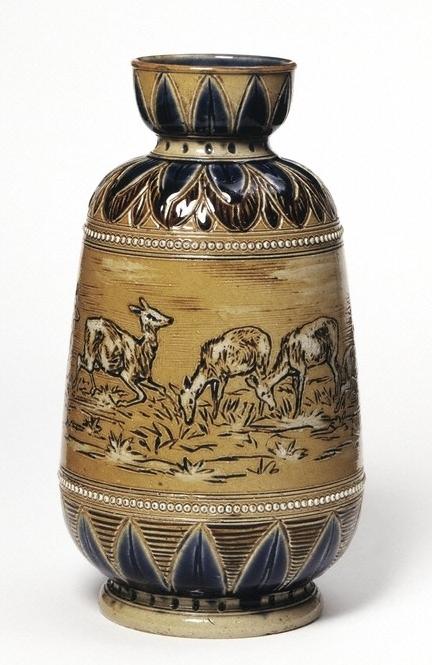
Royal Doulton Art Vase
Learning to identify authentic Royal Doulton porcelain involves much more than recognizing the famous lion-and-crown backstamp. Successful identification also requires understanding production periods, decorative styles, body materials, glaze quality, artist signatures and factory marks. If you are unfamiliar with porcelain in general, our guide What Is Porcelain? provides an excellent starting point before exploring individual manufacturers.
The History of Royal Doulton
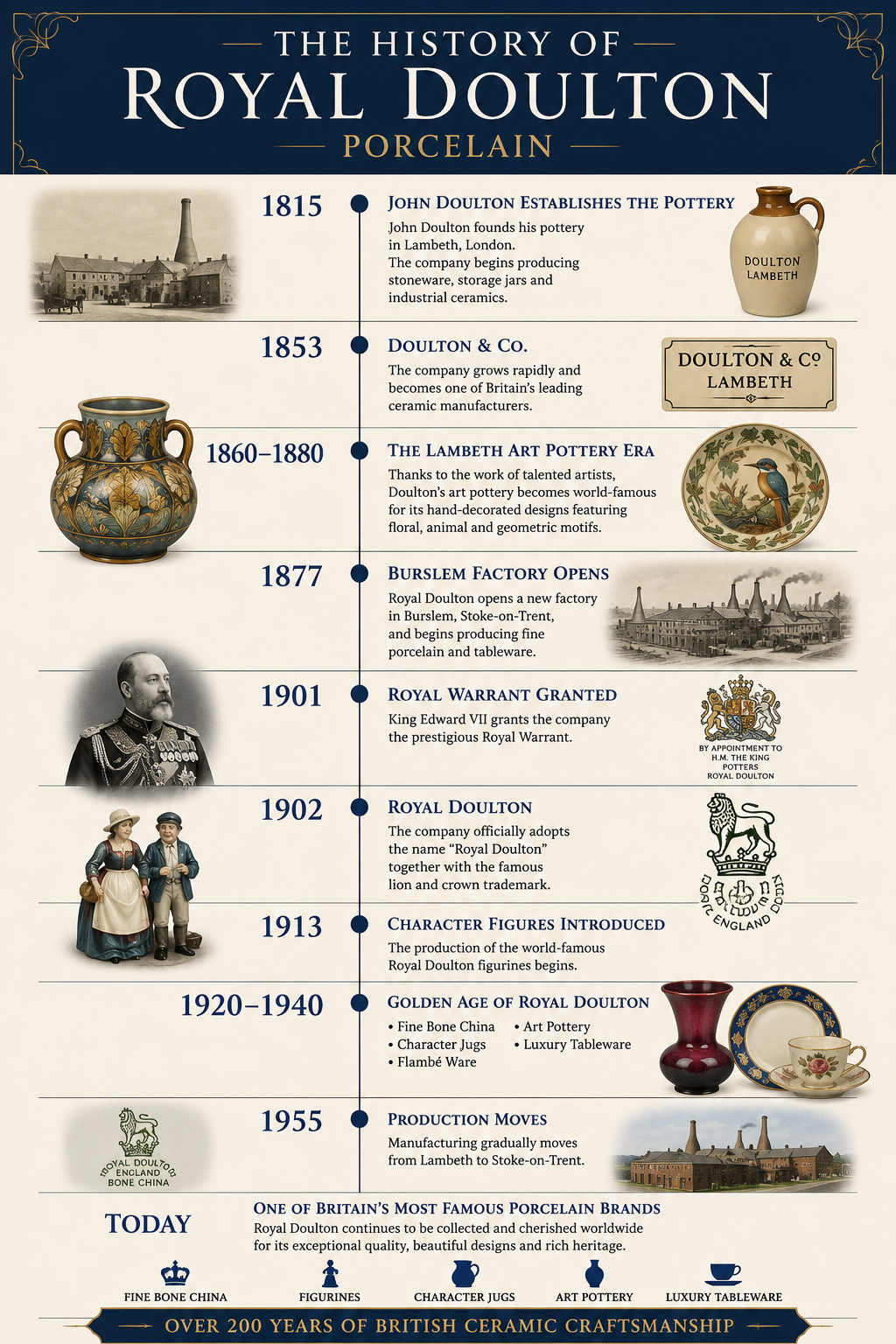
The story of Royal Doulton begins in 1815, when John Doulton established a pottery in Lambeth, London. The company initially specialised in practical stoneware, industrial ceramics and storage vessels rather than luxury porcelain. During the nineteenth century, however, continual investment in technology and artistic design transformed the business into one of Britain’s most respected ceramic manufacturers.
By the mid-nineteenth century, Doulton pottery had gained an international reputation for quality. The company collaborated with talented artists who created beautifully hand-decorated stoneware featuring floral motifs, animals, landscapes and intricate geometric ornament. These artistic works remain highly collectible today.
An important milestone came in 1877, when the company opened its factory in Burslem, Staffordshire—the heart of England’s pottery industry. This expansion allowed Royal Doulton to produce fine porcelain and elegant tableware alongside its famous Lambeth art pottery.
Perhaps the most significant moment in the company’s history occurred in 1901, when King Edward VII granted the company a prestigious Royal Warrant. From 1902 onward, the company officially became known as Royal Doulton, adopting the famous lion and crown trademark that collectors still recognise today.
Throughout the twentieth century, Royal Doulton expanded into Fine Bone China, luxury dinner services, decorative figurines, Character Jugs and Flambé ware. These collections helped establish the company as one of the leading names in British ceramics and continue to attract collectors across Europe, North America and Asia.
Why Is Royal Doulton So Popular Among Collectors?
Several factors explain Royal Doulton’s enduring popularity. First is the consistently high quality of its production. Royal Doulton employed skilled modellers, painters and ceramic artists whose work remains instantly recognisable.
Secondly, the company produced an enormous variety of objects, including:
Fine Bone China tableware
Decorative vases
Character Jugs
Figurines
Art pottery
Tea and coffee services
Commemorative pieces
Because these collections span more than two centuries, collectors can specialise in specific periods, artists, decorative styles or product lines.
Another reason for Royal Doulton’s popularity is its excellent documentation. Factory catalogues, artist records and production marks make dating many pieces considerably easier than with some other porcelain manufacturers. Understanding these factory marks is essential, and readers who are new to ceramic identification may also find our guide What Are Porcelain Marks? especially useful.
Royal Doulton Art Pottery
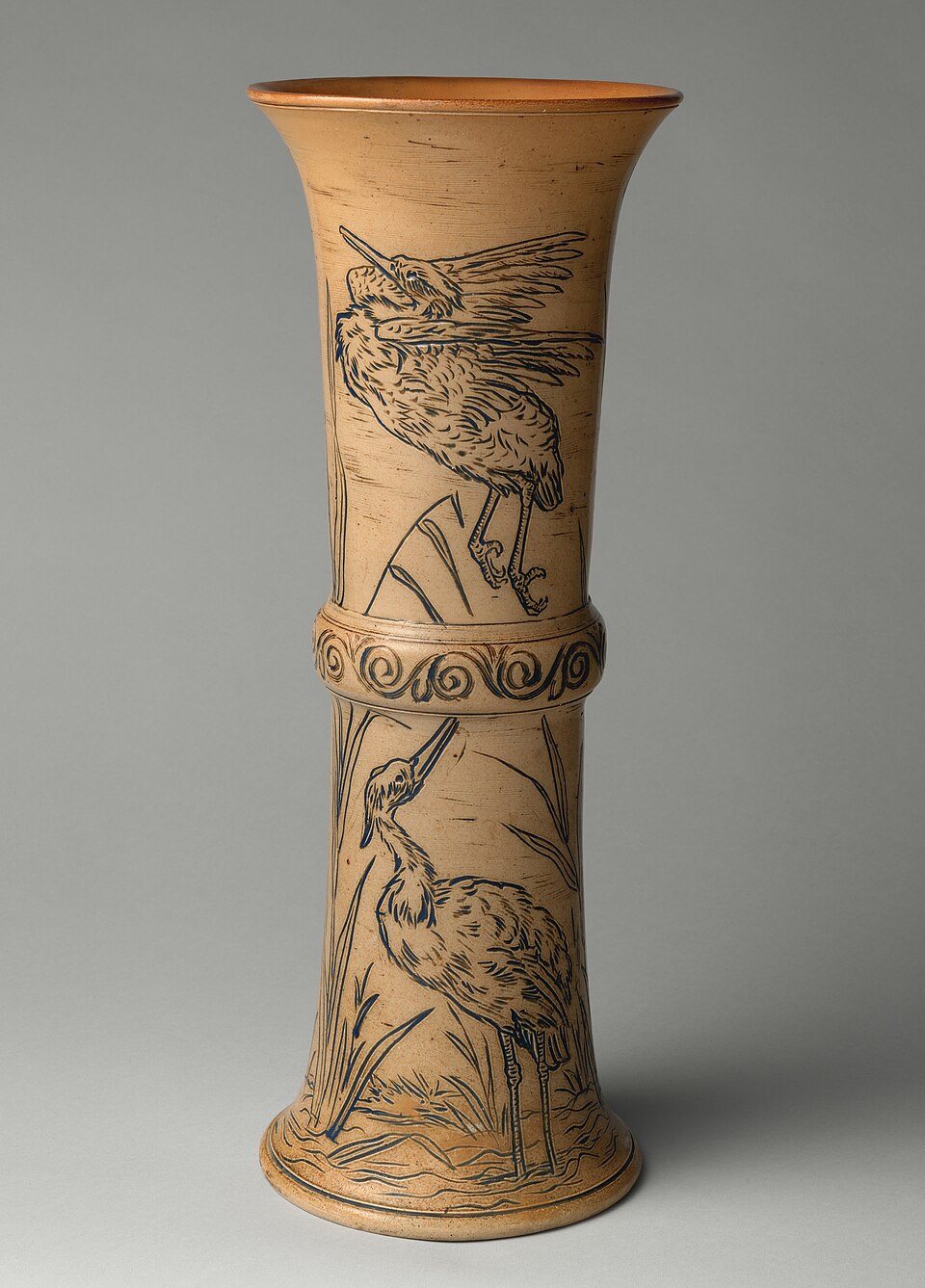
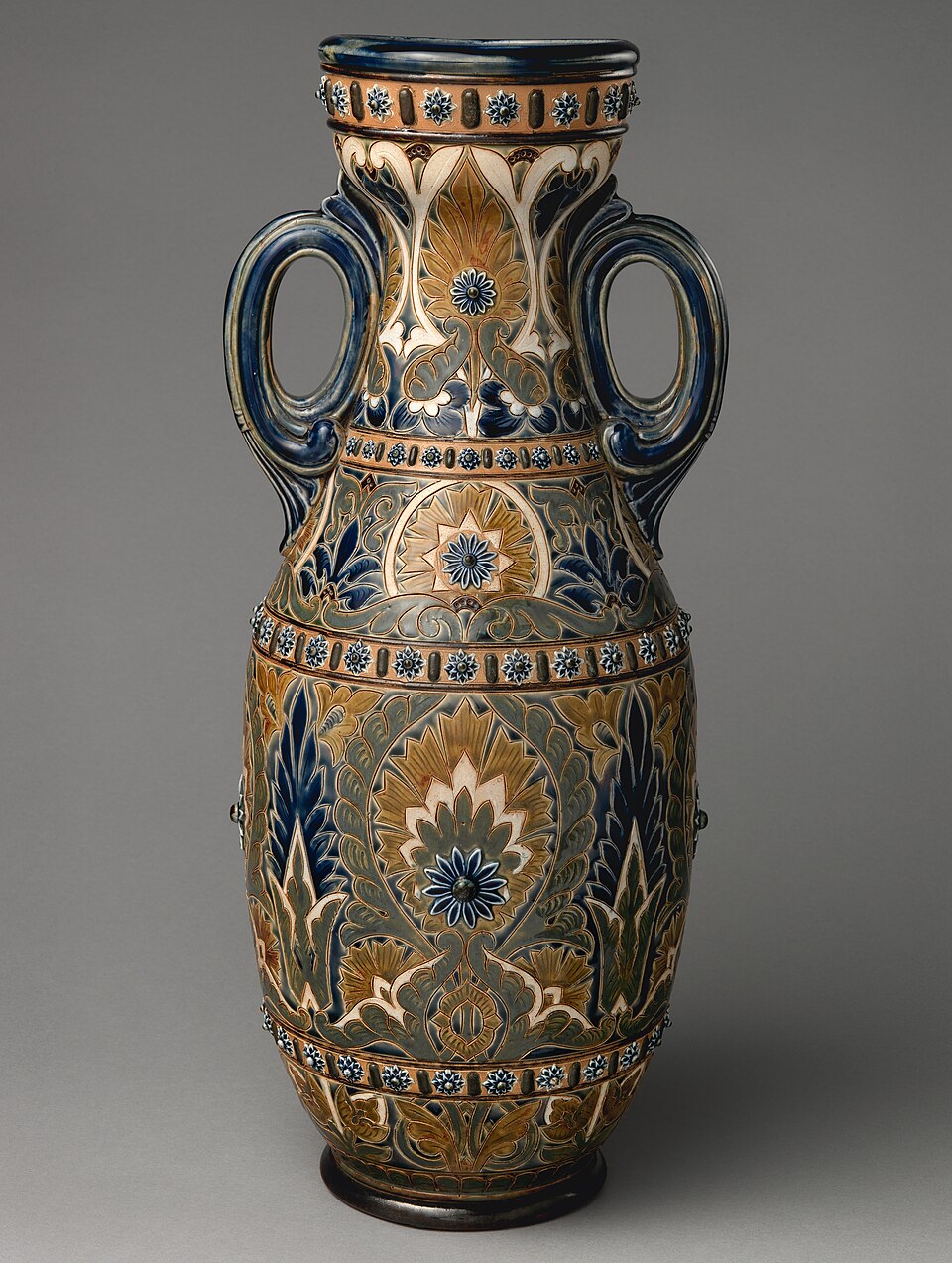
Among the company’s earliest masterpieces is its famous Lambeth Art Pottery. Produced mainly during the late Victorian period, these pieces are celebrated for their rich glazes, hand-carved decoration and exceptional craftsmanship.
Artists such as Hannah Barlow, George Tinworth and many other talented designers created works that combined artistic beauty with technical perfection. Animal scenes, floral ornament, medieval influences and Art Nouveau designs all became characteristic of Royal Doulton’s finest production.
Many collectors specifically seek these hand-painted art pottery pieces because each example displays subtle variations that reflect genuine hand craftsmanship rather than mass production. Similar characteristics can also be observed when studying other prestigious manufacturers such as Wedgwood, although each factory developed its own distinctive artistic identity.
Royal Doulton Marks and Backstamps
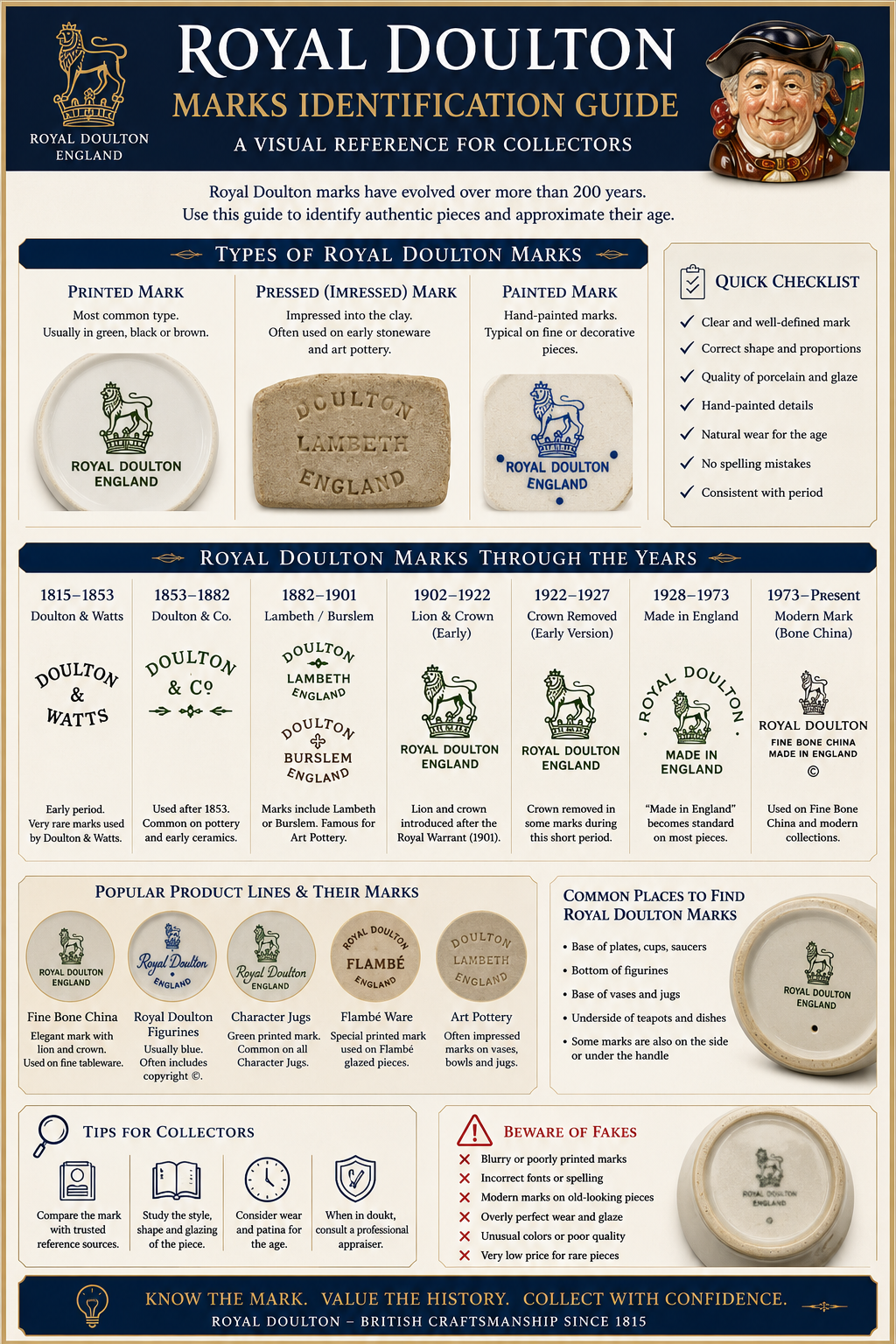
One of the most reliable ways to identify authentic Royal Doulton porcelain is by examining its factory backstamp. Nearly every genuine piece carries a manufacturer’s mark on the base, providing valuable information about its age, production period and authenticity. While the famous lion-and-crown trademark is instantly recognisable, Royal Doulton has used numerous marks throughout its long history, making it essential to understand how they evolved over time.
If you are unfamiliar with ceramic factory marks, it is worth reading our detailed guide What Are Porcelain Marks?, which explains how manufacturers used backstamps to identify their production and how collectors interpret these marks today.
Unlike decorative patterns, which often changed with fashion, factory marks were intended to identify the manufacturer and frequently reveal the approximate production period. Some marks also indicate the factory location, artist, decorator or specific collection, providing collectors with valuable historical information.
Original Royal Doulton marks are normally sharply printed, evenly centred and professionally applied beneath the glaze. Blurred lettering, incorrect fonts or poorly executed logos may indicate a reproduction or counterfeit, although natural wear on older pieces is completely normal.
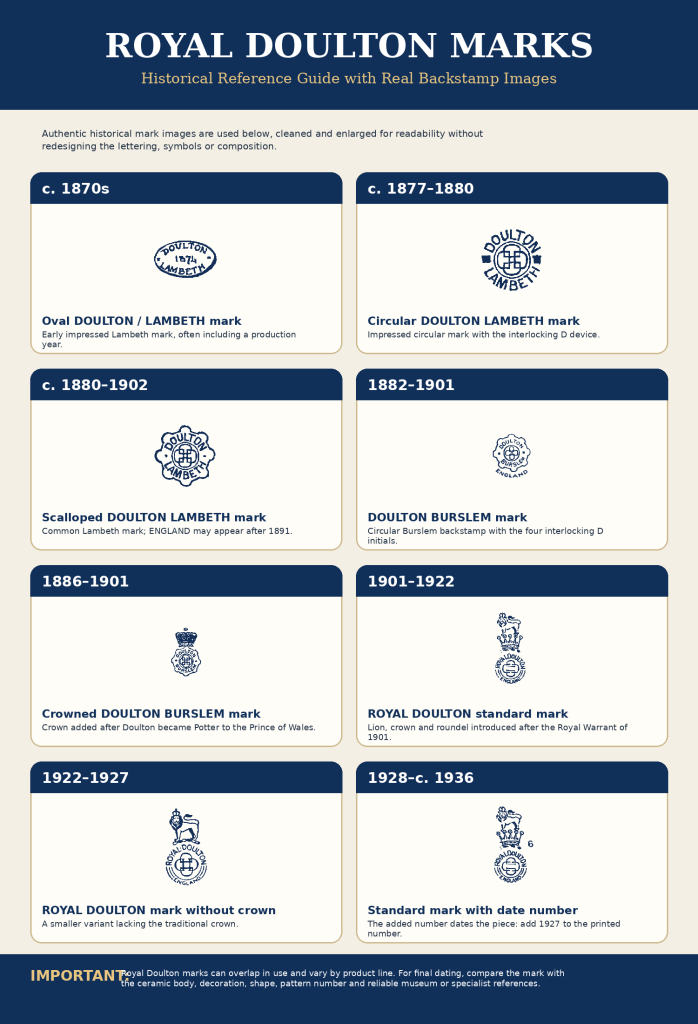
Historical reference infographic featuring authentic Royal Doulton porcelain backstamps used to identify and date original English porcelain.
How Royal Doulton Marks Changed Over Time
Royal Doulton’s backstamps evolved continuously from the early nineteenth century through the modern era. Early production featured simple company names such as Doulton & Watts, while later marks introduced the famous lion standing above a crown after the company received its Royal Warrant in 1901.
Collectors generally divide Royal Doulton marks into several important periods:
1815–1853 — Doulton & Watts
1853–1882 — Doulton & Co.
1882–1901 — Doulton Lambeth and Doulton Burslem
1902–1922 — Lion and Crown Royal Doulton mark
1928–1973 — Made in England variations
Modern production — Fine Bone China backstamps
Knowing which period a particular mark belongs to allows collectors to estimate a piece’s production date far more accurately than appearance alone. This principle applies not only to Royal Doulton but also to manufacturers such as Wedgwood, whose factory marks also changed significantly over the centuries.
How to Date Royal Doulton Porcelain
Dating Royal Doulton porcelain is usually straightforward because the company maintained remarkably consistent marking practices. Nevertheless, experienced collectors rarely rely on a single feature. Instead, they examine several characteristics together before determining an approximate production period.
A professional assessment generally includes:
Factory backstamp
Body material
Shape number
Pattern name or number
Decoration style
Artist’s signature (when present)
Production quality
For example, a piece carrying an early lion-and-crown mark together with traditional Art Nouveau decoration will almost certainly belong to the first decades of the twentieth century. Likewise, Fine Bone China tableware marked “Made in England” generally belongs to the post-war production period.
Dating should always consider the entire object rather than the backstamp alone. Shape, glaze, decoration and craftsmanship often reveal inconsistencies that may not immediately appear in the factory mark.
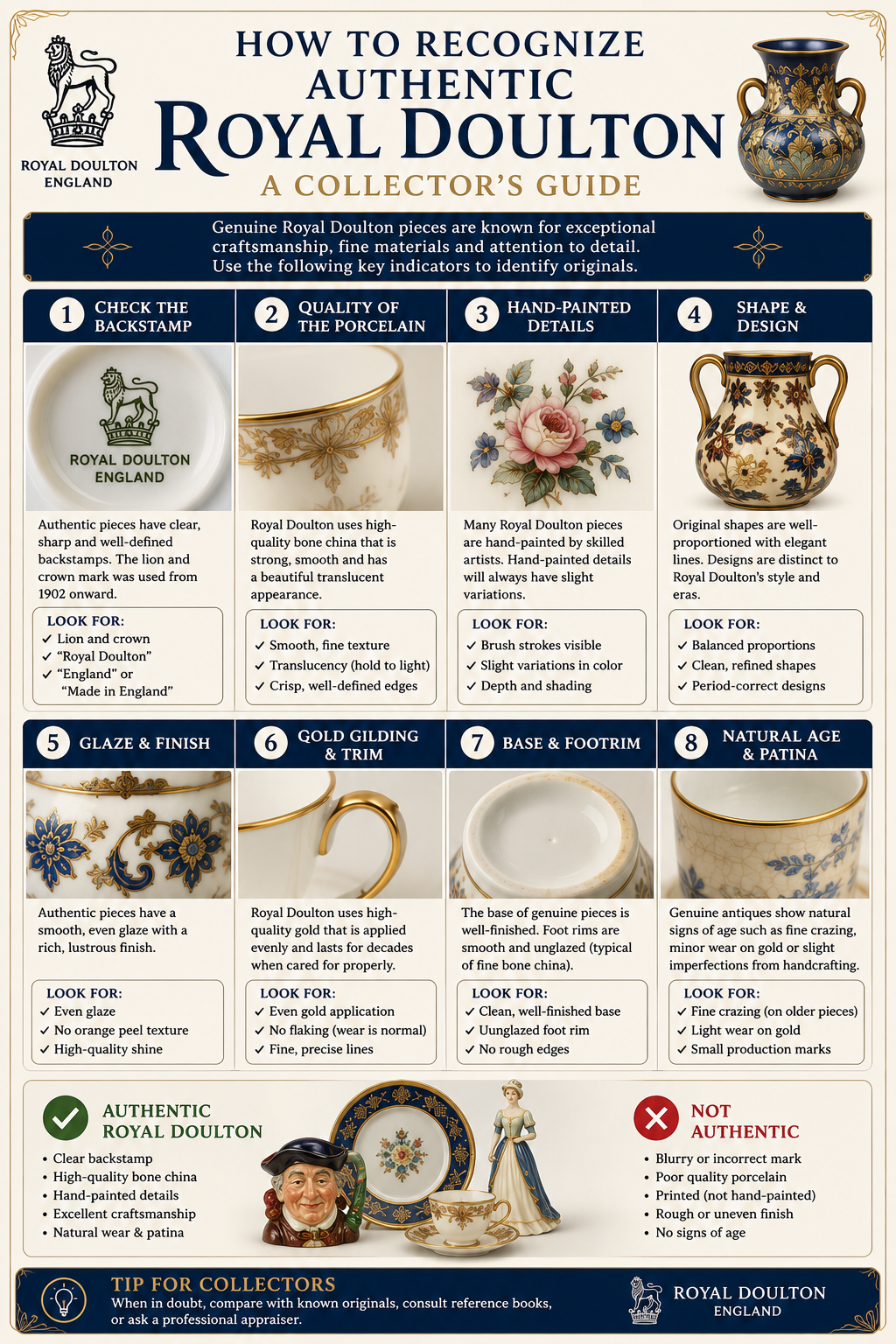
How to Recognize Authentic Royal Doulton
Because Royal Doulton is one of the world’s most collectible ceramic manufacturers, reproductions and counterfeit pieces occasionally appear on the market. Fortunately, genuine examples usually display exceptional quality that is difficult to imitate.
When examining a Royal Doulton piece, experienced collectors typically look for:
Sharp, correctly printed factory backstamp
High-quality Bone China or stoneware body
Finely hand-painted decoration
Smooth, even glaze
Natural signs of age
Well-finished foot rim
Professional gilding
Excellent overall craftsmanship
If you are still uncertain whether a piece is genuine, compare its characteristics with our guide What Is Authenticity?, which explains the principles experts use when evaluating antiques and collectibles.
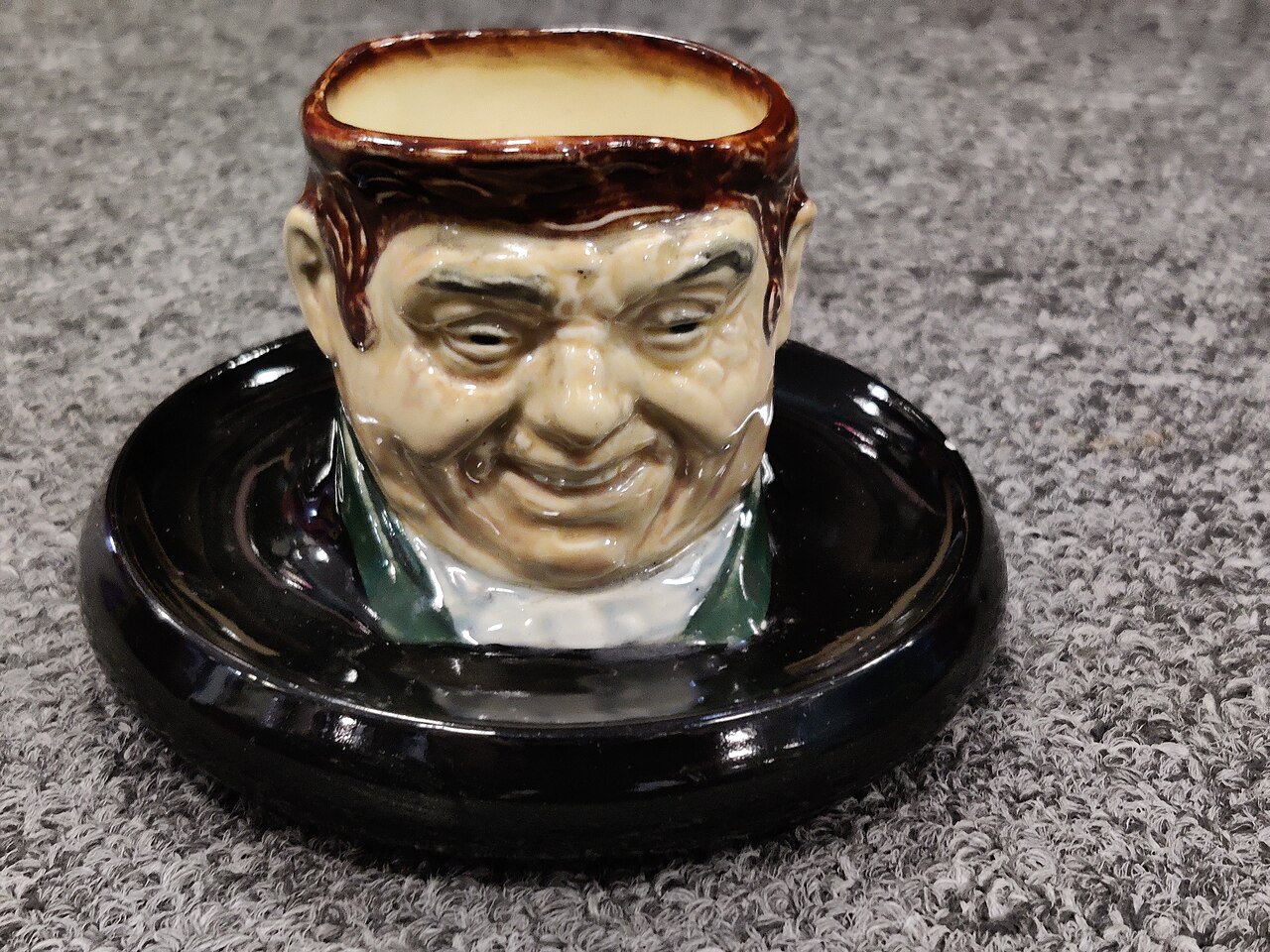
The Famous Royal Doulton Character Jugs
Among all Royal Doulton creations, few are as instantly recognisable as the famous Character Jugs. Introduced in the early twentieth century, these colourful ceramic jugs depict historical figures, literary characters, politicians, naval heroes, musicians and fictional personalities. Today, they are among the company’s most actively collected products.
Unlike ordinary decorative ceramics, Character Jugs combine sculpture, portraiture and functional pottery into a single work of art. Each handle is cleverly incorporated into the design, often representing an object associated with the character, such as a sword, walking stick, anchor or musical instrument.
Some of the most desirable Character Jugs include:
John Barleycorn
Winston Churchill
Long John Silver
The Falconer
Captain Henry Morgan
The Poacher
The Clown
The Lawyer
Limited editions, early production examples and rare colour variations often command significantly higher prices than standard production pieces.
Royal Doulton Figurines
Royal Doulton figurines have become one of the company’s greatest collecting fields. Introduced in the early twentieth century, these elegant porcelain sculptures depict ladies in flowing gowns, children, historical personalities, dancers and scenes from everyday life.
Many figurines were modelled by renowned artists and produced in limited quantities, making certain examples extremely desirable among collectors. Condition plays an especially important role, as even small chips or repairs can dramatically affect value.
Collectors often search for:
Early HN figurines
Limited editions
Retired models
Large display figures
Artist-signed examples
Understanding originality is essential before purchasing any figurine. If you are new to antique authentication, our guide What Is an Original? explains how genuine antiques differ from reproductions and later copies.
Fine Bone China
Royal Doulton played an important role in the international popularity of Fine Bone China. This uniquely British porcelain combines kaolin, feldspar, china stone and bone ash to produce an exceptionally strong yet translucent ceramic body.
Bone China offers several advantages:
Excellent translucency
High mechanical strength
Light weight
Brilliant white appearance
Fine detail reproduction
Outstanding durability
Because of these qualities, Royal Doulton became famous for producing luxury dinner services, tea sets and decorative objects that combined everyday practicality with refined elegance.
What Makes Royal Doulton Valuable?
Not every Royal Doulton piece has high monetary value. Millions of items were produced during the twentieth century, meaning that rarity varies enormously between different collections.
Professional appraisers generally evaluate several important factors:
Production date
Rarity
Condition
Factory backstamp
Artist or modeller
Collection
Decoration quality
Market demand
Provenance
For example, an early Lambeth art pottery vase decorated by Hannah Barlow will usually be considerably more valuable than a mass-produced dinner plate from the late twentieth century.
Similarly, limited-edition Character Jugs or retired figurines often appreciate in value as collector demand increases.
Ten Checks Before Buying Royal Doulton
Whether you are purchasing from an antique shop, auction house or online marketplace, it is wise to perform a careful inspection before making a decision.
Experienced collectors usually follow this checklist:
Verify the factory backstamp.
Inspect the quality of the porcelain body.
Examine the glaze carefully.
Look for hand-painted details.
Check the gilding for quality and wear.
Inspect the foot rim for natural ageing.
Search for chips, cracks and restorations.
Confirm the correct model or pattern number.
Compare with documented originals.
Research recent market prices.
Buying from reputable dealers and established auction houses significantly reduces the risk of acquiring reproductions or altered pieces.
If you encounter an item that appears unusually rare or valuable, it is often worthwhile to obtain an expert opinion before completing the purchase. Professional authentication may reveal details that are not immediately visible to inexperienced collectors.
Original Royal Doulton or Fake?
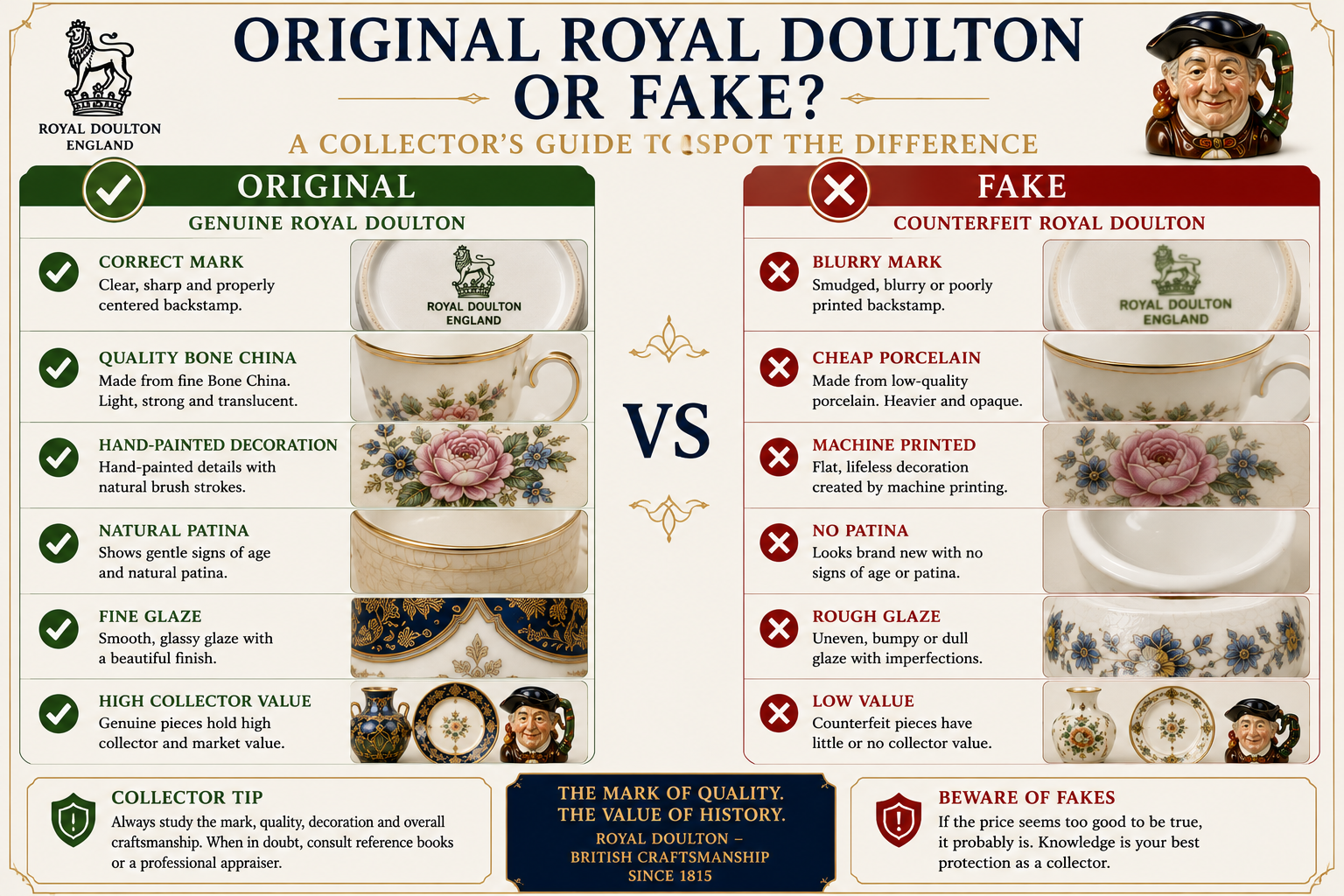
Because Royal Doulton has been collected internationally for more than a century, it has also become one of the most frequently copied British ceramic brands. Fortunately, most reproductions can be identified by carefully examining the quality of the porcelain, the factory backstamp, decoration and overall craftsmanship.
Counterfeit pieces often imitate the famous Royal Doulton lion-and-crown trademark, but experienced collectors know that authenticity depends on far more than a single mark. A genuine piece should demonstrate consistency in every detail—from the body material to the glaze, decoration and natural ageing.
Original Royal Doulton pieces typically feature:
Sharp, professionally applied factory backstamps.
High-quality Fine Bone China or stoneware.
Exceptional moulding and crisp details.
Hand-painted decoration with subtle variations.
Smooth, even glaze.
Natural patina consistent with age.
Excellent overall craftsmanship.
By comparison, reproductions frequently display blurred marks, poor-quality porcelain, heavy transfer printing, rough glazing, artificial ageing or incorrect shapes. Learning to distinguish these characteristics becomes easier after studying authentic examples and comparing production periods.
For a broader explanation of genuine antiques and reproductions, you may also find our guides What Is a Replica?, What Is a Copy? and What Is a Fake? helpful.
Caring for Royal Doulton Porcelain
Proper care is essential if you want Royal Doulton porcelain to retain both its beauty and collector value. Even the finest porcelain can suffer permanent damage if exposed to sudden temperature changes, harsh cleaning chemicals or improper storage.
Collectors generally recommend:
Handling pieces with clean, dry hands.
Supporting larger objects from the base.
Avoiding rapid temperature changes.
Keeping porcelain away from direct sunlight.
Using padded display cabinets.
Separating stacked plates with protective felt.
Cleaning only with mild soap and lukewarm water.
If you own an important collection, our guide How to Store Antique Porcelain and Ceramics explains the best long-term preservation methods used by museums and experienced collectors.
Should Royal Doulton Be Restored?
Many collectors wonder whether damaged Royal Doulton should be restored. The answer depends on the rarity and importance of the piece. Small chips or professional restoration may be acceptable for exceptionally rare objects, while extensive repairs often reduce the value of more common items.
Before attempting any repair, it is important to understand the difference between conservation and restoration. Conservation focuses on preserving the original material, while restoration attempts to return the object to its former appearance.
If you would like to learn more, see our guides What Is Restoration? and What Is Conservation?.
Frequently Asked Questions
Is Royal Doulton always valuable?
No. While certain early Lambeth pieces, rare Character Jugs and limited-edition figurines can be worth thousands of dollars, many twentieth-century tableware pieces remain affordable and were produced in large quantities.
How can I identify my Royal Doulton piece?
Start by examining the factory backstamp, shape number, decoration, material and overall quality. Comparing these features with documented production periods usually allows collectors to estimate both authenticity and age.
What is the most collectible Royal Doulton?
Among the most sought-after items are early Lambeth art pottery, Hannah Barlow decorated pieces, rare Character Jugs, Flambé ware, limited-edition figurines and unusual exhibition pieces.
Does damage reduce value?
Yes. Chips, cracks, heavy wear and poor-quality restoration almost always reduce collector value. Exceptionally rare museum-quality pieces may still remain valuable despite minor damage.
Final Thoughts
For more than two centuries, Royal Doulton has represented the very best of British ceramic craftsmanship. From elegant Victorian art pottery and luxurious Fine Bone China to world-famous Character Jugs and beautifully modelled figurines, the company has created objects admired by collectors across the globe.
Learning to recognise original Royal Doulton requires patience, careful observation and an understanding of factory marks, production periods and craftsmanship. By studying authentic examples and comparing their characteristics, collectors can confidently distinguish genuine antiques from later reproductions.
Whether you are buying your first Royal Doulton piece or building an advanced collection, knowledge remains your most valuable investment.
If you own Royal Doulton porcelain and would like a professional opinion regarding its authenticity, age or market value, our specialists are here to help. Simply visit our Contact Us page and send us clear photographs together with any available information about your piece.
Royal Doulton Collections Every Collector Should Know
During more than 200 years of production, Royal Doulton introduced hundreds of successful collections. While many were designed for everyday use, others were produced in limited numbers and are now highly sought after by collectors.
Some of the best-known Royal Doulton collections include:
Royal Doulton Flambé Ware
Lambeth Art Pottery
Character Jugs
HN Figurines
Bunnykins
Brambly Hedge
Pretty Ladies Figurines
Fine Bone China Dinner Services
Kingsware
Limited Edition Collectibles
Certain collections appeal primarily to antique collectors, while others remain popular with modern enthusiasts looking for decorative or commemorative pieces.
Buying Royal Doulton at Auctions and Antique Shops
Royal Doulton pieces regularly appear at antique fairs, specialist ceramics dealers, estate sales and international auction houses. Prices vary greatly depending on rarity, condition, provenance and collector demand.
Before purchasing, always request detailed photographs of:
The front and back of the item
The factory backstamp
Any artist’s signature
The foot rim
Close-ups of any damage or restoration
Buying from established dealers with expertise in antique ceramics is generally the safest approach, particularly when investing in rare or high-value examples.
Can Royal Doulton Be a Good Investment?
Although antiques should primarily be collected for enjoyment rather than financial gain, certain Royal Doulton pieces have shown steady appreciation over time. Early Lambeth pottery, rare Character Jugs, Flambé ware, artist-decorated pieces and limited editions remain particularly desirable among collectors.
As with any collectible, value depends on rarity, originality, condition and current market demand. Understanding these factors can help collectors make informed purchasing decisions and build a well-curated collection.
About The Old Antiquarian
At The Old Antiquarian, we have more than 35 years of experience buying, researching and evaluating antiques, collectibles and historic works of art. Our educational guides are designed to help collectors identify authentic objects, understand their historical significance and make informed decisions when buying or selling antiques.
Our growing porcelain knowledge base includes detailed guides covering major European manufacturers, factory marks, dating methods, authenticity, restoration, conservation and professional valuation.
Need Help Identifying Royal Doulton?
If you own a Royal Doulton vase, figurine, Character Jug, dinner service or any other ceramic object and would like to know more about its authenticity, age or potential value, our specialists are happy to help.
Visit our Contact Us page and send us clear photographs of the front, back and factory mark. The more information you can provide, the easier it is to identify your Royal Doulton porcelain accurately.
Thia Aide AI Comment Moderator -
Your comment will be reviewed by Thia before publication. Spam and threats are blocked immediately.

 Throughout the twentieth century, Royal Doulton expanded into Fine Bone China, luxury dinner services, decorative figurines, Character Jugs and Flambé ware. These collections helped establish the company as one of the leading names in British ceramics and continue to attract collectors across Europe, North America and Asia.
 Another reason for Royal Doulton’s popularity is its excellent documentation. Factory catalogues, artist records and production marks make dating many pieces considerably easier than with some other porcelain manufacturers. Understanding these factory marks is essential, and readers who are new to ceramic identification may also find our guide What Are Porcelain Marks? especially useful.
 Many collectors specifically seek these hand-painted art pottery pieces because each example displays subtle variations that reflect genuine hand craftsmanship rather than mass production. Similar characteristics can also be observed when studying other prestigious manufacturers such as Wedgwood, although each factory developed its own distinctive artistic identity.
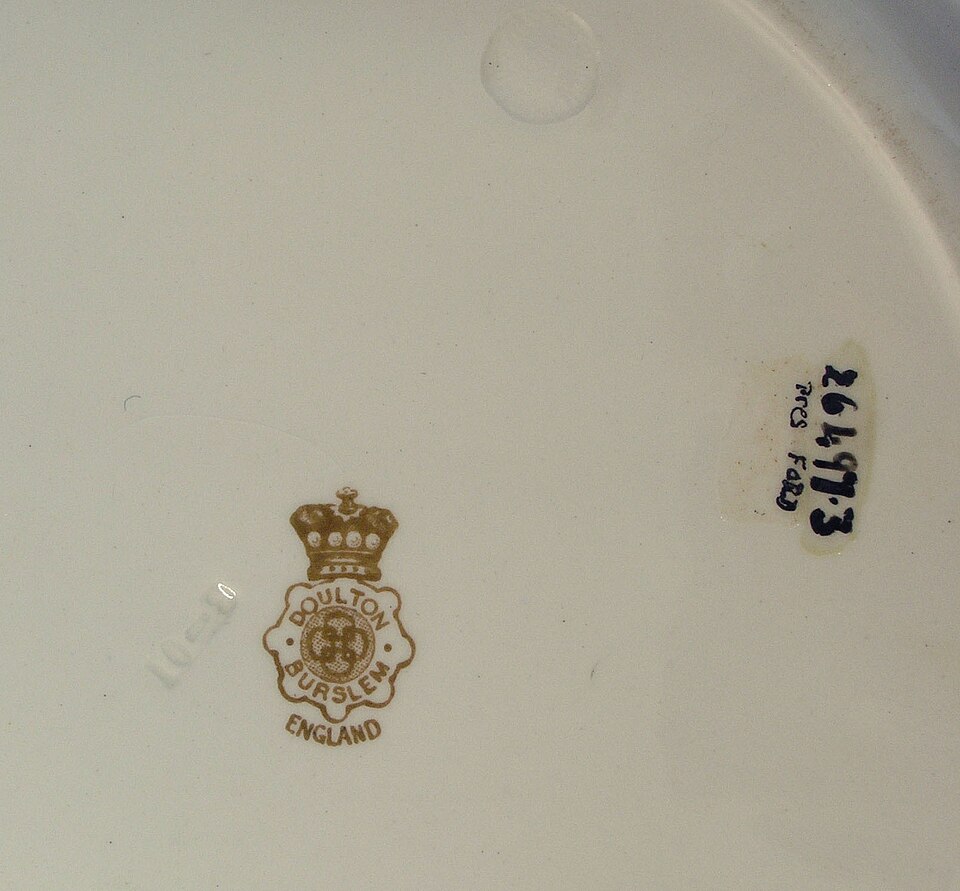 Unlike decorative patterns, which often changed with fashion, factory marks were intended to identify the manufacturer and frequently reveal the approximate production period. Some marks also indicate the factory location, artist, decorator or specific collection, providing collectors with valuable historical information.
Original Royal Doulton marks are normally sharply printed, evenly centred and professionally applied beneath the glaze. Blurred lettering, incorrect fonts or poorly executed logos may indicate a reproduction or counterfeit, although natural wear on older pieces is completely normal.
Unlike decorative patterns, which often changed with fashion, factory marks were intended to identify the manufacturer and frequently reveal the approximate production period. Some marks also indicate the factory location, artist, decorator or specific collection, providing collectors with valuable historical information.
Original Royal Doulton marks are normally sharply printed, evenly centred and professionally applied beneath the glaze. Blurred lettering, incorrect fonts or poorly executed logos may indicate a reproduction or counterfeit, although natural wear on older pieces is completely normal.
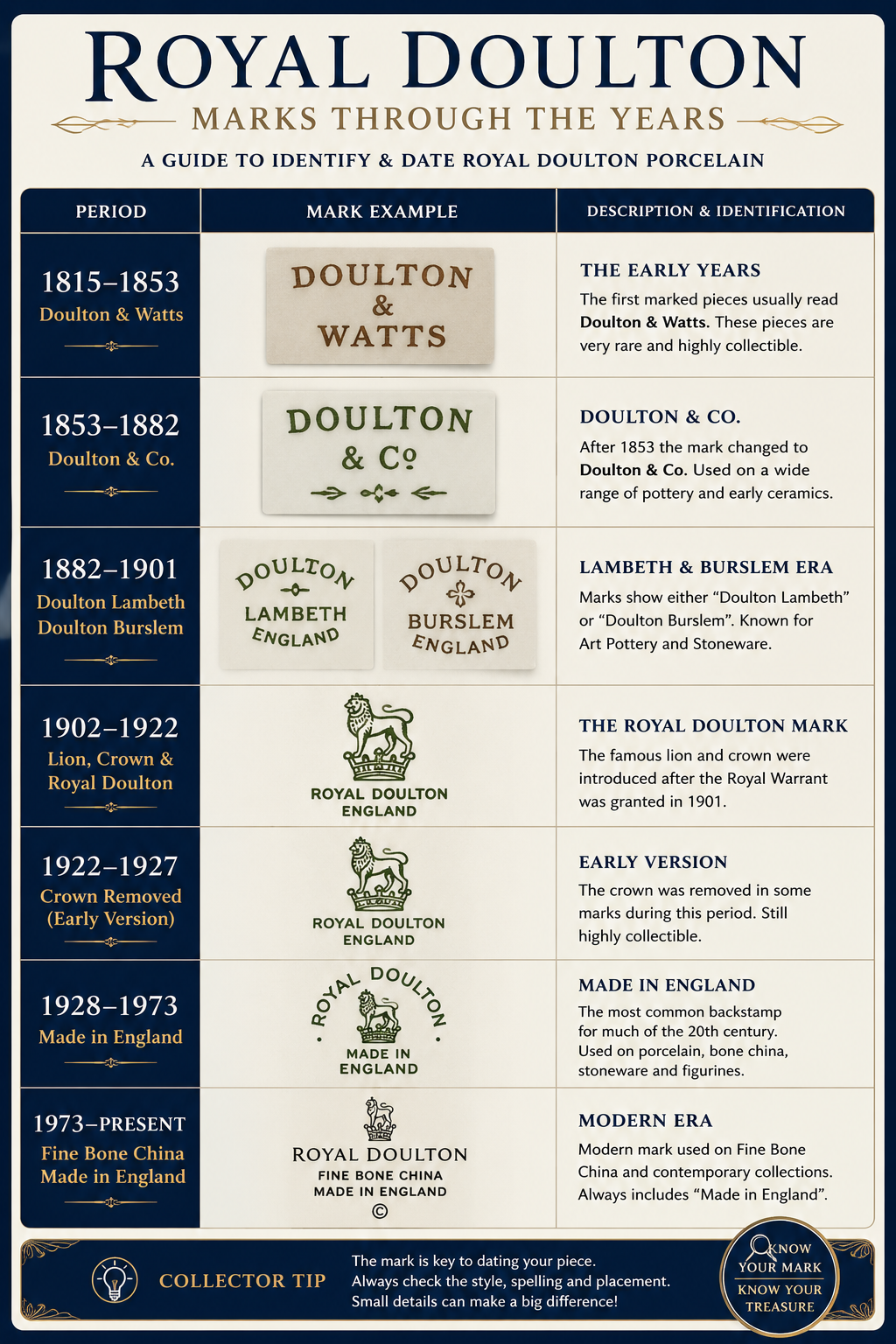 Collectors generally divide Royal Doulton marks into several important periods:
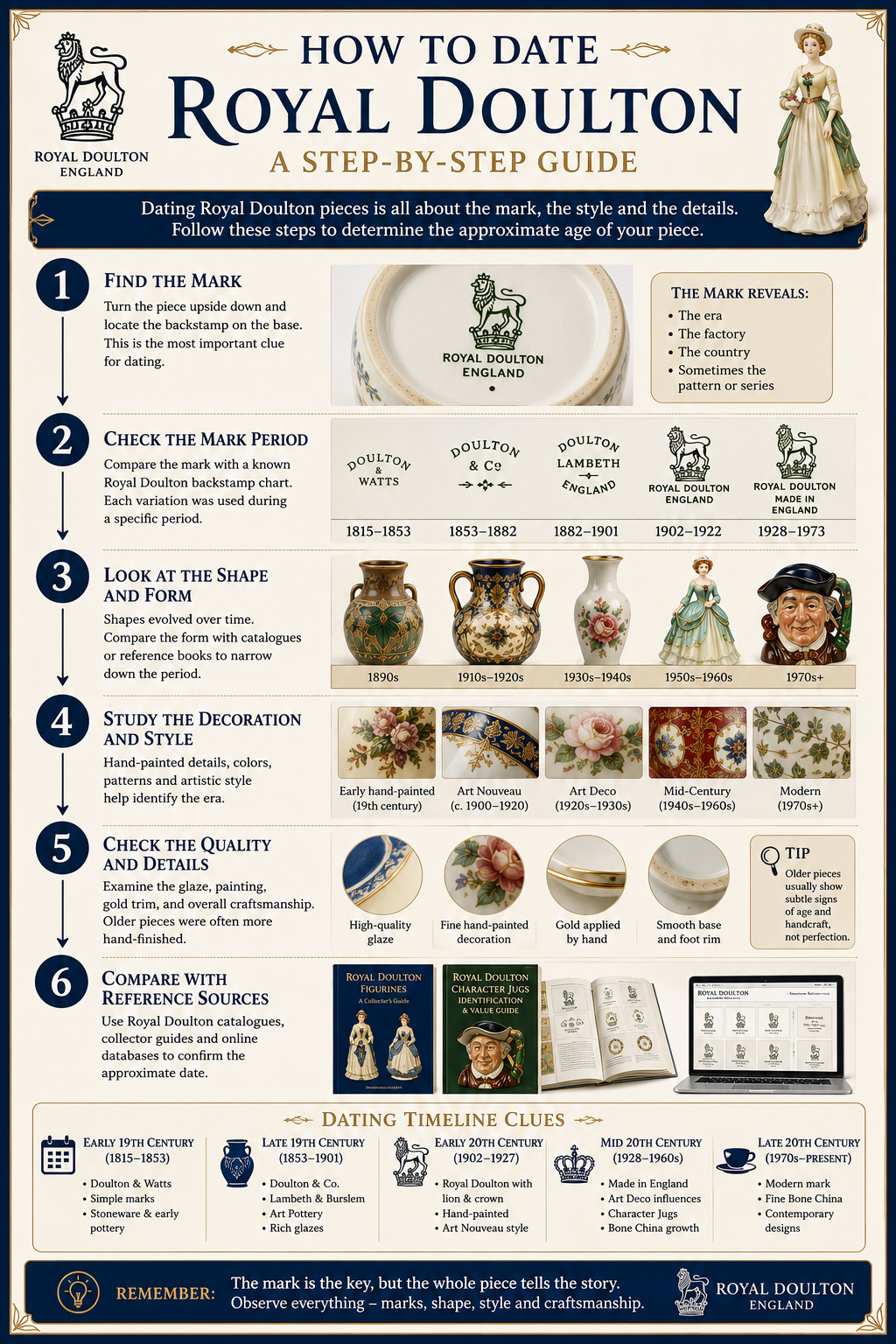 For example, a piece carrying an early lion-and-crown mark together with traditional Art Nouveau decoration will almost certainly belong to the first decades of the twentieth century. Likewise, Fine Bone China tableware marked “Made in England” generally belongs to the post-war production period.
Dating should always consider the entire object rather than the backstamp alone. Shape, glaze, decoration and craftsmanship often reveal inconsistencies that may not immediately appear in the factory mark.
For example, a piece carrying an early lion-and-crown mark together with traditional Art Nouveau decoration will almost certainly belong to the first decades of the twentieth century. Likewise, Fine Bone China tableware marked “Made in England” generally belongs to the post-war production period.
Dating should always consider the entire object rather than the backstamp alone. Shape, glaze, decoration and craftsmanship often reveal inconsistencies that may not immediately appear in the factory mark.
 When examining a Royal Doulton piece, experienced collectors typically look for:
 Some of the most desirable Character Jugs include:
 Experienced collectors usually follow this checklist:
 Original Royal Doulton pieces typically feature:
