
What Is Russian Porcelain?
Russian porcelain is one of Europe’s most distinguished porcelain traditions, admired for its exceptional craftsmanship, elegant hand-painted decoration, rich cobalt blue designs, luxurious gilding, and remarkable artistic quality. From magnificent Imperial dinner services commissioned for the Romanov court to collectible Soviet figurines and beautifully decorated tea sets, Russian porcelain reflects nearly three centuries of artistic achievement, technical innovation, and cultural history.
Today, antique Russian porcelain remains highly sought after by collectors, museums, auction houses, and decorative arts enthusiasts around the world. Pieces produced by the Imperial Porcelain Factory, Lomonosov (LFZ), Gardner, Kuznetsov, Dulevo, Verbilki, and Gzhel are among the most desirable examples on the international antiques market.
Whether you have inherited a porcelain tea service, discovered a decorative figurine, or simply wish to learn more about Russian ceramics, understanding their history is the first step toward identifying authenticity, estimating age, and appreciating their historical and market value.
If you are new to porcelain collecting, we recommend starting with What Is Porcelain?, Types of Porcelain Explained, and Porcelain vs Faience vs Ceramic before exploring the fascinating world of Russian porcelain.
The History of Russian Porcelain
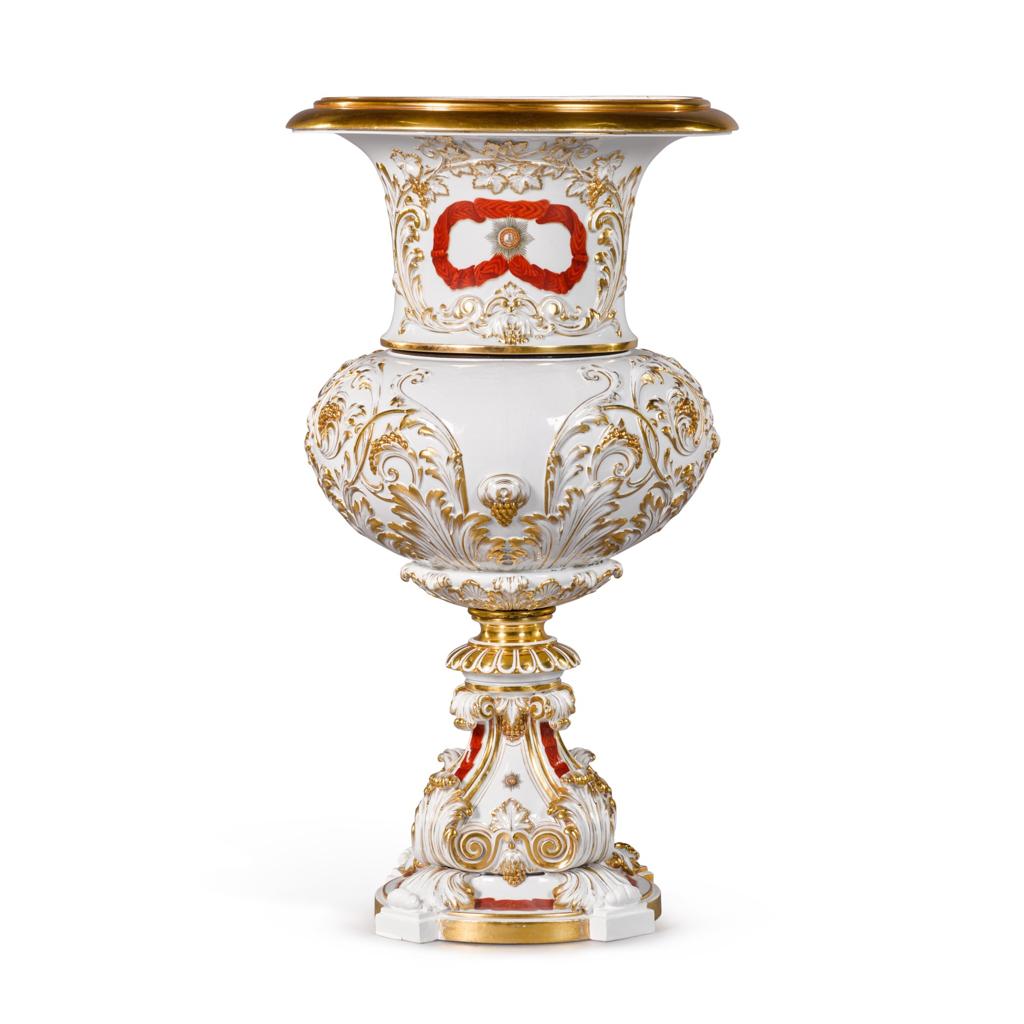
The story of Russian porcelain begins in 1744, when Empress Elizabeth established the Imperial Porcelain Factory in Saint Petersburg. It became the first porcelain factory in Russia and one of the oldest porcelain manufacturers in Europe.
Initially inspired by Chinese and European porcelain, Russian scientists and craftsmen soon developed their own porcelain formula, allowing the factory to produce luxury wares equal in quality to the finest European manufacturers. For many decades, production was reserved almost exclusively for the Imperial Court, with magnificent dinner services, decorative vases, diplomatic gifts, and ceremonial objects created for members of the Romanov dynasty.
During the nineteenth century, porcelain production expanded rapidly. New private factories appeared throughout the Russian Empire, producing elegant tableware, tea services, decorative sculptures, religious objects, and household porcelain for an increasingly wealthy middle class.
Russian porcelain gradually developed its own artistic identity by combining:
- European porcelain techniques
- Traditional Russian decorative art
- Orthodox Christian symbolism
- Imperial heraldry
- Folk motifs
- Exceptional hand-painted decoration
This distinctive combination created a porcelain tradition that remains immediately recognisable to collectors today.
Russian Porcelain During the Imperial Period
From the mid-eighteenth century until the Russian Revolution of 1917, the Imperial Porcelain Factory produced some of the finest porcelain ever created in Europe.
Many pieces were commissioned directly by the Imperial family and were never intended for public sale. Elaborate dinner services decorated with the Imperial double-headed eagle, richly gilded presentation pieces, hand-painted cabinet plates, and monumental decorative vases demonstrated both artistic excellence and political prestige.
Today, Imperial Russian porcelain is among the most valuable categories of European porcelain, with exceptional examples regularly appearing in major international auctions.
Russian Porcelain During the Soviet Era
Following the Russian Revolution in 1917, the Imperial Porcelain Factory was nationalised and later became internationally known as the Lomonosov Porcelain Factory (LFZ).
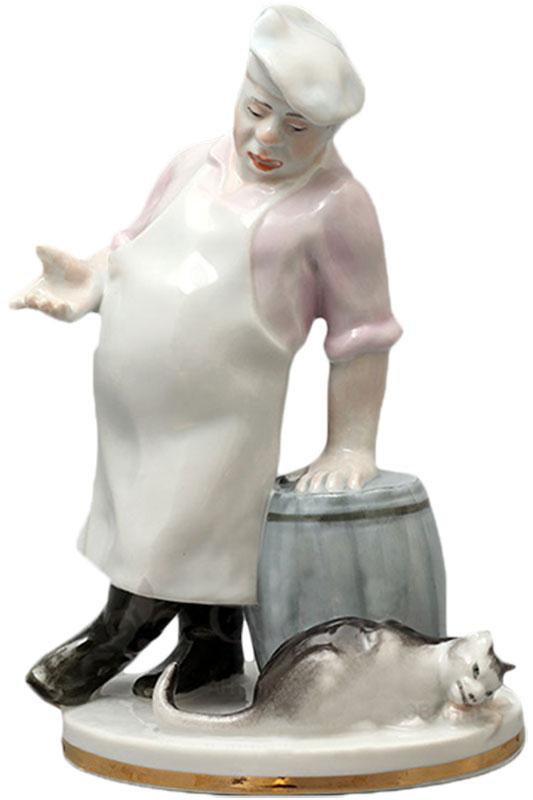
Although the political system changed dramatically, the tradition of outstanding porcelain production continued. Soviet artists developed new decorative styles while preserving many traditional manufacturing techniques established during the Imperial period.
Factories produced millions of:
- Tea services
- Coffee sets
- Decorative plates
- Animal figurines
- Ballerina sculptures
- Children’s figures
- Collectible sculptures
- Luxury presentation pieces
Many Soviet porcelain objects were created for everyday use, but limited editions, hand-painted figurines, and artistic studio productions have become increasingly collectible in recent decades.
Among collectors, the famous Cobalt Net pattern produced by Lomonosov remains one of the most recognised Russian porcelain designs ever created.
How to Identify Russian Porcelain
Correctly identifying Russian porcelain requires much more than examining the factory mark. Professional appraisers evaluate numerous characteristics together before determining authenticity.
Specialists carefully examine:
- Porcelain body
- Glaze quality
- Painting techniques
- Hand-painted decoration
- Gold gilding
- Shape and proportions
- Factory marks
- Natural ageing
- Overall craftsmanship
Collectors should remember that authentic antique porcelain usually displays subtle variations caused by hand production. Slight differences in brushwork, gilding, and decoration often indicate genuine craftsmanship rather than manufacturing defects.
Professionals also determine whether an object remains an original, or whether it could instead be a later copy, a replica, or a fake.
The Most Famous Russian Porcelain Factories
Over nearly three centuries, numerous porcelain manufacturers helped shape Russia’s rich ceramic heritage. While some specialised in luxury porcelain for the Imperial Court, others became famous for beautifully decorated tableware, figurines, folk art, and export porcelain. Learning to recognise these factories is one of the most valuable skills for collectors because each developed its own artistic style, manufacturing techniques, and porcelain marks.
Imperial Porcelain Factory
Founded in 1744 in Saint Petersburg, the Imperial Porcelain Factory is Russia’s oldest porcelain manufacturer and one of Europe’s most prestigious ceramic producers. During the Imperial period, it created luxury dinner services, diplomatic gifts, monumental vases, and ceremonial objects exclusively for the Romanov court.
Its porcelain is admired for exceptional craftsmanship, refined hand painting, elegant gilding, and museum-quality artistic standards.
Lomonosov Porcelain Factory (LFZ)
After the Russian Revolution, the Imperial Porcelain Factory became the Lomonosov Porcelain Factory, internationally recognised by the initials LFZ. During the Soviet era, it produced millions of porcelain objects while maintaining remarkably high artistic standards.
Among its best-known creations is the world-famous Cobalt Net pattern, one of the most recognisable Russian porcelain designs ever produced.
Gardner Porcelain Factory
Founded in the eighteenth century by the English entrepreneur Francis Gardner, Gardner quickly became one of Russia’s finest private porcelain manufacturers. Its elegant tea services, decorative figures, cabinet plates, and luxury tableware remain highly desirable among collectors today.
Kuznetsov Porcelain
The Kuznetsov family established one of the largest porcelain empires in nineteenth-century Russia. Their factories supplied beautifully decorated porcelain throughout the Russian Empire and exported large quantities across Europe.
Collectors appreciate Kuznetsov porcelain for its excellent quality, attractive floral decoration, and wide variety of tableware and decorative objects.
Dulevo Porcelain
Dulevo became famous for colourful floral decoration, elegant tea services, decorative figurines, and richly painted household porcelain. During the Soviet period it grew into one of Russia’s largest porcelain producers.
Verbilki Porcelain
Verbilki developed a reputation for producing refined tableware, elegant decorative porcelain, and beautifully painted household ceramics. The factory continues to be recognised as one of Russia’s historic porcelain manufacturers.
Gzhel
Although Gzhel refers to an entire ceramic-producing region rather than a single factory, it has become internationally famous for its distinctive blue-and-white decoration. Traditional Gzhel designs feature floral ornaments, birds, village scenes, and folk motifs painted in vivid cobalt blue.
Russian Porcelain Marks and Backstamps
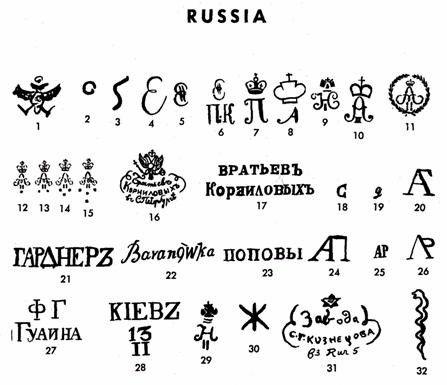
Factory marks are among the most valuable tools for identifying Russian porcelain. Most genuine pieces carry a mark on the underside indicating the manufacturer and often helping specialists estimate the production period.
Depending on the factory and historical era, these marks may include:
- Imperial double-headed eagles
- Royal monograms
- Factory initials
- Cyrillic lettering
- Crowns
- Dates
- Quality marks
- Export symbols
Because manufacturers frequently changed their marks over time, comparing a backstamp with documented historical examples can often narrow production to a particular decade.
If you would like to learn more about identifying porcelain marks, see our complete guide What Are Porcelain Marks?.
Do All Russian Porcelain Pieces Have Factory Marks?
No. While most major Russian manufacturers marked their production, some early objects, decorative pieces, and special commissions may be completely unmarked. In other cases, marks have become partially worn through age, cleaning, or previous restoration.
For this reason, professionals never authenticate porcelain by its backstamp alone. Instead, they examine the porcelain body, glaze, decoration, painting style, construction techniques, condition, provenance, and historical consistency before determining authenticity.
How to Date Russian Porcelain
Dating Russian porcelain requires careful examination of both the factory mark and the object itself. Even when a mark identifies the manufacturer, specialists still compare it with the style, decoration, glaze, and production techniques expected from that historical period.
Professional appraisers usually evaluate:
- Factory mark
- Production period
- Porcelain body
- Glaze quality
- Painting techniques
- Gold decoration
- Shape and proportions
- Natural wear
- Historical style
Pieces that remain in original condition, retain their factory marks, and display consistent ageing are generally easier to authenticate than objects showing extensive repairs or alterations.
How to Recognise Hand-Painted Russian Porcelain
One of the defining characteristics of fine Russian porcelain is its remarkable hand-painted decoration. Long before modern transfer printing became widespread, skilled artists decorated each porcelain object individually using fine brushes and multiple firing stages. Their work gave every piece its own unique artistic character.
Unlike machine-printed decoration, hand-painted porcelain displays subtle variations that reveal the painter’s individual technique. No two pieces are ever completely identical, even when they belong to the same pattern or dinner service.
Collectors often look for:
- Natural brush strokes.
- Subtle variations in repeated floral motifs.
- Layered hand-applied colours.
- Fine gilded details applied individually.
- Slight differences between matching pieces.
- Exceptional artistic precision.
- Balanced decorative composition.
Many of Russia’s finest porcelain painters specialised in flowers, landscapes, Imperial coats of arms, Orthodox motifs, birds, animals, winter scenes, architectural views, and richly gilded ornamental borders.
The Most Collectible Russian Porcelain
Russian porcelain has been produced in countless forms over nearly three centuries, but certain categories consistently attract the strongest interest from collectors and museums.
- Imperial dinner services.
- Presentation pieces made for the Romanov court.
- Large decorative vases.
- Cobalt Net porcelain.
- Hand-painted cabinet plates.
- Luxury tea and coffee services.
- Ballerina figurines.
- Animal sculptures.
- Orthodox religious porcelain.
- Limited-edition Soviet porcelain.
- Artist-signed figurines.
- Museum-quality decorative sculptures.
Pieces produced for members of the Imperial family or in very limited quantities generally achieve the highest prices at international auctions.
Major Periods of Russian Porcelain
| Period | Main Characteristics |
|---|---|
| 1744–1917 | Imperial porcelain created for the Romanov court, characterised by luxury craftsmanship, exceptional gilding, and royal commissions. |
| 1918–1991 | Soviet porcelain produced by Lomonosov, Dulevo, Verbilki, Gzhel, and other state-owned factories, combining traditional craftsmanship with new artistic themes. |
| 1991–Present | Renewed production under the historic Imperial Porcelain Factory together with continued manufacture by Russia’s leading porcelain factories. |
What Determines the Value of Russian Porcelain?
The value of antique Russian porcelain depends on numerous factors rather than a single characteristic. Even two apparently similar pieces may differ greatly in value depending on their rarity, condition, historical significance, and provenance.
Professional appraisers typically consider:
- Manufacturer.
- Historical period.
- Age.
- Rarity.
- Factory marks.
- Artistic quality.
- Hand-painted decoration.
- Original gilding.
- Condition.
- Documented provenance.
- Collector demand.
Specialists also determine whether an object has undergone previous restoration or conservation. While professional conservation may help preserve an antique, excessive restoration or repainting can reduce both historical integrity and market value.
Museum-quality Imperial porcelain, early Gardner services, rare Kuznetsov productions, exceptional Lomonosov figurines, and important presentation pieces remain among the most valuable categories of Russian porcelain.
Russian Porcelain and the International Collectors’ Market
Today, Russian porcelain enjoys strong international demand among collectors of European decorative arts. Major auction houses regularly offer Imperial porcelain, Gardner tableware, Lomonosov figurines, and rare Soviet artistic porcelain to buyers from Europe, North America, and Asia.
Collectors particularly appreciate Russian porcelain because it combines exceptional craftsmanship with fascinating historical context. Every object reflects a specific period in Russian history—from the splendour of the Imperial Court to the artistic experimentation of the Soviet era.
Because demand continues to grow for rare examples in excellent original condition, well-preserved Russian porcelain has become an increasingly important category within the international antiques market.
How to Care for Antique Russian Porcelain
Antique Russian porcelain has survived for generations thanks to the remarkable quality of its manufacture, but it remains fragile and should always be handled with care. Proper storage, cleaning, and display help preserve not only its beauty but also its historical significance and collector value.
Collectors should always support porcelain from its strongest structural points. Handles, lids, spouts, finials, and delicate decorative elements should never be used to lift an object, as these are the areas most likely to become damaged.
To help preserve antique Russian porcelain:
- Handle porcelain with clean, dry hands.
- Avoid sudden changes in temperature.
- Keep porcelain away from prolonged direct sunlight.
- Protect it from vibration and accidental impacts.
- Display valuable pieces inside enclosed cabinets whenever possible.
- Use padded shelves for large vases and decorative plates.
- Never stack valuable porcelain without protective padding.
- Dust regularly using a soft microfiber cloth.
- Avoid abrasive cleaning products and harsh chemicals.
- Never place antique porcelain in a dishwasher.
If damage occurs, professional conservation is generally preferable to unnecessary restoration. Where restoration is required, it should always be carried out using reversible conservation techniques that respect the object’s historical integrity.
When Should You Seek a Professional Appraisal?
If you own a piece of Russian porcelain and would like to determine its authenticity, factory, production period, historical importance, or approximate market value, obtaining a professional appraisal is often the safest course of action.
Professional evaluation is especially recommended before:
- Buying expensive antique porcelain.
- Selling inherited collections.
- Sending porcelain to auction.
- Restoring damaged objects.
- Obtaining insurance.
- Dividing family collections.
- Donating porcelain to museums or institutions.
Professional appraisers examine far more than the factory mark. They evaluate the porcelain body, glaze, decoration, artistic quality, hand painting, manufacturing techniques, natural ageing, provenance, and overall condition before determining authenticity and market value.
➡️ Request a Professional Antique Valuation
Frequently Asked Questions
Is Russian porcelain valuable?
Yes. Antique Russian porcelain is highly collectible, particularly pieces produced by the Imperial Porcelain Factory, Gardner, Kuznetsov, and early Lomonosov (LFZ). Rare Imperial commissions and museum-quality examples can achieve very high prices at international auctions.
How can I identify authentic Russian porcelain?
Authenticity is determined by examining the porcelain body, glaze, decoration, painting techniques, factory marks, craftsmanship, historical consistency, provenance, and natural signs of ageing—not by the backstamp alone.
What is the most famous Russian porcelain factory?
The Imperial Porcelain Factory, founded in Saint Petersburg in 1744, is Russia’s oldest and most prestigious porcelain manufacturer. During the Soviet era it became internationally known as the Lomonosov Porcelain Factory (LFZ).
Do all Russian porcelain pieces have factory marks?
No. While most manufacturers marked their production, some early decorative objects and special commissions were produced without marks. Others have marks that have faded through age or previous restoration.
What is the famous Cobalt Net pattern?
Cobalt Net is one of the world’s best-known Russian porcelain designs. Created by the Lomonosov Porcelain Factory, its elegant cobalt-blue lattice pattern with hand-applied gilding has become an icon of Russian decorative art.
Can Russian porcelain be a good investment?
High-quality Russian porcelain with documented provenance, excellent condition, rarity, and strong historical significance has demonstrated consistent collector demand and is widely regarded as one of Europe’s most desirable porcelain categories.
Conclusion
Russian porcelain occupies a unique place in the history of European decorative arts. From the magnificent luxury creations of the Imperial Porcelain Factory to the internationally recognised designs of Lomonosov, Gardner, Kuznetsov, Dulevo, Verbilki, and Gzhel, it represents nearly three centuries of artistic excellence and technical innovation.
Correct identification requires careful examination of factory marks, porcelain composition, glaze, decoration, craftsmanship, historical style, and provenance. By studying these characteristics together, collectors can better distinguish authentic antiques from later reproductions and gain a deeper appreciation for the remarkable history behind every piece.
Whether you are researching a treasured family heirloom, expanding a collection, or purchasing your first piece of Russian porcelain, understanding its history and identifying its unique characteristics will help you make informed collecting decisions for years to come.
Continue Learning
- What Is Porcelain?
- Types of Porcelain Explained
- Porcelain vs Faience vs Ceramic
- What Are Porcelain Marks?
- What Is Chinese Porcelain?
- What Is Japanese Porcelain?
- What Is a Maker’s Mark?
- What Is Restoration?
- What Is Conservation?
- What Is an Original?
- What Is a Copy?
- What Is a Replica?
- What Is a Fake?
- What Is a Certificate of Authenticity?
Explore Related Collections
