
How to Identify Limoges Porcelain
Limoges is one of the best-known names in the world of French porcelain. However, many people are surprised to learn that Limoges is not a single porcelain factory. Instead, it is a historic porcelain-producing region in central France where dozens of manufacturers have produced fine porcelain for more than two centuries.
Because of this, many authentic pieces are marked Limoges France together with the name or trademark of the individual manufacturer. Understanding this distinction is the first and most important step in identifying genuine Limoges porcelain.
Whether you have inherited a Limoges tea service, discovered a porcelain vase at an antique market, or own a decorative plate marked “Limoges France,” learning how to identify the manufacturer, factory mark, and production period can help determine its authenticity and collector value.
If you are new to porcelain collecting, we recommend first reading What Is Porcelain?, What Is French Porcelain?, Types of Porcelain Explained, and What Are Porcelain Marks?. These guides provide an excellent foundation before identifying Limoges porcelain.
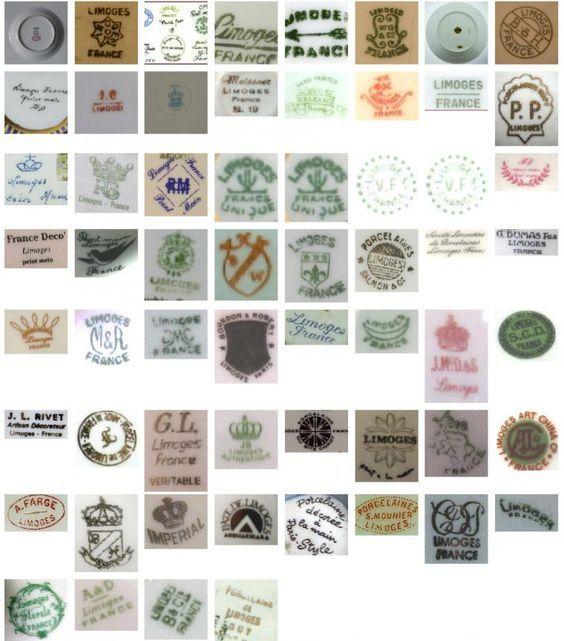
What Is Limoges Porcelain?
Limoges porcelain is internationally recognised for its brilliant white porcelain body, exceptional translucency, refined glaze, and elegant decoration. It has long been regarded as one of the finest porcelains produced anywhere in Europe.
Manufacturers in the Limoges region have produced luxury dinner services, tea sets, coffee services, decorative plates, cabinet vases, trinket boxes, figurines, and countless other fine porcelain objects. Hand-painted examples, artist-signed pieces, and rare antique productions are especially sought after by collectors.
Today, Limoges porcelain remains synonymous with elegance, craftsmanship, and luxury, making it one of the most collected French porcelain traditions in the world.
Is Limoges a Factory or a Region?
One of the most common misconceptions is that Limoges is the name of a porcelain factory. In reality, Limoges is a city and porcelain-producing region where many independent manufacturers have operated since the late eighteenth century.
Following the discovery of high-quality kaolin near Limoges in 1768, the region quickly became France’s leading centre for hard-paste porcelain production. Over the following centuries dozens of factories established workshops there, each producing porcelain under its own name and trademark.
For this reason, a backstamp reading Limoges France alone does not identify the manufacturer. Collectors should always look for the specific factory name or trademark accompanying the Limoges mark.
The Most Famous Limoges Manufacturers
- Haviland Limoges — internationally renowned for elegant dinner services and luxury porcelain.
- Bernardaud — one of today’s most prestigious Limoges manufacturers.
- Raynaud — admired for exceptional craftsmanship and refined tableware.
- Wm. Guérin & Co. — highly collectible antique Limoges porcelain.
- Pouyat Limoges — famous for elegant decorative porcelain.
- T&V Limoges (Tressemann & Vogt) — celebrated for beautifully decorated porcelain.
- Charles Ahrenfeldt — highly regarded antique exporter.
- Jean Pouyat — important nineteenth-century manufacturer.
Each manufacturer developed its own distinctive factory marks, decorative styles, and artistic identity. This is why identifying the manufacturer is often more important than simply recognising the word “Limoges.”
Where Is the Limoges Factory Mark Located?
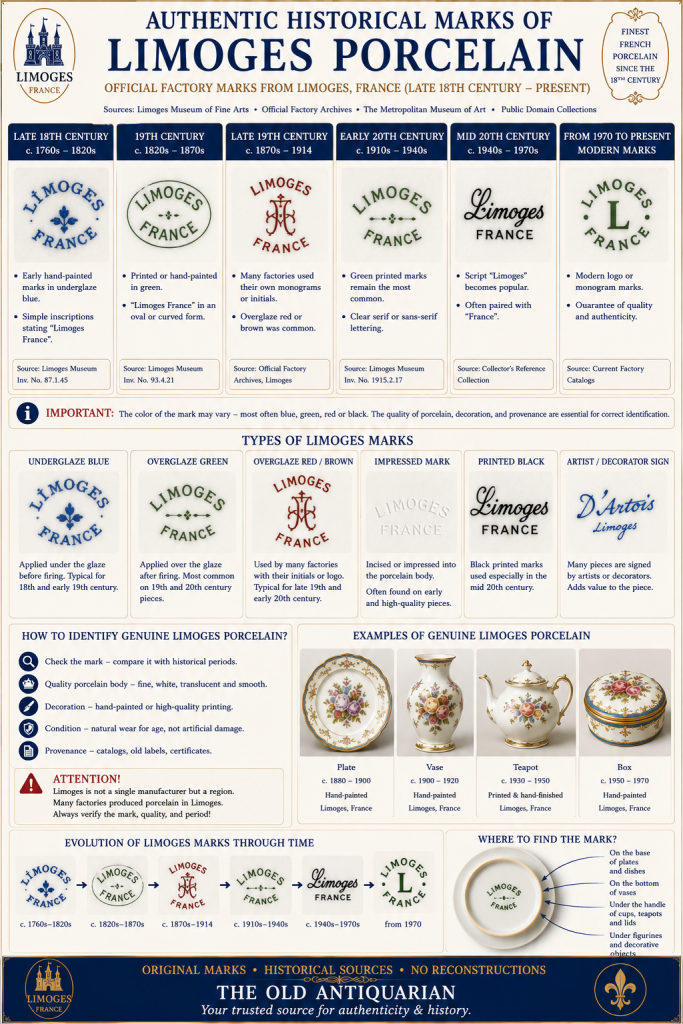
On most authentic Limoges porcelain, the factory mark is found on the underside of the piece. Depending on the manufacturer and production period, it may be printed under the glaze, printed over the glaze, hand-painted, stamped, or impressed into the porcelain body.
Besides the manufacturer’s trademark, collectors may also discover:
- the words Limoges France;
- factory logos;
- pattern numbers;
- model numbers;
- decorator’s marks;
- artist’s signatures;
- gilder’s marks;
- production codes.
Many antique Limoges pieces carry multiple marks because one factory produced the porcelain blank while another workshop decorated it. This was common practice throughout the nineteenth and early twentieth centuries and provides valuable clues for dating and authentication.
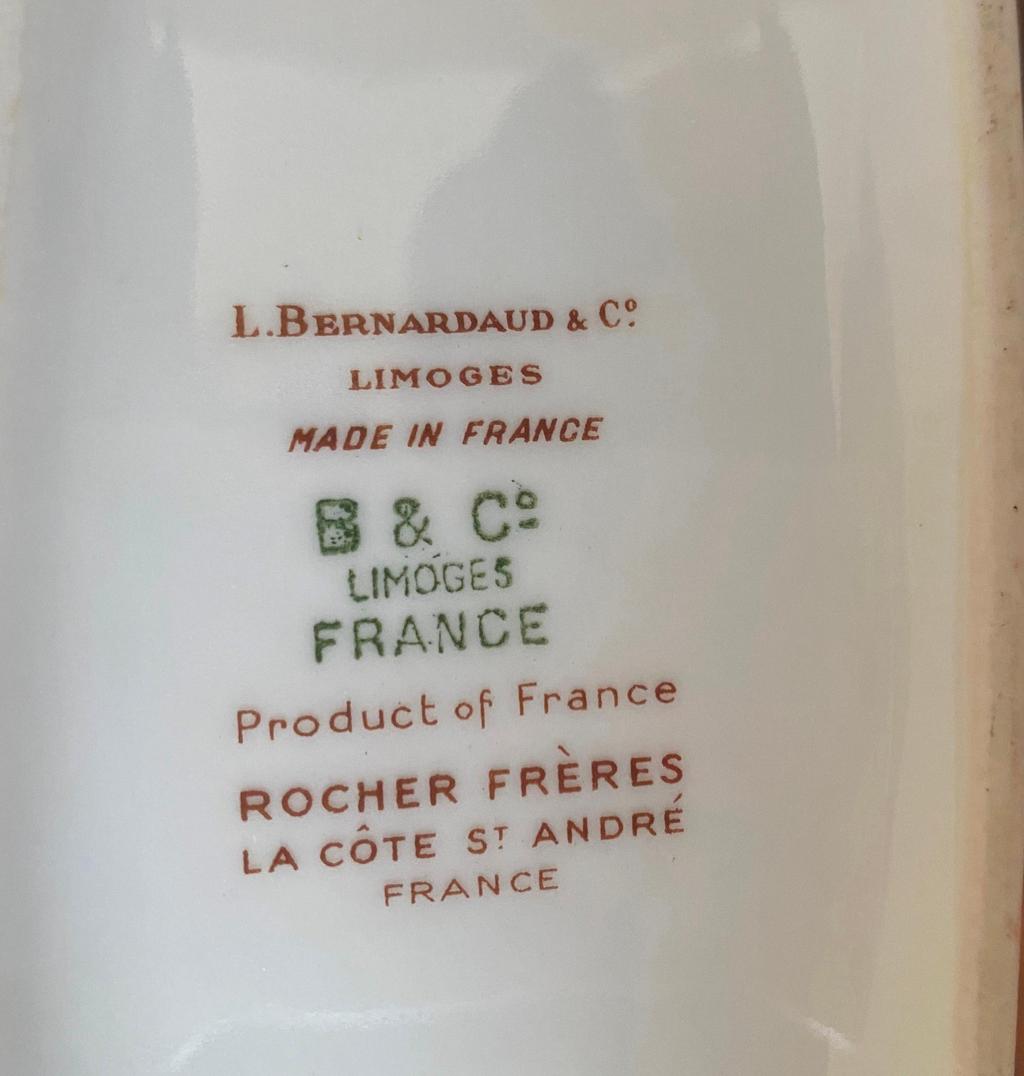
How to Identify Authentic Limoges Porcelain
Authenticating Limoges porcelain involves much more than reading the backstamp. Professional appraisers evaluate the quality of the porcelain body, glaze, translucency, decoration, craftsmanship, painting techniques, firing quality, and overall artistic execution before determining authenticity.
Original Limoges porcelain is usually distinguished by:
- an original manufacturer’s mark;
- a Limoges France backstamp;
- fine white translucent porcelain;
- exceptionally smooth glaze;
- hand-painted decoration;
- artist’s signature or decorator’s mark;
- pattern or model numbers;
- high-quality gilding;
- excellent craftsmanship;
- natural wear consistent with age.
Professional identification also determines whether an object remains an original, or whether it may instead be a later copy, a replica, or even a fake.
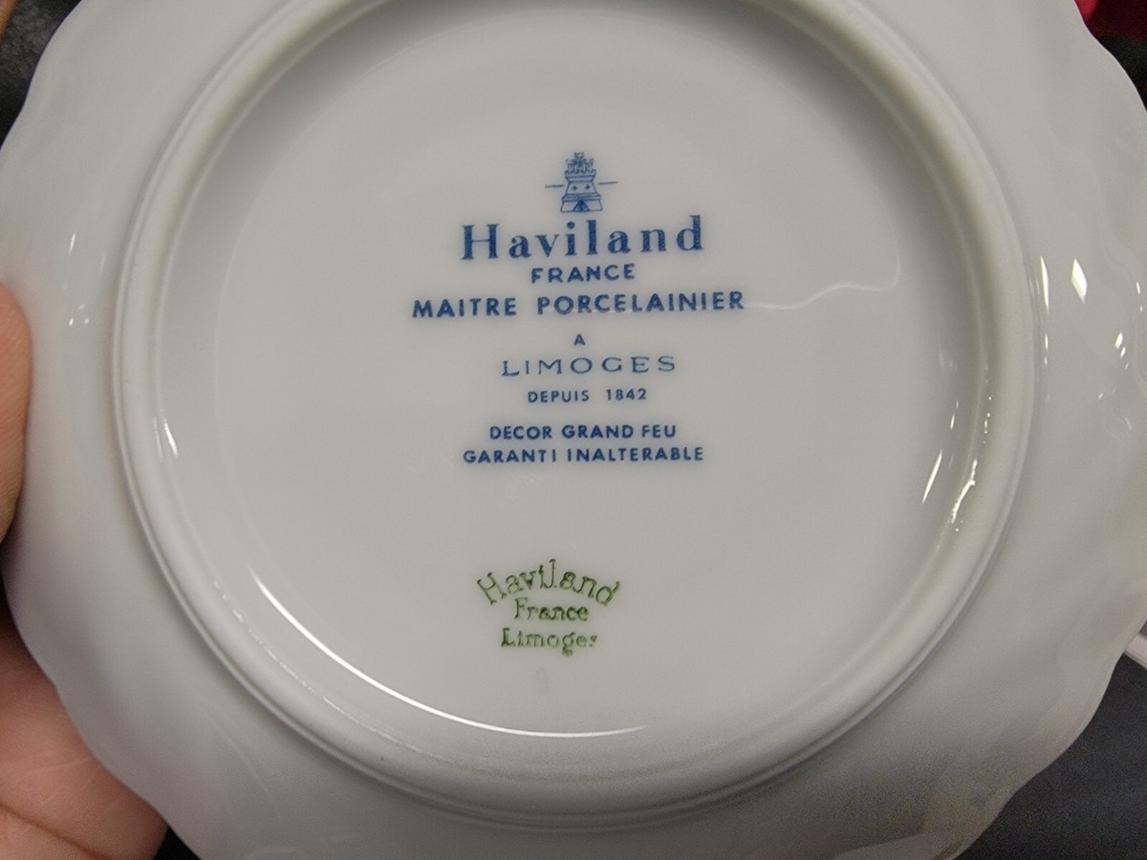
How Have Limoges Marks Changed Over Time?
Unlike manufacturers such as Meissen or Rosenthal, Limoges does not have one official factory mark. Instead, every porcelain manufacturer in the Limoges region developed its own trademarks, logos, and identifying symbols.
Because of this, Limoges marks vary enormously. Some are simple green underglaze stamps, while others appear in red, blue, black, or gold. Certain pieces include elaborate monograms, shields, stars, crowns, initials, or decorative logos that changed repeatedly throughout the nineteenth and twentieth centuries.
Many antique Limoges objects display two separate marks:
- one identifying the factory that produced the porcelain blank;
- another identifying the decorating studio or independent artist.
This dual-marking system is perfectly normal and often helps specialists reconstruct the complete production history of a porcelain object.
For a broader explanation of factory marks, read What Are Porcelain Marks?.
Are There Copies and Reproductions?
Yes. Many porcelain objects marked “Limoges” are not necessarily antique or especially valuable. Some are modern decorative wares, while others use factory marks that closely imitate older Limoges backstamps.
Collectors should therefore never judge authenticity solely from the words Limoges France. Professional authentication always includes examination of the porcelain body, glaze, decoration, craftsmanship, production techniques, and natural ageing before determining whether a piece is genuinely antique. “`html
The Most Collectible Limoges Porcelain
For more than two centuries, Limoges porcelain has been admired by collectors for its exceptional white porcelain body, elegant decoration, refined craftsmanship, and important place in the history of French decorative arts.
Because Limoges is a porcelain-producing region rather than a single factory, collectability often depends on identifying the specific manufacturer, decorator, production period, and artistic quality of the piece.
Collectors most frequently seek:
- Haviland Limoges dinner services.
- Bernardaud luxury porcelain.
- Raynaud hand-decorated tableware.
- Wm. Guérin & Co. porcelain.
- Pouyat Limoges cabinet pieces.
- T&V Limoges decorative porcelain.
- Jean Pouyat hand-painted objects.
- Charles Ahrenfeldt porcelain.
- Artist-signed cabinet plates.
- Large decorative vases.
- Luxury tea and coffee services.
- Complete antique dinner sets.
Hand-painted Limoges porcelain is especially desirable when the decoration displays exceptional brushwork, rich gilding, unusual floral compositions, portraits, landscapes, birds, or detailed artistic scenes.
Complete services in excellent condition generally command greater collector interest than isolated pieces, although rare artist-decorated plates, vases, and presentation objects can be highly valuable individually.
What Determines the Value of Limoges Porcelain?
The value of Limoges porcelain depends on many factors rather than the presence of the words Limoges France alone. Two pieces with similar marks may have completely different values depending on the manufacturer, age, decoration, rarity, and condition.
Professional appraisers carefully evaluate:
- The specific manufacturer.
- The decorating studio.
- Production period.
- Age.
- Factory and decorator marks.
- Pattern.
- Hand-painted decoration.
- Artist’s signature.
- Original gilding.
- Condition.
- Completeness of the service.
- Rarity.
- Documented provenance.
- Current collector demand.
Collectors generally pay the highest prices for porcelain that remains in excellent original condition, retains clear factory marks, and shows no evidence of poor restoration or repainting.
Professional specialists also determine whether an object has undergone previous restoration or conservation. Careful conservation may help preserve an antique, while extensive overpainting, replaced handles, repaired cracks, or poor-quality gilding can significantly reduce both historical integrity and market value.
Why Manufacturer Identification Matters
Identifying the exact manufacturer is one of the most important steps in valuing Limoges porcelain. A simple backstamp reading Limoges France confirms the regional origin, but it does not reveal which factory produced the porcelain.
Collectors should look for names and symbols associated with manufacturers such as:
- Haviland.
- Bernardaud.
- Raynaud.
- Wm. Guérin & Co.
- Pouyat.
- T&V Limoges.
- Charles Ahrenfeldt.
- Jean Pouyat.
Each manufacturer has its own historical importance, decorative traditions, production periods, and level of collector demand. This is why two apparently similar Limoges plates may differ substantially in market value.
Limoges Porcelain in the International Collectors’ Market
Limoges porcelain enjoys a strong international reputation among collectors of French decorative arts. Antique dealers, auction houses, museums, and private collectors throughout Europe, North America, and Asia continue to seek fine examples by leading Limoges manufacturers.
Collectors value Limoges porcelain because it combines:
- More than two centuries of production history.
- Fine French hard-paste porcelain.
- Exceptional translucency.
- Elegant hand-painted decoration.
- Prestigious manufacturers.
- Luxury dinner services.
- Strong international recognition.
- Excellent long-term collectability.
Limoges occupies a unique position because it represents an entire porcelain region rather than one single factory. This diversity gives collectors access to a wide range of styles, periods, marks, and artistic traditions.
Collectors frequently compare Limoges with other important porcelain traditions such as Meissen, Rosenthal, Herend, Royal Copenhagen, and Wedgwood, while recognising its distinctive importance within French porcelain history.
“`htmlHow to Care for Antique Limoges Porcelain
Antique Limoges porcelain has survived for more than two centuries thanks to its exceptional craftsmanship and high-quality hard-paste porcelain. Although it is remarkably durable, it should always be handled with great care to preserve both its beauty and collector value.
Collectors should always support porcelain by its strongest structural points. Handles, lids, decorative flowers, figurines, finials, and gilded elements should never be used to lift an object, as these are the areas most vulnerable to accidental damage.
To help preserve antique Limoges porcelain:
- Handle porcelain with clean, dry hands.
- Avoid sudden temperature changes.
- Keep porcelain away from prolonged direct sunlight.
- Protect it from vibration and accidental impacts.
- Display valuable pieces inside enclosed cabinets whenever possible.
- Use padded shelves for figurines, cabinet plates, and decorative vases.
- Never stack valuable porcelain without protective padding.
- Dust regularly using a soft microfiber cloth.
- Avoid abrasive cleaning products and harsh household chemicals.
- Never place antique porcelain in a dishwasher.
Special care should be taken with hand-painted Limoges porcelain, artist-signed pieces, and objects with heavy gilding. Excessive cleaning or polishing can permanently damage original decoration that has survived for generations.
If damage occurs, professional conservation is generally preferable to unnecessary restoration. When repairs are required, they should always be carried out using reversible conservation techniques that preserve as much original material as possible.
When Should You Seek a Professional Limoges Appraisal?
If you own Limoges porcelain and would like to determine its authenticity, manufacturer, production period, historical importance, or approximate market value, obtaining a professional appraisal is often the safest course of action.
Professional evaluation is especially recommended before:
- Buying valuable Limoges porcelain.
- Selling inherited collections.
- Sending porcelain to auction.
- Restoring damaged objects.
- Obtaining insurance.
- Dividing family collections.
- Donating porcelain to museums or institutions.
Professional appraisers examine much more than the factory mark. They carefully evaluate the porcelain body, glaze, translucency, decoration, artist’s signatures, factory marks, production techniques, provenance, condition, and historical consistency before determining authenticity and market value.
➡️ Request a Professional Antique Valuation
Frequently Asked Questions
Is Limoges a porcelain factory?
No. Limoges is a historic porcelain-producing region in central France. Many independent manufacturers operated there, so the words Limoges France should always be considered together with the specific manufacturer’s mark.
How can I identify authentic Limoges porcelain?
Authenticity is determined by examining the manufacturer’s mark, porcelain body, glaze, decoration, translucency, craftsmanship, artist’s signatures, production techniques, and natural signs of ageing. Professional authentication never relies solely on the backstamp.
Why do some Limoges pieces have two factory marks?
Many antique Limoges pieces have one mark from the factory that produced the porcelain blank and another from the decorating studio or artist who painted and gilded the object. This was common practice and often helps identify the complete production history.
Is every piece marked “Limoges France” valuable?
Not necessarily. The words “Limoges France” indicate the region where the porcelain was produced, but value depends on the manufacturer, age, rarity, artistic quality, condition, decoration, and collector demand.
Which Limoges manufacturers are the most collectible?
Among the most highly regarded manufacturers are Haviland, Bernardaud, Raynaud, Wm. Guérin & Co., Pouyat, and T&V Limoges. Rare hand-painted pieces by these makers are especially desirable among collectors.
Can Limoges porcelain be a good investment?
Exceptional Limoges porcelain with documented provenance, excellent condition, rare factory marks, and outstanding artistic decoration has demonstrated strong collector demand for generations. Complete services and artist-decorated pieces continue to perform well at international auctions.
Conclusion
Limoges represents one of the world’s greatest porcelain traditions and one of the finest achievements of French decorative arts. Rather than referring to a single factory, the name represents an entire porcelain-producing region where numerous prestigious manufacturers created exceptional works admired for more than two centuries.
Correct identification requires careful examination of the manufacturer’s mark, porcelain quality, glaze, decoration, translucency, craftsmanship, historical context, and provenance. Together, these characteristics enable collectors to distinguish authentic Limoges porcelain from later reproductions while appreciating the remarkable artistry behind every piece.
Whether you are researching a treasured family heirloom, expanding a French porcelain collection, or purchasing your first Limoges masterpiece, understanding its history and craftsmanship will help you make informed collecting decisions and gain a deeper appreciation for one of Europe’s finest porcelain traditions.
Continue Learning
- What Is Porcelain?
- Types of Porcelain Explained
- Porcelain vs Faience vs Ceramic
- What Are Porcelain Marks?
- What Is French Porcelain?
- How to Identify Meissen Porcelain
- How to Identify Rosenthal Porcelain
- How to Identify Herend Porcelain
- How to Identify Royal Copenhagen Porcelain
- How to Identify Wedgwood Porcelain
- What Is German Porcelain?
- What Is English Porcelain?
- What Is Italian Porcelain?
- What Is a Maker’s Mark?
- What Is Restoration?
- What Is Conservation?
- What Is an Original?
- What Is a Copy?
- What Is a Replica?
- What Is a Fake?
- What Is a Certificate of Authenticity?
Explore Related Collections
