
What Is German Porcelain?
German porcelain is widely regarded as one of the finest and most influential porcelain traditions in the world. Celebrated for its exceptional craftsmanship, technical perfection, and artistic excellence, German porcelain has shaped the history of European ceramics for more than three centuries.
Germany occupies a unique place in porcelain history because it was here that the secret of true European hard-paste porcelain was finally discovered. This breakthrough transformed European decorative arts forever and led to the creation of some of the world’s most prestigious porcelain manufacturers.
Today, antique German porcelain is among the most desirable categories of European antiques. Collectors, museums, and auction houses actively seek pieces produced by famous factories such as Meissen, Rosenthal, KPM Berlin, Hutschenreuther, Fürstenberg, Nymphenburg, Villeroy & Boch, and Kahla.
Whether you have inherited an elegant dinner service, discovered a porcelain figurine, or simply wish to learn more about German ceramics, understanding their history is the first step toward identifying authenticity, estimating age, and appreciating their collector value.
Before exploring German porcelain in detail, we recommend reading What Is Porcelain?, Types of Porcelain Explained, and Porcelain vs Faience vs Ceramic. These guides explain the fundamentals of porcelain and provide useful background for identifying German examples.
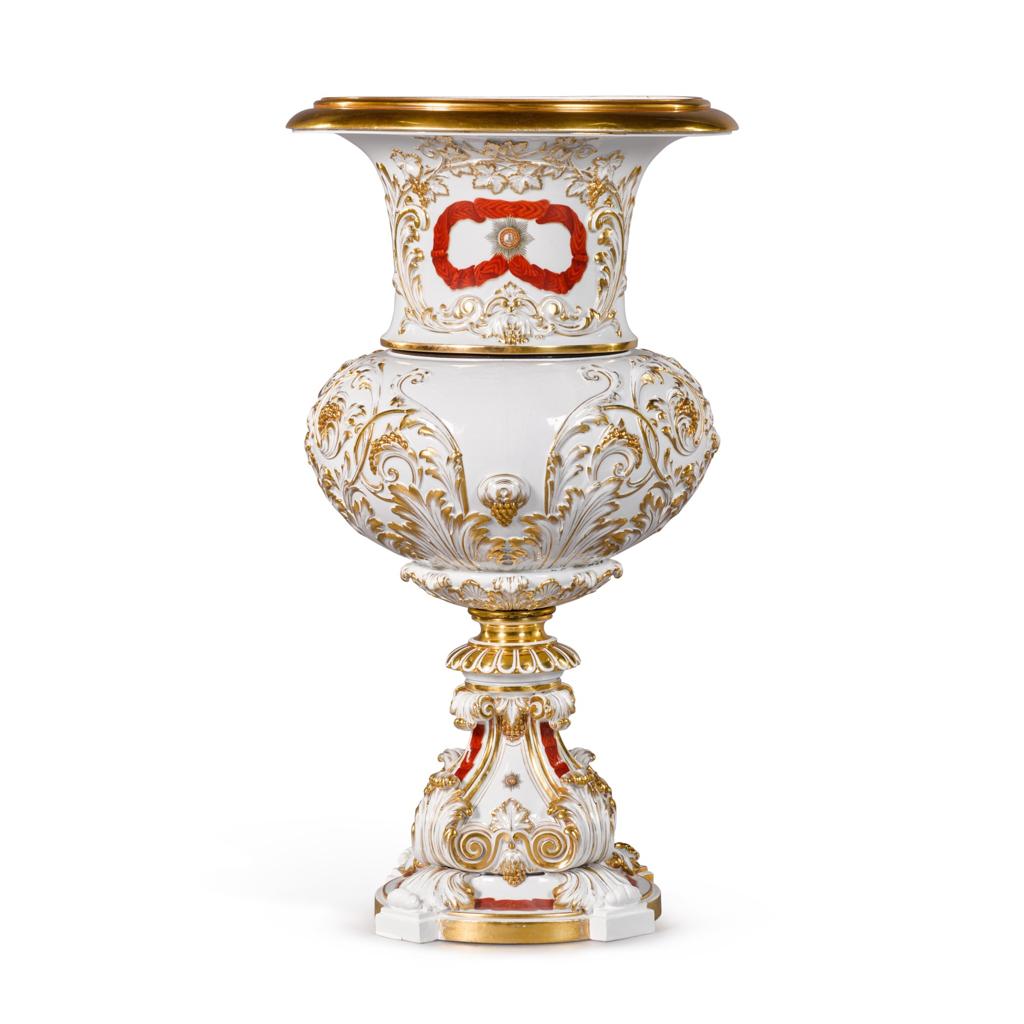
The History of German Porcelain
For centuries, Chinese porcelain was one of Europe’s greatest luxuries. Often called “White Gold”, it was imported at enormous expense while European rulers invested vast sums trying to discover the secret of its manufacture.
Everything changed in the early eighteenth century when the Saxon court sponsored experiments led by Johann Friedrich Böttger and Ehrenfried Walther von Tschirnhaus. Their research resulted in the successful production of true European hard-paste porcelain—one of the greatest technological achievements of the period.
In 1710, the Meissen Porcelain Factory was established near Dresden, becoming the first manufacturer in Europe capable of producing genuine hard-paste porcelain comparable to the finest Chinese examples.
The success of Meissen revolutionised European ceramics. During the following decades, numerous porcelain factories were established throughout the German states, each developing its own artistic identity, decorative techniques, manufacturing traditions, and distinctive porcelain marks.
German porcelain soon became synonymous with technical innovation, artistic excellence, and luxury craftsmanship. It strongly influenced porcelain production across Europe and inspired factories in France, England, Austria, Denmark, Russia, and many other countries.
Why Is German Porcelain So Famous?
German porcelain is admired because it combines remarkable technical precision with exceptional artistic beauty. Many factories employed Europe’s finest sculptors, painters, engravers, and ceramic craftsmen, producing works that are still regarded as masterpieces of decorative art.
Collectors particularly value German porcelain for its:
- True hard-paste porcelain body.
- Outstanding craftsmanship.
- Beautiful hand-painted decoration.
- Brilliant translucent glaze.
- Exceptional sculptural modelling.
- Rich hand-applied gilding.
- More than 300 years of manufacturing tradition.
- Major historical importance.
Professional appraisers also determine whether a porcelain object remains an original, or whether it may instead be a later copy, a replica, or a fake.
The Most Famous German Porcelain Factories
Germany is home to many of the world’s most respected porcelain manufacturers. Each factory developed its own artistic identity, distinctive factory marks, decorative techniques, and collector following.
| Factory | Known For |
|---|---|
| Meissen | The world’s first European hard-paste porcelain factory, famous for its crossed blue swords and museum-quality sculptures. |
| Rosenthal | Luxury tableware, modern artistic collaborations, elegant dinner services, and exceptional design. |
| KPM Berlin | Royal porcelain recognised by its famous blue sceptre mark and refined hand-painted decoration. |
| Hutschenreuther | Fine figurines, luxury tableware, decorative porcelain, and Christmas collectibles. |
| Fürstenberg | One of Germany’s oldest porcelain manufacturers, celebrated for elegant classical designs. |
| Nymphenburg | Bavarian porcelain admired for exceptional craftsmanship and artistic sculpture. |
| Villeroy & Boch | Internationally renowned producer of porcelain, ceramics, and luxury tableware. |
| Kahla | Contemporary German porcelain combining functionality with modern design. |
Together, these manufacturers represent more than three centuries of continuous innovation and remain among the world’s most respected names in porcelain production.
How to Identify German Porcelain
Correctly identifying German porcelain requires considerably more than reading the factory mark. While porcelain marks provide valuable clues, professional appraisers always examine the entire object before determining its authenticity, age, manufacturer, and market value.
Experienced specialists carefully evaluate:
- Factory mark or backstamp.
- Porcelain body.
- Glaze quality.
- Hand-painted decoration.
- Gold or platinum gilding.
- Shape and proportions.
- Manufacturing techniques.
- Natural ageing.
- Overall craftsmanship.
Authentic antique German porcelain often displays subtle characteristics that reflect traditional hand production. Small variations in painting, gilding, and modelling usually indicate genuine craftsmanship rather than manufacturing defects.
Professional identification also establishes whether an object remains an original, or whether it could instead be a later copy, a replica, or even a fake.
German Porcelain Marks and Backstamps
Factory marks are among the most important tools for identifying German porcelain. Usually found on the underside of an object, they help identify the manufacturer, estimate the production period, and sometimes even reveal the decorator, model number, or export destination.
Depending on the factory and historical period, German porcelain marks may include:
- Factory names.
- Royal crowns.
- Crossed swords.
- Blue sceptres.
- Coats of arms.
- Artist signatures.
- Pattern numbers.
- Country-of-origin marks.
- Quality-control symbols.
Perhaps the world’s best-known porcelain mark belongs to Meissen, recognised by its iconic crossed blue swords. KPM Berlin uses the famous blue sceptre, while Rosenthal typically includes the company name together with references such as Germany, Selb, Bavaria, or Studio-Line depending on the production period.
Because many German factories modified their marks over time, comparing a backstamp with documented examples often allows specialists to date porcelain surprisingly accurately.
For a detailed explanation of porcelain factory marks, read our guide What Are Porcelain Marks?.
How to Tell Antique German Porcelain from Modern Pieces
Distinguishing antique German porcelain from modern production requires careful examination. Although factory marks provide valuable information, professionals always evaluate the complete object before reaching a conclusion.
Collectors usually examine:
- Factory mark and production period.
- Quality of the porcelain body.
- Glaze consistency.
- Hand-painted decoration.
- Original gilding.
- Manufacturing techniques.
- Natural wear on the foot rim.
- Historical artistic style.
- Overall craftsmanship.
Older German porcelain usually displays gentle signs of age that develop naturally over decades. Modern porcelain often appears more uniform because of industrial manufacturing methods, transfer printing, and automated decoration.
Professional appraisers also evaluate whether previous restoration or conservation has affected originality or collector value.
How to Recognise Hand-Painted German Porcelain
Many of Germany’s finest porcelain pieces were decorated entirely by hand. Skilled artists painted floral bouquets, birds, landscapes, mythological scenes, portraits, and elaborate gold ornamentation using techniques that required years of specialised training.
Collectors frequently identify genuine hand-painted porcelain by:
- Visible brush strokes.
- Natural colour variations.
- Layered hand-applied painting.
- Individually applied gilding.
- Slight differences between matching pieces.
- Fine artistic detailing.
Unlike modern transfer printing, hand-painted decoration gives every porcelain object its own unique character, making each example slightly different from the next.
The Most Collectible German Porcelain
German porcelain has been admired by collectors for more than three centuries. While virtually every historic German factory produced high-quality porcelain, certain categories consistently attract the strongest international demand because of their rarity, artistic quality, historical importance, and exceptional craftsmanship.
Collectors most frequently seek:
- Meissen figurines.
- Meissen animal sculptures.
- Early Meissen dinner services.
- Rosenthal Studio-Line collections.
- KPM Berlin cabinet plates.
- KPM Berlin decorative vases.
- Hutschenreuther figurines.
- Nymphenburg sculptures.
- Fürstenberg tableware.
- Villeroy & Boch luxury porcelain.
- Hand-painted tea and coffee services.
- Limited-edition artistic porcelain.
Museum-quality examples produced during the eighteenth and nineteenth centuries regularly appear in major international auctions and often achieve exceptional prices.
Complete services, rare figurines, artist-designed porcelain, and objects retaining their original factory marks are especially desirable among collectors.
What Determines the Value of German Porcelain?
No single characteristic determines the value of antique German porcelain. Professional appraisers carefully examine a wide range of factors before estimating authenticity and market value.
The most important considerations include:
- Manufacturer.
- Production period.
- Age.
- Factory marks.
- Rarity.
- Artistic quality.
- Hand-painted decoration.
- Original gilding.
- Condition.
- Historical importance.
- Documented provenance.
- Current collector demand.
Collectors generally pay the highest prices for pieces that remain in excellent original condition, retain their original factory marks, and show no evidence of poor restoration or significant damage.
Specialists also determine whether an object has undergone previous restoration or conservation. Professional conservation may help preserve an antique, while excessive repainting, replacement parts, or poor repairs can reduce both historical integrity and market value.
German Porcelain in the International Collectors’ Market
German porcelain remains one of the strongest sectors of the international antiques market. Collectors throughout Europe, North America, and Asia actively seek rare examples produced by Germany’s leading porcelain manufacturers.
The continuing popularity of German porcelain is supported by several factors:
- More than 300 years of manufacturing history.
- Outstanding artistic reputation.
- Exceptional craftsmanship.
- International auction demand.
- Museum collections worldwide.
- Excellent historical documentation.
Meissen continues to rank among the world’s most prestigious porcelain manufacturers, while Rosenthal, KPM Berlin, Hutschenreuther, Nymphenburg, and Villeroy & Boch remain highly respected names among collectors of European decorative arts.
Because German porcelain influenced nearly every major European porcelain tradition, it occupies a central position in the history of ceramics and remains one of the most widely collected categories of antique porcelain.
Collectors often compare German porcelain with other important European traditions such as French porcelain, Russian porcelain, English porcelain, and Danish porcelain, while also recognising the lasting influence of Chinese porcelain on early European production.
How to Care for Antique German Porcelain
Antique German porcelain has survived for centuries because of its exceptional quality, but it remains fragile and should always be handled with care. Proper storage, cleaning, and display help preserve not only its beauty but also its historical significance and collector value.
Collectors should always support porcelain from its strongest structural points. Handles, lids, spouts, finials, and delicate sculptural elements should never be used to lift an object, as these areas are particularly vulnerable to accidental damage.
To help preserve antique German porcelain:
- Handle porcelain with clean, dry hands.
- Avoid sudden changes in temperature.
- Keep porcelain away from prolonged direct sunlight.
- Protect it from vibration and accidental impacts.
- Display valuable pieces inside enclosed cabinets whenever possible.
- Use padded shelves for figurines, plates, and decorative vases.
- Never stack valuable porcelain without protective padding.
- Dust regularly using a soft microfiber cloth.
- Avoid abrasive cleaning products and harsh household chemicals.
- Never place antique porcelain in a dishwasher.
If damage occurs, professional conservation is generally preferable to unnecessary restoration. Where restoration is required, it should always be carried out using reversible conservation techniques that preserve as much original material as possible.
When Should You Seek a Professional Appraisal?
If you own a piece of German porcelain and would like to determine its authenticity, manufacturer, production period, historical importance, or approximate market value, obtaining a professional appraisal is often the safest course of action.
Professional evaluation is especially recommended before:
- Buying valuable antique porcelain.
- Selling inherited collections.
- Sending porcelain to auction.
- Restoring damaged objects.
- Obtaining insurance.
- Dividing family collections.
- Donating porcelain to museums or institutions.
Professional appraisers examine much more than the factory mark. They carefully evaluate the porcelain body, glaze, decoration, hand-painted details, modelling quality, manufacturing techniques, provenance, condition, and historical consistency before determining authenticity and market value.
➡️ Request a Professional Antique Valuation
Frequently Asked Questions
Is German porcelain valuable?
Yes. German porcelain is among the world’s most collectible ceramics. Pieces produced by Meissen, KPM Berlin, Rosenthal, Hutschenreuther, Nymphenburg, Fürstenberg, and other historic factories are highly sought after by collectors and museums worldwide.
How can I identify German porcelain?
Identification involves examining the porcelain body, glaze, decoration, factory mark, modelling, craftsmanship, manufacturing techniques, provenance, and natural signs of ageing. Professional authentication never relies on the backstamp alone.
What is the most famous German porcelain factory?
The Meissen Porcelain Factory, founded in 1710, is the world’s first manufacturer of true European hard-paste porcelain and remains the most famous German porcelain producer.
Are German porcelain marks reliable?
Factory marks provide valuable information, but they should always be evaluated together with the porcelain body, glaze, decoration, craftsmanship, and historical consistency. Counterfeit marks do exist, particularly on expensive collectible porcelain.
Can damaged German porcelain still be valuable?
Yes. Rare eighteenth- and nineteenth-century porcelain may remain highly valuable despite minor damage. However, poor restoration, overpainting, or replacement parts can significantly reduce collector value.
Can German porcelain be a good investment?
Exceptional German porcelain has demonstrated strong collector demand for generations. Rare Meissen sculptures, KPM Berlin plaques, Rosenthal Studio-Line designs, and important historical pieces continue to achieve impressive prices at international auctions.
Conclusion
German porcelain stands among the greatest achievements in the history of European decorative arts. From the scientific breakthrough that made Meissen the first producer of true European hard-paste porcelain to the internationally admired creations of Rosenthal, KPM Berlin, Hutschenreuther, Nymphenburg, Fürstenberg, and Villeroy & Boch, Germany has shaped porcelain production for more than three hundred years.
Correct identification requires careful examination of factory marks, porcelain quality, glaze, decoration, craftsmanship, historical style, and provenance. Understanding these characteristics allows collectors to distinguish authentic antiques from later reproductions while appreciating the extraordinary artistry behind every piece.
Whether you are researching a family heirloom, expanding a porcelain collection, or purchasing your first German porcelain object, learning about its history and craftsmanship will help you make informed collecting decisions and better understand one of Europe’s greatest artistic traditions.
Continue Learning
- What Is Porcelain?
- Types of Porcelain Explained
- Porcelain vs Faience vs Ceramic
- What Are Porcelain Marks?
- What Is Chinese Porcelain?
- What Is Japanese Porcelain?
- What Is Russian Porcelain?
- What Is Bulgarian Porcelain?
- What Is a Maker’s Mark?
- What Is Restoration?
- What Is Conservation?
- What Is an Original?
- What Is a Copy?
- What Is a Replica?
- What Is a Fake?
- What Is a Certificate of Authenticity?
Explore Related Collections
