
What Is KPM Berlin Porcelain? History, Marks, Identification and Collecting Guide
KPM Berlin porcelain is one of Europe’s most prestigious and collectible porcelains. Founded in 1763 by King Frederick the Great of Prussia, the Königliche Porzellan-Manufaktur Berlin (KPM) became a symbol of royal craftsmanship, artistic excellence and exceptional porcelain production. Today, authentic KPM porcelain is admired by collectors, museums and antique dealers worldwide for its remarkable quality, elegant forms, hand-painted decoration and the famous blue sceptre mark, which has represented the manufactory for more than 260 years.
Whether you have inherited an antique KPM vase, discovered an old porcelain tea set or simply want to learn more about German porcelain, this guide explains everything you need to know—from the history of the factory and its famous artists to identifying authentic marks and understanding collector value.
What Does KPM Berlin Mean?
The abbreviation KPM stands for Königliche Porzellan-Manufaktur Berlin, meaning Royal Porcelain Manufactory Berlin. Since its royal foundation, KPM has remained one of Germany’s most respected porcelain manufacturers and continues producing handmade porcelain in Berlin today.
Collectors often regard KPM alongside famous European manufacturers such as Meissen, Sèvres, Royal Copenhagen and Wedgwood as one of Europe’s finest porcelain makers.
The History of KPM Berlin
The history of KPM Berlin begins during the great European race to master hard-paste porcelain. After the enormous success of Meissen in Saxony, many European monarchs wanted their own porcelain manufactories. Porcelain had become known as “White Gold” because of its rarity, beauty and enormous prestige.
Before KPM officially existed, several attempts were made to establish porcelain production in Berlin. The first factories, operated by Wilhelm Caspar Wegely and later Johann Ernst Gotzkowsky, struggled financially despite royal support.
Everything changed in 1763, when Frederick the Great purchased Gotzkowsky’s porcelain factory and transformed it into the Royal Porcelain Manufactory Berlin. The king gave the factory its official name and introduced the famous blue sceptre from the Brandenburg coat of arms as its permanent trademark. That symbol remains the identifying mark of KPM porcelain today.
Frederick the Great and the Rise of Royal Porcelain
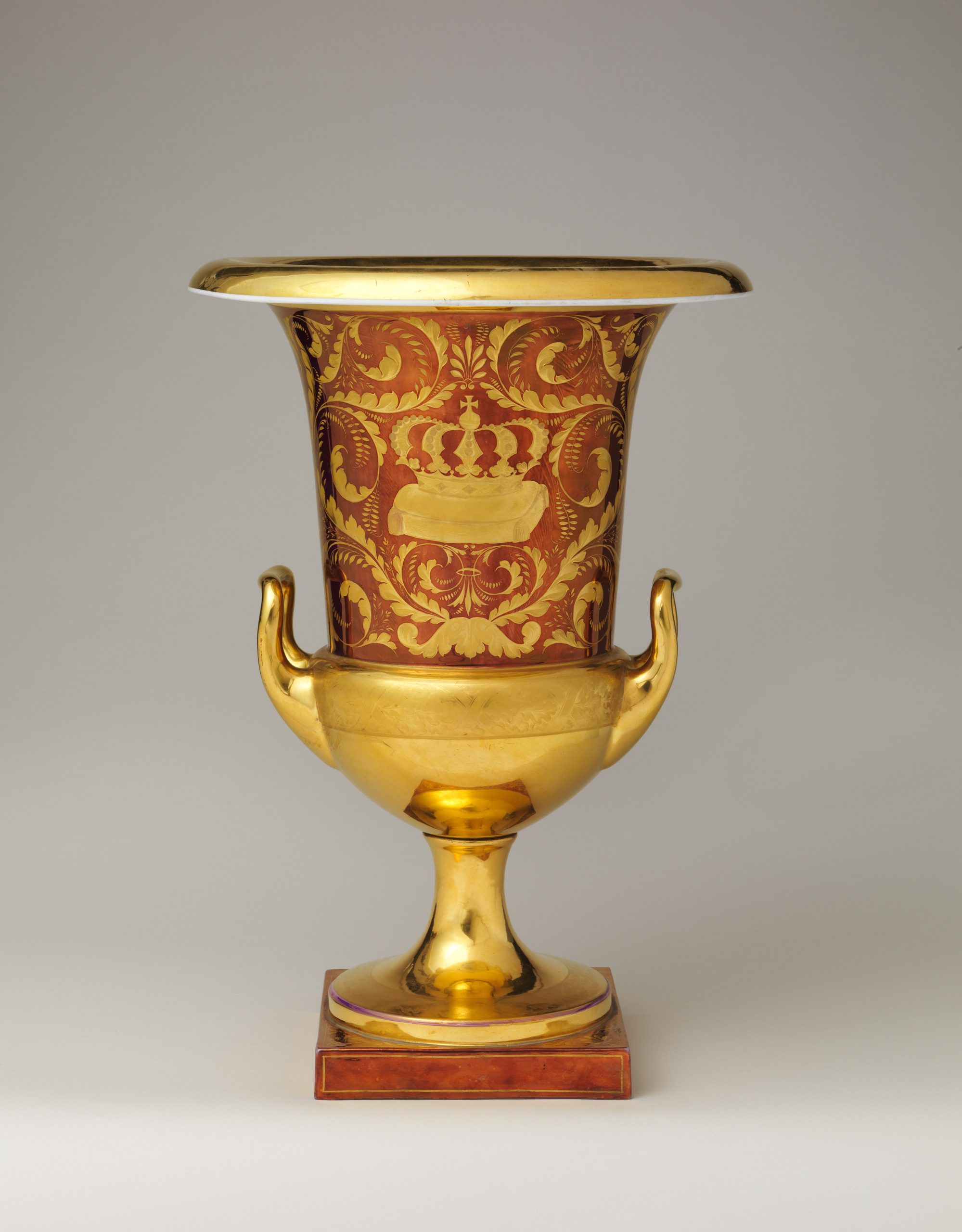
Frederick the Great was much more than the founder of KPM. He became the manufactory’s most important customer, commissioning magnificent porcelain services for his palaces throughout Prussia.
Some royal services contained hundreds of individual pieces and were designed specifically to match palace interiors. They soon became diplomatic gifts presented to European royal families, helping establish KPM’s international reputation during the eighteenth century. :contentReference[oaicite:3]{index=3}
As demand increased, KPM expanded both technically and artistically, attracting some of Germany’s greatest sculptors, architects and porcelain painters.
Why KPM Berlin Became Famous
Several characteristics distinguish KPM from most other European porcelain manufacturers:
- Royal Prussian patronage.
- Exceptional hard-paste porcelain quality.
- Master hand-painted decoration.
- Strict quality control before marking.
- Innovative glaze technology.
- Elegant Neoclassical and Art Nouveau designs.
- Outstanding artistic collaborations.
Unlike mass-produced porcelain, every authentic KPM object passed rigorous inspections before receiving the famous blue sceptre. Even today, pieces that fail quality control never receive the official factory mark.
Characteristics of Authentic KPM Berlin Porcelain
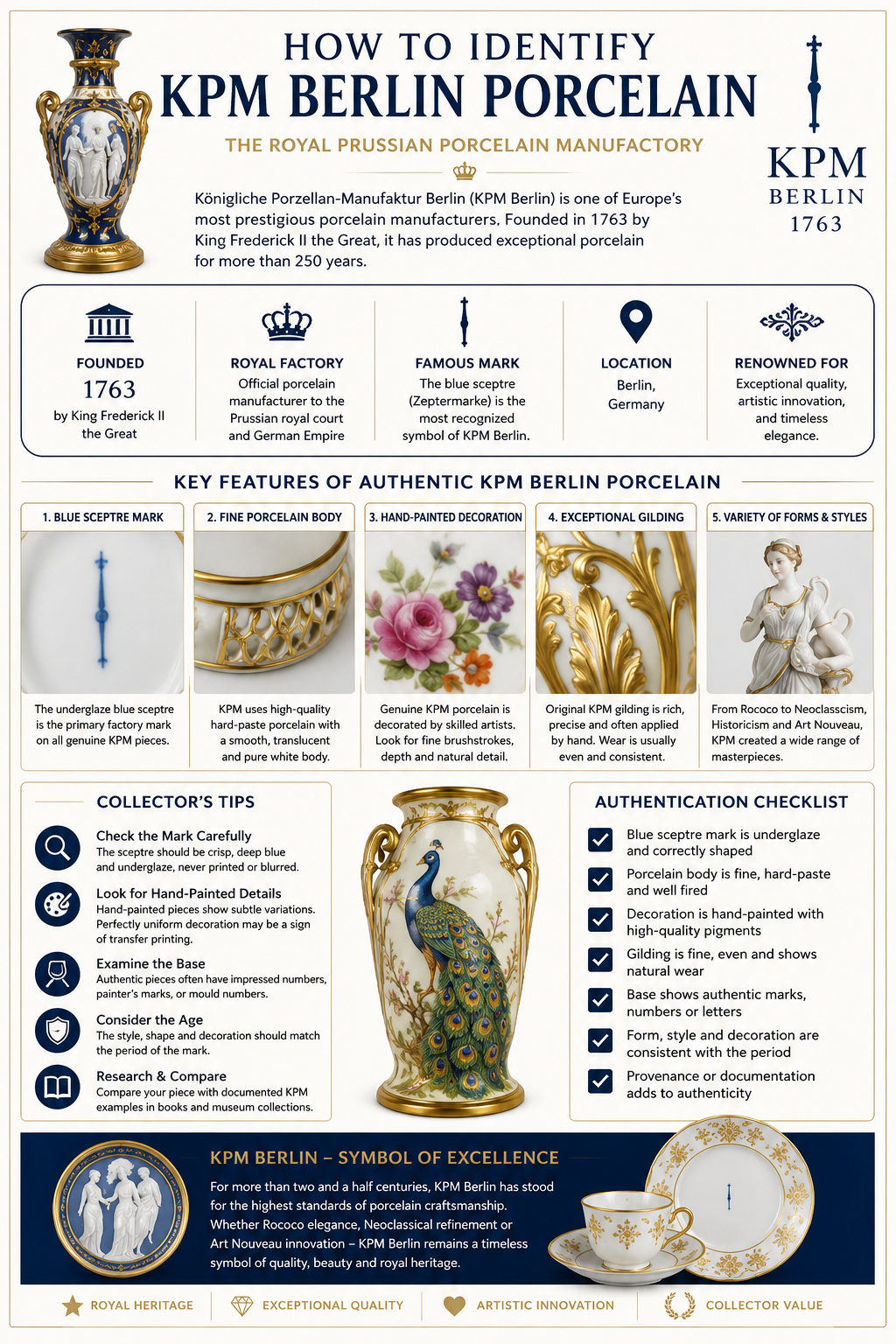
Although production styles evolved over more than two centuries, genuine KPM porcelain usually shares several distinctive characteristics:
- Fine white hard-paste porcelain.
- Excellent translucency.
- Smooth, brilliant glaze.
- Hand-painted decoration.
- Exceptional gilding.
- Elegant proportions.
- Precise modelling.
- Blue underglaze sceptre mark.
If you are new to European porcelain identification, our guides to What Is Porcelain?, Types of Porcelain Explained and Porcelain Marks provide an excellent foundation before studying individual manufacturers.
The Famous Blue Sceptre Mark
Perhaps the single most recognizable feature of KPM porcelain is the famous blue sceptre.
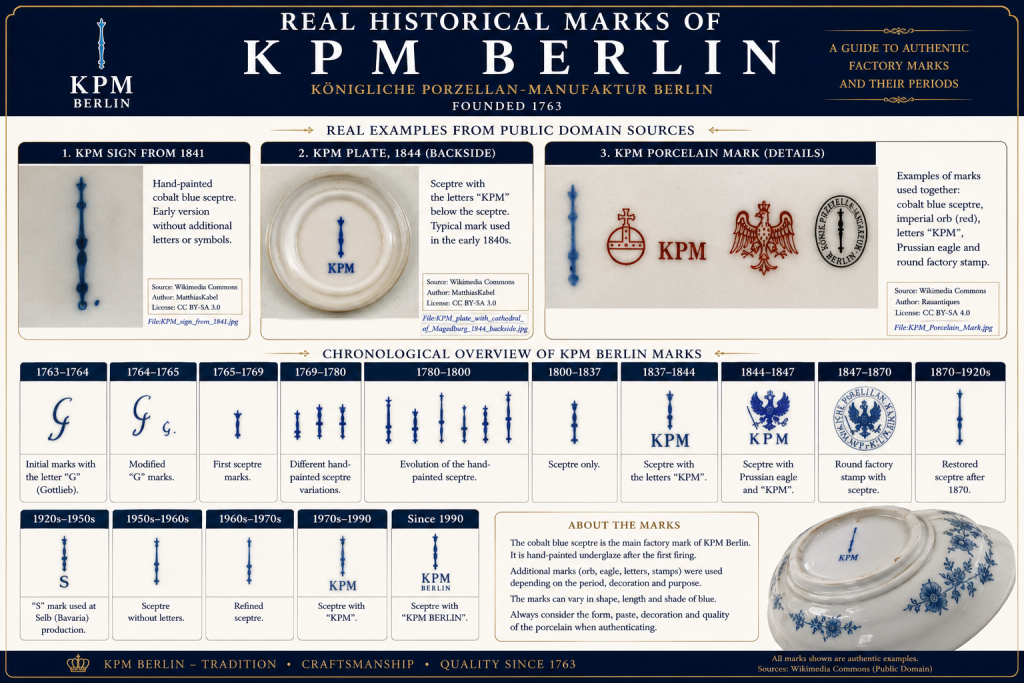
The sceptre comes directly from the Brandenburg coat of arms and has served as KPM’s trademark since 1763. Traditionally, it is painted using cobalt underglaze before glazing and firing, permanently bonding the mark to the porcelain surface. This process makes the mark extremely durable and difficult to counterfeit.
Early examples often display slight variations because every sceptre was painted by hand. During the nineteenth century the mark became more standardized, and additional painter’s marks, decorator’s symbols and model numbers were gradually introduced.
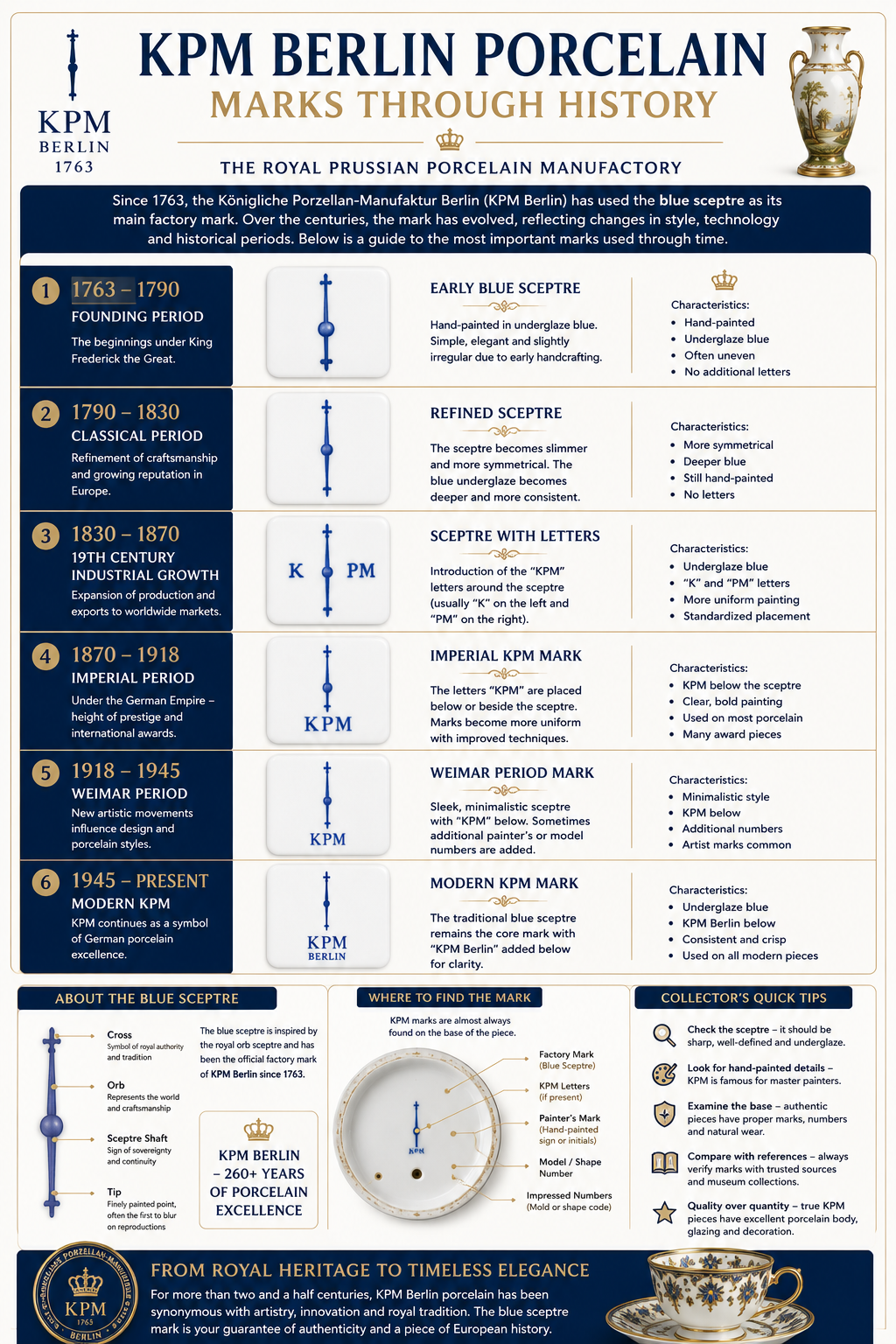
Understanding these subtle differences allows collectors to estimate when a particular piece was produced and helps distinguish authentic antiques from later reproductions.
KPM Berlin and the Art Nouveau Revolution
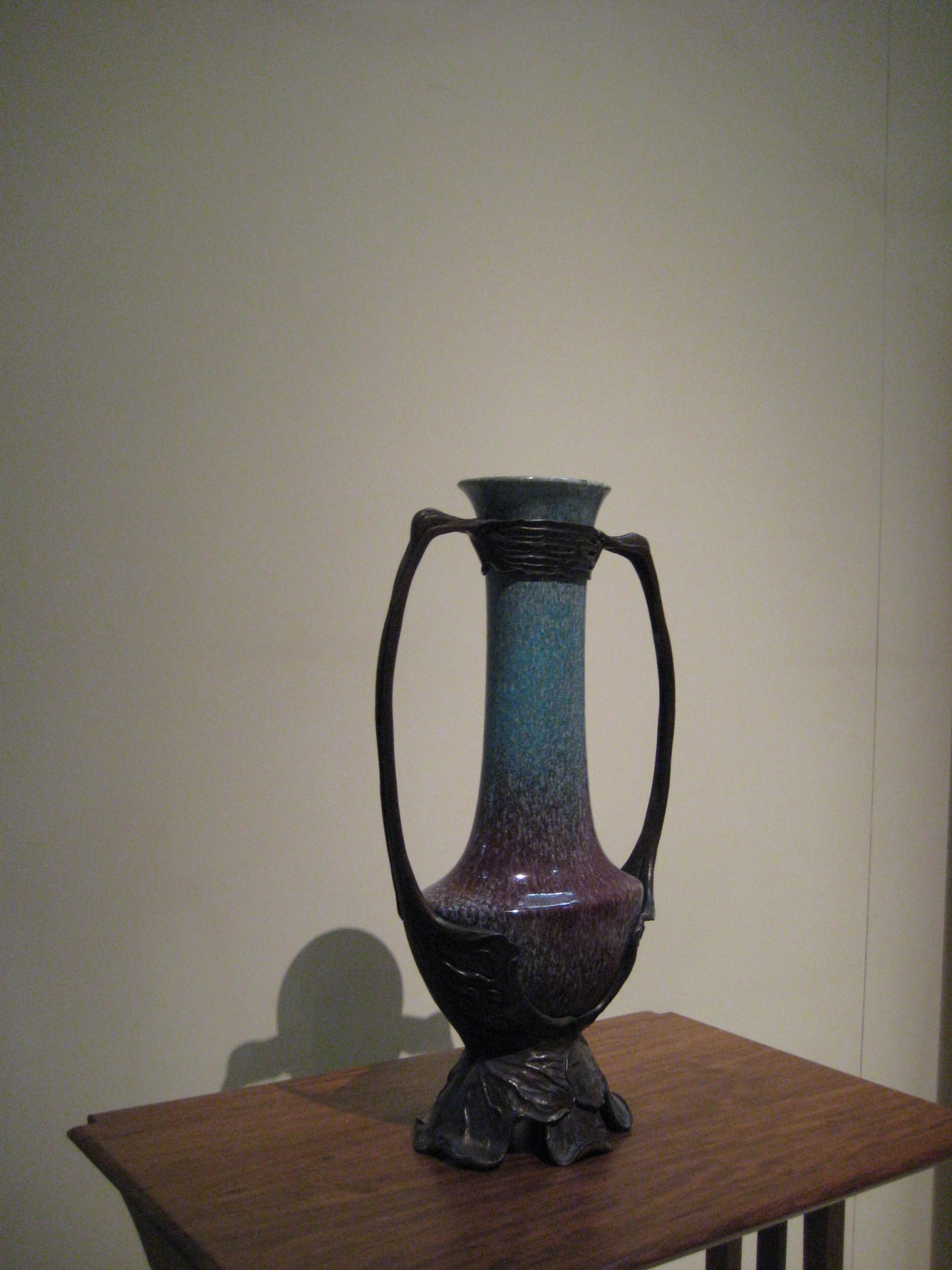
At the end of the nineteenth century, European art underwent a dramatic transformation. Historic revival styles gradually gave way to the flowing organic forms of Art Nouveau, known in Germany as Jugendstil. KPM Berlin embraced this new artistic movement and soon became one of Germany’s leading producers of Art Nouveau porcelain. :contentReference[oaicite:0]{index=0}
Instead of copying historical styles, KPM designers looked to nature for inspiration. Flowers, vines, birds, butterflies and elegant female figures became common decorative themes. The manufactory also experimented with new glazes, richer colours and innovative porcelain forms that distinguished KPM from many of its European competitors.
Today, KPM’s Art Nouveau period is considered one of the most collectible eras in the factory’s long history and is highly sought after by museums and advanced porcelain collectors.
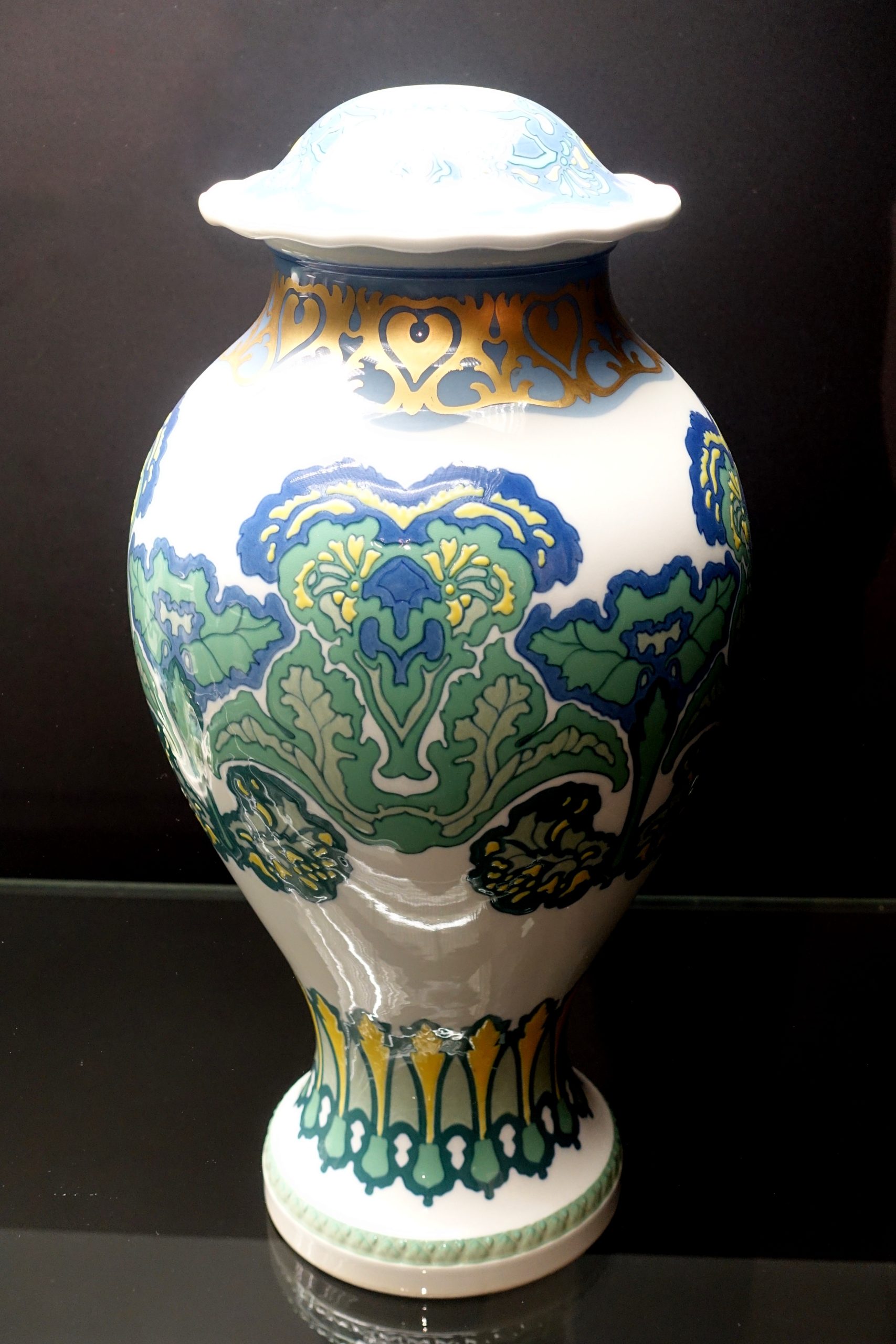
Theo Schmuz-Baudiß — The Artist Who Changed KPM Forever
One name is inseparable from KPM’s Art Nouveau success: Theodor (Theo) Schmuz-Baudiß.
Joining KPM in the early twentieth century and later becoming Artistic Director, Schmuz-Baudiß transformed the manufactory into one of Europe’s leading centres of modern porcelain design. Rather than relying on heavy Rococo ornament, he introduced elegant organic forms, subtle decoration and harmonious proportions inspired by plants, wildlife and Japanese aesthetics.
Many collectors consider his creations to be among the finest examples of German Jugendstil porcelain ever produced.
- Flowing natural forms.
- Soft botanical decoration.
- Exceptional hand painting.
- Innovative coloured glazes.
- Elegant proportions.
- Masterful craftsmanship.
If you enjoy studying European porcelain designers, you may also like our guides to Sèvres Porcelain, Meissen Porcelain and Wedgwood, each of which developed its own distinctive artistic tradition.
Famous KPM Berlin Collections
Over more than two and a half centuries, KPM Berlin has produced an extraordinary variety of porcelain objects ranging from luxurious royal dinner services to monumental decorative vases and museum-quality sculptures.
Among the most celebrated collections are:
- KURLAND — one of the world’s finest Neoclassical dinner services.
- CERES — the celebrated Art Nouveau service introduced for KPM’s 150th anniversary.
- ARKADIA — elegant biscuit porcelain medallion decoration.
- URBINO — a Bauhaus-inspired masterpiece by Trude Petri.
- Large decorative exhibition vases.
- Royal presentation pieces.
These collections demonstrate how KPM continually adapted to changing artistic movements while maintaining exceptional manufacturing standards. :contentReference[oaicite:2]{index=2}
KPM’s Beautiful Landscape and Nature Vases
Unlike many European porcelain factories that concentrated primarily on tableware, KPM became internationally admired for its large decorative vases.
Master painters created breathtaking panoramic landscapes, forests, lakes, castles and mountain scenery using hundreds of tiny hand-painted brushstrokes. These paintings often resemble fine oil paintings more than ceramic decoration.
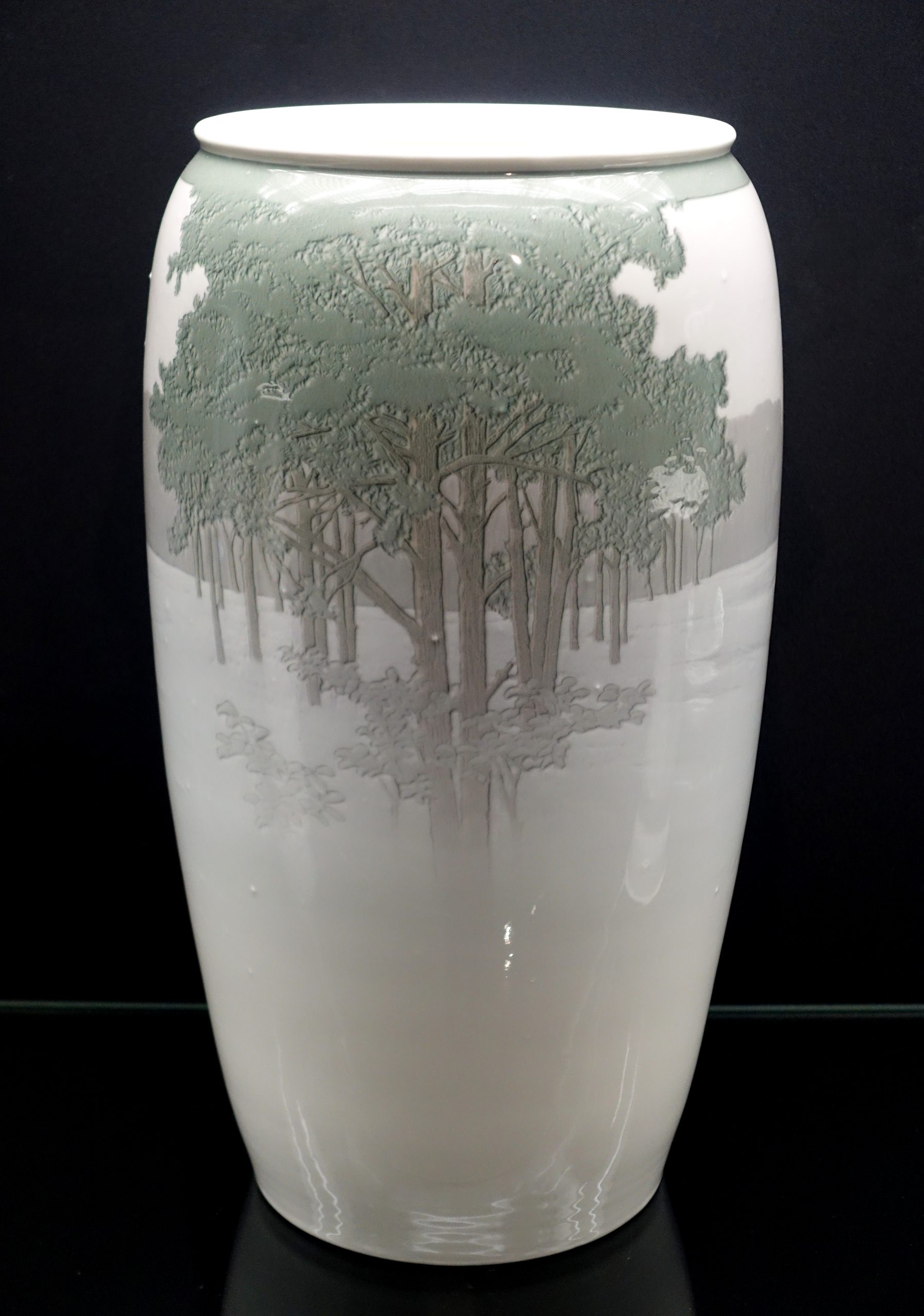
Many landscape vases required weeks—or even months—to complete because every tree, reflection and cloud was painted entirely by hand.
Collectors generally value landscape vases according to:
- Artistic quality.
- Condition.
- Size.
- Painter’s signature.
- Complexity of decoration.
- Rarity of the model.
The Famous Peacock Vases
One of the most spectacular decorative themes produced by KPM Berlin features the magnificent peacock.
Peacocks have long symbolized beauty, luxury and prestige, making them an ideal subject for royal porcelain. Their brilliant feathers allowed KPM painters to demonstrate extraordinary technical skill using vibrant enamel colours and delicate gilding.
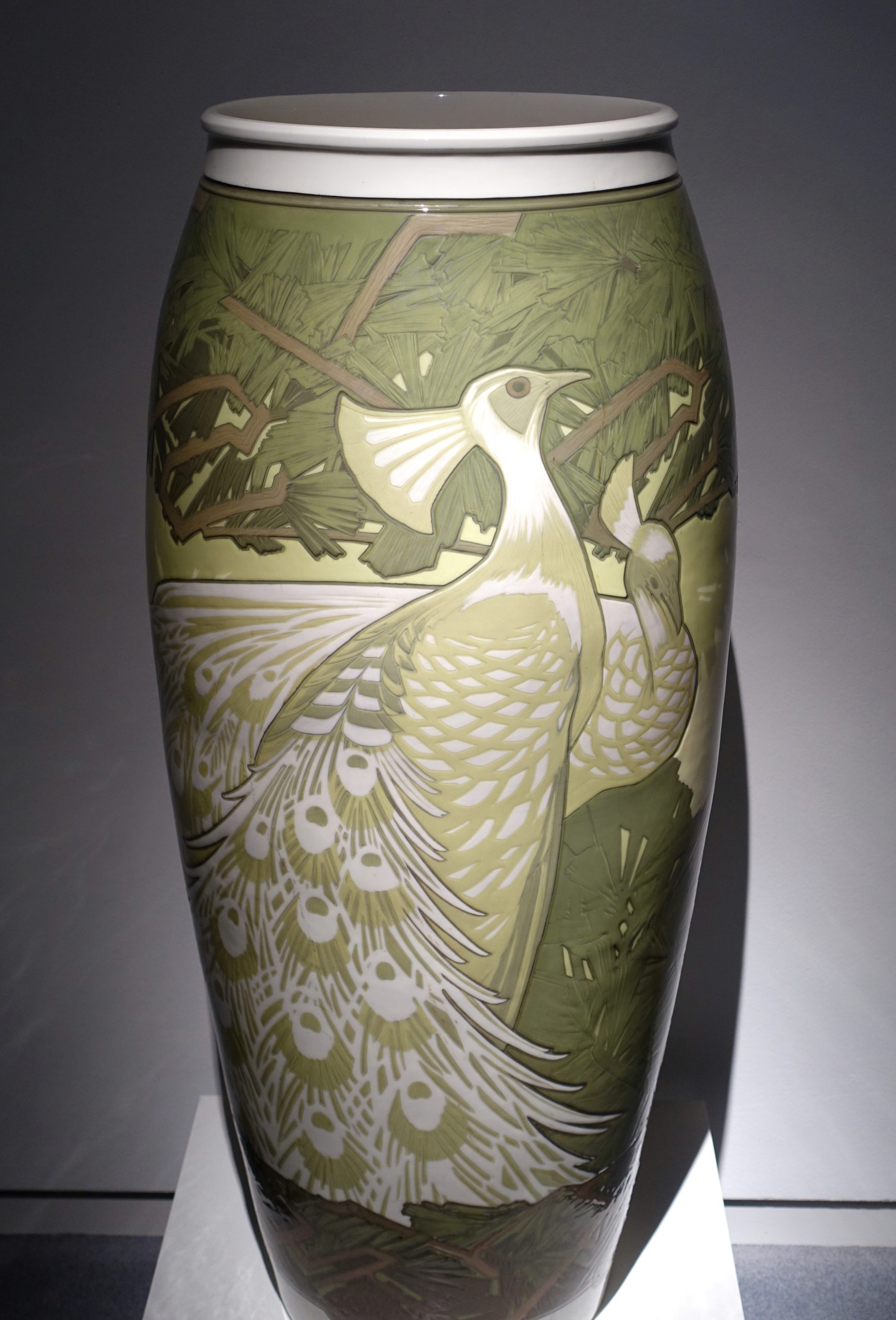
Large peacock floor vases are among the most impressive decorative objects produced by KPM during the late nineteenth and early twentieth centuries. Museum-quality examples can command significant prices because of their artistic excellence, impressive size and exceptional rarity.
How Every KPM Piece Was Made by Hand
One of the reasons KPM porcelain has remained so highly respected is the remarkable amount of manual craftsmanship involved in its production.
Unlike industrial porcelain factories, KPM relied on highly specialised craftsmen who often spent years mastering a single discipline.
- Model makers created original designs.
- Mould makers prepared production moulds.
- Porcelain specialists cast or shaped every piece.
- Kiln experts supervised multiple firings.
- Master painters decorated each object entirely by hand.
- Gilders applied fine gold decoration.
- Inspectors approved only flawless porcelain for the famous blue sceptre mark.
This meticulous production process explains why authentic KPM porcelain remains one of Europe’s finest examples of artistic craftsmanship and why collectors continue to regard it as one of Germany’s greatest cultural achievements.:contentReference[oaicite:3]{index=3}
How to Identify Authentic KPM Berlin Porcelain
Authenticating KPM Berlin porcelain requires much more than simply finding a blue sceptre mark. Over more than 260 years, the factory has used additional painter’s marks, impressed numbers, decorators’ symbols and quality control marks that help collectors determine authenticity and estimate the production period.
Experienced collectors always examine the porcelain body, glaze, decoration, craftsmanship and factory marks together rather than relying on a single characteristic. This approach greatly reduces the risk of confusing authentic KPM porcelain with later reproductions or copies.
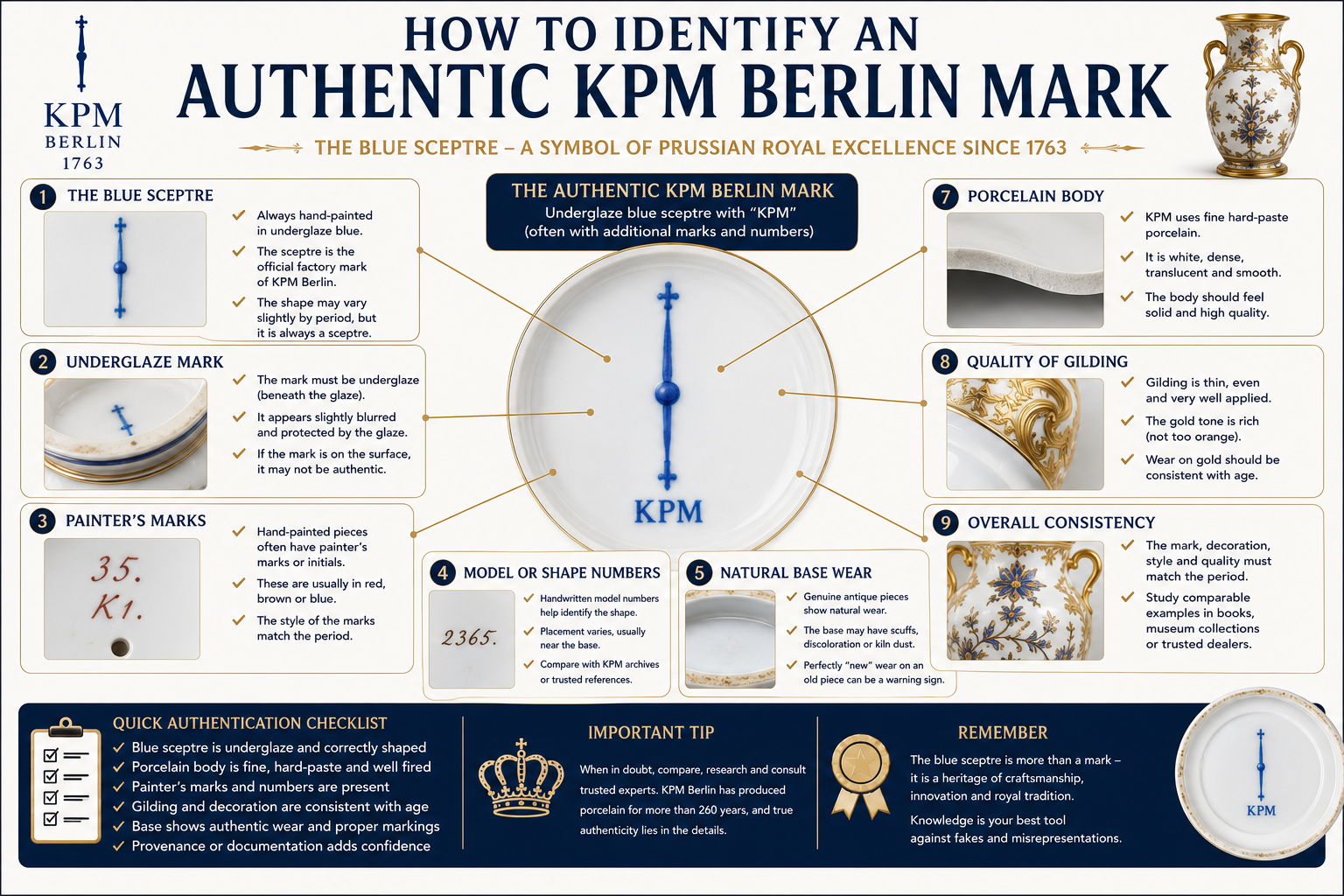
The Famous Blue Sceptre
The most recognizable KPM trademark is the famous blue sceptre. Introduced in 1763, it represents the Brandenburg electoral sceptre and has remained the official symbol of KPM Berlin ever since.
Unlike printed modern logos, traditional KPM marks were applied by hand using cobalt underglaze before glazing and firing. Because they become part of the porcelain itself, genuine underglaze marks cannot simply be scratched away or easily removed.
Early eighteenth-century sceptres often appear slightly irregular because every mark was painted individually. During the nineteenth century the shape gradually became more standardized while preserving its distinctive appearance.
KPM Berlin Marks Through History
Although the blue sceptre remained constant, KPM marks evolved over time as manufacturing techniques became more sophisticated.
Collectors usually divide KPM production into several major periods:
- 1763–1800 — Early hand-painted blue sceptres with slight variations.
- 1800–1870 — More refined underglaze sceptres accompanied by impressed factory numbers.
- Imperial Germany (1871–1918) — Highly standardized marks with painter’s and decorator’s identifiers.
- Weimar Republic (1919–1933) — Continued use of the sceptre together with production codes.
- Modern KPM Berlin — Carefully controlled versions of the historic sceptre combined with contemporary production information.
Understanding these changes allows collectors to estimate the approximate production period before consulting specialist reference books.
Additional Marks Found on Authentic KPM Porcelain
Authentic KPM porcelain often includes several additional marks besides the famous blue sceptre.
- Painter’s initials.
- Decorator’s symbols.
- Model numbers.
- Impressed factory numbers.
- Shape numbers.
- Quality control marks.
- Artist signatures.
- Date-related production codes.
These marks were never intended for customers. Instead, they allowed the manufactory to track production, identify individual craftsmen and maintain strict quality control.
Learning to interpret these additional markings is one of the most valuable skills for serious collectors. Our guide to Porcelain Marks explains how factory marks differ from decorator’s marks, impressed numbers and retailer’s labels.
How to Spot Genuine Hand Painting
One of KPM Berlin’s defining characteristics is its extraordinary hand-painted decoration.
Unlike printed transfers, genuine hand painting displays subtle variations in brushwork, colour intensity and fine details. Under magnification you can often see individual brush strokes that reveal the work of an experienced porcelain painter.
Typical signs of authentic hand-painted decoration include:
- Slight variations between repeated motifs.
- Natural transitions between colours.
- Visible brush strokes under magnification.
- Extremely fine outlining.
- Layered enamel colours.
- Carefully applied raised gilding.
These qualities are particularly evident on KPM’s landscape vases, botanical studies and Art Nouveau masterpieces.
How to Distinguish Antique KPM from Modern Reproductions
Although KPM Berlin still produces exceptional porcelain today, antique collectors should understand the differences between historic production and modern manufacture.
Modern pieces often display perfectly consistent factory marks, flawless glazing and contemporary production numbers. Antique porcelain, by contrast, usually shows subtle signs of age that developed naturally over decades or centuries.
Natural characteristics may include:
- Gentle wear on the foot rim.
- Minor firing imperfections.
- Slight irregularities in hand-painted marks.
- Age-related patina.
- Fine crazing on some decorative enamels.
Collectors should remember that genuine age should never be confused with damage. In fact, natural wear often supports authenticity when combined with correct factory marks and high-quality craftsmanship.
If you would like to learn more about authenticity, reproductions and copies, you may also enjoy our guides to What Is an Original?, What Is a Replica?, What Is a Copy? and How to Identify Fake Antiques.
Is KPM Berlin Porcelain Valuable?
Yes. Authentic antique KPM Berlin porcelain is widely regarded as one of the most valuable categories of European porcelain. Prices vary significantly depending on age, rarity, condition, artist, subject, provenance and market demand.
Large hand-painted exhibition vases, royal presentation pieces and works by celebrated artists such as Theo Schmuz-Baudiß are especially desirable among collectors and frequently achieve impressive auction results.
If you would like to understand how specialists determine the value of porcelain, our guide to How Antique Porcelain Is Valued explains the professional appraisal process in detail.
How to Care for Antique KPM Berlin Porcelain
Because of its artistic and historical importance, antique KPM Berlin porcelain should always be handled with great care. Even small chips, cracks or poorly executed repairs can significantly reduce both collector interest and market value.
When handling valuable porcelain, always support the object from its strongest part rather than lifting it by handles, lids or decorative elements. Large exhibition vases should never be carried by their necks or rims.
For long-term preservation, keep porcelain away from:
- Direct sunlight.
- Rapid temperature changes.
- High humidity.
- Strong vibrations.
- Abrasive cleaning products.
- Dishwashers.
If you own antique porcelain, our guides to How to Store Antique Porcelain and Porcelain Restoration provide detailed advice on preservation and conservation.
Collecting KPM Berlin Porcelain
KPM Berlin has attracted collectors for generations because it combines exceptional craftsmanship with royal history and artistic innovation. While some collectors specialize in complete dinner services, others focus on figurines, Art Nouveau masterpieces, monumental vases or porcelain created by specific artists.
The most desirable pieces often include:
- Early eighteenth-century production.
- Royal presentation pieces.
- Large exhibition vases.
- Hand-painted landscape decoration.
- Art Nouveau masterpieces.
- Works by Theo Schmuz-Baudiß.
- Rare limited editions.
- Museum-quality condition.
Documentation, provenance and original purchase records can also increase collector confidence and may positively influence value.
Common Mistakes When Buying KPM Porcelain
Many beginning collectors focus only on the blue sceptre mark. While the mark is extremely important, it should never be considered in isolation.
Professional appraisers evaluate numerous factors before confirming authenticity, including:
- Porcelain quality.
- Factory marks.
- Painter’s marks.
- Model numbers.
- Decoration quality.
- Wear consistent with age.
- Restoration history.
- Overall craftsmanship.
Collectors should also remember that reproductions sometimes imitate the famous blue sceptre. The overall quality of the porcelain is often far more revealing than the mark itself.
Frequently Asked Questions
What does KPM stand for?
KPM stands for Königliche Porzellan-Manufaktur Berlin, or Royal Porcelain Manufactory Berlin.
When was KPM Berlin founded?
The royal manufactory was officially founded in 1763 by King Frederick the Great of Prussia.
What is the blue sceptre mark?
The blue sceptre is the official trademark of KPM Berlin and has been used continuously since the factory’s foundation in 1763.
Is all KPM porcelain hand painted?
Many of KPM’s finest porcelain pieces are individually hand painted by skilled artists, especially decorative vases, plaques and luxury tableware.
Is antique KPM Berlin porcelain valuable?
Yes. Authentic antique KPM porcelain is highly collectible and exceptional examples regularly achieve strong prices at international auctions.
Related Guides
- What Is German Porcelain?
- What Is Meissen Porcelain?
- What Is Sèvres Porcelain?
- What Is Royal Copenhagen Porcelain?
- How to Identify Wedgwood Porcelain
- Porcelain Marks Explained
- How Antique Porcelain Is Valued
Continue Exploring
- What Is Porcelain?
- Types of Porcelain Explained
- Porcelain Marks Guide
- Guide to Antique Porcelain
- Antique Collectors Glossary
- Stories & Knowledge
Need Help Identifying KPM Berlin Porcelain?
Authenticating antique KPM Berlin porcelain requires careful examination of the factory marks, porcelain body, hand-painted decoration, craftsmanship, condition and historical production techniques. Many valuable pieces have subtle characteristics that are easily overlooked, while reproductions can sometimes imitate the famous blue sceptre mark.
If you own a KPM Berlin vase, tea service, figurine or decorative porcelain and would like a professional opinion, our specialists can help evaluate its authenticity, approximate age and collector value.
Contact The Old Antiquarian for a professional antique porcelain evaluation.
