
What Is Chelsea Porcelain?
Chelsea Porcelain: History, Marks, Dating, Identification & Value
Chelsea porcelain occupies a special place in the history of English ceramics. Produced in London during the eighteenth century, Chelsea became one of the earliest and most prestigious English porcelain manufactories, creating soft-paste porcelain admired for its sculptural modelling, naturalistic flowers, richly painted decoration and increasingly elaborate gilding.
For collectors today, Chelsea is particularly fascinating because its relatively short production history can be divided into several recognisable periods. Changes in porcelain body, decoration, artistic style and especially the famous Chelsea anchor marks provide important clues for identifying and dating surviving pieces.
This guide explores the history of Chelsea porcelain, its principal production periods, factory marks, materials, decoration, important forms, methods of authentication and the factors that can influence collector value.
If you are new to the subject, our
complete guide to antique porcelain
provides a broader introduction to porcelain history, manufacturers, identification and collecting.
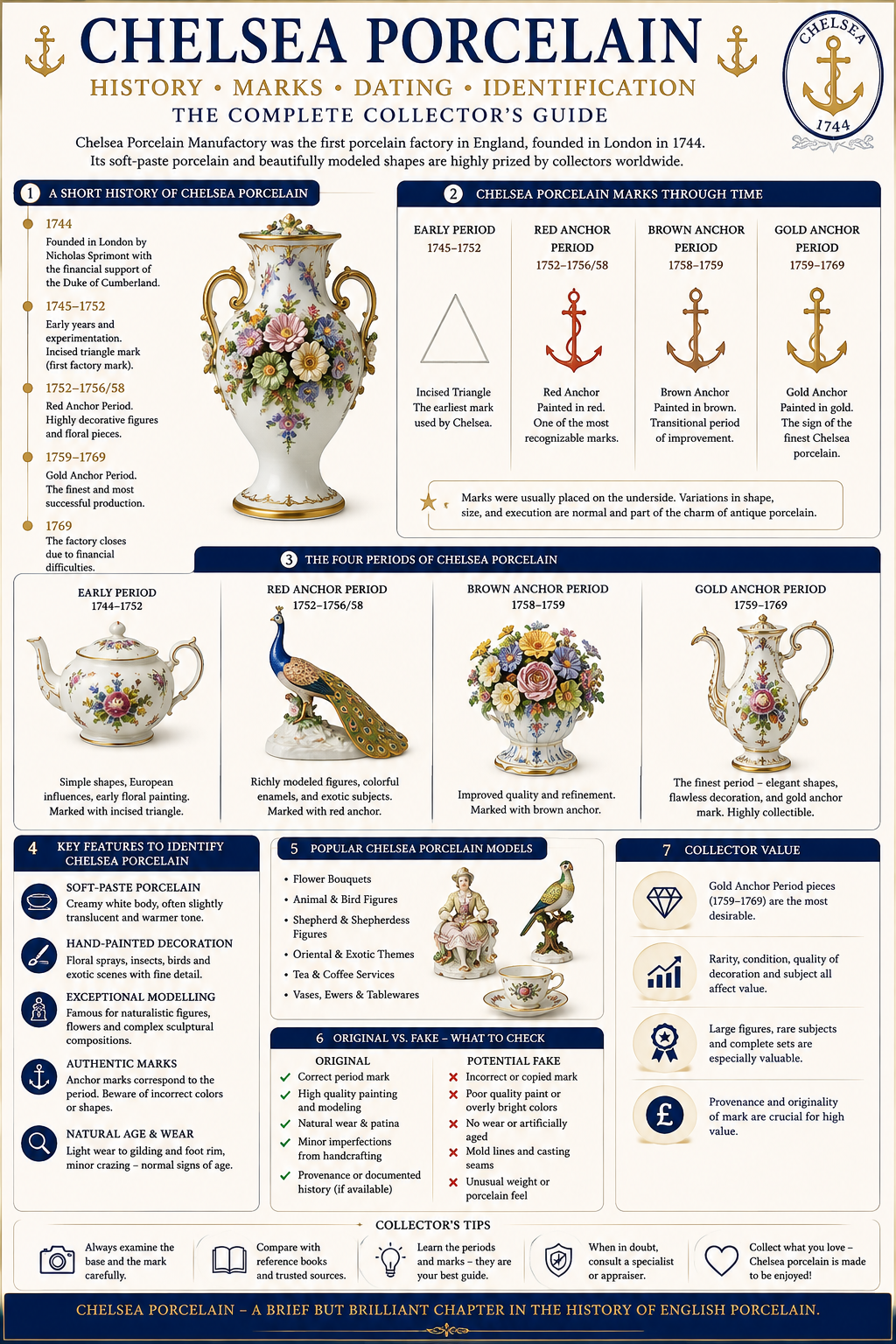
Quick Guide to Chelsea Porcelain
| Feature | Chelsea Porcelain |
|---|---|
| Factory | Chelsea Porcelain Manufactory |
| Location | Chelsea, London, England |
| Main production | Mid-18th century to 1769 |
| Porcelain body | Soft-paste porcelain |
| Famous marks | Triangle and anchor marks, including Red, Brown and Gold Anchor |
| Known for | Figures, animals, flowers, tablewares, vases and luxury decorative porcelain |
| Decoration | Hand-painted enamels, naturalistic flowers, Rococo decoration and gilding |
| Collector interest | High, particularly for rare early and well-documented examples |
What Is Chelsea Porcelain?
Chelsea porcelain refers to the soft-paste porcelain produced by the Chelsea manufactory in London during the eighteenth century. Unlike the hard-paste porcelain perfected at European factories such as Meissen, early English manufacturers experimented with different soft-paste compositions while attempting to produce porcelain with the delicacy, whiteness and translucency admired in imported Asian wares.
Chelsea developed its own distinctive artistic identity. Its finest pieces combine sophisticated modelling with colourful enamel painting, botanical and floral subjects, figures, animals and increasingly luxurious gold decoration.
This combination of technical experimentation and artistic ambition makes Chelsea particularly important when studying the development of
European and English antique porcelain
.
The Beginning of the Chelsea Porcelain Manufactory
Chelsea emerged during the formative period of English porcelain production in the mid-eighteenth century. At the time, porcelain imported from China and Japan was highly fashionable among wealthy European households, while continental factories were developing increasingly sophisticated alternatives.
English manufacturers responded by experimenting with their own porcelain recipes. Chelsea became one of the most artistically ambitious of these early factories.
Its location in London was important. The manufactory operated close to wealthy patrons, merchants and the luxury market, allowing it to produce porcelain intended not simply for everyday use but also for display, fashionable interiors and prestigious dining tables.
Early Chelsea Porcelain
The earliest Chelsea porcelain differs considerably from the highly gilded pieces produced during the factory’s later years. Early wares tend to reveal the experimental character of English soft-paste porcelain and are especially important to collectors studying the origins of the factory.
Among the earliest forms were practical objects such as teawares alongside increasingly ambitious decorative pieces.
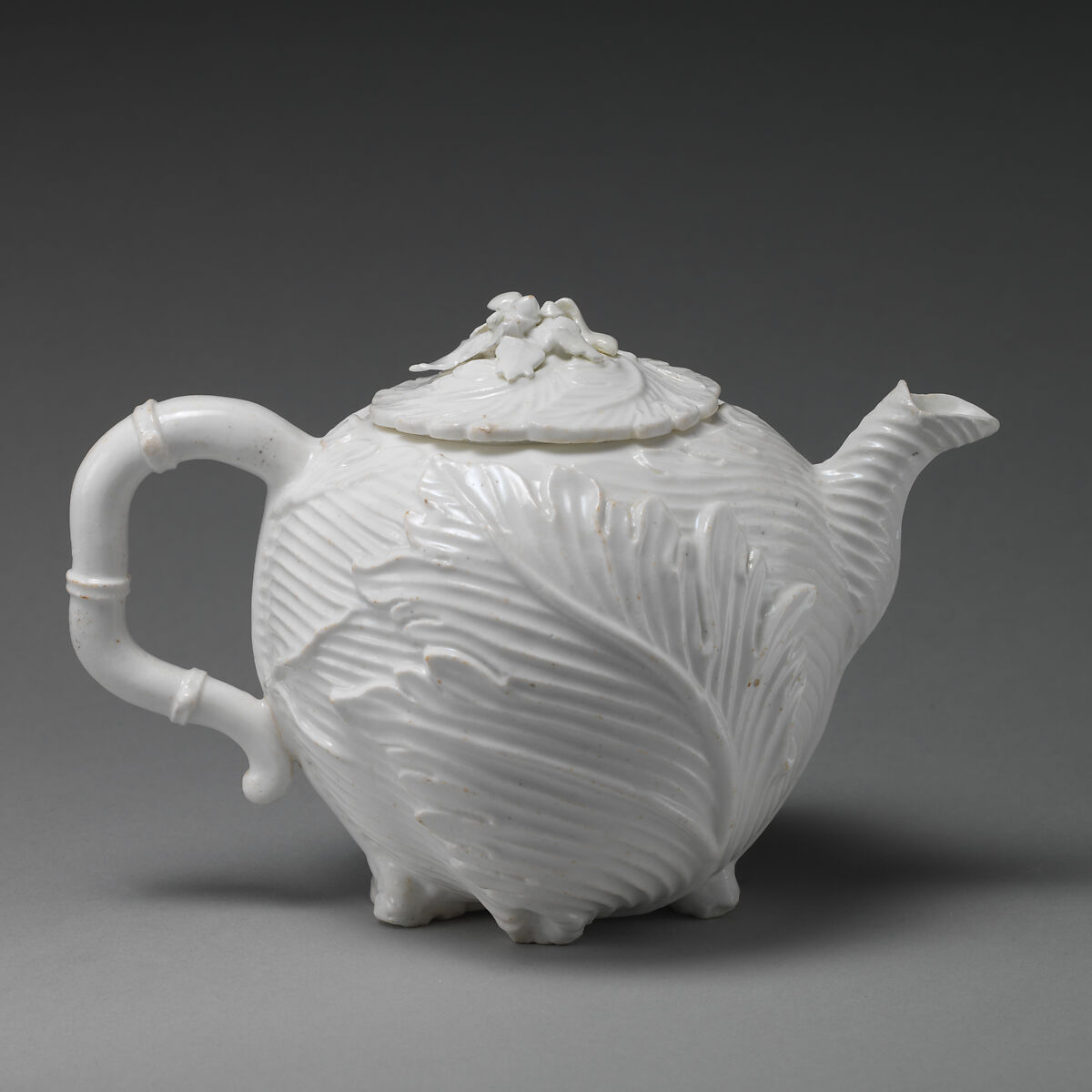
Why Is Chelsea Soft-Paste Porcelain Important?
Understanding the porcelain body is essential when identifying Chelsea. The factory produced soft-paste porcelain, an important European alternative developed before reliable hard-paste production became widespread in England.
Soft-paste porcelain can differ from hard-paste porcelain in its composition, firing behaviour, glaze and physical appearance. Chelsea examples may show a warm white tone, subtle firing irregularities and characteristics associated with eighteenth-century experimental porcelain manufacture.
These features are useful because an apparently convincing Chelsea anchor mark on a porcelain body that is inconsistent with eighteenth-century Chelsea production should immediately encourage closer investigation.
This illustrates one of the most important principles in porcelain collecting: the object must support the mark, rather than the mark being used to justify the object.
The Main Chelsea Porcelain Periods
Collectors traditionally divide Chelsea production into several periods, often named after the type or colour of factory mark associated with them. These classifications are extremely useful, but the dates should be treated as approximate rather than absolute boundaries.
| Period | Approximate Date | Typical Mark | General Character |
|---|---|---|---|
| Early / Triangle Period | c. 1745–1749 | Incised triangle | Experimental early soft-paste porcelain |
| Raised Anchor Period | Late 1740s–early 1750s | Anchor in relief | Development of the factory’s visual identity |
| Red Anchor Period | Early–mid 1750s | Red painted anchor | Naturalistic decoration, figures and increasingly ambitious forms |
| Brown / Transitional Anchor | Late 1750s | Brown anchor | Transitional production and increasingly refined decoration |
| Gold Anchor Period | c. 1759–1769 | Gold painted anchor | Highly elaborate decoration, Rococo forms and rich gilding |
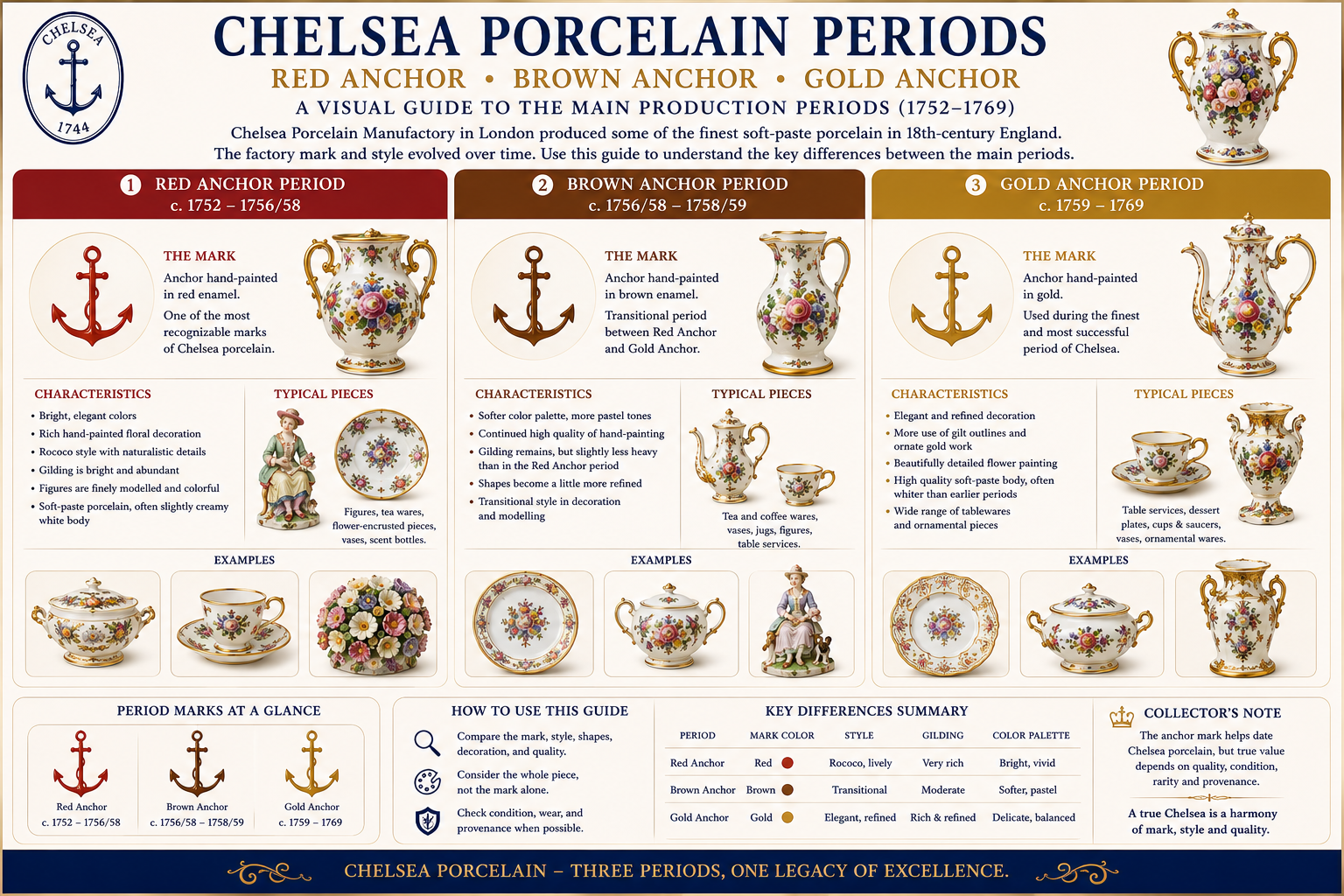
The Red Anchor Period
The Red Anchor Period is one of the best-known phases of Chelsea production. Pieces associated with this period demonstrate the growing technical confidence of the manufactory and its increasing interest in ambitious sculptural and naturalistic porcelain.
Animal figures became particularly striking examples of Chelsea modelling. Their appeal lies not simply in the subject but in the combination of modelling, coloured enamels and the lively Rococo taste of the period.
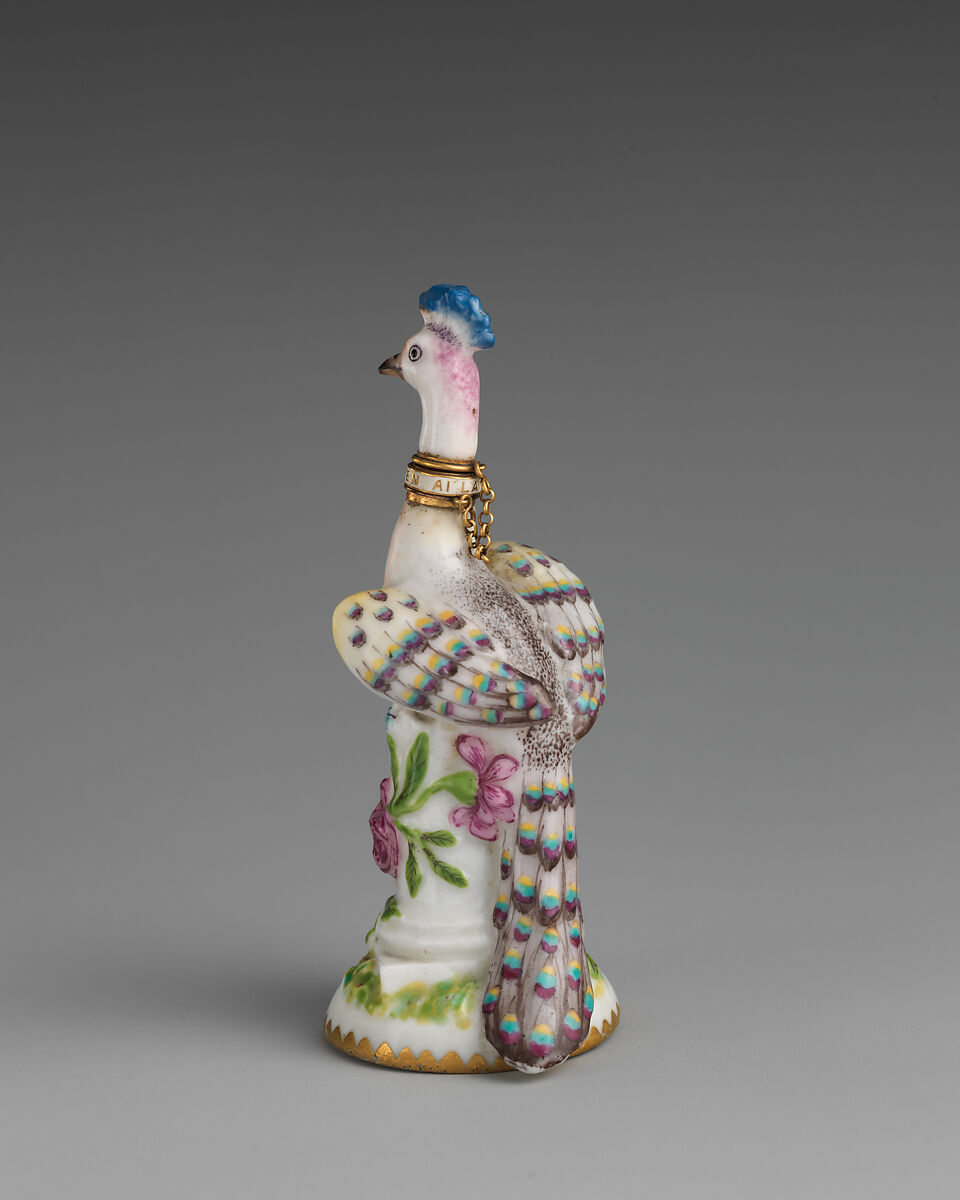
Characteristics Associated with Red Anchor Chelsea
- soft-paste porcelain body;
- hand-painted enamel decoration;
- naturalistic flowers and botanical subjects;
- animal and human figures;
- increasingly elaborate modelling;
- Rococo influence;
- painted red anchor marks on many documented pieces.
However, collectors should never assume that every object carrying a red anchor is automatically eighteenth-century Chelsea. Famous porcelain marks have been copied and imitated, making comparison with the porcelain body, glaze, decoration and workmanship essential.
Our broader guide to
identifying porcelain marks and backstamps
explains why factory marks should always be examined alongside the complete object.
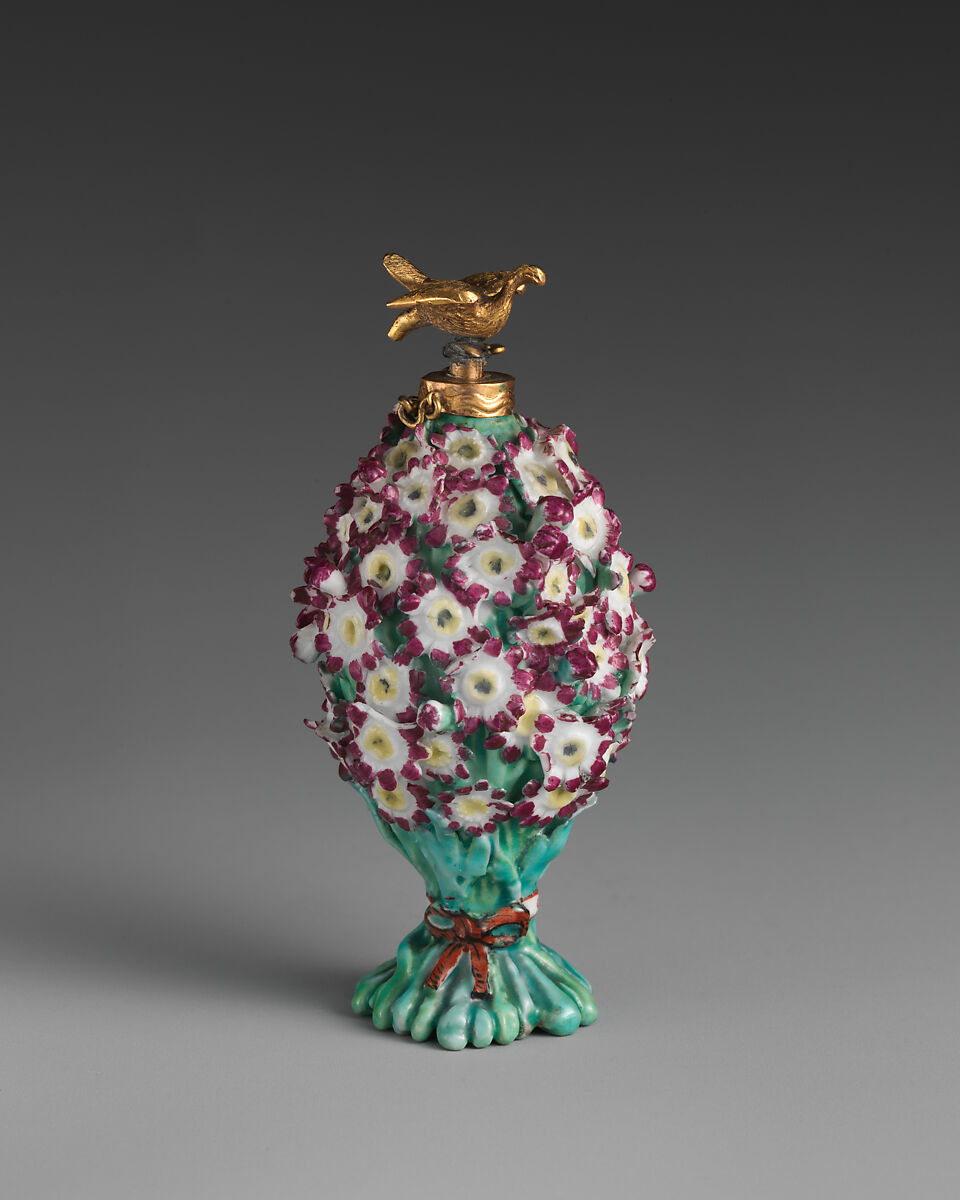
The Brown Anchor and Transitional Period
Between the better-known Red Anchor and Gold Anchor phases lies a short but important transitional stage in the development of Chelsea porcelain. Pieces associated with this period may carry an anchor painted in brown or a brownish enamel, although the classification of Chelsea wares should never depend on mark colour alone.
Artistically, this period helps illustrate the gradual transformation of Chelsea from the lively naturalism of the Red Anchor years toward the increasingly sophisticated and luxurious production associated with the Gold Anchor period.
Decoration became more refined, forms increasingly ambitious and continental influences more visible. Flowers, figures, tablewares and ornamental objects continued to be produced, while gilding assumed a progressively greater role in the overall design.
What Characterises Transitional Chelsea Porcelain?
- continued use of soft-paste porcelain;
- increasingly refined enamel decoration;
- naturalistic flowers and botanical ornament;
- complex sculptural modelling;
- greater use of gilding;
- Rococo-inspired shapes and ornament;
- brown or brownish anchor marks on some pieces;
- a gradual stylistic movement toward the luxury of the Gold Anchor period.
Because the transition between Chelsea periods was not an instantaneous change, collectors should be cautious about assigning an exact production year solely from the colour of an anchor. Style, porcelain body, decoration, form and documented parallels remain important evidence.
The Gold Anchor Period
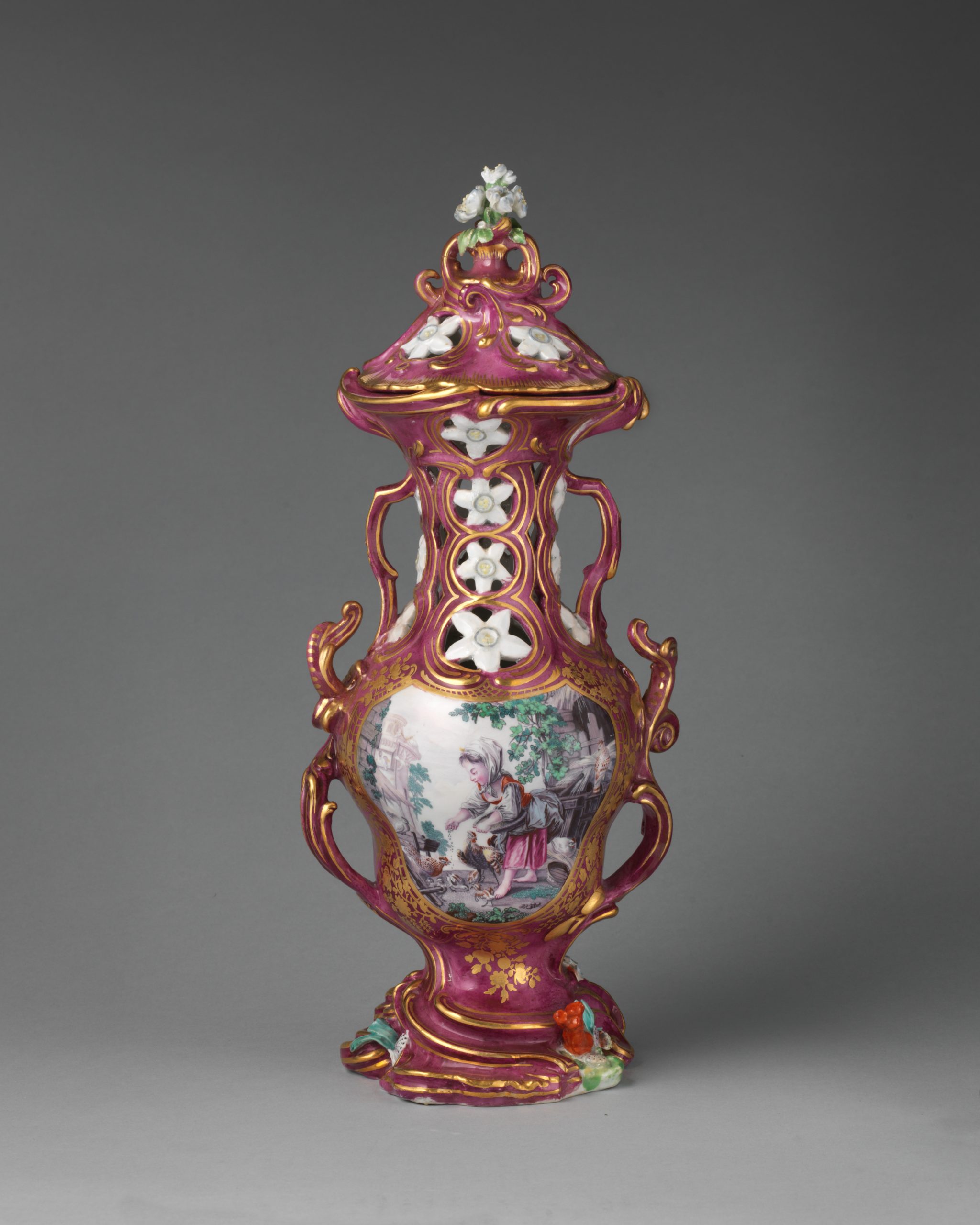
The Gold Anchor Period, generally associated with the final decade of Chelsea’s independent production, represents the manufactory at its most luxurious and technically ambitious.
During these years Chelsea produced elaborate vases, tablewares and ornamental objects decorated with richly coloured enamels and extensive gilding. Sculptural handles, complex Rococo forms and sophisticated painted decoration transformed porcelain into an important element of fashionable eighteenth-century interiors.
The small gold-painted anchor associated with this period has consequently become one of the most recognisable marks in the history of English porcelain.
Characteristics of Gold Anchor Chelsea Porcelain
Although individual objects vary considerably, Gold Anchor Chelsea is often associated with several characteristic features:
- complex and ambitious porcelain forms;
- rich polychrome enamel decoration;
- extensive use of gilding;
- sculptural handles and applied ornament;
- flowers, landscapes, figures and decorative reserves;
- strong Rococo influence;
- increasing influence from fashionable French porcelain;
- gold anchor marks on many surviving examples.
These qualities make Gold Anchor wares among the most immediately impressive Chelsea objects, but they also make them attractive targets for later imitation. Authentication therefore requires much more than finding a gold anchor on the underside.
The Influence of Sèvres on Chelsea Porcelain
One of the most interesting developments during Chelsea’s later years was the growing influence of French luxury porcelain, particularly Sèvres.
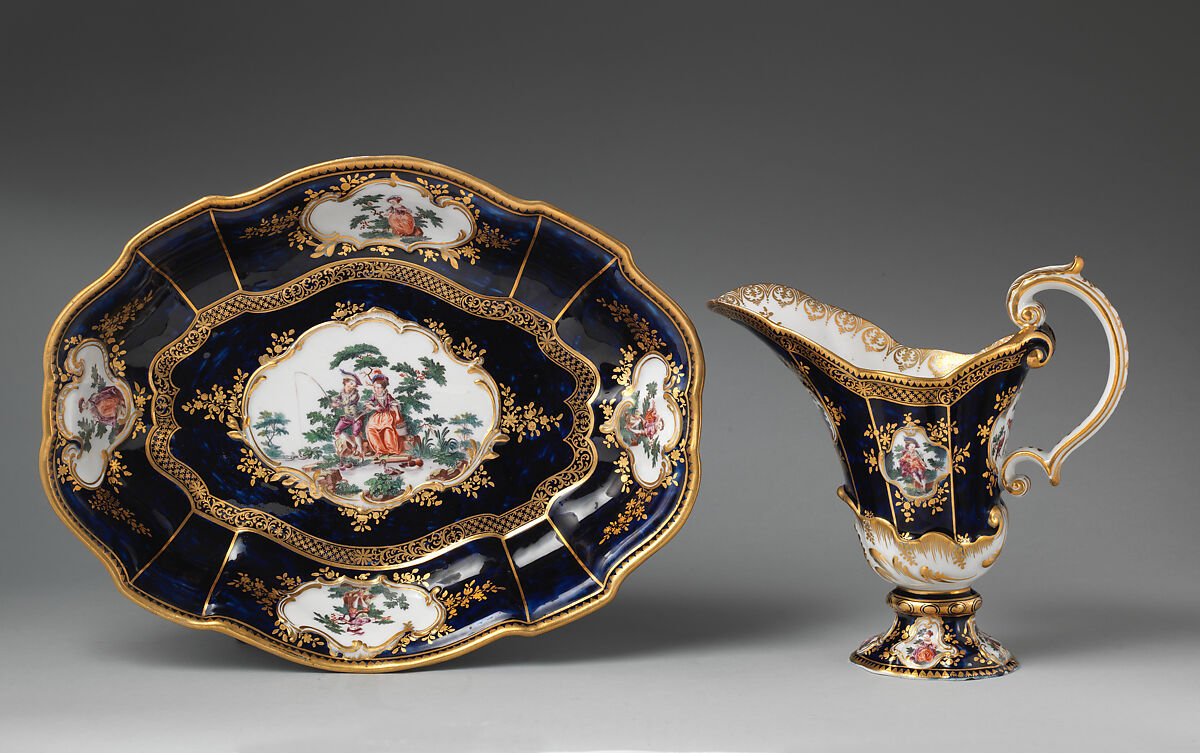
By the late 1750s and 1760s, Sèvres had become one of Europe’s great centres of fashionable porcelain design. Rich ground colours, elaborate gilding, painted reserves and inventive forms influenced porcelain manufacturers far beyond France.
Chelsea responded to this fashionable language while retaining its own English character. Some Gold Anchor pieces therefore display deep coloured grounds, extensive gilding, elaborate handles and richly painted panels that clearly belong to the wider world of European Rococo luxury.
Collectors interested in comparing these traditions can explore our detailed
guide to identifying Sèvres porcelain
.
Chelsea Vases and Luxury Decorative Porcelain
Large Chelsea vases demonstrate how far the factory had developed from its experimental beginnings. These were not merely containers intended for practical use. They were luxury decorative objects designed to command attention in sophisticated interiors.
The finest examples combine several demanding techniques within a single object: complex moulding, enamel painting, applied decoration, gilding and carefully balanced composition.
When examining a Chelsea vase, collectors should therefore look beyond the mark and consider whether the quality of the entire object corresponds with the level of craftsmanship expected from eighteenth-century Chelsea production.
What Did Chelsea Produce?
Chelsea’s production was remarkably varied. The factory made both functional and highly decorative porcelain, and many surviving pieces reveal the close relationship between eighteenth-century dining culture, interior decoration and collecting.
| Type of Chelsea Porcelain | Typical Characteristics | What Collectors Examine |
|---|---|---|
| Figures | Human figures, allegorical subjects and groups | Modelling, enamels, base, mark and restoration |
| Animals and Birds | Naturalistic and decorative sculptural models | Anatomy, modelling quality, colour and period |
| Vases | Rococo forms, painted reserves and rich gilding | Shape, handles, decoration, gilding and anchor mark |
| Tea and Coffee Wares | Cups, saucers, teapots and related tablewares | Body, glaze, decoration, wear and matching pieces |
| Plates and Dishes | Floral, botanical and ornamental decoration | Pattern, enamel quality, rim, foot and mark |
| Flowers | Individually modelled or assembled porcelain flowers | Petal modelling, firing flaws, repairs and losses |
| Perfume and Ornamental Objects | Small luxury objects and elaborate decorative forms | Completeness, rarity, modelling and provenance |
Chelsea Porcelain Figures
Porcelain sculpture was one of Chelsea’s great strengths. Figures could represent fashionable people, literary or theatrical subjects, allegories, pastoral scenes, animals and other themes suited to eighteenth-century taste.
The modeller Joseph Willems played an important role in the development of Chelsea porcelain sculpture during the middle decades of the eighteenth century. The quality of modelling seen in Chelsea figures helped establish a recognisable sculptural character for the factory.
For collectors, figures require particularly careful examination because projecting fingers, flowers, leaves, hats, staffs and other delicate elements are easily broken. Old restoration can be skilful enough to escape casual inspection.
Chelsea Porcelain Flowers
Naturalistic flowers are among the most charming features of Chelsea porcelain. They may appear as painted decoration, applied ornament or fully modelled porcelain flowers assembled into elaborate arrangements.
These delicate components also create one of the greatest condition challenges for collectors. Petals and leaves can be chipped, replaced or restored, and later overpainting may disguise damage.
When evaluating such pieces, use magnification and good neutral lighting to inspect edges, joins and differences in colour or surface texture.
Chelsea Porcelain Marks
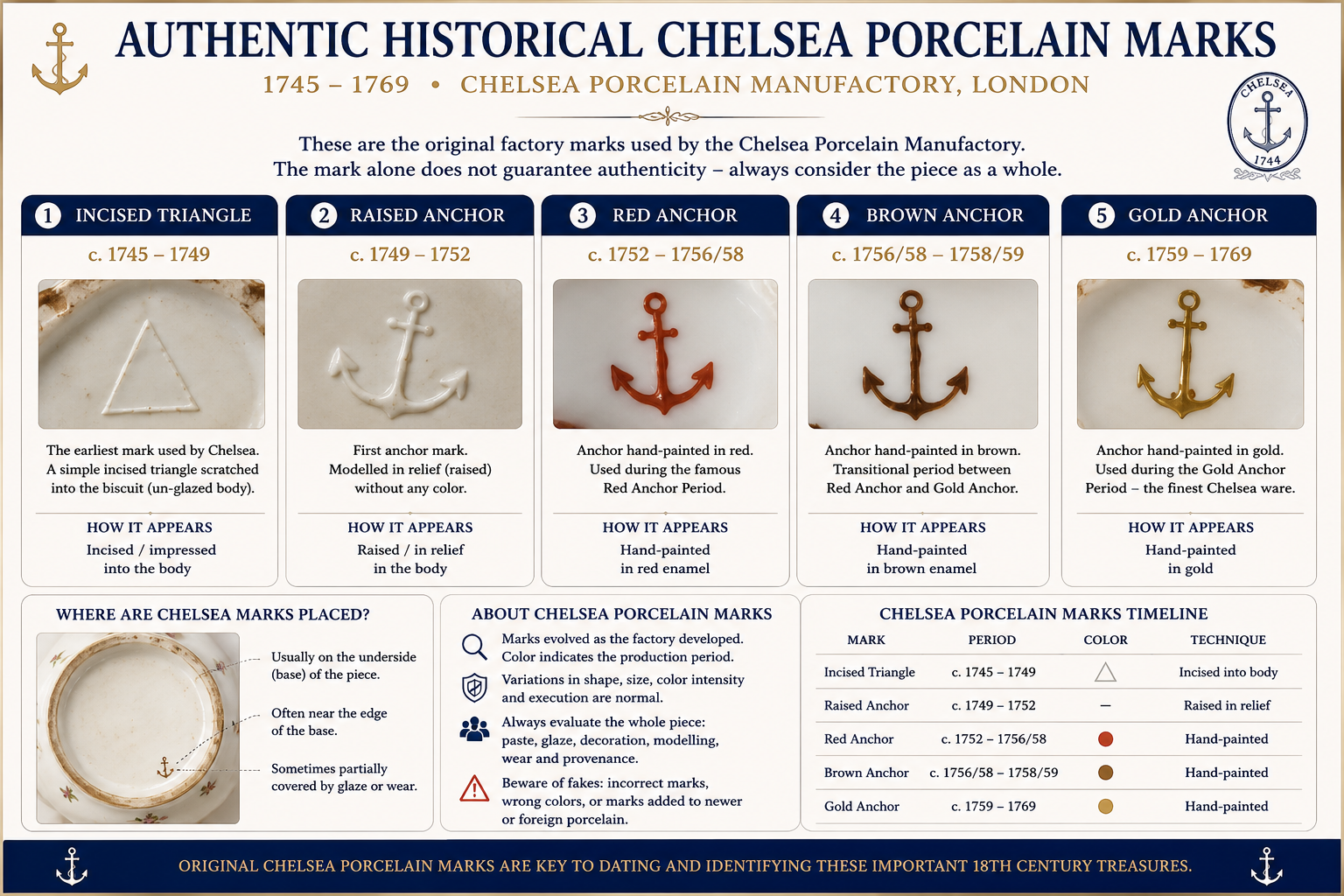
Factory marks are among the most frequently searched features of Chelsea porcelain. They are useful because the evolution of Chelsea marks broadly corresponds with important stages in the factory’s history.
The best-known sequence includes the incised triangle, raised anchor, red anchor, brown or transitional anchor and gold anchor. However, variations occur, and not every authentic Chelsea object is marked in exactly the same way.
For that reason, a factory mark should be regarded as evidence rather than automatic proof of authenticity.
Chelsea Porcelain Marks at a Glance
| Mark | Approximate Period | Appearance | Identification Note |
|---|---|---|---|
| Incised Triangle | c. 1745–1749 | Triangle incised into the body | Associated with some of the earliest Chelsea production |
| Raised Anchor | c. 1749–1752 | Anchor formed in relief | Early development of the anchor symbol |
| Red Anchor | c. 1752–1756/58 | Anchor painted in red enamel | Associated with an important period of figures and naturalistic decoration |
| Brown Anchor | c. 1756/58–1758/59 | Anchor painted in brown or brownish enamel | Often associated with transitional production |
| Gold Anchor | c. 1759–1769 | Anchor painted in gold | Associated with Chelsea’s increasingly luxurious late production |
Where Are Chelsea Porcelain Marks Found?
Chelsea marks are normally sought on the underside or base of an object. Depending on the form, the mark may appear near the centre, closer to the foot rim or in another discreet position.
Age, firing, glaze, wear and accumulated surface deposits can make some marks less obvious. Conversely, a mark that appears unnaturally perfect should not automatically be interpreted as evidence of authenticity.
When examining a mark, compare:
- its shape;
- colour;
- method of application;
- position;
- relationship to the glaze;
- expected production period;
- and whether the rest of the object is stylistically and technically consistent with that period.
Can Chelsea Porcelain Be Dated by Its Mark?
A Chelsea mark can provide a useful dating range, but usually not an exact year of manufacture.
For example, a convincing Gold Anchor may suggest the later Chelsea period, but specialists still compare the object’s form, decoration, porcelain body and construction with documented examples from the same era.
This method is important throughout the study of antique ceramics. Our
complete guide to dating antique porcelain
explains how marks, shapes, decoration, manufacturing techniques and other evidence can be combined when estimating the age of a piece.
Never Authenticate Chelsea Porcelain by the Anchor Mark Alone
This is perhaps the most important rule in the entire guide.
A Chelsea anchor is not, by itself, proof that a piece was made at Chelsea in the eighteenth century.
Marks associated with prestigious factories can be copied, added later or reproduced on objects that have little connection with the original manufactory.
A convincing assessment therefore asks a much broader question:
Does the entire object make sense for the period indicated by the mark?
The answer requires examination of the porcelain body, glaze, modelling, decoration, gilding, construction, wear, condition and provenance.
How to Identify Authentic Chelsea Porcelain
Identifying authentic Chelsea porcelain requires much more than finding an anchor mark on the base. Genuine eighteenth-century Chelsea pieces should be assessed as complete objects, with the porcelain body, glaze, modelling, decoration, gilding, construction, marks, condition and signs of age considered together.
This is especially important because famous porcelain marks have been copied and imitated. A convincing-looking Red Anchor or Gold Anchor can therefore support an attribution, but it should never be treated as proof on its own.
Collectors who are still learning the basic principles may also find our
guide to identifying antique porcelain
useful when comparing body, glaze, decoration, marks and signs of age.
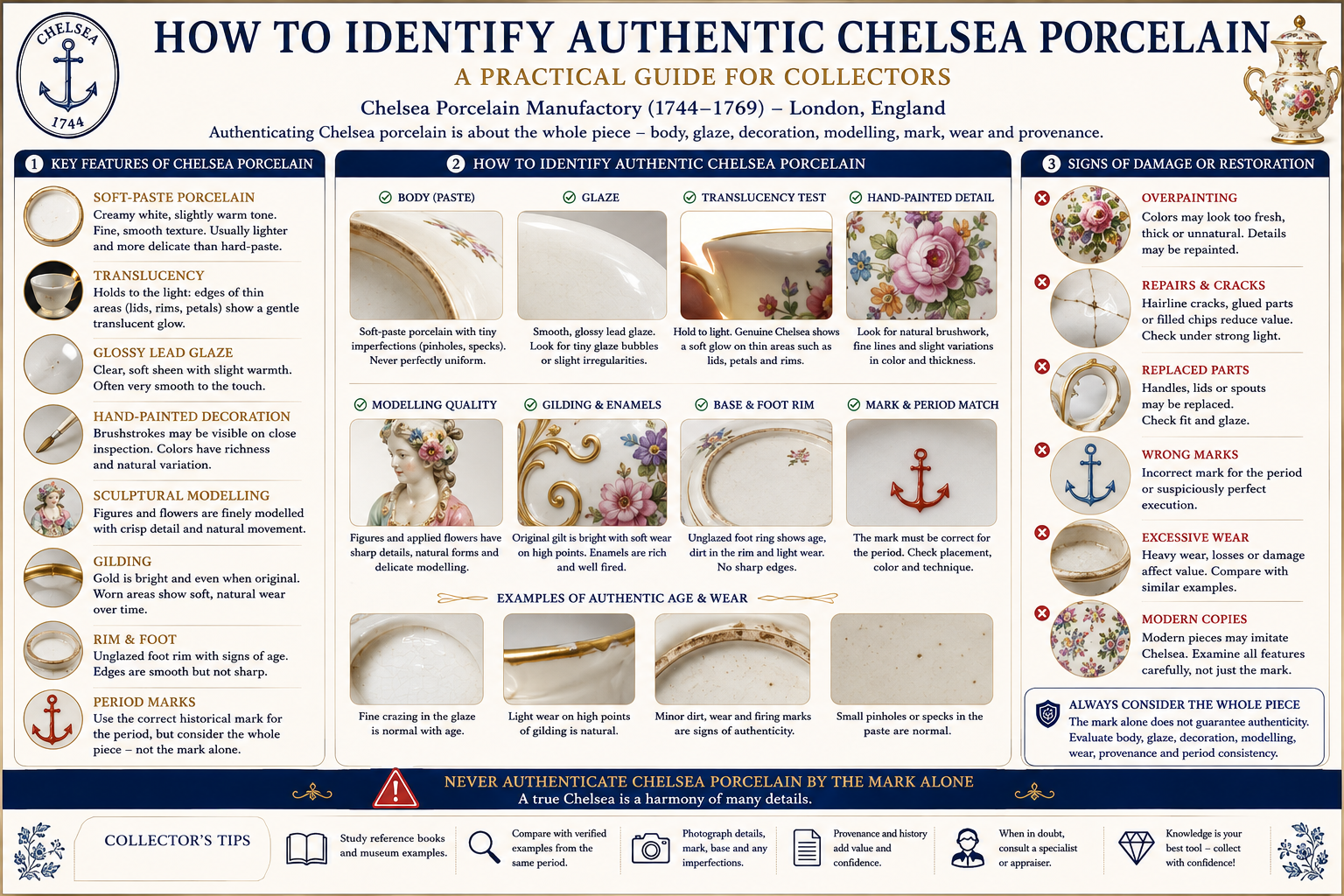
1. Examine the Porcelain Body
Chelsea manufactured soft-paste porcelain, and the nature of the ceramic body is therefore one of the first characteristics worth examining.
Do not expect every genuine Chelsea piece to have precisely the same appearance. Porcelain recipes and manufacturing methods developed during the factory’s history, and firing conditions could also produce variation.
Nevertheless, an object whose body appears fundamentally inconsistent with eighteenth-century English soft-paste porcelain deserves further investigation, regardless of the mark underneath it.
2. Look at the Glaze
The glaze can provide useful supporting evidence when examining antique Chelsea porcelain. Rather than judging it by a single characteristic, study how the glaze interacts with the porcelain body, moulded details, foot rim and painted decoration.
Under good light, examine the surface for:
- variations associated with firing;
- areas where glaze gathers around modelling;
- surface wear consistent with handling;
- differences between original surfaces and restored areas;
- unusual modern-looking coatings or excessive artificial ageing.
No individual glaze characteristic should be used as a stand-alone authentication test. It becomes useful when considered together with the rest of the object.
3. Study the Modelling and Shape
Chelsea became renowned for inventive forms, particularly figures, animals, flowers and elaborate Rococo vessels. Quality of modelling can therefore be highly informative.
Look closely at facial features, fingers, feathers, leaves, petals, handles, scrollwork and other small details. On accomplished pieces these elements should form a coherent design rather than appearing crude or mechanically lifeless.
The shape itself can also help with dating. If a form can be matched to documented Chelsea examples in museum collections, catalogues or established reference literature, the comparison becomes considerably more useful than examining the mark in isolation.
4. Examine the Hand-Painted Decoration
Many Chelsea objects were decorated with coloured enamels, including flowers, botanical subjects, figures, landscapes, birds and ornamental motifs.
Under magnification, hand-painted decoration may reveal subtle changes in brushwork, line thickness and colour application. These natural variations should not be confused with poor workmanship; they are part of the evidence that can help distinguish painted decoration from later mechanically applied decoration.
Also ask whether the decorative style is appropriate for the proposed period. A genuine-looking mark combined with decoration that belongs to a much later aesthetic tradition is a warning sign.
5. Inspect the Gilding
Gilding became particularly important during Chelsea’s later production, reaching an especially luxurious level during the Gold Anchor Period.
The finest later Chelsea pieces can display extensive gold ornament combined with coloured grounds, painted reserves and elaborate Rococo forms.
When examining gilding, consider:
- the quality and precision of application;
- whether the gold belongs naturally to the design;
- wear on exposed areas;
- differences between original gilding and later retouching;
- whether the style corresponds to the supposed production period.
Perfectly preserved gilding is not automatically suspicious, just as worn gilding is not automatically old. Condition and provenance must always be considered.
6. Examine the Chelsea Factory Mark
Once the body, glaze and decoration have been considered, examine the factory mark carefully.
Depending on the proposed period, collectors may encounter an incised triangle, raised anchor or an anchor painted in red, brown or gold.
Compare the mark with documented examples and ask several questions:
- Is the type of mark appropriate for the proposed date?
- Does its method of application make sense?
- Is its position plausible for the object?
- Does the mark appear naturally integrated with the surface?
- Do the body, shape and decoration agree with the same period?
For a broader explanation of this process, see our
complete guide to porcelain marks and backstamps
.
7. Inspect the Base and Foot Rim
The underside of a porcelain object can reveal information that is less obvious from its decorated surfaces.
Study the foot rim, unglazed areas, firing characteristics, accumulated wear and the relationship between the mark and surrounding surface.
A base can also reveal evidence of restoration, grinding, replaced components or deliberate alteration. This is why experienced collectors routinely turn an object over before reaching conclusions about attribution or age.
8. Look for Natural Wear – But Do Not Rely on Wear Alone
An eighteenth-century porcelain object may show evidence of use and handling, but age does not produce one universal pattern of wear.
A display vase that spent generations in a cabinet may survive in remarkably good condition, while a frequently used plate or cup can show much greater abrasion.
Potentially meaningful areas include:
- contact points on the foot rim;
- raised gilded decoration;
- handles and projecting elements;
- edges and rims;
- areas repeatedly touched during handling.
Artificial ageing can also be created. Dirt, staining or worn gilding should therefore never substitute for a complete examination.
9. Check Carefully for Restoration
Restoration is particularly important with Chelsea figures, flowers and complex Rococo forms because projecting porcelain elements are vulnerable to damage.
Common areas to inspect include fingers, leaves, petals, handles, finials, stems, animal extremities and other projecting details.
Possible evidence of restoration may include:
- changes in surface texture;
- differences in gloss;
- subtle colour mismatches;
- overpainting around repaired areas;
- visible joins;
- reconstructed fingers, flowers or leaves;
- replacement components;
- filled chips or cracks.
Professional restoration can be extremely difficult to detect with the naked eye, so valuable pieces may require specialist examination.
10. Compare the Piece with Documented Museum Examples
One of the strongest methods of studying Chelsea porcelain is comparison with well-documented examples held by major museum collections.
Do not compare only the mark. Compare the complete object:
- shape;
- proportions;
- porcelain body;
- modelling;
- decoration;
- colour palette;
- gilding;
- base construction;
- and mark.
A close visual resemblance does not prove that two pieces share the same origin, but documented comparisons can reveal whether an attribution is historically and stylistically plausible.
Original Chelsea Porcelain vs Later Reproduction
Because Chelsea has been collected for generations, later objects may carry Chelsea-style anchor marks or imitate eighteenth-century designs. The existence of an anchor therefore answers only one small part of the authentication question.
| Feature | Potentially Consistent with Period Chelsea | Reason for Further Investigation |
|---|---|---|
| Porcelain body | Consistent with historic soft-paste production | Body or manufacturing characteristics inconsistent with the proposed period |
| Mark | Appropriate type and application for the period | Mark inconsistent with body, shape or decoration |
| Decoration | Period-appropriate enamel painting and ornament | Later decorative technique or historically inconsistent style |
| Gilding | Appropriate to design and production period | Modern-looking application or inappropriate style |
| Modelling | Form and details comparable with documented examples | Crude or historically inconsistent modelling |
| Wear | Plausible wear related to use and handling | Artificially uniform or deliberately created ageing |
| Restoration | Clearly understood and disclosed repairs | Hidden reconstruction, overpainting or replacement parts |
| Provenance | Documented ownership or established collection history | Unsupported stories or unverifiable attribution |
Common Mistakes When Identifying Chelsea Porcelain
Several mistakes repeatedly lead collectors toward incorrect conclusions.
Assuming an Anchor Mark Means Chelsea
This is the most important mistake to avoid. Chelsea-style marks have been imitated. Always examine the entire object.
Trying to Date a Piece from Mark Colour Alone
Red, brown and gold anchors are useful chronological clues, but period boundaries are approximate and variations exist.
Ignoring Restoration
A genuine eighteenth-century Chelsea object can still contain extensive later restoration. Authenticity and condition are separate questions.
Assuming Every Old-Looking Piece Is 18th Century
Surface dirt, staining and worn decoration can occur on later objects and can also be artificially encouraged.
Judging Quality from One Feature
Neither translucency, weight, glaze, gilding nor a factory mark can authenticate Chelsea independently. The evidence must agree as a whole.
A Practical Chelsea Porcelain Authentication Checklist
| 1. | Identify the porcelain body | Is it technically plausible for Chelsea soft-paste porcelain? |
| 2. | Study the glaze | Does the surface appear consistent with the object and period? |
| 3. | Examine the modelling | Are the shape and details comparable with documented Chelsea forms? |
| 4. | Study the decoration | Are the enamels, motifs and style period-appropriate? |
| 5. | Inspect the gilding | Does it correspond with the proposed production period? |
| 6. | Check the mark | Is the mark appropriate in type, colour and application? |
| 7. | Inspect the base | Look at the foot rim, unglazed areas and construction. |
| 8. | Check condition | Look for chips, cracks, losses, repairs and overpainting. |
| 9. | Research provenance | Does the ownership history provide useful supporting evidence? |
| 10. | Compare documented examples | Use museum collections and reliable specialist references. |
Why the Whole Object Matters More Than the Mark
The strongest Chelsea attribution is not based on one convincing detail. It emerges when multiple independent characteristics point toward the same conclusion.
A period-appropriate anchor mark becomes far more meaningful when it appears on an object whose soft-paste body, glaze, form, modelling, decoration and gilding are also consistent with documented Chelsea production.
Conversely, when the mark suggests one period but the body, decoration or manufacturing technique suggests another, the discrepancy deserves investigation.
This principle applies far beyond Chelsea and is fundamental to the
identification and authentication of antique porcelain
in general.
How to Date Chelsea Porcelain
Dating Chelsea porcelain is usually a process of combining several types of evidence rather than searching for a single date code. Factory marks are extremely useful, but they should be interpreted alongside the porcelain body, shape, modelling, decoration, gilding and known history of individual designs.
The earliest Chelsea pieces belong to the experimental years of the 1740s, while later production became progressively more elaborate. By comparing these changes with documented museum examples, collectors can often place an object within a reasonably narrow historical period.
For a broader explanation of these techniques, see our
guide to dating antique porcelain
.
Chelsea Porcelain Dating at a Glance
| Approximate Period | Mark or Association | Features to Examine |
|---|---|---|
| c. 1745–1749 | Triangle Period | Early soft-paste body, incised triangle on marked examples, naturalistic modelling and experimental early production |
| c. 1749–early 1750s | Raised Anchor | Development of the anchor symbol, evolving body and glaze, increasingly mature forms |
| Early to mid-1750s | Red Anchor | Figures, animals, botanical decoration, coloured enamels and increasingly ambitious modelling |
| Late 1750s | Brown / Transitional Anchor | Refined decoration, transitional styles and increasing use of gilding |
| c. 1759–1769 | Gold Anchor | Rich gilding, elaborate Rococo forms, painted reserves and strong French influence |
| 1769–1784 | Chelsea-Derby | Continuation and adaptation of Chelsea models under Derby ownership |
How to Date Unmarked Chelsea Porcelain
An unmarked piece should not automatically be dismissed. Some authentic Chelsea porcelain survives without a visible factory mark, and attribution may instead depend on a combination of technical and stylistic evidence.
When examining an unmarked object, compare:
- the porcelain body and glaze;
- the shape and proportions;
- the quality of modelling;
- the colour palette and enamel decoration;
- the treatment of flowers, figures and animals;
- the form of the base and foot rim;
- the use and style of gilding;
- known Chelsea models and moulds;
- documented museum examples;
- and any reliable provenance.
This is particularly important because absence of a mark and authenticity are two separate questions. A documented comparison with a recognised Chelsea model can sometimes provide stronger evidence than an isolated anchor mark.
The End of Independent Chelsea Production
By the 1760s, Chelsea was facing a changing market. Nicholas Sprimont’s health declined, production decreased and the factory’s elaborate Rococo style was beginning to compete with changing tastes.
In 1769, the Chelsea factory’s stock and equipment were offered for sale. The business subsequently came under the control of William Duesbury, the important porcelain entrepreneur associated with Derby.
This did not mean that the Chelsea tradition disappeared overnight. Models, moulds, patterns and skilled workers continued to influence production after the change of ownership.
What Is Chelsea-Derby Porcelain?
The term Chelsea-Derby is generally used for the period following the acquisition of Chelsea by William Duesbury, when the histories of the Chelsea and Derby manufactories became closely connected.
Museum collections commonly identify the Chelsea-Derby period as 1769–1784. During these years, Chelsea models, moulds and decorative traditions continued while Derby’s influence became increasingly important.
This transitional history matters greatly to collectors because an object inspired by Chelsea or produced from a Chelsea-derived model is not necessarily an example of the earlier independent Chelsea factory.
Correctly distinguishing Chelsea from Chelsea-Derby can therefore be important for attribution, dating and valuation.
Chelsea vs Chelsea-Derby
| Feature | Independent Chelsea | Chelsea-Derby |
|---|---|---|
| Period | Primarily c. 1740s–1769 | 1769–1784 |
| Historical context | Chelsea manufactory under its original development | Production after Chelsea came under William Duesbury |
| Design heritage | Original Chelsea development and models | Continuation and adaptation of Chelsea models alongside Derby production |
| Collector question | Which Chelsea period does the object belong to? | Is the piece later Chelsea-Derby rather than earlier Chelsea? |
| Valuation | Depends heavily on period, rarity, model, quality and condition | Must be valued within its own Chelsea-Derby context |
Is Chelsea Porcelain Rare?
Chelsea porcelain can be scarce, but not every Chelsea object has the same degree of rarity. Rarity depends on the particular model, production period, decoration, survival rate, completeness and number of comparable examples known.
An early experimental object, unusual figure, rare animal model or important Gold Anchor vase may attract very different collector interest from a more frequently encountered form.
Rarity should therefore be assessed at the level of the specific object, not simply from the Chelsea name.
What Makes Chelsea Porcelain Valuable?
The value of antique Chelsea porcelain is determined by a combination of factors. Age is important, but it is only one part of the equation.
| Value Factor | Why It Matters |
|---|---|
| Authenticity | A secure attribution to Chelsea is fundamental to collector value. |
| Production Period | Early, Red Anchor and important Gold Anchor objects may attract different levels of demand. |
| Rarity | Rare models, unusual decoration and scarce surviving forms can command greater interest. |
| Model | Important figures, animals, vases and recognised designs may be especially desirable. |
| Decoration | Fine enamel painting, botanical subjects and sophisticated decorative schemes can add significance. |
| Gilding | High-quality and well-preserved period gilding can contribute to desirability. |
| Condition | Chips, cracks, losses and restoration can materially affect market value. |
| Provenance | Documented ownership and important collections can strengthen confidence and historical interest. |
| Pair or Set | Original matching pairs or complete groups may be significantly more desirable than isolated components. |
| Market Demand | Collector taste and demand for a particular category influence realised prices. |
Which Chelsea Porcelain Is Most Collectible?
Collectors may be particularly interested in pieces that combine rarity, artistic quality and a strong connection to important phases of Chelsea production.
Categories that can attract significant attention include:
- early Triangle Period porcelain;
- rare Red Anchor figures and animals;
- important sculptural models;
- naturalistic botanical and floral porcelain;
- elaborate Gold Anchor vases;
- exceptionally well-painted pieces;
- rare matching pairs;
- objects with distinguished provenance;
- and well-documented examples associated with recognised models or decorators.
However, no category should be assumed to be valuable automatically. Two apparently similar Chelsea pieces can differ substantially in authenticity, condition, rarity and market desirability.
How Condition Affects Chelsea Porcelain Value
Condition is particularly important with eighteenth-century Chelsea because many objects have delicate projecting elements.
Flowers, leaves, fingers, feathers, handles, finials and other sculptural details are vulnerable to chips and breakage. Consequently, apparently minor differences in condition can matter significantly when two comparable objects are evaluated.
Condition Issues to Look For
- hairline cracks;
- rim chips;
- missing petals or leaves;
- broken or replaced fingers;
- restored handles;
- reconstructed finials;
- overpainting;
- regilding;
- staining;
- and extensive structural restoration.
Restoration does not necessarily make an important object undesirable. Rare eighteenth-century porcelain often survives with some intervention. What matters is the extent, quality and transparency of the restoration, together with the rarity of the object itself.
Does Restoration Destroy the Value of Chelsea Porcelain?
Not necessarily.
A rare and historically important Chelsea object can remain collectible even when professionally restored. On the other hand, extensive reconstruction or undisclosed restoration may substantially affect both desirability and value.
The impact depends on questions such as:
- How rare is the model?
- How much of the original object survives?
- Where is the restoration located?
- Has decoration been overpainted?
- Have missing elements been reconstructed?
- Is the repair reversible or invasive?
- Has the restoration been clearly disclosed?
For this reason, condition should always be described precisely rather than reducing an object to labels such as “perfect” or “damaged”.
Why Provenance Matters
Provenance is the documented history of ownership of an object. For important Chelsea porcelain, reliable provenance can strengthen an attribution and add historical context.
Useful provenance may include:
- old collection labels;
- historic auction records;
- dealer documentation;
- collection inventories;
- published catalogues;
- museum exhibition history;
- and photographs showing the object in an earlier collection.
A family story can be interesting, but it should not be treated as documentary evidence unless supporting records survive.
How Much Is Chelsea Porcelain Worth?
There is no reliable single price for “Chelsea porcelain”. The market ranges from objects with condition problems or uncertain attribution to rare, museum-quality pieces with exceptional provenance.
A responsible valuation therefore begins by identifying exactly what the object is before attempting to assign a monetary figure.
The normal sequence should be:
- establish likely authenticity;
- identify the production period;
- identify the model or form;
- assess decoration and artistic quality;
- document condition and restoration;
- research rarity and provenance;
- compare genuinely similar market examples;
- and only then estimate current market value.
This distinction is important because an asking price, auction estimate and realised sale price are not the same thing.
Can a Chelsea Porcelain Mark Make a Piece Valuable?
The mark alone does not create value.
A genuine period mark can help support identification and dating, but the collector is ultimately buying the object: its craftsmanship, rarity, condition, historical significance and aesthetic quality.
A gold anchor on an ordinary later imitation does not transform it into eighteenth-century Chelsea, just as an unmarked object should not automatically be rejected when strong evidence supports a Chelsea attribution.
This is why understanding
porcelain marks and makers’ backstamps
is most useful when combined with knowledge of porcelain manufacture and decorative history.
Why Chelsea Porcelain Still Matters to Collectors
Chelsea’s importance extends beyond rarity or auction value. The manufactory represents one of the defining chapters in the development of English porcelain.
Its history traces the transformation of British porcelain from experimental soft-paste production in the 1740s to increasingly sophisticated sculptural and decorative wares, culminating in the richly gilded Rococo objects of the Gold Anchor period.
The transition into Chelsea-Derby after 1769 also demonstrates how designs, moulds, craftsmen and commercial networks could move between important eighteenth-century factories.
For collectors, this makes Chelsea an unusually rewarding field of study: marks, materials, artistic style, manufacturing history and provenance all contribute to understanding a single object.
How to Collect Chelsea Porcelain
Collecting Chelsea porcelain can range from acquiring a single eighteenth-century figure to building a specialised collection devoted to a particular production period, mark, subject or decorative style.
For a new collector, the best approach is not necessarily to search immediately for the rarest object. It is more useful to learn how Chelsea changed from its early experimental production through the Red Anchor, Brown Anchor and Gold Anchor periods.
Studying documented examples also helps develop an understanding of what cannot easily be learned from marks alone: the character of the soft-paste body, quality of modelling, enamel palette, gilding, proportions and overall craftsmanship.
Good Areas for a Chelsea Collection
| Collecting Area | Why It Is Interesting |
|---|---|
| Early Chelsea | Represents the experimental beginnings of English porcelain production. |
| Red Anchor Porcelain | Includes important figures, animals and naturalistic decoration. |
| Gold Anchor Porcelain | Shows Chelsea at its most elaborate, with Rococo forms, rich enamels and gilding. |
| Figures | Offers a wide range of human, allegorical, theatrical and pastoral subjects. |
| Animals and Birds | Often displays the factory’s distinctive sculptural modelling. |
| Flowers and Botanical Pieces | Demonstrates Chelsea’s celebrated interest in naturalistic decoration. |
| Vases and Ornamental Wares | Includes some of the factory’s most ambitious luxury porcelain. |
| Chelsea-Derby | Provides an opportunity to study the continuation of Chelsea designs after 1769. |
What Should You Look for When Buying Chelsea Porcelain?
Before buying an expensive Chelsea piece, examine the object systematically rather than allowing a famous anchor mark to determine your decision.
A useful buying checklist includes:
- Confirm the attribution. Does the porcelain body, form and decoration correspond with documented Chelsea production?
- Identify the likely period. Is the object early Chelsea, Red Anchor, transitional, Gold Anchor or Chelsea-Derby?
- Examine the mark. Is its form, colour and application consistent with the proposed period?
- Inspect the condition. Look carefully for cracks, chips, missing components and restoration.
- Check delicate elements. Fingers, flowers, leaves, handles and finials deserve particularly close inspection.
- Research the model. Compare the piece with documented museum examples and reliable reference material.
- Ask about provenance. Old labels, invoices, auction records and collection histories can provide useful supporting evidence.
- Compare appropriate market examples. Compare the same or closely related model rather than unrelated Chelsea objects.
Questions to Ask Before Buying
Whether buying from a dealer, auction house or private seller, several simple questions can reveal important information:
- How has the object been attributed to Chelsea?
- What production period is proposed?
- Has the piece been professionally restored?
- Are any components replaced?
- Is there evidence of regilding or overpainting?
- Does the object have documented provenance?
- Are there photographs of the underside and factory mark?
- Are condition reports and additional close-up photographs available?
The more valuable the object, the less reasonable it is to rely on a single photograph or a brief description.
Buying Chelsea Porcelain Online
Online catalogues have made it easier than ever to discover antique porcelain, but photographs can hide restoration, cracks and subtle differences in surface quality.
Before buying a potentially important Chelsea piece online, request clear photographs of:
- the front and back;
- both sides;
- the underside;
- the factory mark;
- the foot rim;
- handles and finials;
- flowers and other projecting decoration;
- any cracks, chips or repaired areas.
A detailed condition report is particularly important for sculptural Chelsea porcelain, where small restored elements may be difficult to recognise from standard catalogue photography.
What Should Chelsea Collectors Avoid?
Not every questionable object is deliberately deceptive. Old attributions can be repeated for generations, while later porcelain may genuinely have been inspired by Chelsea designs.
Nevertheless, caution is advisable when encountering:
- a famous anchor mark on an otherwise stylistically inconsistent object;
- claims of an exact eighteenth-century date without supporting evidence;
- poor-quality modelling attributed to an important Chelsea model;
- artificially aged surfaces;
- extensive restoration that is not disclosed;
- later decoration presented as original;
- unverifiable stories of important provenance;
- and valuations based only on asking prices for superficially similar pieces.
Learning how
antique porcelain is identified
can help prevent many of these common collecting mistakes.
How to Handle Chelsea Porcelain Safely
Eighteenth-century Chelsea porcelain should be handled with particular care because many objects contain delicate projecting details.
Whenever possible:
- handle porcelain with clean, dry hands;
- support the main body rather than lifting an object by a handle;
- never lift figures by heads, arms or accessories;
- avoid holding flower-encrusted porcelain by applied decoration;
- remove jewellery that could scratch the surface;
- work over a clear, stable surface;
- and move one object at a time.
How to Store and Display Chelsea Porcelain
A stable display environment is usually preferable to frequent handling. Valuable pieces should be protected from vibration, accidental impact, unstable shelves and sudden environmental changes.
Avoid placing delicate porcelain:
- at the edge of shelves;
- where doors can strike it;
- on unstable furniture;
- in areas exposed to frequent vibration;
- where children or pets can easily reach it;
- or in locations subject to sudden temperature changes.
For larger collections, leave sufficient space between objects so that one piece does not need to be moved simply to reach another.
How to Clean Antique Chelsea Porcelain
Cleaning should always begin with the least aggressive method possible.
Before cleaning, inspect the piece for:
- hairline cracks;
- loose restoration;
- flaking enamel;
- unstable gilding;
- old adhesive;
- and fragile applied decoration.
Aggressive household cleaners, abrasives, harsh brushes and unnecessary soaking can damage decoration or old repairs. A valuable or heavily restored piece is better assessed by a conservator before substantial cleaning is attempted.
Should Antique Chelsea Porcelain Be Restored?
The answer depends on the object, the damage and the purpose of the intervention.
A rare Chelsea figure with a broken but surviving original component presents a different conservation question from a heavily reconstructed decorative piece. Before restoration, it is sensible to document the object’s current condition and understand how intervention could affect both its historical integrity and market value.
For important antique porcelain, conservation should prioritise preservation rather than attempting to make every object appear new.
Professional Evaluation of Chelsea Porcelain
If you own a porcelain figure, vase, plate, teapot, animal model or other object carrying a Chelsea-style anchor mark, a professional evaluation can help determine whether the attribution is plausible.
A proper assessment may consider:
- porcelain body and glaze;
- factory mark;
- production period;
- model and form;
- hand-painted decoration;
- gilding;
- condition and restoration;
- rarity;
- provenance;
- and relevant market comparisons.
This is particularly useful before buying, selling, insuring or restoring an object. As explained throughout our
Antique Porcelain Guide
,
professional identification considers the complete object rather than relying on the factory mark alone.
Frequently Asked Questions About Chelsea Porcelain
What is Chelsea porcelain?
Chelsea porcelain is soft-paste porcelain associated with the Chelsea Porcelain Manufactory in London, one of the most important early English porcelain factories of the eighteenth century. It became especially known for figures, animals, flowers, tablewares and elaborate Rococo decorative porcelain.
When was Chelsea porcelain made?
Chelsea’s principal independent production belongs to the mid-eighteenth century and continued until 1769. After the factory came under William Duesbury, Chelsea traditions continued during the period commonly known as Chelsea-Derby, 1769–1784.
What is the Chelsea porcelain mark?
Chelsea is famous for its anchor marks. Collectors traditionally recognise a sequence that includes the early incised triangle and raised anchor followed by Red Anchor, Brown Anchor and Gold Anchor marks.
For a wider understanding of how factory marks should be interpreted, see our
guide to porcelain marks and backstamps
.
What does a red anchor mean on Chelsea porcelain?
A painted red anchor is associated with an important phase of Chelsea production during the 1750s. However, a red anchor alone does not prove that an object is authentic Chelsea because historical factory marks have been imitated.
What does a gold anchor mean on Chelsea porcelain?
The Gold Anchor is associated with Chelsea’s later and particularly luxurious period, generally dating from around 1759 to 1769. Many pieces from this era feature elaborate Rococo forms, coloured enamels and rich gilding.
Is all Chelsea porcelain marked?
No. The absence of a visible mark does not automatically exclude a Chelsea attribution. Unmarked pieces may require comparison of the body, glaze, modelling, decoration and form with documented examples.
Can Chelsea porcelain marks be fake?
Yes. Chelsea-style anchor marks have been copied and imitated. A mark should therefore be treated as one piece of evidence rather than proof of authenticity.
How can I tell if Chelsea porcelain is authentic?
Examine the entire object: porcelain body, glaze, modelling, decoration, gilding, factory mark, base, condition, restoration and provenance. These characteristics should be historically consistent with one another.
How do I date Chelsea porcelain?
Begin with the factory mark, but compare it with the object’s shape, decoration, porcelain body and manufacturing characteristics. Chelsea’s evolving triangle and anchor marks can help establish approximate production periods rather than precise dates.
See our
complete guide to dating antique porcelain
for the broader methodology.
Is Chelsea porcelain valuable?
Some Chelsea porcelain is highly collectible, but value varies enormously. Authenticity, rarity, production period, model, decoration, condition, restoration, provenance and current collector demand all matter.
Does restoration reduce Chelsea porcelain value?
Restoration can affect value, but its impact depends on the rarity of the object and the extent and quality of the work. A rare Chelsea model can remain important and collectible despite professional restoration.
What is Chelsea-Derby porcelain?
Chelsea-Derby refers to the period following William Duesbury’s acquisition of Chelsea, conventionally dated 1769–1784. Chelsea models and traditions continued while the histories of the Chelsea and Derby manufactories became increasingly connected.
Should I clean Chelsea porcelain before having it valued?
Avoid aggressive cleaning. Dirt can usually be dealt with later, while damaged gilding, enamel or old restoration cannot easily be reversed. If the object appears important or fragile, have its condition assessed before substantial cleaning.
Final Thoughts on Chelsea Porcelain
Chelsea porcelain represents one of the most fascinating chapters in the history of eighteenth-century English ceramics. In little more than two decades of independent production, the manufactory developed from experimental soft-paste porcelain into sophisticated figures, naturalistic flowers, animals and richly gilded Rococo objects.
Its evolving triangle, Red Anchor, Brown Anchor and Gold Anchor marks provide valuable clues for collectors, but the most important lesson is that no Chelsea object should be judged by its mark alone.
Porcelain body, glaze, modelling, decoration, gilding, condition, restoration, provenance and comparison with documented examples must all contribute to a responsible attribution.
Learning these characteristics not only helps collectors distinguish genuine eighteenth-century Chelsea from later reproductions and related Chelsea-Derby wares; it also reveals why Chelsea occupies such an important position in the development of English porcelain.
Continue Exploring Antique Porcelain
Chelsea is only one chapter in the much larger history of European porcelain. Continue your research with our
Complete Guide to Antique Porcelain
,
learn
how to identify antique porcelain
,
or explore our detailed guide to
porcelain marks and makers’ backstamps
.
Need Help Identifying Your Porcelain?
If you own a Chelsea-style porcelain object and would like to understand its possible manufacturer, period, authenticity, condition or collector significance, professional examination can help place the piece in its proper historical context.
Photographs of the complete object, underside, factory mark, dimensions and any visible damage or restoration are particularly useful when beginning an assessment.
Collecting Chelsea Porcelain
Collecting Chelsea porcelain can range from acquiring a single eighteenth-century figure or dish to building a specialised collection focused on a particular production period, type of decoration or group of models.
For a new collector, the most important objective is not simply to find an object carrying a Chelsea anchor. It is to learn how the porcelain body, modelling, decoration, factory marks, condition and documented history work together.
A carefully chosen example with a convincing attribution and clearly understood condition is generally a better foundation for a collection than an apparently impressive object purchased primarily because of its mark.
What Should Chelsea Porcelain Collectors Look For?
Before purchasing an object attributed to Chelsea, examine several aspects independently.
| Check | What to Look For | Why It Matters |
|---|---|---|
| Attribution | Evidence that the entire object is consistent with Chelsea production | The anchor mark alone is insufficient |
| Period | Triangle, Raised Anchor, Red Anchor, transitional, Gold Anchor or Chelsea-Derby | Period can affect rarity and collector interest |
| Model | Comparison with documented Chelsea forms | Known models provide valuable attribution evidence |
| Decoration | Quality and historical appropriateness of enamels and gilding | Later decoration can alter both attribution and value |
| Condition | Chips, cracks, losses, repairs and replacement elements | Condition can substantially influence desirability |
| Restoration | Extent and quality of repairs or reconstruction | Complex Chelsea figures are frequently restored |
| Provenance | Old labels, invoices, auction records or collection history | Documented provenance can strengthen attribution |
| Comparables | Museum examples and genuinely comparable sales | Useful for both identification and valuation |
Which Chelsea Period Should You Collect?
There is no single “best” Chelsea period. Different phases of production appeal to collectors for different reasons.
Early Chelsea and the Triangle Period
Early Chelsea is particularly interesting for collectors fascinated by the beginnings of English porcelain. These pieces document the experimental development of the factory and can be important even when their decoration appears relatively restrained compared with later wares.
Red Anchor Chelsea
The Red Anchor years offer an attractive combination of sculptural modelling, animals, figures, flowers and increasingly sophisticated decoration. For many collectors, this period captures some of Chelsea’s most distinctive artistic qualities.
Gold Anchor Chelsea
Collectors drawn to elaborate eighteenth-century luxury may prefer the Gold Anchor period. Rich gilding, complex Rococo forms, coloured grounds and French-inspired decoration can make these objects visually spectacular.
Chelsea-Derby
Chelsea-Derby provides a fascinating continuation of the story after 1769. These pieces should be understood within their own historical context rather than automatically being classified as earlier Chelsea.
What to Avoid When Buying Chelsea Porcelain
The greatest risk is not necessarily buying a damaged object. Damage can often be identified and reflected in the price. A more serious problem is purchasing an incorrectly attributed or heavily altered piece without recognising what it is.
Exercise additional caution when:
- the seller relies entirely on the anchor mark;
- no clear photograph of the underside is provided;
- the attribution is unsupported by comparable examples;
- the mark and decorative style appear to belong to different periods;
- restoration is described vaguely or not discussed at all;
- an elaborate figure is claimed to have no damage or restoration without detailed examination;
- the provenance consists only of an unverifiable story;
- or the asking price is justified primarily by the Chelsea name rather than the quality and rarity of the object.
Questions to Ask Before Buying Chelsea Porcelain
Whether purchasing from a dealer, auction house or private seller, useful questions include:
- Why is the piece attributed to Chelsea?
- What production period is proposed?
- What type of factory mark does it carry?
- Is the mark under or over the glaze where relevant?
- Is the model documented elsewhere?
- Has the object been restored?
- Are any elements replaced or reconstructed?
- Is there documented provenance?
- Are there previous auction or collection records?
- Can detailed photographs of the base and condition be provided?
The answers do not necessarily have to be perfect. What matters is whether the description is transparent and supported by evidence.
How to Examine Chelsea Porcelain Before Buying
Whenever possible, examine the object in person under good neutral lighting. If purchasing remotely, request high-resolution photographs from several angles.
Useful photographs include:
- front and back;
- both sides;
- top view;
- complete underside;
- close-up of the factory mark;
- foot rim;
- handles and finials;
- flowers, leaves and projecting elements;
- existing cracks or chips;
- and any known restored areas.
For figures, detailed photographs of hands, fingers, accessories and applied flowers can be particularly useful because these areas are vulnerable to damage and reconstruction.
How to Care for Antique Chelsea Porcelain
Eighteenth-century Chelsea porcelain should be handled as a historic object rather than ordinary household china. Even apparently robust pieces may contain old cracks, restored components or fragile applied decoration.
Always handle porcelain with clean, dry hands and support the main body of the object. Never lift a vase by its handles, a figure by its head or limbs, or a floral object by projecting petals and leaves.
For broader conservation advice, see our
guide to storing antique porcelain and ceramics
.
Cleaning Chelsea Porcelain
Avoid aggressive household cleaners, abrasive materials and unnecessary soaking. Historic porcelain can contain old repairs, retouching, gilding and vulnerable painted decoration.
Light surface dust is often best removed cautiously with a soft brush. More extensive cleaning should take the condition of the individual object into account.
If you suspect old restoration, overpainting or unstable decoration, specialist advice is preferable to experimental cleaning.
Displaying Chelsea Porcelain Safely
Display cabinets can protect porcelain from accidental handling and dust, but objects should remain stable and sufficiently separated from one another.
Avoid:
- unstable shelves;
- crowded displays;
- placing pieces close to shelf edges;
- direct contact between delicate objects;
- strong vibration;
- and locations where an object can easily be knocked while cleaning.
Large or unusually shaped objects may benefit from discreet museum-quality supports designed to prevent movement without placing pressure on fragile porcelain.
Should Antique Chelsea Porcelain Be Restored?
The decision to restore an important Chelsea object should be made carefully.
Conservation aims primarily to stabilise and preserve an object, while restoration may also attempt to improve its visual appearance. These are related but distinct approaches.
For rare porcelain, unnecessary intervention can remove historical evidence or complicate future examination. Before undertaking substantial restoration, consider the object’s rarity, structural stability, previous repairs and intended use.
Whenever significant work is performed, documentation of the condition before and after treatment is valuable for future owners and collectors.
Keep Records for Your Chelsea Porcelain
Good documentation becomes increasingly valuable as a collection develops.
For each piece, consider recording:
- photographs of the complete object;
- photographs of the mark and underside;
- dimensions;
- weight where useful;
- proposed production period;
- condition;
- known restoration;
- purchase date;
- seller or auction house;
- purchase documentation;
- previous provenance;
- and relevant reference examples.
These records can assist future research, insurance, valuation and eventual resale.
Professional Chelsea Porcelain Identification and Valuation
If you own a Chelsea figure, vase, plate, teapot, animal model or another piece of porcelain carrying an anchor mark, begin by photographing the object carefully.
Useful images should show the complete piece, the underside, the factory mark, decoration and any visible damage or restoration. Measurements and information about provenance can also be important.
A professional assessment should consider the object as a whole, including:
- porcelain body;
- factory mark;
- production period;
- model and form;
- decoration;
- gilding;
- condition;
- restoration;
- rarity;
- provenance;
- and relevant market comparisons.
This approach is considerably more reliable than attempting to value a piece from a photograph of its anchor mark alone.
Chelsea Porcelain in the Wider History of European Porcelain
Chelsea becomes even more interesting when viewed alongside the great porcelain traditions developing elsewhere in eighteenth-century Europe.
Continental factories such as
Meissen
demonstrated the possibilities of European porcelain manufacture, while
Sèvres
became enormously influential in the development of luxury Rococo decoration.
Chelsea followed a distinctly English path, working with soft-paste porcelain while responding to Asian imports, continental fashions and the tastes of London’s wealthy eighteenth-century consumers.
Its relatively short independent history makes the factory especially rewarding to study because changes in marks, materials and artistic style can be followed within only a few decades.
Why Chelsea Porcelain Is Important
Chelsea porcelain represents much more than a famous anchor mark. It records an important stage in Britain’s attempt to establish a sophisticated domestic porcelain industry during the eighteenth century.
From experimental early teawares to naturalistic figures and flowers and finally to the richly gilded objects of the Gold Anchor years, Chelsea developed rapidly and left an artistic legacy far greater than the relatively short duration of its independent production might suggest.
For today’s collector, the greatest reward comes from learning to read these objects carefully: the body, glaze, modelling, decoration, mark, wear and provenance together reveal far more than any single feature.
Frequently Asked Questions About Chelsea Porcelain
What is Chelsea porcelain?
Chelsea porcelain is eighteenth-century English soft-paste porcelain produced by the Chelsea Porcelain Manufactory in London. The factory became famous for figures, animals, flowers, tablewares and richly decorated ornamental porcelain, particularly during the Red Anchor and Gold Anchor periods.
When was Chelsea porcelain made?
Chelsea porcelain was produced primarily from the 1740s until 1769, when the manufactory came under the control of William Duesbury of Derby. The subsequent period, generally known as Chelsea-Derby, continued until the 1780s.
What are the main Chelsea porcelain marks?
The best-known Chelsea marks include the incised triangle, raised anchor, Red Anchor, Brown Anchor and Gold Anchor. These marks are associated with different stages of production and can provide useful evidence when dating a piece.
However, marks should never be considered independently from the porcelain body, glaze, modelling, decoration and construction of the object.
What does the Red Anchor mark mean on Chelsea porcelain?
A painted red anchor is traditionally associated with an important phase of Chelsea production during the 1750s. Porcelain from this period includes figures, animals, botanical decoration and increasingly sophisticated forms.
Because Chelsea-style anchor marks were later imitated, the presence of a red anchor alone does not prove that an object is genuine eighteenth-century Chelsea.
What does the Gold Anchor mark mean?
The Gold Anchor is associated with Chelsea’s later and particularly luxurious period, approximately 1759–1769. Pieces from this phase can feature elaborate Rococo modelling, rich enamel colours, painted reserves and extensive gilding.
Is all Chelsea porcelain marked?
No. The absence of a Chelsea mark does not automatically mean that a piece is not genuine.
Unmarked porcelain may sometimes be attributed through its body, glaze, form, decoration, modelling and comparison with documented Chelsea examples. Conversely, the presence of an anchor mark does not guarantee authenticity.
How can I tell if Chelsea porcelain is genuine?
Authentication requires examination of the entire object. Specialists consider the soft-paste porcelain body, glaze, modelling, hand-painted decoration, gilding, base, foot rim, factory mark, natural wear, restoration and provenance.
If you are unfamiliar with these characteristics, begin with our
guide to identifying antique porcelain
.
Can Chelsea porcelain marks be fake?
Yes. Chelsea’s famous anchor marks have been copied and imitated. A convincing-looking Red or Gold Anchor should therefore be regarded as one piece of evidence rather than proof of authenticity.
What is the difference between Chelsea and Chelsea-Derby porcelain?
Chelsea generally refers to porcelain associated with the independent Chelsea manufactory before 1769. Chelsea-Derby refers to the subsequent period after William Duesbury acquired Chelsea, when Chelsea models and traditions became closely connected with Derby production.
Is Chelsea porcelain valuable?
Some Chelsea porcelain can be highly collectible and valuable, but value varies enormously. Important factors include authenticity, production period, rarity, model, decoration, condition, restoration, provenance and current collector demand.
Does restoration reduce the value of Chelsea porcelain?
Restoration can affect value, but its impact depends on its extent and on the rarity and importance of the object. A rare Chelsea figure with professional restoration may remain desirable, whereas extensive reconstruction or undisclosed repairs can substantially affect value.
What Chelsea porcelain is most collectible?
Collector interest can be particularly strong for rare early wares, important Red Anchor figures and animals, unusual sculptural models, naturalistic flowers, exceptional Gold Anchor vases, matching pairs and objects with significant documented provenance.
How do I date Chelsea porcelain?
Begin with the mark, but do not stop there. Compare the mark with the porcelain body, shape, decoration, modelling and gilding. Documented museum examples can help establish whether all these characteristics belong to the same historical period.
Our
complete guide to dating antique porcelain
explains this process in greater detail.
Professional Identification and Valuation of Chelsea Porcelain
If you own a Chelsea-style figure, vase, plate, teapot, animal model or another piece of antique porcelain, identifying the anchor mark is only the beginning.
A meaningful assessment should consider:
- the porcelain body;
- factory mark;
- probable production period;
- shape and model;
- quality of modelling;
- hand-painted decoration;
- gilding;
- condition;
- restoration;
- rarity;
- provenance;
- and comparable examples.
Clear photographs of the complete object, underside, factory mark, decoration and any damaged or restored areas are particularly useful when making an initial assessment.
Contact The Old Antiquarian about your porcelain
Continue Exploring Antique Porcelain
Chelsea forms only one chapter in the much larger history of European porcelain. Comparing different factories is one of the best ways to understand how porcelain bodies, marks, decoration and artistic styles developed across Europe.
Begin with our
Complete Guide to Antique Porcelain
,
which brings together porcelain history, identification, manufacturers, marks, dating, collecting and care.
For objects whose manufacturer is uncertain, our
Porcelain Marks and Backstamps Guide
explains how factory marks should be interpreted and why they must be considered together with the object itself.
Related Porcelain Guides
-
How to Identify Sèvres Porcelain
-
How to Date Antique Porcelain
-
How to Identify Antique Porcelain
-
How to Identify Porcelain Marks and Backstamps
Final Thoughts
Chelsea porcelain represents one of the most important achievements of eighteenth-century English ceramic art. In only a few decades, the manufactory progressed from experimental soft-paste wares to sophisticated figures, naturalistic flowers, elaborate vessels and richly gilded Rococo porcelain.
Its evolving sequence of triangle and anchor marks provides collectors with valuable chronological clues, but the greatest lesson offered by Chelsea is that no antique porcelain should be identified by its mark alone.
Body, glaze, modelling, decoration, gilding, construction, condition, restoration and provenance must tell a consistent story.
Learning to recognise these relationships is what transforms a factory mark from a simple symbol into historical evidence.
Whether the object is an early Chelsea teapot, a Red Anchor animal figure or an elaborate Gold Anchor vase, careful study can reveal much more than a maker’s name. It can help reconstruct when the piece was produced, how it was made, where it belongs within the development of English porcelain and why it continues to fascinate collectors centuries later.
The information in this guide is intended for educational and collecting purposes. Attribution, authentication and valuation of important antique porcelain should be based on examination of the individual object and, where appropriate, specialist research.
