
Bavaria Porcelain : Identification Guide
Bavaria Porcelain: Marks, Makers, Dating, Identification & Value
Last updated: September 1, 2026 | By The Old Antiquarian
Quick Answer
“Bavaria” on porcelain usually identifies a geographic connection with Bavaria, Germany—not one single porcelain brand.
To identify a piece correctly, look for the actual manufacturer, the exact version of the backstamp, country wording, model or pattern numbers, decoration, porcelain body, manufacturing technique and condition.
Important Bavarian porcelain names include Nymphenburg, Hutschenreuther, Rosenthal, Seltmann Weiden, Schumann Arzberg, Heinrich, Tirschenreuth and Mitterteich. There was also a specific manufacturer called Porzellanfabrik Bavaria AG Ullersricht, which explains why the word “Bavaria” can sometimes cause confusion.
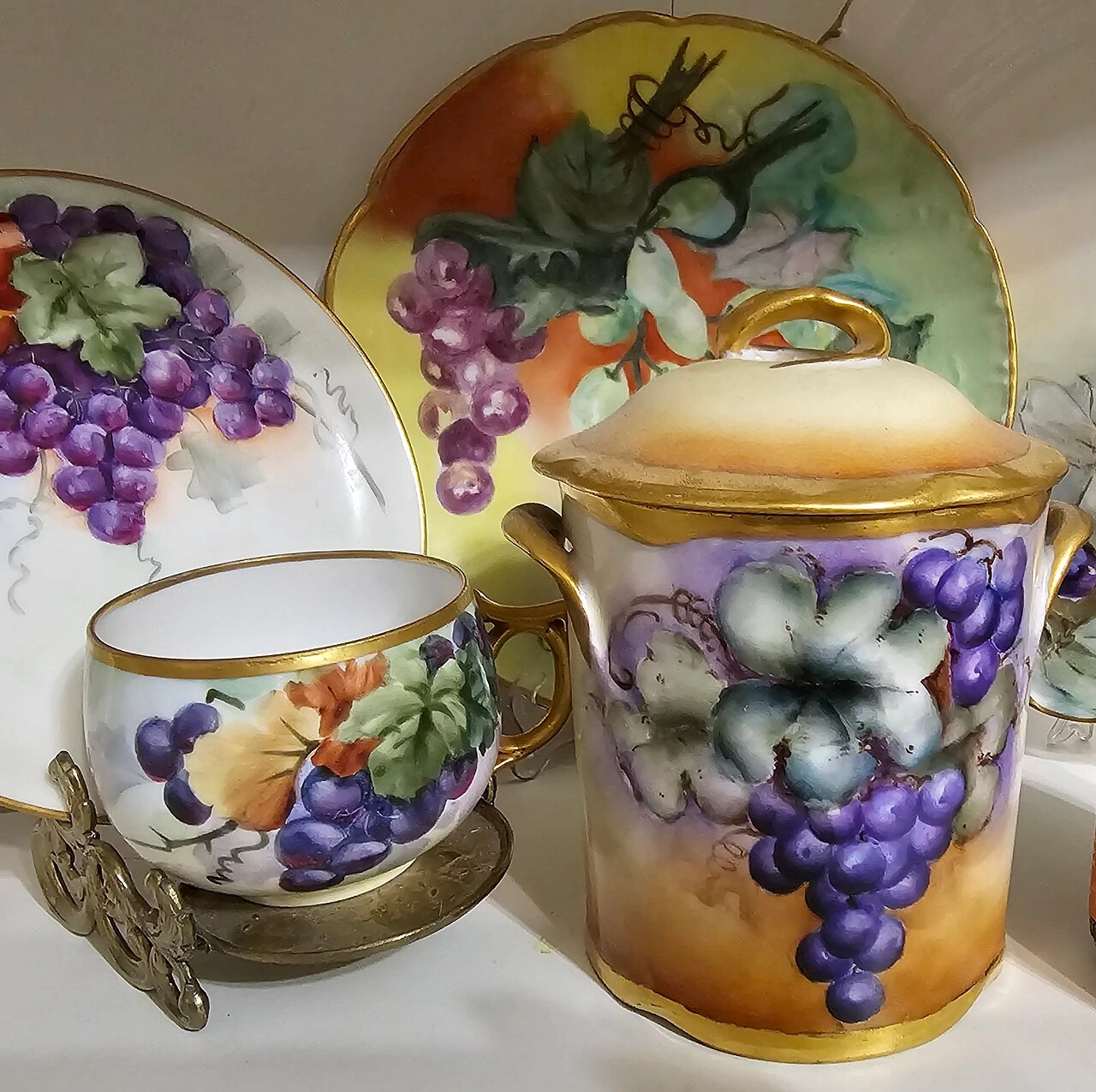
At a Glance
Bavaria Porcelain at a Glance
| Question | Collector’s Answer |
|---|---|
| Is Bavaria a porcelain brand? | Usually no. It is generally a geographic designation referring to Bavaria, Germany. |
| Are all Bavaria marks the same? | No. Many different manufacturers operated in Bavaria and used different marks. |
| Can “Bavaria” date a piece? | Not by itself. Dating requires several independent clues. |
| Which makers should I know? | Nymphenburg, Hutschenreuther, Rosenthal, Seltmann Weiden, Schumann Arzberg, Heinrich, Tirschenreuth and Mitterteich are important names. |
| Does Bavaria porcelain have value? | Some pieces do. Maker, rarity, period, decoration, condition, completeness and demand matter more than the word Bavaria alone. |
| What should I photograph? | The entire object, underside, complete mark, every number, decoration, dimensions and any damage or restoration. |
What Does “Bavaria” Mean on Porcelain?
For collectors, this is the most important starting point.
When the word BAVARIA appears underneath a porcelain cup, plate, vase, figurine or dinner service, it often indicates that the piece was associated with the German region of Bavaria.
It does not automatically identify one particular factory.
This distinction matters because Bavaria became home to numerous porcelain manufacturers, especially in important centres such as Selb, Weiden, Arzberg, Tirschenreuth and Mitterteich.
BAVARIA = A CLUE TO ORIGIN
The maker’s name and exact mark variant are the real starting points for identification.
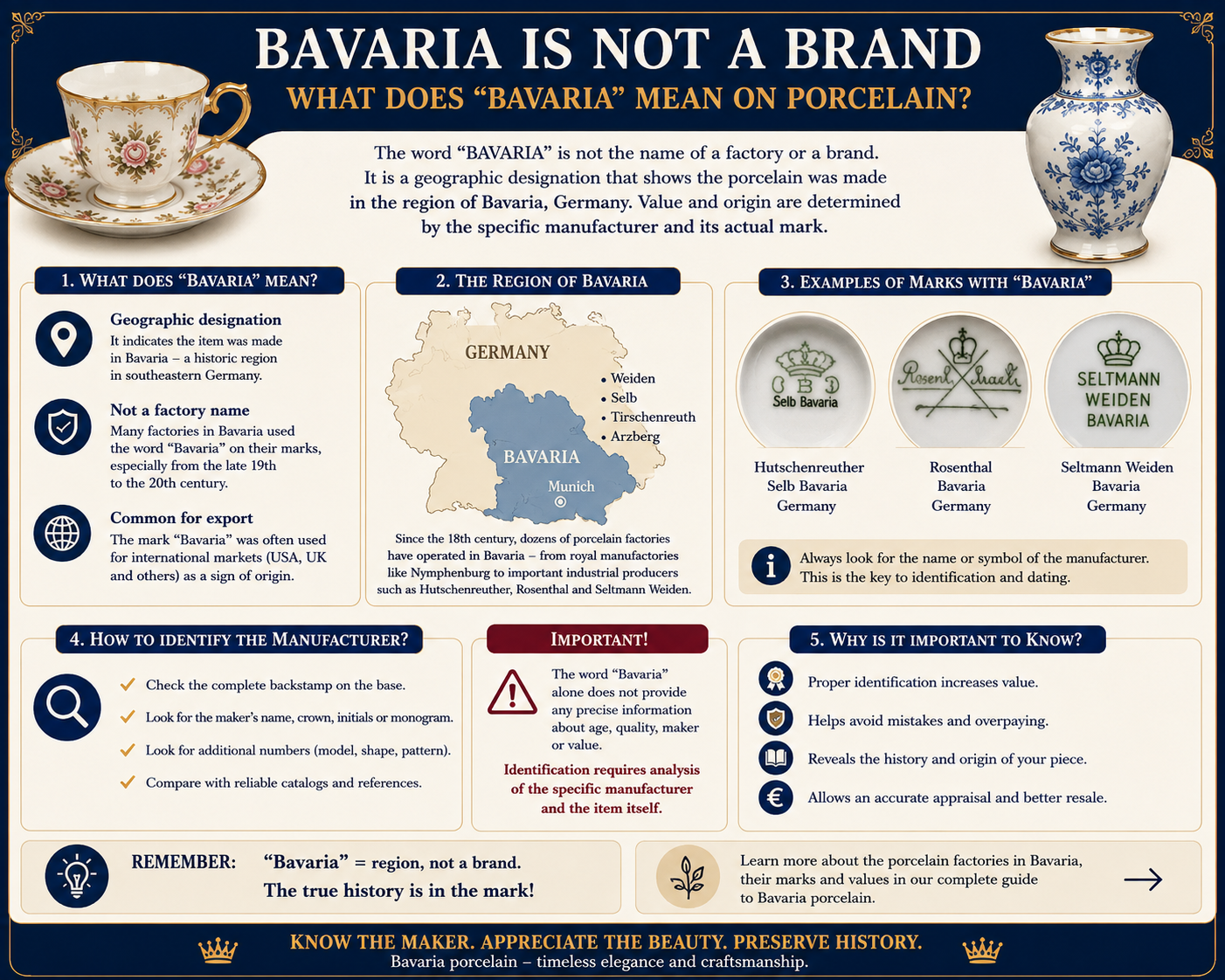
This is similar to other famous porcelain-producing regions. A geographic name may narrow the search, but it does not replace identification of the factory.
For a broader introduction to this process, see our
complete guide to porcelain marks and backstamps
.
Was There Actually a Porcelain Factory Called Bavaria?
Yes. This is an important exception.
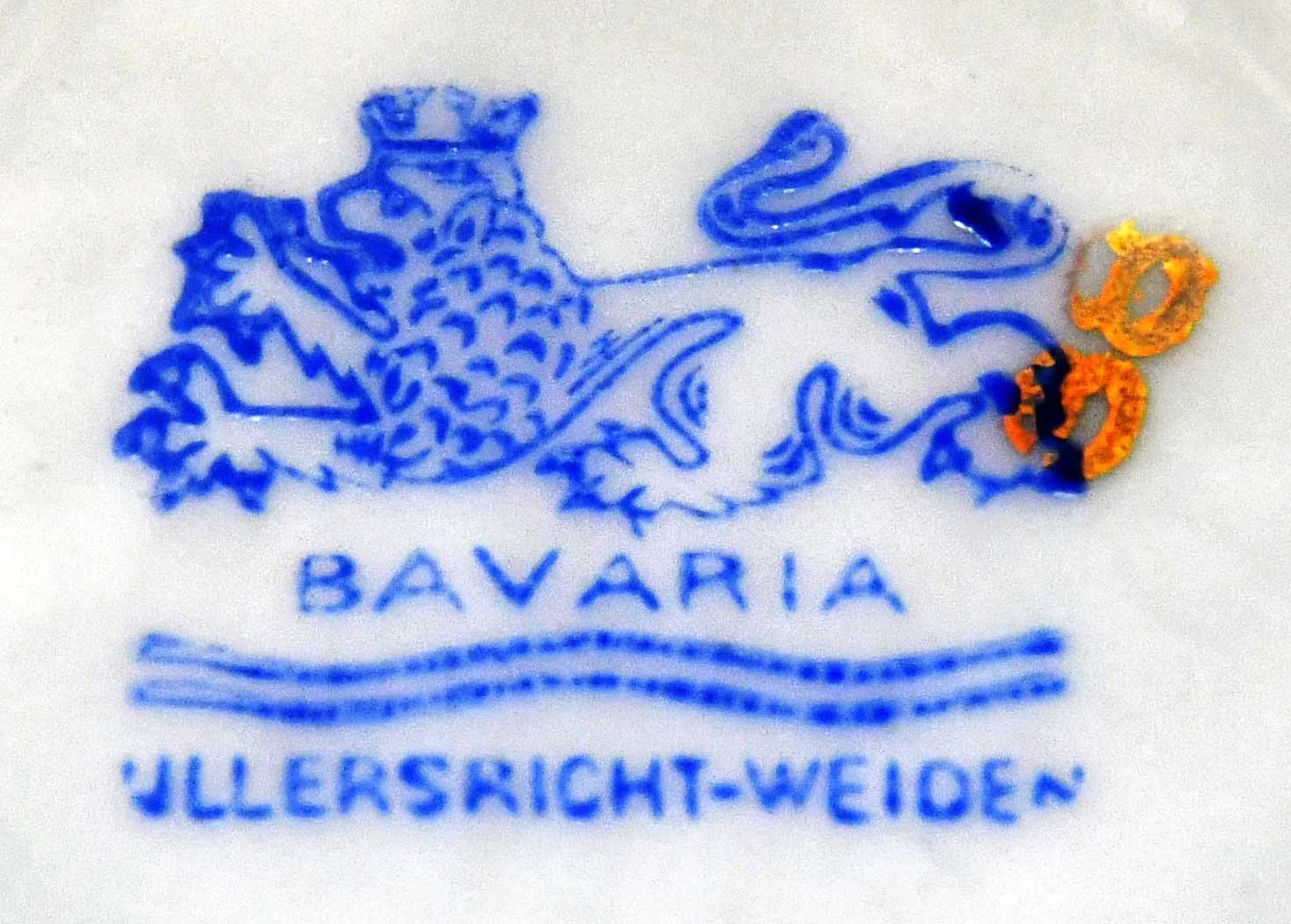
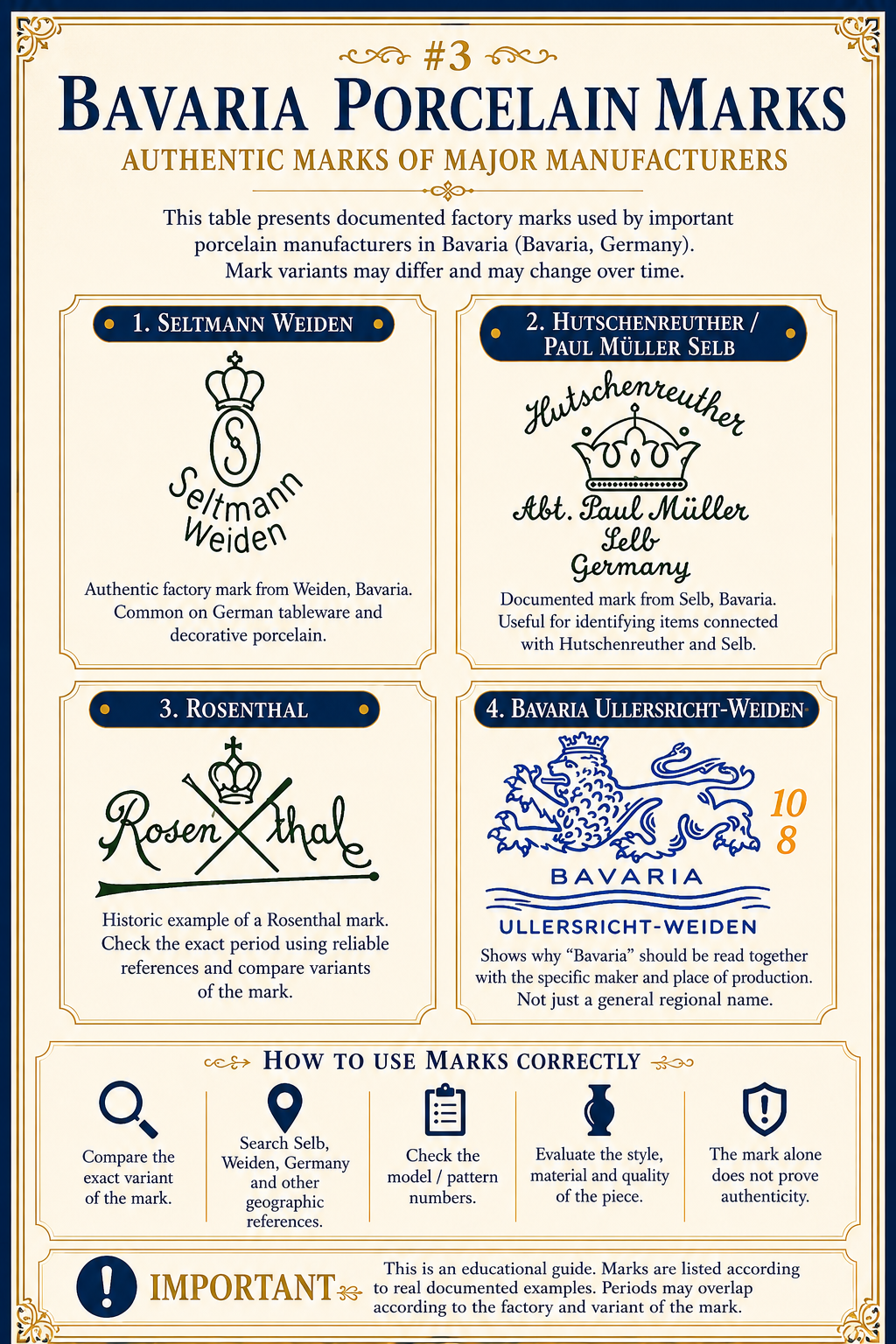
Porzellanfabrik Bavaria AG Ullersricht was a real porcelain manufacturer in the Weiden area.
The company was established in 1920 and operated for a relatively short period before bankruptcy in 1931.
A mark reading Bavaria Ullersricht-Weiden therefore refers to a specific factory and must not be interpreted in the same way as a generic Bavaria origin inscription.
The History of Bavarian Porcelain
Bavarian porcelain history extends far beyond the export tableware of the late nineteenth and twentieth centuries.
Its roots reach into the eighteenth-century world of royal patronage, courtly luxury and experimental European porcelain production.
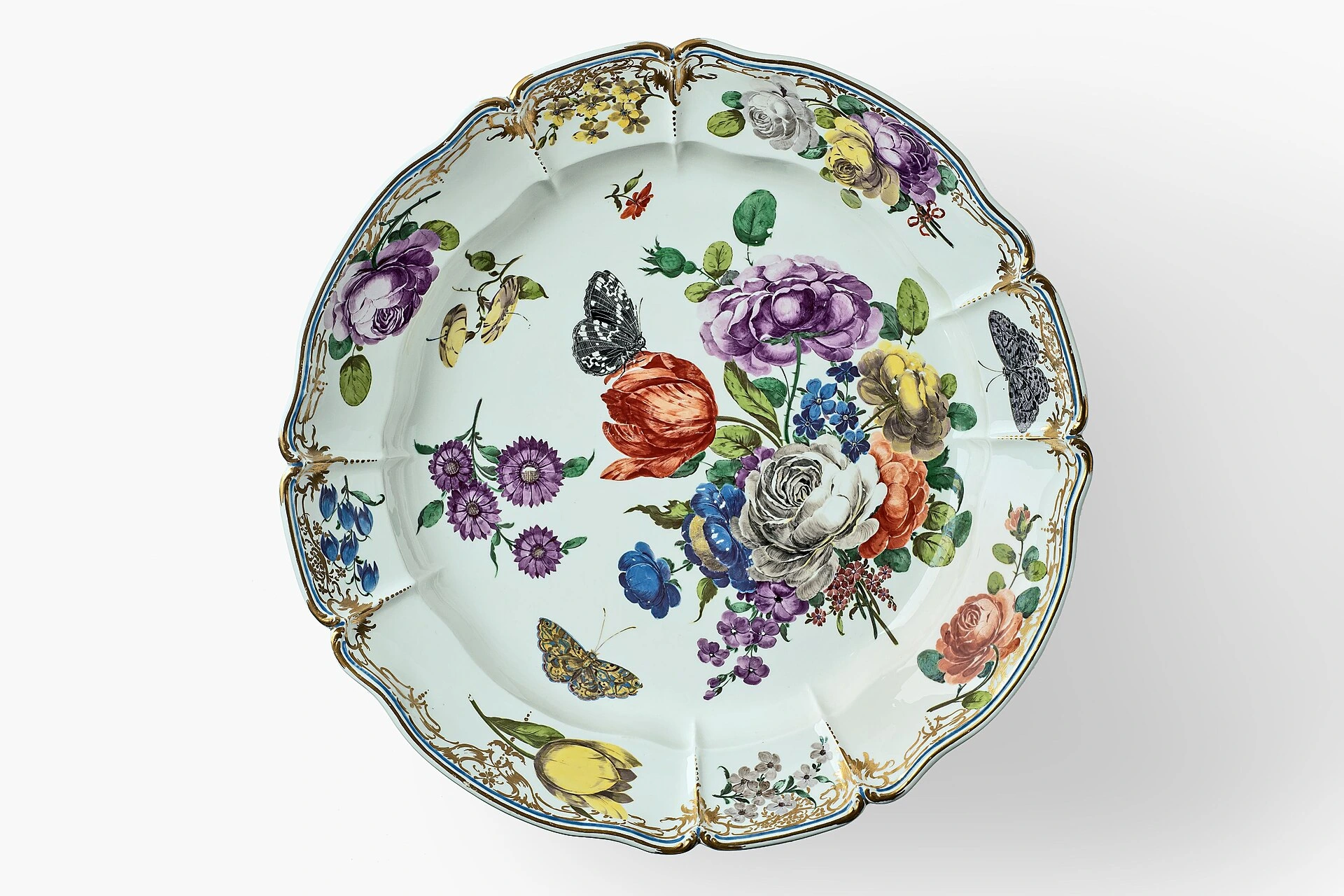
Nymphenburg and the Eighteenth-Century Court Tradition
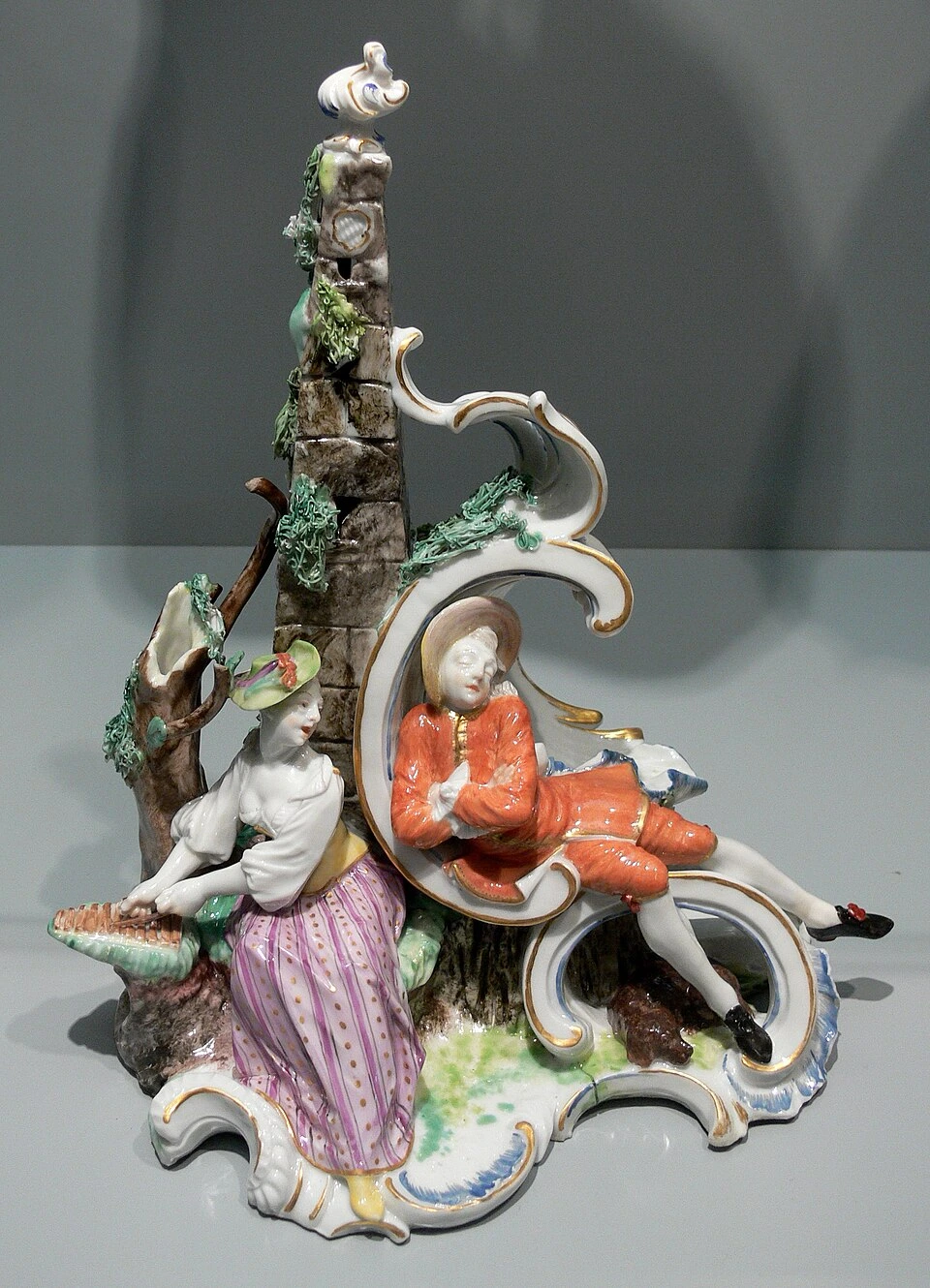
The Nymphenburg Porcelain Manufactory was founded in 1747 under Elector Max III Joseph.
After the technical challenges of the early years, controlled porcelain production was achieved in 1754, and the workshops later moved to the Nymphenburg Palace complex in 1761.
Nymphenburg became especially celebrated for sculptural porcelain and the work of modeller Franz Anton Bustelli, whose Rococo figures are among the great achievements of eighteenth-century European porcelain.
The Rise of Industrial Porcelain in Northern Bavaria
During the nineteenth century, Bavaria developed into one of Germany’s most important porcelain-producing regions.
Access to raw materials, transport networks, skilled labour and expanding European and international markets encouraged the development of factories across Upper Franconia and the Upper Palatinate.
Selb became particularly important, while Arzberg, Weiden, Tirschenreuth, Mitterteich and Hohenberg also became strongly associated with porcelain production.
Maker Reference
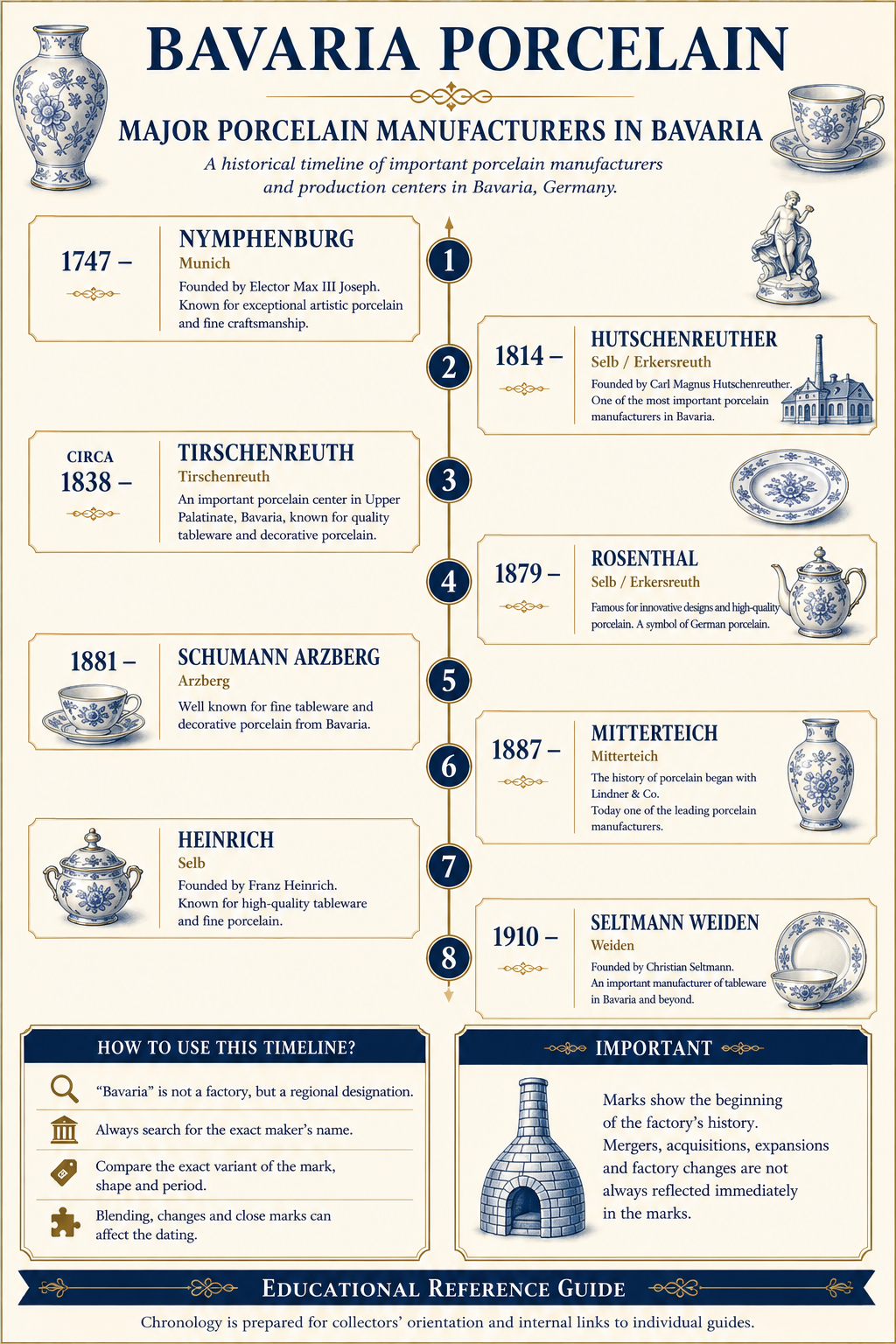
Major Bavaria Porcelain Manufacturers
There were many porcelain factories in Bavaria, and no short list can include every historic workshop.
The following names, however, provide a useful foundation for collectors researching Bavaria porcelain marks.
| Manufacturer | Location | Historical Starting Point | Collector Notes |
|---|---|---|---|
| Nymphenburg | Munich | 1747 | Court manufactory; artistic porcelain, figures and fine hand craftsmanship. |
| Hutschenreuther | Hohenberg / Selb | 1814 | Important Bavarian industrial porcelain name with numerous mark variants. |
| Tirschenreuth | Tirschenreuth | Founding phase 1830–1838 | Long regional porcelain tradition; marks require variant-by-variant research. |
| Rosenthal | Erkersreuth / Selb | 1879 | Began as a porcelain decorating business; own porcelain production followed later. |
| Schumann Arzberg | Arzberg | 1881 | Known especially for tableware and decorative porcelain. |
| Mitterteich | Mitterteich | 1887 | Multiple ownership phases and backstamp variations. |
| Heinrich | Selb | 1896; own porcelain from 1901 | Initially decorated purchased whiteware before producing porcelain in-house. |
| Seltmann Weiden | Weiden | 1910 | Major tableware manufacturer with numerous twentieth-century marks. |
| Bavaria AG Ullersricht | Weiden / Ullersricht | 1920 | Short-lived manufacturer particularly relevant when the actual factory name includes Bavaria. |
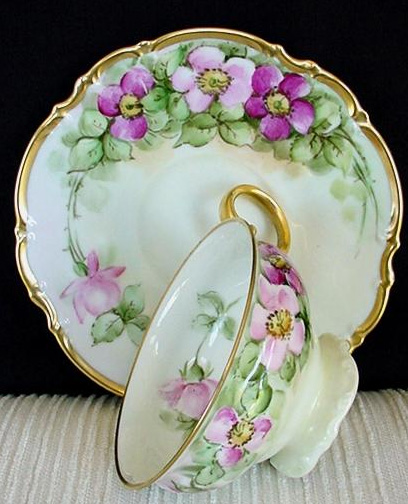
Hutschenreuther
Hutschenreuther traces its history to 1814 and became one of the names most closely associated with the development of the Bavarian porcelain industry.
Different branches, acquisitions and factory histories mean that collectors should avoid assigning dates from the Hutschenreuther name alone.
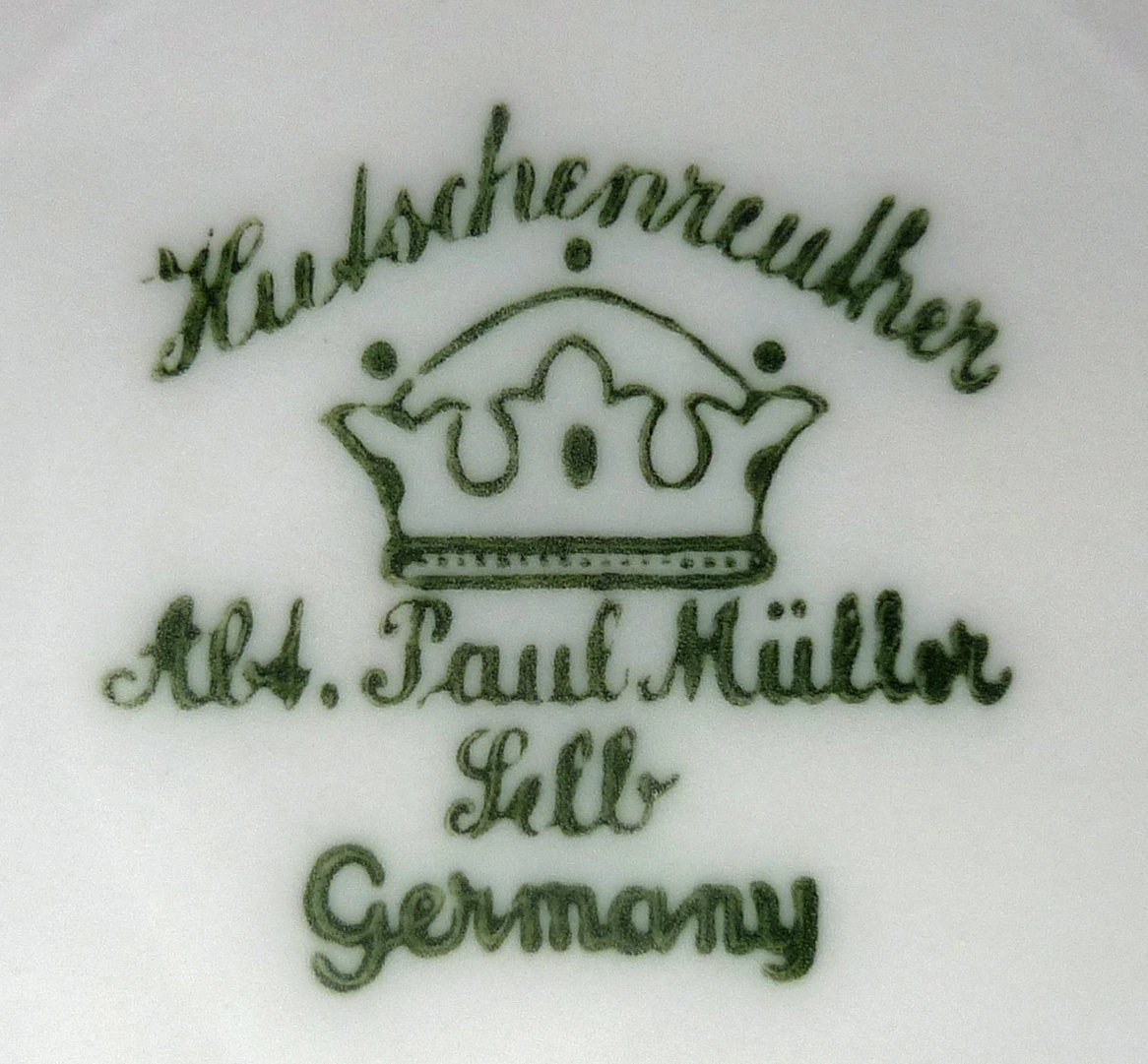
The exact backstamp, location wording and associated factory name are much more useful.
One historically important example involves Paul Müller of Selb, whose works became associated with Hutschenreuther in the early twentieth century.
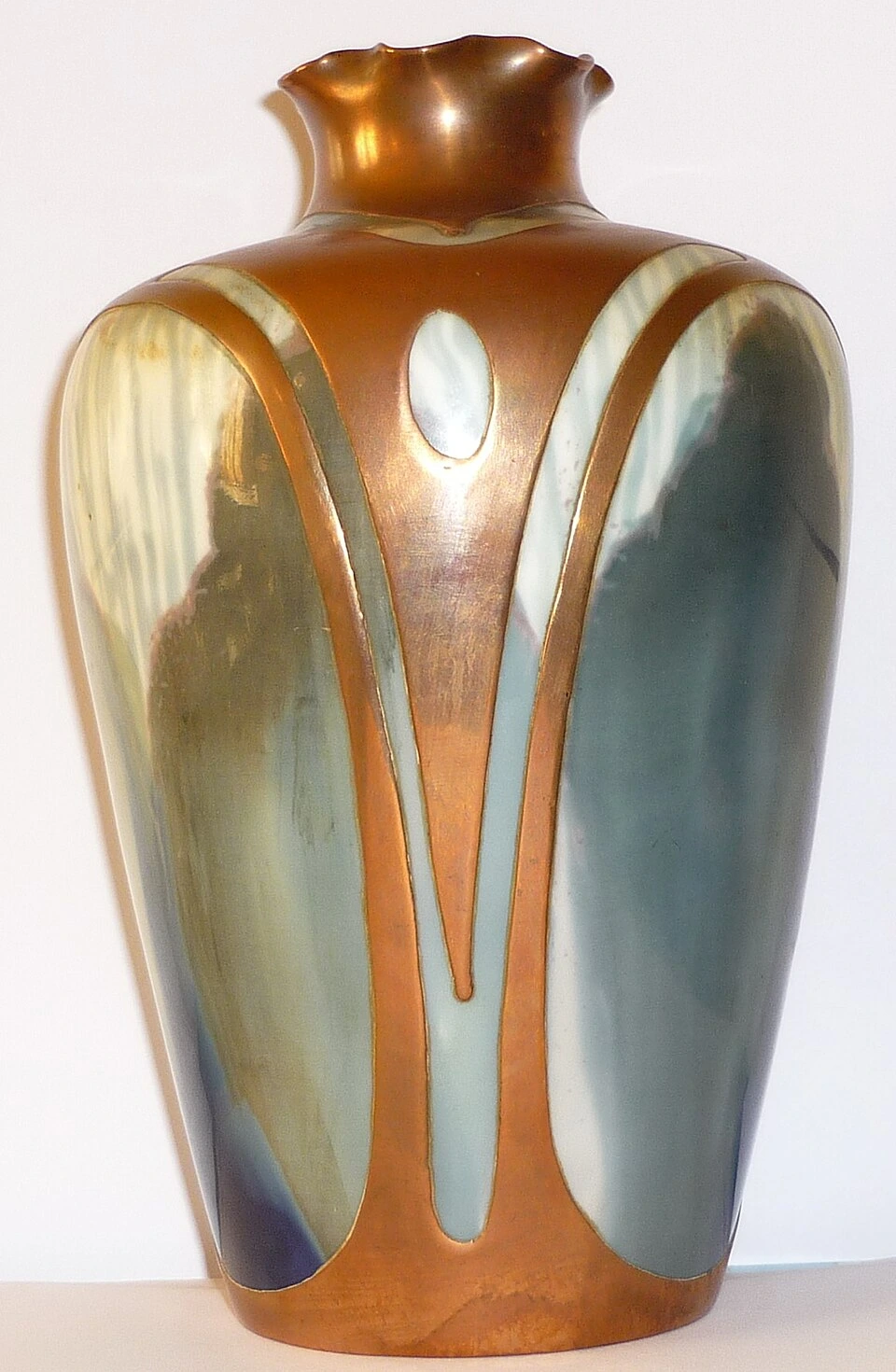
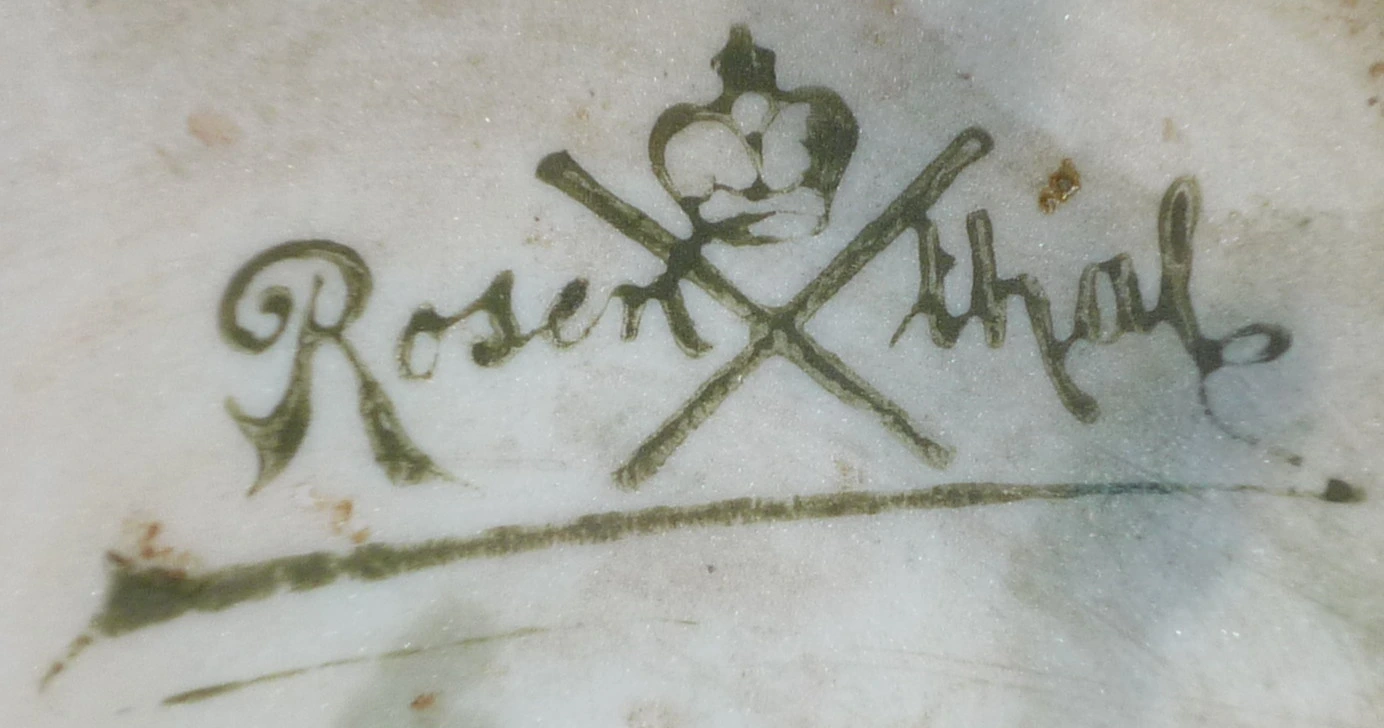
Rosenthal
Philipp Rosenthal established a porcelain painting business at Erkersreuth Castle in 1879.
The company later moved into porcelain production itself, with its own factory established in 1891.
Rosenthal became internationally important not only for tableware but also for artistic porcelain and modern design.
Its long history produced numerous backstamp variations, which makes exact mark comparison particularly useful.
Seltmann Weiden
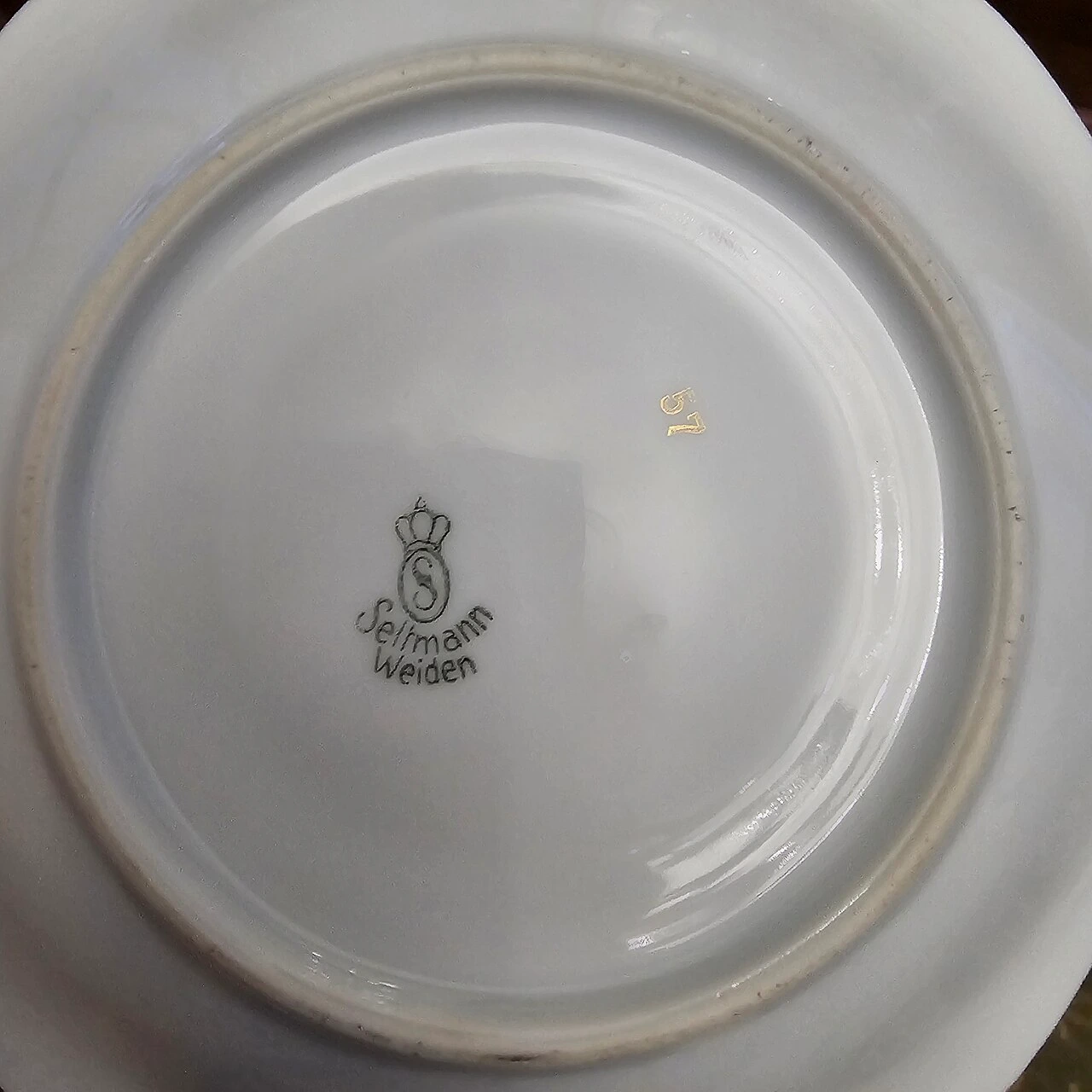
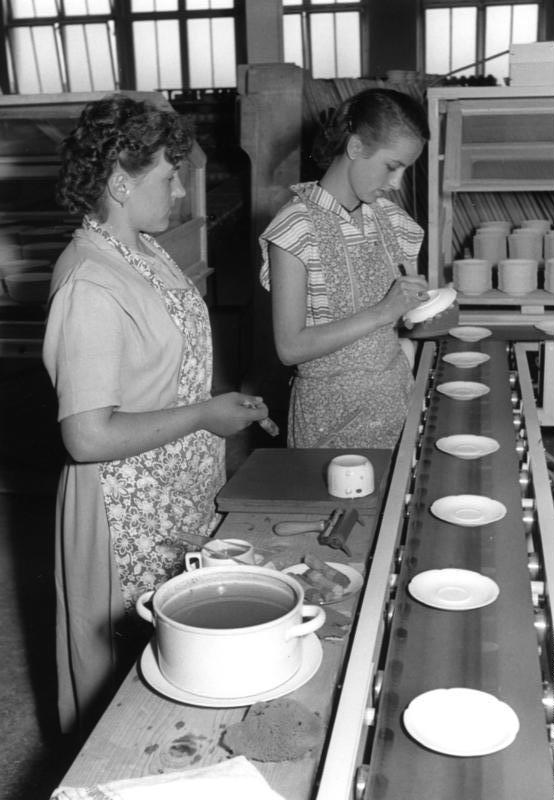
Christian Seltmann founded his porcelain factory in Weiden in 1910.
The company developed into a major manufacturer of household, hospitality and decorative porcelain and remains associated with German porcelain production today.
Identification
Bavaria Porcelain Marks
Porcelain marks—also called factory marks, backstamps or maker’s marks—are among the most useful clues for identifying Bavarian porcelain.
However, a mark is evidence rather than proof.
A convincing attribution requires the mark and the object to tell the same story.
The porcelain body, glaze, shape, decoration, manufacturing quality, natural wear and expected production period should all be historically consistent.
This principle is explored in greater detail in our
Antique Porcelain Identification Guide
.
Four Useful Bavaria Porcelain Mark Examples
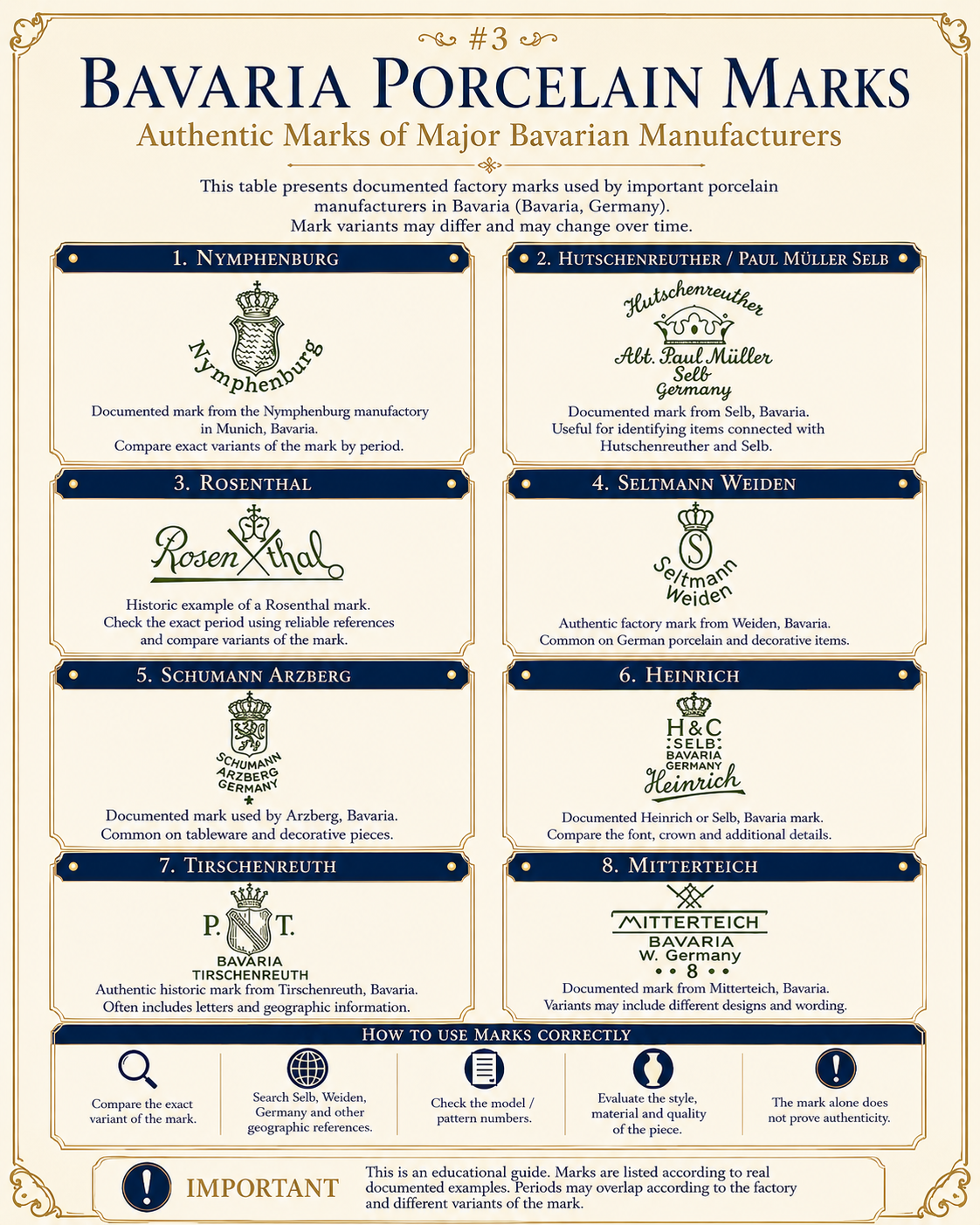
Eight Major Bavarian Manufacturers
The expanded reference below provides a wider comparison between marks associated with eight significant porcelain manufacturers.
It is intended as an orientation tool—not as a substitute for checking the exact historical variant of a mark.
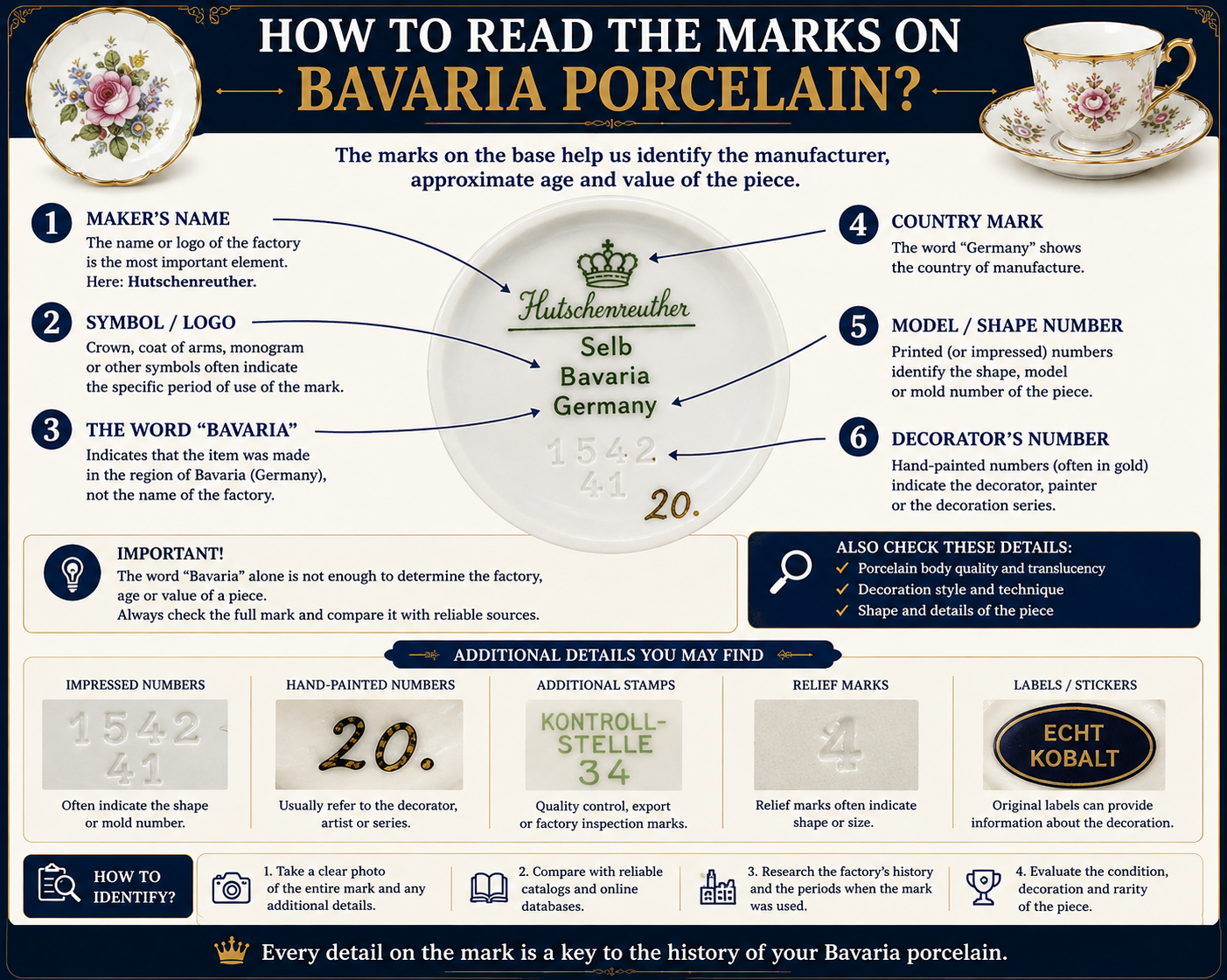
How to Read Bavaria Porcelain Marks
Do not stop after recognising one familiar word.
Turn the object over, photograph the complete base and record every visible symbol, letter and number.
| Mark Element | What It May Tell You | Collector Value |
|---|---|---|
| Maker’s Name | The manufacturer or factory. | Essential |
| Logo / Symbol | Can help distinguish mark periods and factory branches. | Very High |
| Bavaria | Usually a regional reference; sometimes part of a specific factory name. | Contextual |
| Germany / Made in Germany | Country-of-origin wording that may contribute to dating when combined with other evidence. | Useful in combination |
| Model / Shape Number | May identify the mould, form or model. | High |
| Pattern / Decoration Number | May identify decoration, pattern or production series. | High when documented |
| Painted / Control Marks | May relate to decorators, inspection, quality control or internal factory systems. | Manufacturer-specific |
Golden Rule
Maker + exact mark variant + country wording + model/pattern number + decoration + manufacturing technique + documented factory history
How to Date Bavaria Porcelain
There is no safe universal chart that dates Bavaria porcelain from one word.
A piece should instead be dated by building a chain of consistent evidence.
The safest approach is to begin with the manufacturer and exact mark variant and then test that proposed period against the object itself.
| Step | Question to Ask |
|---|---|
| 1 | Which manufacturer actually made the object? |
| 2 | Which exact version of the manufacturer’s mark is present? |
| 3 | What country or regional wording appears? |
| 4 | Are there model, shape, pattern or impressed numbers? |
| 5 | Does the decoration fit the proposed period? |
| 6 | Does the porcelain body, glaze and manufacturing technique make sense? |
| 7 | Does the documented factory history support the conclusion? |
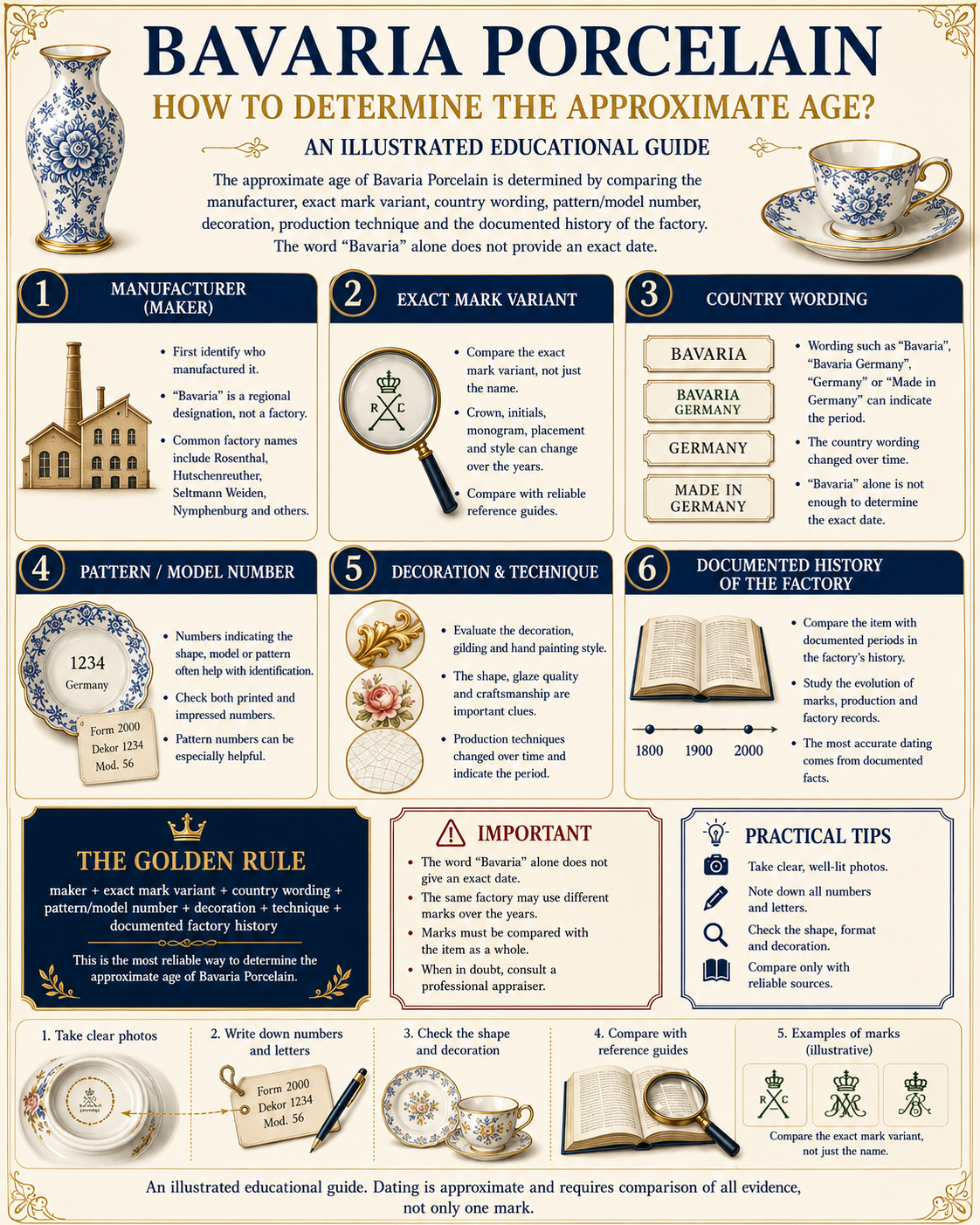
For a full explanation of this methodology, continue with
How to Date Antique Porcelain
.
Can Country Wording Date Bavaria Porcelain?
Country wording can help, but it should never be treated as a stand-alone dating system.
Marks may contain combinations such as Bavaria, Germany, Bavaria Germany or Made in Germany.
Export practices, ownership changes, production runs and individual mark variants can overlap.
For that reason, broad internet rules that assign an exact date from one country inscription should be treated with caution.
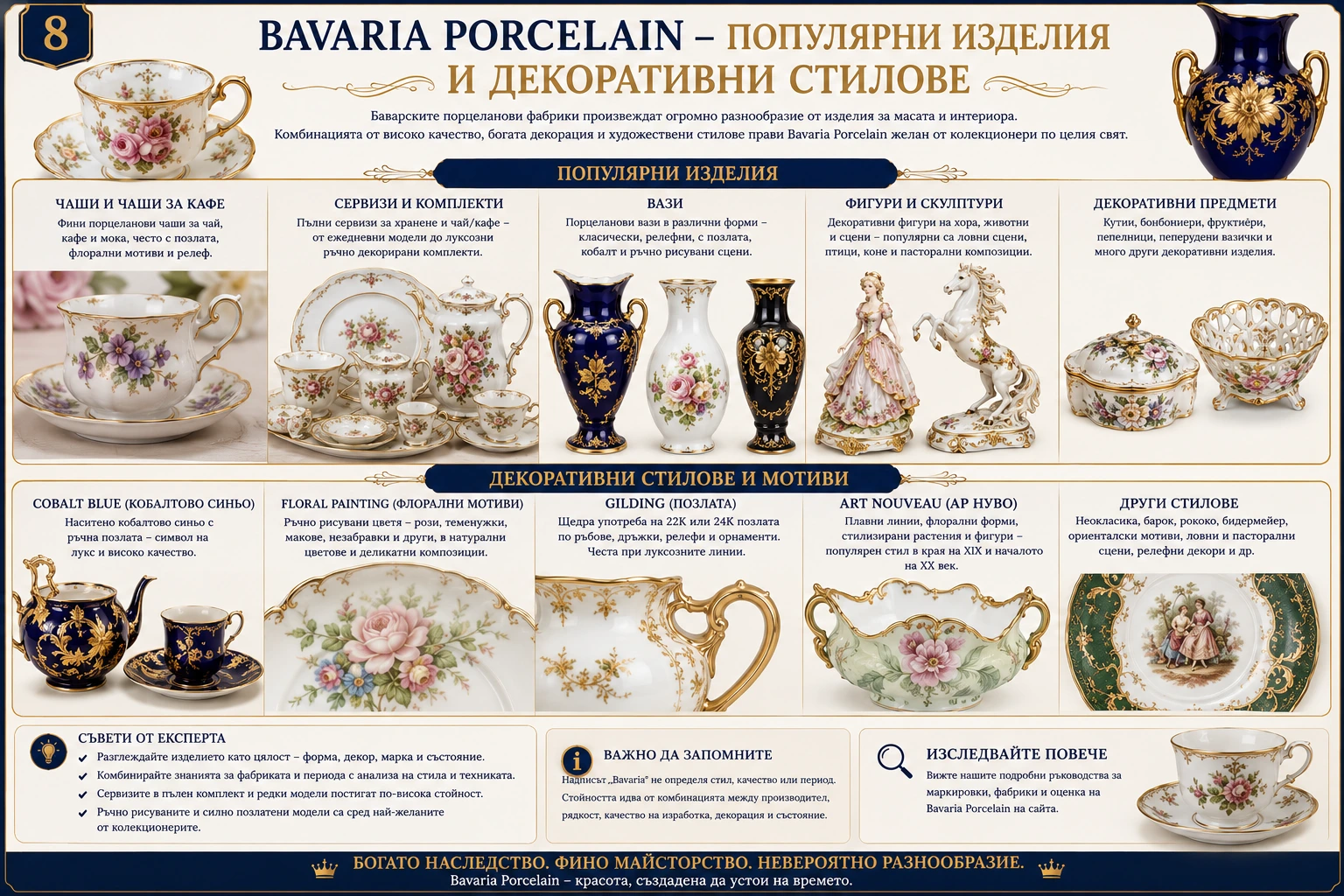
Popular Bavaria Porcelain Items & Decorative Styles
Bavarian factories produced an enormous range of household and decorative porcelain.
Some pieces were intended for everyday use, while others were designed specifically for display, gifts or export markets.
| Type | Common Features | What Collectors Examine |
|---|---|---|
| Cups & Saucers | Floral decoration, gilding, coloured grounds, elegant handles. | Matching shapes, marks, pattern and gilding. |
| Tea & Coffee Services | Matching pots, cups, saucers, sugar bowls and creamers. | Completeness, lids, matching marks and condition. |
| Vases | Floral painting, cobalt grounds, gilding, Art Nouveau and revival styles. | Maker, form, decoration technique and rarity. |
| Figurines | Human figures, animals and decorative compositions. | Model number, modeller, factory, restoration and missing parts. |
| Decorative Objects | Boxes, bowls, centrepieces, dishes and display objects. | Quality, rarity, original components and provenance. |
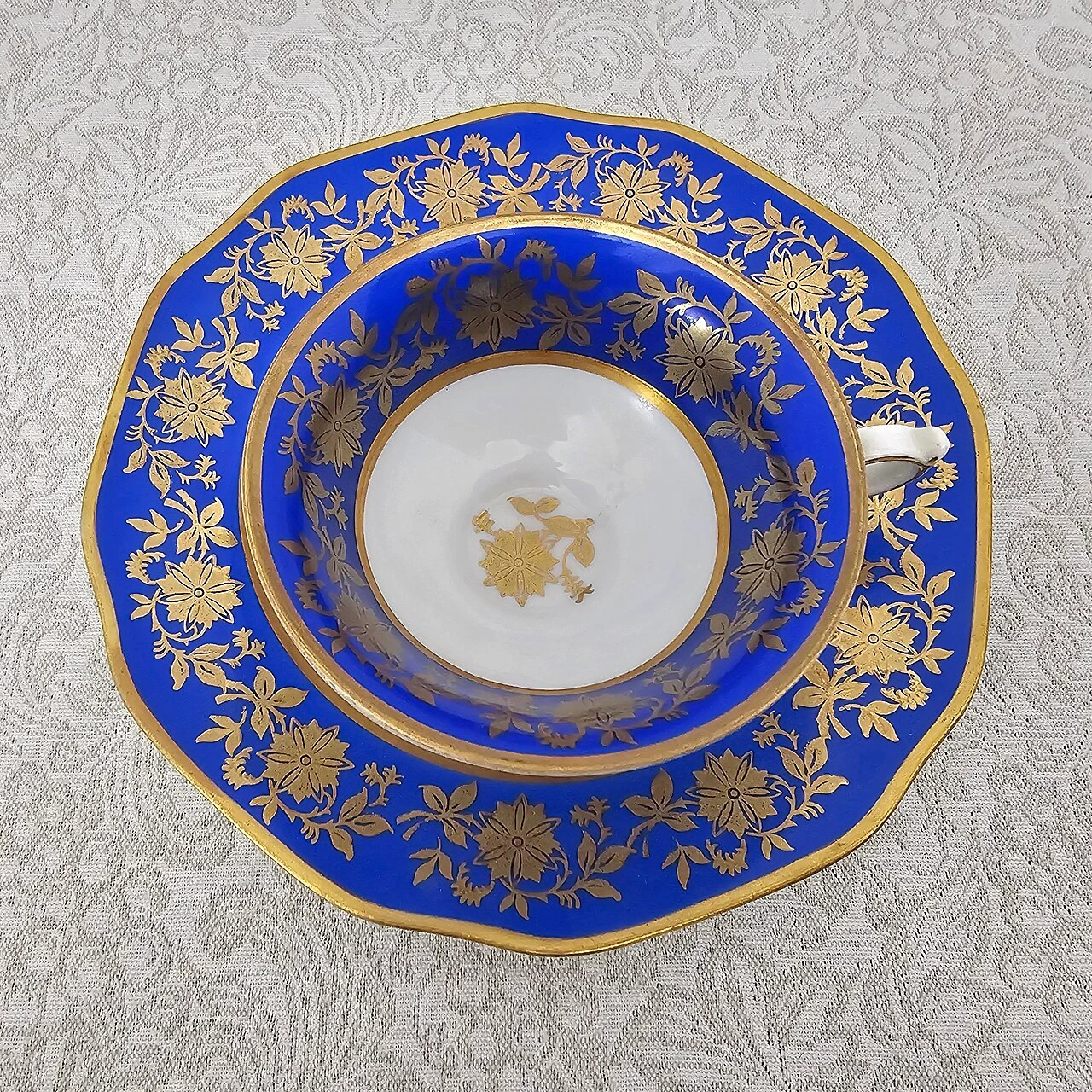
Cobalt Blue and Gilding
Deep cobalt blue grounds combined with gilded floral or ornamental decoration are visually striking and frequently attract collector attention.
However, colour and gilding should never be used to identify a manufacturer without a supporting mark.
Hand Painting
Hand-painted decoration can add artistic interest and sometimes collector value.
Look for natural variations in brushwork, slight differences between repeated motifs and layers of painted detail.
Do not assume that every floral design is entirely hand painted.
Transfer decoration, printed outlines with hand-applied colour and combined techniques were also widely used.
Physical Examination
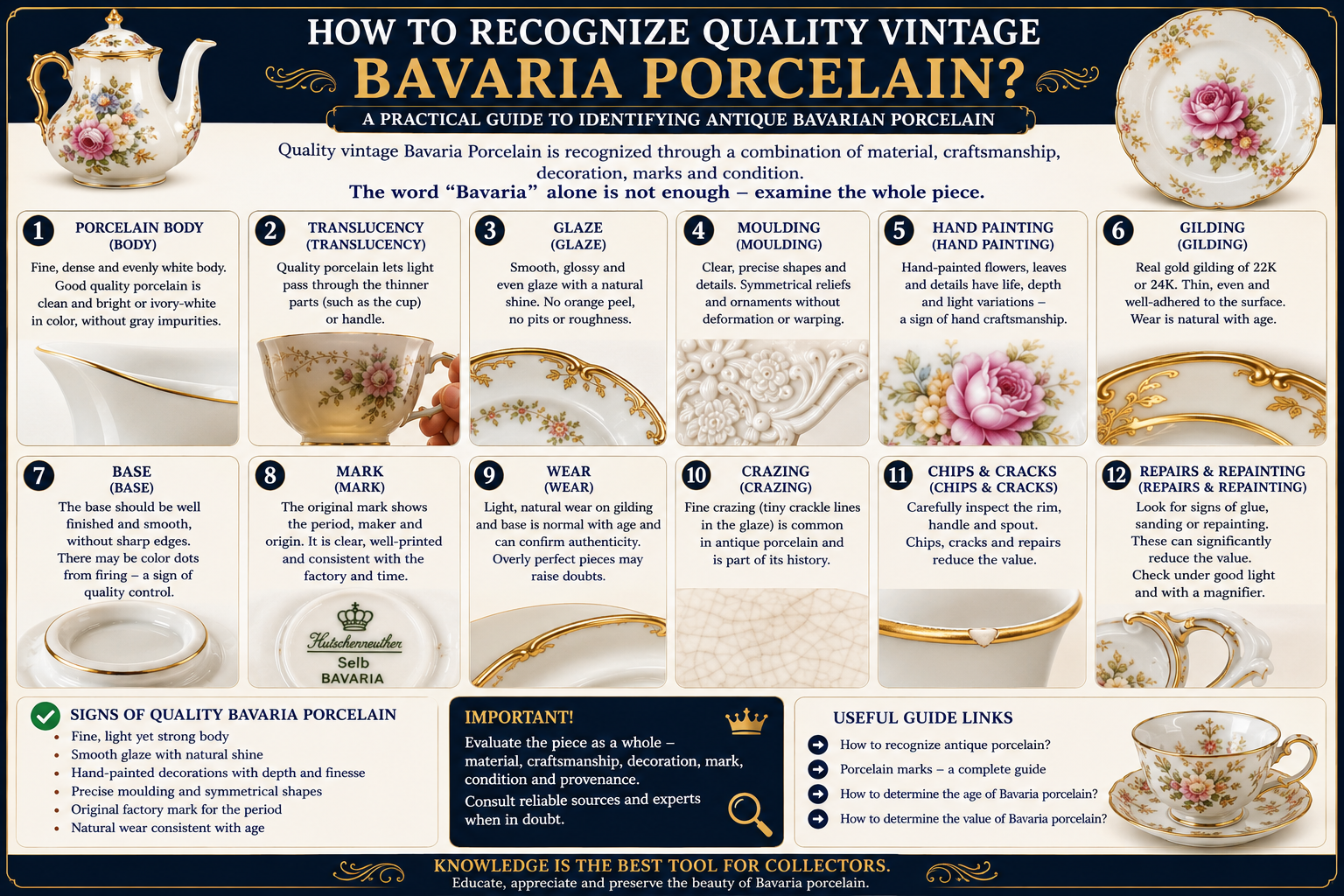
How to Recognize Quality Vintage Bavaria Porcelain
A convincing mark should be supported by the physical quality of the object.
Experienced collectors examine the porcelain before reaching conclusions about age or attribution.
Look for a refined, well-fired body appropriate to the manufacturer and type of object.
Thin areas of many porcelain bodies may transmit light, but translucency is a material clue—not a dating test.
Examine smoothness, consistency, natural gloss, firing imperfections and later intervention.
Good porcelain normally shows controlled modelling, clean relief and well-finished edges.
Study brushwork, transfer printing, enamel colours, gilding and consistency with the proposed period.
Inspect the foot rim, complete backstamp, impressed details and signs of natural use.
For a broader examination method, our
Complete Guide to Antique Porcelain
explores porcelain bodies, marks, manufacturers, authentication, collecting and preservation in greater depth.
Collector Value
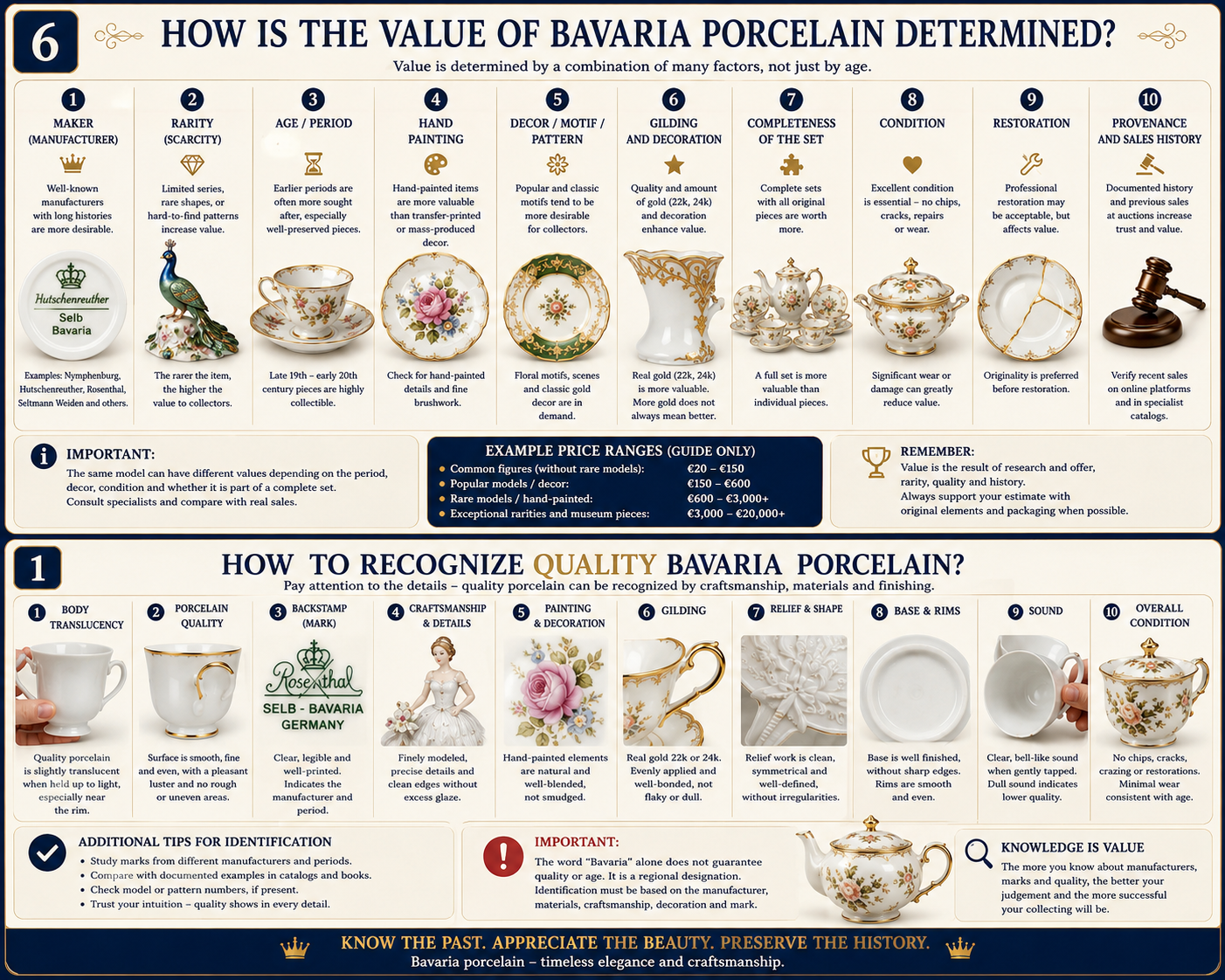
Is Bavaria Porcelain Valuable?
Some Bavaria porcelain can be valuable, but the word Bavaria itself does not create value.
Two pieces carrying similar regional wording may differ dramatically in rarity, craftsmanship, age, condition and collector demand.
| Value Factor | Why It Matters | What to Verify |
|---|---|---|
| Maker | A documented manufacturer gives the object historical identity. | Exact mark and factory history. |
| Rarity | Scarce forms and patterns can attract stronger demand. | Catalogues and genuine sold comparables. |
| Age / Period | Certain periods are more historically or artistically important. | Mark, technique and decoration must agree. |
| Decoration | Fine hand painting and complex decoration may add desirability. | Hand-painted versus printed or transfer-assisted work. |
| Gilding | Fine, well-preserved gilding can contribute to decorative quality. | Originality, wear and later regilding. |
| Completeness | Complete services and original lids or fittings may be more desirable. | Matching marks, pattern and dimensions. |
| Condition | Damage can substantially reduce collector demand. | Chips, cracks, staining and wear. |
| Restoration | Repair affects originality and may influence value. | Glue, fillers, repainting and replacement parts. |
| Provenance | Documented history may add context and confidence. | Invoices, labels, family records and archival evidence. |
| Market Demand | Prices ultimately depend on current collector interest. | Recent sold results for genuinely comparable objects. |
Do Not Use Asking Prices as Market Value
An online seller can ask any price.
That does not mean a comparable collector has actually paid it.
A responsible estimate should prioritize recent sold results for the same maker, form, dimensions, pattern, mark period and condition.
A rare vase cannot be compared meaningfully with a common cup simply because both are marked Bavaria.
Condition, Restoration & Common Problems
Condition is especially important in porcelain because damage frequently appears on exposed rims, handles, finials, feet and delicate relief decoration.
| Condition Issue | Where to Look | Collector Significance |
|---|---|---|
| Chips | Rims, handles, feet, finials and raised decoration. | Usually reduces value. |
| Hairline Cracks | Handles, bases, cup rims and lid fittings. | Can significantly affect value and stability. |
| Crazing | Glazed surfaces under angled light. | Not automatic proof of age. |
| Gilding Wear | Rims, handles and raised areas. | Natural wear may be acceptable; heavy loss affects presentation. |
| Restoration | Colour changes, overspray, filler, glue and texture differences. | Should always be disclosed. |
| Repainting | Over damaged decoration or repaired areas. | Can conceal previous damage and complicate appraisal. |
Practical Method
How to Identify Bavaria Porcelain Step by Step
- Photograph the complete object from several angles.
- Photograph the entire underside, not only the main logo.
- Transcribe every word exactly as it appears.
- Identify the manufacturer before trying to date the piece.
- Record every number, including impressed and hand-painted numbers.
- Measure the object accurately.
- Examine the porcelain body and glaze.
- Determine the decoration technique.
- Inspect condition and restoration.
- Compare the exact mark variant with documented examples.
- Check the manufacturer’s history for ownership and production changes.
- Only then research market value using genuinely comparable sold examples.
Collector Checklist
What to Check Before Buying or Valuing Bavaria Porcelain
| Manufacturer | Can you identify an actual maker rather than only the word Bavaria? |
| Exact Mark Variant | Does the typography, crown, symbol and layout match a documented example? |
| Country Wording | Bavaria, Germany, Made in Germany or another wording? |
| Numbers | Have all pattern, shape, model, impressed and painted numbers been recorded? |
| Body & Glaze | Do the material and manufacturing quality support the attribution? |
| Decoration | Hand painted, transfer printed or a combination? |
| Dimensions | Do they correspond with documented examples of the model? |
| Condition | Inspect for chips, cracks, staining, wear and missing pieces. |
| Restoration | Look for glue, filler, overspray, repainting and replacement parts. |
| Market Evidence | Use recent sold comparables rather than optimistic asking prices. |
Frequently Asked Questions
Bavaria Porcelain FAQ
Is Bavaria porcelain a brand?
Usually not. Bavaria normally refers to the German region where a porcelain manufacturer operated. The actual maker should be identified from the full backstamp.
What does Bavaria mean on the bottom of porcelain?
It generally indicates a connection with Bavaria, Germany. It does not by itself identify the exact factory.
Was there a porcelain company actually named Bavaria?
Yes. Porzellanfabrik Bavaria AG Ullersricht was a specific manufacturer in the Weiden area, founded in 1920 and active until 1931.
How can I identify a Bavaria porcelain maker?
Examine the entire backstamp for a maker’s name, crown, shield, monogram, city, initials or other factory symbol. Then compare the exact version with reliable documented references.
Can the word Bavaria tell me the age of porcelain?
No. The word alone is not an exact dating tool. Maker, mark variant, country wording, numbers, decoration and manufacturing characteristics should be combined.
What do numbers on Bavaria porcelain mean?
Depending on the manufacturer, they may represent a model, shape, mould, pattern, decoration, production batch or internal control system. They are not automatically dates.
Is hand-painted Bavaria porcelain valuable?
Fine hand painting can increase collector interest, but value still depends on the manufacturer, rarity, period, quality, condition and market demand.
Is older Bavaria porcelain always more valuable?
No. Age is only one factor. A rare later model in excellent condition may be more desirable than an older but common or damaged piece.
Does crazing prove Bavaria porcelain is antique?
No. Crazing can occur for different reasons and may also be deliberately produced. It should never be used alone as proof of age.
Are Bavaria porcelain marks ever copied?
Yes. Historic porcelain marks can be imitated or misunderstood. The physical object must support the attribution suggested by the mark.
Which Bavarian porcelain makers should collectors know?
Important names include Nymphenburg, Hutschenreuther, Rosenthal, Seltmann Weiden, Schumann Arzberg, Heinrich, Tirschenreuth and Mitterteich, alongside many additional regional manufacturers.
How should I photograph Bavaria porcelain for identification?
Photograph the entire object from several angles, the complete underside, a sharp close-up of the backstamp, every additional number or label, dimensions and any damage or restoration.
The Old Antiquarian
Need Help Identifying Your Bavaria Porcelain?
Send clear photographs of the complete piece, underside, backstamp, numbers and decoration, together with dimensions and information about any chips, cracks or restoration.
Request a Free Initial Consultation
Identification and valuation depend on the individual object and the available evidence.
Continue Exploring
Related Porcelain Guides
Complete Guide to Antique Porcelain
How to Identify Porcelain Marks & Backstamps
Research
Sources & Further Research
Historical dates and manufacturer information in this guide were checked against manufacturer histories, regional porcelain archives and specialist reference resources.
Recommended starting points include:
- Porzellan Manufaktur Nymphenburg – official manufactory and House of Wittelsbach history.
- Hutschenreuther – official company history from 1814.
- Rosenthal – official company history, including the 1879 Erkersreuth beginnings.
- Seltmann Weiden – manufacturer history and current company information.
- Förderverein Porzellan- und Kachelmuseum Tirschenreuth – regional porcelain history.
- Porzellan-Selb – historical research on Selb manufacturers including Heinrich and Paul Müller.
- Porcelain Marks & More – manufacturer histories and documented mark references for Bavarian factories.
- Regional museum and archive material from Weiden – documentation relating to Bavaria AG Ullersricht.
About the Author
The Old Antiquarian
The Old Antiquarian combines more than 35 years of experience with antiques and collecting with careful historical research. Our identification guides are designed to help collectors examine objects systematically—combining marks, materials, craftsmanship, condition and documented history rather than relying on a single clue.
“Bavaria” is the beginning of the investigation—not the final identification.
The strongest attribution is reached when the maker, exact mark variant, country wording, model or pattern information, porcelain body, decoration, manufacturing technique and documented history all point toward the same factory and period.
Last updated: September 1, 2026
