
Hummel Figurines : Identification Guide
Hummel Figurines: History, Marks, Identification, Dating & Value Guide
Last updated: 7 September 2026 | The Old Antiquarian
Quick Answer
M.I. Hummel figurines are collectible German ceramic figures based on the artwork of Sister Maria Innocentia Hummel. The most reliable way to identify an authentic example is to examine the HUM model number, M.I. Hummel signature, factory trademark or TMK, documented model, material, craftsmanship and condition together. Although they are frequently described online as “Hummel porcelain figurines,” classic Hummel production is historically associated primarily with fine earthenware rather than conventional high-fired porcelain.
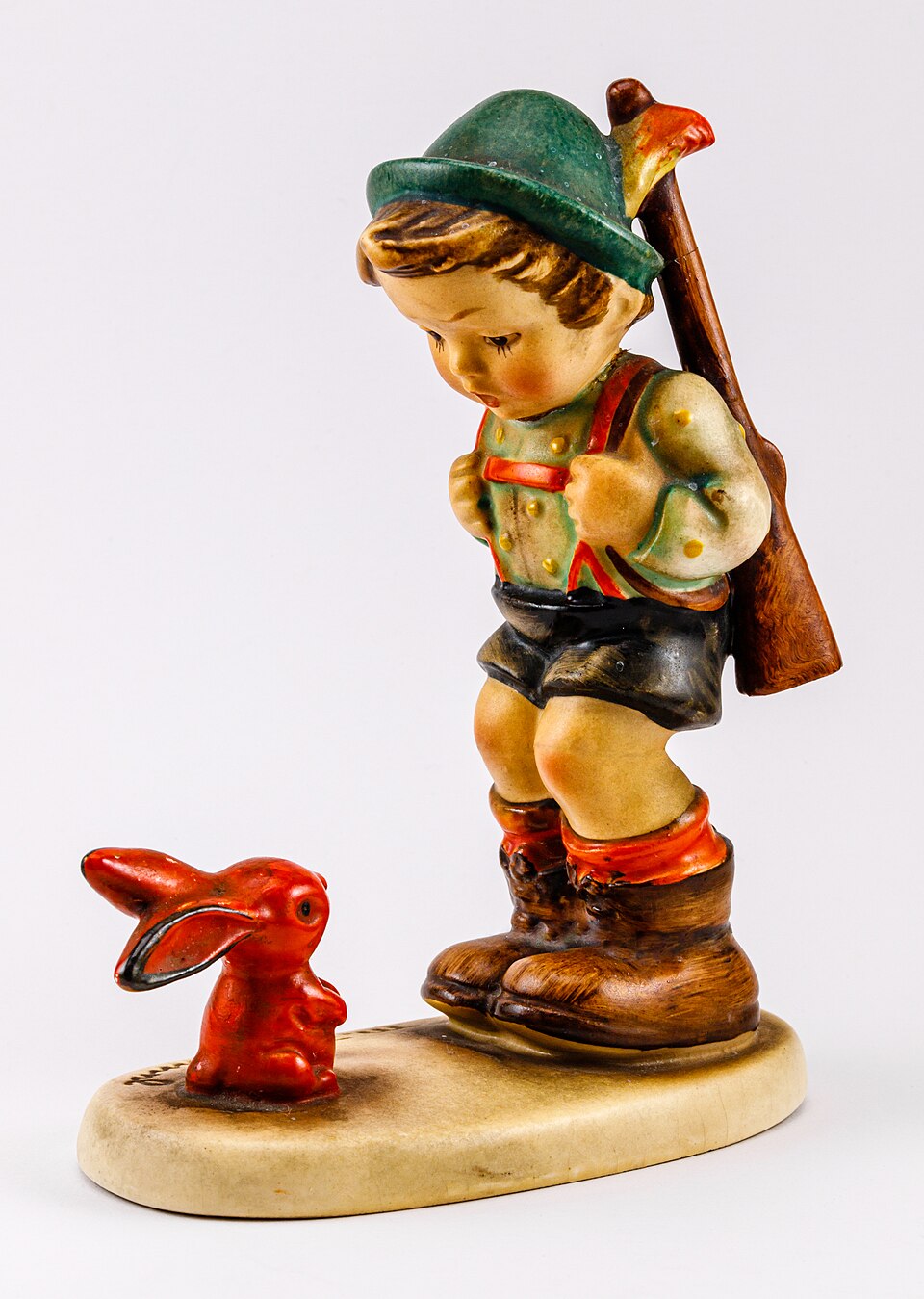
M.I. Hummel Figurines at a Glance
| Feature | Key Information |
|---|---|
| Artist | Maria Innocentia Hummel, born Berta Hummel |
| First official figurines | 1935 |
| Historic manufacturer | W. Goebel Porzellanfabrik, Germany |
| Historic production centre | Rödental, Bavaria, Germany |
| Traditional material | Fine earthenware / Steingut |
| Model identification | HUM number |
| Dating system | Factory trademarks commonly grouped as TMK marks |
| Main value factors | Model, rarity, TMK period, variation, size, condition, restoration, provenance and market demand |
If you are new to European ceramics, our
Guide to Antique Porcelain
provides a useful foundation for understanding how materials, factory marks, craftsmanship, condition and provenance work together during identification.
Who Was Maria Innocentia Hummel?
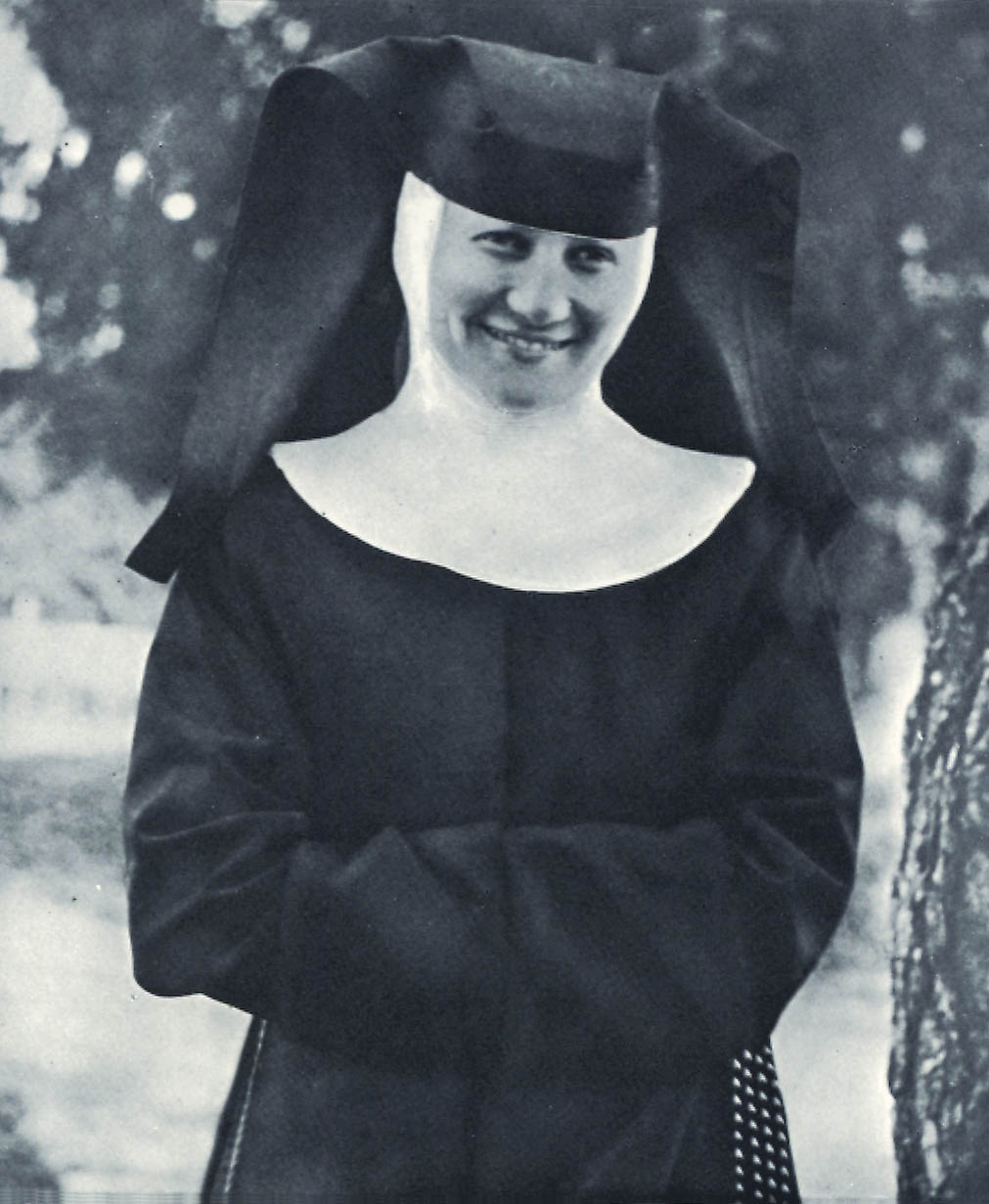
Maria Innocentia Hummel was born Berta Hummel in Bavaria in 1909. Her artistic talent appeared at an early age, and she later received professional training in applied art in Munich.
After entering the Franciscan convent at Siessen, she became known as Sister Maria Innocentia Hummel. Her drawings developed a highly recognisable visual language centred on children, rural life, animals, music, books, religious subjects and everyday moments.
The children in her works are often represented with rounded faces, oversized clothing, thoughtful expressions and a gentle sense of humour. These distinctive qualities later became central to the three-dimensional figurines recognised worldwide as M.I. Hummel.
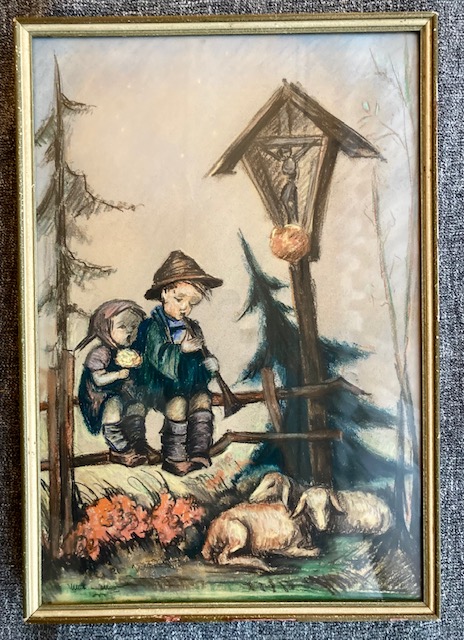
Maria Innocentia Hummel created the original artwork, while professional sculptors translated her two-dimensional drawings into three-dimensional ceramic models suitable for production.
How Goebel and Hummel Created a Collecting Icon
The history of M.I. Hummel figurines is closely connected with the German manufacturer Goebel. During the 1930s, Franz Goebel recognised the potential of Maria Innocentia Hummel’s artwork and explored how her distinctive childhood subjects could be translated into ceramic figures.
The goal was not simply to manufacture generic decorative children. The sculptural models had to preserve the atmosphere, proportions and emotional character of Hummel’s original artwork.

The First Hummel Figurines in 1935
The first official M.I. Hummel figurines were introduced in 1935. Among the early motifs presented at the Leipzig Trade Fair were Puppy Love, Little Fiddler, Book Worm, Strolling Along, Sensitive Hunter, Begging His Share and Flower Madonna.
Their success helped transform the collaboration into one of the most recognisable traditions in twentieth-century European collectible ceramics.
A Short History of Hummel Figurines
| Year | Milestone |
|---|---|
| 1909 | Berta Hummel is born in Bavaria. |
| 1934 | She takes her religious vows as Maria Innocentia Hummel. |
| 1935 | The first official M.I. Hummel figurines are introduced. |
| 1939–1945 | World War II severely restricts production. |
| 1946 | Maria Innocentia Hummel dies at the age of 37. |
| 1950s | The famous Full Bee trademark era becomes an important reference point for collectors. |
| 1977 | The Goebel Collectors’ Club is established. |
| 2008 | Goebel ends its direct production of M.I. Hummel figurines. |
| Today | The M.I. Hummel tradition continues through Hummel Manufaktur in Rödental, Germany. |
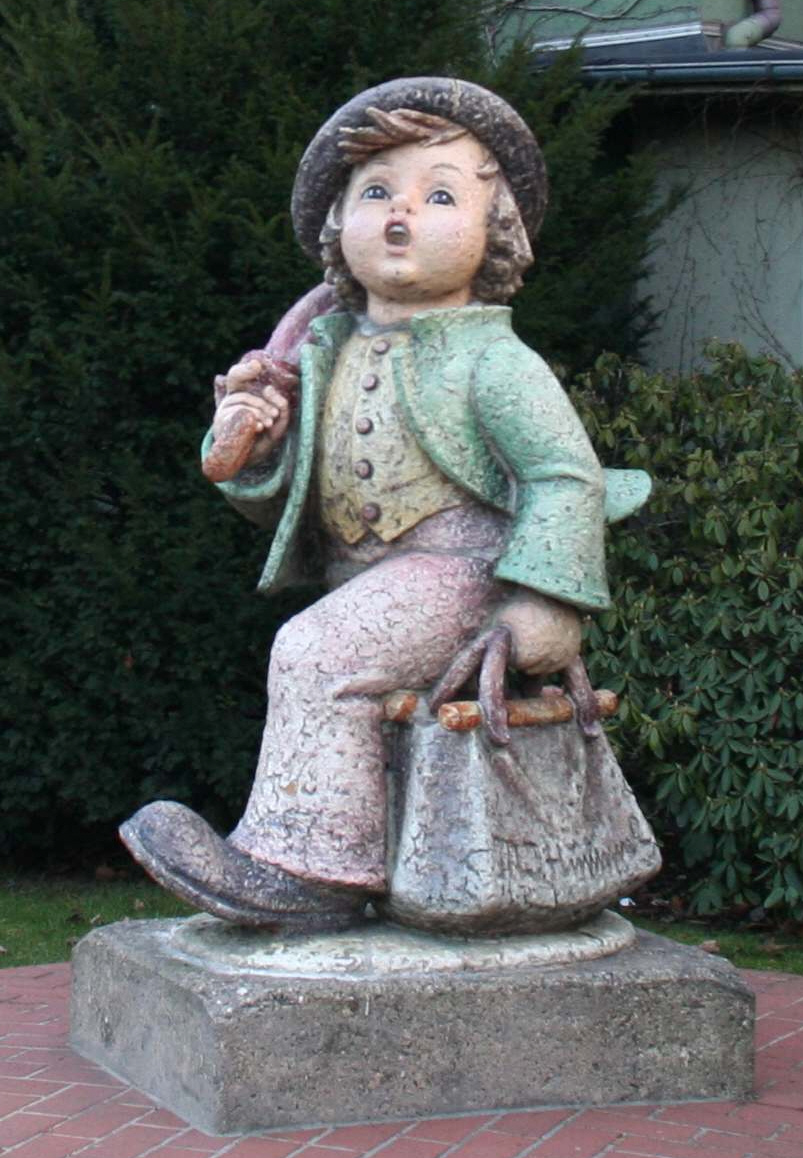
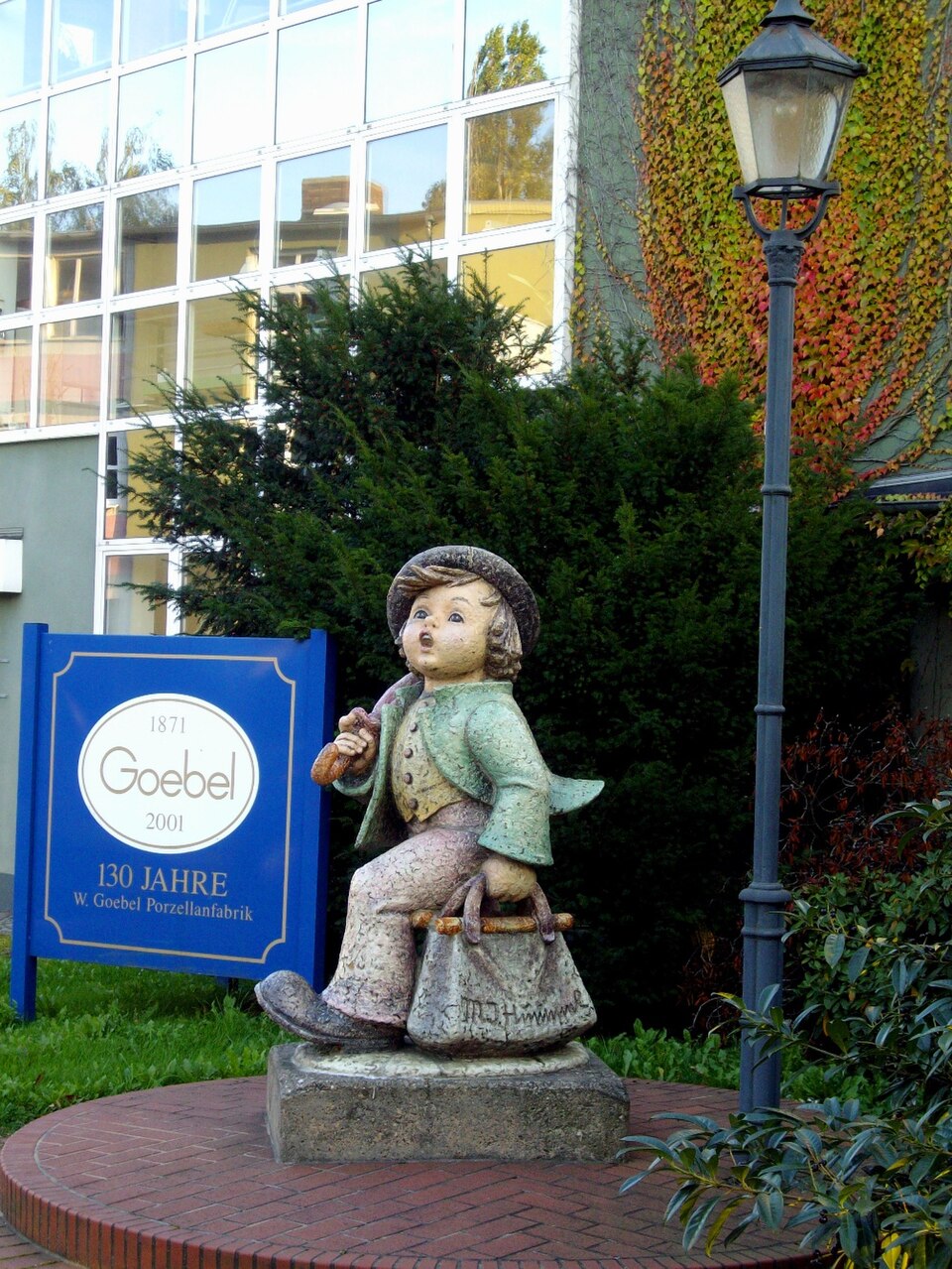
Are Hummel Figurines Really Porcelain?
The technically accurate answer:
most classic M.I. Hummel figurines are better described as fine earthenware, not conventional porcelain. The expression “Hummel porcelain figurines” remains extremely common in the antiques and collectibles market, but it is a broad commercial description rather than a precise ceramic classification.
This distinction is important because ceramic is a broad family of materials. Porcelain, stoneware and earthenware are all ceramics, but they differ in composition, firing temperature, density and physical character.
Historical Hummel references document experimental production in porcelain and other ceramic bodies, but Goebel adopted fine earthenware for the main production of the classic figurines.
The term Goebelit is also encountered in specialist Hummel literature. It refers to a special ceramic body associated with Goebel and the production of Hummel figurines.
| Material | Relationship to Hummel | Collector Note |
|---|---|---|
| Earthenware / Steingut | Principal traditional body | The most appropriate technical description for classic M.I. Hummel production. |
| Goebelit | Special Goebel ceramic body | A term encountered in specialist Hummel references. |
| Porcelain | Early experimental examples | Porcelain is not the standard material of the main classic range. |
| Other experimental ceramic bodies | Rare | Unusual examples require specialist comparison with documented pieces. |
For a broader explanation of ceramic materials, see our
What Is Porcelain?
guide.
Goebel Is Not the Same as Hummel
One of the most common identification mistakes is assuming that every object marked Goebel is a Hummel.
Goebel was a major German ceramic manufacturer with a broad product range. M.I. Hummel represents one specific artistic line based on the artwork of Maria Innocentia Hummel.
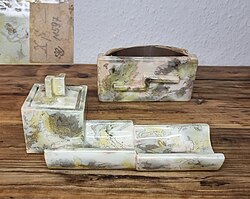
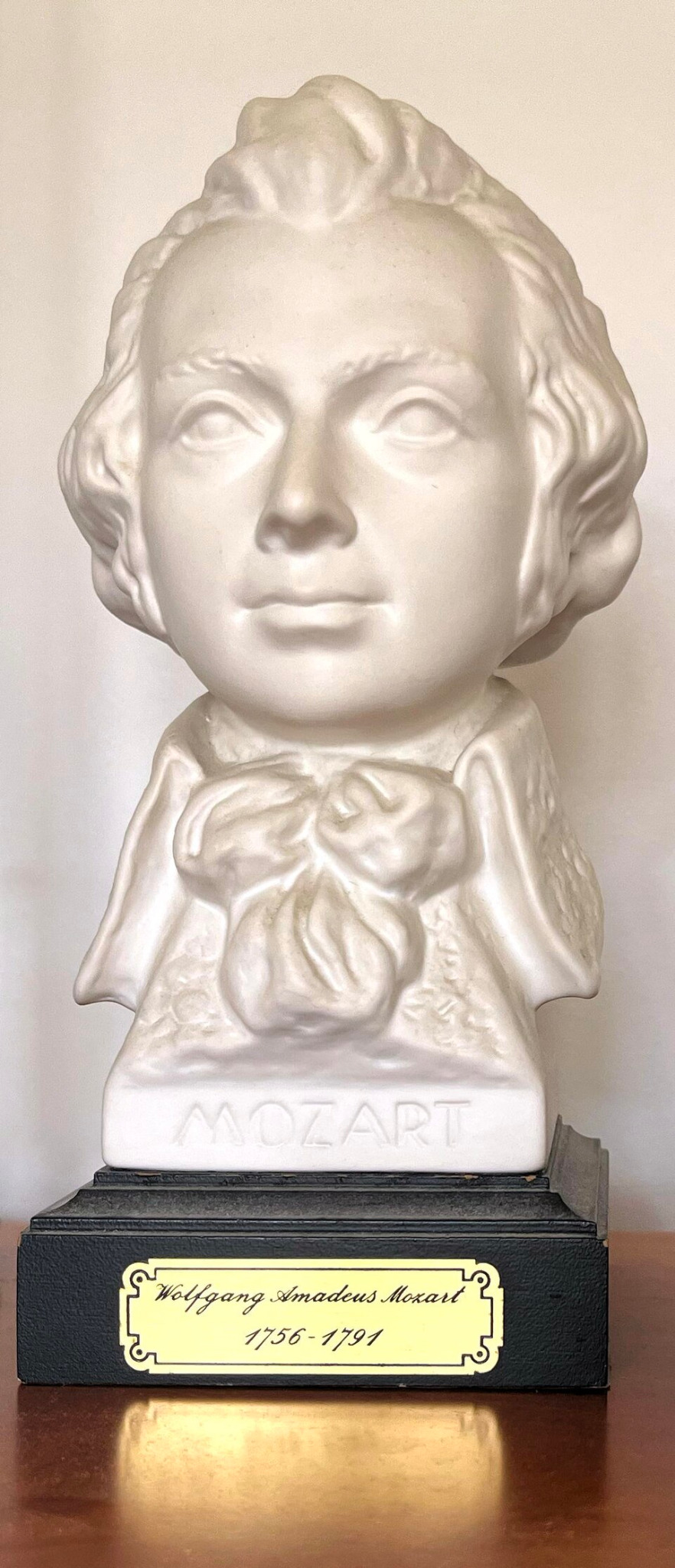
A genuine Goebel trademark may establish Goebel manufacture, but it does not automatically identify an object as an M.I. Hummel figurine.
How to Identify an Original Hummel Figurine
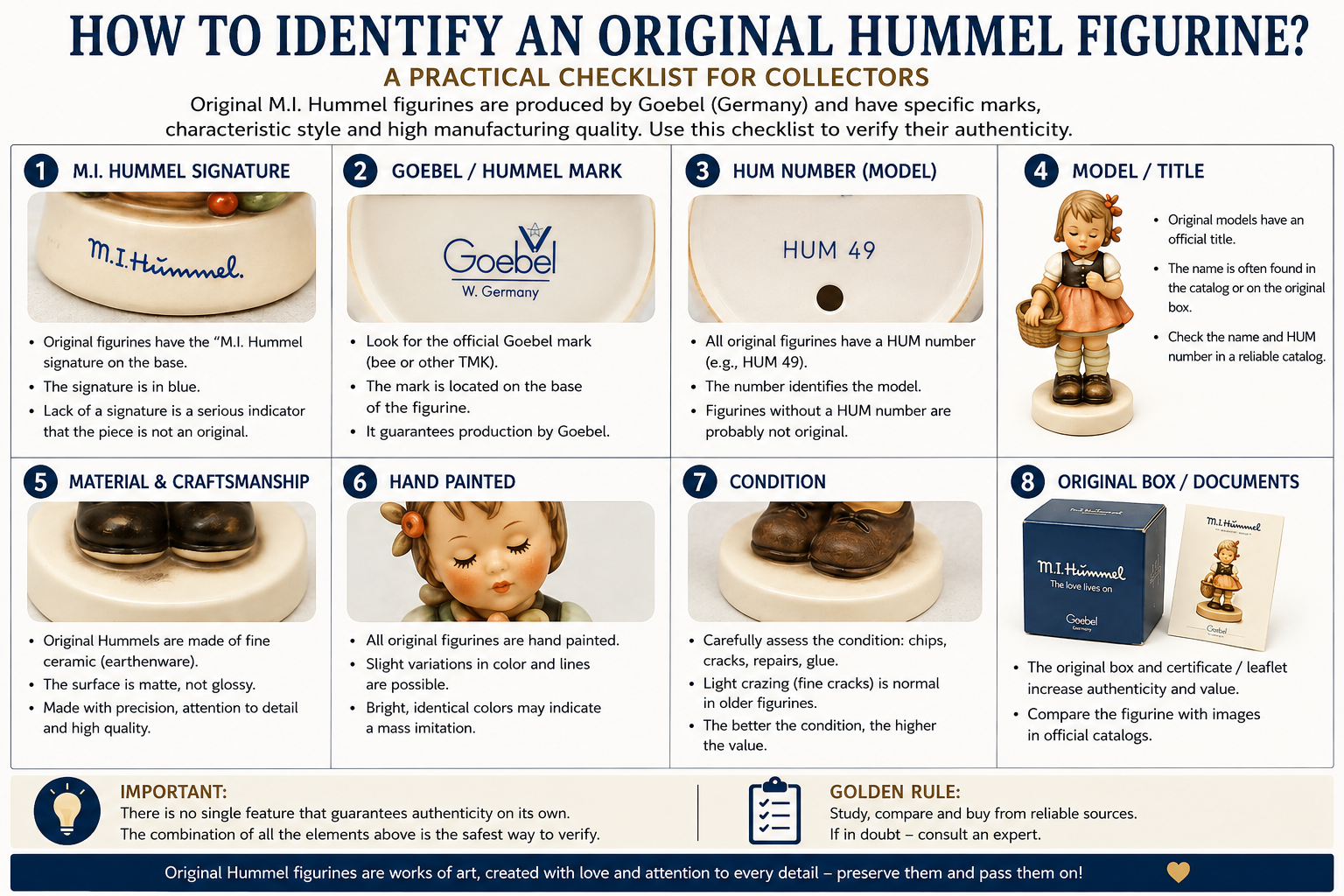
Authenticating a Hummel should always be approached as a combination of evidence. A trademark, signature or familiar-looking child figure should never be treated as proof by itself.
1. Find the HUM Number
The HUM number is the principal model or mould reference assigned to a Hummel design. It is usually found on the underside of the base and is one of the most useful pieces of information for collector research.
Always record the complete number. Additional suffixes such as /0, /I, /II or /III can identify different sizes or variations within the same model family.
2. Examine the M.I. Hummel Signature
The familiar M.I. Hummel signature is an important identifying element associated with authorised designs.
Its position can vary depending on the model and mould. The signature should therefore be examined together with the HUM number, trademark and documented characteristics of the figurine.
3. Identify the Factory Trademark
The factory trademark can help establish an approximate production period. Collectors commonly group the principal historic trademarks into the TMK system.
Our
Porcelain Marks Identification Guide
explains why factory marks should always be interpreted together with the physical object.
4. Match the Figurine to a Documented Model
Compare the pose, clothing, accessories, dimensions, base and HUM number with reliable catalogues and documented examples.
A figurine that simply resembles the Hummel style should not be attributed to M.I. Hummel without additional evidence.
5. Examine the Craftsmanship
Classic Hummel figurines are associated with careful modelling, expressive faces and controlled hand-applied decoration. Small differences between genuine examples can occur because decoration involves handwork.
Hummel Trademark Chart: TMK Marks and Dating Guide
The evolution of Hummel and Goebel trademarks is one of the most useful dating tools available to collectors.
However, TMK periods should be treated as approximate production ranges rather than exact manufacturing dates. Transitional pieces may show characteristics from more than one mark period, and factory variations are known.
The Hummel trademark chart is one of the most useful tools for approximately dating an M.I. Hummel figurine. Collectors commonly refer to the principal factory trademarks as TMK marks, beginning with the early Crown Mark and continuing through the Full Bee, Stylized Bee, later Goebel trademarks and modern Hummel Manufaktur marks. Always compare the trademark with the HUM number, M.I. Hummel signature, model details and other base markings before assigning a production period.
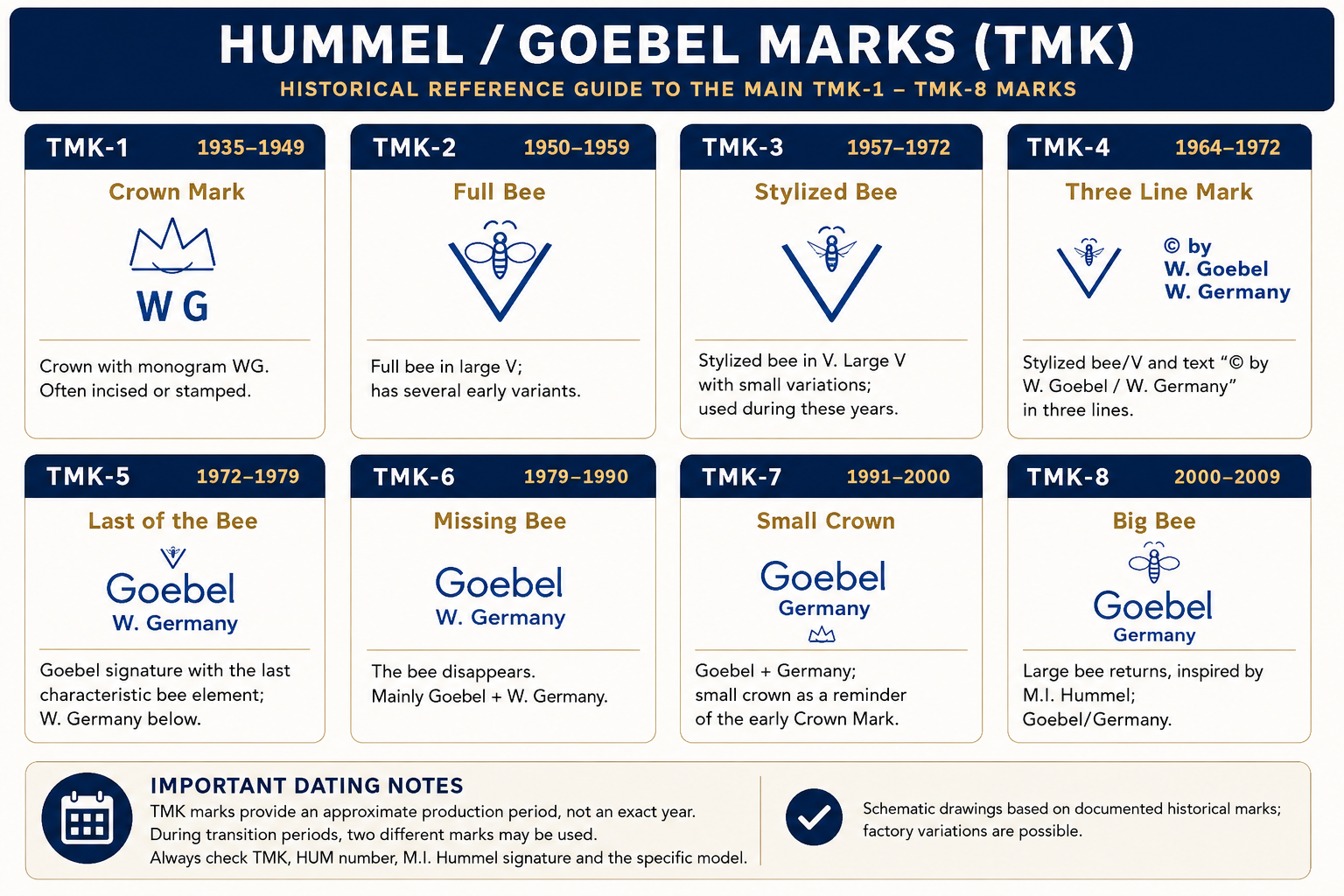
| TMK | Collector Name | Approximate Period | Key Identification Feature |
|---|---|---|---|
| TMK-1 | Crown Mark | 1934/35–1949 | Early crown trademark, stamped or incised. |
| TMK-2 | Full Bee | 1950–c.1960 | Detailed bee within a large V; several variants are documented. |
| TMK-3 | Stylized Bee | c.1957–1972 | Simplified bee symbol with large and small variations. |
| TMK-4 | Three Line Mark | 1964–1972 | Stylized bee with multi-line W. Goebel / W. Germany wording. |
| TMK-5 | Last of the Bee | 1972–1979 | The Goebel name becomes more prominent while a bee element remains. |
| TMK-6 | Missing Bee | 1979–1990 | The bee disappears from the principal trademark. |
| TMK-7 | Small Crown | 1991–2000 | Germany replaces W. Germany; a crown reference appears. |
| TMK-8 | Big Bee | 2000–2009 | The bee returns prominently to the trademark. |
| TMK-9 | Yellow Bee | From 2009 | Post-Goebel-era branding with a coloured bee. |
| TMK-10 | Manufaktur Mark | Before December 2017 | Associated with the Hummel Manufaktur production era. |
| TMK-11 | Handmade Mark | December 2017 onward | Later handmade branding associated with contemporary production. |
How to Use a Hummel Trademark Chart
Start by photographing the complete trademark on the underside of the figurine. Compare the shape of the crown, bee, lettering and factory wording with the corresponding TMK period in the Hummel trademark chart.
Do not use the trademark alone to assign an exact production year. A Hummel trademark normally identifies an approximate manufacturing period, while the HUM number, model variation, copyright information, size and documented production history can help narrow the identification.
Two examples of the same Hummel model may carry different trademarks because a successful design could remain in production across several TMK periods. This is why collectors should distinguish between the date when a Hummel design was originally created and the production period of an individual figurine.
When comparing a Hummel mark with a trademark chart, record the complete HUM number and every mark on the base. A TMK can narrow the production period, but the combination of trademark, model number, signature and physical characteristics provides much stronger identification evidence.
A trademark usually establishes a period, not an exact year. For the best result, compare the TMK with the HUM number, copyright information, physical construction and documented history of the specific model.
For the broader methodology behind dating ceramics, see
How to Date Antique Porcelain.
How to Read the Base of a Hummel Figurine
The underside of a Hummel figurine can contain several separate pieces of information. Understanding what each mark means is essential for accurate identification.
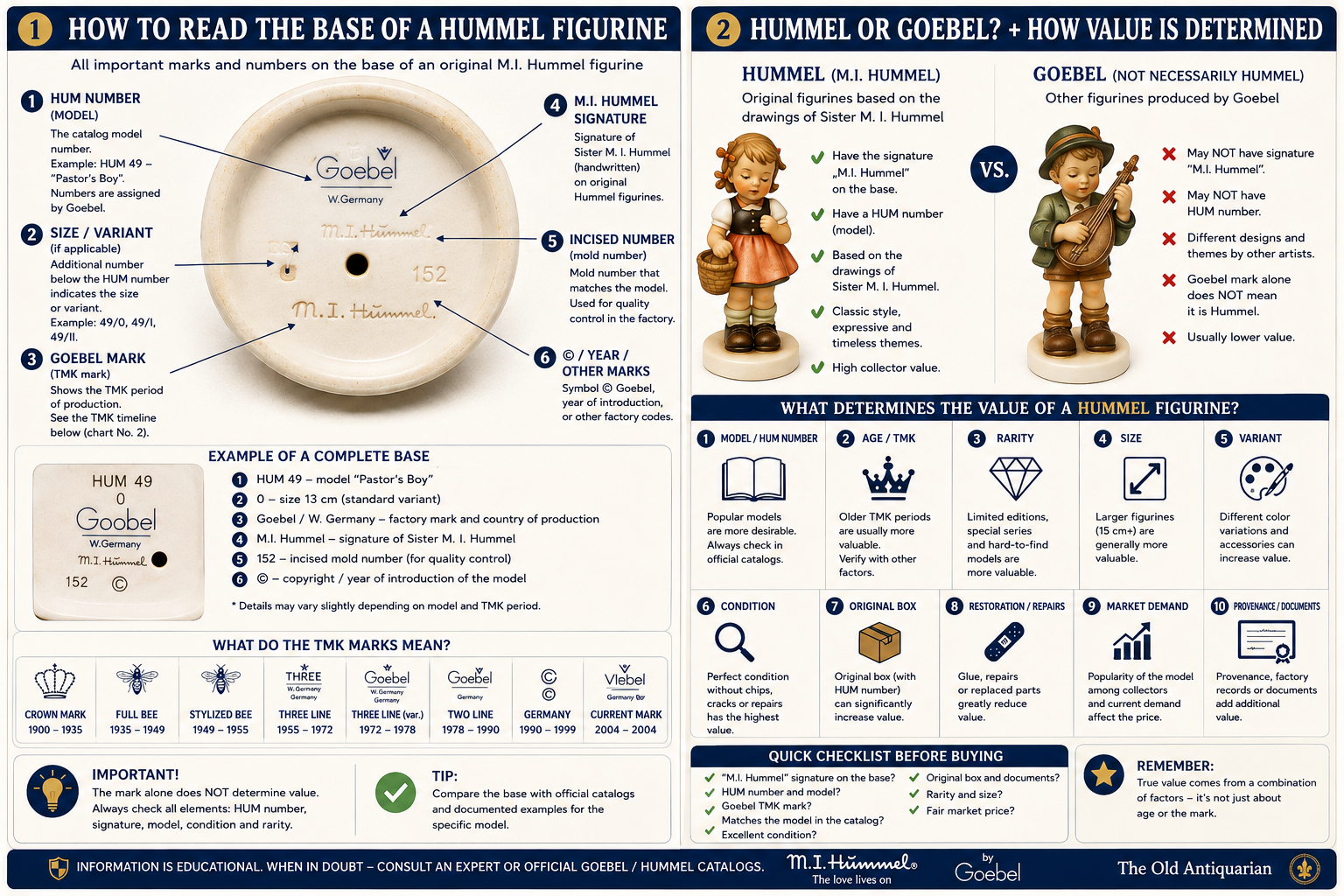
| Marking | What It Usually Means |
|---|---|
| HUM number | Identifies the principal model or mould family. |
| /0, /I, /II etc. | Can identify a size or variant within the same model family. |
| M.I. Hummel signature | Connects the design with the authorised Hummel artistic tradition. |
| TMK trademark | Factory trademark used as an approximate dating tool. |
| Copyright or incised date | May relate to the design, registration or mould history rather than the production year of the individual figurine. |
| Other numbers and symbols | May represent production, mould, quality-control or decorator information. |
Never assume that a copyright or incised date is automatically the date on which that individual figurine was manufactured.
What Does the HUM Number Mean?
The HUM number is fundamental to serious Hummel collecting. It connects the physical figurine to its documented model family and helps distinguish between pieces that may appear superficially similar.
Two figurines can depict very similar children while belonging to entirely different models. Conversely, the same basic HUM number may exist in multiple sizes, revisions or decorative variations.
When researching a figurine, record the HUM number exactly as it appears, including slashes, Roman numerals and any additional suffixes.
Hummel Figurines Beyond the Standard Standing Figure
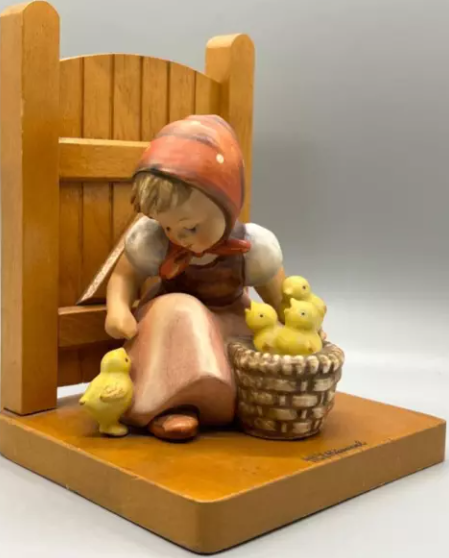
The Hummel tradition includes more than conventional free-standing figurines. Over the decades, Hummel imagery has appeared in groups, plaques, religious subjects, bells, decorative compositions and other collector formats.
Popular Hummel Subjects and Themes
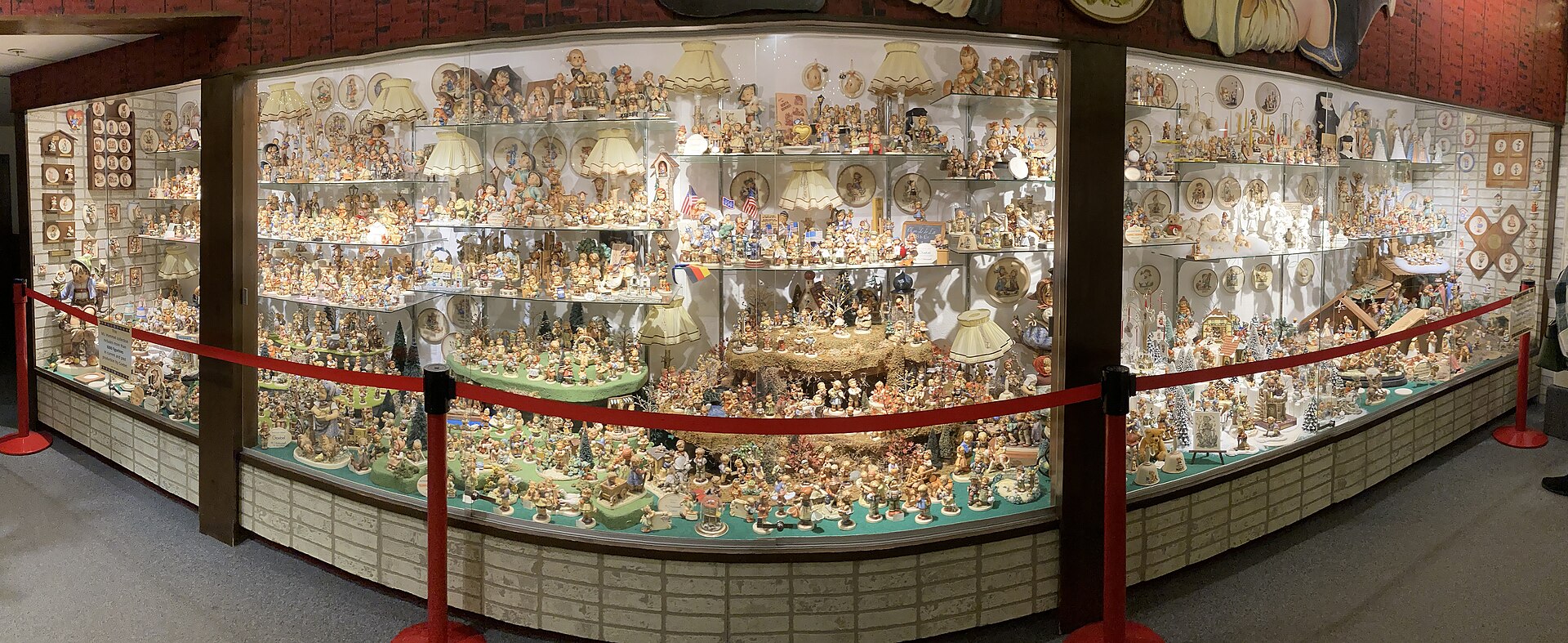
Despite the enormous number of designs produced over the decades, several themes recur throughout the Hummel tradition.
- children at play;
- young musicians;
- schoolchildren and books;
- travellers and walkers;
- flowers and gardens;
- birds and animals;
- rural life;
- religious subjects;
- Christmas and seasonal scenes;
- Madonna and Nativity compositions.
Are Old Hummel Figurines Valuable?
Some Hummel figurines can be valuable, but age alone does not determine price.
Many models were produced for long periods and survive in substantial numbers. Other versions, sizes or early examples can be considerably more difficult to find.
This means that the correct question is not simply “How old is my Hummel?” but rather:
“Which exact HUM model, size, variation and production period do I have, and what is its condition?”
What Determines the Value of a Hummel Figurine?
| Value Factor | Why It Matters |
|---|---|
| HUM model | Some designs attract much stronger collector demand than others. |
| TMK period | Earlier production can be scarcer, although the trademark alone does not determine value. |
| Rarity | Short-lived models and unusual variations may attract specialist interest. |
| Size | Different sizes within a model family can have different rarity and demand. |
| Variation | Changes in colour, accessories, modelling or base design may be collector significant. |
| Condition | Cracks, chips, missing elements and repairs can significantly reduce value. |
| Original packaging | Correct original boxes and paperwork can strengthen collector appeal. |
| Provenance | Documented history can be important for exceptional or unusual examples. |
| Market demand | Completed sales provide better evidence of market value than ambitious asking prices. |
Does an Early TMK Always Mean a Valuable Hummel?
No. An early mark can increase collector interest, but a common early figurine may still be worth less than a genuinely rare later variation.
The model, production version, rarity and condition must always be considered together.
Condition: One of the Most Important Value Factors
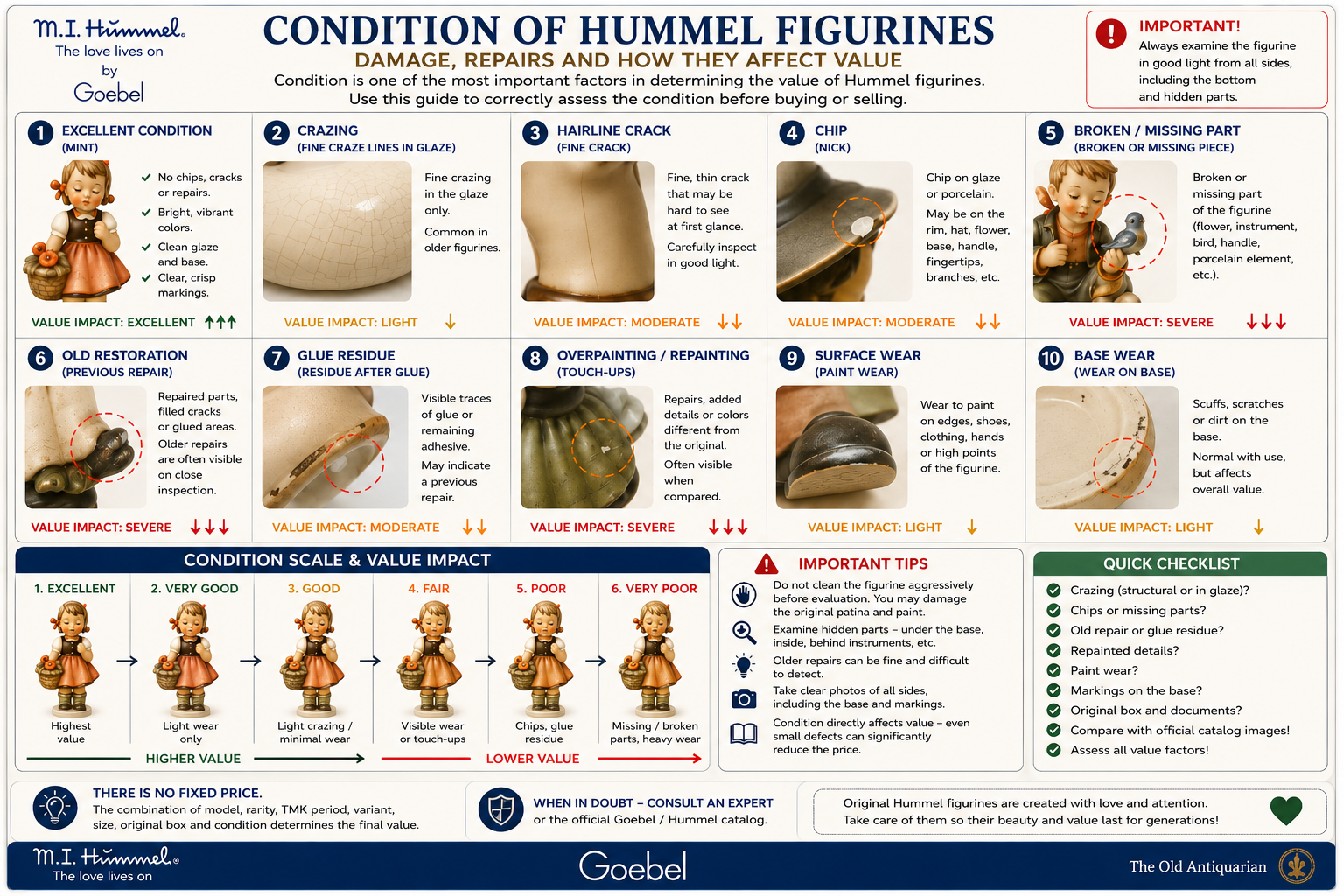
Crazing
Crazing is a network of fine lines within the glaze. It should be distinguished from a structural crack running through the ceramic body.
Light crazing may occur on older ceramic objects and does not automatically make a figurine worthless. Extensive crazing, however, can reduce visual appeal and collector demand.
Hairline Cracks
A hairline is a fine structural crack that can sometimes be difficult to see. Inspect the base, legs, neck, baskets, arms and junctions between delicate elements under good neutral light.
Chips and Missing Parts
Flowers, fingertips, birds, feathers, musical instruments, basket handles and other projecting elements are particularly vulnerable.
Even a relatively small missing detail can significantly affect the value of a desirable model.
Old Restoration
Repairs can range from obvious household glue to sophisticated professional restoration. Changes in colour, texture, gloss or modelling can reveal restored areas.
Magnification and careful examination under neutral or ultraviolet light may help identify repairs that are difficult to see at first glance.
If you believe a figurine may be rare or valuable, photograph and research it first. Aggressive cleaning, repainting or amateur glue repairs can permanently reduce collector appeal.
How to Recognise a Misidentified or Imitation Hummel
Many ceramic manufacturers produced figures of children wearing traditional European clothing. A similar appearance therefore does not automatically make an object M.I. Hummel.
A figurine may be:
- a genuine M.I. Hummel;
- a genuine Goebel product from another series;
- a legitimate figurine made by another manufacturer;
- a later decorative object inspired by the Hummel aesthetic;
- or an intentionally misleading imitation.
The safest method is to begin with the HUM number and compare the exact model with reliable references before relying on visual resemblance.
For broader authentication principles, see
What Is an Original?.
How to Photograph a Hummel Figurine for Identification
Good photographs can dramatically improve preliminary identification and valuation. Use natural indirect light whenever possible and avoid heavy filters.
Photograph these details:
- the complete figurine from the front;
- both sides and the back;
- the complete underside;
- the HUM number;
- the entire factory trademark;
- the M.I. Hummel signature;
- all additional numbers and inscriptions;
- close-ups of chips, cracks or restoration;
- the original box and documentation, if available.
How to Store and Handle Hummel Figurines
Hummel figurines often contain delicate projecting elements. Always lift a figurine by supporting the strongest part of the body and base rather than holding it by a basket, arm, flower, instrument or other fragile detail.
Display shelves and cabinets should be stable and protected from accidental knocks. Avoid prolonged exposure to strong direct sunlight and sudden changes in temperature or humidity.
Cleaning should be conservative. Avoid abrasive materials, harsh chemicals and unnecessary soaking, particularly when a figurine may contain old repairs.
Collector Checklist: 10 Things to Check Before Buying a Hummel
- Record the complete HUM number.
- Identify the TMK trademark.
- Check the M.I. Hummel signature.
- Compare the figurine with documented models.
- Confirm the size and variation.
- Inspect delicate details for chips or missing parts.
- Look for crazing and structural cracks.
- Check for glue, repainting and previous restoration.
- Never assume every Goebel object is Hummel.
- Compare completed market sales rather than asking prices alone.
Frequently Asked Questions About Hummel Figurines
Are Hummel figurines porcelain?
Most classic M.I. Hummel figurines are more accurately described as fine earthenware. The phrase “Hummel porcelain figurines” is widely used commercially, and rare experimental porcelain examples are documented, but porcelain is not the standard material of the main classic range.
Are all Goebel figurines Hummel?
No. Goebel manufactured many ceramic and porcelain products. M.I. Hummel is a specific artistic line based on the work of Maria Innocentia Hummel.
What is a HUM number?
The HUM number identifies the model or mould family and is one of the most useful starting points when researching an M.I. Hummel figurine.
What does the bee mark mean on a Hummel?
Bee symbols appear in several important historical trademarks. Changes in the form and position of the bee help collectors estimate the approximate production period.
What is a Hummel trademark chart?
A Hummel trademark chart compares the principal factory marks used on M.I. Hummel figurines during different production periods. Collectors commonly refer to these marks as TMK-1, TMK-2, TMK-3 and subsequent TMK periods. The chart can help establish an approximate production period, but the trademark should always be checked together with the HUM number, M.I. Hummel signature, model variation and documented production history.
Does the copyright date tell me when my Hummel was made?
Not necessarily. A copyright or incised date may refer to the design or mould rather than the manufacturing year of the individual figurine.
Are older Hummel figurines always worth more?
No. Age is only one factor. The precise model, rarity, size, variation, condition and current collector demand are also important.
Does crazing reduce Hummel value?
It can. Light crazing may have only a modest effect on some older pieces, while severe crazing can substantially reduce appearance and market desirability.
Does restoration reduce value?
Usually yes. The effect depends on the rarity of the model, the extent and quality of the repair and the amount of original material that remains.
Does the original box increase value?
Correct original packaging and documentation can increase collector appeal, particularly for rare, limited or exceptionally well-preserved figurines.
Can a Hummel figurine be identified from photographs?
Clear photographs of the complete figurine, underside, HUM number, trademark, signature and condition can often support a strong preliminary identification. Particularly rare or valuable examples may require physical examination.
Final Collector’s Advice
M.I. Hummel figurines occupy a distinctive place in twentieth-century European decorative art. They combine the personal artistic language of Maria Innocentia Hummel with a sophisticated German ceramic manufacturing tradition.
Their popularity has also created decades of confusion surrounding materials, trademarks, production periods, similar-looking figurines and market values.
The safest approach is therefore to identify the model first, interpret the trademark second, examine the condition carefully and value the exact version rather than the Hummel name alone.
Do You Own a Hummel or Goebel Figurine?
Send clear photographs of the complete figurine, underside, HUM number, trademark, signature and any visible damage. These details provide the strongest starting point for identification and valuation.
Related Guides
Guide to Antique Porcelain: History, Marks & Identification
How to Identify Antique Porcelain
Independent guides to identifying, researching, preserving and valuing antiques and collectible objects.
Last reviewed: 7 September 2026.
