
Royal Dux Bohemia : Identification Guide
Royal Dux Bohemia: History, Marks, Figurines, Dating & Value Guide
Last updated: 7 September 2026 | The Old Antiquarian
Quick Answer
Royal Dux Bohemia is a historic ceramic and porcelain manufacturer founded in Dux, now Duchcov in the Czech Republic, in 1853. The most famous Royal Dux mark is the pink triangle, documented in its traditional form from around 1900. Reliable identification requires much more than the mark alone: collectors should compare model and impressed numbers, country-of-origin wording, material, artistic style, modelling quality, decoration and condition.
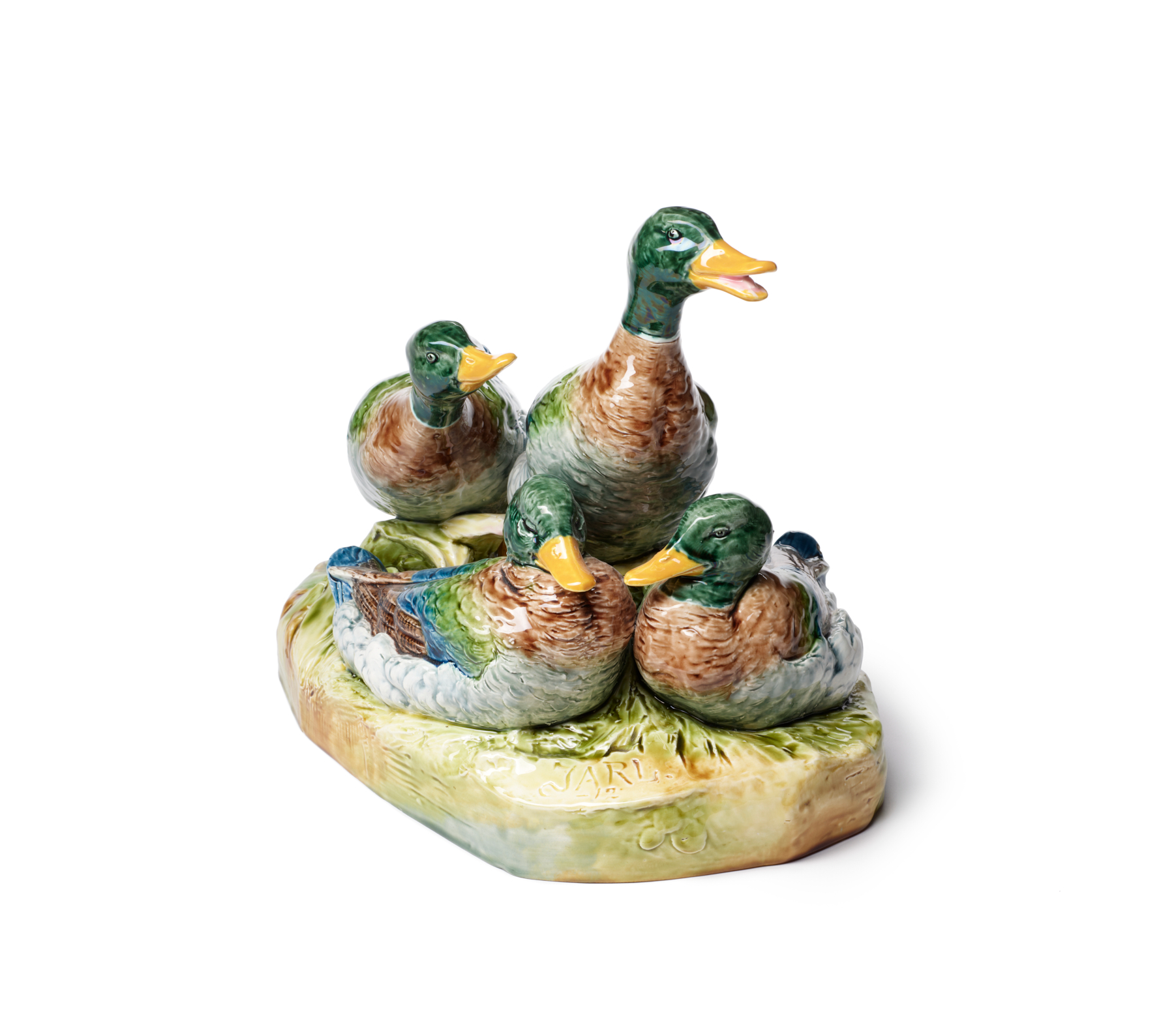
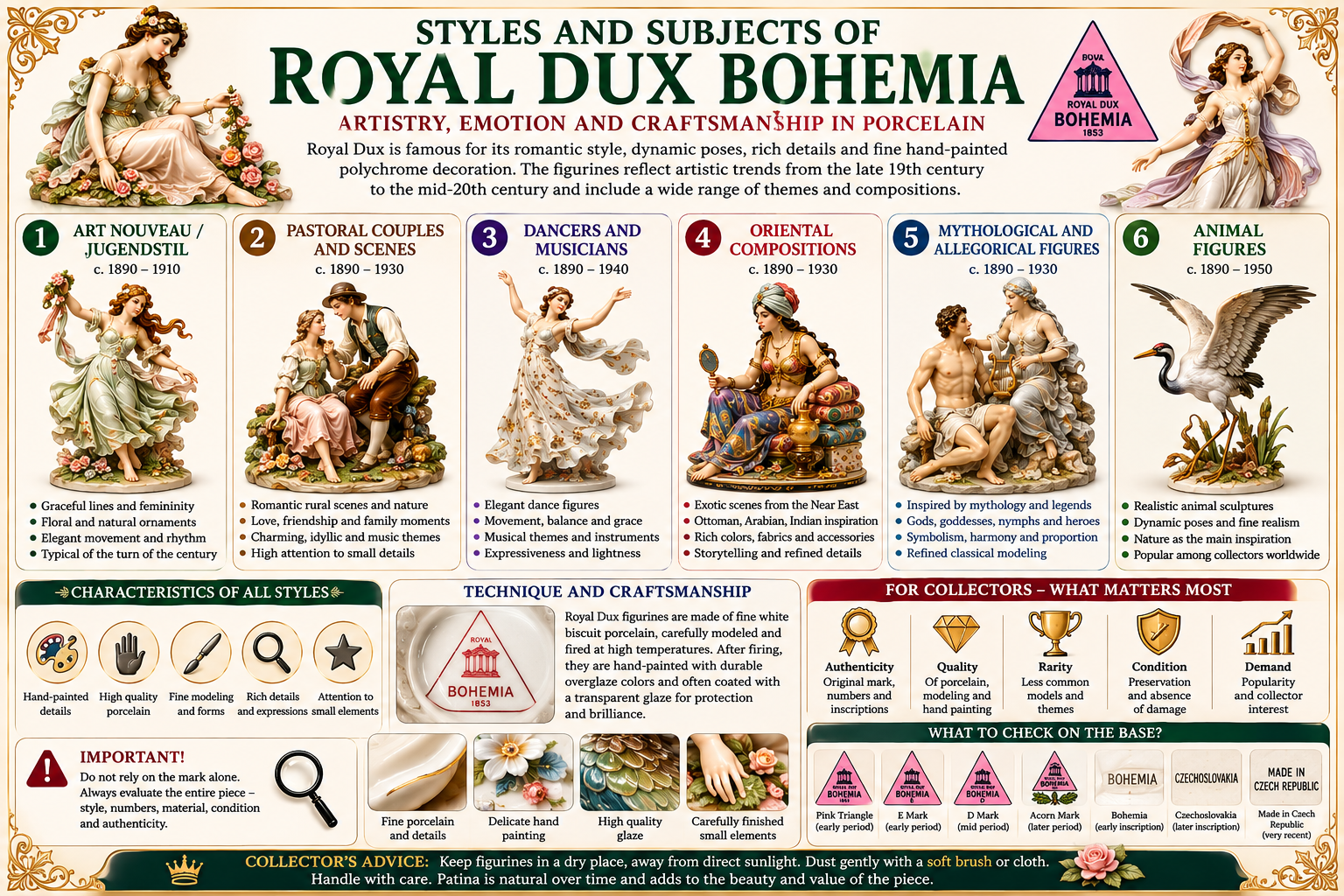
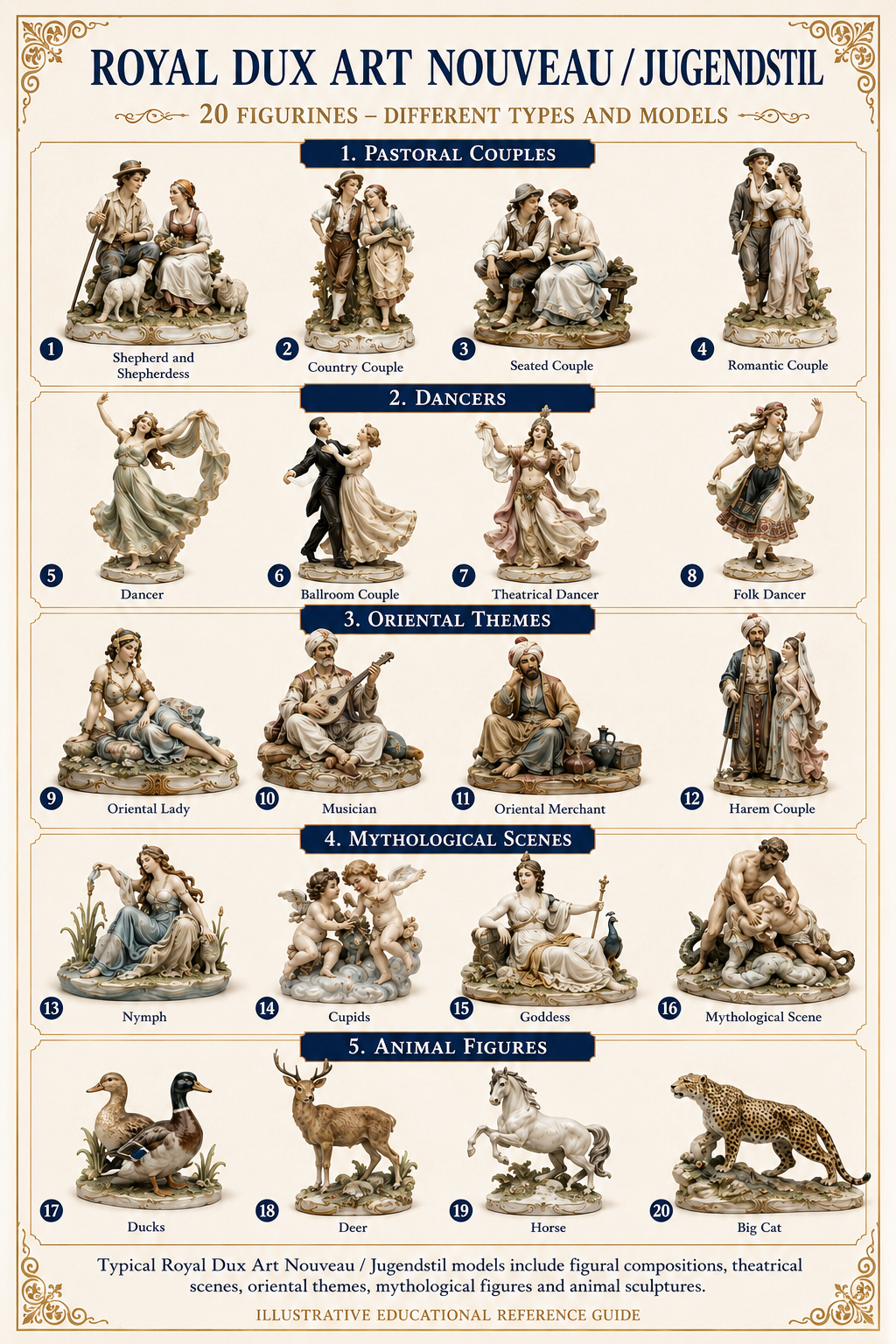
A note about the illustrations:
museum photographs in this guide show documented historical objects. The educational infographics use illustrative reconstructions to explain styles, marks and identification principles; they should not be treated as catalogues of specific historical Royal Dux models.
Royal Dux Bohemia at a Glance
| Feature | Key Information |
|---|---|
| Founded | 1853 |
| Location | Dux, now Duchcov, Czech Republic |
| Eduard Eichler | Purchased the factory in 1860 |
| Duxer Porzellan-Manufaktur | Established as a joint-stock company in the late 1890s |
| Famous Mark | Royal Dux Bohemia pink triangle, documented from around 1900 |
| Important Style | Art Nouveau / Jugendstil / Secession |
| Historic Materials | Terracotta, faience, majolica, earthenware and porcelain |
| Value Factors | Model, period, artist, rarity, size, decoration, condition, provenance and collector demand |
Royal Dux Marks and Stamps: How to Read a Royal Dux Stempel
For collectors, the fastest way to narrow down a Royal Dux date is to read the complete mark, not simply look for a pink triangle. Important clues include the wording Royal Dux Bohemia, Austria, Czechoslovakia or Czech Republic, together with the acorn, letters such as E, D or M, model numbers and any additional printed or impressed marks.
What is a Royal Dux Stempel?
German-speaking collectors often use the word Stempel when researching a Royal Dux factory mark or stamp. A Royal Dux Stempel may include the triangular device, factory wording, country-of-origin wording, letters, impressed details or other production information. It should be interpreted as part of the complete base rather than as an isolated logo.
| Mark / Wording | Useful Dating Context | Collector Interpretation |
|---|---|---|
| Royal Dux Bohemia pink triangle | Traditional pink triangular marking documented from around 1900 and still used in later production. | The triangle alone does not prove an early date. |
| Royal Dux / Austria | Documented printed variants were used during the early twentieth century, including examples dated 1904–1918. | Useful evidence for pre-Czechoslovak production when the whole mark matches a documented form. |
| E in the acorn | Documented on variants used during 1912–1918. | Associated with the Eichler name; do not date from the letter alone. |
| Czechoslovakia | Appears on documented post-1918 Royal Dux marks and export combinations. | Strong evidence that the piece is not an original pre-1918 production example. |
| M | Documented from 1953 onward on pieces connected with production at Most. | A later-production clue rather than an Art Nouveau-period identifier. |
| Made in Czech Republic | Documented from 1993 onward. | Clearly indicates Czech Republic-era production. |
Important: Royal Dux has used the traditional pink triangle for a very long period. A pink triangle therefore means Royal Dux identification evidence, not automatically “antique Royal Dux.” Dating requires the wording, symbol configuration, numbers, material and model to agree.
If you are new to European ceramics, our
Guide to Antique Porcelain
provides a broader introduction to porcelain history, manufacturers, factory marks, identification and collecting.
Royal Dux Bohemia: What Does the Mark Mean?
The wording Royal Dux Bohemia identifies the historic Bohemian origin associated with the manufactory at Dux, today Duchcov in the Czech Republic. For collectors, the word Bohemia is an important historical clue, but it should not be treated as an exact date code.
To date a Royal Dux Bohemia piece more reliably, compare the complete factory mark with its country wording, triangle or acorn configuration, model and impressed numbers, ceramic body, style and decoration. The same broad Royal Dux identity continued across different political and production periods, so the entire object must agree with the proposed date.
Collector Tip: “Royal Dux Bohemia” confirms an important part of the factory identity and historical geography, but the wording alone does not prove that a figurine belongs to the early Art Nouveau period.
History of Royal Dux Bohemia
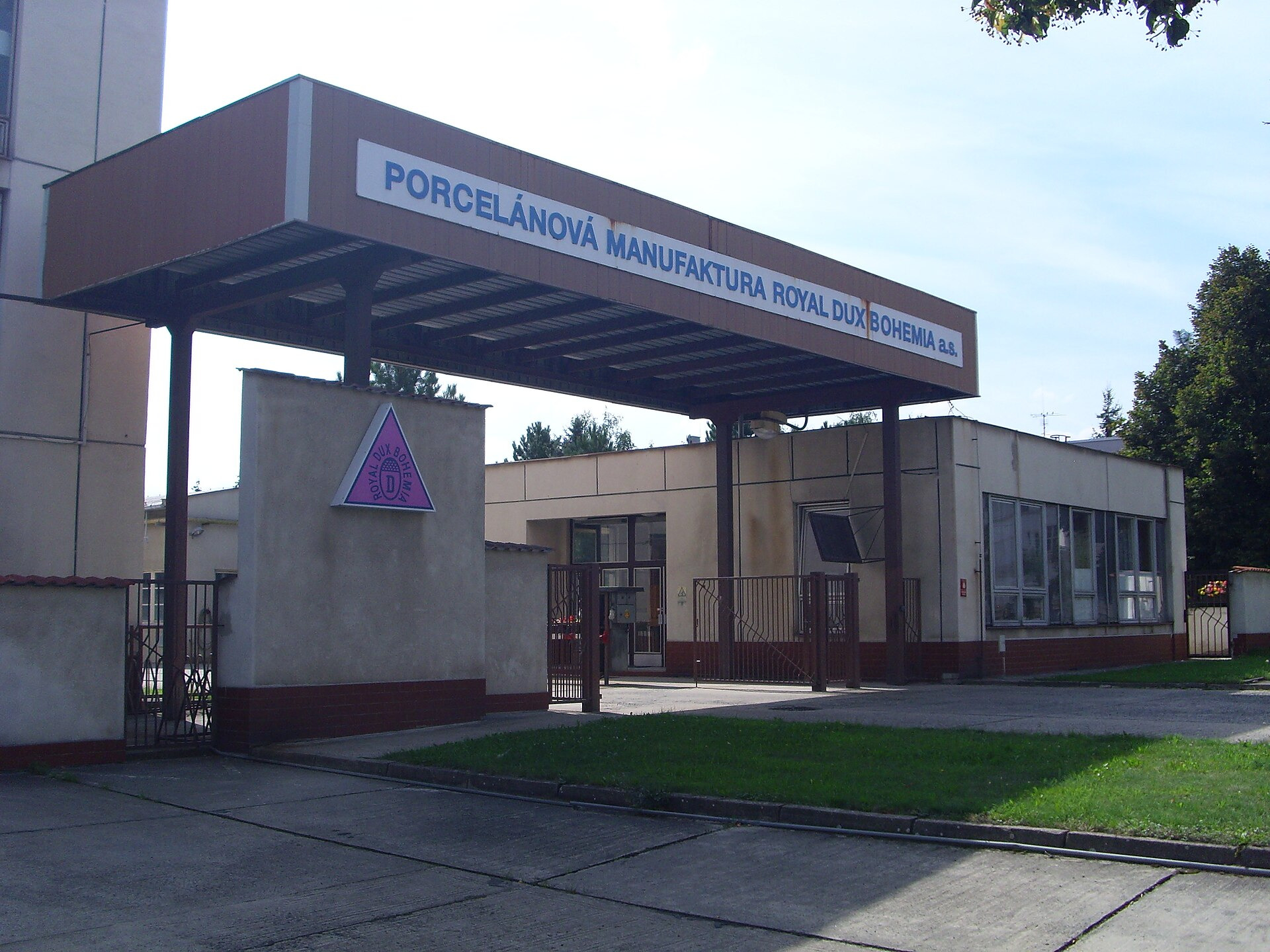
The history of Royal Dux begins in 1853, when a ceramic factory was established in Dux, the Bohemian town now known as Duchcov in the Czech Republic. Its earliest output consisted largely of utilitarian ceramic wares made from materials available in the surrounding region.
A decisive change came in 1860, when the factory was acquired by the experienced modeler and entrepreneur Eduard Eichler. Under the name E. Eichler Thonwaren-Fabrik, production expanded considerably and became especially associated with terracotta, faience and majolica.
From Eichler to Duxer Porzellan-Manufaktur
Following Eichler’s death in 1887, the company continued under his family and later underwent significant expansion and modernization. By the end of the nineteenth century the business was reorganized as Duxer Porzellan-Manufaktur A.G.
This period was important because porcelain became increasingly significant alongside the factory’s established production in other ceramic bodies.
Collector’s Note:
the date 1853 seen on some later Royal Dux marks refers to the year the original factory was founded. It is not automatically the production date of the object.
The Art Nouveau / Jugendstil Golden Age
Around the turn of the twentieth century, Royal Dux entered one of the most celebrated periods in its history. The flowing forms and naturalistic ornament of Art Nouveau—known in much of Central Europe as Jugendstil or Secession—were particularly well suited to the factory’s ambitious figural production.
One of the important modelers associated with this flourishing period was Alois Hampel. Elegant figures, floral forms, romantic compositions, dancers, allegorical subjects and highly decorative vessels became closely associated with the artistic identity of the manufactory.
International recognition followed. The company received the Grand Prix at the 1904 World’s Fair in St. Louis, followed by further exhibition awards in Milan and Liberec in 1906.
Royal Dux Figurine Styles and Subjects
Royal Dux is particularly appealing to collectors because the factory worked across an unusually broad range of figural subjects. Stylistic attribution alone cannot authenticate a piece, but recognizing these recurring themes can help narrow the field before marks and model numbers are examined.
| Category | Typical Characteristics | What to Examine |
|---|---|---|
| Art Nouveau / Jugendstil | Flowing forms, nature, movement, elegant elongated silhouettes | Drapery, floral ornament, pose, surface decoration |
| Pastoral Couples | Romantic rural scenes and idealized country life | Costume, flowers, baskets, animals and naturalistic bases |
| Dancers & Musicians | Movement, theatricality and expressive poses | Hands, instruments, balance, drapery and fragile details |
| Orientalist Subjects | European interpretations of Near Eastern and North African themes | Costumes, textiles, jewellery, accessories and colour |
| Mythological & Allegorical Figures | Classical figures, nymphs, gods and allegorical compositions | Anatomy, attributes, symbolism and composition |
| Animal Figures | Birds, wild animals and complex naturalistic groups | Anatomy, movement, feathers, fur and sculptor signatures |
Royal Dux Animal Figurines
Animal sculpture forms an important part of the Royal Dux story. A particularly valuable documented reference is the Figural Group of Four Mallard Ducks modeled by Swedish-born sculptor Otto Jarl (1856–1915) around 1912.
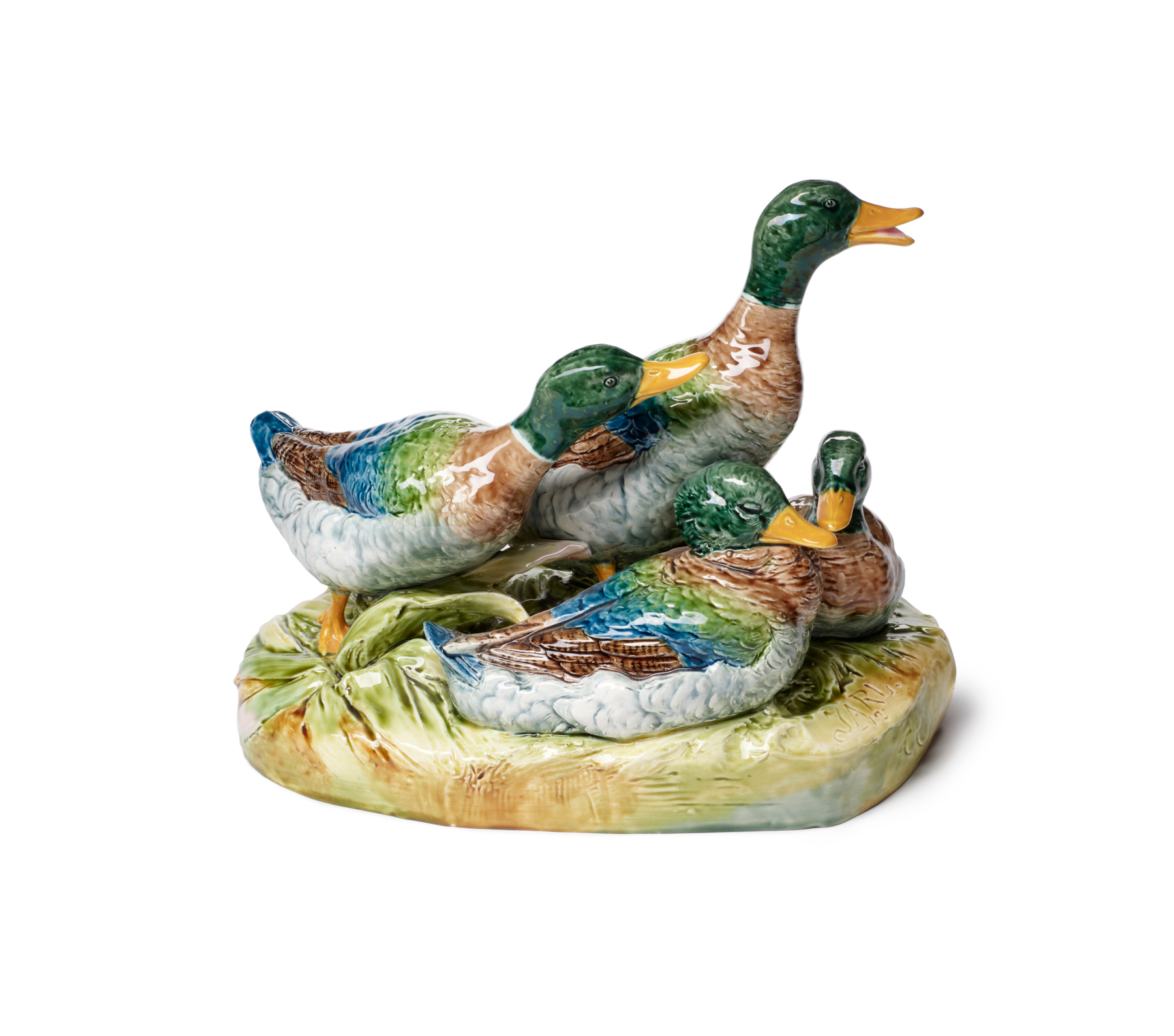
The Walters Art Museum identifies this particular group as lead-glazed earthenware (majolica). Its molded inscription includes Jarl’s name and “–12,” probably referring to the year in which the model was designed.
This museum example is particularly useful because it demonstrates an important rule: not every object sold or collected under the Royal Dux name is necessarily porcelain.
Are All Royal Dux Figurines Porcelain?
No. This is one of the most important distinctions to understand when researching Royal Dux.
During its long history the factory worked with several ceramic bodies. Earlier production under Eduard Eichler was particularly associated with terracotta, faience and majolica, while porcelain became increasingly important around the end of the nineteenth century.
| Material | Royal Dux Context | Collector’s Note |
|---|---|---|
| Terracotta | Important in nineteenth-century Eichler production | Do not judge it by porcelain characteristics |
| Faience | Used for decorative ceramic wares | Body and glaze should be examined independently |
| Majolica / Earthenware | Used for richly glazed decorative and sculptural works | The Otto Jarl mallard group is a documented example |
| Porcelain | Increasingly important from the late nineteenth century onward | Closely associated with many famous Royal Dux figurines and decorative works |
If you are uncertain about the ceramic body itself, begin with our
complete guide to identifying antique porcelain
before attempting to date the piece.
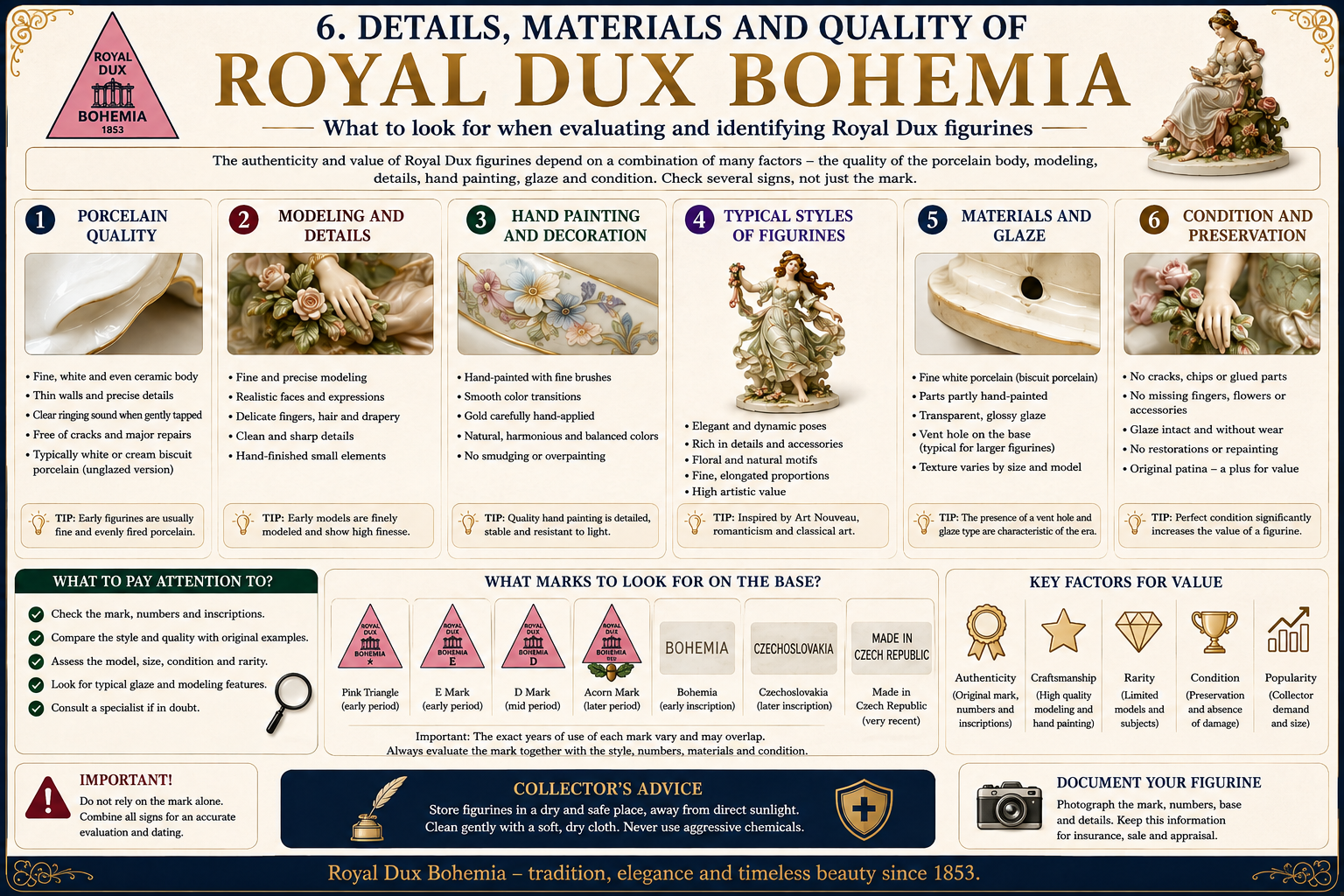
How to Identify an Original Royal Dux Figurine
The famous pink triangle is an excellent starting point, but it is not an authentication certificate. Marks can vary, later objects can use historic-looking designs, and false or misleading Royal Dux markings also exist.
A convincing identification should therefore bring several independent features into agreement.
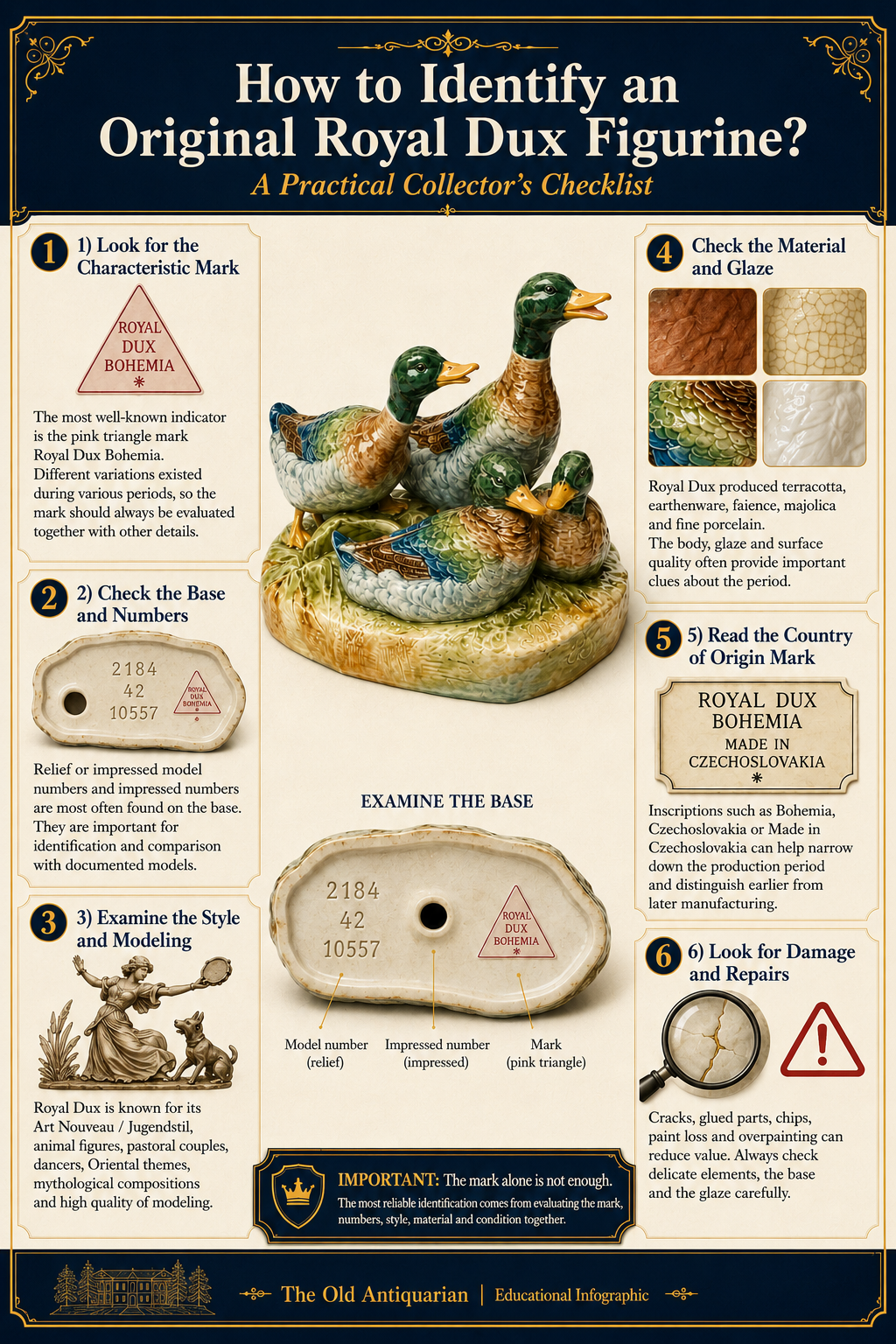
1. Examine the Entire Figurine
Before turning the object over, study the quality of the modeling. Pay particular attention to faces, hands, fingers, drapery, flowers, feathers, animal anatomy and the transition between the figures and their base.
A famous mark on poorly modeled ceramic should immediately raise questions.
2. Examine the Base
The underside may contain much more information than the main trademark. Record every visible feature before attempting to interpret it.
- Factory mark
- Model number
- Impressed or relief numbers
- Shape or size numbers
- Letters and internal factory codes
- Painter’s or decorator’s marks
- Country-of-origin wording
- Paper labels or stickers
- Artist or modeler signature
3. Compare the Material and Glaze
The ceramic body must make sense for the claimed period and model. A Royal Dux attribution should not be accepted simply because a triangle appears underneath.
4. Compare the Model
Where possible, identify the exact subject and model number and compare it with reliable catalogues, museum collections and documented examples.
5. Inspect the Condition
Look for repairs, overpainting, replaced parts and subtle differences in colour or gloss. Restoration can obscure evidence that would otherwise help with authentication.
The Famous Royal Dux Pink Triangle Mark
The most recognizable Royal Dux mark is the pink triangular tablet. The official factory history documents the traditional marking method from around 1900, describing a triangular mark made from pink material carrying the Royal Dux Bohemia name and an acorn.
The acorn has historical significance: the German word Eichel means acorn and relates to the Eichler name.
A later mark may incorporate 1853 to refer to the foundation of the factory. It does not mean that the object itself was made in 1853.
For a broader explanation of backstamps, impressed marks and factory symbols, see our
Porcelain Marks Identification Guide.
Royal Dux Marks and Chronology
Royal Dux dating is more complicated than many simplified internet charts suggest. Several marks existed at the same time, export marks varied, and transitional pieces can combine features associated with different periods.
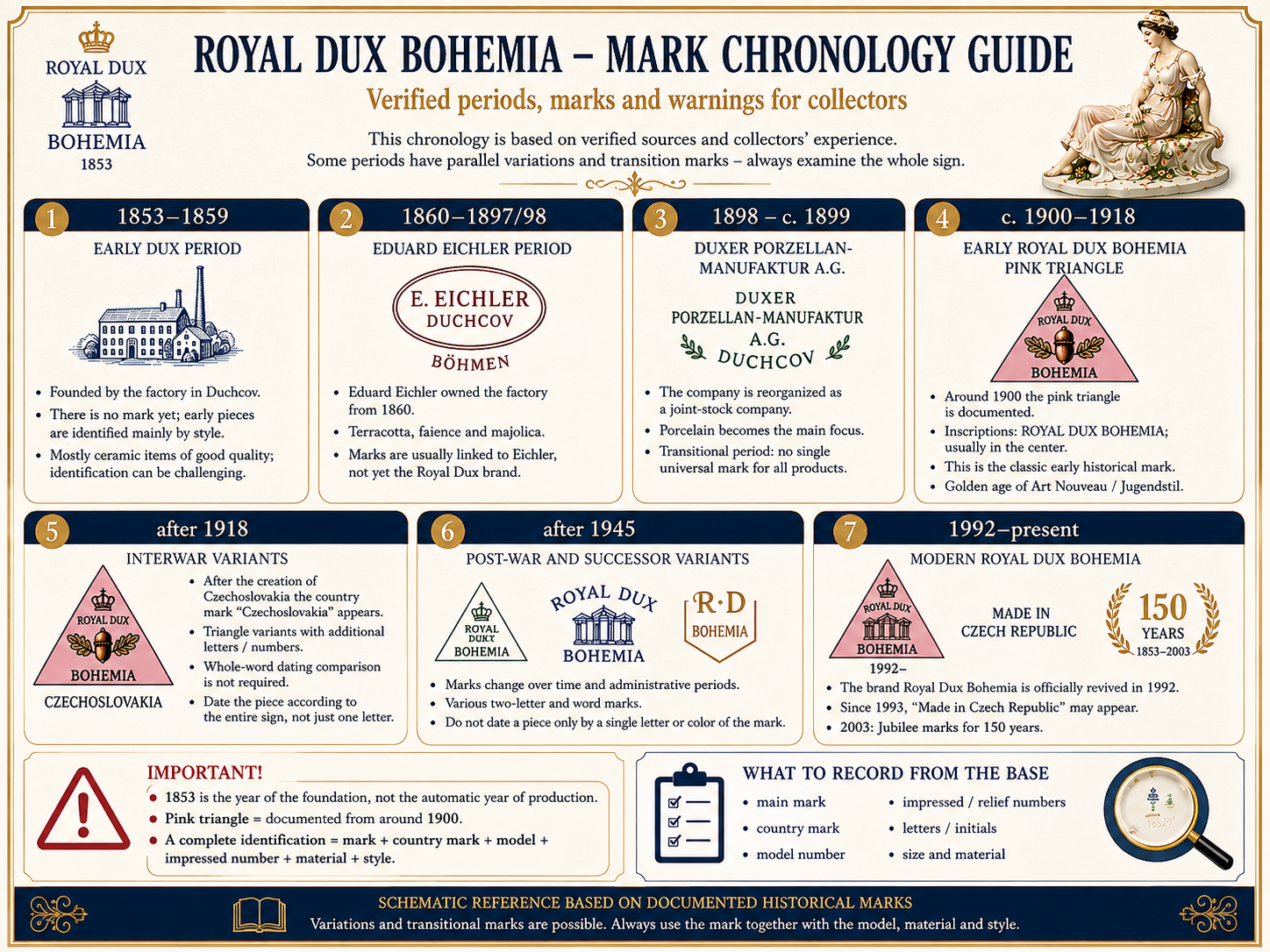
| Period | Historical / Marking Context | Dating Significance |
|---|---|---|
| 1853–1860 | Early Dux factory | Predates the famous Royal Dux pink triangle. |
| 1860–1897 | Eduard Eichler Thonwaren-Fabrik | Marks relate to the Eichler business rather than the later familiar Royal Dux trademark. |
| Late 1890s | Duxer Porzellan-Manufaktur A.G. | Transitional corporate period as porcelain production expanded. |
| 1900–1918 | Early Royal Dux marks, including pink triangle variants | Important Art Nouveau period. Several mark variants are documented. |
| 1912–1918 | Documented E-in-acorn triangle variants | Useful when the precise configuration corresponds with documented examples. |
| From 1918 | Czechoslovakia wording and additional interwar variants | Country wording provides a strong terminus after the formation of Czechoslovakia. |
| 1918–1945 | Multiple triangle, acorn, DPM and country-mark combinations | Exact dating requires comparison of the complete mark, not one letter or symbol. |
| 1938–1945 | German occupation-period variants | Certain documented marks relate specifically to this political period. |
| From 1953 | Some M-marked pieces | The M is associated with production connected with the factory at Most. |
| 1990s | Modern stickers and renewed Royal Dux branding | Do not confuse modern labels with earlier marks. |
| From 1993 | Made in Czech Republic | Clearly indicates Czech Republic-era production. |
| 2003 | 150th anniversary markings | Commemorates 150 years since the factory’s 1853 foundation. |
the letters E, D or M, the acorn, a pink triangle, or the word Czechoslovakia should never be interpreted in isolation. The exact design and combination of the complete mark matter.
Royal Dux Austria Marks
Some early twentieth-century Royal Dux marks use the wording Royal Dux together with Austria. Documented variants are known from the period 1904–1918. These marks can be especially useful when distinguishing pre-1918 production from pieces carrying later Czechoslovak country wording.
However, the word Austria should still be assessed together with the exact logo, central symbol, model number and physical characteristics of the object. Several mark variants were used within the same broad period.
Royal Dux Czechoslovakia Marks
After the creation of Czechoslovakia in 1918, Royal Dux used a variety of marks and export combinations incorporating Czechoslovakia or Made in Czechoslovakia. Documented examples include triangle and acorn marks accompanied by country-of-origin wording, as well as DPM-related combinations.
For dating purposes, Czechoslovakia wording is a strong chronological clue: it rules out original manufacture before 1918. It does not, by itself, identify an exact year, because several Royal Dux marks remained in use for long periods and could overlap.
Royal Dux Pink Triangle: Original Mark or Fake?
A pink triangle should never be treated as proof of age or authenticity by itself. The traditional triangle has continued in Royal Dux marking practice into modern production, and documented reference collections also record misleading or fake examples.
One documented fake type consists of a poorly formed in-mould triangular feature simply painted pink rather than a convincing factory-applied mark. Later paper or printed labels can also be misunderstood when separated from the rest of the object.
Check the Mark Against the Object
- Does the mark style match the claimed production period?
- Does the country wording agree with the historical date?
- Do the model and impressed numbers correspond with documented examples?
- Is the material correct for the model?
- Does the modelling quality match known Royal Dux production?
- Are there signs that the mark or surrounding base has been altered or repainted?
The safest conclusion comes from agreement between mark + model + material + workmanship + period + provenance, not from the colour of the triangle alone.
How to Read Royal Dux Model and Impressed Numbers
Royal Dux bases often contain impressed, molded or painted numbers in addition to the main trademark. These markings can be extremely useful when the same configuration can be matched to documented factory or museum examples.
However, there is no rule stating that every number has the same meaning on every piece.
| Marking | Possible Meaning |
|---|---|
| Model Number | Identifies a specific design or sculptural model |
| Shape Number | May identify the mould or form |
| Size / Variant Number | May distinguish dimensions or versions of a model |
| Letters | May represent factory, production or control information |
| Painter / Decorator Mark | May identify an individual worker, decorator or internal production stage |
Record every number and letter exactly as it appears. Never assume that a two-digit or four-digit number is automatically a production year.
How to Date a Royal Dux Figurine
Dating Royal Dux is most reliable when several independent clues point toward the same period.
Use this order:
- Identify the exact factory mark.
- Record the country-of-origin wording.
- Record every model and impressed number.
- Identify the ceramic material.
- Study the artistic style and construction.
- Compare the model with documented examples.
- Check whether the physical condition is consistent with the proposed age.
For a detailed explanation of this methodology, see
How to Date Antique Porcelain.
Early Royal Dux vs Later Production
A figurine that looks Edwardian or Art Nouveau is not necessarily an early example. Successful Royal Dux designs could remain in production for long periods, and older styles were sometimes continued or revived.
| Feature | Question to Ask |
|---|---|
| Factory Mark | Does the exact version correspond with the proposed period? |
| Country Mark | Does it say Bohemia, Austria, Czechoslovakia or Czech Republic? |
| Model Number | Can the same number be documented in a catalogue or museum? |
| Material | Is the ceramic body consistent with the model and period? |
| Decoration | Do the painting, gilding and glaze agree with documented examples? |
| Condition | Does the surface show plausible, natural evidence of age? |
Condition, Damage and Restoration
Condition is especially important with complex figurines because Royal Dux designs can include numerous delicate projecting elements.
Check These Areas Carefully
- Fingers and hands
- Flowers and leaves
- Feathers and beaks
- Animal ears, horns and tails
- Musical instruments
- Basket handles
- Edges of flowing drapery
- Connections between figures and the base
Signs of Previous Restoration
Old repairs may appear as differences in gloss, colour or texture. Look for adhesive residue, overpaint, unusually smooth surfaces, filled cracks and areas where details appear softer than the surrounding original modeling.
Household glue, repainting and aggressive cleaning can remove valuable evidence, make future conservation more difficult and significantly reduce collector value.
What Makes a Royal Dux Figurine Valuable?
There is no universal Royal Dux price guide. Two similarly sized figurines can sell for dramatically different amounts because collector value depends on the exact model and its individual characteristics.
Is Royal Dux porcelain valuable? Some Royal Dux figures and decorative works can be highly collectible, but the factory name or pink triangle alone does not guarantee a high value. Early or scarce models, documented artist-designed pieces, large and complex groups, exceptional decoration and examples in strong original condition may attract greater interest than common later production.
| Value Factor | Why It Matters |
|---|---|
| Model | Some subjects are substantially more desirable than others. |
| Production Period | Important early artistic periods can attract greater collector interest. |
| Artist / Modeler | A documented sculptor such as Otto Jarl can add artistic and historical interest. |
| Rarity | Uncommon models and variants can command stronger demand. |
| Size & Complexity | Large complicated groups are difficult to manufacture and survive intact. |
| Decoration | Quality of painting, glazing and gilding contributes to desirability. |
| Condition | Missing parts, cracks and restoration usually reduce market value. |
| Provenance | Old invoices, catalogues and documented ownership can strengthen confidence. |
| Collector Demand | Recent comparable sold results provide the best indication of current market interest. |
Does an Old Royal Dux Figurine Automatically Have High Value?
No. Age is only one factor.
An early but common or heavily restored piece may be worth less than a later, scarce model in exceptional original condition. Likewise, an unusual documented artist model may attract far more interest than an anonymous decorative figure of similar age.
This principle applies throughout the antique porcelain market: identity + rarity + quality + condition + demand usually matter more than age alone.
How to Photograph a Royal Dux Figurine for Identification
Good photographs often make the difference between a vague attribution and a useful preliminary identification.
- Photograph the complete figurine from the front.
- Photograph both side views.
- Photograph the back.
- Photograph the entire underside.
- Take a close-up of the main factory mark.
- Photograph every model and impressed number.
- Record signatures, initials and additional marks.
- Photograph damage and restoration.
- Measure height, width and depth.
- Record the object’s weight where useful.
Royal Dux Collector Checklist
| No. | Check Before Buying, Selling or Dating |
|---|---|
| 1 | Photograph the complete factory mark. |
| 2 | Record the country-of-origin wording. |
| 3 | Record every number, letter and symbol. |
| 4 | Try to identify the exact model. |
| 5 | Determine whether the body is porcelain, majolica, faience or another ceramic. |
| 6 | Evaluate modeling and decorative quality. |
| 7 | Inspect all fragile projecting details. |
| 8 | Look for hidden restoration and overpainting. |
| 9 | Preserve labels, boxes, catalogues and provenance. |
| 10 | Compare recent sold examples of the same model—not merely asking prices. |
Frequently Asked Questions About Royal Dux Bohemia
When was Royal Dux founded?
The original factory in Dux, now Duchcov, was founded in 1853. Eduard Eichler acquired it in 1860 and significantly expanded its artistic ceramic production.
When did the Royal Dux pink triangle mark appear?
The traditional Royal Dux Bohemia pink triangle marking system is documented from around 1900.
Does a Royal Dux pink triangle mean the piece is antique?
No. The traditional pink triangle was documented around 1900, but Royal Dux continued using this form of branding in later production. The complete mark, country wording, model number, material and style must be examined before assigning an age.
What does Austria mean on a Royal Dux mark?
Documented Royal Dux marks carrying Austria are known from the early twentieth century, including variants used from about 1904 to 1918. The exact configuration should be compared with documented marks before dating.
How old is Royal Dux marked Czechoslovakia?
Czechoslovakia wording generally indicates manufacture after the country’s creation in 1918. It narrows the date range but does not identify an exact year on its own.
Does 1853 on a Royal Dux mark indicate the production year?
No. On later marks, 1853 refers to the historic foundation of the factory rather than automatically indicating when the individual object was manufactured.
What does the E on a Royal Dux mark mean?
The letter E is associated with Eichler. Documented E-in-acorn variants occur during the early twentieth-century Royal Dux period, including examples from 1912–1918. The complete mark should be compared with documented references before dating.
What does D mean on Royal Dux?
D is associated with Dux and appears in later mark variants. The letter alone cannot establish an exact manufacturing date.
What does M mean on Royal Dux?
M appears on some pieces from 1953 onward and is associated with production connected with the factory at Most.
What does Czechoslovakia mean on a Royal Dux base?
The wording provides an important country-of-origin clue and generally indicates manufacture after the creation of Czechoslovakia. It should still be interpreted alongside the complete factory mark.
Are all Royal Dux figurines porcelain?
No. Royal Dux and its predecessor factory produced terracotta, faience, majolica, earthenware and porcelain at different points in their history.
Are Art Nouveau Royal Dux figurines valuable?
Important Art Nouveau models can be highly collectible, particularly when the model is scarce, well documented and preserved in excellent original condition. The style alone does not determine price.
Does restoration reduce Royal Dux value?
Usually yes. The effect depends on the rarity of the model, the extent and location of the damage and the quality of the restoration.
Can Royal Dux be identified from photographs?
Clear photographs of the entire object, underside, factory mark, model numbers and condition can often support a useful preliminary identification. Rare or particularly valuable pieces may still require physical examination.
What is a Royal Dux Stempel?
Stempel is the German word commonly used for a stamp or factory mark. When researching a Royal Dux Stempel, examine the complete base for the triangular device, wording, country name, model numbers, impressed details and other factory information rather than identifying the piece from one symbol alone.
What does Royal Dux Bohemia mean?
Royal Dux Bohemia refers to the manufactory’s historic association with Dux in Bohemia, today Duchcov in the Czech Republic. The wording is useful for identification, but it is not an exact production date and should be interpreted together with the complete mark and object.
Is Royal Dux porcelain valuable?
Some Royal Dux porcelain and ceramic figures can be valuable, especially scarce models, important early works, documented artist-designed pieces and examples in excellent original condition. Value depends on model, period, rarity, size, decoration, condition, restoration, provenance and current collector demand.
Final Thoughts
Royal Dux Bohemia cannot be understood through the pink triangle alone. Its history spans more than a century and a half of changing ownership, materials, artistic movements, export markets and production methods.
The most reliable collector’s approach is therefore to treat every figurine as a combination of evidence:
mark + model + numbers + material + style + craftsmanship + condition + provenance.
When these characteristics support one another, it becomes far easier to distinguish an important early Royal Dux work from a later production piece, identify restorations and form a realistic view of collector value.
Do You Own a Royal Dux Bohemia Figurine?
Send clear photographs of the complete object, underside, factory mark, model numbers, dimensions and any visible damage or restoration for an initial professional opinion.
Sources & References
Related Porcelain Guides
Czech & Bohemian Porcelain – Marks, Makers & Identification
How to Identify Antique Porcelain
About The Old Antiquarian
The Old Antiquarian publishes specialist guides to antique identification, factory marks, historical manufacturers, provenance, conservation and collector value, combining decades of practical experience with documented museum and archival research.
Educational content only. Identification and valuation conclusions depend on the individual object and may require physical examination. Last reviewed: 7 September 2026.
