
Lladró Porcelain : Identification Guide
Last updated: 26 August 2026 |
By: The Old Antiquarian
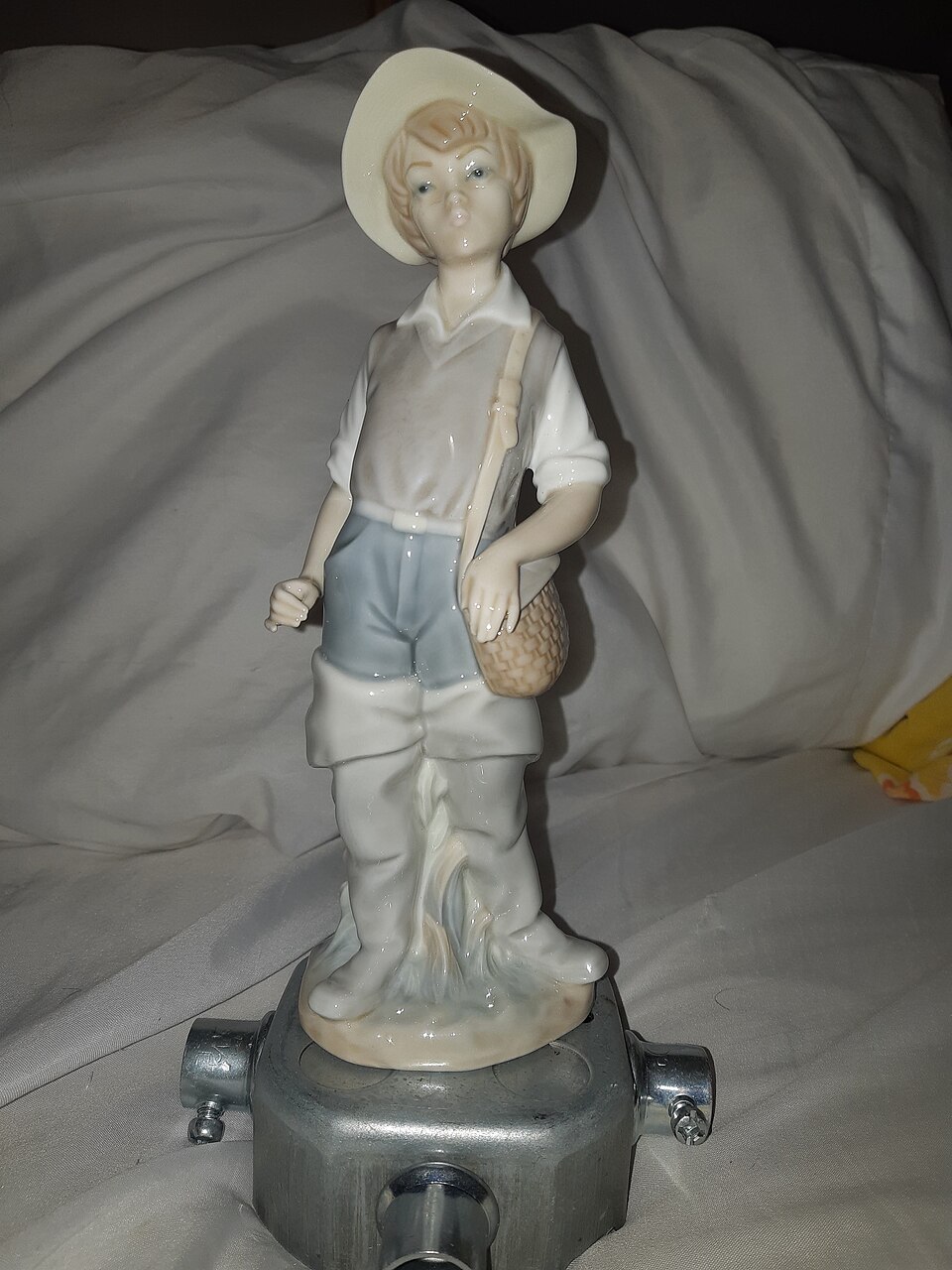
Lladró porcelain is among the most recognisable forms of modern Spanish art porcelain. Founded in Valencia in 1953, Lladró became internationally known for finely modelled porcelain figurines, delicate flowers, graceful human figures, soft colours and increasingly ambitious sculptural compositions. For collectors, however, identifying a Lladró figurine correctly requires more than recognising its distinctive style. The Lladró mark, reference number, model, craftsmanship, production period, condition and provenance should all tell a consistent story.
Quick Answer
To identify an original Lladró figurine, begin with the base. Current Lladró guidance identifies the official Lladró logo carried by its sculptures as an important mark of authenticity and origin. Then record every number, letter and additional symbol, identify the exact model, and compare the craftsmanship, colours, glaze and details with documented examples. Never assume that a number on the base is automatically a production year, and never authenticate a figurine from the mark alone.
Lladró at a Glance
| Feature | Details |
|---|---|
| Brand | Lladró |
| Founded | 1953 |
| Founders | Juan, José and Vicente Lladró |
| Origin | Almàssera, near Valencia, Spain |
| Main workshop | Valencia, Spain |
| Best known for | Porcelain figurines, sculptures, flowers, animals and decorative art |
| Classic characteristics | Fine modelling, delicate details, graceful forms and often soft pastel decoration |
| Key identification clue | Lladró logo and other information on the base |
| Value factors | Model, rarity, edition, artist, condition, documentation and collector demand |
In This Guide
What Is Lladró Porcelain?
Lladró is a Spanish art porcelain brand best known for figurative sculpture. Unlike many historic European manufacturers whose reputations were built largely around dinnerware, tea services and decorative vessels, Lladró became internationally recognised primarily through porcelain figurines and sculptural compositions.
Its repertoire includes children, mothers and families, romantic couples, dancers, musicians, angels, animals, flowers, religious subjects and increasingly complex decorative sculptures. Contemporary Lladró also extends far beyond the classic pastel figurine, with modern design pieces, lighting, decorative accessories and High Porcelain creations.
Collectors beginning their research may find our
Guide to Antique Porcelain
useful for understanding porcelain bodies, factory marks, manufacturers, dating and collecting before studying an individual maker.
The History of Lladró Porcelain
1953 — The Beginning near Valencia
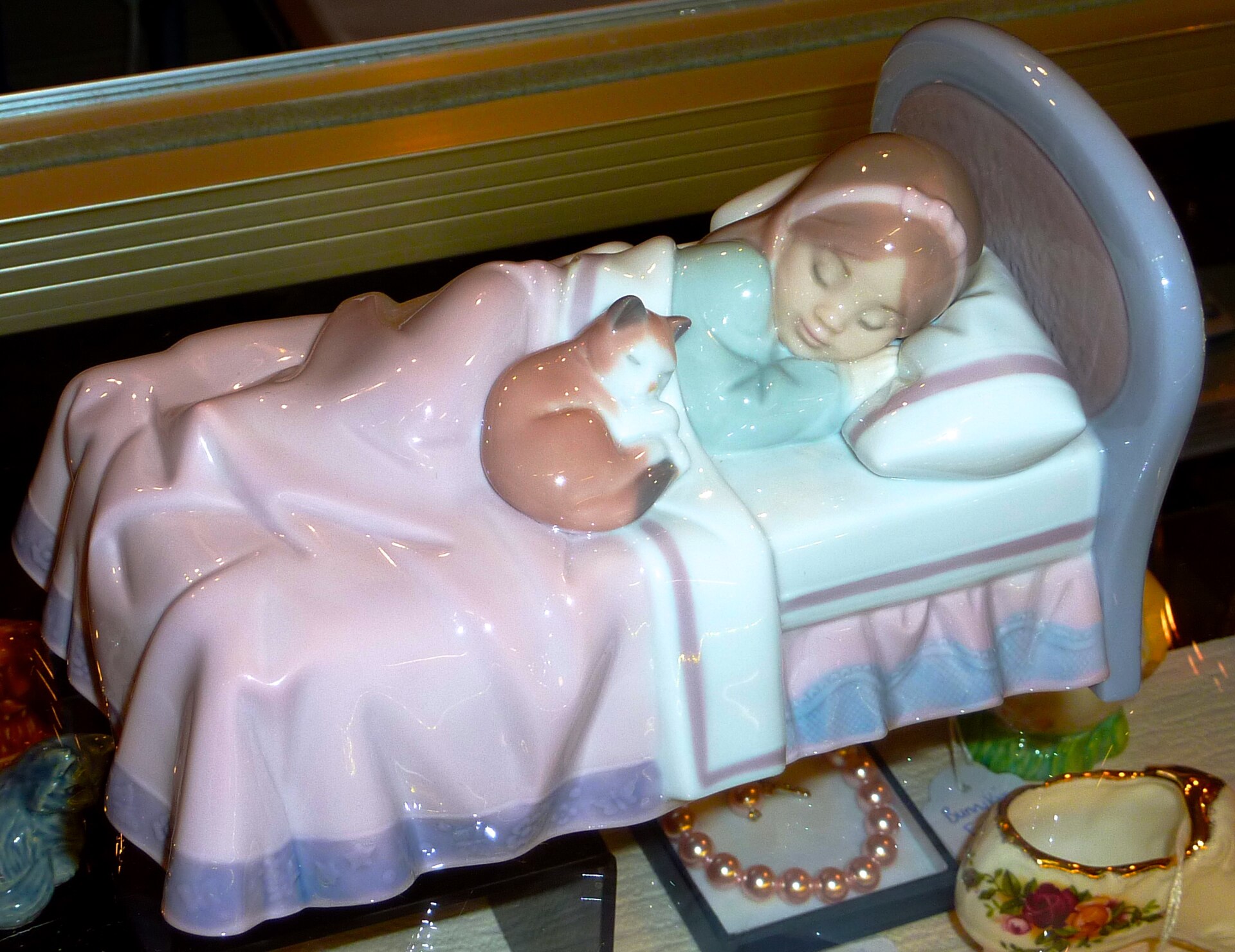
Lladró began in 1953, when brothers Juan, José and Vicente Lladró started making their first ceramic and porcelain pieces at their family home in Almàssera, a town near Valencia. According to the company’s official history, the brothers’ early work was influenced by the great European porcelain traditions, including Meissen, Sèvres and Capodimonte.
Growing demand soon led the family workshop to move to nearby Tavernes Blanques, which would later become closely associated with the company.
The 1960s — A Distinctive Lladró Style Emerges
During the 1960s, Lladró developed a more distinctive artistic language. Figures became increasingly graceful and elongated, compositions grew more technically ambitious, and the company refined the soft decorative palette that collectors now associate with many classic Lladró figurines.
The company also pioneered a single-firing method for this production, replacing the traditional triple-firing process used previously. According to Lladró, this helped achieve the crystalline finish and characteristic pastel tones seen in many of its works.
In 1965, Lladró began entering the United States market. In 1969, its headquarters opened at Tavernes Blanques in Valencia.
The 1970s — Technical Development and International Recognition
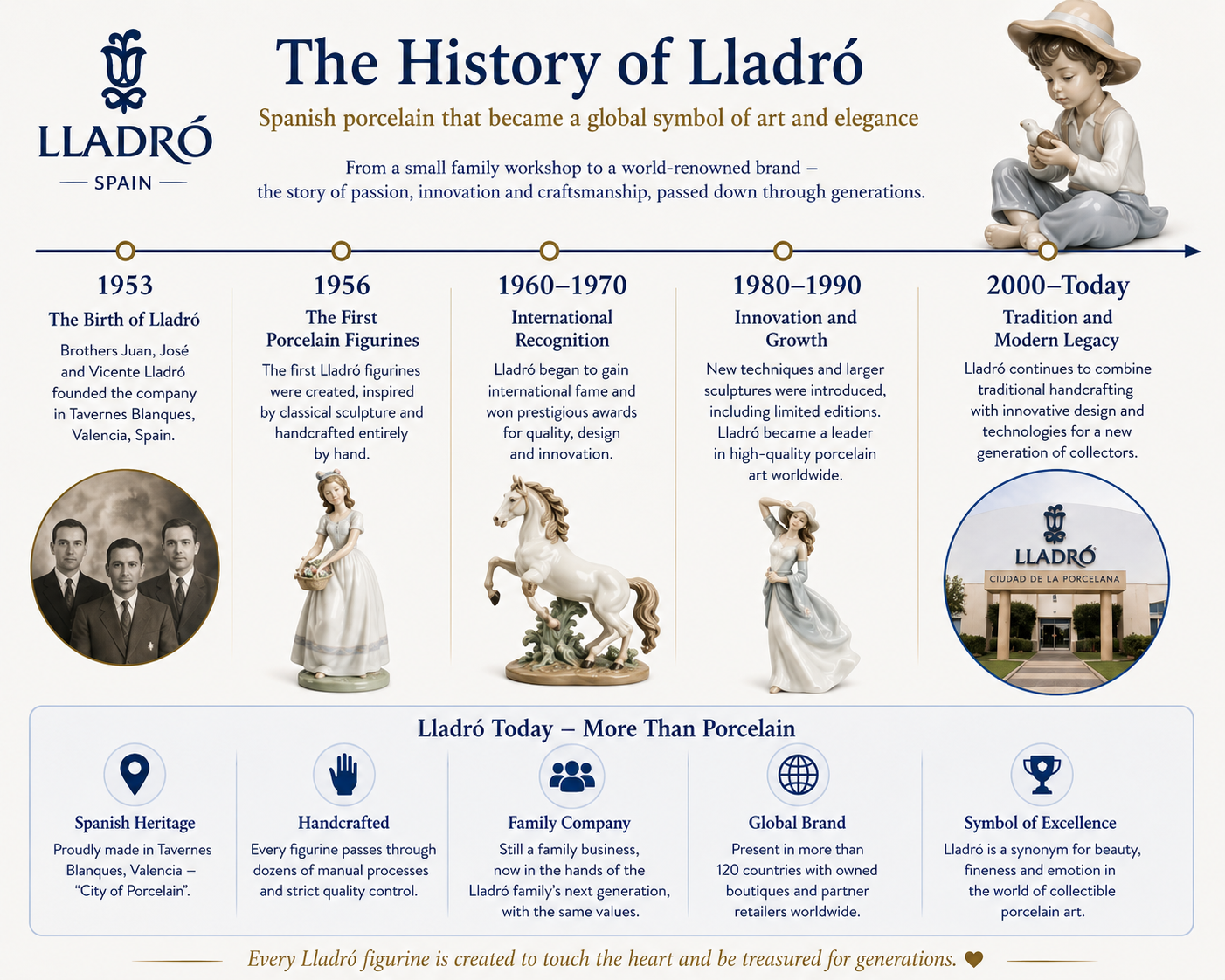
The 1970s were an important period of creative maturity. Lladró produced increasingly complex sculptures, introduced early limited series and developed new expressive possibilities through the use of gres, whose strength and earthy tones allowed the artists to explore larger and stylistically different forms.
The 1980s and 1990s — A Global Collecting Brand
The company continued to expand internationally during the 1980s. The Lladró Collectors’ Society was founded in 1985 and, according to Lladró’s official history, attracted more than 100,000 collectors during its years of operation.
The brand expanded further in Asia and other international markets, while increasingly complex floral compositions and elaborate sculptural scenes demonstrated the technical possibilities of Lladró porcelain.
Lladró Today
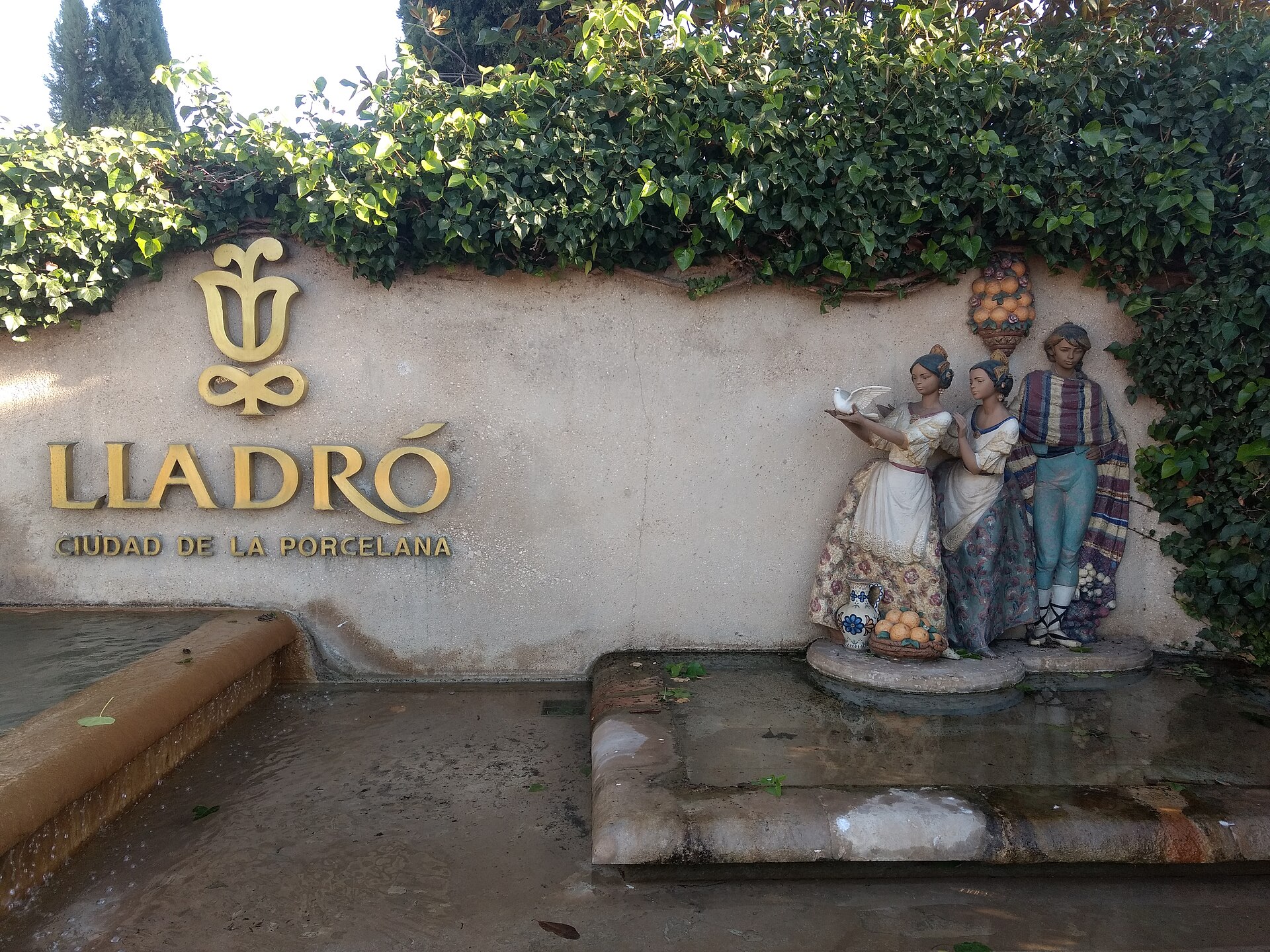
Modern Lladró encompasses far more than traditional figurines. Its current production includes classic sculpture, contemporary design, High Porcelain, lighting, home accessories and artistic collaborations. Despite this wider creative range, the company states that its porcelain sculptures continue to be handcrafted in its workshop in Spain.
How Are Lladró Figurines Made?
The craftsmanship behind Lladró is one of the most important reasons collectors study the objects themselves rather than relying only on a factory mark.
Lladró describes its porcelain as being made from mineral materials including kaolin, quartz and feldspar. The sculptor’s original design is divided into separate components, plaster moulds are created, liquid porcelain is cast, and individual elements are assembled by hand.
Decoration may include glazed, matte and satin finishes as well as enamels and metallic lustres. The company also maintains a large colour palette developed within its own workshop.
One of the most technically demanding features is the creation of porcelain flowers. Individual petals may be formed and assembled separately, which explains why floral compositions can contain extremely fragile details.
During firing, the porcelain contracts as it acquires its final proportions, colour and surface finish. This transformation makes the quality of the final modelling and firing especially useful when examining a figurine.
Recognising Classic Lladró Style and Craftsmanship
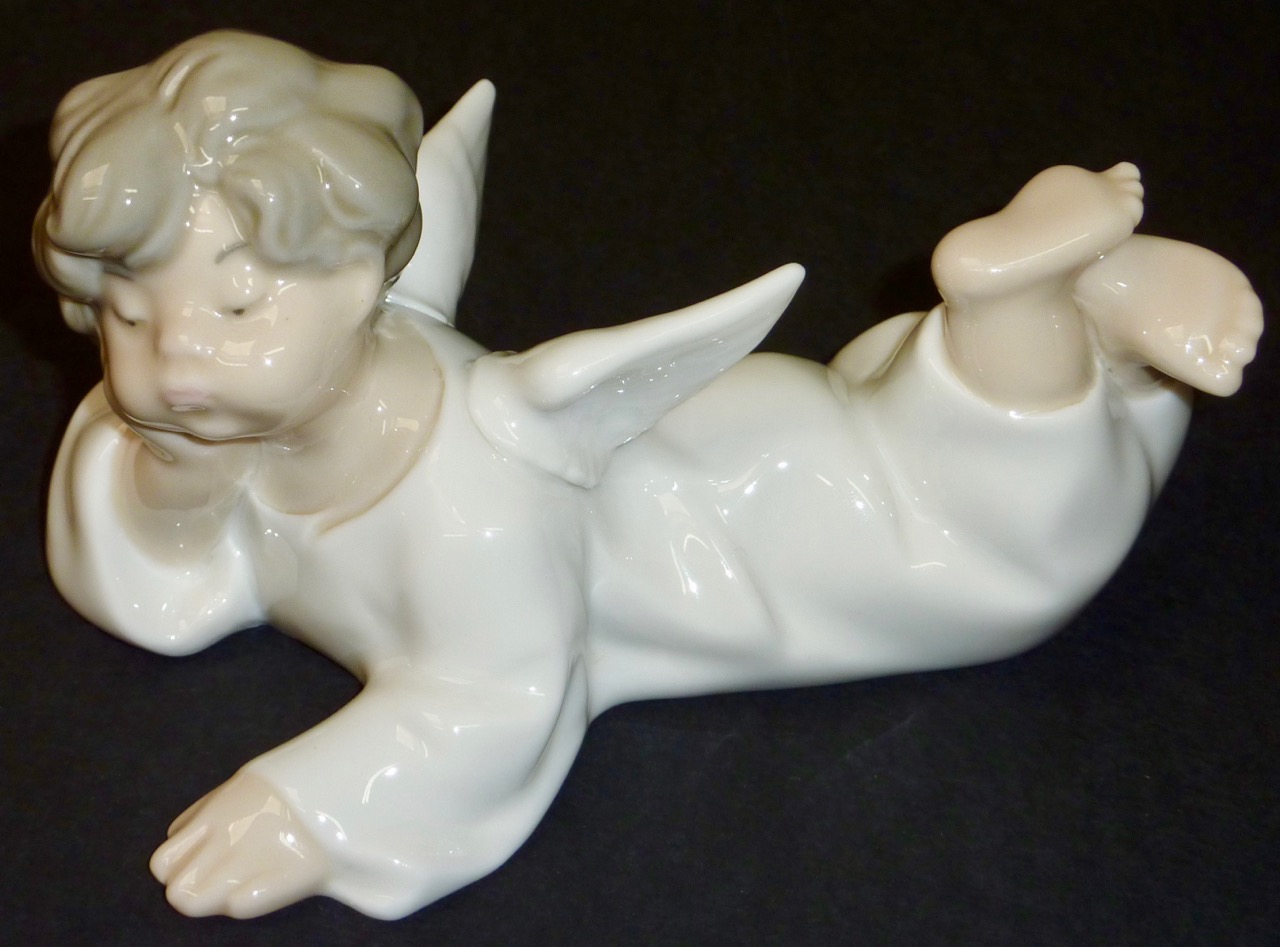
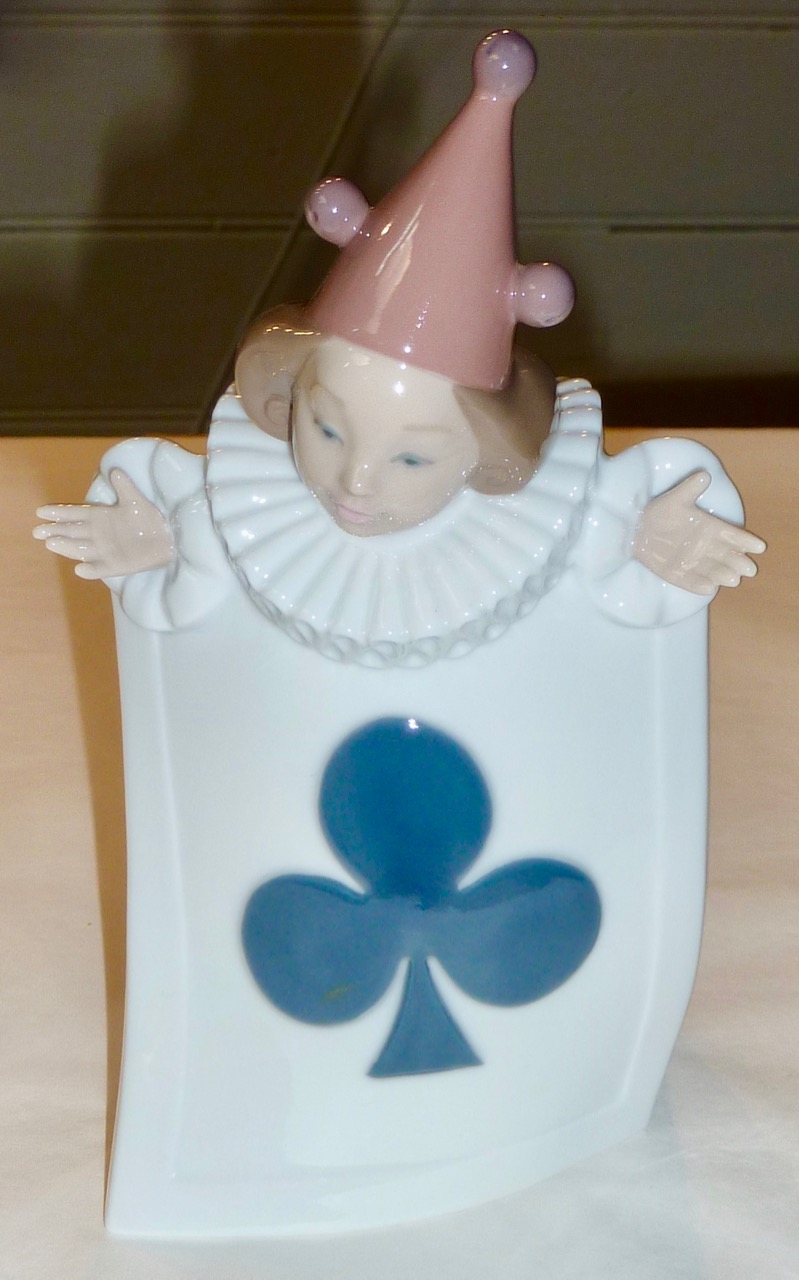
There is no single visual characteristic that proves a figurine is Lladró. Nevertheless, many classic pieces share a recognisable combination of modelling, decoration and finish.
| Feature | What to Examine | Why It Matters |
|---|---|---|
| Faces | Soft modelling, balanced features and careful finishing | Poorly modelled facial details deserve closer examination |
| Hands and fingers | Fine individual modelling | Important for both identification and condition |
| Clothing | Flowing folds and carefully controlled forms | Helps compare a figurine with documented models |
| Flowers | Individually modelled petals and leaves | Often among the most fragile parts of a sculpture |
| Colour | Many classic models use subtle pastel tones | Useful supporting evidence, but never proof on its own |
| Base | Logo, numbers and additional marks | One of the most important areas for identification |
How to Identify an Original Lladró Figurine
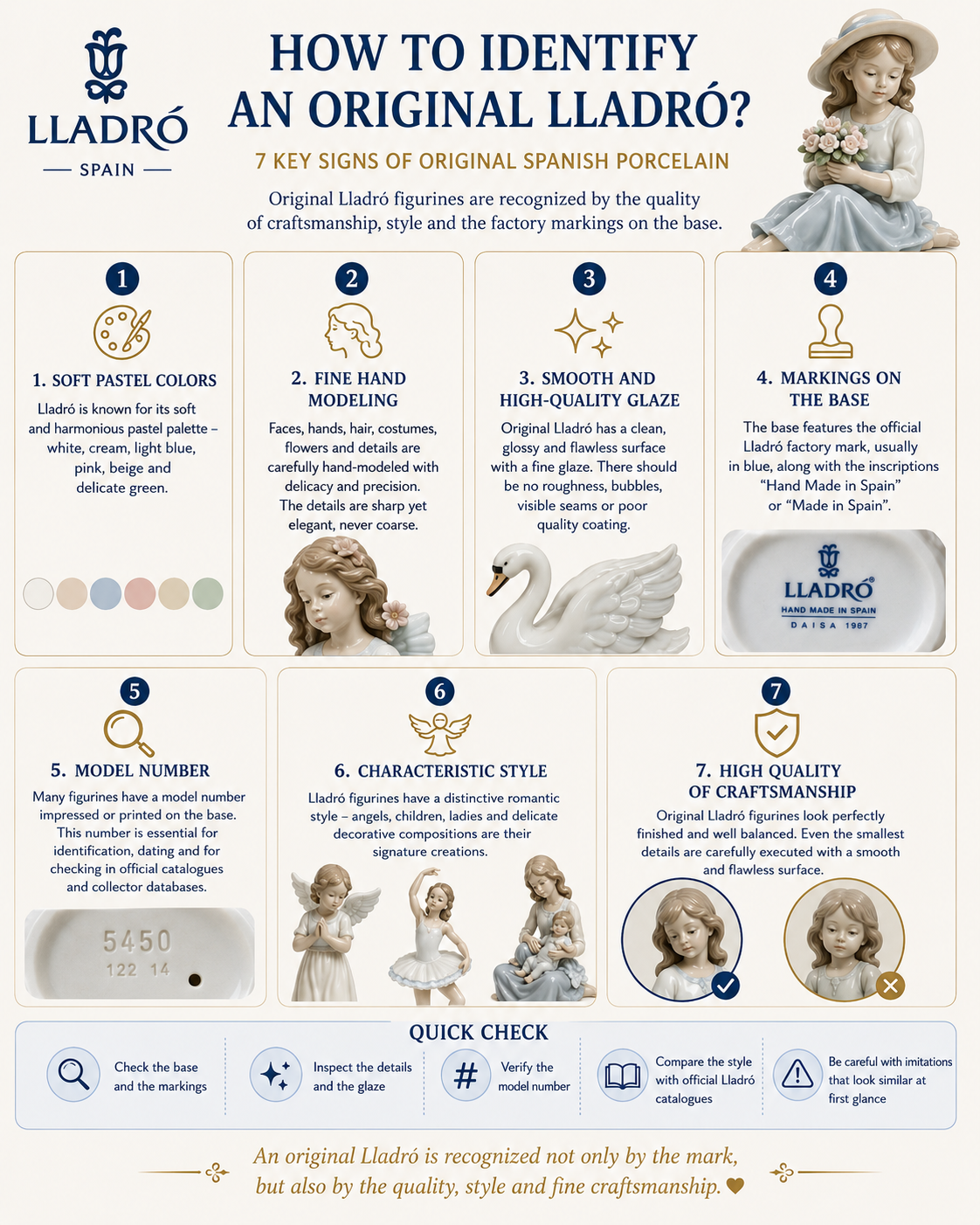
Reliable Lladró identification is an evidence-based process. Begin with the complete object and move gradually toward the details. This avoids one of the most common mistakes in porcelain collecting: finding a familiar-looking logo online and ignoring contradictions in the model, finish or craftsmanship.
The same principle applies to porcelain generally. Our
guide to identifying antique porcelain
explains why the body, glaze, decoration, manufacturing quality and marks should always be considered together.
- Examine the entire figurine. Record the subject, pose, colours, dimensions and decorative details.
- Assess the modelling. Look closely at faces, hands, fingers, hair, flowers and clothing.
- Turn the figurine over safely. Photograph the entire underside rather than cropping only the logo.
- Look for the Lladró logo. Compare its form with documented examples.
- Record every number and letter. Do not assume what they mean before researching them.
- Identify the exact model. Compare the pose, dimensions and details with reliable catalogues.
- Check condition carefully. Small losses can hide among flowers, fingers, hat rims, wings and other thin elements.
- Check documentation. Original boxes, certificates, labels and purchase records can strengthen identification.
Collector note:
a soft pastel palette or familiar-looking face is not proof of Lladró manufacture. Many Spanish and European porcelain figurines share similar decorative characteristics. The object and its markings must agree.
Lladró Marks and Backstamps
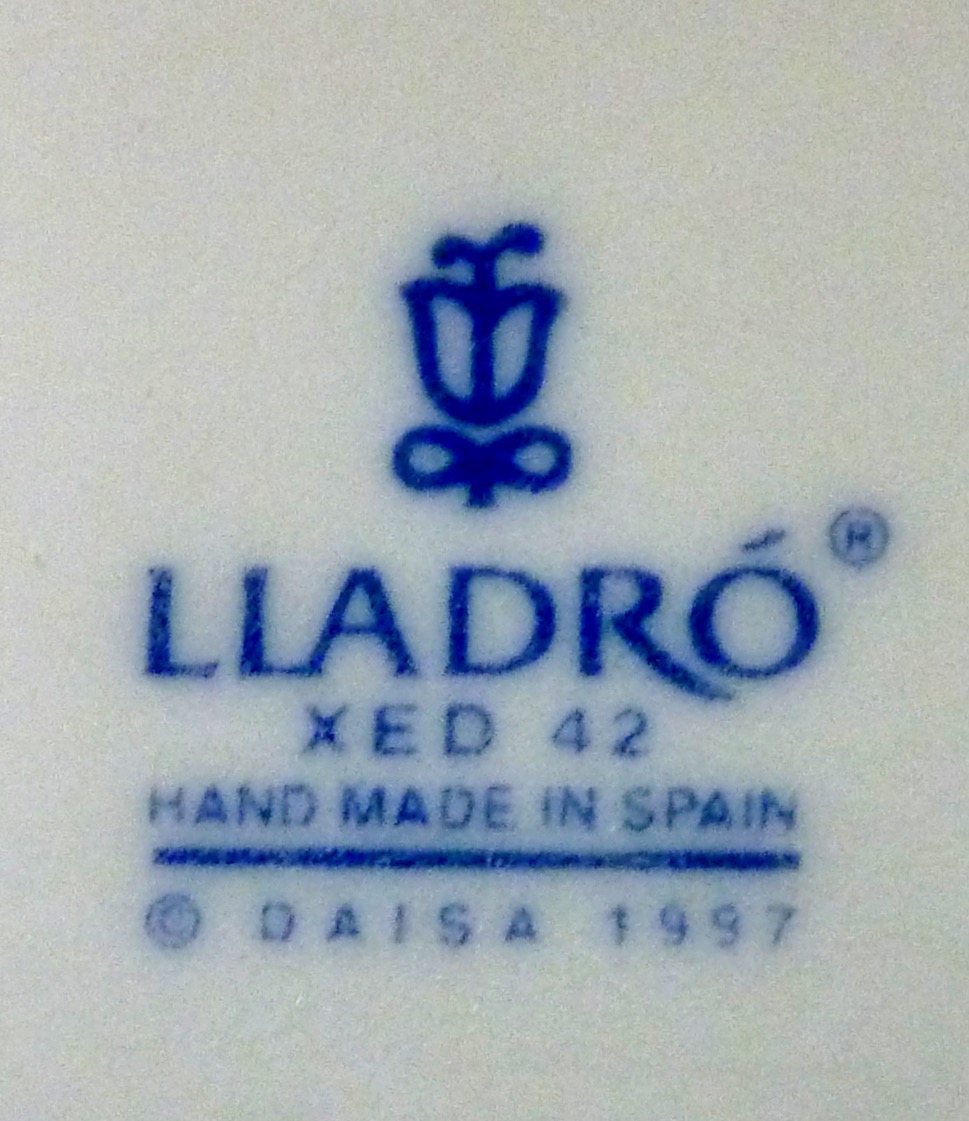
For many collectors, the most important clue appears on the underside. Current official Lladró guidance states that its authentic sculptures carry the Lladró logotype as a mark of authenticity and origin.
Depending on the model and period, the base may also contain additional wording, impressed numbers, reference information or smaller signs connected with production.
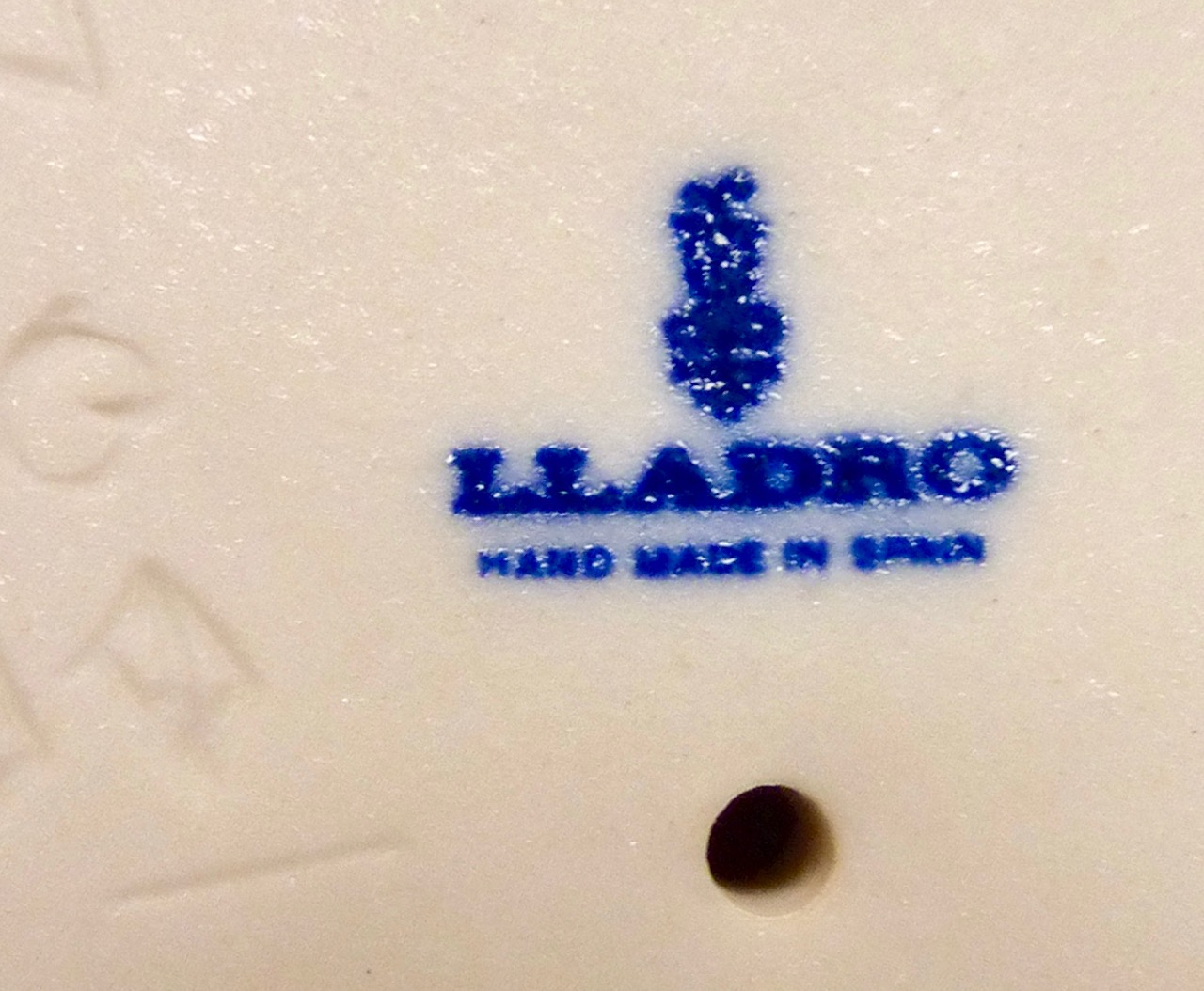
What might you find on the base?
- the Lladró logo;
- Made in Spain or Hand Made in Spain wording;
- a reference or model number;
- edition information on certain pieces;
- production-related markings;
- additional artisan or workshop signs.
If you are unfamiliar with factory marks, our
Porcelain Marks Identification Guide
explains the difference between factory logos, backstamps, model numbers, decorators’ marks and other porcelain markings.
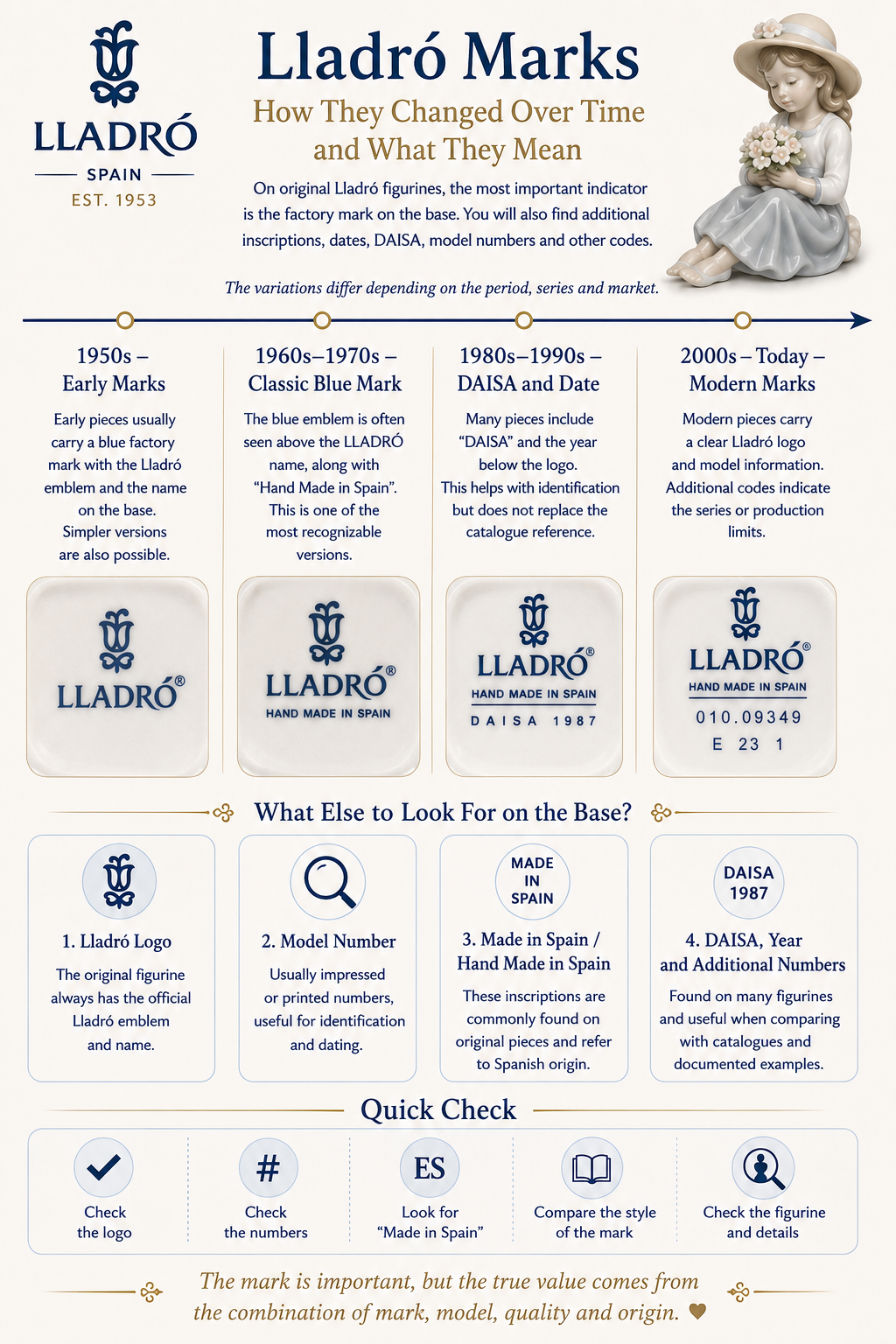
Important:
historical mark charts should be treated as research aids rather than automatic dating systems. Exact production periods should be checked against the model, reference number and reliable documented sources.
Lladró Model Numbers and Reference Numbers
Numbers on the base can be extremely useful, but they are also frequently misunderstood. A number should never be described as a year until its function has been established.
| Marking | Possible Meaning | How to Use It |
|---|---|---|
| Reference number | Catalogue reference for a particular design | Search reliable catalogues and official records |
| Model or mould number | Production identification related to the design or form | Compare with documented examples |
| Limited Edition number | Individual number within a defined edition | Compare with the certificate and edition details |
| Other numbers | Production or internal information | Do not interpret in isolation |
Useful official search tip:
Lladró’s FAQ explains that some discontinued pieces may carry an older four-digit reference number. When searching certain older references, adding the prefix 0100 or 0101 can help locate the piece in Lladró’s database.
How to Date a Lladró Figurine
Dating Lladró is usually a process of establishing a likely production period rather than reading one exact year directly from the backstamp.
A reliable assessment combines several clues:
- the version of the Lladró mark;
- reference or model number;
- the documented production period of the model;
- whether the design is current or discontinued;
- style and colour palette;
- glazed, matte or other finish;
- edition information;
- original box and labels;
- certificate, where applicable;
- documented provenance.
This multi-factor approach is the same one used more broadly in our
complete guide to dating antique porcelain
.
A mark that appears consistent with one period becomes much more useful when the model, craftsmanship and documentation point to the same conclusion.
Lladró vs NAO by Lladró
Collectors frequently encounter porcelain marked NAO. NAO is associated with the Lladró group, but a figurine bearing a NAO mark should be identified and described according to the mark actually present on the piece rather than being catalogued simply as a standard Lladró figurine.
This distinction matters because the two names occupy different positions within the secondary market and can attract different collector audiences. Nevertheless, the exact model remains more important than a broad assumption about the brand name.
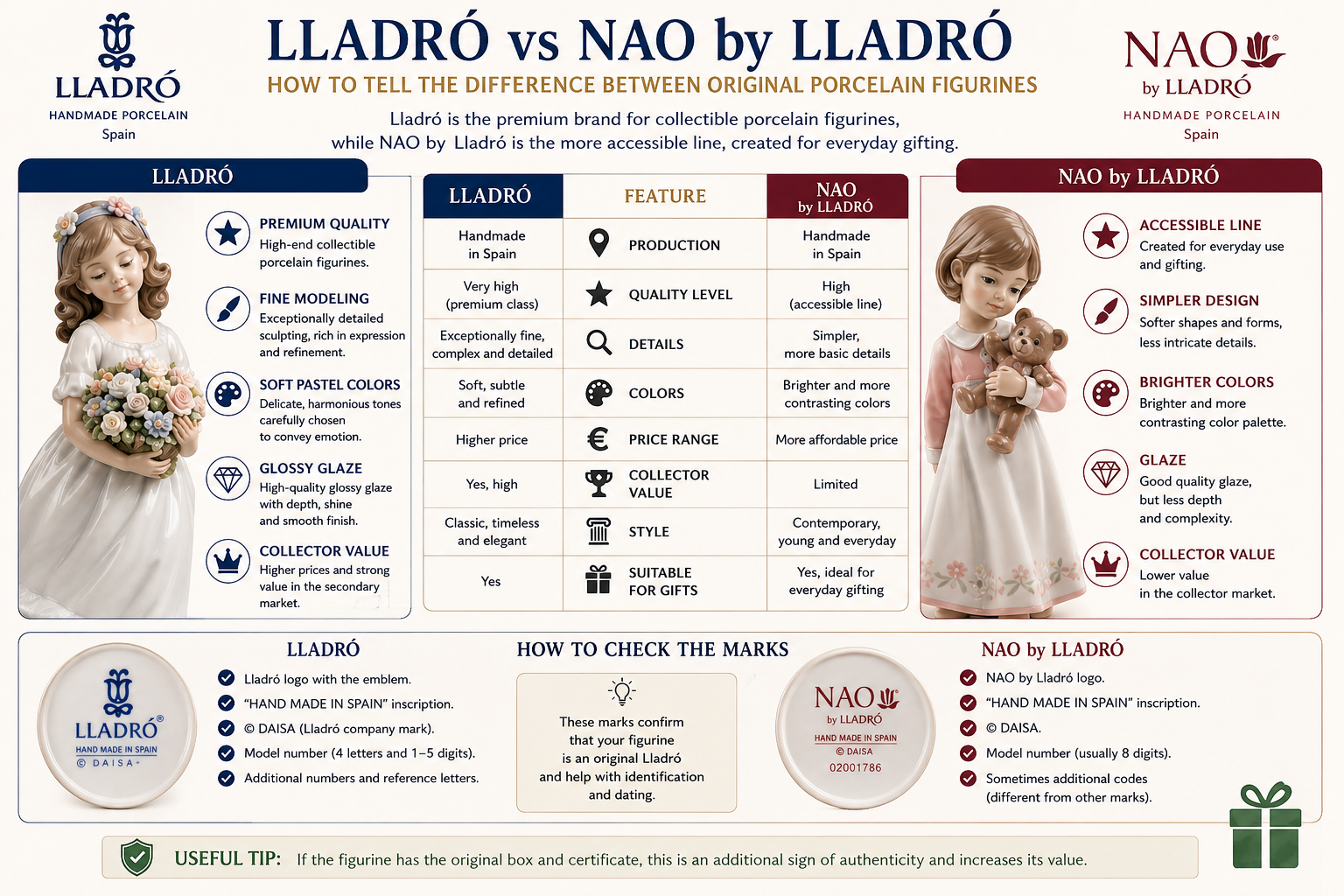
Important:
the comparison above is a general collector’s overview. Individual NAO models may be more desirable than common Lladró models, and market value should always be researched piece by piece.
Which Lladró Figurines Do Collectors Look For?
The presence of the Lladró name does not automatically make every figurine rare or valuable. Some designs were produced in substantial numbers, while other models, editions and large compositions may appear much less frequently.
Collector interest can be particularly strong for:
- earlier well-documented figurines;
- discontinued or retired models with established demand;
- official Limited Editions;
- High Porcelain creations;
- large and technically complex compositions;
- sculptures with extensive hand-modelled flowers;
- scarce variations of popular models;
- works associated with recognised Lladró sculptors or designers;
- significant artistic collaborations;
- examples retaining their original box, certificate and documentation.
Limited Edition vs Numbered Series
These terms should not be treated as interchangeable.
A Limited Edition has a predetermined maximum production quantity, with individual pieces normally numbered within that edition. A Numbered Series may also use individual numbers, but the existence of a number does not necessarily mean that the total production quantity was fixed in advance.
For that reason, finding a number on a base does not automatically prove that a figurine belongs to a rare limited edition.
What Does Retired or Discontinued Lladró Mean?
A retired or discontinued Lladró model is one that is no longer part of current production. Discontinuation can reduce future supply, but it does not automatically create high value.
A discontinued figurine becomes especially interesting when strong collector demand is combined with scarcity, excellent condition and a desirable subject or design.
Are Lladró Figurines Valuable?
Some Lladró figurines can have substantial collector value, while many common models remain relatively affordable on the secondary market. There is no single reliable price chart for all Lladró porcelain.
A meaningful valuation begins by identifying the exact model and then comparing it with genuinely comparable examples.
| Value Factor | Why It Matters | What to Check |
|---|---|---|
| Exact model | Different designs can have very different markets | Reference number and model name |
| Rarity | Scarcity can increase collector competition | Production history and frequency of genuine sales |
| Edition | Limited and special editions may have a different collector market | Edition number and certificate |
| Size and complexity | Large technically difficult works may have higher original and secondary-market values | Dimensions, number of components and decorative complexity |
| Condition | Small losses can materially affect desirability | Flowers, fingers, wings, edges, glaze and repairs |
| Restoration | Repairs may affect originality and market value | Glue, filler, repainting and differences in surface gloss |
| Original box | Improves completeness and safe storage | Does the label match the figurine? |
| Documentation | Especially important for special and limited editions | Certificate, receipt and provenance |
| Market demand | Ultimately determines what buyers are willing to pay | Actual sold results, not asking prices alone |
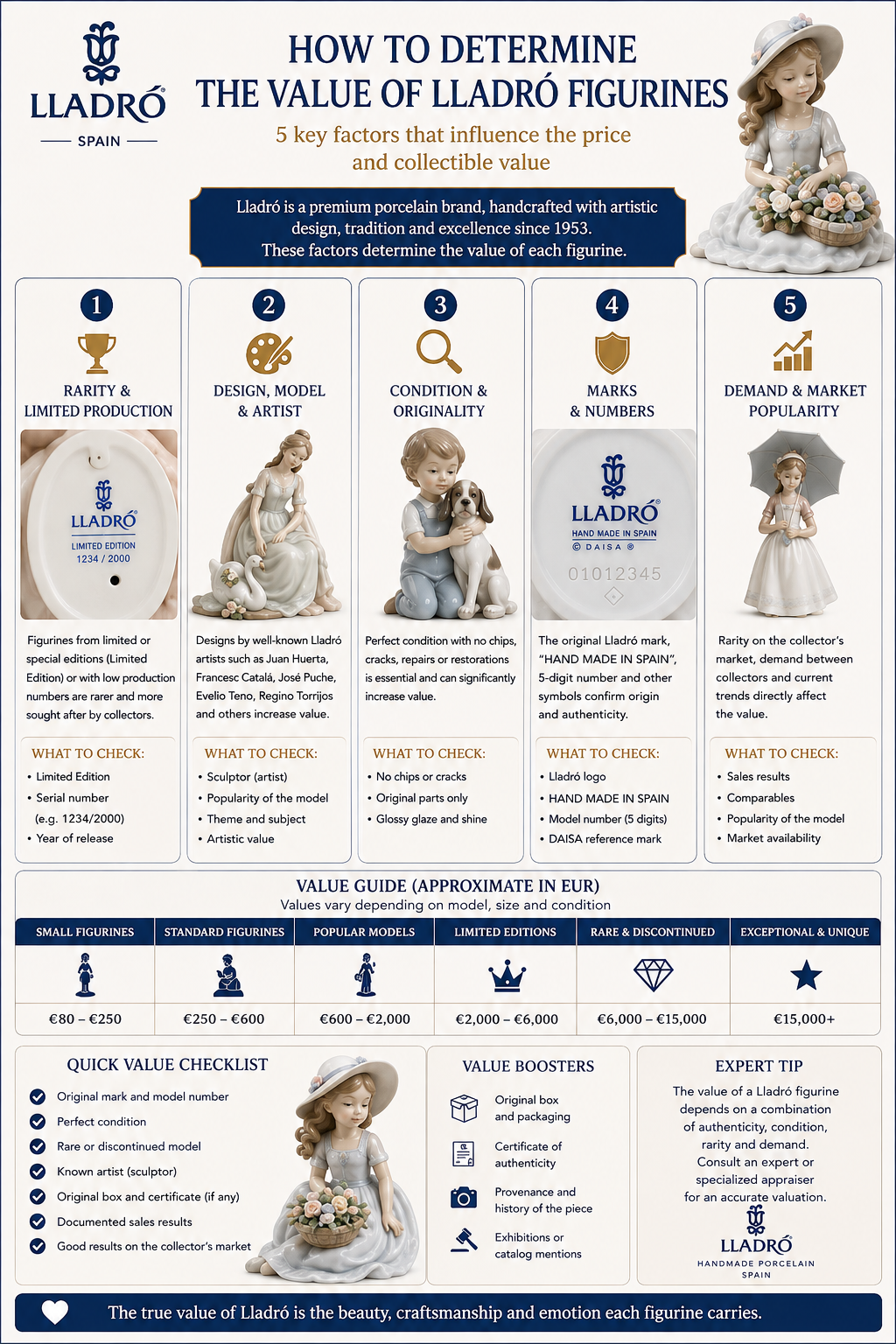
About price ranges:
values shown in the infographic are broad illustrative ranges rather than valuations for a specific figurine. Actual value depends on the exact model, edition, condition, documentation, location and current market demand.
Sold Prices Matter More Than Asking Prices
One of the most common valuation mistakes is using online asking prices as evidence of market value. A seller can ask any amount for a figurine; that does not mean a buyer has paid it.
For serious valuation, compare completed sales of the same model in similar condition and, where possible, with the same box, certificate and edition status.
How to Check the Condition of a Lladró Figurine
Condition is particularly important with figurative porcelain because the most beautiful details are often also the most vulnerable.
| Area | What to Look For | Why It Matters |
|---|---|---|
| Fingers | Tiny losses, replacements or repairs | Damage can be easy to overlook |
| Flowers | Missing petals or leaves | A frequent damage point on floral models |
| Hat rims and thin edges | Chips or hairline cracks | Often damaged during handling |
| Wings and lace | Breaks, glue or missing elements | Highly fragile decorative areas |
| Glaze | Scratches or differences in gloss | May reveal wear or restoration |
| Base | Chips, altered markings or abrasion | Important for both condition and identification |
Always examine the figurine under good directional light. A repaired surface can sometimes show a slightly different gloss, colour or texture from the surrounding original porcelain.
How to Clean and Care for Lladró Figurines
Correct care depends on the finish and decoration of the individual object. Delicate porcelain flowers, thin fingers, lace-like details and metallic lustres should be handled with particular caution.
For routine dust removal, use a very soft clean brush or cloth and support the figurine from a strong part of its body rather than lifting it by an arm, flower, head or other projecting detail.
Where wet cleaning is appropriate, use only a gentle method and avoid harsh household chemicals, abrasive materials and sudden temperature changes. Never assume that every Lladró finish should be cleaned in exactly the same way.
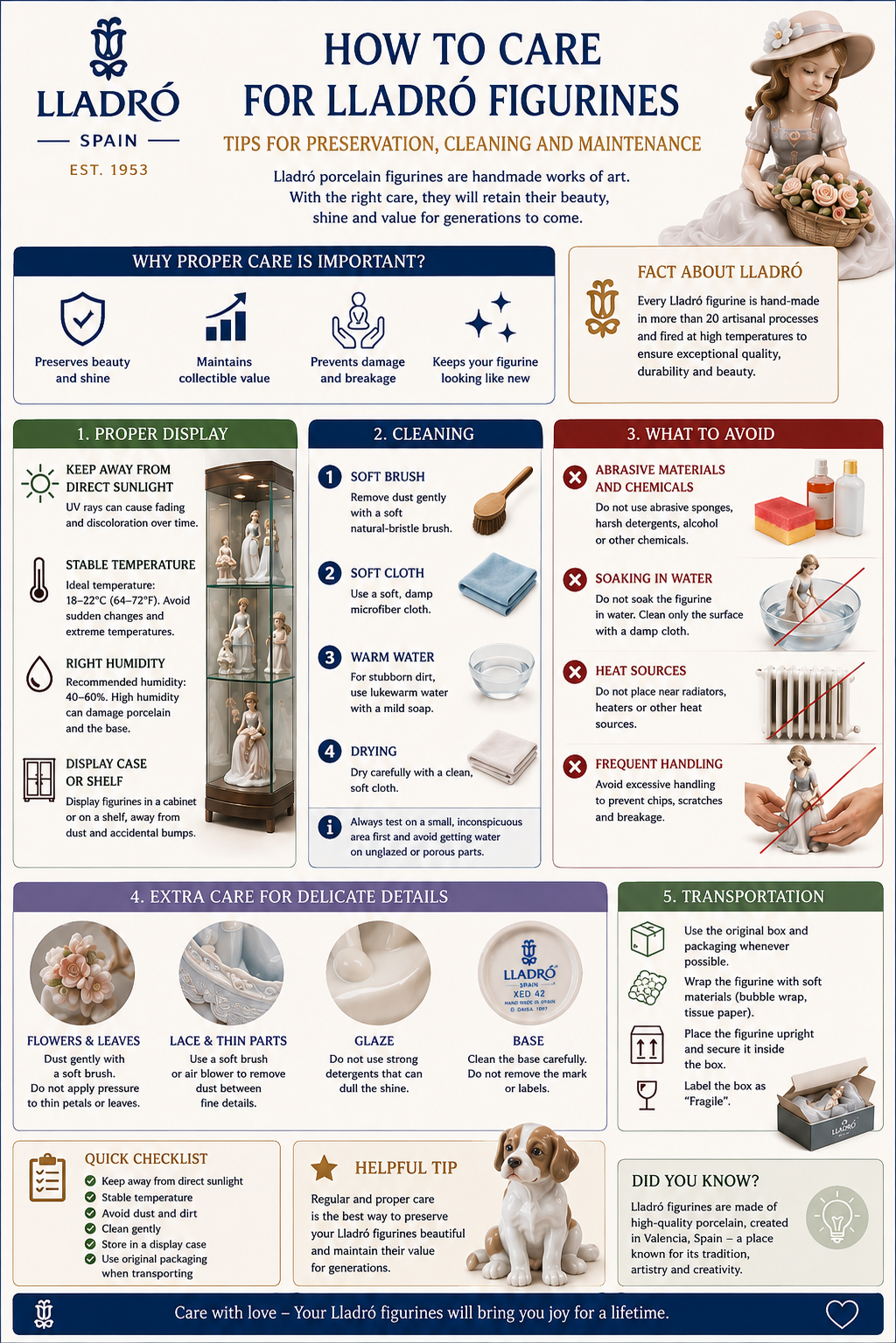
Handling rule:
always support the strongest part of a figurine. Never lift valuable porcelain by flowers, wings, fingers, hats or other projecting elements.
Lladró Collector Checklist
- Photograph the complete figurine from several angles.
- Photograph the entire base and mark.
- Record every number, letter and symbol.
- Identify the exact model rather than relying on the subject alone.
- Never assume a number represents a year.
- Examine fingers, flowers, wings, hats and thin decorative details.
- Look for cracks, chips and restoration.
- Check whether the box label matches the figurine.
- Look for a certificate when researching a Limited Edition.
- Compare documented references rather than marketplace descriptions alone.
- Use actual sold results when researching market value.
Do You Own a Lladró Figurine?
If you own a Lladró, NAO or another porcelain figurine and would like help understanding its maker, model, approximate period or potential collector value, clear photographs of the complete object, underside, mark and numbers are the best place to begin.
Frequently Asked Questions About Lladró
How can I tell if my Lladró figurine is authentic?
Begin with the base and examine the Lladró logo, numbers and other markings. Then identify the exact model and compare the porcelain, modelling, decoration and finish with reliable documented examples. No single characteristic should be used on its own.
Where is the Lladró mark normally found?
The mark is normally found on the base of a porcelain sculpture, although additional numbers or workshop-related markings may also be present.
Do all Lladró figurines have exactly the same mark?
No. Markings and associated information have varied over the company’s history. Early, vintage and modern pieces should therefore be researched according to their specific model and period.
What does DAISA mean on Lladró porcelain?
DAISA appears in connection with company and copyright information on many Lladró pieces. Its presence alone does not determine the exact production date or value of a figurine.
Is the number on the bottom of a Lladró figurine the date?
Not necessarily. Numbers can represent catalogue references, model information, edition numbers or other production data. Determine the function of the number before using it for dating.
How do I find the name of an old Lladró figurine?
Begin with the reference number on the base and compare the figurine with reliable catalogues. Lladró’s official FAQ also provides a useful search method for certain older four-digit references by adding 0100 or 0101 before the number.
What does retired Lladró mean?
It generally means that the model is no longer in current production. A retired model may become more difficult to find, but discontinued status alone does not guarantee rarity or high value.
Are old Lladró figurines always valuable?
No. Age is only one factor. The exact model, rarity, condition, edition, subject, documentation and current collector demand can be more important.
Does the original Lladró box increase value?
It can improve completeness and collector appeal, particularly when the box label and reference match the figurine. Documentation can be especially important for special or limited editions.
What is the difference between Lladró and NAO?
NAO is associated with the Lladró group but represents a distinct branded line. Collectors should identify each figurine according to the actual mark and reference on the object rather than assuming the two names are interchangeable.
Can I determine Lladró value from the mark alone?
No. The mark helps identify the manufacturer and may support dating, but value depends on the exact model, condition, rarity, edition, documentation and current market demand.
Conclusion
Lladró occupies a distinctive place in the history of Spanish porcelain. From the three brothers’ beginnings near Valencia in 1953 to contemporary High Porcelain and international design collaborations, the company developed a recognisable approach to figurative porcelain based on craftsmanship, modelling and decoration.
For collectors, the most important lesson is simple: never judge a Lladró figurine from the blue logo alone. The strongest identification is achieved when the mark, model, reference number, craftsmanship, condition and documentation all support the same conclusion.
That evidence-based approach is also fundamental to the wider field of
antique porcelain identification
.
About The Old Antiquarian
The Old Antiquarian publishes practical guides to antiques, vintage objects and collectibles, combining hands-on experience with research using official manufacturers, museums, archives and specialist reference sources. Our aim is to help collectors identify objects more carefully, understand their history and make better-informed decisions about authenticity, condition and value.
