
What Is Czech & Bohemian Porcelain ?
Czech & Bohemian Porcelain: History, Marks, Makers, Identification & Value
Czech and Bohemian porcelain represents more than two centuries of Central European ceramic tradition. From elegant nineteenth-century cups and richly gilded cabinet pieces to Art Nouveau, Art Deco and twentieth-century Czechoslovak tableware, porcelain made in the historic lands of Bohemia has developed a distinctive identity that continues to attract collectors around the world.
Names such as Thun, EPIAG Pirkenhammer, Rudolf Kämpf and Březová appear regularly on antique and vintage porcelain, but identifying an individual piece is not always straightforward. Factory ownership changed, political borders shifted, export regulations evolved and manufacturers modified their backstamps repeatedly.
For that reason, inscriptions such as Bohemia, Austria, Czechoslovakia, Made in Czechoslovakia, Czech Republic or simply a factory symbol can provide important clues to the history and approximate date of a piece.
This comprehensive collector’s guide explores the history of Czech and Bohemian porcelain, important manufacturers, porcelain marks and backstamps, dating clues, materials, decoration, authenticity and collector value.
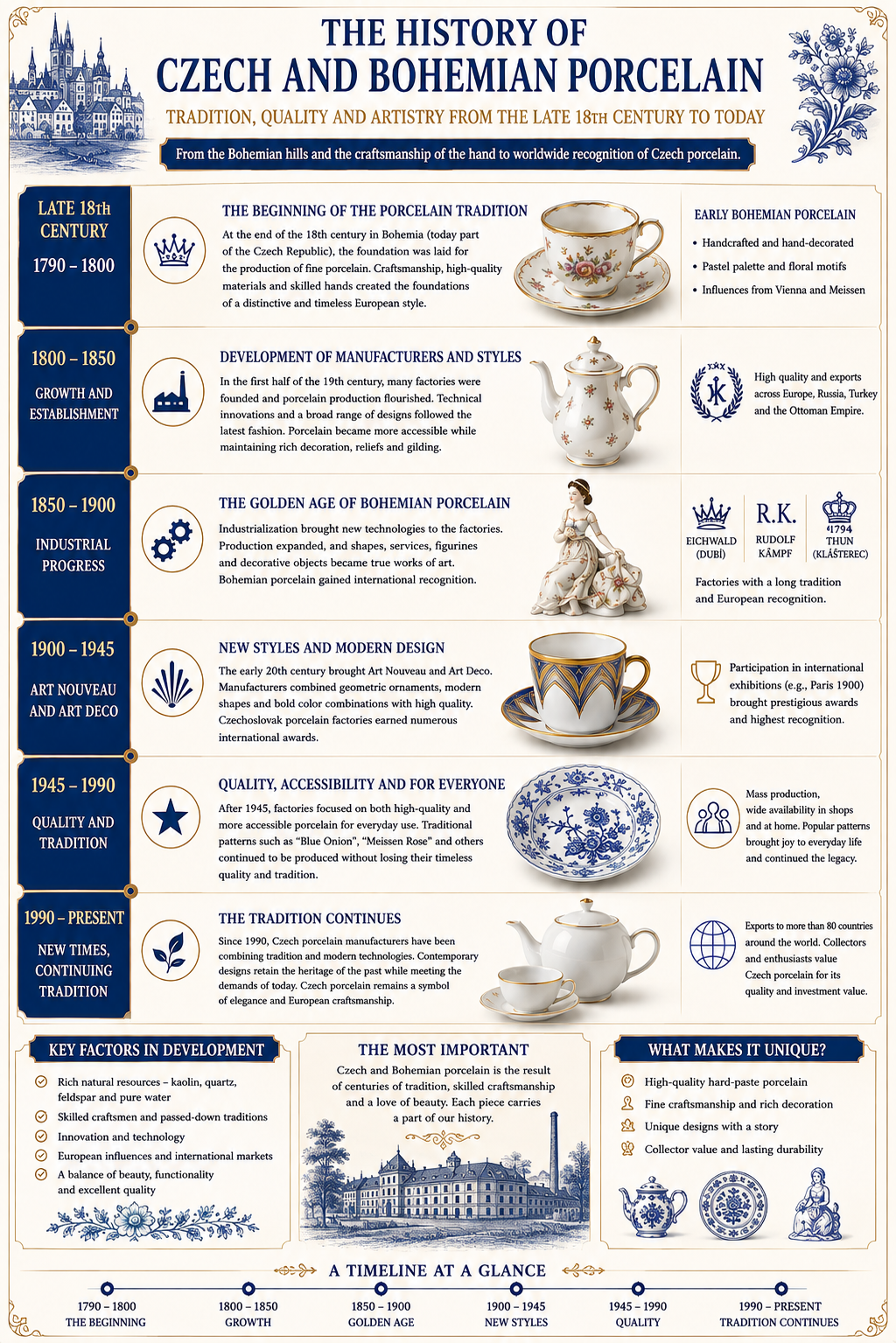
Quick Guide to Czech and Bohemian Porcelain
| Feature | What to Look For | Why It Matters |
|---|---|---|
| Factory mark | Crown, initials, factory name, symbol or printed backstamp | May identify the manufacturer and production period |
| Country wording | Bohemia, Austria, Czechoslovakia, Czech Republic | Can help establish an approximate historical period |
| Porcelain body | Fine, dense, usually white or slightly creamy body | Helps distinguish porcelain from other ceramics |
| Decoration | Flowers, gilding, cobalt, landscapes, geometric designs | Can indicate factory, style and period |
| Numbers | Pattern, shape, mould or decorator numbers | Useful when researching catalogues and factory records |
| Wear | Natural wear to gilding, foot rim and decoration | May support — but never prove — age |
| Condition | Chips, cracks, restoration and rubbing | Can significantly affect collector value |
What Is Bohemian Porcelain?
The term Bohemian porcelain generally refers to porcelain produced in Bohemia, a historic region of Central Europe that today forms a large part of the Czech Republic.
Because the political geography of the region changed repeatedly, collectors may encounter porcelain associated with several different geographical descriptions. Depending on its date and export destination, a piece may be marked Bohemia, Austria, Czechoslovakia or Czech Republic.
This historical complexity is one reason Czech porcelain marks are so interesting to collectors. A backstamp is not merely a manufacturer’s logo; it may also preserve evidence of the political and commercial world in which the object was produced.
Collectors unfamiliar with ceramic terminology may find it useful to first explore our complete
Guide to Antique Porcelain,
which explains porcelain materials, manufacturing, marks, identification and collecting in greater detail.
The Origins of Czech and Bohemian Porcelain
European porcelain production expanded dramatically during the eighteenth century after the development of hard-paste porcelain in Saxony. The success of major German-speaking porcelain centres encouraged entrepreneurs and craftsmen throughout Central Europe to search for suitable deposits of kaolin and establish new factories.
Bohemia possessed several advantages: mineral resources, skilled craftsmen, established glass and ceramic traditions and access to important Central European trade routes.
By the late eighteenth and early nineteenth centuries, porcelain production was becoming established in the region. During the nineteenth century, factories expanded rapidly and Bohemian porcelain became an important export product.
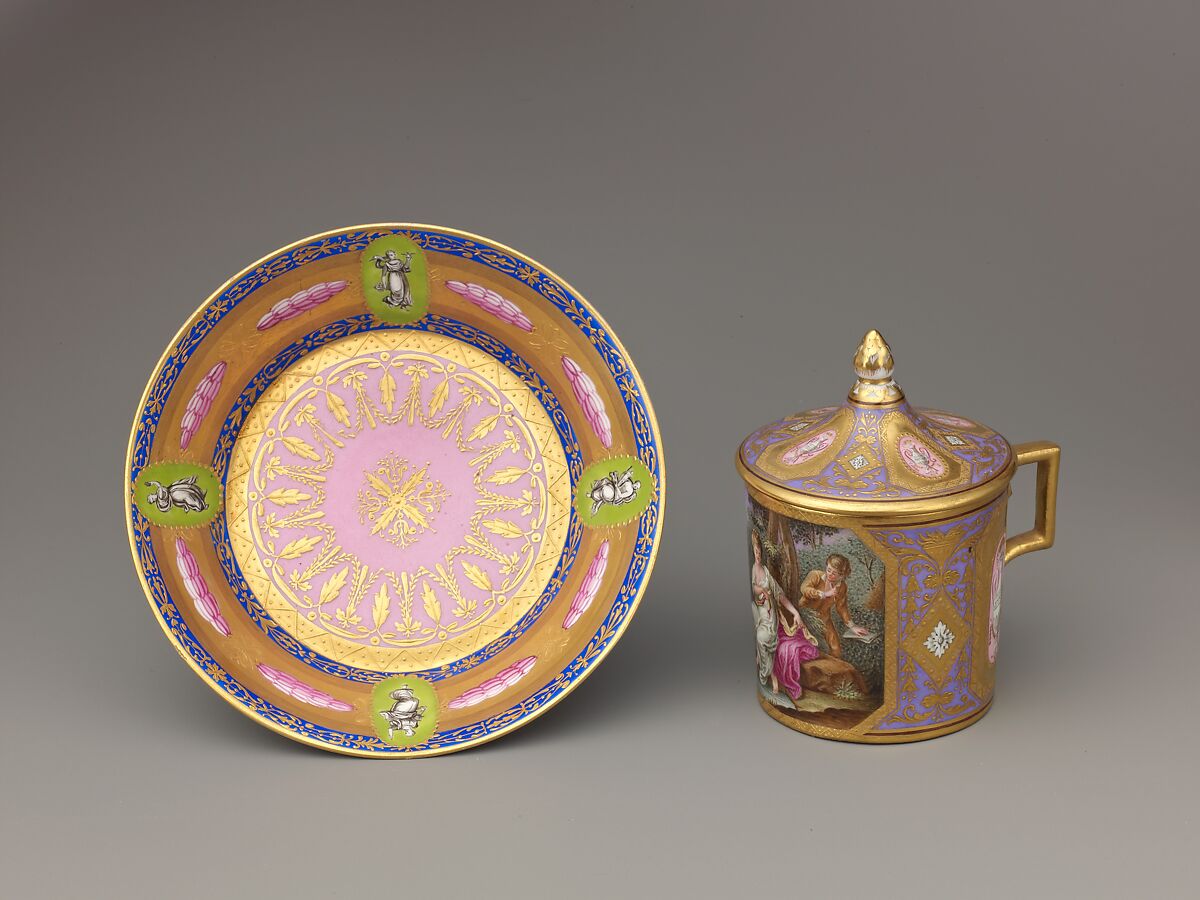
Bohemian Porcelain in the 19th Century
The nineteenth century was one of the defining periods for Bohemian porcelain. Factories increased production, improved firing technology and developed extensive ranges for both domestic consumption and export.
Production ranged from practical tableware to highly decorative objects intended for affluent households. Tea and coffee services, cups and saucers, plates, vases, figurines, serving pieces and elaborate presentation wares were produced in enormous variety.
Typical decorative features can include:
- hand-painted flowers and botanical motifs;
- rich gilding;
- cobalt-blue grounds;
- romantic landscapes;
- rococo-inspired ornament;
- relief decoration;
- classical and historicist motifs;
- fine polychrome painting.
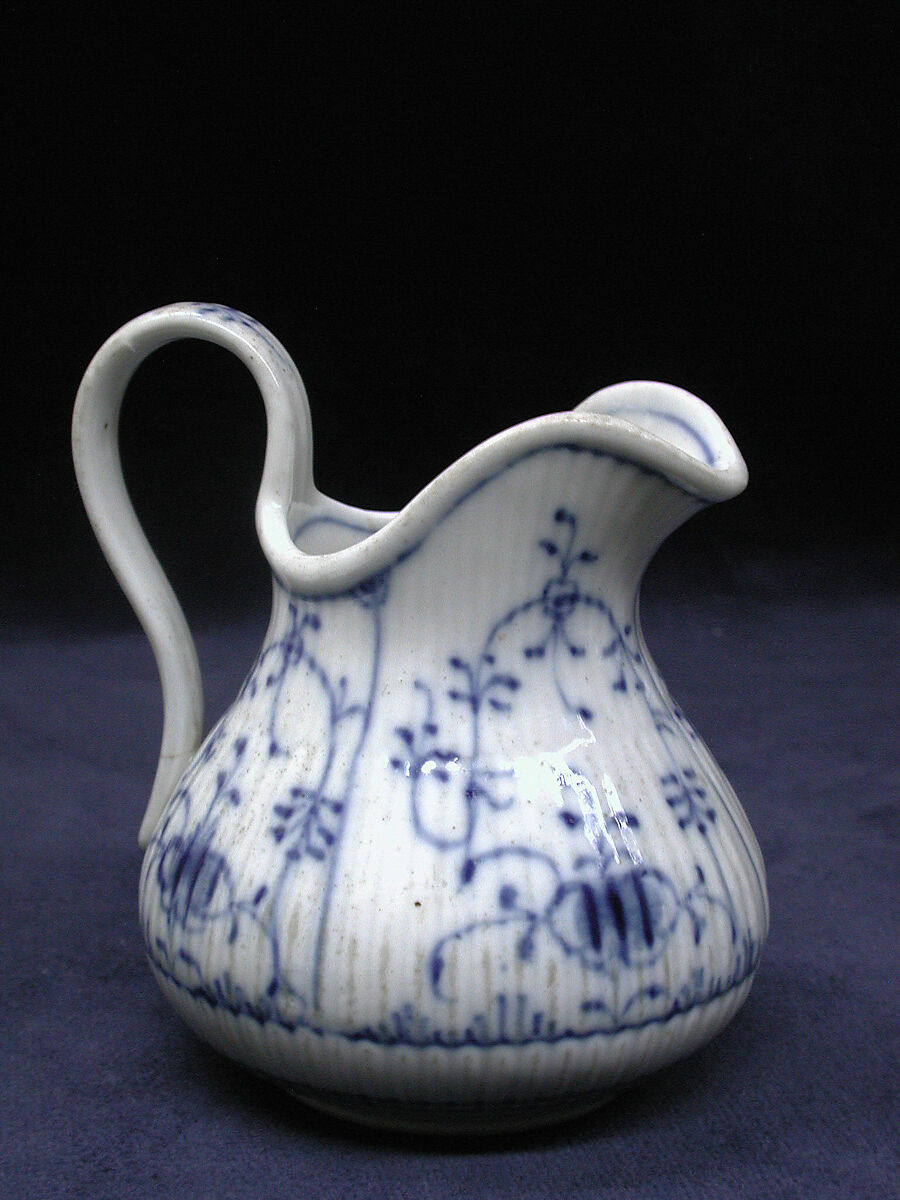
From Bohemia to Czechoslovakia
The collapse of Austria-Hungary at the end of the First World War and the creation of Czechoslovakia in 1918 introduced an especially useful chronological clue for collectors.
Porcelain produced for export during subsequent decades frequently carries wording such as Czechoslovakia or Made in Czechoslovakia. These inscriptions can help establish a broad date range, although they should never be treated as an exact dating system by themselves.
Factory marks continued to evolve, and manufacturers sometimes retained familiar symbols while changing the accompanying country designation, typography or company name.
For a broader explanation of how marks are interpreted, see our
guide to porcelain marks and backstamps.
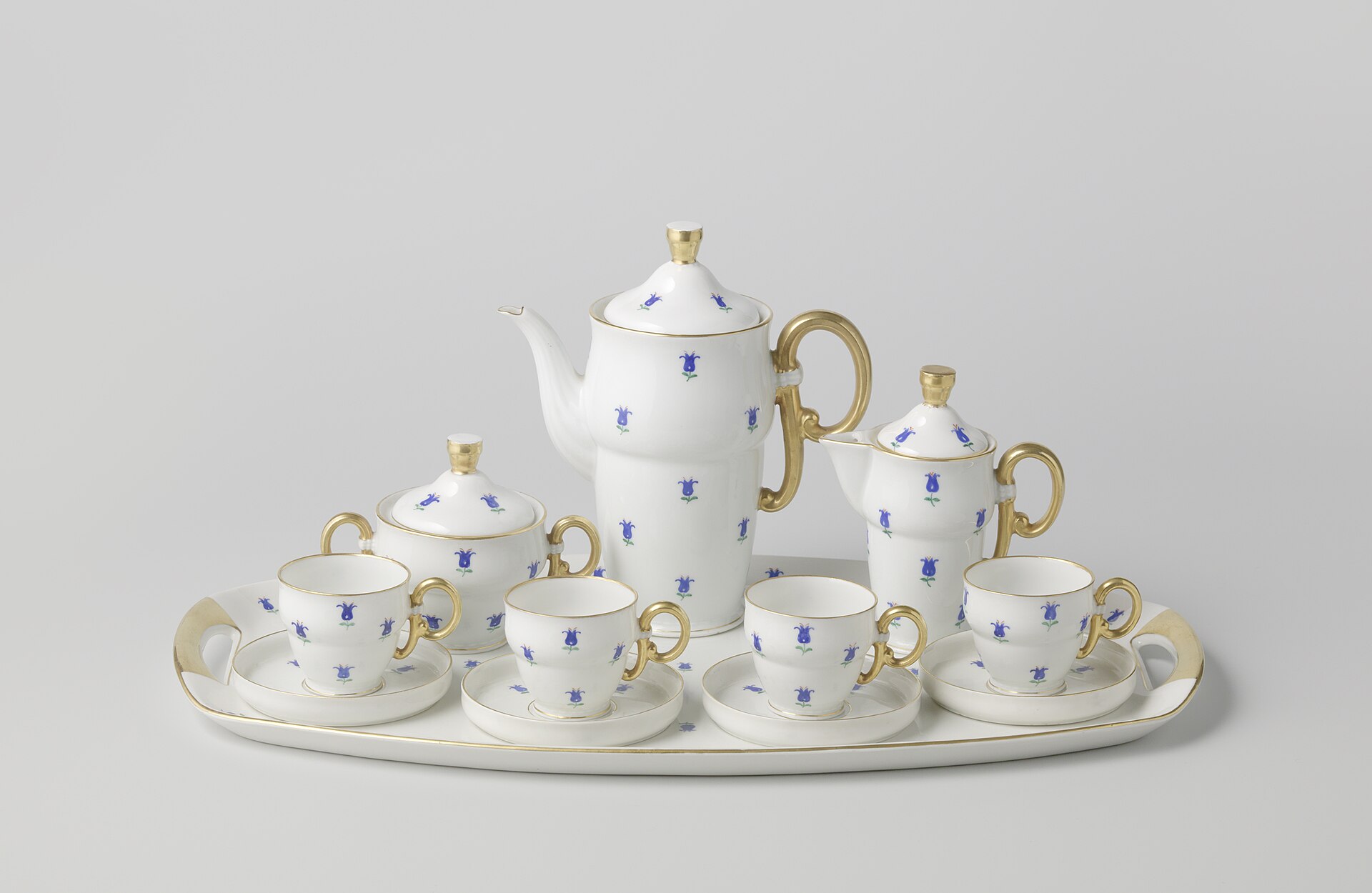
Art Nouveau, Art Deco and Modern Czech Porcelain
Czech and Czechoslovak porcelain did not remain stylistically fixed. During the late nineteenth and early twentieth centuries, manufacturers responded to changing European tastes.
Art Nouveau introduced flowing botanical forms, stylised flowers and organic ornament. Art Deco later brought stronger geometry, simplified forms, contrasting colours and modern decorative compositions.
Alongside luxury porcelain, factories increasingly produced high-quality tableware for a broader market. This combination of craftsmanship and industrial production became an important characteristic of twentieth-century Czechoslovak ceramics.
Important Czech and Bohemian Porcelain Manufacturers
Many factories operated in the region, and company names sometimes changed through mergers, nationalisation and later restructuring. Four names are particularly useful for collectors beginning their research.
| Manufacturer | Historic Association | Often Collected For | Useful Identification Clues |
|---|---|---|---|
| Thun | Klášterec region | Tableware, services, decorative porcelain | Crown devices, Thun name, changing country inscriptions |
| EPIAG / Pirkenhammer | Karlovy Vary area | Fine services, cups, vases, decorative porcelain | Pirkenhammer and EPIAG backstamps |
| Rudolf Kämpf | Bohemian porcelain tradition | Luxury services and decorative wares | R.K. and associated factory marks |
| Březová | Karlovy Vary region | Fine tableware and decorative porcelain | Factory name, symbols and changing country wording |
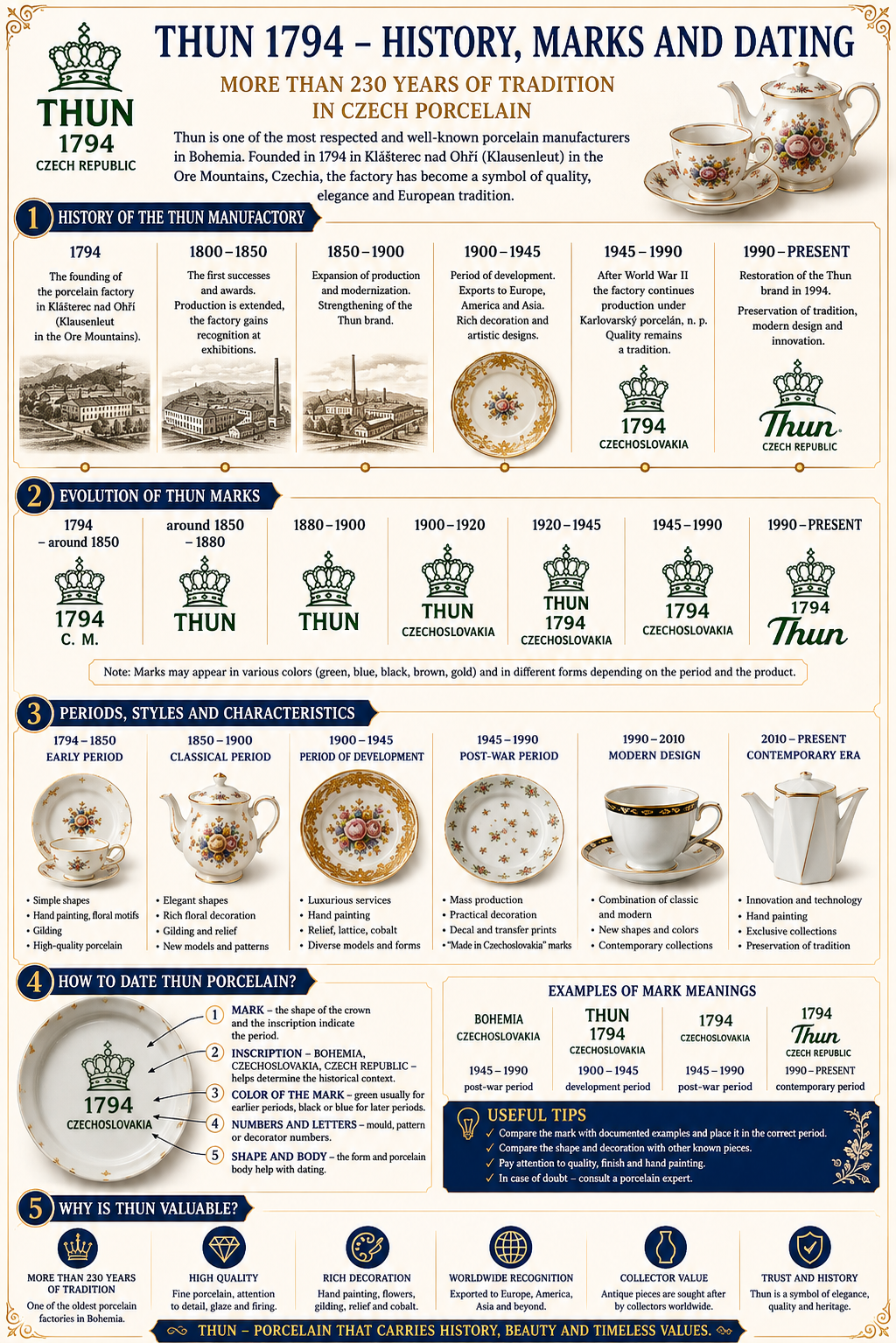
Thun Porcelain
Thun is one of the best-known names associated with Czech porcelain. Its long manufacturing tradition makes Thun particularly interesting because collectors encounter pieces from widely different periods.
Depending on the date, marks may vary considerably in design and wording. Crowns, numbers, factory names and country designations can all provide useful evidence, but they must be compared with documented examples from the appropriate period.
EPIAG and Pirkenhammer Porcelain
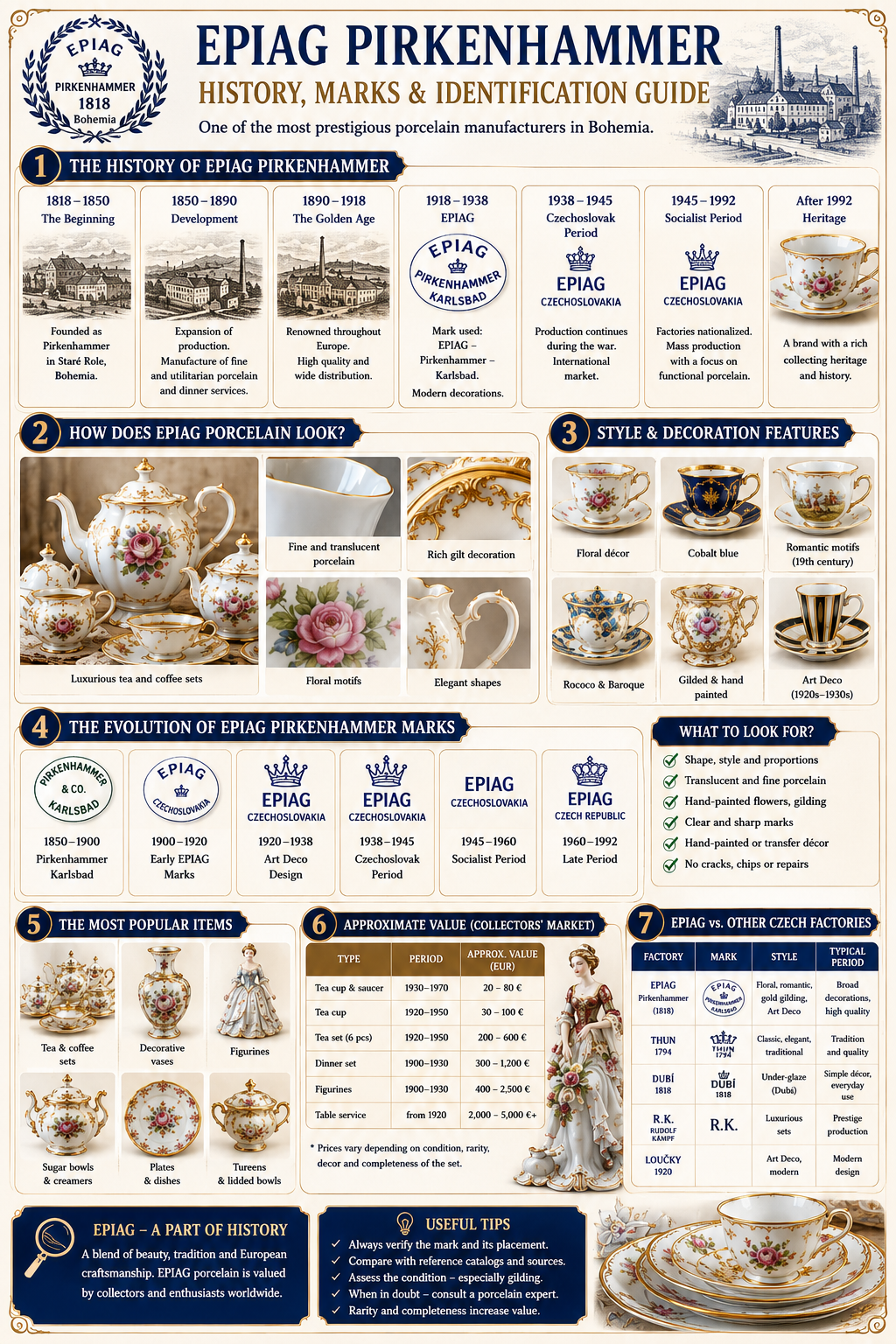
The names EPIAG and Pirkenhammer are familiar to collectors of Bohemian and Czechoslovak porcelain.
Pieces associated with Pirkenhammer can range from refined nineteenth-century wares to twentieth-century services displaying changing artistic fashions. Floral decoration, gilding, elegant shapes and later geometric designs can all appear depending on the production period.
EPIAG marks are particularly interesting because the wording, crown devices and country designations changed over time. Collectors should therefore compare the complete backstamp rather than searching only for the word “EPIAG”.
Rudolf Kämpf Porcelain
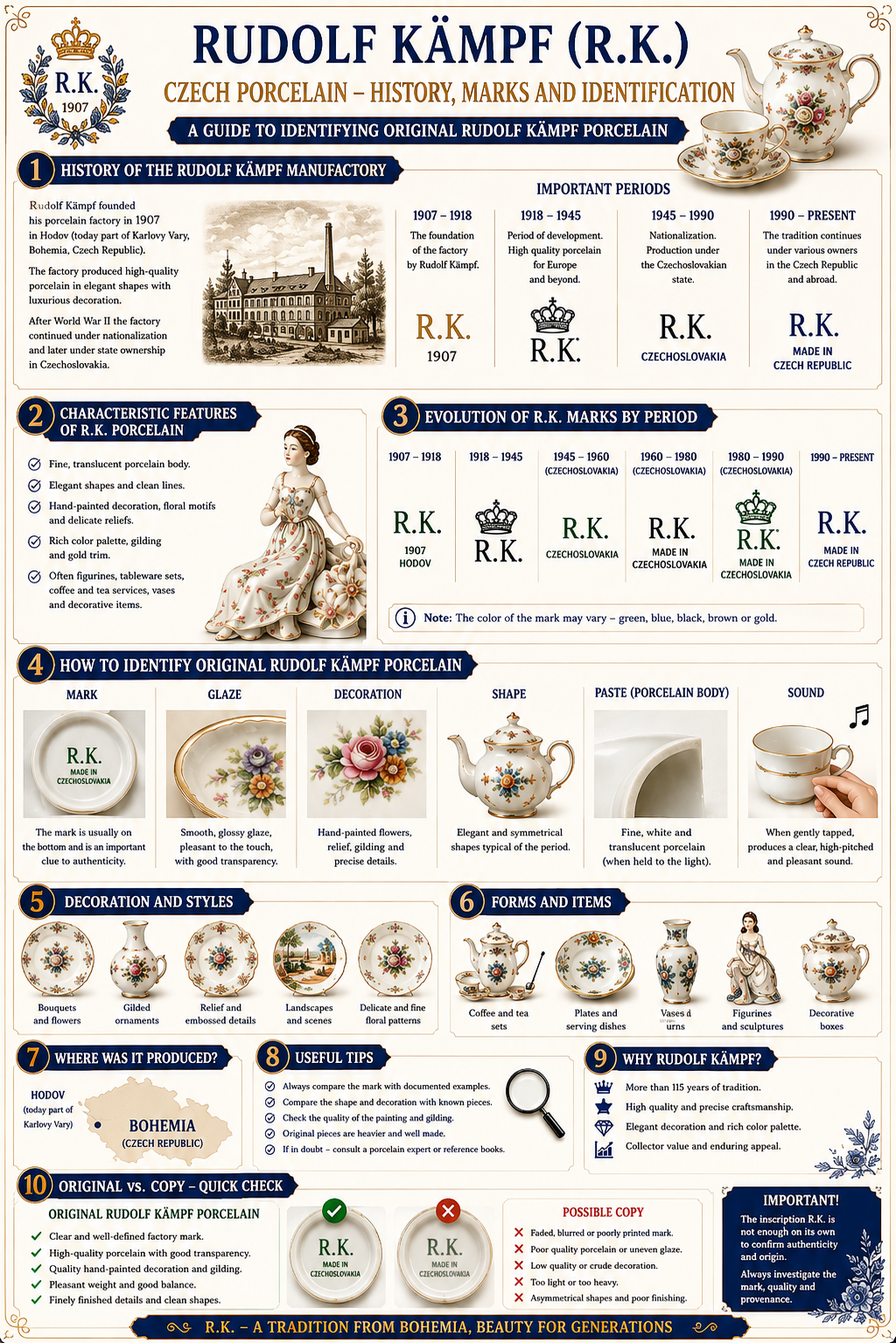
Porcelain associated with Rudolf Kämpf is another important branch of the Bohemian tradition. Collectors may encounter R.K. marks on finely made tableware, tea and coffee services, vases and decorative pieces.
As with other Czech manufacturers, identification requires more than recognising the initials. The quality of the porcelain body, glaze, form, decoration, mark and historical period should all agree.
Březová Porcelain
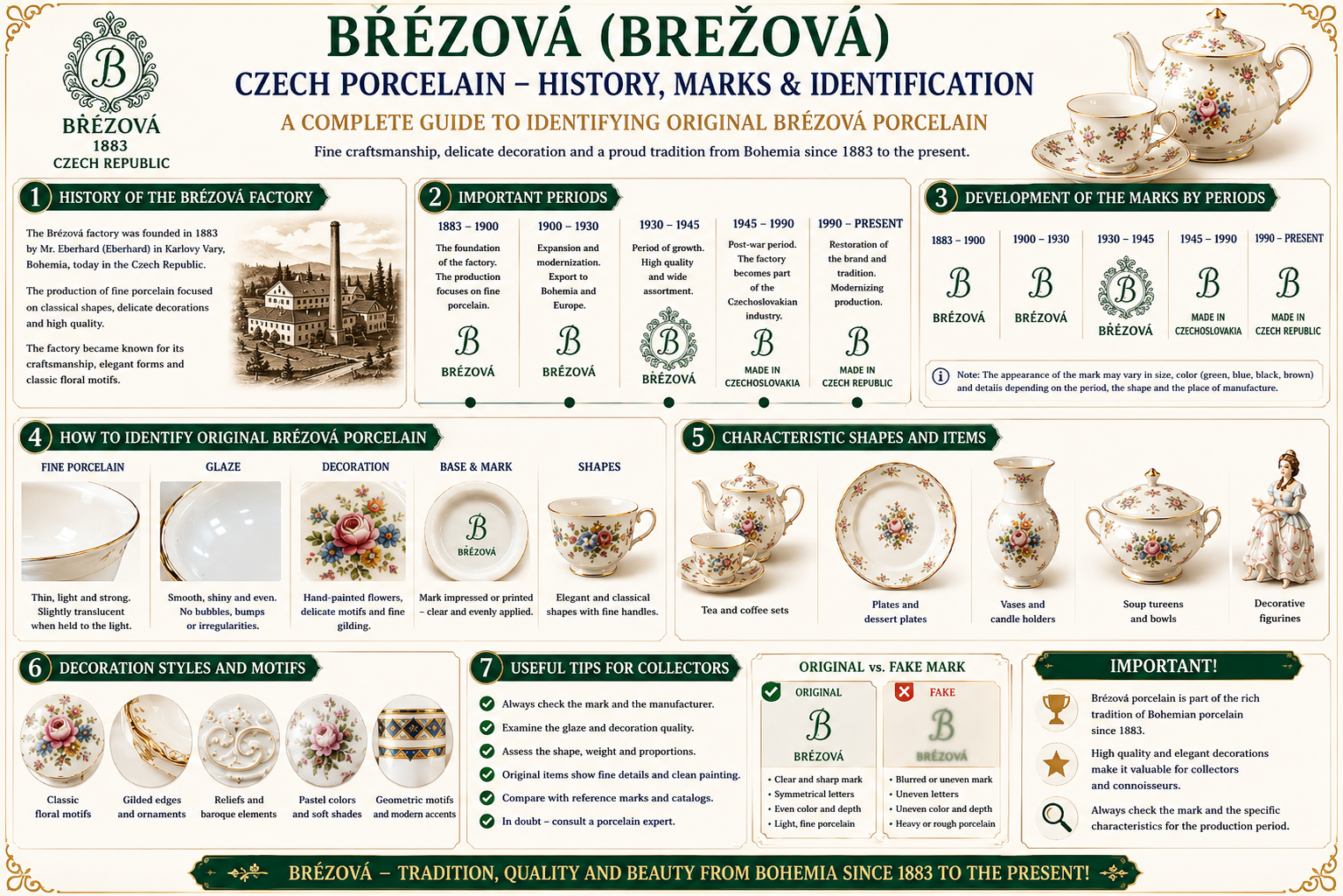
Březová, often written without Czech diacritics as Brezova, is another name collectors may encounter while researching porcelain from the Karlovy Vary region.
Its porcelain tradition includes tableware and decorative objects displaying floral motifs, gilded borders and refined European forms. As political and commercial circumstances changed, marks and country inscriptions also evolved.
Czech Porcelain Marks: What Should You Look For?
The underside of an antique porcelain object is often the best place to begin an investigation. Czech and Bohemian pieces may carry printed, painted, impressed or incised information.
Look carefully for:
- factory names;
- crowns, shields, monograms and symbols;
- Bohemia or Austria inscriptions;
- Czechoslovakia or Made in Czechoslovakia;
- Czech Republic;
- model and pattern numbers;
- impressed numbers;
- decorator’s marks;
- artist signatures;
- export or retailer marks.
If you want to study this process in greater depth, our
complete guide to identifying porcelain marks
explains how collectors compare backstamps with the object itself.
Bohemia, Czechoslovakia or Czech Republic – What Does the Mark Mean?
Country wording can be extremely useful, but it needs historical context.
| Wording | General Historical Context | Collector’s Interpretation |
|---|---|---|
| Bohemia | Historic regional designation, especially relevant to earlier export wares | Research the factory and exact mark rather than dating from the word alone |
| Austria | May occur on objects produced when Bohemia formed part of the Habsburg/Austro-Hungarian political sphere | Potential clue to pre-1918 production |
| Czechoslovakia | Associated with the Czechoslovak state created in 1918 | Strong broad chronological clue |
| Made in Czechoslovakia | Common export-oriented country designation on twentieth-century goods | Useful when combined with factory mark and style |
| Czech Republic | Modern Czech state | Generally points to post-Czechoslovak production |
These are historical guidelines rather than an automatic dating formula. Old moulds, later reproductions, export requirements and changing company structures can complicate interpretation.
How to Identify Antique Czech and Bohemian Porcelain
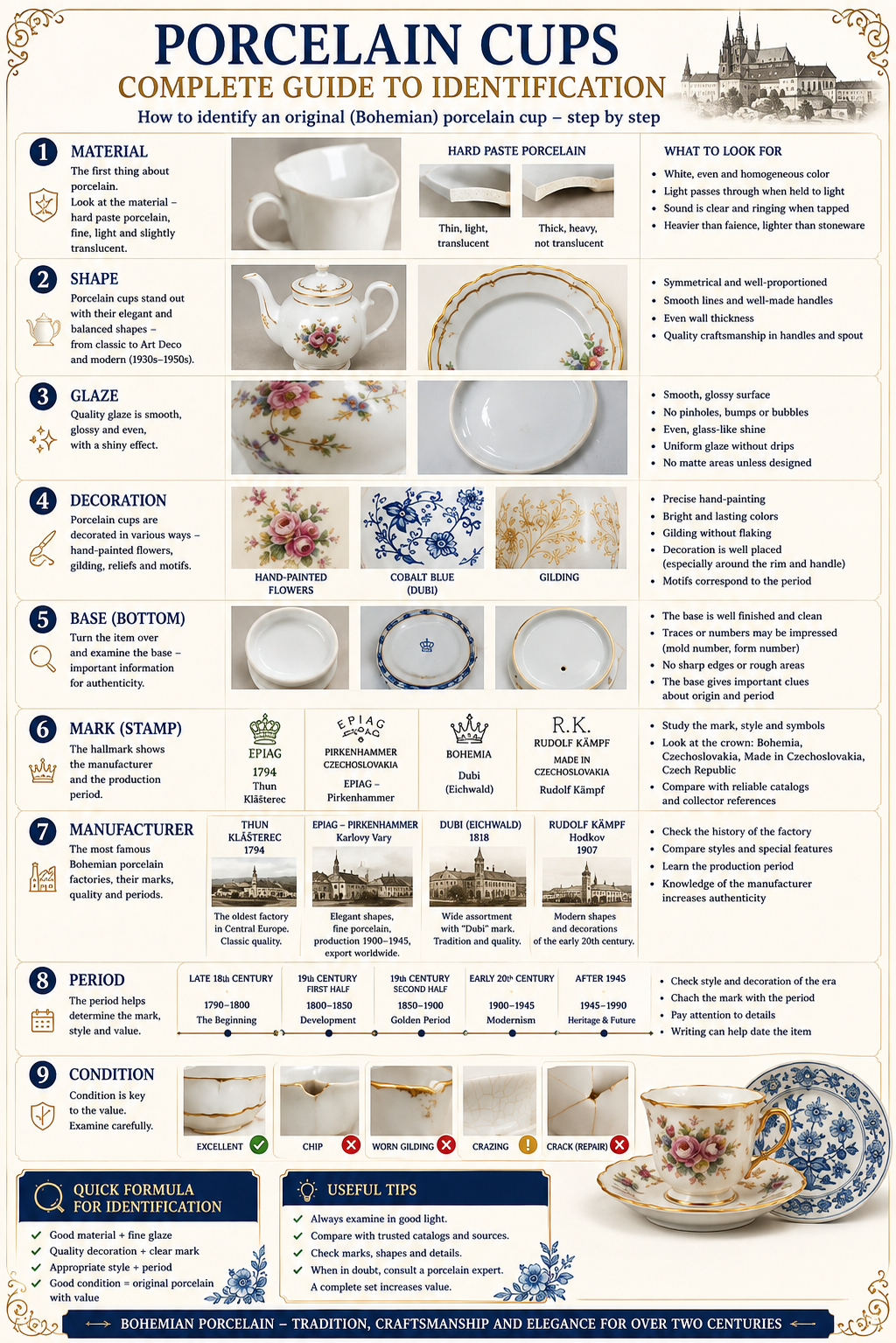
A genuine piece should be studied as a complete object. The factory mark is important, but it should agree with the material, glaze, shape, decoration, manufacturing technique and natural wear.
1. Examine the Porcelain Body
Many high-quality Bohemian pieces are made from refined hard-paste porcelain. Examine the body at an unglazed foot rim or another exposed area.
Look for a fine, dense and well-fired ceramic body. Thin areas of some porcelain pieces may show a degree of translucency when held carefully against strong light.
2. Study the Shape
Shape can be surprisingly useful for dating porcelain. Nineteenth-century historicist and rococo-revival forms differ considerably from streamlined Art Deco or later modern tableware.
Study handles, finials, rims, feet, lids and proportions. Factory catalogues and documented museum examples are especially valuable when identifying unusual forms.
3. Examine the Glaze
Quality porcelain generally has a smooth, well-fused glaze. Older pieces may show minor age-related surface characteristics, but artificial ageing should never be confused with genuine historical wear.
4. Study the Decoration
Decoration is one of the most revealing aspects of Bohemian porcelain.
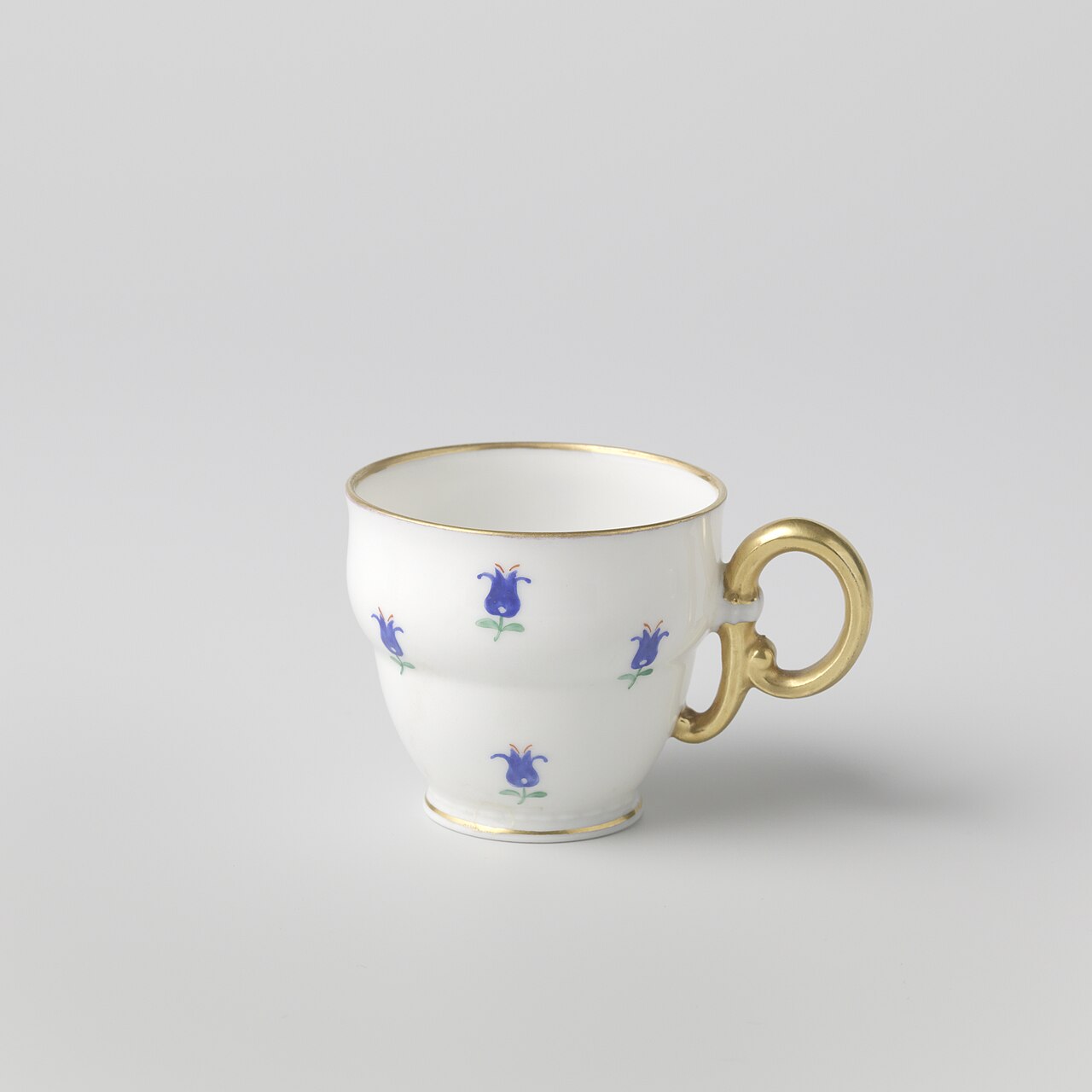
Hand-painted flowers may show subtle differences between individual brushstrokes, while transfer decoration tends to be more mechanically consistent. Gilding should also be examined carefully around rims, handles and raised ornament.
5. Turn the Piece Over
The base can reveal information that is invisible from the front: factory stamps, impressed model numbers, painter’s signs, pattern references and evidence of manufacturing technique.
Never clean an old backstamp aggressively simply to make it easier to read. Photograph it under diffuse light and examine the image at higher magnification instead.
6. Compare the Mark with the Period
Once you have identified a possible manufacturer, compare the exact mark with documented versions from that factory.
Typography, crown shape, colour, surrounding text and country designation may all matter. Our separate guide on
how to date antique porcelain
explains why several characteristics should be combined before assigning a date.
How to Date Czech and Bohemian Porcelain
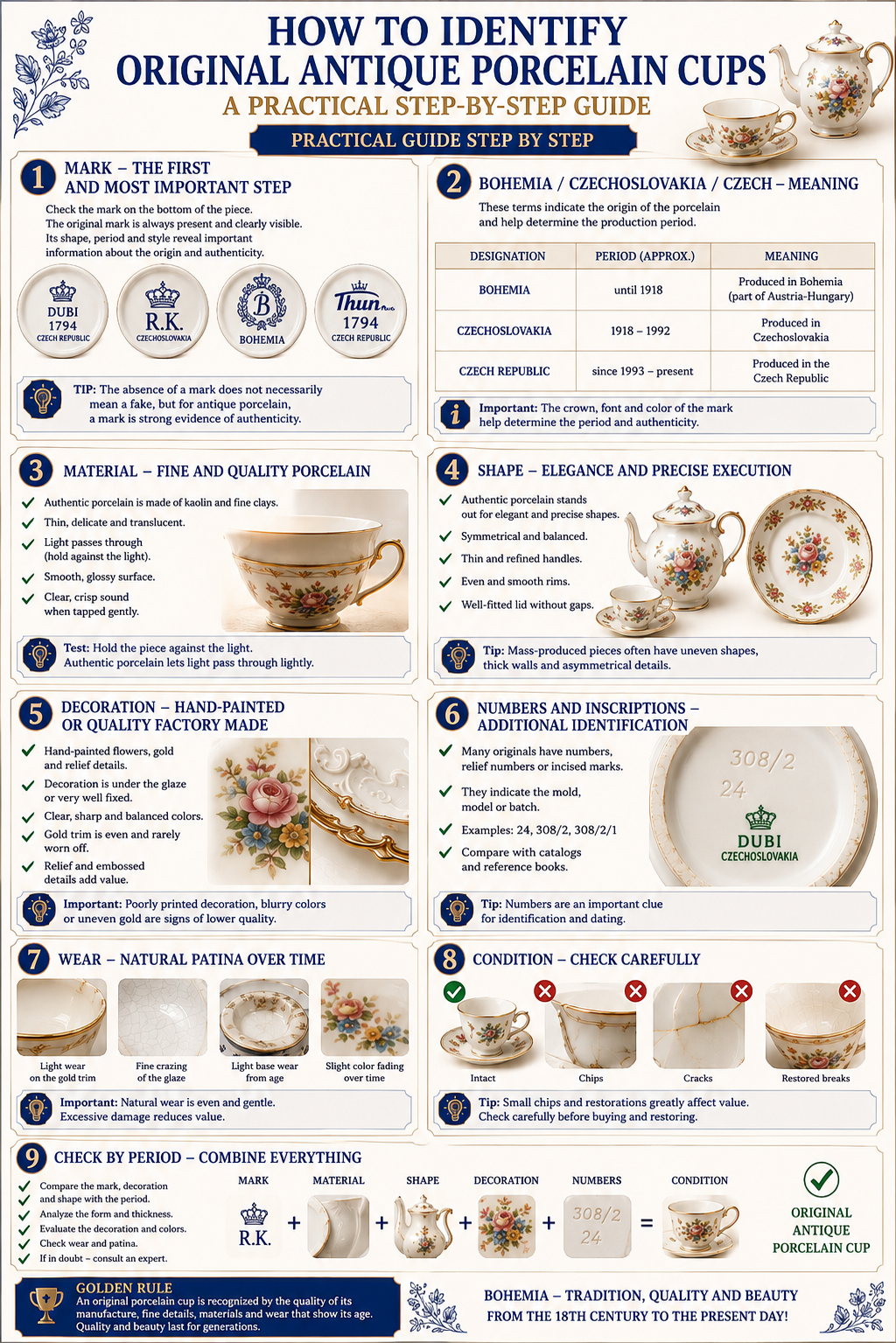
Dating antique Czech and Bohemian porcelain rarely depends on a single feature. The most reliable approach is to combine the factory mark with the country designation, porcelain body, shape, decoration, manufacturing technique, pattern numbers and signs of natural age.
Political changes in Central Europe provide particularly useful clues. A piece marked Bohemia belongs to a different historical context from one marked Czechoslovakia, while a Czech Republic designation generally indicates much later production.
However, country names should always be interpreted together with the manufacturer’s mark. Marks could remain in use for years, factories changed ownership, and export markings did not always change immediately after political events.
| Period | Historical Context | Possible Identification Clues |
|---|---|---|
| Late 18th – early 19th century | Early development of Bohemian porcelain production | Early factory marks, hand finishing, traditional European forms |
| 19th century | Rapid expansion of Bohemian porcelain factories | Floral painting, gilding, historicist and rococo-inspired forms |
| c. 1900–1918 | Late Austro-Hungarian period | Bohemia or Austrian-associated export terminology may occur |
| 1918–1930s | Early Czechoslovak period | Czechoslovakia wording, Art Nouveau and Art Deco influences |
| 1945–1992 | Post-war Czechoslovak production | Factory consolidation, export marks and large-scale production |
| 1993–present | Czech Republic | Czech Republic and modern manufacturer marks |
For a broader methodology, read our guide to
dating antique porcelain.
Marks Alone Do Not Prove Authenticity
One of the most important rules in porcelain collecting is simple: a convincing backstamp does not automatically make a piece authentic or old.
Marks can be copied, imitated or applied to later objects. In other cases, genuine historical marks may have remained in use over relatively long periods. A collector should therefore ask whether the mark is consistent with the entire object.
Check whether the porcelain body, glaze, form, decoration and manufacturing technique correspond with the period suggested by the mark. Natural wear should also occur in believable locations rather than appearing artificially distributed across the object.
Understanding the difference between genuine age and deliberate imitation becomes easier when combined with our guides to
authenticity,
replicas
and
fakes.
Natural Wear on Antique Czech Porcelain
A porcelain object that has survived for many decades may show evidence of use. The challenge is distinguishing natural wear from damage and artificial ageing.
Typical age-related characteristics can include light rubbing of gilded rims, minor scratches on surfaces that contacted tables or saucers, gentle wear around handles and subtle discoloration around an unglazed foot.
Some older pieces may also display fine glaze crazing. Crazing by itself, however, does not prove age or authenticity.
Condition: What Collectors Should Examine
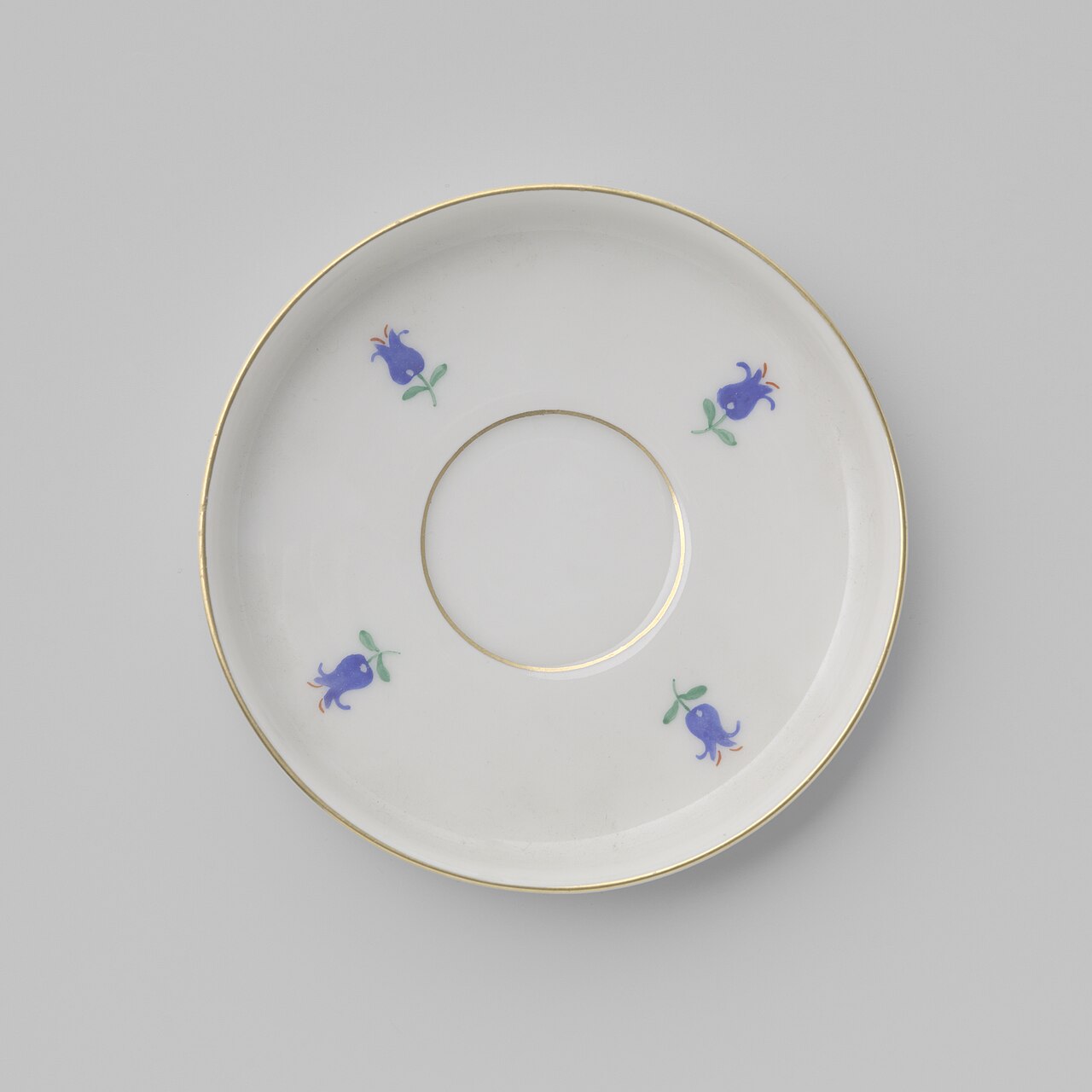
Condition can have a substantial influence on the desirability and market value of antique Czech porcelain. Before buying or valuing a piece, examine it carefully under strong, even light.
| Condition Issue | Where to Look | Possible Effect on Value |
|---|---|---|
| Hairline cracks | Rims, handles, bases and around attachments | Often significant |
| Chips | Rims, feet, lid edges and finials | Depends on size and visibility |
| Restoration | Handles, figures, spouts, rims and decorative elements | Can substantially affect collector value |
| Gilding wear | Edges, handles and raised decoration | Minor age-related wear may be acceptable |
| Decoration loss | Painted flowers, landscapes and transfers | Depends on severity |
| Crazing | Glazed surfaces | Depends on type, severity and period |
Small signs of age are not necessarily undesirable. Collectors generally distinguish between honest historical wear and damage that compromises the appearance or structural integrity of an object.
Is Czech and Bohemian Porcelain Valuable?
Yes, some antique Czech and Bohemian porcelain can be valuable, but origin alone does not determine price.
The market contains everything from relatively common twentieth-century tableware to rare factory pieces, elaborate nineteenth-century porcelain, important designs and exceptional objects sought by specialist collectors.
Value is usually determined by a combination of manufacturer, age, rarity, decoration, artist or designer, condition, provenance and current collector demand.
What Determines the Value of Czech Porcelain?
| Factor | Why It Matters |
|---|---|
| Manufacturer | Some factories, periods and product lines attract stronger collector interest. |
| Age | Early production can be scarcer, although age alone does not guarantee value. |
| Rarity | Unusual forms, limited production and scarce patterns can command premiums. |
| Decoration | Fine hand painting, elaborate gilding and technically demanding decoration may increase desirability. |
| Artist or designer | Documented authorship can significantly influence collector interest. |
| Condition | Cracks, chips, restoration and severe decoration loss usually reduce value. |
| Completeness | Complete services, matching lids and original components can be more desirable. |
| Provenance | Documented ownership or exhibition history can add historical significance. |
| Market demand | Collector preferences change over time and differ between markets. |
If you are researching the financial side of an object, our
Antique Valuation
guide explains the principal factors specialists consider when assessing antiques.
Which Czech Porcelain Is Most Collectible?
There is no single category of Czech porcelain that is always the most valuable. Specialist collectors may focus on a particular manufacturer, historical period, decorative technique or type of object.
Pieces that can attract particular attention include early factory production, unusual nineteenth-century forms, elaborate hand-painted porcelain, richly gilded services, rare patterns, distinctive Art Nouveau and Art Deco designs, documented artist pieces and examples in exceptional original condition.
Complete sets can also be desirable, especially when all pieces carry compatible marks and the service retains difficult-to-find components such as lids, serving dishes, coffee pots or sugar bowls.
Hand-Painted or Transfer-Printed?
One useful skill when examining antique porcelain is learning to distinguish hand-painted decoration from transfer printing.
Under magnification, hand painting often reveals subtle brushwork, variations in line thickness and small differences between repeated motifs. Transfer decoration tends to be more uniform and may reveal a printed dot or line structure.
Many pieces combine techniques. A transferred outline, for example, may have been enhanced by hand with colour or gilding. Therefore, the presence of transfer printing does not automatically indicate poor quality or modern manufacture.
Why Gilding Matters
Gold decoration was widely used on Bohemian porcelain, from restrained rim lines to elaborate rococo-inspired ornament.
Examine whether the gilding is appropriate to the style and whether wear corresponds naturally with handling. Handles, rims, knobs and raised surfaces usually experience more contact than protected recessed areas.
Perfectly preserved gilding on an allegedly heavily used nineteenth-century object is not impossible, but it deserves closer examination.
How to Examine a Czech Porcelain Mark
When researching a backstamp, do not look only at the manufacturer name. Record the entire mark.
Important details include:
- the exact spelling of the manufacturer;
- crown, shield or monogram design;
- typeface and arrangement of the lettering;
- colour of the mark;
- Bohemia, Czechoslovakia or Czech Republic wording;
- Made in wording;
- numbers and letters;
- impressed marks in the porcelain body;
- decorator or painter marks;
- additional retailer or export marks.
Photograph the mark directly from above in good light. Then compare it with documented examples rather than relying on a visually similar mark found without provenance online.
Common Mistakes When Identifying Czech Porcelain
Even experienced collectors can be misled when too much importance is placed on one characteristic. Avoid these common mistakes:
- Dating from the mark alone. Always compare the complete object.
- Assuming every crown mark belongs to the same manufacturer. Crowns were used by numerous European factories.
- Believing crazing proves age. It does not.
- Assuming all hand-painted porcelain is valuable. Quality, rarity and authorship matter.
- Ignoring restoration. Old repairs can be difficult to detect.
- Confusing Bohemian style with Bohemian manufacture. Similar decorative traditions existed elsewhere in Central Europe.
- Using country wording as an exact date. Treat it as one piece of chronological evidence.
A Practical Identification Formula
For an unknown Czech porcelain object, use the following sequence:
Mark → country designation → material → shape → glaze → decoration → numbers → natural wear → condition → historical period.
When all these elements support the same conclusion, an attribution becomes considerably stronger.
Czech Porcelain vs German and Austrian Porcelain
The porcelain traditions of Bohemia, Germany and Austria developed in close geographical and cultural proximity. Craftsmen, artistic ideas, raw materials and commercial influences crossed borders, which means some objects can appear remarkably similar.
For this reason, decoration alone is rarely sufficient to establish origin. A floral cup with gilding could potentially fit several Central European traditions.
Factory marks, documented shapes, porcelain composition, production technique and historical records provide stronger evidence.
Collectors comparing Central European factories may also find our
guide to German porcelain
useful when studying related manufacturing traditions.
How to Research an Unknown Czech Porcelain Piece
If you have inherited or discovered an unidentified porcelain object, begin methodically rather than immediately searching for a price.
- Photograph the entire object from several angles.
- Photograph the underside and every mark.
- Measure the height, width and diameter.
- Examine the porcelain body and glaze.
- Identify whether the decoration is painted, printed or mixed.
- Record every number, letter and symbol.
- Search for the manufacturer before searching for the pattern.
- Compare the mark with documented period examples.
- Check auction results for genuinely comparable objects.
- Consider professional assessment for unusual or potentially important pieces.
This approach is much more reliable than searching only for phrases such as “old porcelain cup value”.
How to Care for Antique Czech Porcelain
Antique porcelain is durable, but delicate handles, finials, gilding and old restorations require careful handling.
Avoid abrasive cleaners and dishwashers. Do not soak pieces unnecessarily, especially if they have cracks, old repairs or unglazed areas that could absorb moisture.
When displaying valuable pieces, provide stable support and avoid locations where vibration, direct sunlight or accidental contact could cause damage.
For long-term preservation, see our guide on
how to store antique porcelain and ceramics.
Why Czech and Bohemian Porcelain Matters to Collectors
Czech and Bohemian porcelain tells a story extending far beyond decorative ceramics. Individual objects reflect changing borders, industrial development, international trade, artistic movements and the everyday culture of Central Europe.
A nineteenth-century Bohemian cup, an EPIAG service marked Czechoslovakia or a later Thun piece may belong to very different historical worlds even though all originated within the same broader porcelain tradition.
That intersection between objects and changing European history is precisely what makes Czech porcelain so rewarding to research.
Frequently Asked Questions About Czech and Bohemian Porcelain
What is Bohemian porcelain?
Bohemian porcelain generally refers to porcelain historically manufactured in Bohemia, a Central European region that today forms a substantial part of the Czech Republic. Because political borders changed over time, pieces may carry different country designations.
How can I identify Czech porcelain?
Begin with the underside. Examine the factory mark, country designation, impressed numbers and decorator marks. Then compare those clues with the porcelain body, glaze, shape, decoration, manufacturing technique and condition.
What does Czechoslovakia mean on porcelain?
A Czechoslovakia designation generally places the object within the historical context of the Czechoslovak state, which existed during much of the twentieth century. It is a useful dating clue but should be combined with the specific factory mark and other characteristics.
Does a Bohemia mark mean the porcelain is antique?
Not automatically. “Bohemia” can be an important historical clue, but wording alone cannot establish authenticity or an exact date. The complete mark and object must be examined.
Is antique Czech porcelain valuable?
Some examples can be highly collectible, while others remain relatively affordable. Manufacturer, age, rarity, decoration, condition, artist or designer, provenance and market demand all influence value.
Are Thun porcelain pieces collectible?
Yes. Thun has a long manufacturing history, and collector interest varies considerably according to period, pattern, rarity, decoration and condition.
What are EPIAG porcelain marks?
EPIAG marks occur on porcelain associated with manufacturers belonging to the historical porcelain industry of the region. Because several mark styles and country designations were used, the exact backstamp should be researched rather than interpreting the EPIAG name alone.
What does R.K. mean on Czech porcelain?
R.K. can be associated with Rudolf Kämpf porcelain, but initials should never be attributed solely from appearance. The complete mark and characteristics of the object should correspond with documented examples.
Is crazing a sign that porcelain is old?
Crazing can occur on older ceramics, but it is not proof of age. Glaze composition, firing, environmental conditions and artificial ageing can all affect surface appearance.
How can I tell whether porcelain decoration is hand-painted?
Examine the decoration under magnification. Hand painting usually reveals subtle brush variations and differences between repeated motifs. Transfer decoration tends to be more mechanically consistent, although many manufacturers combined printing with hand finishing.
Can a porcelain mark be fake?
Yes. Marks can be copied or reproduced. Authentication should therefore consider the entire object rather than relying exclusively on the backstamp.
Where are Czech porcelain marks usually found?
Most factory marks appear on the underside or base. Additional numbers, decorator marks or impressed symbols may also occur around the foot rim or elsewhere on the object.
Final Checklist: Identifying Czech and Bohemian Porcelain
| Check | Question to Ask |
|---|---|
| Material | Is the body consistent with fine porcelain? |
| Factory mark | Can the manufacturer be identified? |
| Country designation | Does the wording fit the proposed historical period? |
| Shape | Does the form correspond with documented factory production? |
| Decoration | Is the technique and style appropriate to the period? |
| Numbers | Can mould, pattern or decorator numbers be identified? |
| Wear | Does ageing appear natural and consistent? |
| Condition | Are there cracks, chips or restoration? |
| References | Does the object match documented examples? |
Conclusion
Czech and Bohemian porcelain represents one of Central Europe’s richest ceramic traditions. From the early factories of Bohemia through the industrial expansion of the nineteenth century, the creation of Czechoslovakia and the modern Czech Republic, porcelain produced in this region reflects more than two centuries of craftsmanship, design and European history.
Manufacturers such as Thun, EPIAG Pirkenhammer, Rudolf Kämpf and Březová form important chapters of that story, but identifying their porcelain requires more than recognising a familiar logo.
The strongest attribution comes from combining factory marks, country designations, material, shape, glaze, decoration, numbers, natural wear, condition and historical evidence.
Whether you are researching an inherited coffee service, a flea-market discovery or a carefully assembled collection, every mark and manufacturing detail can reveal another part of the object’s journey through history.
Related Guides
Continue your research with these guides from The Old Antiquarian:
-
Antique Porcelain Guide – History, Identification, Marks & Manufacturers
-
What Are Porcelain Marks? A Guide to Porcelain Backstamps
-
How to Identify Porcelain Marks
-
How to Date Antique Porcelain
-
How to Store Antique Porcelain and Ceramics
-
Antique Valuation
Continue Exploring
Discover more collector guides, identification resources and stories from the world of antiques in
Stories & Knowledge
.
Each antique object carries evidence of where it was made, how it was used and the people and cultures through which it travelled. Learning to read those details is one of the most rewarding parts of collecting.
Have a Czech or Bohemian Porcelain Piece?
If you would like to learn more about an antique porcelain object, photograph the complete piece, its base, factory mark and any numbers or signatures before contacting us.
