
What Is Haviland Limoges?
Haviland Limoges Porcelain: Marks, Patterns, Dating & Identification
Haviland Limoges porcelain is one of the best-known names in French tableware and decorative porcelain. The modern Haviland house dates its Limoges story to 1842, when David Haviland settled in Limoges after building a ceramics and porcelain import business in New York. Over the following decades, Haviland became especially important in the American market and developed an international reputation for refined hard-paste porcelain, floral decoration, gilding and innovative design.
For collectors, Haviland can also be challenging. Several related companies used the Haviland family name, backstamps changed over time, many patterns remained in production for long periods, and thousands of decorations were never officially named. Correct identification therefore depends on combining the maker, backmark, blank shape, decoration, factory numbers and pattern-reference systems rather than relying on a single clue.
If you are new to antique porcelain, begin with our
Guide to Antique Porcelain
and
Types of Porcelain Explained
before moving into specialist Haviland identification.
Haviland Limoges at a Glance
| Traditional origin date | 1842 |
| Founder | David Haviland |
| Production centre | Limoges, France |
| Main collector groups | Haviland & Co., Théodore Haviland, Charles Field Haviland |
| Pattern scale | More than 30,000 patterns or variations are estimated by Haviland Collectors International Foundation |
| Schleiger references | About 11,000 patterns identified and numbered in Schleiger catalogues |
| Key identification clues | Backstamp, maker, blank, decoration, factory number, Schleiger number and condition |
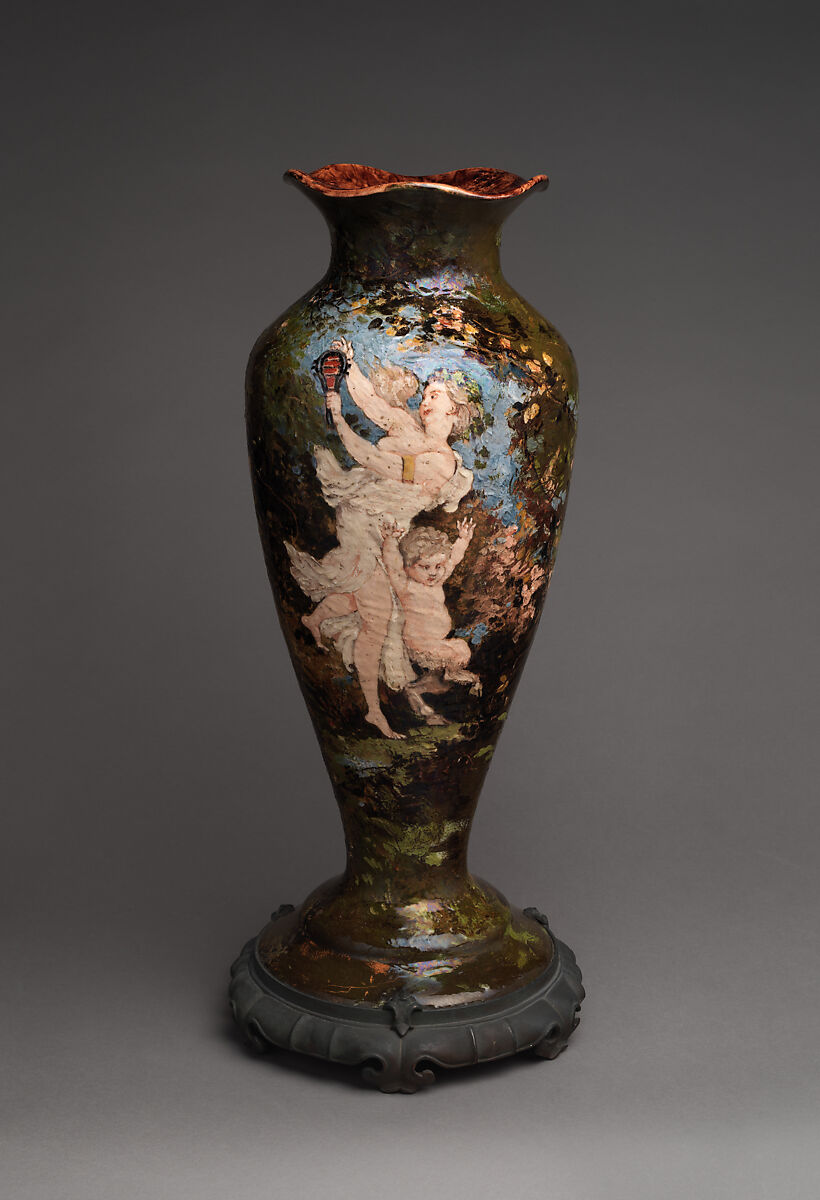
What Is Haviland Limoges Porcelain?
Haviland belongs to the history of Limoges porcelain, the hard-paste porcelain tradition centred on Limoges in central France. The region became internationally important because of its access to kaolin and its network of porcelain factories, decorators and specialist craftsmen.
The Haviland name became particularly influential because the business connected French porcelain production with the enormous nineteenth-century American market. Haviland produced both tableware and decorative objects and developed a reputation for combining high-quality porcelain with changing tastes in floral design, gilding, naturalism and later modern decorative styles.
The History of Haviland in Limoges
David Haviland began in New York, where he was involved in importing ceramics and porcelain. He travelled to France and ultimately settled in Limoges. The modern Haviland company dates its manufacture to 1842, while the Haviland Collectors International Foundation notes that David established his own company in 1853 to produce china for the American market. These dates describe different stages in the development of the Haviland enterprise and explain why both appear in historical references.
Haviland’s great nineteenth-century success came from close attention to American taste and from bringing decorating activity into the production system. The company became known for richly decorated table services and for innovations in porcelain decoration, including the growing use of transfer and lithographic techniques alongside hand finishing.
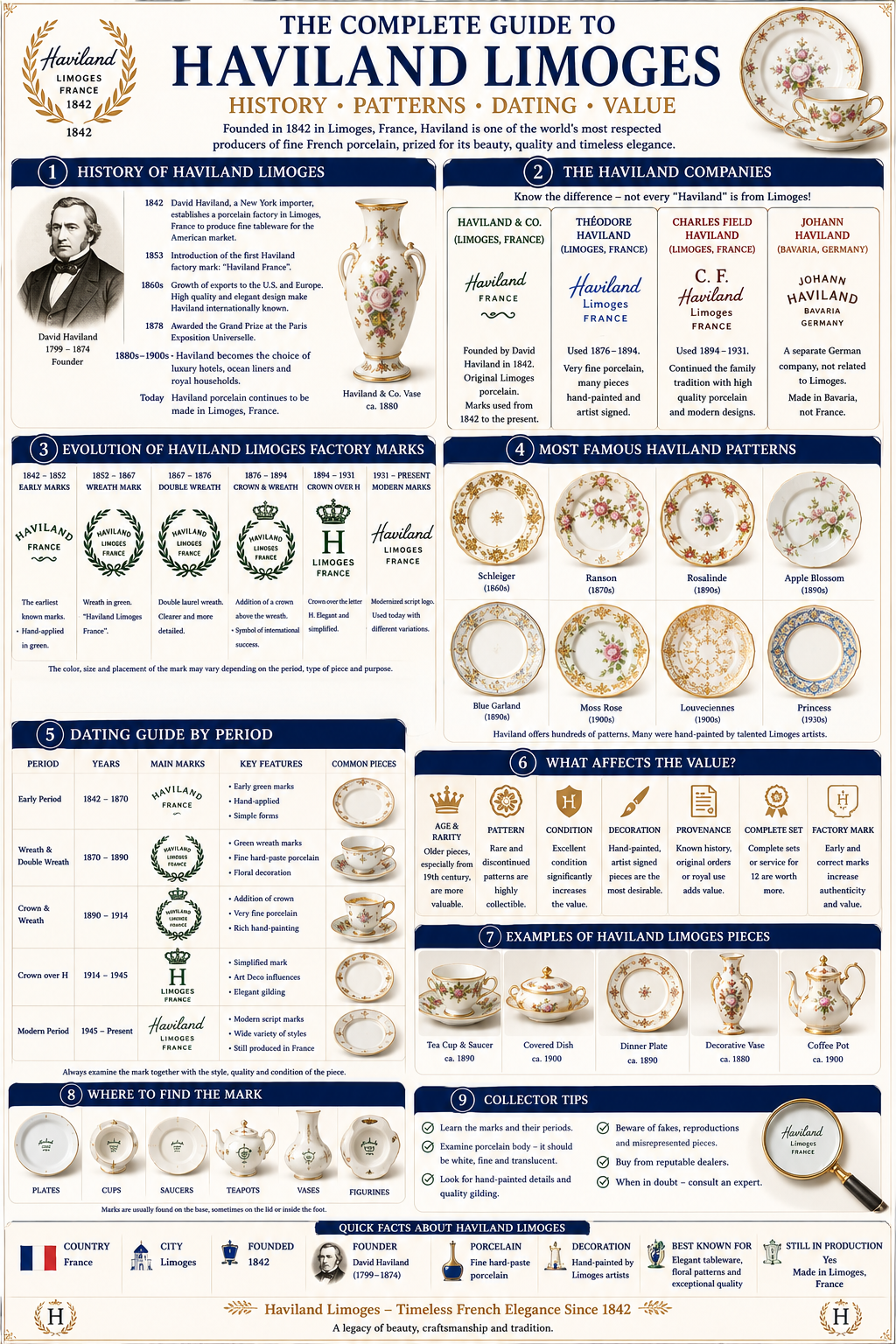
During the later nineteenth century, Haviland porcelain was exported extensively to the United States and became associated with formal dining, hotels, institutions and affluent households. The company also produced important decorative and artistic porcelain, broadening its reputation beyond ordinary dinnerware.
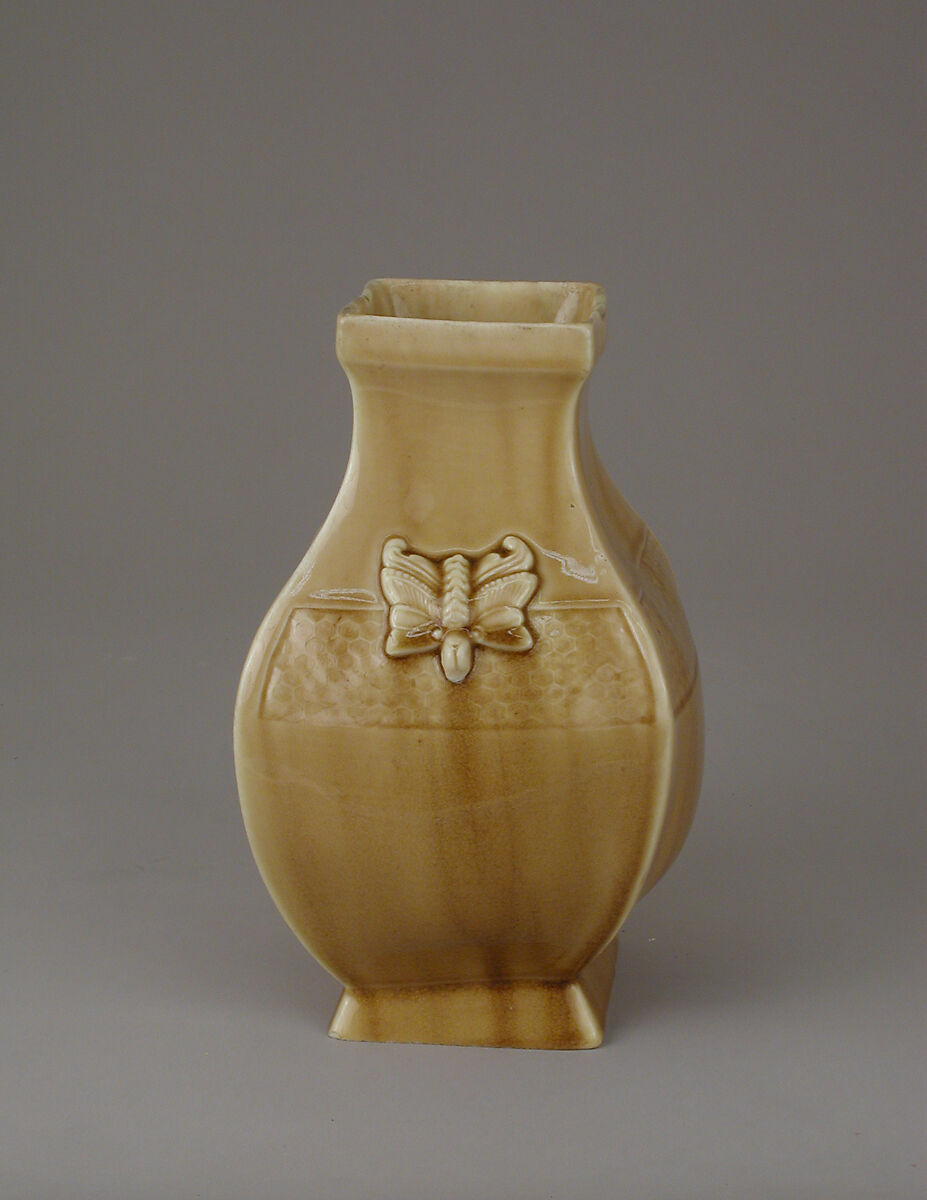
Haviland’s history later divided into several family and commercial branches. This is one of the main reasons why collectors must identify the exact maker rather than treating every Haviland mark as the same company.
The Haviland Collectors International Foundation reports that Haviland was acquired by Bernardaud in December 2024, bringing together two historic Limoges porcelain houses. For antique identification, however, the older maker names and backstamps remain the essential evidence.
The Different Haviland Companies
Several related but distinct businesses used the Haviland family name. Their histories overlap, but their marks and pattern catalogues should not be treated as interchangeable.
Haviland & Co. (H&Co.)
Haviland & Co. is the principal historic line associated with David Haviland and later Charles Edward Haviland. It supplied large quantities of French porcelain to the American market and is the source of many nineteenth-century Haviland dinner services and decorative objects encountered today.
Théodore Haviland
Théodore Haviland, David Haviland’s son, left the original company and established his own business in 1893. Théodore Haviland porcelain therefore forms a separate identification group with its own backstamps, patterns and production history.
Charles Field Haviland
Charles Field Haviland was David Haviland’s nephew. Collector references often identify this branch through marks such as CFH and CFH-GDM. Charles Field Haviland should be researched separately from both Haviland & Co. and Théodore Haviland.
GDA and Related Haviland Identification Groups
Specialist Haviland pattern identification also encounters GDA and other related production or decorating groups. These require their own backstamp comparison and should not simply be labelled Haviland & Co.
Johann Haviland
Johann Haviland is a major source of confusion. Johann Haviland established a company in Bavaria, Germany in 1907. This is not French Haviland Limoges production, even though the family name is related. Pieces marked Bavaria, Germany or later Johann Haviland marks must therefore be classified separately.
| Maker / Group | Typical Clues | Collector Note |
|---|---|---|
| Haviland & Co. | H&Co., Haviland & Co., Limoges / France wording | Main historic Haviland line |
| Théodore Haviland | Théodore Haviland, Limoges, France | Separate company from 1893 |
| Charles Field Haviland | CFH, CFH-GDM and related wording | Separate identification group |
| Johann Haviland | Bavaria / Germany wording | German production; not Haviland Limoges |
Haviland Limoges Marks and Backstamps
The backstamp is the first major clue when identifying Haviland porcelain. Collector references use the term backmark or backstamp for the manufacturer’s mark on the underside of a piece. Some items also carry a second decorator mark, retailer mark, factory number or other production information.
A backstamp can help identify the maker and establish an approximate period, but it should not be treated as a complete authentication test. The porcelain body, decoration, blank, factory number and condition must also make sense for the proposed date.
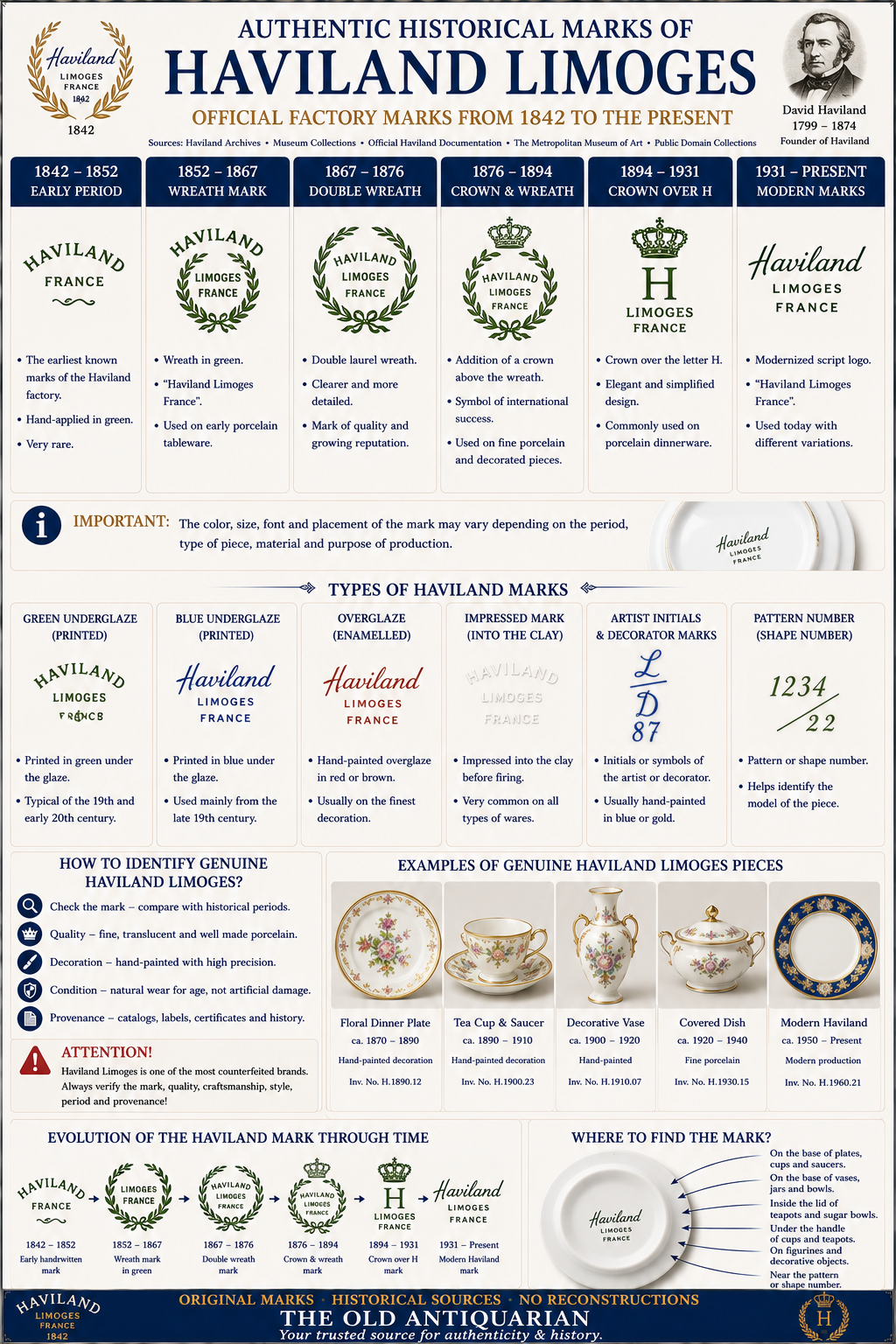
Haviland Limoges Marks Timeline
Because several Haviland businesses existed, it is more useful to think of Haviland marks as a maker timeline than as one simple sequence of logos. First identify which Haviland name appears on the base; then compare that maker’s backstamp with specialist references for the date range.
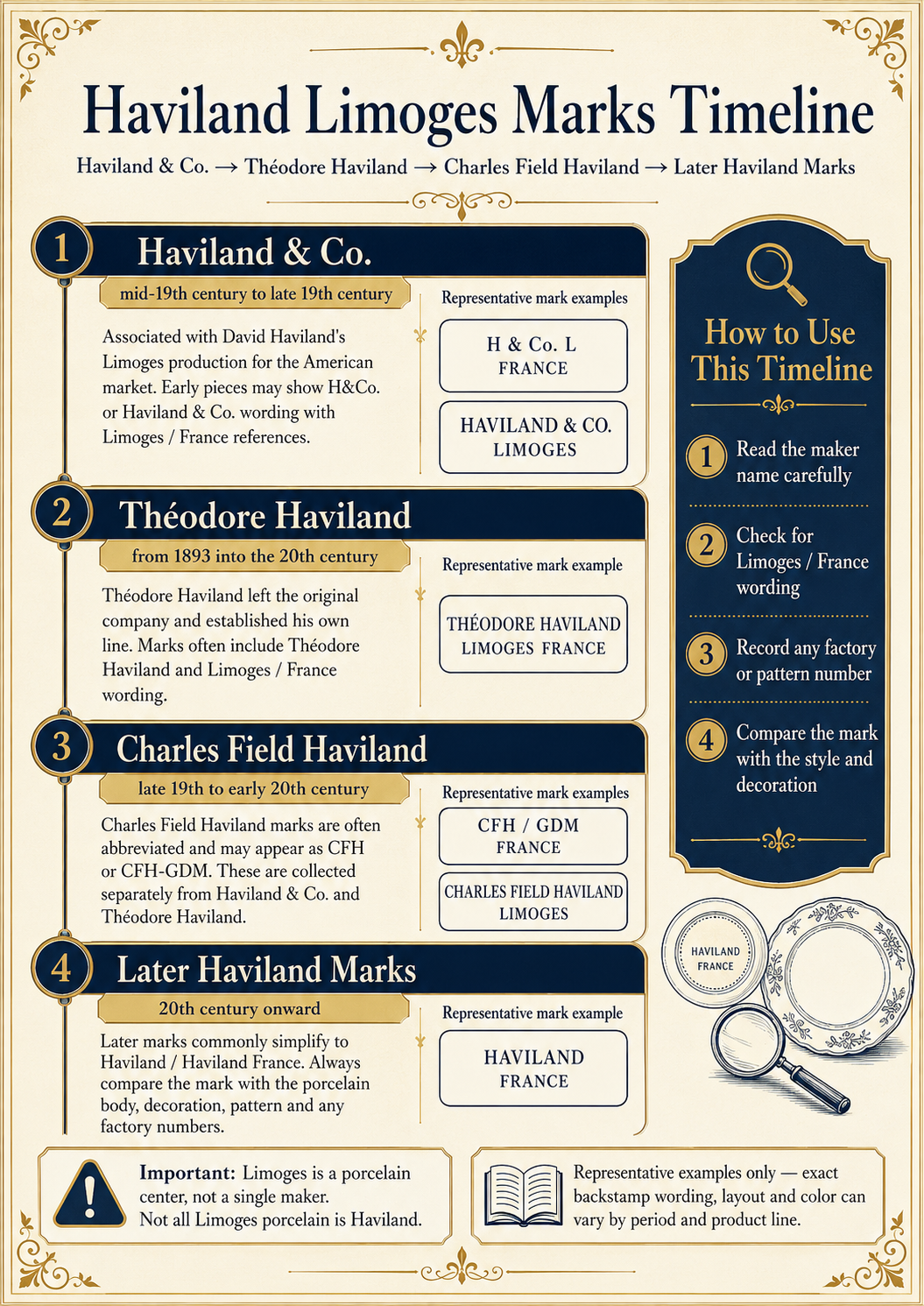
For a dedicated visual reference, see
Authentic Historical Haviland Limoges Marks.
How to Date Haviland Limoges Porcelain
Dating Haviland is rarely a matter of finding one date code. A better method is to build a date range from several independent clues.
1. Identify the Maker
Determine whether the piece belongs to Haviland & Co., Théodore Haviland, Charles Field Haviland or another related group.
2. Compare the Backstamp
Match the exact wording, layout and colour of the backmark with documented examples. Different imprints were used in different periods.
3. Look for a Decorator Mark
Some pieces carry both a manufacturer’s mark and a separate decorating mark. This can provide additional information about how and where the decoration was applied.
4. Record Factory Numbers
Factory numbers can help identify a pattern or production group. They may occur separately from the printed backstamp and should be recorded exactly as found.
5. Compare the Blank and Decoration
The porcelain shape and decorative style should fit the proposed period. Because many Haviland patterns remained in production for long periods, decoration alone cannot establish an exact date.
6. Check Historical Consistency
The backstamp, blank, decoration, manufacturing quality and signs of age should tell a consistent story. If one element conflicts strongly with the others, further research is necessary.
Haviland Patterns and Schleiger Numbers: How to Identify a Pattern
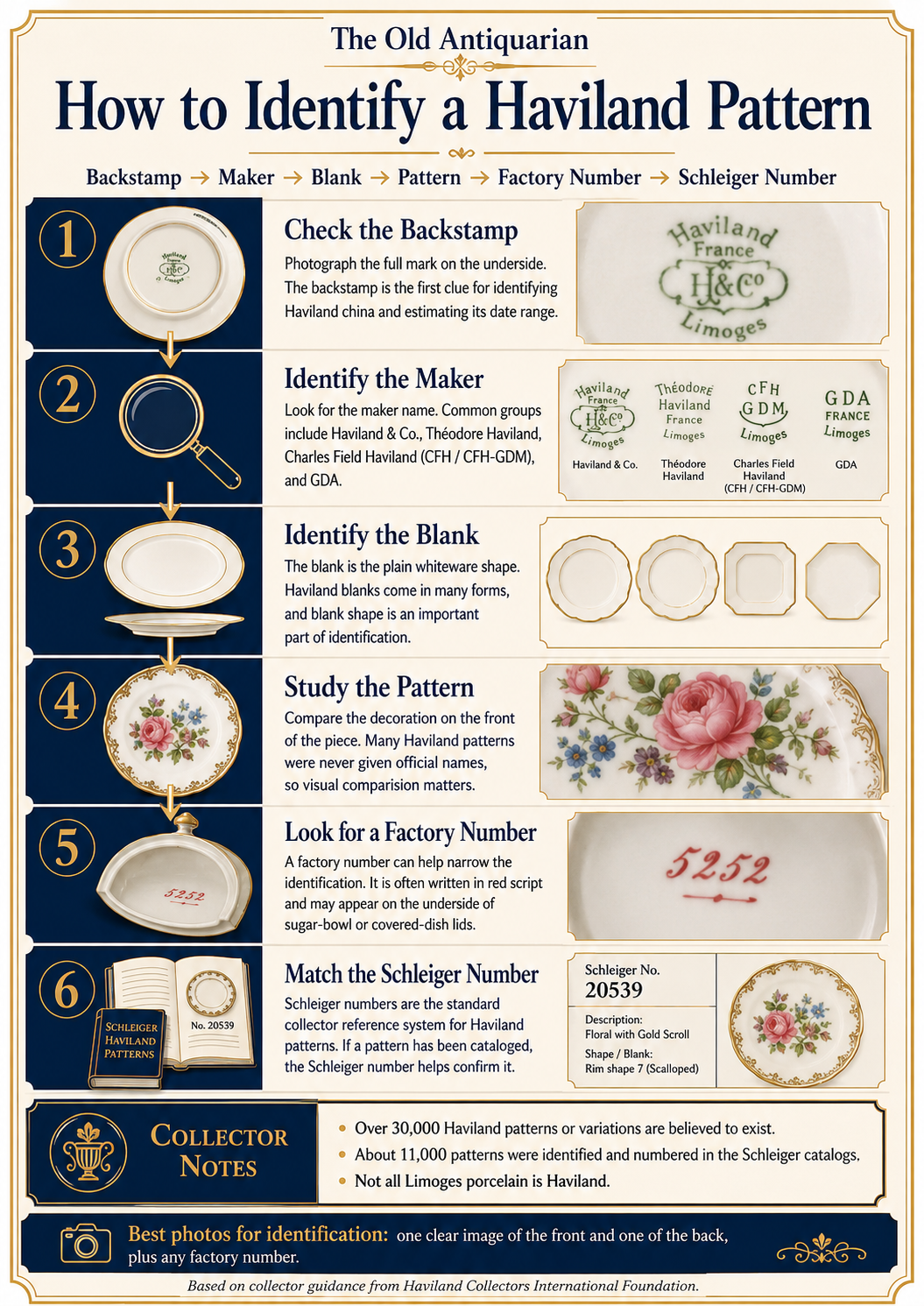
Identifying a Haviland pattern can be more difficult than identifying the manufacturer. Haviland produced an exceptionally large number of decorations and variations, and many vintage patterns were never given official factory names.
For this reason, collectors usually identify Haviland china by combining several clues: the maker’s backstamp, porcelain blank, decoration, factory number and Schleiger reference number.
Step 1: Photograph the Haviland Backstamp
Begin with the underside of the piece. Photograph the entire base rather than only the most obvious mark.
Record:
- the Haviland maker’s mark;
- Limoges or France wording;
- decorator marks;
- retailer marks;
- handwritten numbers;
- factory numbers;
- any additional symbols or inscriptions.
The backstamp helps establish which Haviland company produced the piece, but it does not necessarily identify the decorative pattern by itself.
Step 2: Identify Which Haviland Company Made the Piece
Before comparing patterns, determine whether the porcelain belongs to Haviland & Co., Théodore Haviland, Charles Field Haviland or another related group.
This distinction matters because pattern references and backstamps from the different Haviland companies should not automatically be treated as interchangeable.
| Mark or Name | What It Helps Identify | What It Does Not Prove |
|---|---|---|
| H&Co. / Haviland & Co. | Historic Haviland & Co. production | The exact pattern name or Schleiger number |
| Théodore Haviland | Théodore Haviland production | An exact production date from the name alone |
| CFH / CFH-GDM | Charles Field Haviland identification group | That the piece belongs to Haviland & Co. |
| Limoges | French porcelain-producing centre | That the manufacturer was Haviland |
Step 3: Identify the Haviland Blank
The blank is the undecorated porcelain shape onto which a pattern was applied.
When comparing Haviland blanks, look at:
- rim shape;
- moulded relief;
- scalloped or smooth edges;
- handles and finials;
- overall proportions;
- embossed details;
- shape of serving pieces.
This is important because similar decorations can appear on different blanks, while the same blank may have been used with many different decorative patterns.
Step 4: Study the Decoration Carefully
For Haviland pattern identification, compare the complete decorative arrangement rather than one flower or colour.
Look at:
- flower species and arrangement;
- placement of sprays or bouquets;
- border design;
- gilded bands;
- colour combinations;
- repeating motifs;
- small secondary decorations;
- differences between dinner plates and serving pieces.
A clear photograph of a large dinner plate or serving platter is often particularly useful because it shows more of the complete pattern than a cup or small side plate.
Step 5: Look for a Haviland Factory Number
Some Haviland pieces carry a factory number. These original production markings can sometimes help connect a piece with a decorative pattern or production group.
Factory numbers may appear separately from the printed backstamp and should be recorded exactly as found.
Covered serving pieces can be especially useful to examine because numbers may also occur on the underside of lids.
Step 6: Compare the Pattern with a Schleiger Reference
The Schleiger system is one of the most important collector-reference systems used for Haviland pattern identification.
Because thousands of Haviland decorations were produced without official names, the Schleiger catalogues assigned reference numbers to documented patterns and blanks so that collectors could identify them consistently.
A pattern described by a particular Schleiger number is therefore being identified through a collector catalogue rather than by a factory pattern number stamped on every piece.
What Is a Haviland Schleiger Number?
A Haviland Schleiger number is a collector-reference identification used for patterns or blanks catalogued in the Schleiger system.
It is important to distinguish four different types of information:
| Identification Clue | Meaning |
|---|---|
| Backstamp | Identifies the maker or manufacturing group and may help establish a period. |
| Factory Number | Original production information applied during manufacture or decoration. |
| Schleiger Number | Collector-reference classification for a catalogued pattern or blank. |
| Pattern Name | May be an official name, but many familiar names were assigned later by collectors, authors or replacement services. |
Are Schleiger Numbers Printed on Haviland China?
Usually no. A Schleiger number should not normally be expected to appear as part of the factory backstamp.
The number is generally established by comparing the decoration or blank with published Schleiger reference material.
This is why collectors may identify a plate using a Schleiger reference even though that particular reference number does not appear anywhere on the porcelain itself.
Why Are Schleiger Numbers Important?
Many vintage Haviland patterns have no reliable official factory name. A stable reference number therefore gives collectors a more precise way to:
- identify a decoration;
- compare similar patterns;
- research matching pieces;
- search for replacement pieces;
- distinguish closely related variants;
- communicate an identification to other collectors.
Can Two Similar Haviland Patterns Have Different Schleiger Numbers?
Yes. Closely related decorations can differ in border treatment, flower arrangement, colour, gilding or other details.
For this reason, approximate visual resemblance is not enough. Compare the entire pattern carefully before assigning a Schleiger reference.
What Is a Haviland Blank?
Collectors use the word blank for the plain white porcelain shape before decoration. Blanks can differ in rim form, moulded relief, edge shape, handles, finials and proportions.
The same blank could receive different decorations, which is why identifying the blank and identifying the pattern are related but separate tasks.
What Is a Haviland Factory Number?
Some Haviland pieces carry a factory number. These numbers can provide useful production information and may sometimes help narrow pattern identification.
A factory number should not be confused with a Schleiger number.
Remember:
A factory number is an original production marking associated with manufacture or decoration. A Schleiger number is a collector-reference identification assigned through published catalogues.
How to Identify Discontinued Haviland Patterns
Collectors often search for discontinued Haviland patterns when trying to complete an inherited or incomplete dinner service.
The challenge is that many old Haviland decorations did not have the commercial pattern names that modern tableware buyers expect.
For an unidentified discontinued pattern, use this sequence:
- identify the exact Haviland company from the backstamp;
- photograph a large plate or platter showing the complete decoration;
- record any factory or handwritten numbers;
- compare the porcelain blank;
- look for a documented Schleiger reference;
- compare minor decorative variations carefully.
Do not assume that a modern seller’s descriptive name is the original Haviland factory name.
Théodore Haviland Patterns
Pieces marked Théodore Haviland should first be identified as part of the Théodore Haviland production line rather than being grouped automatically with Haviland & Co.
When researching a Théodore Haviland pattern, compare the exact backstamp, blank, decoration and any additional numbers before relying on a pattern name supplied by a seller or replacement service.
This distinction is especially useful when two Haviland-family patterns appear visually similar but belong to different manufacturing branches.
Charles Field Haviland Patterns
Porcelain associated with Charles Field Haviland, including pieces carrying CFH or related marks, should also be researched as its own identification group.
Do not assume that a Charles Field Haviland pattern follows the same backmark or pattern-reference sequence as Haviland & Co. The complete underside of the object should always be documented before attempting a pattern match.
Haviland Pattern Identification Checklist
- Photograph the complete backstamp.
- Identify the exact Haviland company.
- Photograph a large piece showing the complete decoration.
- Compare the porcelain blank.
- Record factory and handwritten numbers exactly.
- Check decorator and retailer marks.
- Compare borders, flowers, gilding and colour placement.
- Search for a Schleiger reference where applicable.
- Do not assume a collector name is an official factory pattern name.
- Compare similar variants carefully before assigning an identification.
How to Identify Genuine Haviland Limoges
Authentication requires more than reading the word Haviland. Experienced collectors compare the backstamp with the physical object and ask whether the porcelain, decoration and construction are consistent with the proposed maker and period.
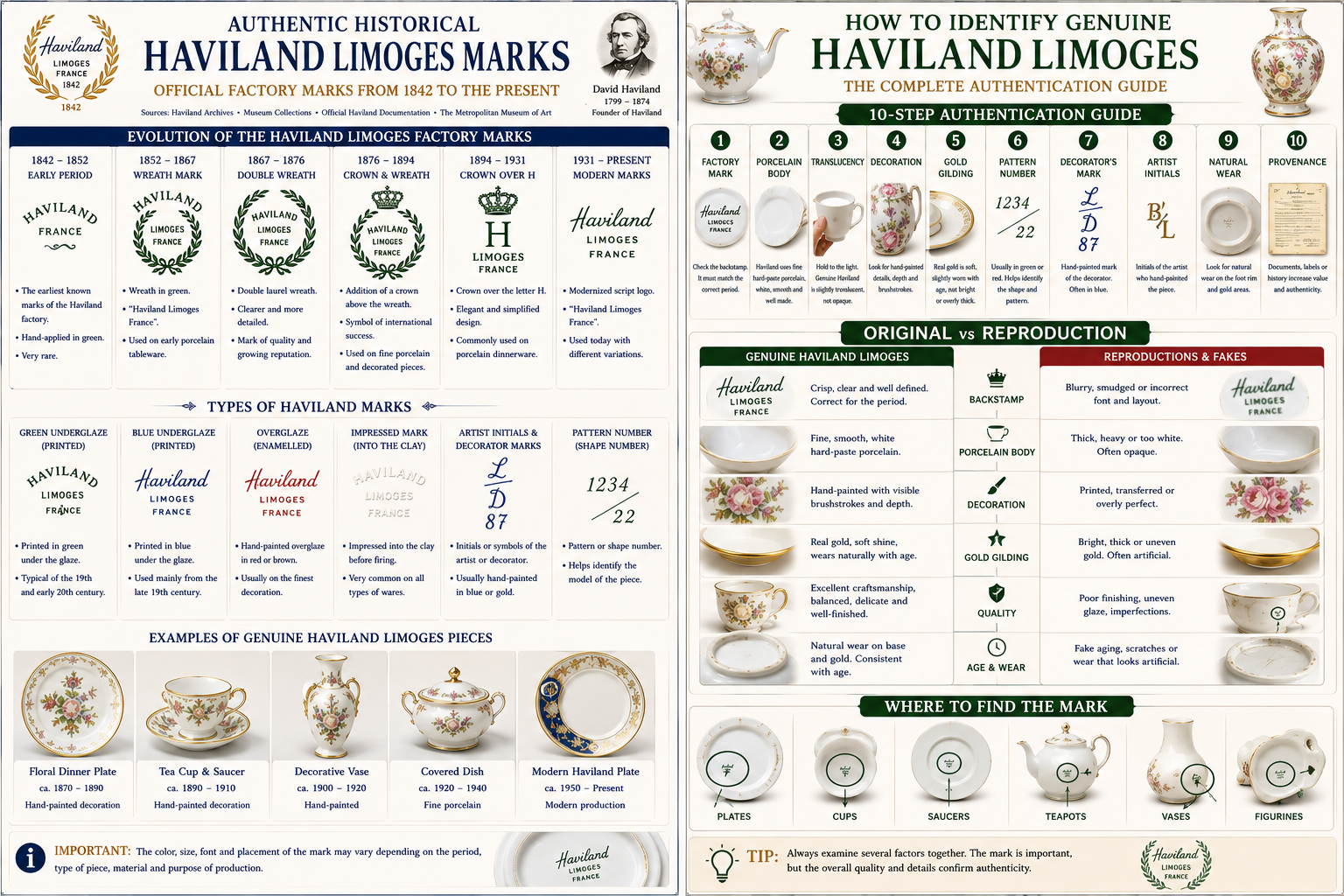
Important authentication clues include:
- the complete factory backstamp;
- maker name and location wording;
- porcelain body and translucency;
- glaze quality;
- hand-painted, transfer-printed or mixed decoration;
- gilding and finishing quality;
- blank shape;
- factory and decorator numbers;
- natural wear appropriate to age;
- restoration or later alteration;
- provenance when available.
For a deeper authentication workflow, see
How to Identify Genuine Haviland Limoges Porcelain.
Haviland Decoration and Collecting
Haviland’s enormous variety is one reason the field remains attractive to collectors. Floral borders, naturalistic flowers, gilded rims, embossed blanks, hand-painted decorative pieces and later modern designs can all belong to the broader Haviland tradition.
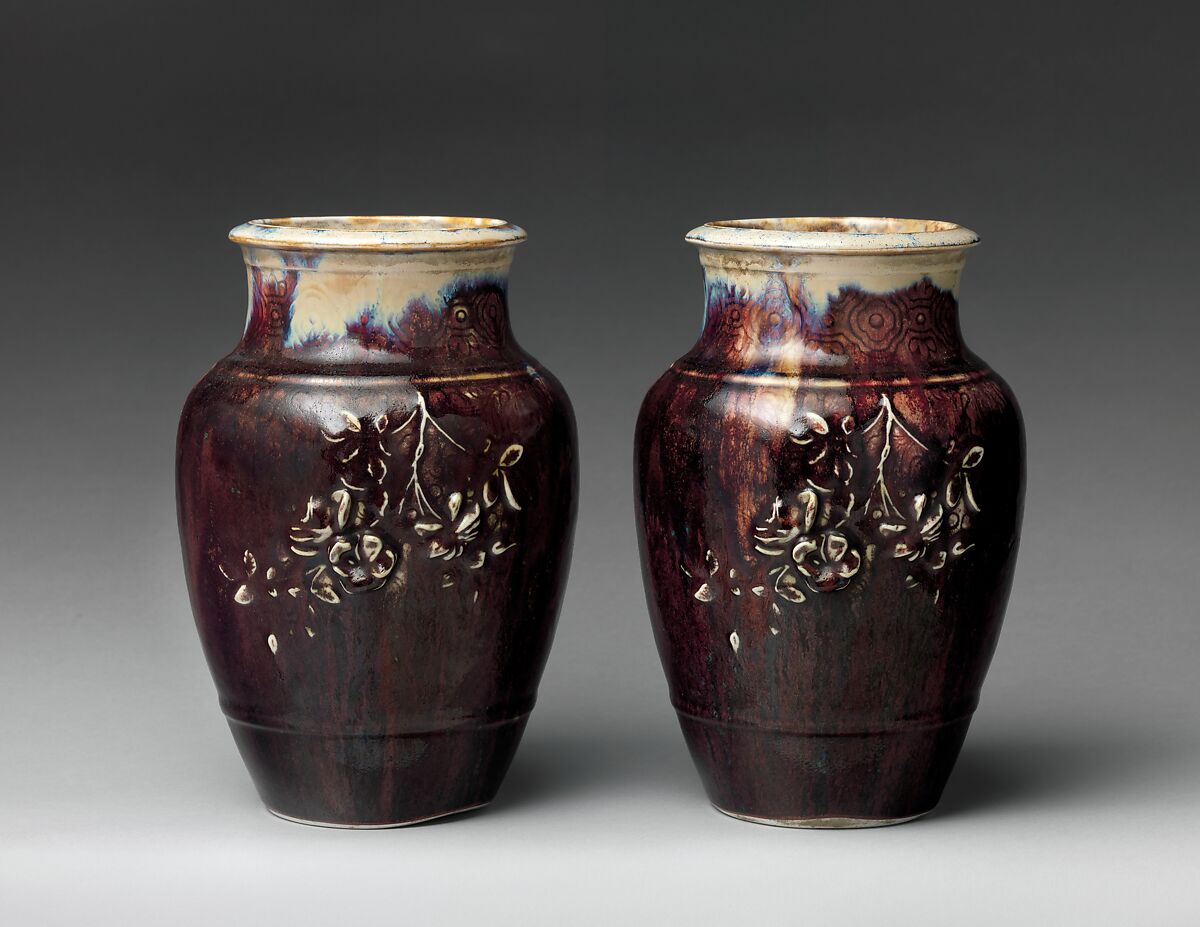
Collector value is usually strongest when a piece combines rarity, identifiable production history, desirable decoration, excellent condition and strong artistic quality. A famous or documented pattern can help, but the market does not value every old Haviland plate equally.
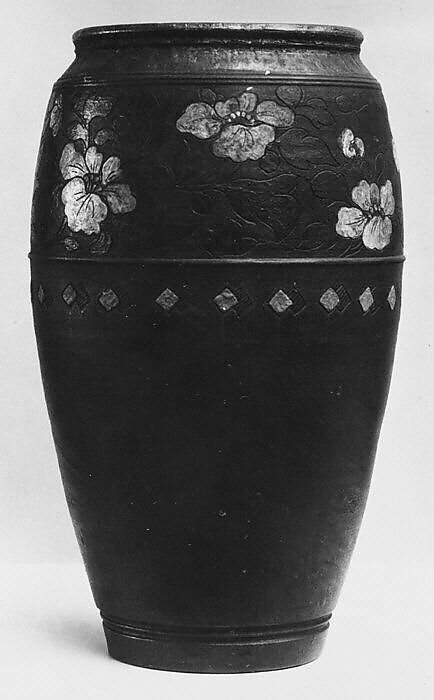
Is Haviland Limoges Valuable?
Haviland values range widely. Common individual plates and incomplete services may be modestly priced, while rare artistic porcelain, unusual nineteenth-century pieces, important decorative objects, scarce patterns and complete services in excellent condition can be much more desirable.
Main Factors That Influence Haviland Value
- Maker: Haviland & Co., Théodore Haviland, Charles Field Haviland and other groups can have different collector markets.
- Pattern or decoration: rarity and demand matter more than age alone.
- Blank: unusual shapes or important moulded forms may increase interest.
- Condition: chips, cracks, hairlines, staining and repairs usually reduce value.
- Decoration: fine hand painting, gilding and artist-associated work can matter significantly.
- Completeness: coherent services and scarce serving pieces can be more desirable than isolated common plates.
- Provenance: documented history can strengthen attribution and value.
- Current demand: replacement and collector markets vary by pattern.
For broader valuation principles, see
How Is Antique Porcelain Valued?.
Common Haviland Identification Mistakes
Assuming Every Limoges Mark Is Haviland
Limoges was home to many porcelain manufacturers. The maker must be identified from the complete backstamp.
Confusing Johann Haviland with French Haviland
Johann Haviland was produced in Bavaria, Germany and should not be classified as Haviland Limoges.
Using a Pattern Name as Proof
Most vintage Haviland patterns were never officially named. Collector names can be useful, but the backstamp, blank and reference number are stronger evidence.
Confusing Factory Numbers and Schleiger Numbers
A factory number is an original production marking. A Schleiger number is a collector-reference classification.
Dating from Decoration Alone
Many patterns remained in production for decades. Backmarks and other manufacturing clues must also be considered.
Ignoring Decorator Marks
A second mark can contain useful information about factory decoration or later decorating activity.
Collector Checklist: How to Research Haviland Porcelain
- Photograph the entire object from the front.
- Photograph the complete backstamp.
- Record every maker name and location.
- Identify Haviland & Co., Théodore Haviland, CFH or another maker group.
- Check for decorator marks and retailer marks.
- Record factory numbers exactly.
- Identify the blank shape.
- Compare the decoration visually.
- Search for a Schleiger reference when applicable.
- Check condition, restoration and wear.
- Do not rely on the word “Limoges” alone.
How to Care for Haviland Limoges Porcelain
Antique Haviland porcelain should be handled as decorative art as well as tableware. Gilding, hand painting and old repairs can be vulnerable even when the porcelain body itself appears strong.
- Wash valuable pieces by hand with mild soap and lukewarm water.
- Avoid sudden temperature changes.
- Do not use abrasive cleaners or scouring pads.
- Protect gilded rims from aggressive polishing.
- Use padding between stacked plates.
- Support large pieces from the body rather than handles or delicate projections.
- Avoid amateur glue repairs on collectible pieces.
- Use professional conservation when significant restoration is required.
For detailed preservation advice, see
How to Store Antique Porcelain and Ceramics.
When Should You Seek Professional Guidance?
Professional guidance can be useful when you have an unusual backstamp, a large inherited service, important decorative porcelain, an unidentified factory number, a suspected rare pattern or a piece with significant restoration.
Do you own Haviland Limoges porcelain and want help identifying its maker, pattern, period or possible collector value?
Initial Photo Review · No Obligation · 35+ Years of Experience
Frequently Asked Questions About Haviland Limoges
Is all Limoges porcelain Haviland?
No. Limoges is a French porcelain-producing centre. Many manufacturers operated there, so the full maker’s mark must be identified.
How can I identify Haviland Limoges china?
Begin with the backstamp, identify the exact Haviland maker, then compare the blank, decoration, factory numbers and pattern-reference information.
What does H&Co. mean on Haviland china?
H&Co. is commonly associated with Haviland & Co., the principal historic Haviland line connected with David and Charles Edward Haviland.
Is Théodore Haviland the same as Haviland & Co.?
No. Théodore Haviland left the original company and established his own business in 1893. Its marks and patterns should be identified separately.
What does CFH mean on Limoges porcelain?
CFH is associated with Charles Field Haviland, a separate Haviland family branch that should not be confused with Haviland & Co. or Théodore Haviland.
What is a Haviland Schleiger number?
A Schleiger number is a collector-reference number used to identify Haviland patterns and blanks catalogued in the Schleiger system. It is not normally a factory number stamped on the porcelain.
Are Schleiger numbers printed on Haviland china?
Usually not. They are normally established by comparing the pattern or blank with published Schleiger reference material.
Why does my Haviland pattern have no name?
Most vintage Haviland patterns were never officially named. Many names in today’s market were assigned later by collectors, authors or replacement services.
How do I identify a discontinued Haviland pattern?
Identify the exact maker from the backstamp, photograph the complete decoration, compare the blank, record factory numbers and check specialist pattern references, including Schleiger numbers where applicable.
What is the difference between a Haviland factory number and a Schleiger number?
A factory number is original production information associated with manufacture or decoration. A Schleiger number is a collector-reference identification used in published reference catalogues.
Where can I find a Haviland factory number?
Factory numbers can occur on the underside of pieces. Covered serving pieces and the undersides of their lids can also be useful places to examine carefully.
Can a Haviland backstamp date the porcelain?
It can often provide an approximate period, but the date should be checked against the maker, blank, decoration, factory numbers and the rest of the object.
Is Johann Haviland Limoges porcelain?
No. Johann Haviland production was based in Bavaria, Germany and should not be classified as French Haviland Limoges.
Is Haviland porcelain valuable?
Some pieces are modestly priced while rare patterns, artistic porcelain, unusual forms and complete services in excellent condition can be much more desirable. Value depends on the complete object, not simply the Haviland name.
Conclusion
Haviland Limoges is best understood not as one simple mark or one catalogue of named patterns, but as a complex collecting field built around several related makers, thousands of decorations and more than a century of changing backstamps.
The most reliable identification process begins with the backstamp, then moves through the maker, blank, pattern, factory number and Schleiger reference. When those clues agree with the porcelain body, decoration and condition, collectors can establish a much stronger attribution and approximate date.
For pattern identification in particular, the relationship between the maker, blank, decoration, factory number and Schleiger reference is essential. A pattern name found online should never automatically outweigh the physical evidence on the porcelain itself.
For anyone researching inherited china or an unfamiliar Limoges piece, the most important rule is simple: do not identify Haviland from the word “Limoges” alone. Read the complete mark and evaluate the entire object.
Sources & References
-
Haviland — Official History of the Manufacture
-
Haviland Collectors International Foundation — Haviland History
-
Haviland Collectors International Foundation — Haviland Backmarks
-
Haviland Collectors International Foundation — Pattern Identification
-
Haviland Collectors International Foundation — Collector FAQs
Editorial Note
This guide was prepared by The Old Antiquarian as an educational reference for collectors researching Haviland Limoges porcelain, marks, backstamps, patterns, Schleiger numbers, dating and identification.
Last updated: September 2026
Related Guides
