
What Is Royal Worcester
Royal Worcester Porcelain – Complete Guide to History, Identification, Factory Marks and Value
Royal Worcester is one of the oldest, most prestigious and most collectible English porcelain manufacturers in the world. Founded in 1751 in Worcester, England, the company became famous for producing exceptionally fine porcelain, elegant tableware, richly decorated vases, hand-painted fruit pieces, luxurious gilding and some of the finest examples of English Bone China.
Quick Answer: Royal Worcester porcelain is best identified by combining the factory backstamp with its date code, material, shape or model number, decoration and any artist signature. The famous “51” in the standard Royal Worcester mark refers to the factory’s founding year, 1751—it is not a production date. Letter date codes were used from 1867; “Royal Worcester England” was added in 1891; the dot system began in 1892; the star-and-dot system began in 1916; and “Made in England” became an important dating clue from 1928.
Royal Worcester at a Glance
| Founded | 1751, Worcester, England |
| Important early mark | Crescent Mark |
| Standard later mark | Crown-and-circle Royal Worcester mark with “51” |
| Letter date codes | From 1867 |
| “Royal Worcester England” | Added in 1891 |
| Dot dating system | 1892–1915 |
| Star + dots | 1916–1927 |
| “Made in England” era | From 1928 in the principal date-code sequence |
Today, authentic Royal Worcester porcelain is highly sought after by collectors, museums and antique dealers. Early pieces from the eighteenth century, exhibition vases, hand-painted fruit studies, limited editions and signed artist pieces often achieve impressive prices at international auctions.
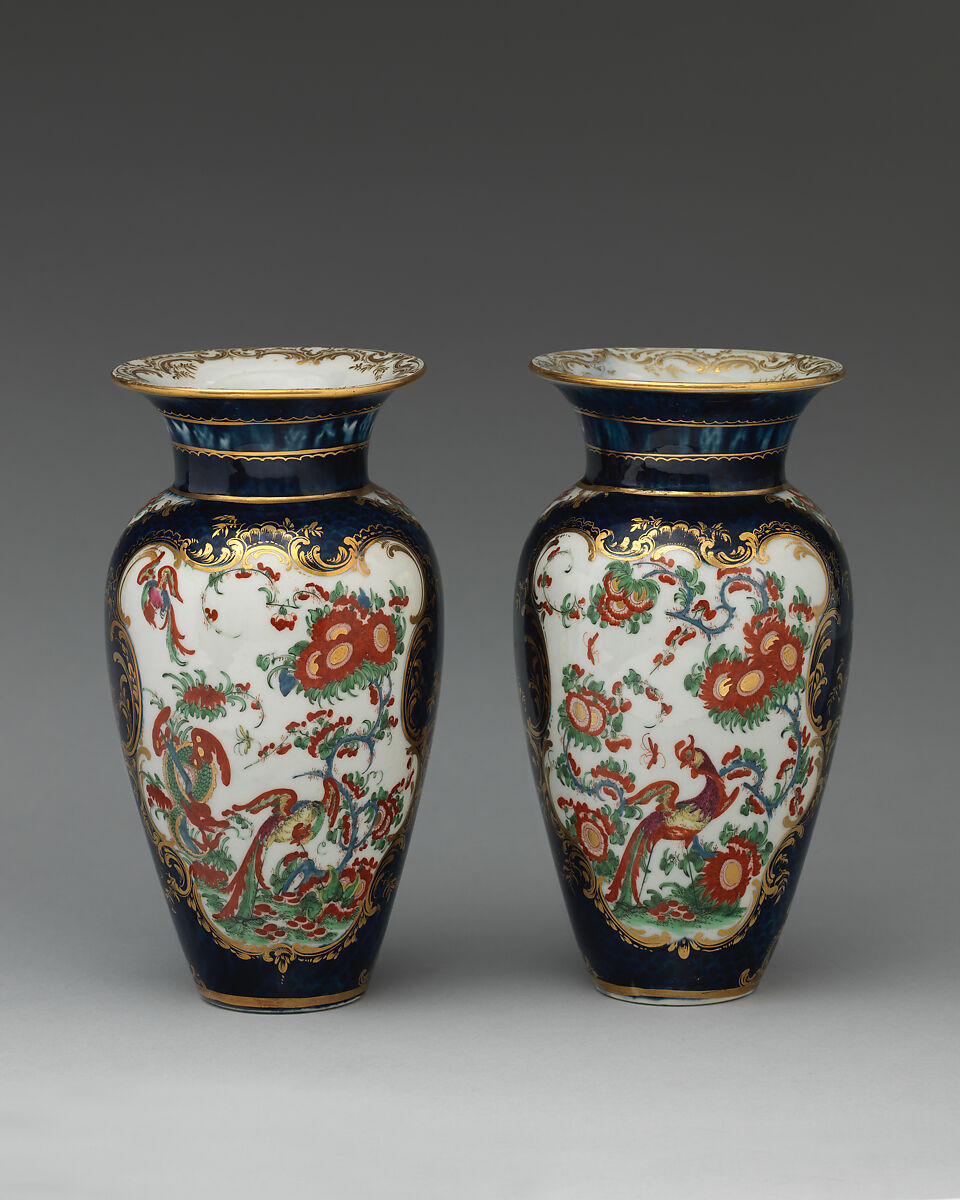
Whether you own an antique vase, dinner service, figurine or decorative plate, learning how to identify authentic Royal Worcester porcelain begins with understanding its history, factory marks and manufacturing periods. Small details such as the backstamp, decoration, porcelain quality, artist signatures and model numbers can reveal the age and authenticity of a piece.
If you are new to antique porcelain, it is worth first reading our guide explaining What Is Porcelain?, followed by our detailed articles about Porcelain Marks, How to Identify Antique Porcelain and How to Date Antique Porcelain. These guides provide the essential knowledge needed before identifying Royal Worcester.
The History of Royal Worcester
The story of Royal Worcester begins in 1751, when physician Dr. John Wall and businessman William Davis founded what became one of England’s earliest successful porcelain factories. Their ambition was to create porcelain equal to the finest European manufacturers while developing a distinctive English style.
During its earliest years the factory produced soft-paste porcelain decorated with elegant blue underglaze designs, oriental influences and refined Rococo decoration. The famous Crescent Mark, now one of the most recognizable early English porcelain marks, appeared during this pioneering period.
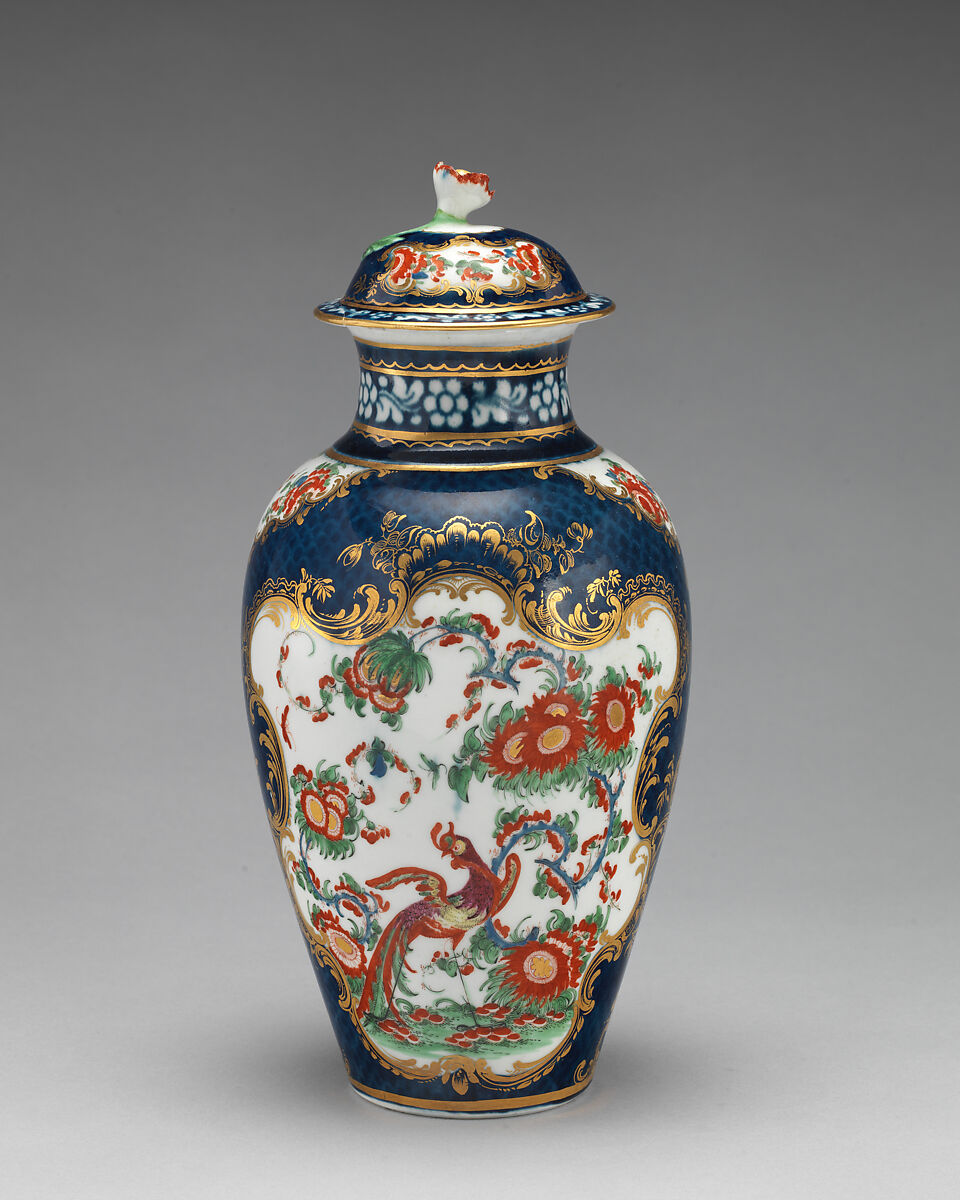
Ownership of the factory changed several times throughout the late eighteenth and nineteenth centuries. Important partnerships such as Flight, Flight & Barr, Flight, Barr & Barr, Chamberlain Worcester and later Kerr & Binns each introduced new factory marks and expanded production while maintaining exceptionally high artistic standards.
A defining moment came in 1862, when the Worcester Royal Porcelain Company Limited was formed. During the later nineteenth century the familiar Royal Worcester crown-and-circle identity became increasingly important, together with the number “51” at the centre of the standard printed mark. The number refers to 1751, the founding year of the Worcester porcelain enterprise, and should never be interpreted as the year in which a particular piece was made.
Throughout the late Victorian and Edwardian periods, Royal Worcester became internationally renowned for artistic exhibition vases, luxurious dinner services, elegant cabinet wares and exceptionally detailed hand-painted fruit decoration. The factory employed some of Britain’s finest porcelain artists, whose signed works are now among the most valuable pieces produced by the company.
Why Royal Worcester Is So Highly Collectible
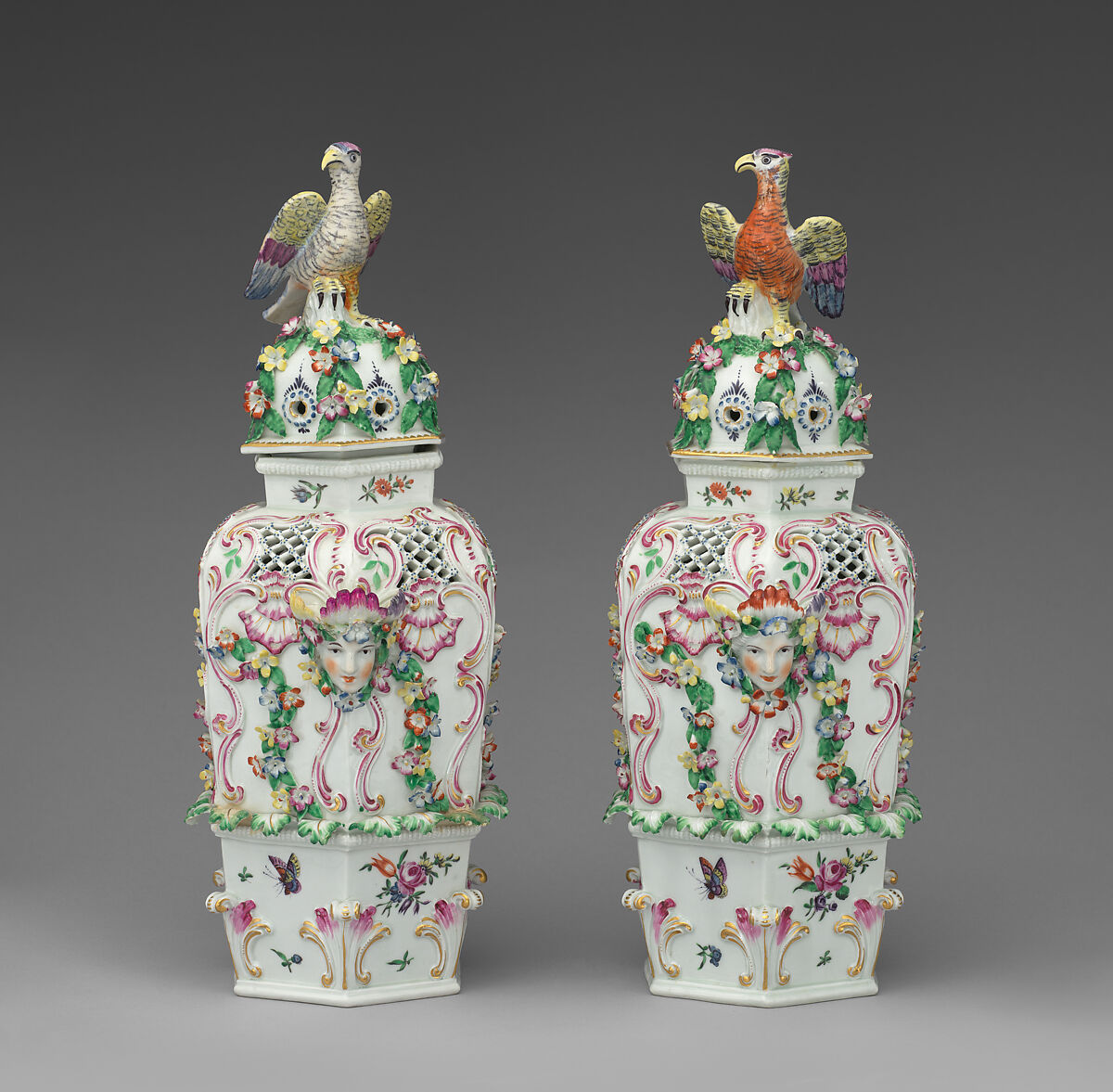
Collectors value Royal Worcester for far more than its age. The factory consistently combined outstanding porcelain quality with innovative design, technical excellence and artistic decoration. Unlike many manufacturers that focused primarily on tableware, Royal Worcester also produced exhibition-quality decorative porcelain intended to showcase the highest level of British craftsmanship.
Some of the most desirable categories include:
- Early Worcester porcelain (1751–1783)
- Flight & Barr period porcelain
- Royal Worcester exhibition vases
- Hand-painted Fruit studies
- Blush Ivory porcelain
- Hadley figurines
- Cabinet vases
- Signed artist pieces
- Limited production Bone China
Today these pieces appear regularly in major museums and international auctions, with exceptional examples selling for thousands of pounds depending on rarity, condition, provenance and artistic quality.
The Most Famous Royal Worcester Patterns and Collections
One of the reasons Royal Worcester remains one of the world’s most collectible porcelain manufacturers is the extraordinary variety of artistic styles and decorative collections produced over nearly three centuries. While the factory created thousands of patterns, several series have become especially desirable among collectors because of their beauty, rarity and historical importance.
Understanding these collections also helps identify authentic pieces and estimate their market value. If you are unfamiliar with porcelain identification, you may also wish to read our guides on How to Identify Antique Porcelain and How Antique Porcelain Is Valued.
Blush Ivory
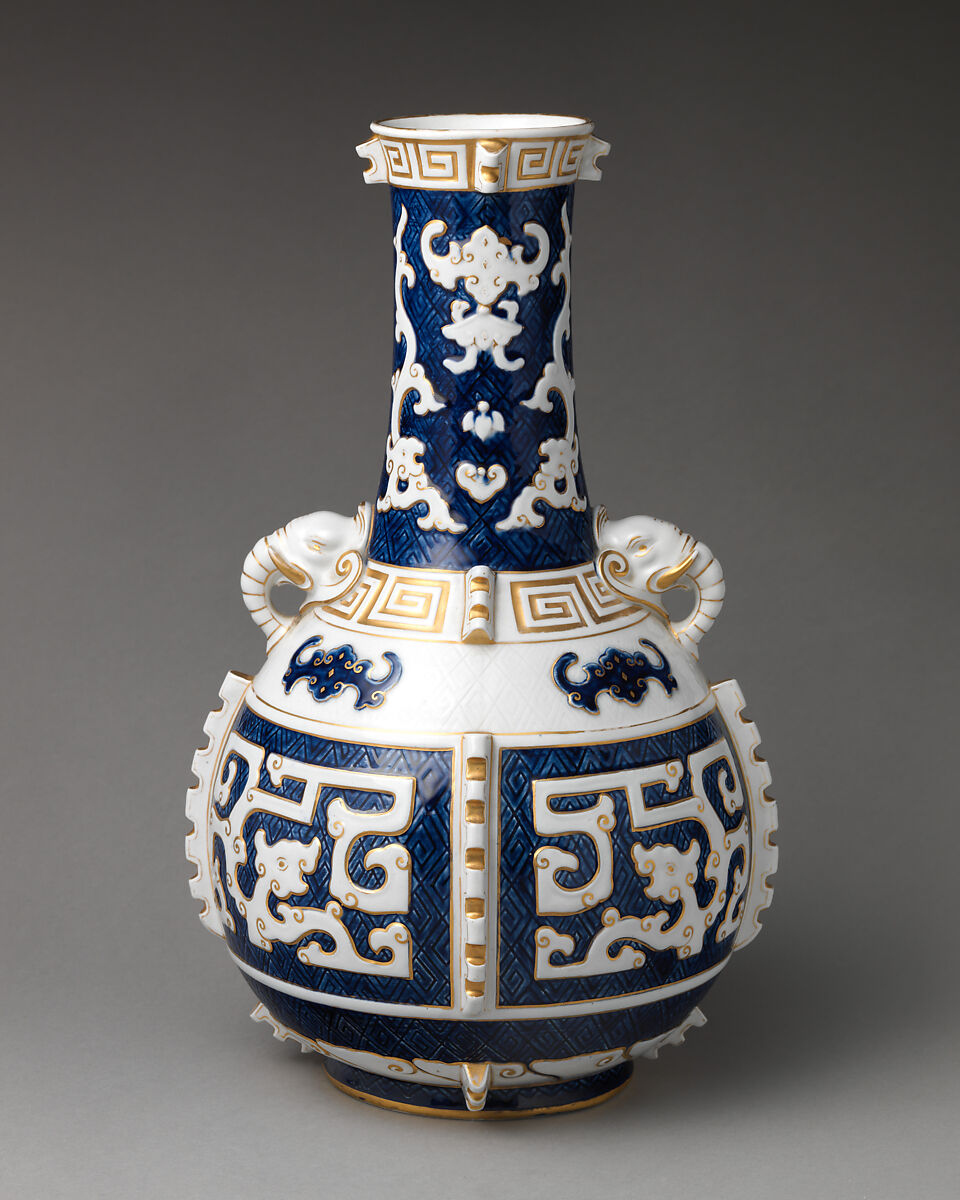
Introduced during the late nineteenth century, Blush Ivory became one of Royal Worcester’s signature collections. The porcelain features a soft ivory background combined with delicate floral decoration, elegant gilding and refined shapes that perfectly reflect Victorian taste.
Original Blush Ivory pieces often include carefully hand-painted flowers, raised gold decoration and finely executed factory marks. Because the series remained popular for decades, collectors pay close attention to the production period, artist signatures and factory backstamps.
Hand-Painted Fruit
Perhaps no Royal Worcester decoration is more admired than the famous Hand-Painted Fruit series. These masterpieces were individually painted by highly skilled artists using multiple layers of colour to create remarkable realism, depth and natural lighting.
Each fruit composition is unique. Apples, peaches, grapes, plums and berries appear with subtle shadows and rich colour transitions that cannot be reproduced by ordinary transfer printing. Signed examples by well-known Royal Worcester artists command exceptionally strong prices on today’s market.
When examining these pieces, collectors should look for visible brushwork, natural colour variation and artist signatures rather than perfectly uniform printed decoration.
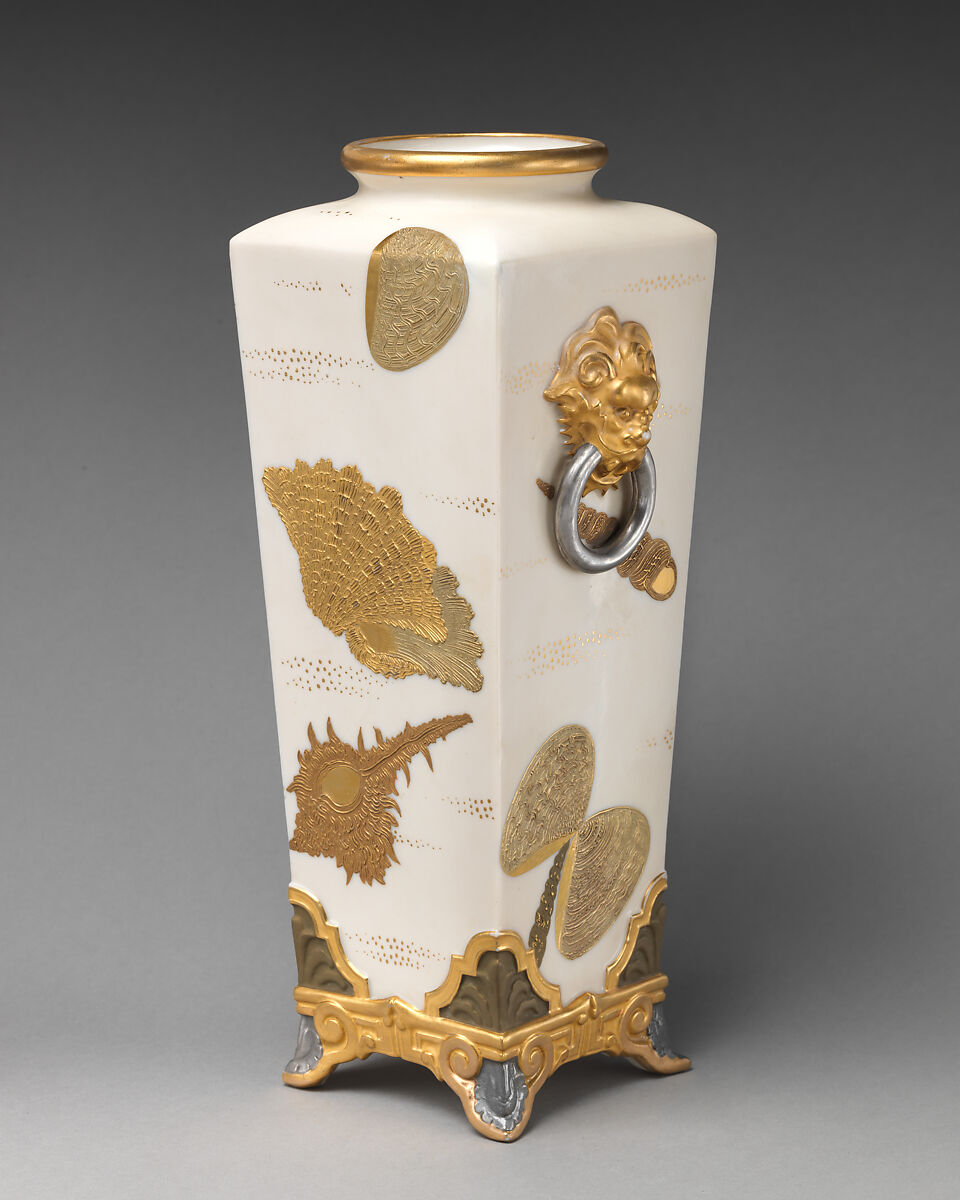
Cabinet Vases
Royal Worcester became internationally famous for producing luxurious cabinet vases. These decorative objects were intended for display rather than everyday use and often feature elaborate hand-painted landscapes, birds, flowers, classical scenes and heavy gilding.
Many cabinet vases were created for international exhibitions or commissioned for wealthy collectors. Limited production numbers, exceptional artistic quality and outstanding preservation make these among the most valuable Royal Worcester objects today.
Bone China
Royal Worcester played an important role in developing fine English Bone China. This material combines porcelain stone, china clay and bone ash to produce exceptionally strong yet translucent porcelain with remarkable whiteness and brilliance.
Authentic Bone China pieces feel lighter than expected, produce a clear ringing sound when gently tapped and often become slightly translucent when held against a bright light. Later factory marks frequently include the words “Bone China”, helping collectors identify the production period.
Figurines
Beginning in the nineteenth century, Royal Worcester produced elegant porcelain figurines that became increasingly popular during the early twentieth century. Sculptures designed by renowned artists such as James Hadley remain especially desirable because of their exceptional modelling, expressive faces and delicate hand-painted decoration.
Original figurines often include model numbers, decorator marks and artist references underneath the base. Condition is particularly important, as even small restorations or missing details may significantly affect collector value.
Tea and Dinner Services
Royal Worcester also earned worldwide recognition for its luxurious tea, coffee and dinner services. These sets combined practical functionality with sophisticated decoration and became favourites among aristocratic households throughout Britain and abroad.
Complete services with matching cups, saucers, teapots, sugar bowls, cream jugs and serving pieces are considerably more valuable than individual replacements. Original sets retaining their factory marks and consistent decoration remain highly desirable among collectors.
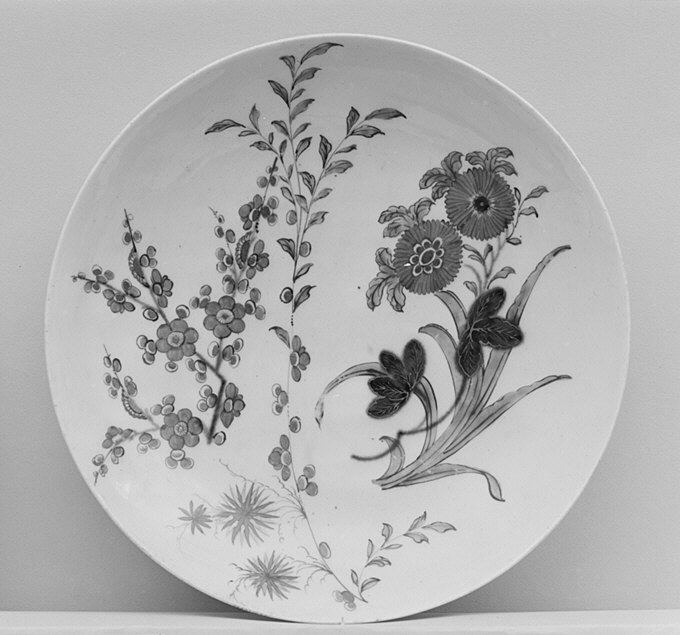
Royal Worcester Artists
One of the distinguishing features of Royal Worcester is the number of internationally respected artists who decorated its porcelain. Many painters specialised in flowers, fruit, birds or landscapes, while others focused on portraiture or ornamental gilding.
Signed works by celebrated artists are usually far more valuable than standard production pieces. The combination of an authentic factory mark, artist signature, excellent condition and documented provenance can dramatically increase market value.
In the next section, we will examine the evolution of Royal Worcester factory marks, explain the principal dating systems and show how to use backstamps alongside material, decoration and artist signatures.
Authentic Royal Worcester Factory Marks
Factory marks are among the most important tools for identifying authentic Royal Worcester porcelain. Over more than 270 years of production, the company used numerous backstamps reflecting changes in ownership, manufacturing techniques and dating systems. Understanding these marks allows collectors to determine the approximate production period and distinguish original pieces from reproductions.
It is important to remember that no single factory mark proves authenticity on its own. Experienced collectors always evaluate the mark together with the porcelain body, decoration, gilding, artist signatures, model numbers and overall craftsmanship.
What Does “51” Mean on a Royal Worcester Mark?
The number 51 found in the centre of many standard Royal Worcester crown-and-circle marks refers to 1751, the year the Worcester porcelain factory was founded. It is a trademark and historical reference—not a date code. To date a piece, collectors should look instead for letters, dots, stars, geometric symbols, the wording England or Made in England, and later coding systems.
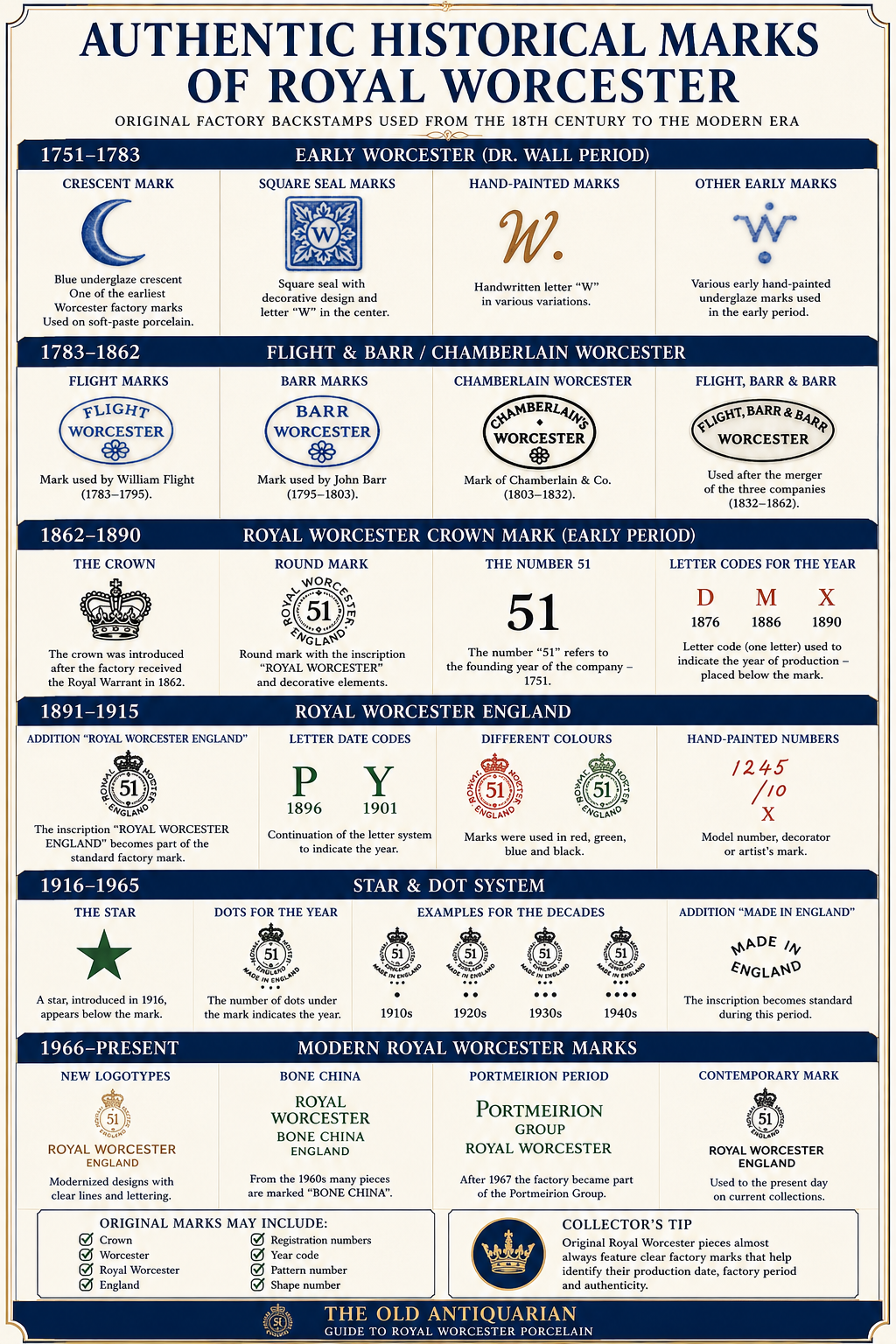
For a broader introduction to porcelain backstamps, you may also find our Complete Guide to Porcelain Marks helpful.
The Evolution of Royal Worcester Factory Marks
1751–1783 — Early Worcester
The earliest Worcester porcelain usually carries the famous Crescent Mark, one of the most recognizable symbols in English porcelain history. These early marks were generally painted in underglaze blue and appear on soft-paste porcelain produced during the factory’s pioneering years.
Not every early Worcester piece is marked. Some examples carry simple workmen’s marks or no factory mark at all, making identification dependent upon porcelain quality, decoration and form.
1783–1862 — Flight, Barr & Chamberlain
Following changes in ownership, Royal Worcester porcelain was produced under several partnerships including Flight, Flight & Barr, Flight Barr & Barr and Chamberlain Worcester. During these periods, factory names often appear within the backstamp, providing useful dating evidence.
Collectors frequently encounter printed, impressed and handwritten versions of these marks. Small variations are completely normal and reflect changing production methods over many decades.
1862–Present — Royal Worcester
The introduction of the official Royal Worcester Crown Mark established the factory’s best-known identity. Most authentic backstamps from this period include the Crown, the registered trademark “51”, the factory name and later, the country of origin.
Letter codes, dot systems and additional symbols were gradually introduced to identify production years. These dating systems remain invaluable for collectors today.
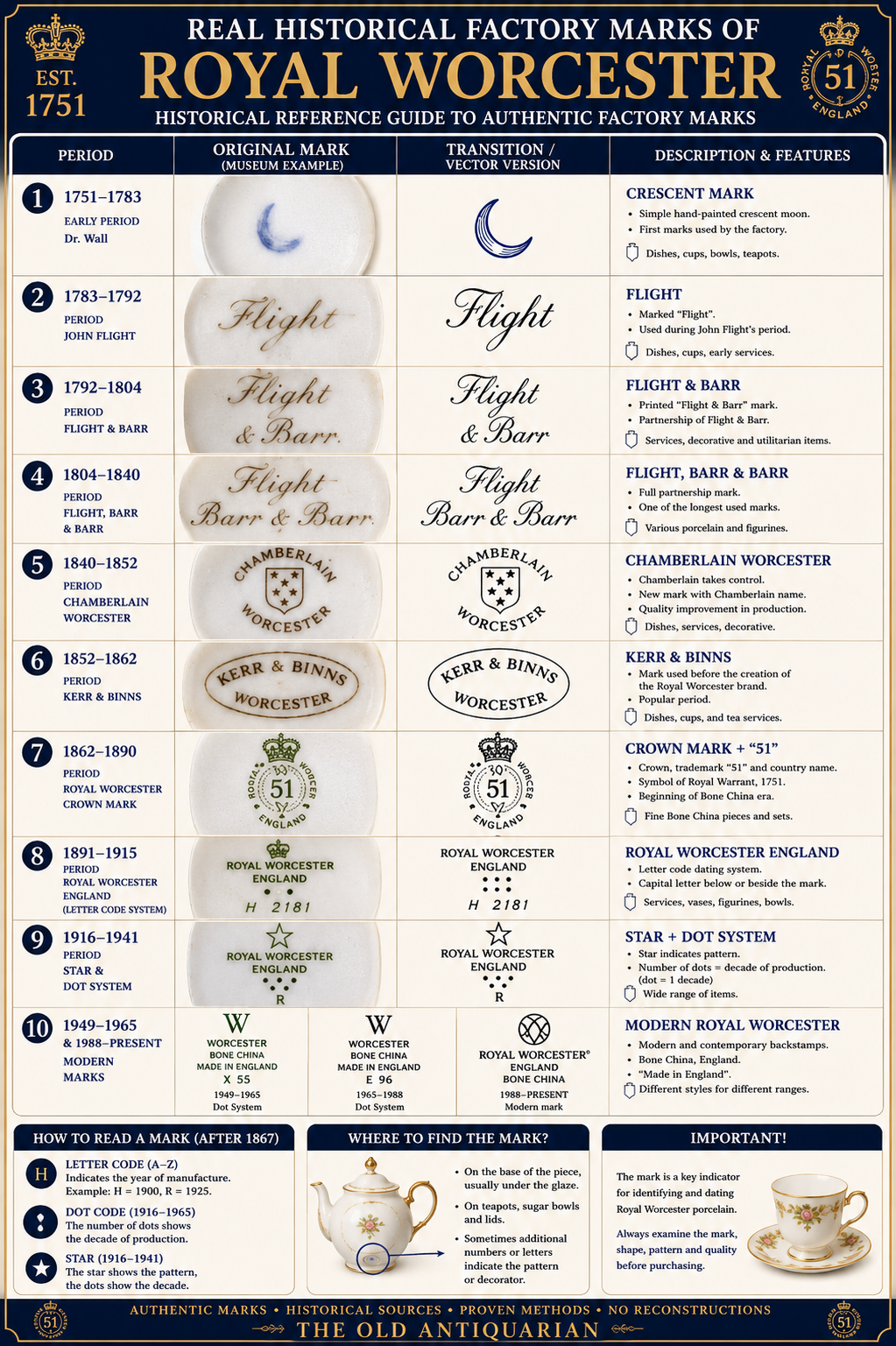
How to Date Royal Worcester Porcelain by Marks and Date Codes
Royal Worcester developed one of the most useful factory dating systems in English ceramics. The date code is often part of the standard printed backstamp, but it should always be interpreted together with the material, shape, model number, decoration and any artist signature.
Collector Tip: Do not date a Royal Worcester piece from the number 51. It refers to the founding year 1751. The actual manufacturing date is indicated by a separate letter, dot, star, symbol or later production code when one is present.
Royal Worcester Date Codes at a Glance
| Period | Dating clue | What to look for |
|---|---|---|
| 1862–1875 | Early standard mark period | Specific year indicators are uncommon; occasionally the last two digits of a year appear below the mark. |
| 1867–1890 | Letter codes | A coded letter corresponds to a manufacturing year. |
| 1891 | “Royal Worcester England” | The word England was added to the standard wording. |
| 1892–1915 | Dot system | One dot in 1892, two in 1893, with one additional dot added each year. |
| 1916–1927 | Star + dots | A star appears in 1916; dots are then added annually. |
| 1928–1941 | “Made in England” + symbols | Oblong, diamond, division mark, circles and later dots accompany Made in England. |
| 1942–1948 | No date code | No manufacturing-year code was used in the standard mark during this period. |
| 1949–1960s | Letters and dots | V, W and later combinations involving dots and the registered R in a circle. |
| From 1966 | Date codes rarely used | A different factory-stamp format was increasingly used, especially on bone china tableware. |
Royal Worcester Letter Date Codes: 1867–1890
From 1867, Royal Worcester used letters to indicate years of manufacture. The sequence is not a simple modern A-to-Z progression because several letters were omitted or used out of alphabetical order. For example, A = 1867, B = 1868, C = 1869, D = 1870, while Z = 1888, O = 1889 and a lower-case a = 1890. From 1876, the crown in the printed mark was adjusted to sit down into the circular design.
Royal Worcester England Mark: 1891
In 1891, the words “Royal Worcester England” were added to the standard factory mark. This is an important transition point for collectors because it separates the earlier letter-code era from the dot-based dating sequence that followed.
Royal Worcester Dot Marks: 1892–1915
The dot system begins in 1892 with one dot. Two dots indicate 1893, three indicate 1894, and another dot was added for each successive year until 1915, when 24 dots were arranged around the standard printed mark.
Royal Worcester Star and Dot Marks: 1916–1927
From 1916, a small star or asterisk appears below the mark. In 1917 the star is accompanied by one dot, in 1918 by two dots, and the sequence continues until 1927, when the star is accompanied by eleven dots.
Royal Worcester “Made in England” Marks: 1928–1941
The wording “Made in England” becomes a particularly useful dating clue from 1928. In that year it appears with an oblong symbol; 1929 uses a diamond, 1930 a division mark, 1931 two circles and 1932 three circles. From 1933, dots were added to the triple-circle symbol, continuing through 1941.
This means that a Royal Worcester backstamp reading Made in England should not automatically be described simply as “modern.” The precise symbol and dot combination can often narrow the manufacturing period considerably.
1942–1948: Royal Worcester Marks Without a Date Code
Between 1942 and 1948, the standard factory mark did not use a date code. Pieces from this period therefore need to be assessed using the backstamp style together with the shape, decoration, material and documented production history.
1949 and Later Royal Worcester Date Marks
In 1949 the letter V was introduced and England was added. 1950 uses W, followed by W with increasing dots from 1951 onward. During the later 1950s and into the 1960s, codes evolved around the registered R in a circle. From 1966, date coding was rarely used, so later pieces may require pattern and production records rather than a simple backstamp code.
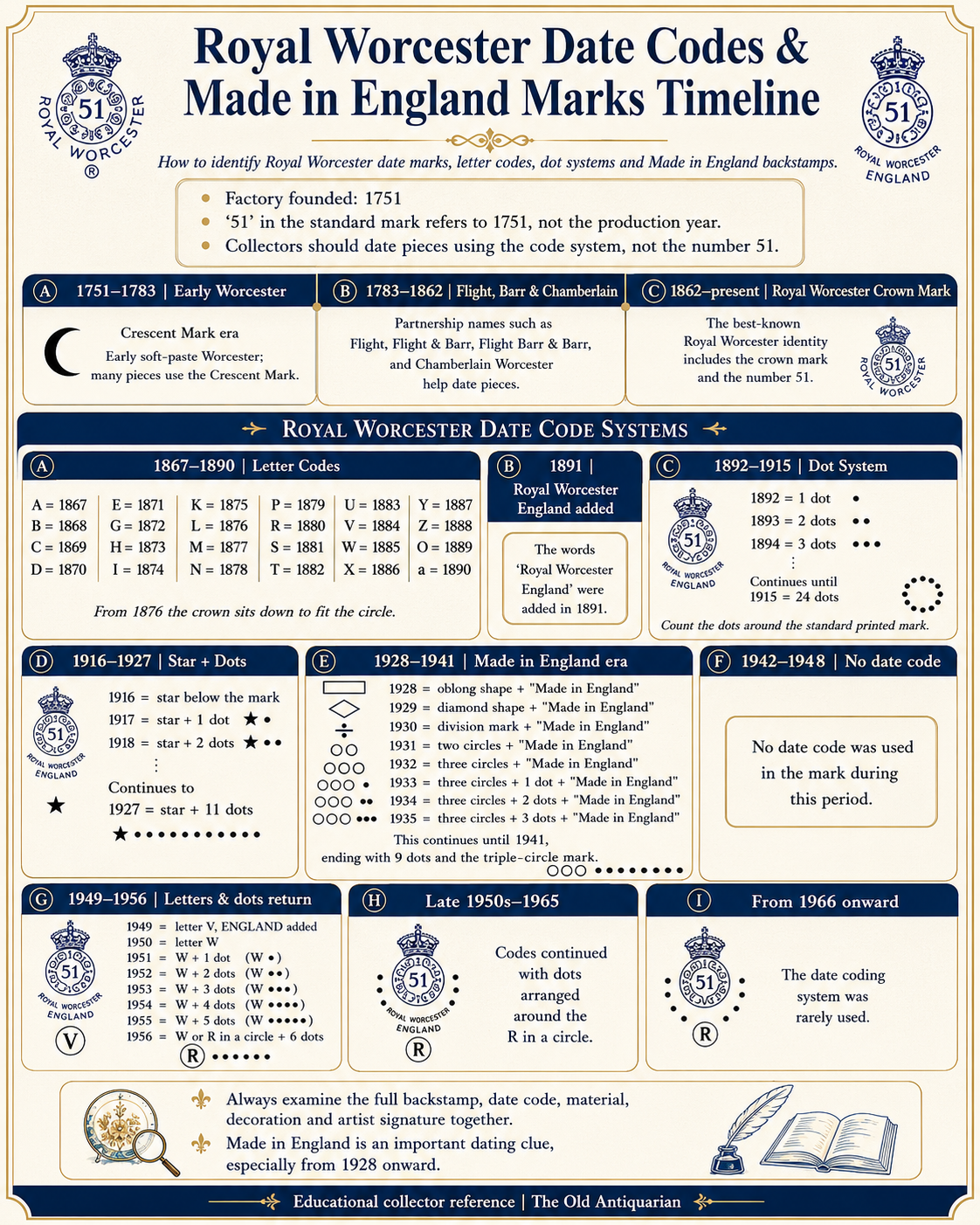
The infographic above is designed as a practical collector reference. For difficult pieces, always compare the complete backstamp with documented Royal Worcester factory-mark references rather than relying on a single symbol in isolation.
If you would like to learn more about dating antique porcelain in general, our article How to Date Antique Porcelain explains the principles used across many European manufacturers.
How to Identify Authentic Royal Worcester
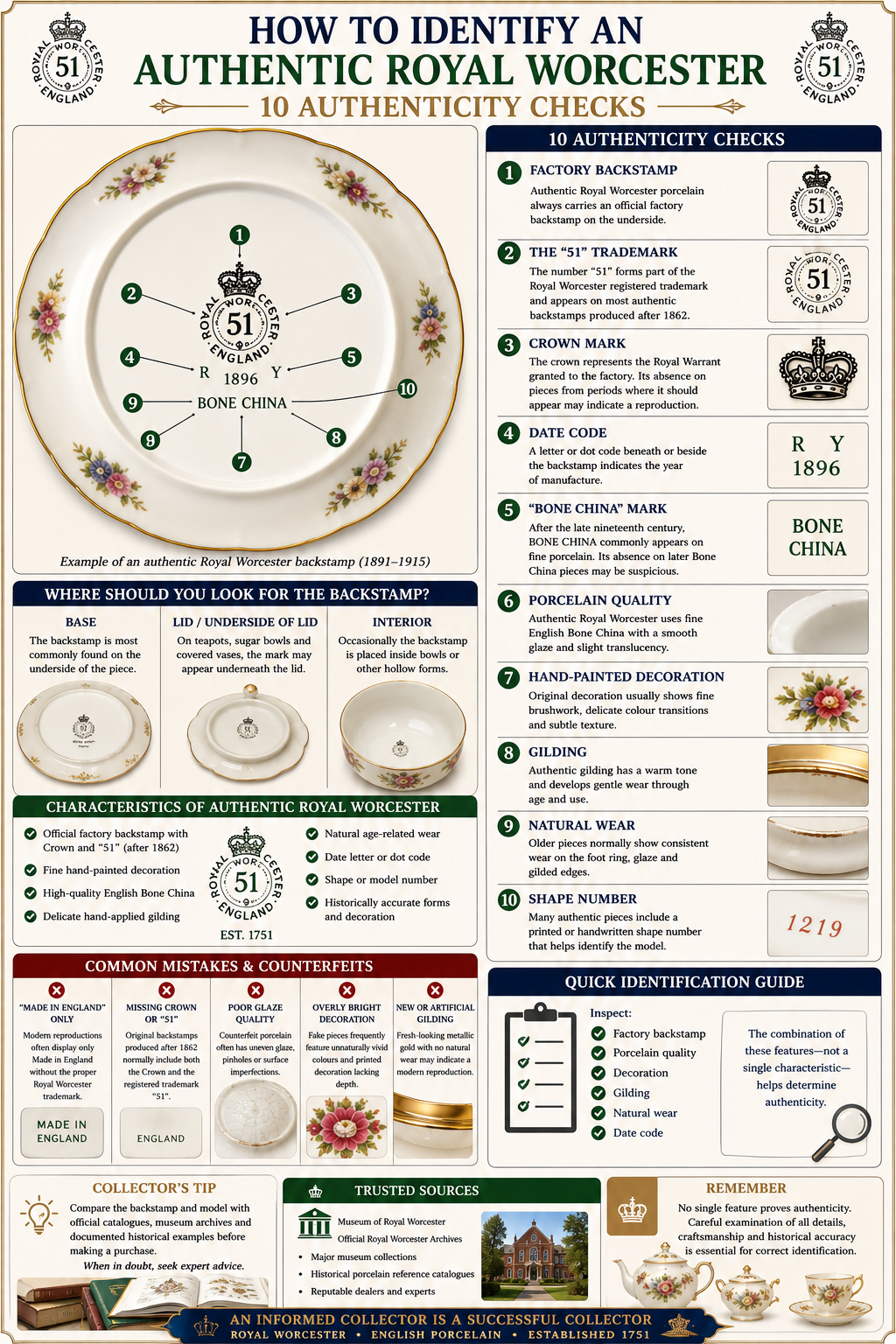
Authentic Royal Worcester porcelain combines several distinctive characteristics that are difficult to reproduce accurately. Rather than relying upon a single feature, collectors examine every aspect of the object before reaching a conclusion.
Factory Backstamp
The factory backstamp should match the production period, decoration and porcelain body. Differences in font, layout or proportions can indicate later reproductions.
Porcelain Quality
Authentic Royal Worcester porcelain is exceptionally fine, smooth and well finished. Bone China examples often display a beautiful translucency when held against strong light.
Hand-Painted Decoration
Original hand-painted decoration shows subtle brushwork, layered colours and natural variation. Printed decoration generally lacks the depth found in genuine hand-painted pieces.
Gilding
Original gilding develops gentle wear over many decades. Bright modern metallic finishes without natural ageing should be examined carefully.
Artist Signatures
Many premium Royal Worcester pieces include the signature or initials of the decorating artist. These signatures should correspond with documented Royal Worcester painters from the correct production period.
Original vs Fake Royal Worcester
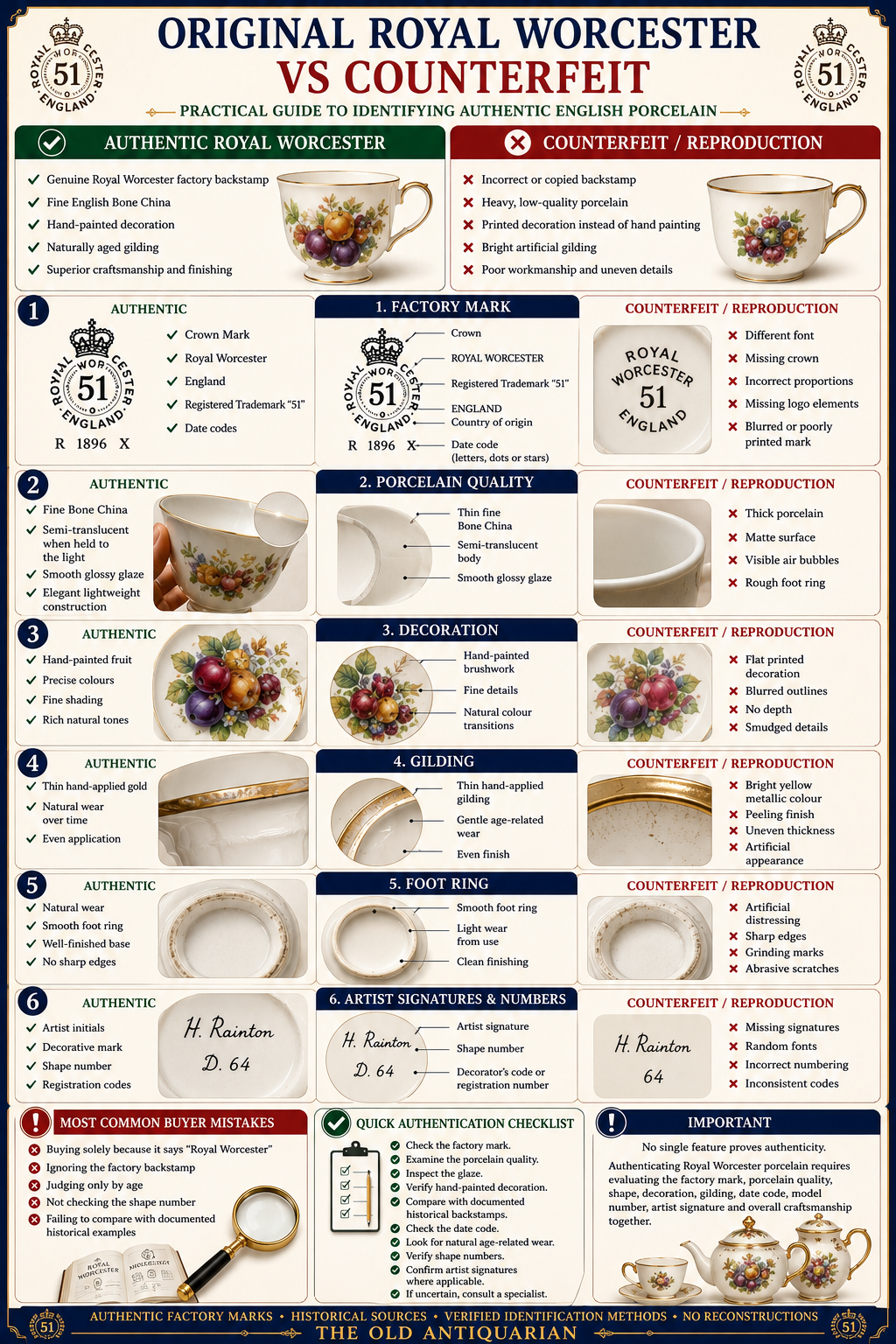
Because Royal Worcester is internationally recognised, reproductions and misleading copies regularly appear on the antiques market. Fortunately, careful examination usually reveals important differences.
Common Warning Signs
- Incorrect Crown Mark.
- Poor quality printing.
- Heavy porcelain body.
- Artificially aged gilding.
- Incorrect factory fonts.
- Random model numbers.
- Modern decoration on supposedly eighteenth-century shapes.
- Grinding marks around the foot ring.
One suspicious feature alone does not necessarily prove a fake. However, when several warning signs appear together, further expert examination is strongly recommended.
Collector’s Checklist
Before purchasing Royal Worcester porcelain, experienced collectors usually ask the following questions:
- Is the factory mark historically correct?
- Does the decoration match the production period?
- Is the gilding original?
- Are artist signatures genuine?
- Does the shape correspond with documented Royal Worcester catalogues?
- Has the piece been restored?
- Does the condition justify the asking price?
In the final section of this guide, we will explore the market value of Royal Worcester porcelain, discuss the factors that influence prices, explain proper storage and care, answer frequently asked questions and provide additional resources for collectors.
Royal Worcester Value Guide
The value of Royal Worcester porcelain varies enormously depending on age, rarity, artistic quality, condition, provenance and collector demand. While some twentieth-century dinnerware may be relatively affordable, rare exhibition vases and signed hand-painted masterpieces regularly achieve impressive prices at international auctions.
Collectors should remember that no two pieces are exactly alike. Even objects with the same pattern may differ significantly in value because of their production period, artist, decoration quality or state of preservation.
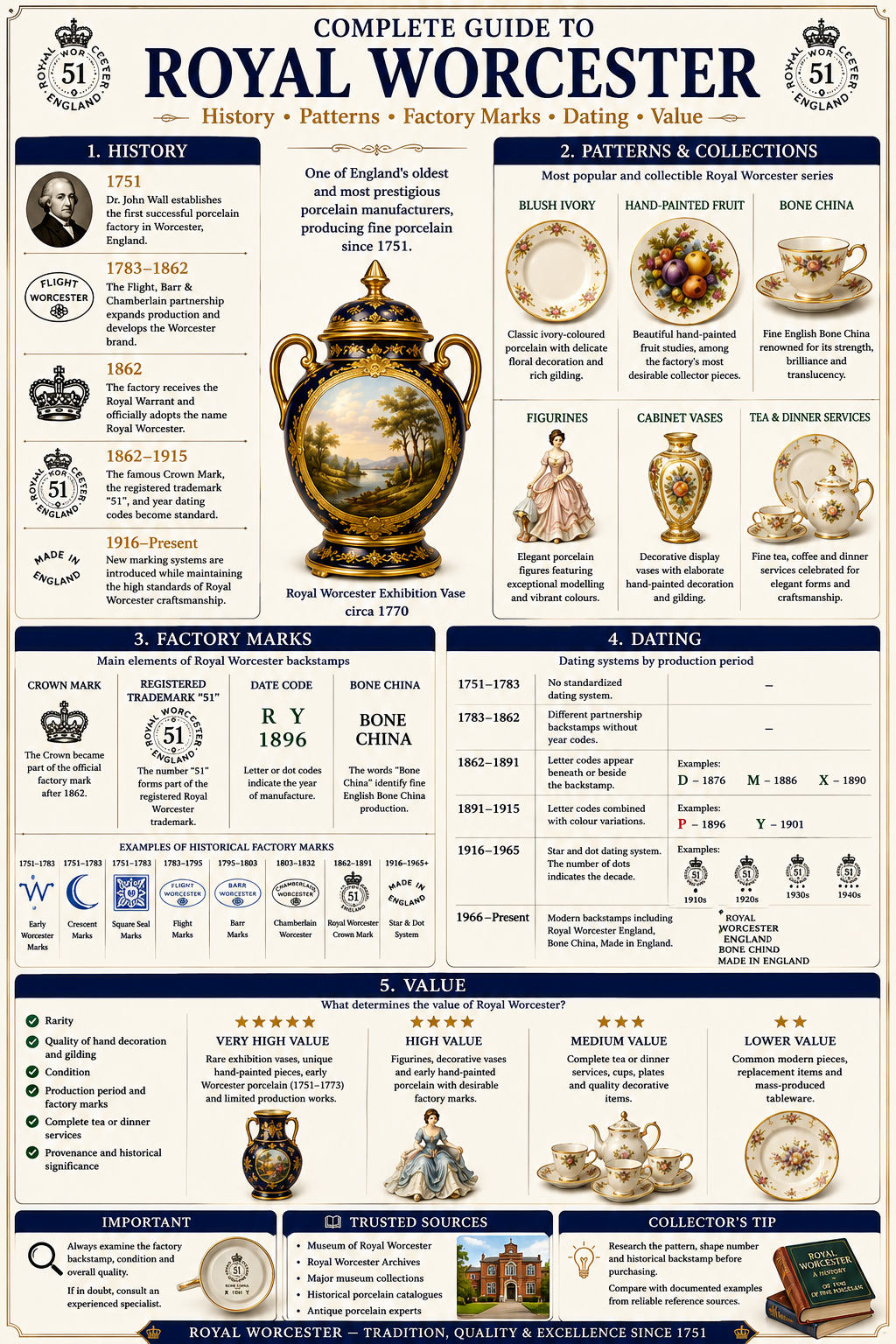
If you would like to understand how antique porcelain is professionally evaluated, read our detailed guide
How Is Antique Porcelain Valued?.
What Determines the Value of Royal Worcester?
Age
Generally, eighteenth-century Worcester porcelain commands higher prices because of its rarity and historical importance. However, exceptional nineteenth-century exhibition pieces often exceed the value of much older objects due to their artistic significance.
Rarity
Limited production models, exhibition pieces, artist-signed works and unusual decorative styles are significantly more desirable than mass-produced tableware.
Condition
Condition remains one of the most important value factors. Chips, cracks, professional restorations, hairlines or heavy wear can substantially reduce collector interest. Original gilding and untouched surfaces are especially desirable.
Decoration
Royal Worcester became famous for extraordinary hand-painted decoration. Fruit studies, birds, landscapes and elaborate gilding generally command stronger prices than standard transfer-printed designs.
Artist Signatures
Pieces signed by well-known Royal Worcester artists are often worth considerably more than similar unsigned examples. Artist attribution is therefore an important part of professional identification.
Factory Marks
Clear factory backstamps greatly increase confidence in authenticity. Well-preserved marks also make dating much easier, improving market desirability.
Most Valuable Royal Worcester Pieces
- Early Worcester porcelain (1751–1783)
- Rare Crescent Mark examples
- Flight & Barr porcelain
- Royal Worcester exhibition vases
- Hand-Painted Fruit masterpieces
- Signed artist pieces
- Cabinet vases
- Blush Ivory rarities
- Large decorative chargers
- Complete early tea and dinner services
The finest museum-quality examples have sold for many thousands of pounds at leading international auction houses, particularly when accompanied by documented provenance.
How to Care for Royal Worcester Porcelain
Proper storage helps preserve both the beauty and value of antique porcelain. Even minor accidental damage can significantly reduce collector value.
Storage Tips
- Store porcelain in a stable environment.
- Avoid sudden temperature changes.
- Keep pieces away from direct sunlight.
- Never stack plates without protective padding.
- Lift vases by the body rather than the handles.
- Use acid-free tissue when packing valuable items.
- Avoid abrasive cleaning products.
- Handle gilded decoration as little as possible.
Our detailed article How to Store Antique Porcelain and Ceramics explains these techniques in much greater detail.
Frequently Asked Questions
How can I tell if my Royal Worcester is genuine?
Examine the factory backstamp, porcelain quality, decoration, gilding, artist signatures, model numbers and overall craftsmanship. Authenticity should never be judged by the mark alone.
Are all Royal Worcester pieces valuable?
No. Some modern tableware has modest collector value, while rare eighteenth-century porcelain and signed exhibition pieces can be extremely valuable.
Does restoration reduce value?
In most cases, yes. Professional restoration may improve appearance but usually lowers collector value compared with an undamaged original example.
Can Royal Worcester factory marks identify the exact year?
Often, yes. Royal Worcester used letter, dot, star and symbol-based date codes during many periods. Some marks can identify a precise manufacturing year, while other periods—especially 1942–1948 and many later twentieth-century wares—require additional evidence.
What does 51 mean on a Royal Worcester mark?
The number 51 refers to 1751, the founding year of the Worcester porcelain factory. It is not the manufacturing year of the individual piece.
When did Royal Worcester use “Made in England” marks?
In the principal Royal Worcester date-code sequence, Made in England was added from 1928. Different symbols and later dots were used with the wording to distinguish years through 1941.
What does “Royal Worcester England” mean?
The wording Royal Worcester England was added to the standard mark in 1891. It is an important dating clue, but the complete backstamp should still be examined before assigning a date.
What is the rarest Royal Worcester porcelain?
Among the rarest pieces are early Worcester porcelain from the eighteenth century, important exhibition vases, signed artist works and limited production decorative masterpieces.
Conclusion
For more than 270 years, Royal Worcester has represented the very highest standards of English porcelain manufacture. From the earliest Crescent Mark porcelain to magnificent Victorian exhibition vases and elegant Bone China tableware, the factory has produced some of the world’s finest ceramic art.
Learning to identify authentic Royal Worcester requires patience and careful observation. Factory marks, porcelain quality, decoration, artist signatures, model numbers and historical documentation all contribute to accurate identification.
Whether you are beginning your collecting journey or already own important examples, understanding the history and craftsmanship behind Royal Worcester will help you appreciate why these remarkable objects remain among the most respected pieces of antique English porcelain.
Sources & References
- Museum of Royal Worcester — Royal Worcester Factory Marks and official date-code reference.
- Museum of Royal Worcester — Dr Wall and the First Factory.
- Museum of Royal Worcester — Royal Worcester 19th Century and Severn Street Factory history.
- Museum of Royal Worcester — Royal Worcester 20th Century.
Editorial Note: Royal Worcester marks vary by material, product line and period. This guide is intended as a collector reference and should be used together with examination of the complete object. Last updated: 29 August 2026.
Continue Exploring
- What Is Porcelain?
- Porcelain Marks Identification Guide
- How to Identify Antique Porcelain
- How to Date Antique Porcelain
- How Is Antique Porcelain Valued?
- How to Store Antique Porcelain and Ceramics
- Guide to Antique Porcelain
- Antique Glossary
Need help identifying your Royal Worcester porcelain?
Whether you own a vase, tea service, figurine or decorative plate, professional identification can reveal its age, authenticity and market value.
➡️ Request a professional antique appraisal or contact our specialists for expert advice.
