
What Is Royal Crown Derby
Royal Crown Derby Porcelain – History, Identification, Factory Marks and Dating Guide
Royal Crown Derby is one of England’s oldest and most prestigious porcelain manufacturers, renowned worldwide for its luxurious Bone China, exceptional hand-painted decoration and magnificent raised gold work. Founded in 1750 in Derby, England, the factory has supplied fine porcelain to aristocratic families, collectors and royal households for more than two and a half centuries.
Today, antique Royal Crown Derby porcelain is highly sought after by collectors because of its craftsmanship, historical significance and outstanding quality. Some of the most desirable pieces include Imari tableware, decorative vases, cabinet plates, tea services, animal paperweights and limited-edition collector pieces.
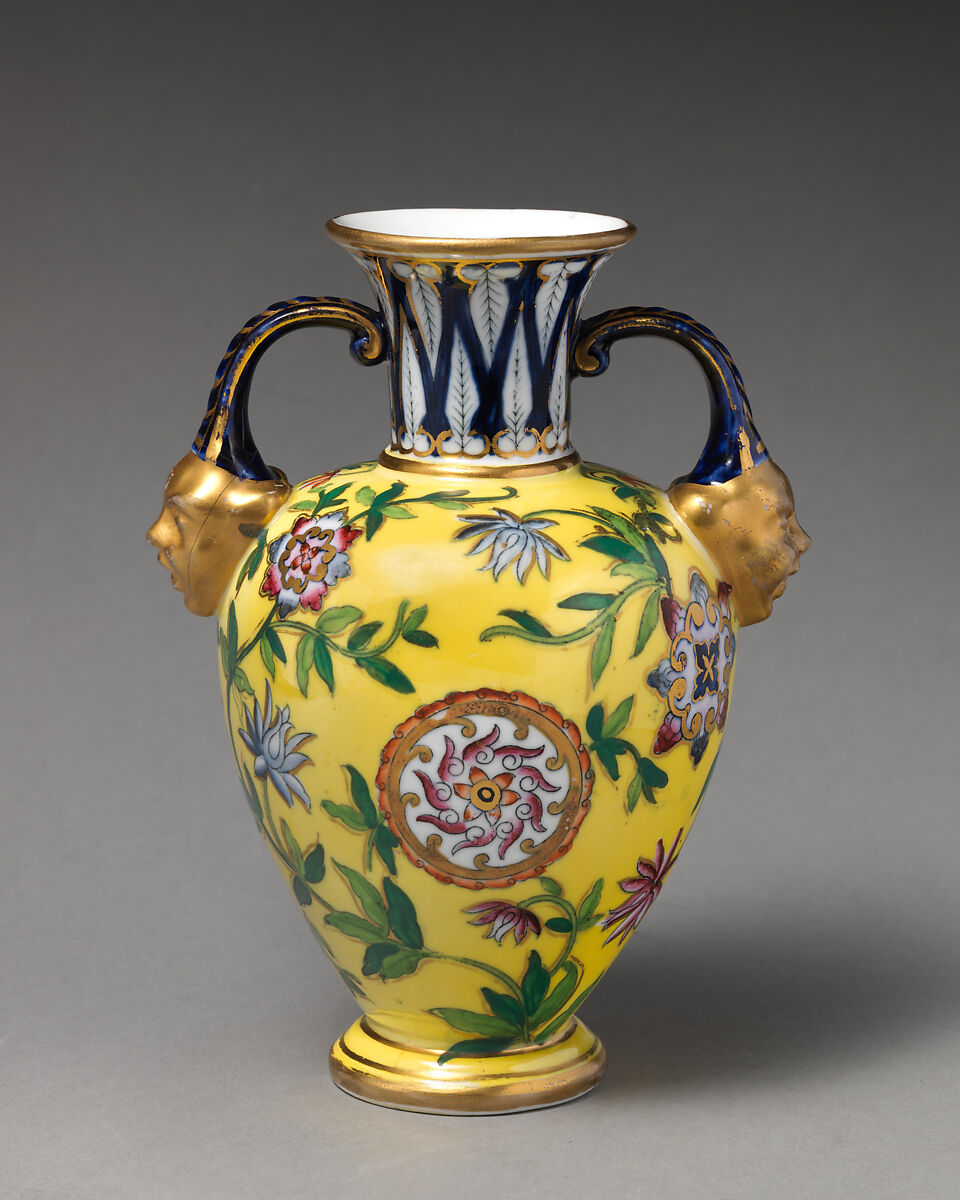
One of the defining characteristics of Royal Crown Derby is its remarkable consistency in quality. Whether examining an eighteenth-century soft-paste porcelain vase or a twentieth-century Bone China service, collectors immediately recognize the factory’s elegant forms, brilliant enamels and finely burnished gilding.
If you are unfamiliar with English porcelain, you may first wish to read our guide explaining what English porcelain is. You may also find it useful to explore our articles on porcelain marks and how to identify antique porcelain before learning about Royal Crown Derby.
The History of Royal Crown Derby
The story of Royal Crown Derby begins in 1750, when physician Dr. John Wall and entrepreneur William Duesbury established one of England’s earliest successful porcelain manufactories in the city of Derby. Their ambition was to produce porcelain equal in quality to the finest wares imported from Meissen, Sèvres and China.
Early Derby porcelain quickly became famous for its elegant shapes, colourful hand-painted floral decoration and rich gilding. During the second half of the eighteenth century, Derby attracted many of England’s finest painters and decorators, creating pieces that remain among the highlights of British ceramic art.
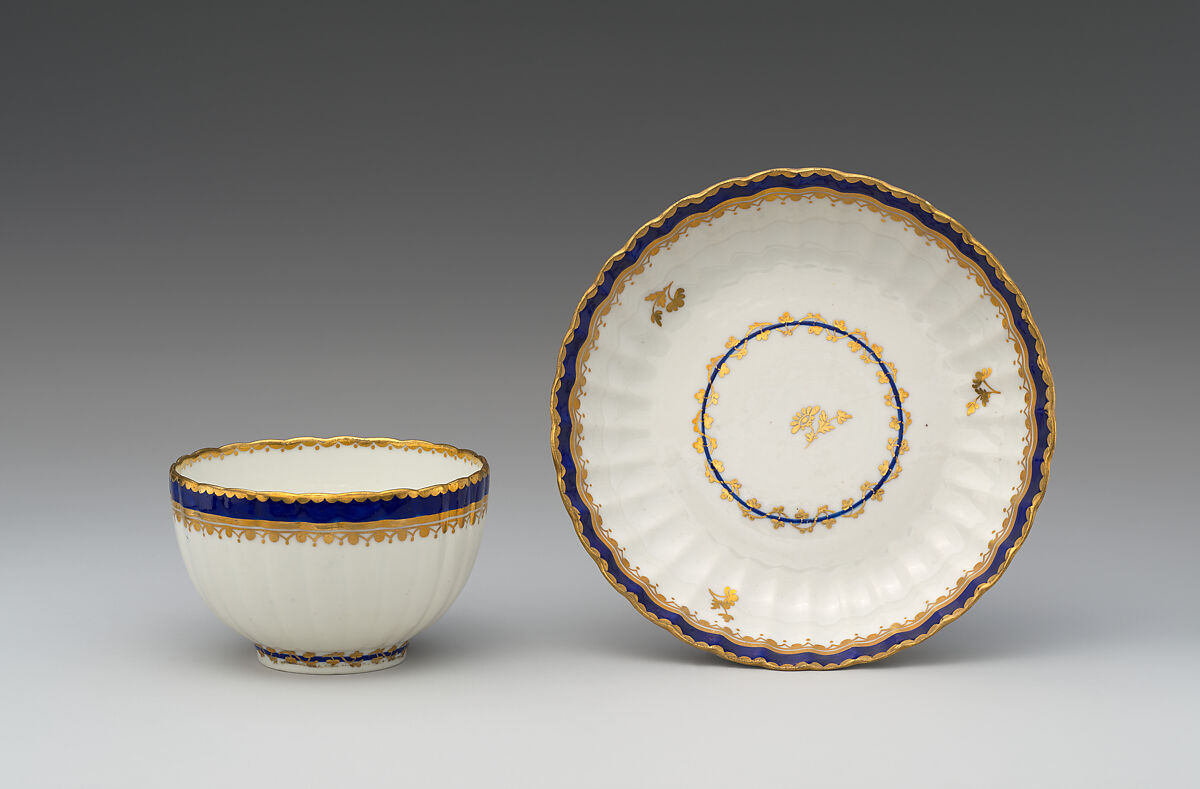
Throughout the nineteenth century, the factory continued to expand its reputation. The company developed increasingly sophisticated decorating techniques and became especially admired for its luxurious presentation pieces, cabinet wares and richly gilded Bone China.
In 1890, Queen Victoria granted the company permission to use the word “Royal”, creating the famous name Royal Crown Derby. This royal recognition confirmed the factory’s position among Britain’s leading porcelain manufacturers.
Why Collectors Value Royal Crown Derby
Royal Crown Derby has become one of the most collected names in English porcelain because it combines artistic excellence with exceptional manufacturing quality. Unlike many nineteenth-century factories that concentrated on mass production, Royal Crown Derby maintained a strong emphasis on hand decoration, skilled craftsmanship and premium Bone China.
Collectors particularly appreciate the factory’s:
- Outstanding hand-painted decoration.
- Rich raised gold ornamentation.
- Exceptional Bone China quality.
- Highly documented factory marks.
- Excellent historical records for dating.
- Wide variety of collectible patterns and shapes.
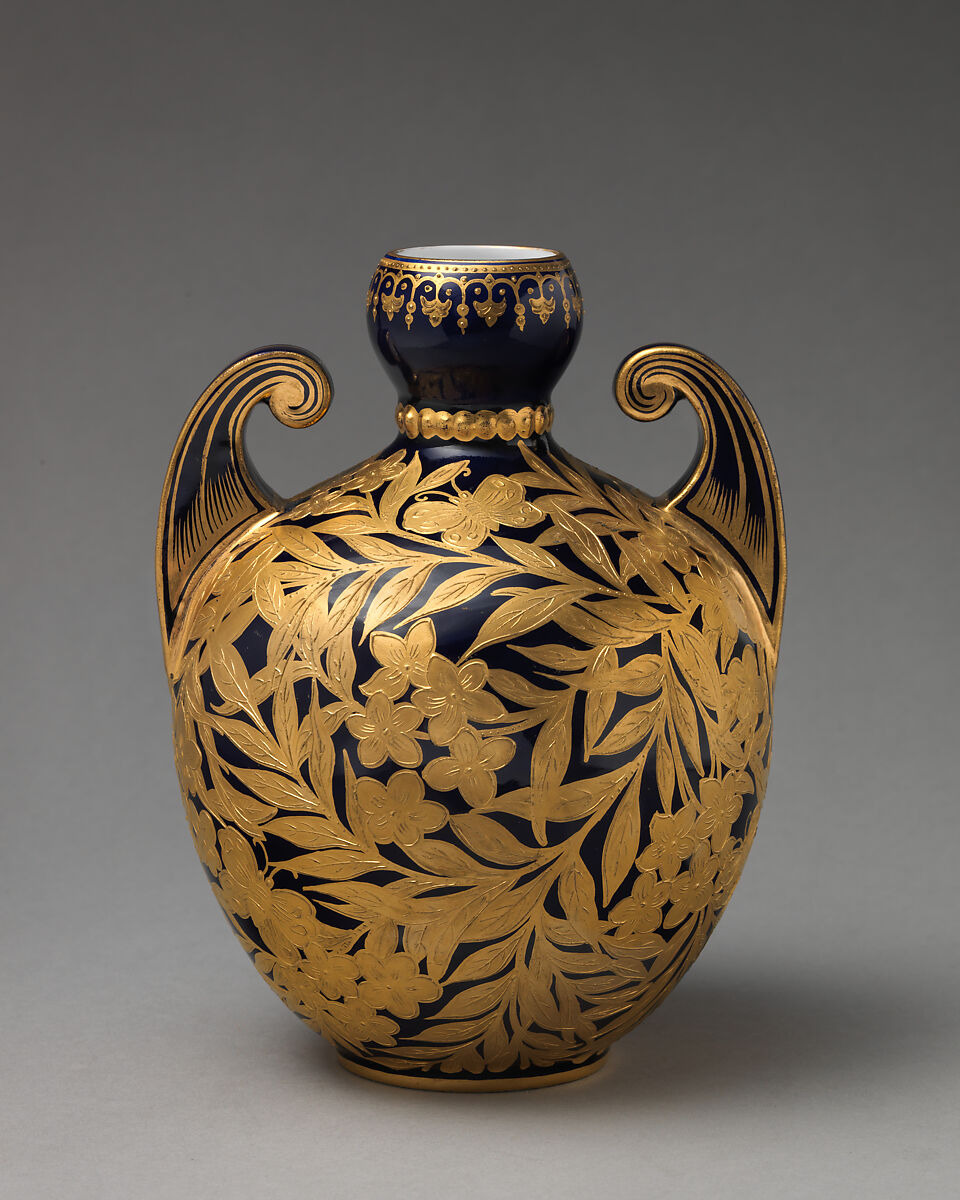
Today, Royal Crown Derby pieces can be found in museums, royal collections and major private collections around the world. Their desirability has made the factory one of the most respected names in the international antiques market.
In the next section, we will examine the factory’s most famous patterns, including Old Imari, Royal Antoinette, Gold Aves, Derby Posies and other iconic Royal Crown Derby designs, as well as the characteristics that make them especially valuable to collectors.
The Most Famous Royal Crown Derby Patterns
One of the reasons Royal Crown Derby remains one of the world’s most collectible porcelain manufacturers is the extraordinary variety of artistic patterns it has produced over more than 270 years. From luxurious Japanese-inspired decorations to elegant floral services and richly gilded cabinet pieces, the factory has created designs that continue to attract collectors worldwide.
Unlike many porcelain manufacturers that frequently changed styles, Royal Crown Derby successfully combined traditional craftsmanship with new artistic movements while maintaining its unmistakable identity. Collectors often identify a piece not only by its factory mark, but also by its decoration, colour palette, gilding and shape.
Old Imari
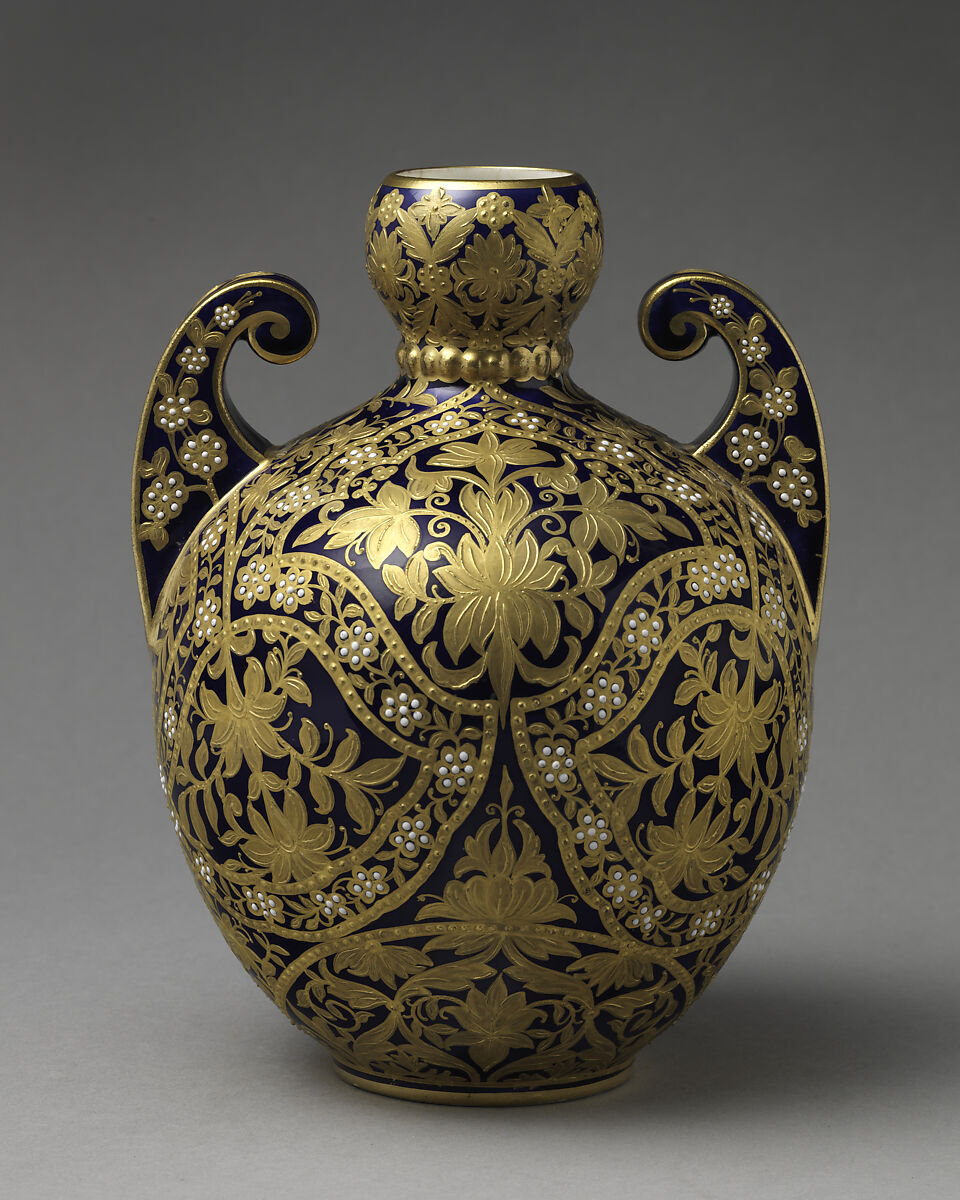
Perhaps the most famous Royal Crown Derby pattern is Old Imari. Introduced in the late nineteenth century, it was inspired by traditional Japanese Imari porcelain exported to Europe during the seventeenth and eighteenth centuries.
Old Imari is instantly recognisable by its spectacular combination of:
- deep cobalt blue;
- iron red enamel;
- rich hand-burnished gold decoration;
- intricate floral and geometric motifs.
Today, Old Imari remains one of the factory’s most collected and internationally recognised patterns.
Royal Antoinette
Another iconic collection is Royal Antoinette, admired for its delicate floral garlands, elegant scrolling ornament and generous use of raised gold. This luxurious pattern has become one of Royal Crown Derby’s flagship Bone China designs and is frequently chosen for formal dining services.
Gold Aves
The Gold Aves pattern combines birds inspired by early embroidery with rich gilded decoration on fine white Bone China. It demonstrates the factory’s exceptional ability to balance elegance with intricate hand craftsmanship.
Derby Posies
Introduced during the twentieth century, Derby Posies became one of the company’s most successful everyday patterns. Small hand-painted flowers arranged on a bright white Bone China body created a timeless design that remains popular with collectors and users alike.
Cabinet Vases
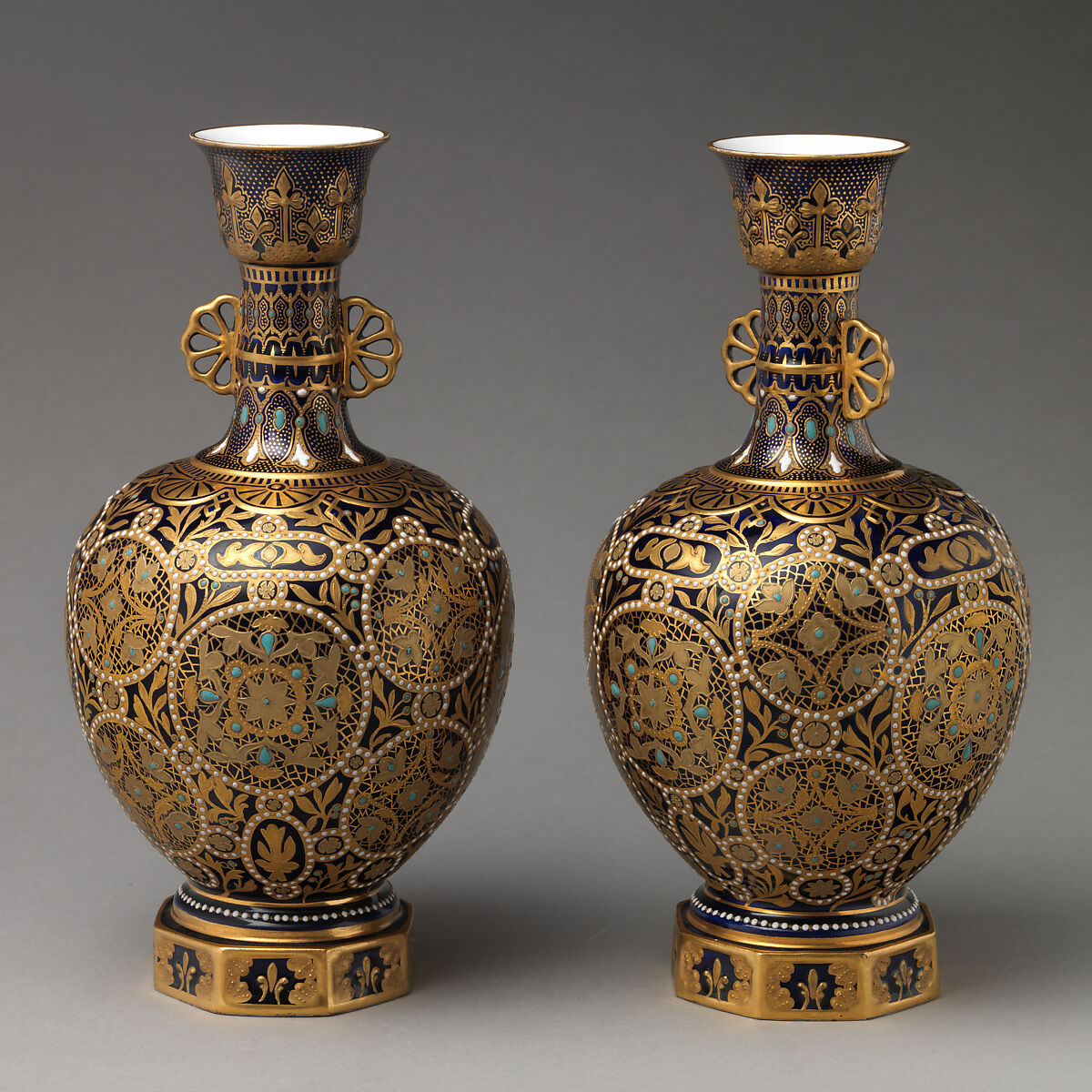
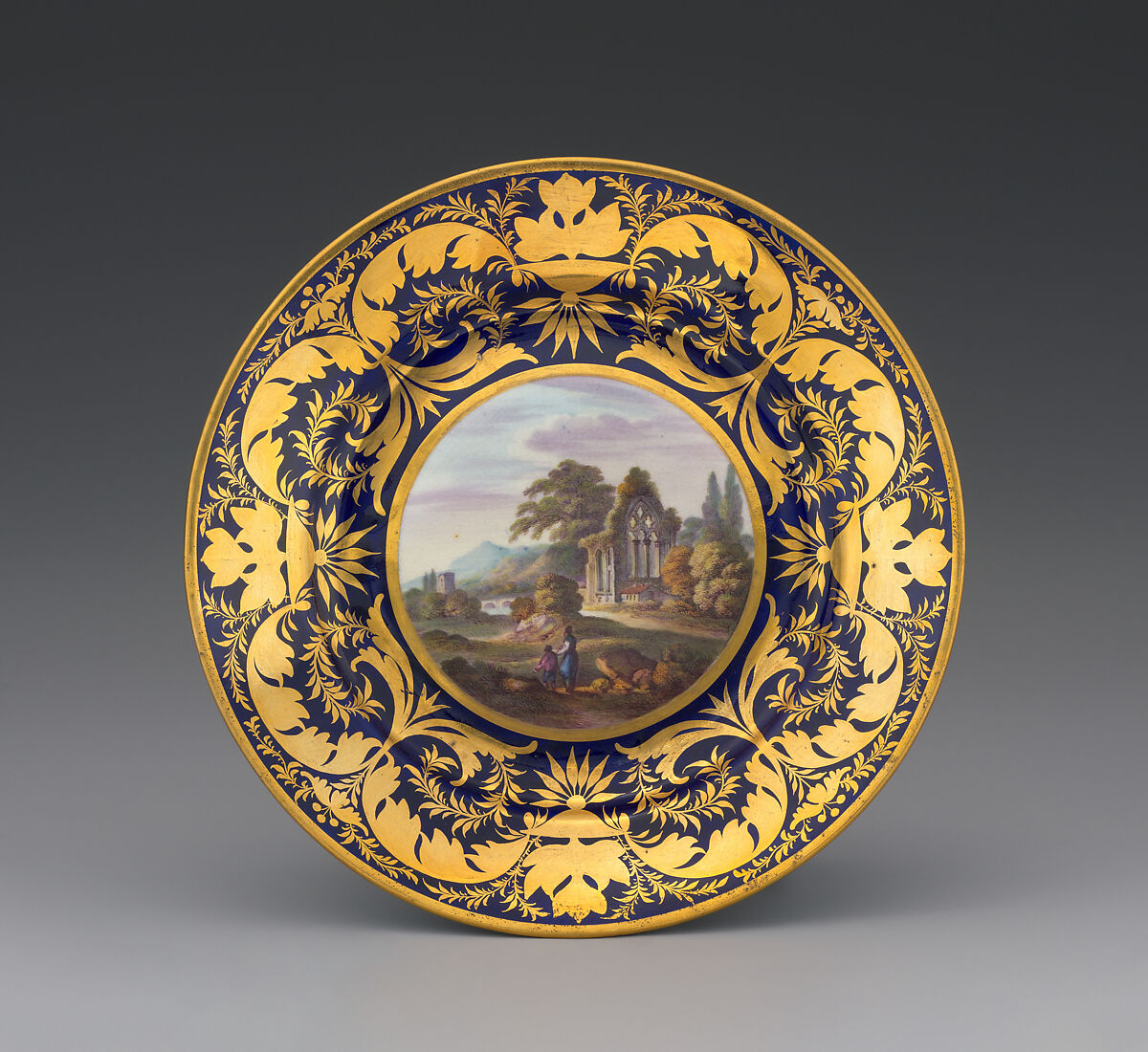
Royal Crown Derby also became famous for its spectacular cabinet vases produced during the Victorian period. These highly decorative pieces often feature elaborate gilding, raised enamel work, scenic painting and exceptional craftsmanship. Many examples were created specifically for exhibitions or wealthy collectors.
Bone China Tableware
The factory’s tea services, coffee sets, plates and serving pieces are equally respected. Royal Crown Derby Bone China is celebrated for its remarkable translucency, strength and smooth ivory-white glaze, qualities that distinguish it from many other English porcelain manufacturers.
Why Royal Crown Derby Patterns Are Valuable
Several factors influence the desirability of Royal Crown Derby porcelain. Rare patterns, limited production numbers, exceptional hand painting and outstanding preservation all contribute significantly to collector value. Complete tea or dinner services are generally more valuable than individual pieces, while exhibition-quality cabinet wares can achieve particularly strong prices.
Collectors should also pay close attention to original maker’s marks, pattern numbers and date ciphers, as these help establish authenticity and production period. Understanding these details is essential before estimating value or purchasing antique English porcelain.
In the next section we will explore the evolution of Royal Crown Derby factory marks, explain how to date antique pieces accurately and show how collectors distinguish authentic porcelain from reproductions using historical backstamps, date ciphers and factory identification systems.
Royal Crown Derby Factory Marks
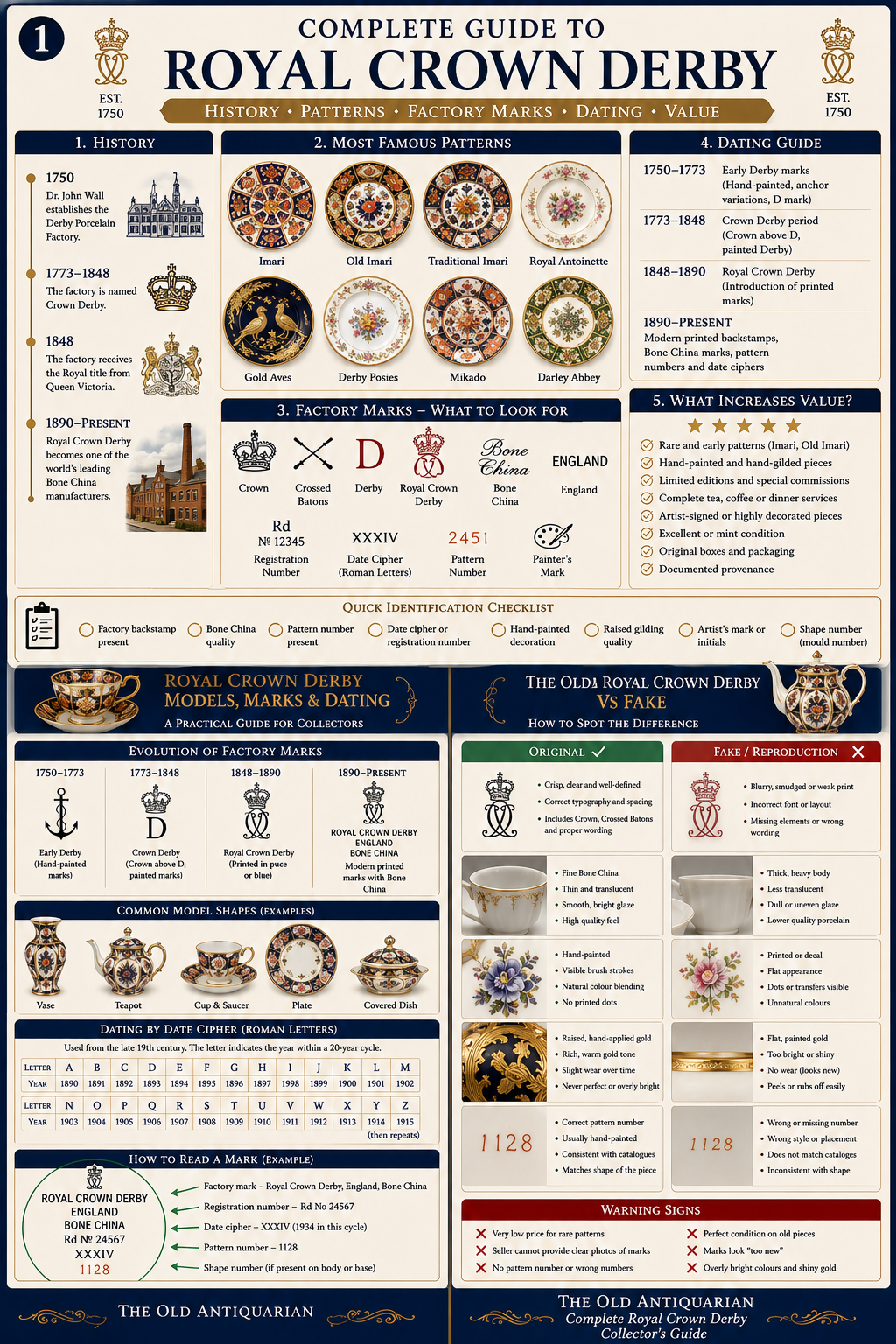
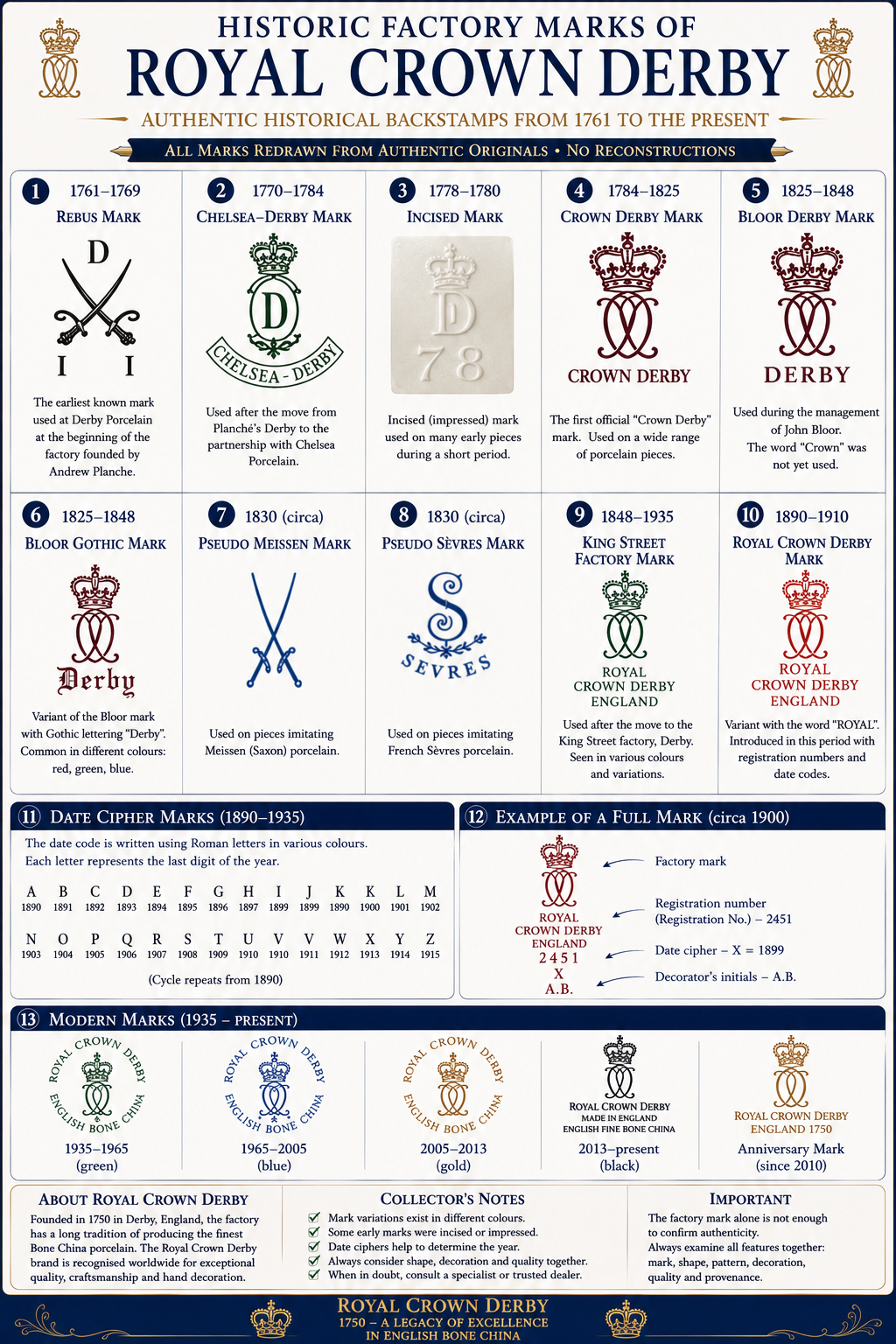
One of the greatest advantages for collectors is that Royal Crown Derby has one of the best documented factory marking systems in the world of antique English porcelain. The evolution of its backstamps allows collectors to identify production periods with remarkable accuracy, often narrowing the manufacturing date to a specific decade or even a particular year.
However, no factory mark should ever be examined in isolation. Professional identification also considers the porcelain body, decoration, gilding, model shape, pattern number, decorator’s marks and overall craftsmanship. If you are new to porcelain collecting, our guides to porcelain marks and dating antique porcelain explain these principles in greater detail.
The Evolution of Royal Crown Derby Marks
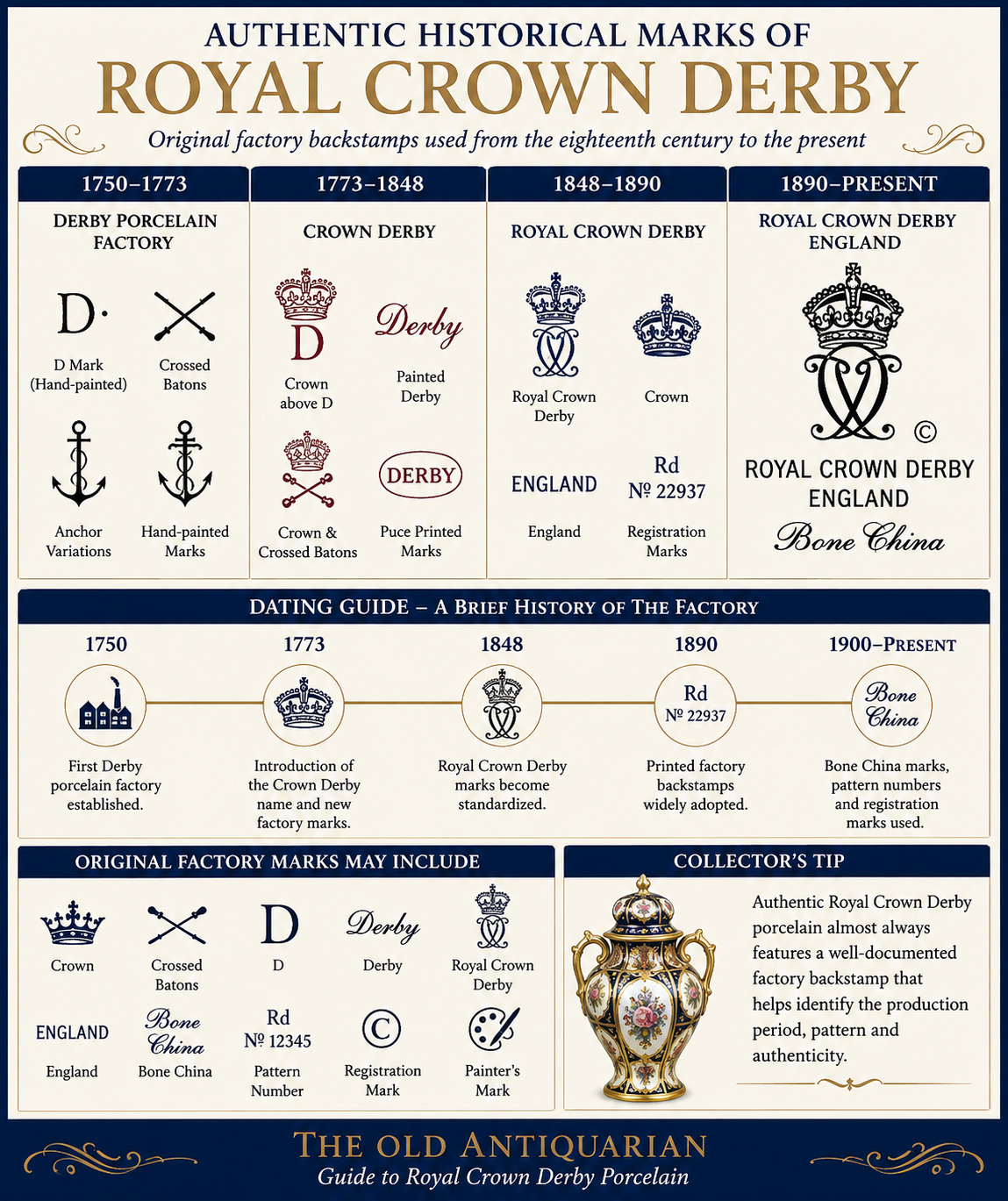
During its long history, the Derby factory used numerous marks reflecting changes in ownership, production methods and royal recognition. Early pieces often display simple painted or incised symbols, while later examples feature increasingly detailed printed backstamps.
1750–1770 — Early Derby Marks
The earliest Derby porcelain was marked with simple painted symbols or the famous Rebus Mark. These rare pieces belong to the earliest period of English porcelain production and are among the most desirable examples for collectors.
1770–1848 — Crown Derby
As the factory expanded, the familiar Crown Derby marks appeared. Various combinations of crowns, crossed batons and the Derby name were used, often accompanied by painter’s marks and hand-written production numbers.
1848–1890 — Royal Recognition
Following continued success, the factory gradually introduced more standardised backstamps. During this period many pieces include printed marks, registration information and increasingly sophisticated dating systems.
1890–Present — Royal Crown Derby
After Queen Victoria granted permission to use the word “Royal”, the factory adopted the famous Royal Crown Derby name. Modern backstamps typically include the royal crown, factory name, “England”, Bone China designation, pattern numbers and date ciphers.
How to Date Royal Crown Derby Porcelain
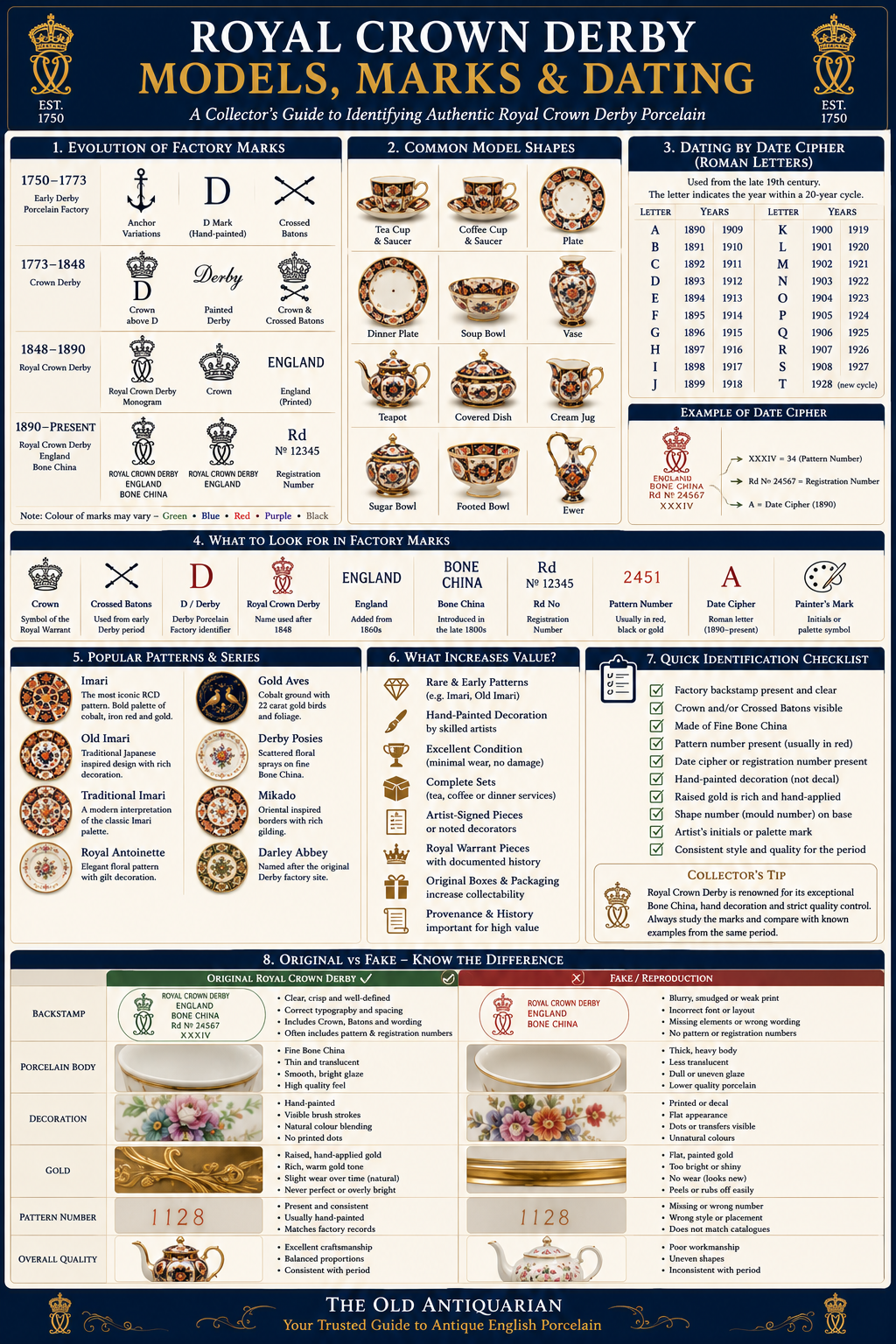
Dating Royal Crown Derby usually involves several identification features working together rather than relying on a single factory mark. Experienced collectors examine every detail before determining a production period.
Important dating features include:
- Factory backstamp.
- Date cipher.
- Pattern number.
- Shape number.
- Decorator’s initials.
- Bone China designation.
- Registration marks.
- Style of decoration.
How to Identify Authentic Royal Crown Derby
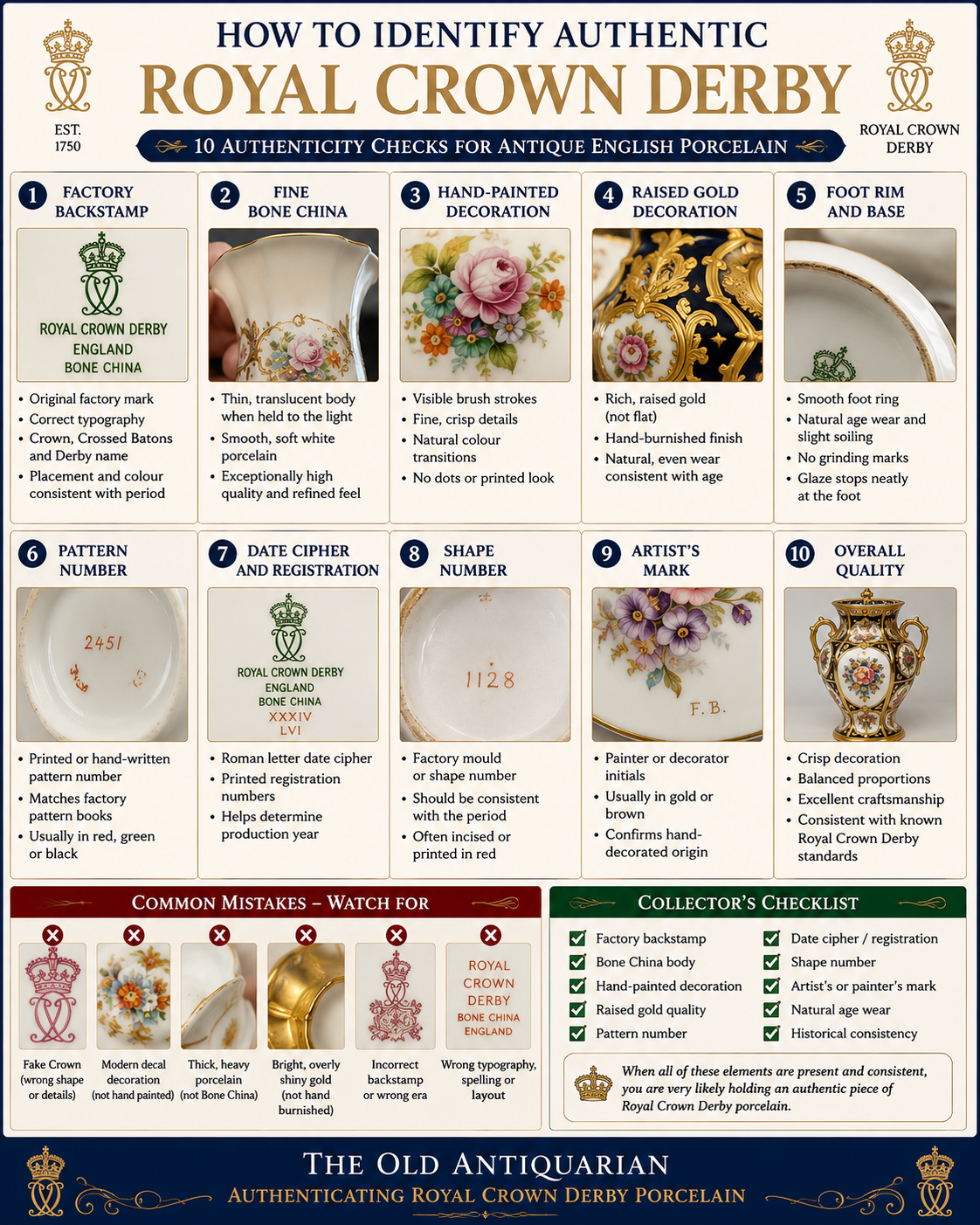
Authenticating Royal Crown Derby requires careful observation. Genuine pieces consistently demonstrate outstanding quality, precise hand decoration and exceptionally well-executed gilding. Modern reproductions often imitate the factory mark but fail to reproduce the same level of craftsmanship.
Collectors should always inspect:
- Factory backstamp.
- Bone China quality.
- Hand-painted decoration.
- Raised gold decoration.
- Natural wear on the foot rim.
- Pattern and shape numbers.
- Decorator’s marks.
- Overall balance and finish.
Original vs Fake Royal Crown Derby
Because Royal Crown Derby enjoys an excellent international reputation, reproductions occasionally appear on the antiques market. Fortunately, most copies reveal inconsistencies when examined carefully.
Common warning signs include:
- Incorrect typography.
- Poorly reproduced crowns.
- Missing crossed batons.
- Heavy porcelain body.
- Printed decoration instead of hand painting.
- Bright metallic gold instead of burnished gilding.
- Artificial ageing.
- Incorrect pattern numbers.
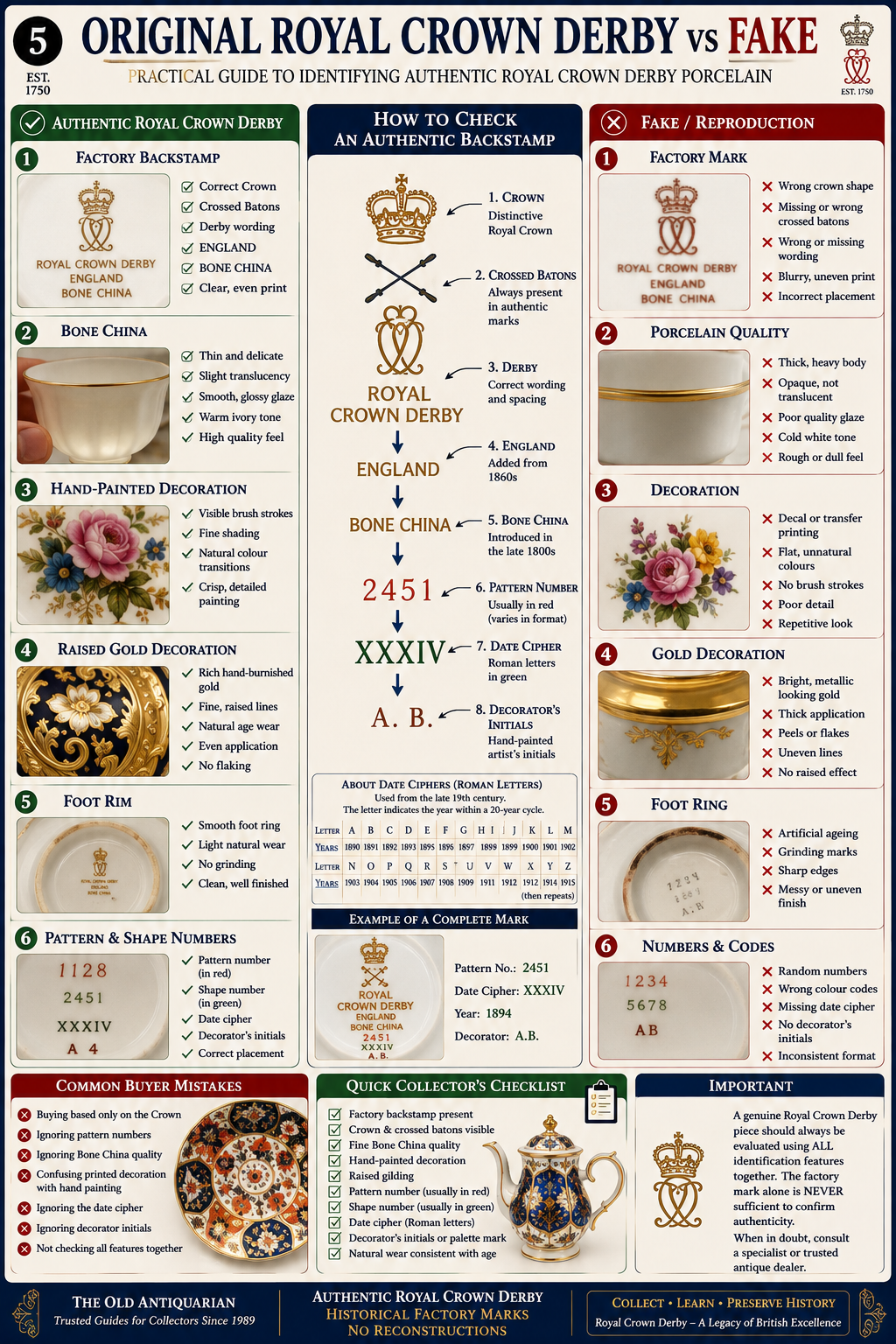
Always remember that authenticity is determined by evaluating every identifying feature together. A genuine-looking factory mark alone is never sufficient proof that a piece is authentic. Experienced collectors compare the mark, porcelain quality, decoration, model shape, pattern number, date cipher and overall craftsmanship before reaching a conclusion.
In the final section of this guide, we will examine the value of Royal Crown Derby porcelain, discover which patterns command the highest prices and explain the factors that influence collector demand in today’s international antiques market.
Royal Crown Derby Value Guide
The value of Royal Crown Derby porcelain depends on a combination of historical significance, rarity, artistic quality, condition, provenance and collector demand. While some modern tableware is relatively affordable, exceptional eighteenth-century porcelain, exhibition pieces and rare hand-painted cabinet wares regularly achieve impressive prices at leading international auction houses.
Every Royal Crown Derby object should be evaluated individually. Two pieces with the same pattern may differ greatly in value depending on their production period, artist, decoration quality, factory marks and overall condition.
If you would like to understand how antique porcelain is professionally evaluated, our guide on How Is Antique Porcelain Valued? explains the appraisal process in detail.
What Determines the Value of Royal Crown Derby?
Age
Earlier porcelain generally commands higher prices because of its rarity. Pieces produced during the eighteenth century, particularly those from the early Derby factory, are among the most desirable examples for collectors.
Rarity
Limited production patterns, exhibition wares, artist-signed pieces and unusual decorative styles are considerably more valuable than standard production tableware.
Condition
Condition is one of the most important value factors. Chips, cracks, hairlines, professional restorations or excessive wear usually reduce collector value. Original gilding and undamaged glaze are especially desirable.
Decoration
Royal Crown Derby became internationally famous for extraordinary hand-painted decoration and elaborate raised gold work. Complex floral painting, Imari decoration and exhibition-quality artistry generally command premium prices.
Factory Marks
Authentic factory backstamps, clear pattern numbers and correct date ciphers provide confidence in authenticity and often increase collector interest. Well-preserved historical marks also make accurate dating much easier.
Most Valuable Royal Crown Derby Patterns
- Old Imari
- Traditional Imari
- Royal Antoinette
- Gold Aves
- Rare eighteenth-century Derby porcelain
- Hand-painted exhibition vases
- Cabinet pieces
- Limited editions
- Complete tea and dinner services
- Artist-signed porcelain
Museum-quality examples with exceptional provenance have achieved remarkable prices at major auction houses, particularly when preserved in outstanding original condition.
How to Care for Royal Crown Derby Porcelain
Proper storage and careful handling help preserve both the beauty and value of antique porcelain. Even minor accidental damage may significantly reduce collector value.
Storage Recommendations
- Store porcelain in a stable environment.
- Avoid sudden temperature changes.
- Protect pieces from direct sunlight.
- Never stack plates without protective padding.
- Lift vases by the body rather than the handles.
- Use acid-free tissue paper for storage.
- Avoid abrasive cleaning products.
- Handle gilded decoration as little as possible.
Our detailed article How to Store Antique Porcelain and Ceramics explains the best conservation practices for collectors.
Frequently Asked Questions
Is all Royal Crown Derby porcelain valuable?
No. While every authentic piece has historical interest, rarity, age, decoration and condition determine market value. Early Derby porcelain and limited production pieces generally command the highest prices.
How can I identify genuine Royal Crown Derby?
Examine the factory backstamp, Bone China quality, decoration, gilding, pattern numbers, date ciphers, shape numbers and overall craftsmanship. Authenticity should never be based on the mark alone.
Does restoration reduce value?
In most situations, yes. Professional restoration may improve appearance but usually reduces collector value compared with an undamaged original example.
Can factory marks identify the exact production year?
Many Royal Crown Derby backstamps include date ciphers and factory information that allow very accurate dating. These should always be interpreted alongside the decoration style, pattern number and model shape.
What is the rarest Royal Crown Derby porcelain?
Among the rarest pieces are early Derby porcelain, exhibition vases, artist-signed cabinet wares, rare Old Imari examples and important eighteenth-century soft-paste porcelain.
Conclusion
For more than 275 years, Royal Crown Derby has represented the highest standards of English porcelain craftsmanship. From the earliest Derby porcelain of the eighteenth century to magnificent Victorian cabinet wares and elegant Bone China table services, the factory has earned an outstanding international reputation for quality and artistic excellence.
Understanding Royal Crown Derby requires more than recognising a factory mark. Authentic identification combines historical knowledge, factory backstamps, pattern numbers, date ciphers, porcelain quality and careful observation of hand-painted decoration.
Whether you are an experienced collector or have recently discovered a family heirloom, learning how to identify and date Royal Crown Derby porcelain will help you appreciate why it remains one of the world’s most respected names in antique English ceramics.
Continue Exploring
- What Is Porcelain?
- What Are Porcelain Marks?
- How to Identify Antique Porcelain
- How to Date Antique Porcelain
- How Is Antique Porcelain Valued?
- How to Store Antique Porcelain and Ceramics
- Guide to Antique Porcelain
- Antique Glossary
Need help identifying your Royal Crown Derby porcelain?
Whether you own a vase, tea service, decorative plate or cabinet piece, professional identification can reveal its age, authenticity and current market value.
➡️ Request a professional antique appraisal or contact our specialists for expert advice.
2 Comments
Pip Tregidgo
I have a quantity of Royal Crown Derby, rosebud pattern, 1848 mark. The cream jug has been stapled. There are a muffin dish, cake plate, 4 larger plates , 6 small plates, jug and sugar bowl, 4 coffee cups and saucers, 4 small tea cups and saucers and 3 large cups and saucers. No damage, apart from to the little jug. Would this be worth getting properly valued, sold separately via eBay or auctioned locally??
the-old-antiquarian
Dear Pip,
Thank you for reaching out to us. You have a very charming and historically interesting collection. The year 1848 is highly significant for Derby porcelain, marking a major transition period for the factory, which makes pieces from this era quite desirable for collectors.
Regarding the cream jug with the stapled repair: you might be pleased to know that in the antique world, 19th-century staple repairs are often appreciated by specialized collectors. They tell a wonderful story of social history, showing how precious the item was to its original family.
To answer your question directly: a formal, paid valuation is usually only necessary for insurance purposes. If your main goal is to sell, we would be more than happy to help you find the best route free of charge.
How we can help you:
If you can send us a few clear photos of the items—especially the 1848 backstamps, the general condition of the set, and a close-up of the stapled jug—we can look into it and provide you with a complimentary estimate.
Depending on what suits you best, we can then discuss a few options:
1. Direct Match: We might be able to offer the collection directly to established collectors within our network who look for early English porcelain.
2. Consignment: We could explore listing the items for sale in our online store on your behalf, saving you the hassle of eBay listings and international shipping.
3. Independent Route: If you still prefer to sell them yourself via eBay or a local auction, we will gladly give you our honest advice on how to group the lots to maximize your return.
There is absolutely no obligation to sell through us—we are simply delighted to assist a fellow antique enthusiast.
Looking forward to seeing the photos whenever you have a moment!
Warm regards,
The Old Antiquarian
https://www.the-old-antiquarian.com