
Sitzendorf Porcelain: Marks, Figurines, Dating & Value
Sitzendorf Porcelain: Marks, Figurines, Lace Figures, Dating & Value Guide
Last Updated: September 19, 2026 | The Old Antiquarian
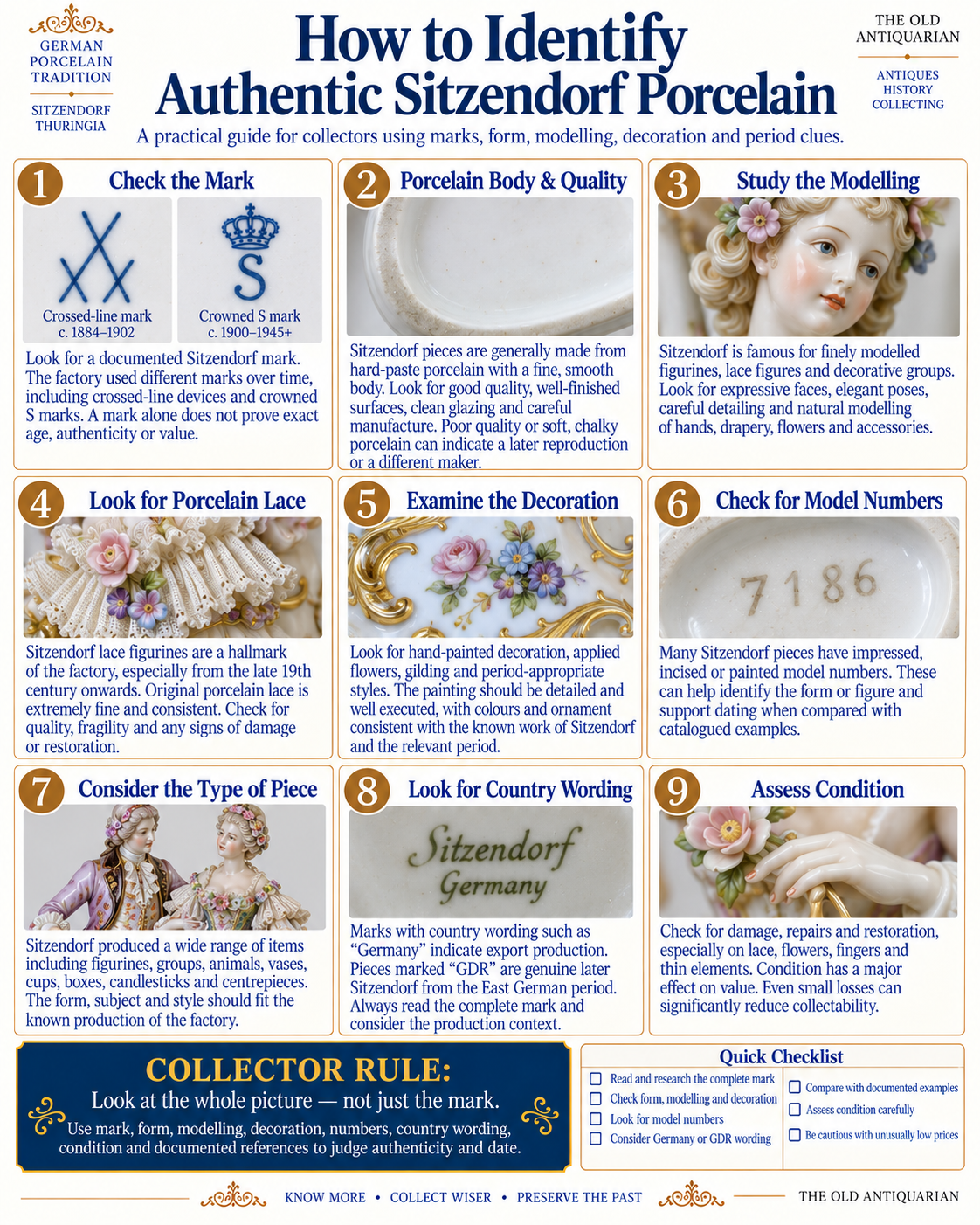
Sitzendorf porcelain comes from a historic porcelain-making centre in Thuringia, Germany. The later factory tradition began with Wilhelm Liebmann, who received permission to establish a porcelain manufactory in Sitzendorf in 1850. Collectors especially associate Sitzendorf with finely modelled figurines, elaborate figure groups, applied flowers and delicate porcelain lace. Earlier crossed-line marks and later crowned-S marks can help identify production periods, but a mark alone does not prove exact age, authenticity or market value. Reliable identification requires the complete mark, porcelain body, form, modelling, decoration, model numbers, country wording, condition and comparison with documented examples.
Sitzendorf Porcelain at a Glance
| Feature | Collector Reference |
|---|---|
| Region | Sitzendorf, Thuringia, Germany. |
| Early historical episode | Georg Heinrich Macheleid established a short-lived porcelain operation in Sitzendorf in 1760; it was transferred to Volkstedt in 1762. No securely documented factory marks are known for this brief Sitzendorf phase. |
| Later factory tradition | Wilhelm Liebmann received the princely concession to establish a porcelain factory in Sitzendorf on 18 November 1850. |
| Known for | Figurines, figure groups, porcelain lace, applied flowers, animals, decorative wares, centrepieces, baskets, boxes and ornamental tableware. |
| Important mark families | Crossed-line devices from the Voigt era, crowned-S marks, impressed marks and later export or East German wording. |
| Strong collector searches | Sitzendorf porcelain marks, Sitzendorf figurines, Sitzendorf lace figurines, Sitzendorf value and Sitzendorf Germany marks. |
| Main identification risk | Confusing a historical style with an early production date, or assuming every crowned-S mark belongs to one narrow period. |
| Value | Depends on exact period, model, scale, subject, modelling, decoration, condition, restoration, completeness, provenance and genuinely comparable completed sales. |
A Sitzendorf mark is the beginning of identification — not proof of exact age, authenticity or value.
The entire object must support the mark.
Sitzendorf belongs within the much wider history of
German porcelain,
but it deserves a specialist guide because its marks, lace figurines, historical factory phases and later East German production create their own identification problems.
In This Guide
- What is Sitzendorf porcelain?
- History of Sitzendorf porcelain
- The Macheleid connection, 1760–1762
- Wilhelm Liebmann and the 1850 factory
- The Voigt period
- Sitzendorf porcelain marks
- The crowned-S mark
- How to date Sitzendorf porcelain
- Sitzendorf figurines
- Sitzendorf lace figurines
- Other Sitzendorf porcelain objects
- Porcelain body and manufacture
- Styles and decoration
- How to identify authentic Sitzendorf
- Sitzendorf vs Dresden porcelain
- Later and GDR production
- Condition and restoration
- Sitzendorf porcelain value
- Collector checklist
- FAQ
- Sources & Further Research
What Is Sitzendorf Porcelain?
Sitzendorf porcelain is porcelain associated with the historic manufacturing centre of Sitzendorf in Thuringia, Germany. For modern collectors, the name is most strongly connected with the manufactory established by Wilhelm Liebmann in the nineteenth century and the businesses that succeeded it.
The factory became particularly well known for decorative and figural production. Courtly figures, couples, dancers, musicians, children, animals, elaborate groups and later porcelain lace all form an important part of the Sitzendorf collecting tradition.
The short 1760–1762 Macheleid episode in Sitzendorf and the nineteenth-century factory founded by Wilhelm Liebmann are not the same continuous business. The later Sitzendorf factory should not automatically be pushed back to 1760 when dating an object.
History of Sitzendorf Porcelain
The history of porcelain in Sitzendorf has two distinct beginnings. The first belongs to Georg Heinrich Macheleid in the eighteenth century. The second — and the one most directly relevant to the majority of objects collectors encounter today — begins with Wilhelm Liebmann in 1850.
| Date / Period | Historical Development | Why It Matters to Collectors |
|---|---|---|
| 1760–1762 | Georg Heinrich Macheleid received permission for porcelain production in Sitzendorf. The operation was transferred to Volkstedt after roughly two years. | No securely documented factory marks are known for this short Sitzendorf phase. Do not use later Sitzendorf marks to date an object to the 1760s. |
| 1850 | Wilhelm Liebmann received the official concession to establish a porcelain manufactory in Sitzendorf. | This is the practical starting point for the later Sitzendorf factory tradition. |
| 1858 | The factory buildings were destroyed by fire and quickly rebuilt with the support of Wilhelm Oertel. | A significant change in the early industrial history of the factory. |
| After c. 1860 | The range expanded to figures, figure groups and increasingly ornate decorative porcelain. | Explains the growing importance of sculpture and luxury decorative wares. |
| c. 1884 onward | Porcelain lace figures and additional figural subjects became important within production. | Marks the emergence of one of the categories most closely associated with Sitzendorf today. |
| Mid-1880s | The business passed into the Voigt era and production continued to expand. | Important for crossed-line marks and later company-name changes. |
| 1896 onward | The business operated under Alfred Voigt AG and later related corporate forms. | Several mark changes occurred across the late nineteenth and early twentieth centuries. |
| From 1918 | The crowned-S family of marks became an important long-lived Sitzendorf identifier. | The crowned S cannot be treated as one narrow-date mark. |
| 1958–1972 | State involvement increased during the East German period. | Marks, labels and production context must be considered within GDR history. |
| 1972–1990 | The factory was fully nationalised as VEB Sitzendorfer Porzellanmanufaktur. | Genuine Sitzendorf pieces from this period are later factory production, not automatically reproductions or fakes. |
| After 1990 | The factory returned to private ownership after German reunification. | Historic styles and marks continued into later production phases. |
Georg Heinrich Macheleid and Sitzendorf, 1760–1762
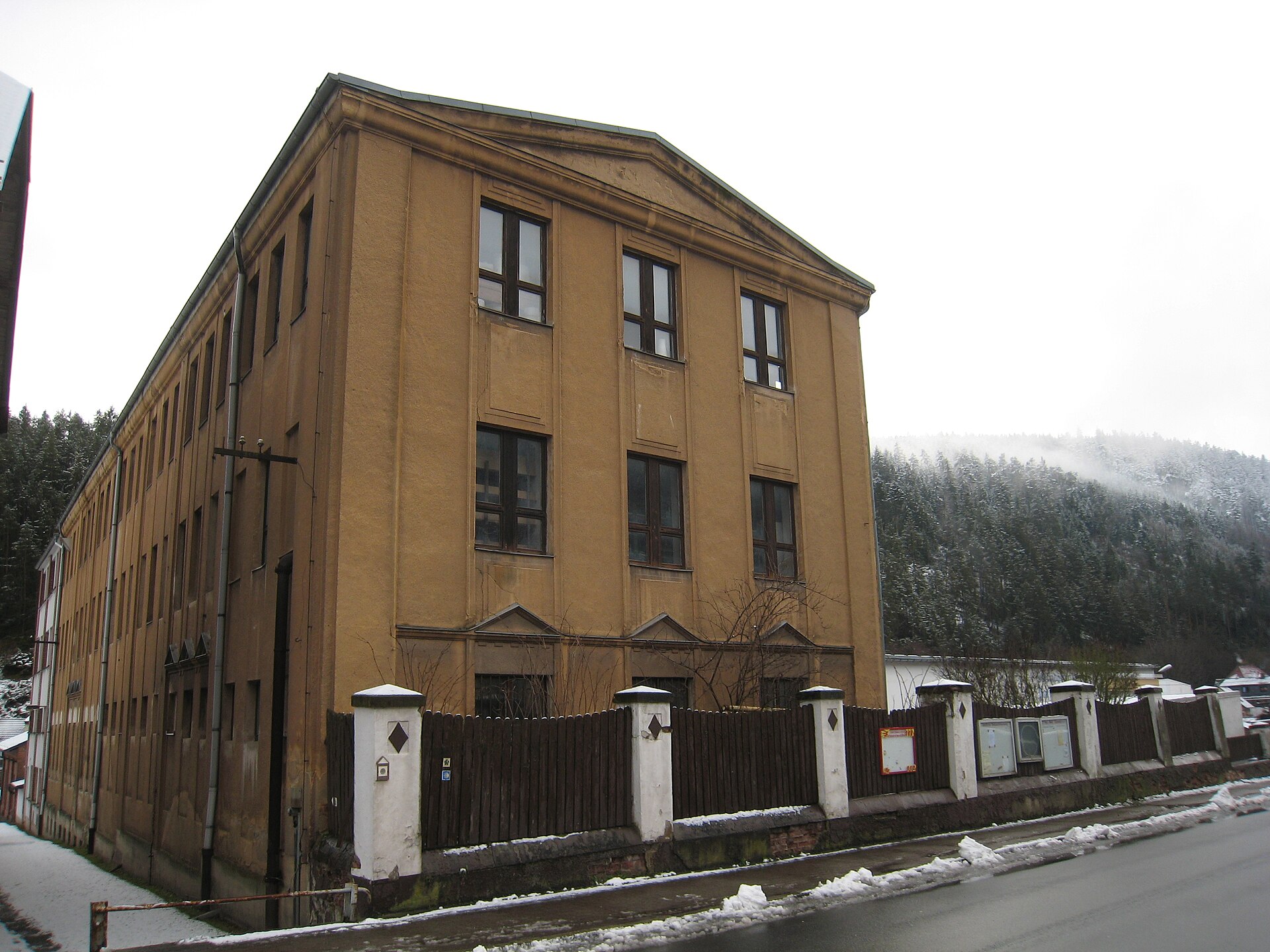
Georg Heinrich Macheleid is central to the history of Thuringian porcelain. In 1760 he received permission to establish porcelain production in Sitzendorf. Only about two years later, however, the operation was moved to Volkstedt.
This short episode matters because it is easy to see the date 1760 associated with Sitzendorf and assume that later Sitzendorf figurines descend continuously from the same factory. That conclusion is not supported by the documented business history.
Wilhelm Liebmann and the 1850 Sitzendorf Factory
The later manufactory tradition begins with Wilhelm Liebmann. After earlier attempts to obtain permission, Liebmann received a princely concession on 18 November 1850 to establish a porcelain factory in Sitzendorf.
Early production included relatively practical and straightforward wares alongside simple figures. After rebuilding from the fire of 1858, the factory expanded. By the 1860s the range included figures, figure groups and increasingly elaborate decorative porcelain.
Museum documentation records mirrors, candlesticks, centrepieces, vases, bowls, baskets and boxes among the wider Sitzendorf repertoire. That broader production history is important because the collector market often focuses so heavily on figurines that other genuine Sitzendorf wares are overlooked.
The Voigt Period and the Rise of Figural Sitzendorf
By the mid-1880s the factory had entered the Voigt phase. This period is particularly important to collectors because production increasingly embraced ornate figural porcelain, lace figures and historical revival styles.
The factory also produced figures in a broadly Meissen-influenced or “Meissen genre” tradition. That phrase describes artistic influence, not manufacture by the Meissen factory. If a piece carries genuine Meissen crossed swords, it requires a different attribution process; use our
Meissen Porcelain Identification Guide
for that investigation.
In 1896 the business became Alfred Voigt AG. Corporate names and marks continued to evolve into the twentieth century, which is one reason Sitzendorf backstamps must be researched variant by variant.
Sitzendorf Porcelain Marks and Backstamps
Marks are one of the strongest search and identification areas for Sitzendorf porcelain. They are also one of the easiest areas in which to make a false attribution.
Collectors may encounter underglaze painted marks, printed marks, impressed marks, crowned-S variants, crossed-line devices, export wording and later labels or inscriptions associated with the East German period.
The correct method is to photograph the entire underside, not only the main logo. Record every crown, letter, line, number, colour, impression and country-of-origin inscription. For the broader methodology, see our
Porcelain Marks Identification Guide.
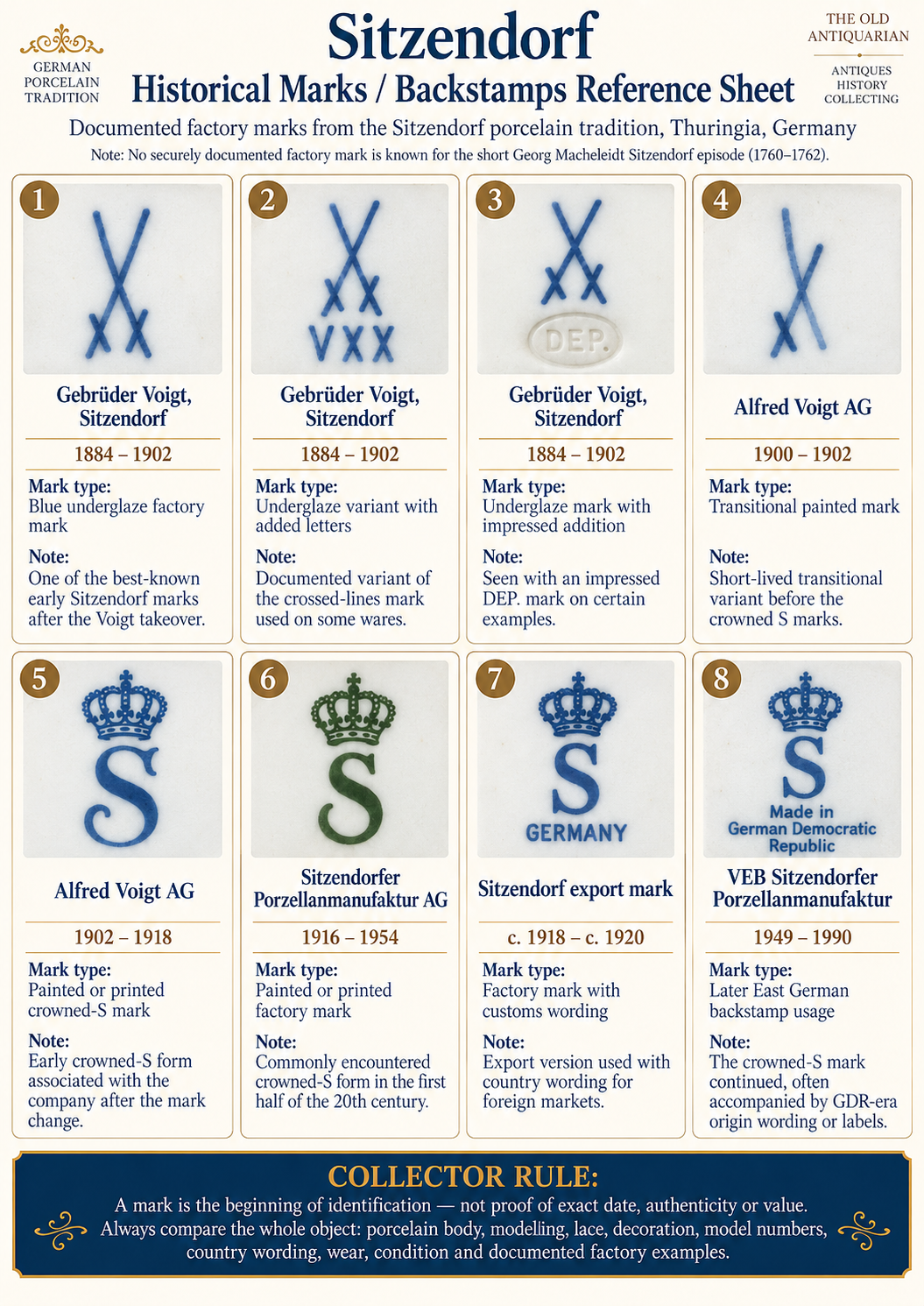
Crossed-Line Sitzendorf Marks
Specialist mark references document blue underglaze crossed-line devices used during the late nineteenth and very early twentieth centuries. Variants may include added letters, impressed additions or small differences in the angle and length of the lines.
A simplified crossed-line mark should not automatically be called Meissen. Meissen’s crossed swords have their own documented evolution, while Sitzendorf’s late nineteenth-century crossed-line devices belong to a separate factory history.
The Crowned-S Sitzendorf Mark
The crowned S is one of the most familiar Sitzendorf marks. Several versions were used, and the family of crowned-S marks continued across long periods of production.
Specialist references document an elaborate crowned-S mark in the early twentieth century, other variants around 1915–1954, and a crowned sans-serif S used from 1918 onward. Country wording or additional labels may narrow the context, but the S and crown alone do not provide one exact date.
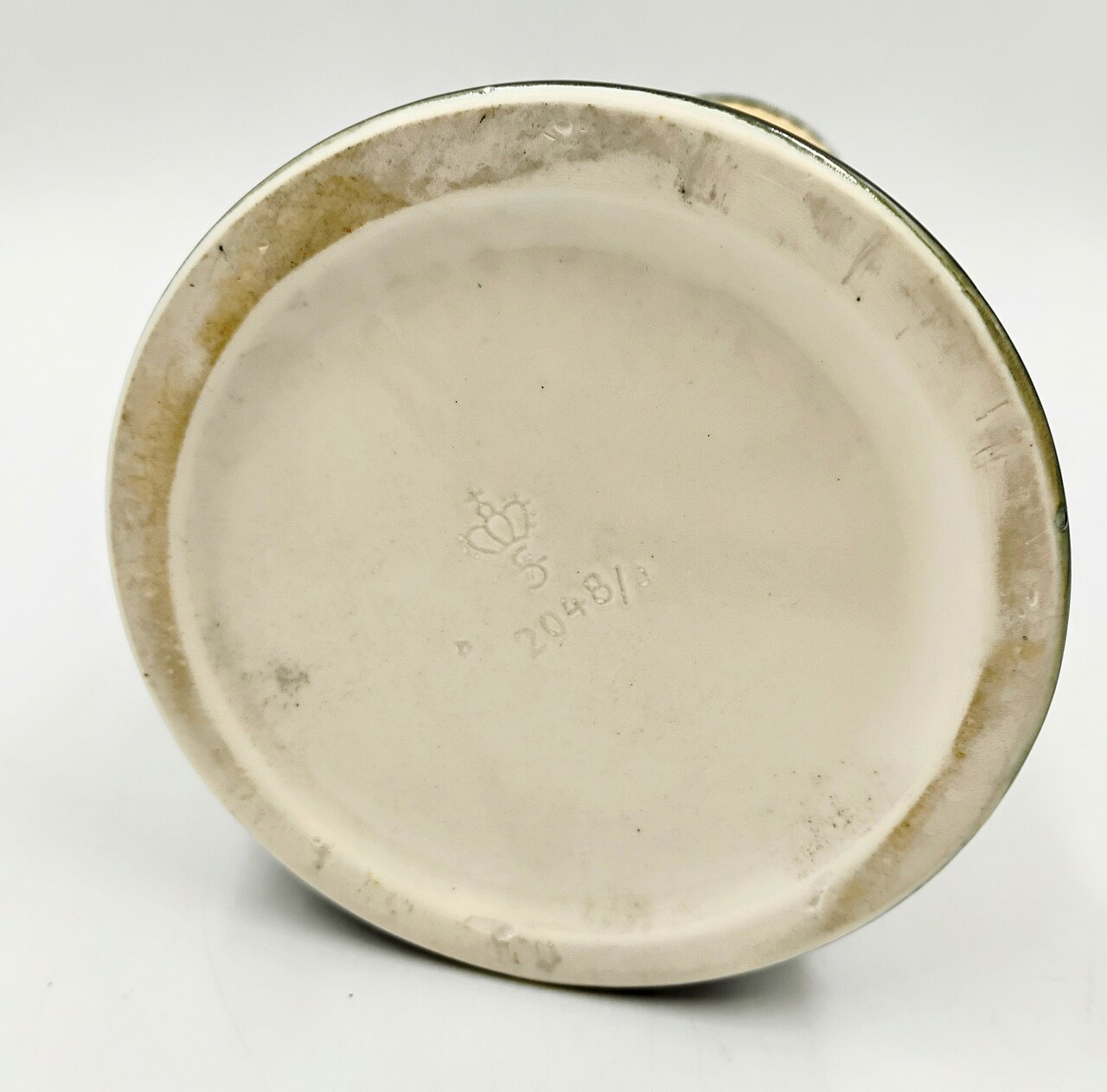
Exact mark variant + factory period + porcelain body + form + model number + decoration + country wording + condition + documented comparison.
What Does “Germany” Mean on Sitzendorf Porcelain?
“Germany” can appear as country-of-origin or export wording on Sitzendorf porcelain. A crowned-S mark with additional Germany wording is documented around the early twentieth century, including an export form associated with approximately 1918–1920.
Country wording is useful chronological evidence, but it should not be treated as an exact dating system in isolation.
What Does GDR or German Democratic Republic Mean?
GDR and German Democratic Republic wording place a piece within the East German historical context. The German Democratic Republic existed from 1949 to 1990, while Sitzendorf itself became fully nationalised as a VEB in 1972.
GDR-era porcelain may be completely genuine Sitzendorf. It is simply later production than nineteenth- or early-twentieth-century examples.
How to Date Sitzendorf Porcelain
Dating Sitzendorf porcelain is usually a process of establishing a supported production range rather than finding one magical exact year.
For the general method behind mark evolution, country wording, model numbers, style and manufacturing evidence, see
How to Date Antique Porcelain.
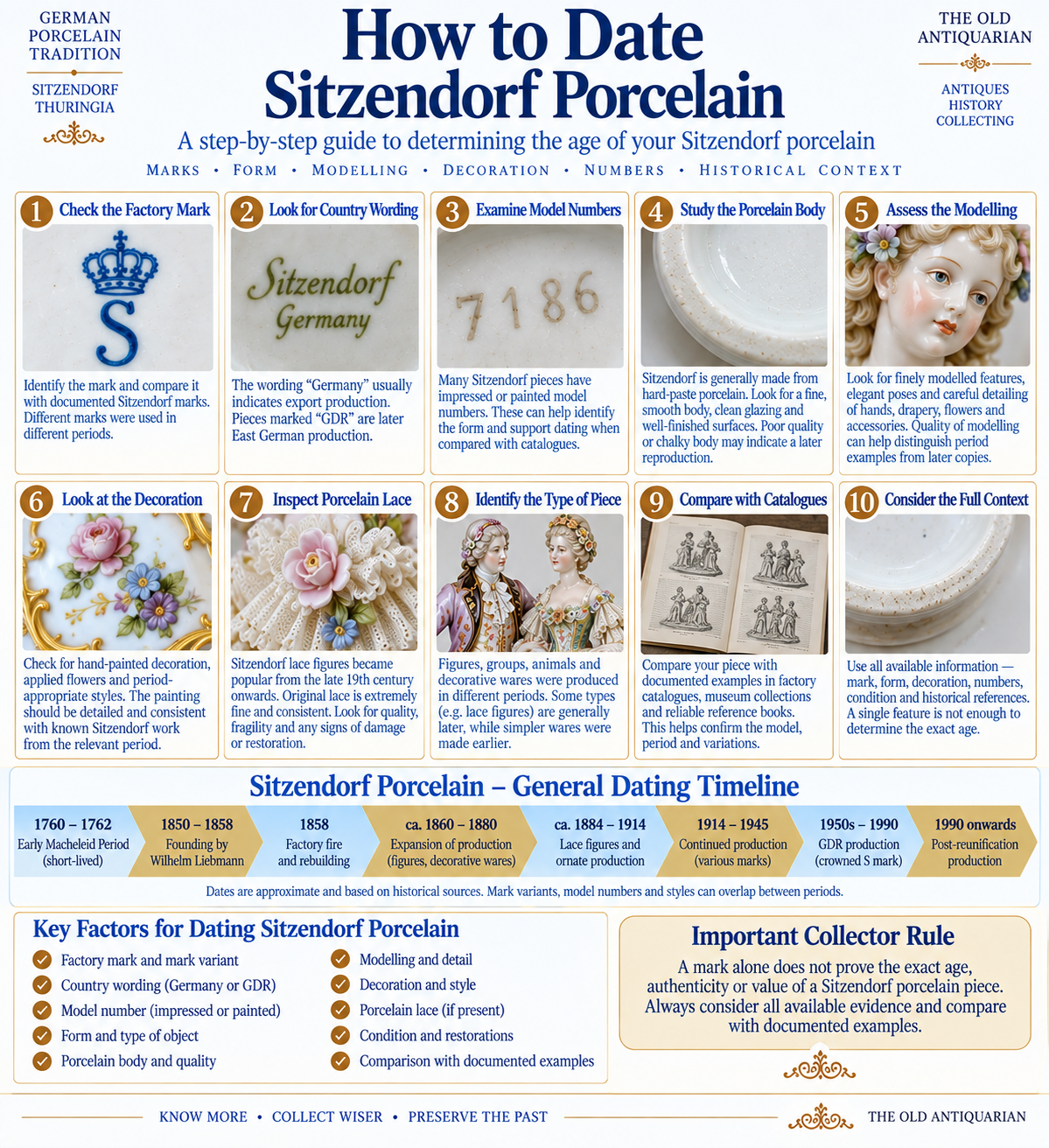
| Dating Clue | What It Can Tell You | What It Cannot Prove Alone |
|---|---|---|
| Exact factory mark | May place the piece within a documented mark period. | Exact year, authenticity or value. |
| Crossed-line device | Can support late nineteenth / early twentieth-century Sitzendorf attribution when the exact version matches documented examples. | That every crossed-line symbol is Sitzendorf. |
| Crowned S | Strong Sitzendorf clue when the exact form is correct. | A narrow date, because crowned-S variants span long periods. |
| Germany wording | Can provide export and chronological context. | One universal production date for every object. |
| GDR / East German wording | Places the object in post-1949 East German context. | The date on which the original model was designed. |
| Model / mould number | May connect a figure or form to catalogued production. | That the number itself is a date. |
| Porcelain lace | Can support later nineteenth- or twentieth-century figural production when consistent with documented examples. | That every lace figure is Sitzendorf. |
| Modelling & decoration | Can support a factory and period attribution. | An exact date based only on artistic style. |
| Wear & condition | Can show long handling, use or restoration history. | Age by itself. |
Sitzendorf Figurines
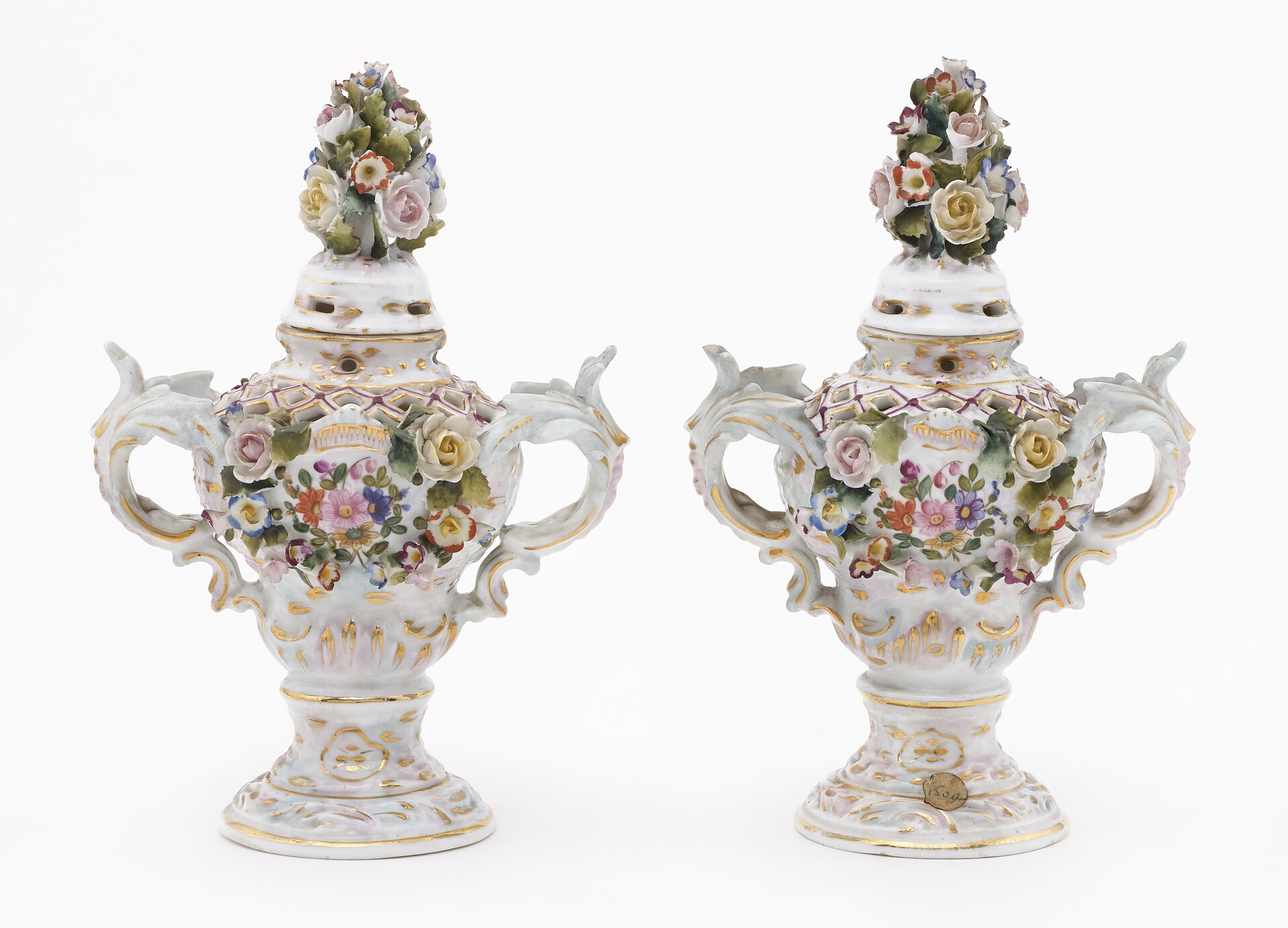
Figurines are the heart of the modern Sitzendorf collector market. The factory produced a wide range of sculptural subjects, including courtly figures, couples, musicians, dancers, pastoral scenes, children, religious groups and animals.
The visual language frequently draws on Rococo, eighteenth-century court costume and historicist revival styles. That can make a twentieth-century Sitzendorf figure look much older than its actual manufacturing date.
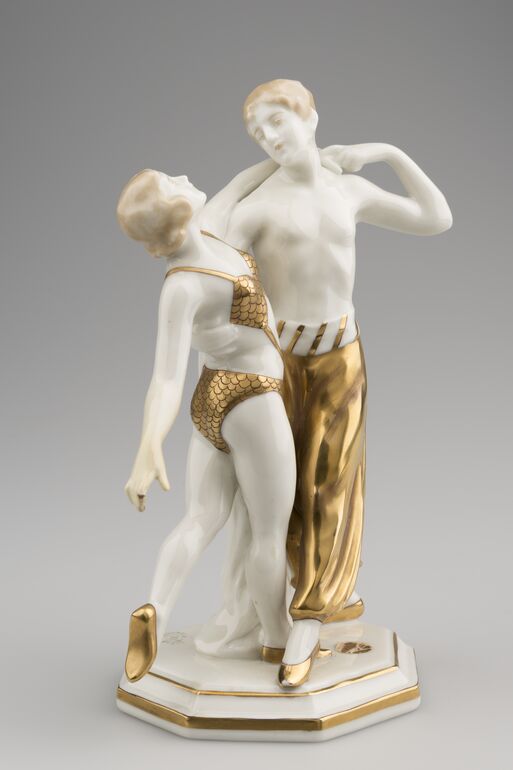
What Should You Examine on a Sitzendorf Figurine?
Study the face, hands, fingers, anatomy, hair, drapery, base, accessories and applied flowers. High-quality modelling should feel deliberate throughout the entire object, including less visible areas.
Also examine whether the decorative style is consistent with the proposed period. Strong modelling alone does not prove age; later factory production may remain exceptionally well made.
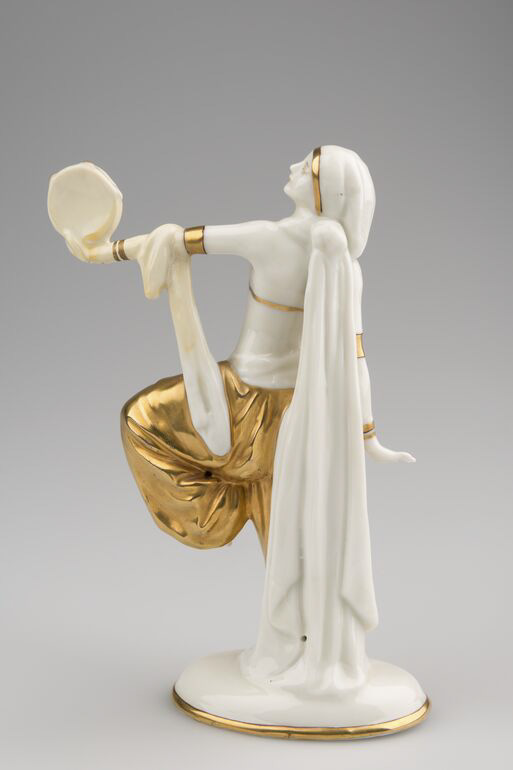
Sitzendorf Lace Figurines
Porcelain lace is one of the features most closely associated with Sitzendorf collecting. Museum and specialist sources place the introduction or increasing importance of lace figures around the 1880s.
The technique creates a convincing textile effect in fired porcelain. The result is visually spectacular but extremely fragile. Even careful handling can damage individual loops, edges and folds.
Inspect every layer of lace under strong side lighting. Tiny losses may be difficult to see from the front but can materially affect collector desirability.
Where Damage Commonly Appears
Pay particular attention to the edges of skirts, sleeves, fans, flowers, leaves, ribbons, feathers, musical instruments and fingertips. Look for different gloss, discoloured adhesive, filler, repainting or areas that appear noticeably smoother than the surrounding original surface.
Restoration is not automatically unacceptable. What matters is understanding exactly what has been repaired, how extensive the intervention is and whether the restoration has been represented accurately.
20 Types of Sitzendorf Porcelain Collectors Encounter
Sitzendorf is much broader than lace figurines. Historic descriptions of the factory include figures and groups as well as mirrors, candlesticks, centrepieces, vases, bowls, baskets and boxes.
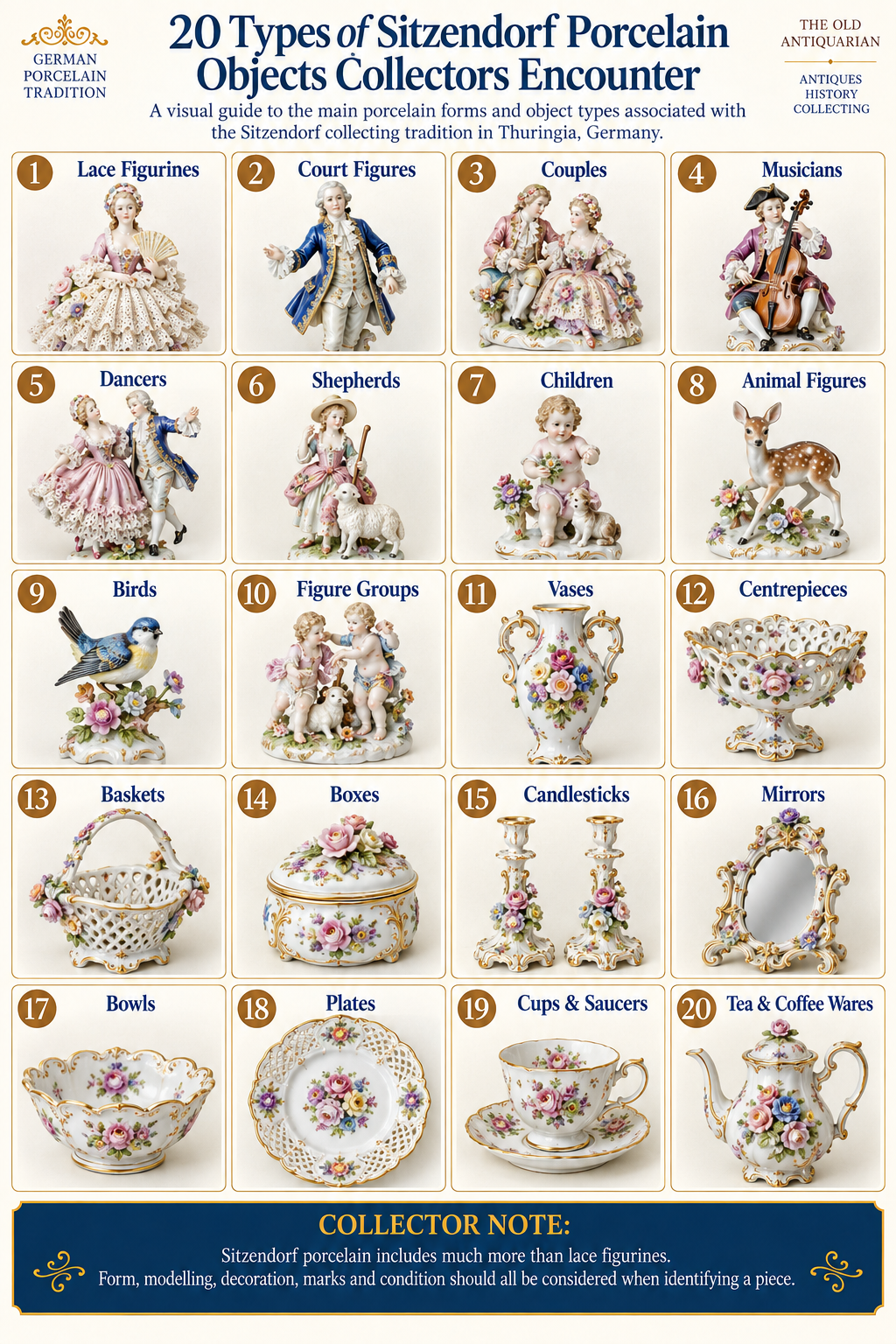
| Object Type | Collector Focus |
|---|---|
| Lace figurines | Completeness of lace, applied flowers, fingers and restoration. |
| Courtly figures & couples | Modelling, costume detail, model number and mark variant. |
| Musicians & dancers | Instruments, fingers, extremities and gilded details are vulnerable. |
| Animals & birds | Check ears, beaks, tails, legs and applied naturalistic elements. |
| Figure groups | Completeness, original arrangement, losses and scale matter. |
| Vases & centrepieces | Applied flowers, handles, rims, pierced work and gilding. |
| Baskets & boxes | Pierced walls, lids, finials and applied flower losses. |
| Candlesticks & mirrors | Structural stability, replacement elements and restoration. |
| Tableware & vessels | Factory mark, wear pattern, sets, lids and completeness. |
Porcelain Body, Glaze and Manufacture
The mark is only one part of the object. Examine the ceramic body itself: colour, density, translucency where relevant, exposed foot areas, firing quality, surface finish and glaze.
If the body appears coarse, unusually porous, poorly finished or fundamentally inconsistent with documented Sitzendorf porcelain, the mark deserves additional scrutiny.
For a broader step-by-step examination of porcelain material, glaze and manufacturing clues, use our
Antique Porcelain Identification Guide.
Sitzendorf Styles and Decoration
Sitzendorf production reflects changing taste rather than one single permanent style. Rococo revival, courtly subjects, applied flowers, porcelain lace, hand-painted floral decoration and gilding are all strongly associated with collector examples.
| Feature | What to Look For | Common Identification Trap |
|---|---|---|
| Rococo Revival | Elegant figures, curved bases, court dress, pastoral scenes and ornamental modelling. | Assuming Rococo style means eighteenth-century production. |
| Porcelain lace | Fine textile-like skirts, sleeves and layered ornament. | Ignoring small losses or old restoration. |
| Applied flowers | Individually modelled roses, leaves and petals. | Missing petals may be easy to overlook. |
| Hand painting | Small brush variations, layered colour and individually treated details. | Assuming hand painting alone proves age. |
| Gilding | Edges, bases, costumes and decorative highlights. | Later regilding can mask wear or repairs. |
| Historic revival forms | Eighteenth-century-looking costumes and subjects produced much later. | Dating the piece from subject matter rather than manufacture. |
How to Identify Authentic Sitzendorf Porcelain
Record front, back, both sides, base and every vulnerable detail.
Do not crop away impressed numbers, painted marks, country wording or labels.
Do not stop at “crowned S.” Compare crown shape, typography, colour, application technique and accompanying wording.
The material, glaze and firing quality should agree with documented Sitzendorf production.
Look at faces, hands, drapery, anatomy, applied flowers and the less visible back of the object.
Numbers may help identify a form but should not automatically be interpreted as dates.
Determine whether painting, gilding, lacework and applied flowers are consistent with the proposed factory period.
Germany, GDR and other origin wording can narrow the historical context but rarely establish an exact date by themselves.
Check lace, petals, hands, fingers, instruments, handles, rims, finials and projecting parts.
Prefer museum records, factory history and reliable mark research to anonymous marketplace descriptions.
mark + factory period + body + form + modelling + decoration + numbers + wording + condition + documented comparison
Sitzendorf vs Dresden Porcelain
Sitzendorf and Dresden porcelain can look surprisingly similar. Both may feature Rococo-revival figures, hand painting, elaborate gilding and applied flowers.
The historical structure is different. Sitzendorf is a specific Thuringian factory tradition. Dresden porcelain is a much broader Saxon manufacturing and decorating tradition involving multiple factories and painting workshops rather than one single maker.
For the specialist Dresden context, see our
Dresden Porcelain Guide.
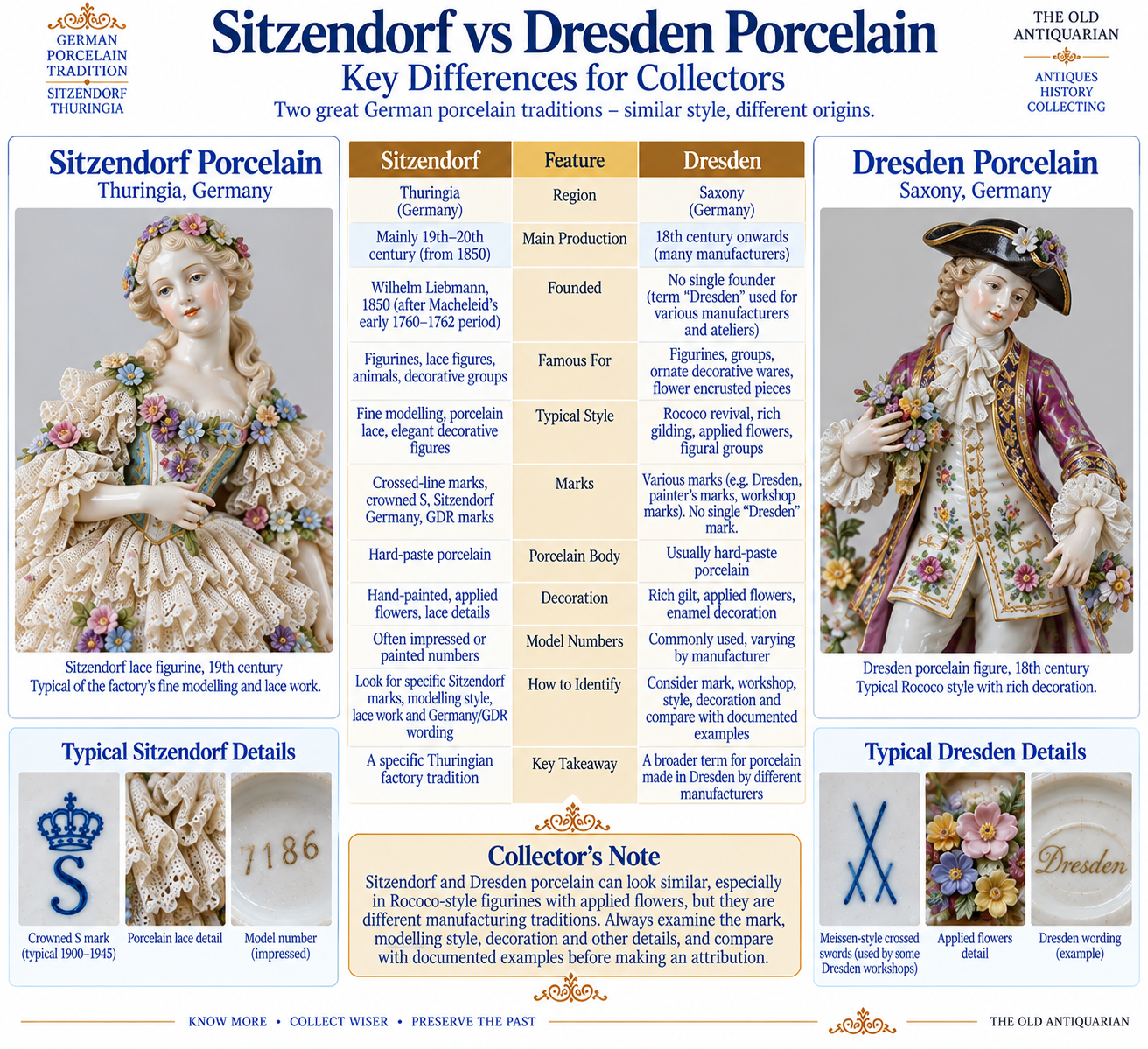
| Feature | Sitzendorf | Dresden |
|---|---|---|
| Region | Thuringia. | Saxony. |
| Meaning | Specific porcelain factory tradition centred on Sitzendorf. | Broad porcelain manufacturing and decorating tradition involving multiple firms. |
| Main collector focus | Crossed-line marks, crowned S, model numbers, lace figures, later GDR context. | Identify the exact maker and/or decorating workshop. |
| Typical overlap | Rococo revival, figures, applied flowers, gilding. | Rococo revival, figures, applied flowers, gilding. |
| Critical difference | A documented Sitzendorf mark can identify one factory tradition. | “Dresden” by itself may not identify who made the porcelain body. |
Antique vs Later and GDR Sitzendorf Production
One of the most important collector distinctions is the difference between antique period production, genuine later factory production and a misattributed or deliberately misleading object.
Later production is not automatically fake. Sitzendorf continued using historic styles and successful types of figurines across changing political and corporate periods.
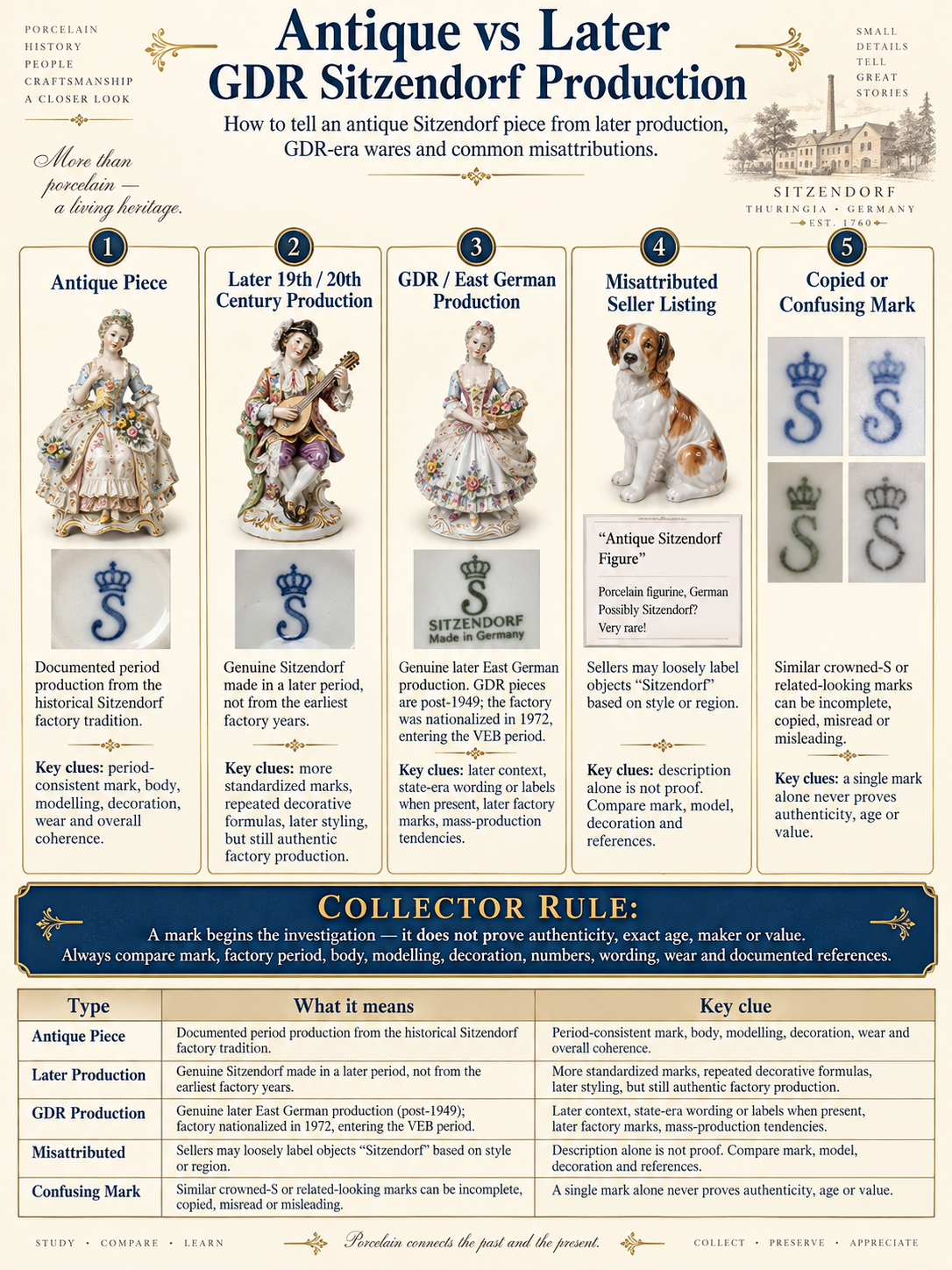
| Category | What It Means | Collector Approach |
|---|---|---|
| Antique period production | The individual object was actually manufactured within the historic period to which it is attributed. | Mark, form, technique, decoration and wear should agree. |
| Later factory production | A genuine Sitzendorf object made in a later period, possibly using an older style or model. | Date the individual example, not merely the design tradition. |
| GDR production | Genuine East German-period production. | Use marks, wording, labels and VEB context. |
| Misattributed object | A seller or previous owner has called something Sitzendorf without sufficient evidence. | Ignore the listing title and rebuild the attribution from the object itself. |
| Copied / confusing mark | A mark resembles Sitzendorf but is incomplete, copied, altered or belongs elsewhere. | Compare geometry, typography, application and the entire object with documented examples. |
Later factory production, revival, reproduction, decorative copy and counterfeit are not interchangeable terms. Describe only what the evidence supports.
Condition and Restoration
Condition is particularly important for Sitzendorf because many of the factory’s most attractive objects are technically fragile.
| Area | Typical Problem | Why It Matters |
|---|---|---|
| Porcelain lace | Missing loops, edges, folds or later fill. | Lace is extremely fragile and difficult to restore invisibly. |
| Applied flowers | Missing petals, leaves or entire flowers. | Small losses can accumulate significantly. |
| Hands & fingers | Breaks, reattachment and rebuilt fingers. | Common vulnerable point on figurines. |
| Musical instruments | Broken bows, strings, handles or projecting details. | Often essential to the completeness of the figure. |
| Animals | Ears, tails, horns, beaks and legs. | Projecting parts are common restoration points. |
| Gilding | Wear, regilding or retouching. | May help distinguish original surface from later intervention. |
| Base | Grinding, filling, altered marks or adhesive. | The base carries crucial identification evidence. |
Do not aggressively clean a Sitzendorf figure before examining it. Dirt, old labels, marks and even previous repairs can contain useful evidence about the object’s history.
Sitzendorf Porcelain Value
There is no reliable universal price range for “Sitzendorf porcelain.” A small later figure, a large elaborate group, an intact lace figure and a rare documented model belong to different collector markets.
Use completed comparable sales — not optimistic online listing prices.
exact factory period + model / form + subject + size + decoration + modelling quality + rarity + condition + restoration + completeness + provenance + genuinely comparable completed sales
| Value Factor | Why It Matters |
|---|---|
| Production period | Different factory phases may attract different levels of specialist interest. |
| Model / subject | Collector demand can vary dramatically between forms. |
| Scale | Large technically complex groups belong to a different market from small figures. |
| Porcelain lace | Completeness and survival of fragile lace can materially affect desirability. |
| Decoration | Quality of painting, gilding and applied ornament should be considered. |
| Condition | Chips, cracks and missing elements affect demand. |
| Restoration | Extent, location and quality of restoration matter. |
| Completeness | Pairs, groups, lids and original components may be important. |
| Provenance | Reliable documentation can strengthen attribution and historical interest. |
| Completed sales | Actual realised prices provide better market evidence than asking prices. |
For the broader appraisal process, see our
Complete Antique Porcelain Guide
and the
Professional Antique Valuation
service.
If you are considering selling a Sitzendorf figurine, porcelain group, vase or another antique object, visit our
We Buy Antiques
page to learn what we purchase and how to send an item for consideration.
Sitzendorf Collector Checklist
- Photograph the complete object from every side.
- Photograph the entire underside, not only the main logo.
- Record the exact mark variant.
- Record all impressed, painted and printed numbers.
- Check whether the mark is underglaze, overglaze, impressed or printed.
- Examine the porcelain body and glaze.
- Study faces, hands, drapery and modelling quality.
- Inspect every porcelain-lace edge carefully.
- Check applied flowers for missing petals and restoration.
- Read Germany, GDR or other country wording in context.
- Do not date a piece from artistic style alone.
- Distinguish genuine later production from antique period production.
- Do not assume Dresden-style decoration means Dresden origin.
- Compare the exact object with museum, factory or reliable catalogue examples.
- Use completed comparable sales before estimating market value.
Do You Have Sitzendorf Porcelain?
Send clear photographs of the complete object, the full underside, every mark and number, dimensions, decoration and any visible damage or restoration. These details are the best starting point for reliable identification, valuation or a potential purchase enquiry.
If you are considering selling Sitzendorf porcelain, German porcelain figurines or another antique object, you can contact us directly through our antiques buying service.
Sitzendorf Porcelain FAQ
Is Sitzendorf porcelain valuable?
Some Sitzendorf porcelain is strongly collectible, especially well-modelled figures, complete lace pieces, large groups and unusual forms. Value depends on the exact production period, model, size, decoration, condition, restoration and comparable completed sales.
How can I identify Sitzendorf porcelain?
Begin with the complete factory mark and then compare the porcelain body, form, modelling, decoration, model numbers, country wording, condition and documented historical examples.
What does the Sitzendorf porcelain mark look like?
There is no single mark for every period. Collectors encounter crossed-line marks from the late nineteenth and early twentieth centuries, several crowned-S variants, impressed marks and later country or GDR-related wording.
What does a crown over S mean on porcelain?
A crowned S can be an important Sitzendorf clue, but multiple variants were used over long periods. The crown shape, letter form, colour, application method, country wording and the object itself must all be checked.
Are all Sitzendorf figurines antique?
No. Sitzendorf continued producing figurines during the twentieth century and through the East German period. Genuine later production can be authentic Sitzendorf without being an antique nineteenth-century object.
When did Sitzendorf make lace figurines?
Museum and specialist histories place the introduction or growing importance of Sitzendorf porcelain lace figures around the 1880s. Later production continued the tradition.
Is Sitzendorf the same as Dresden porcelain?
No. Sitzendorf is a specific Thuringian factory tradition, while Dresden porcelain is a broader Saxon manufacturing and decorating tradition involving multiple firms and workshops.
Does GDR wording mean a Sitzendorf piece is fake?
No. GDR or German Democratic Republic wording indicates later East German historical context. Genuine Sitzendorf porcelain was produced during that period.
How do I date a Sitzendorf figurine?
Use the exact mark variant, model number, country wording, porcelain body, modelling, decoration, lacework, condition and documented factory history together. Avoid assigning an exact year unless the evidence supports it.
Does restoration reduce Sitzendorf porcelain value?
It can. The effect depends on the rarity of the object and the location, extent and quality of the restoration. Repairs to lace, hands, flowers and prominent sculptural details can be especially important.
Can I sell Sitzendorf porcelain to The Old Antiquarian?
The Old Antiquarian considers Sitzendorf porcelain and other antique and collectible objects for purchase. If you are thinking of selling, send clear photographs of the complete item, the underside, all marks and numbers, dimensions and information about any damage or restoration through our
We Buy Antiques
page.
Related German & Porcelain Guides
Sources & Further Research
The historical chronology in this guide has been checked against museum documentation and specialist factory-mark research. Exact mark dating should always be treated as evidence to test against the complete object rather than as an automatic answer.
-
Museum Europäischer Keramikkunst – Sitzendorfer Porzellan-Manufaktur
– museum documentation covering Wilhelm Liebmann, the 1850 concession, the 1858 fire, expansion after 1860, lace figures from around 1884 and later factory history. -
Porcelain Marks & More – Sitzendorf
– specialist factory history and documented mark variants, including the 1760–1762 Macheleid episode, Voigt phases, crowned-S marks and later production. -
The Old Stuff – Sitzendorf Marks
– secondary reference for crossed-line, crowned-S, Germany and impressed mark variants.
Different references may give slightly different transition dates for company ownership or the introduction of certain mark variants. Where evidence does not justify one exact year, use an approximate range and state the uncertainty rather than creating false precision.
About The Old Antiquarian
The Old Antiquarian combines more than 35 years of practical experience with antiques and collecting with historical, museum and comparative research.
For porcelain, we treat the factory mark as one part of a larger evidence chain. Material, form, model, decoration, manufacturing technique, condition, restoration, provenance and documented comparisons all matter when identifying an object or discussing its market value.
For broader context, continue with our
Complete Antique Porcelain Guide.
If you have an antique you are considering selling, you can also visit
We Buy Antiques.
Conclusion: Identify the Period, Not Just the Mark
Sitzendorf porcelain is particularly rewarding to study because the factory’s history crosses several distinct periods while its decorative language often looks deliberately historic.
A crowned S, porcelain lace or Rococo-style figure may provide a useful clue, but none of these features should be used alone. The strongest attribution is the one in which the mark, factory history, porcelain body, model, decoration, numbers, wording, wear and condition all point toward the same conclusion.
Only after the object has been identified and approximately dated should its value be researched through genuinely comparable completed sales. If the owner is considering selling the piece, the next step may instead be a direct
antique purchase enquiry.
Identify the exact mark → establish the factory period → examine the whole object → check restoration → compare documented examples → then research value.
