
Volkstedt Porcelain Marks & Value
Volkstedt Porcelain: Rudolstadt Marks, Figurines, Dating & Value Guide
Last Updated: September 2026 | By The Old Antiquarian
Volkstedt porcelain is part of a historic Thuringian porcelain tradition centred on Volkstedt, now associated with Rudolstadt in Germany. Porcelain production developed there in the eighteenth century, but “Volkstedt” and “Rudolstadt” should not automatically be treated as the name of one factory. Over time, several manufacturers and workshops operated in the area. Correct identification therefore requires the exact mark, manufacturer, porcelain body, form, decoration, model or mould numbers, country wording, condition and documented historical comparison to be considered together.
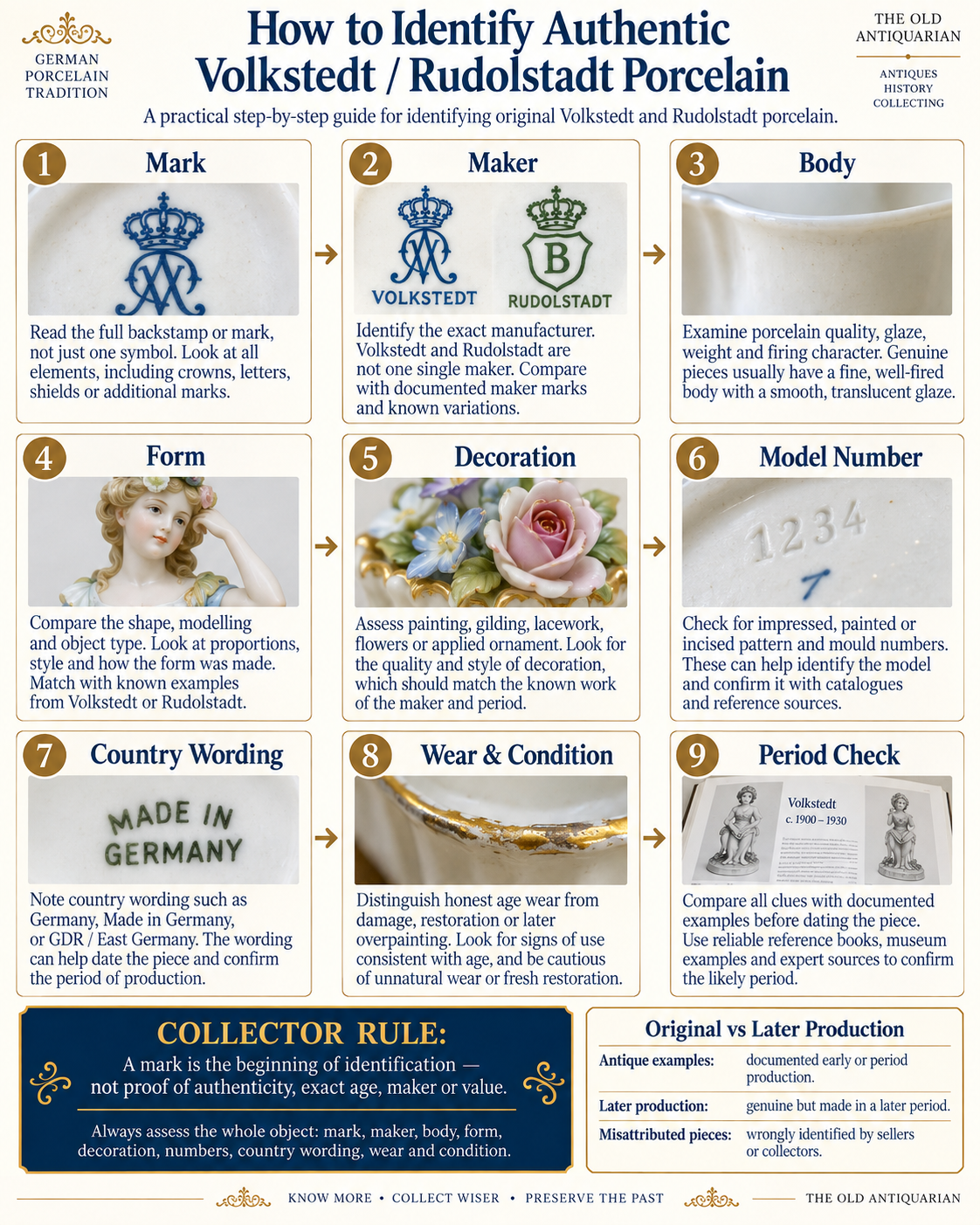
Volkstedt & Rudolstadt Porcelain at a Glance
| Feature | Collector Reference |
|---|---|
| Region | Volkstedt / Rudolstadt, Thuringia, Germany |
| Historic roots | Porcelain experiments associated with Georg Heinrich Macheleid began around 1760; production was established at Volkstedt in 1762. |
| Main material | Hard-paste porcelain dominates the historic tradition, although individual manufacturers also produced biscuit and other specialist porcelain wares. |
| Important names | Aelteste Volkstedter, Triebner–Ens related enterprises, Beyer & Bock, Ernst Bohne Söhne, Karl Ens and other regional manufacturers. |
| Common objects | Figurines, figure groups, animals, decorative porcelain, tea and coffee wares, vases and ornamental forms. |
| Marks | Painted, printed, impressed and underglaze marks vary by manufacturer and period. Symbols alone must not be read without the rest of the object. |
| Dating clues | Exact mark variant, wording, model or mould number, body, modelling, decoration, production technique and documented factory history. |
| Main identification risk | Treating “Volkstedt”, “Rudolstadt”, a crown, a crowned N or a familiar-looking symbol as proof of one specific maker. |
| Value | Depends on maker, period, model, size, artistic quality, rarity, condition, restoration, completeness, provenance and genuinely comparable completed sales. |
“Volkstedt” or “Rudolstadt” is often a geographic or regional clue — not, by itself, a complete maker attribution.
A mark is the beginning of the investigation, not proof of authenticity, exact date, manufacturer or value.
Volkstedt belongs within the wider history of German porcelain, but its collecting story differs from manufacturers such as Meissen or KPM Berlin. Here, geographic names, changing company structures and overlapping decorative traditions make manufacturer-level identification especially important.
Table of Contents
- What Is Volkstedt Porcelain?
- History of Volkstedt Porcelain
- Georg Heinrich Macheleid
- Important Volkstedt & Rudolstadt Makers
- Volkstedt & Rudolstadt Porcelain Marks
- How to Date Volkstedt Porcelain
- Materials & Manufacturing
- Volkstedt Figurines & Object Types
- Decoration & Styles
- How to Identify Volkstedt Porcelain
- Volkstedt vs Other German Porcelain
- GDR & Later Production
- Copies, Later Production & Misattribution
- Condition & Restoration
- Volkstedt Porcelain Value
- Collector Checklist
- FAQ
- Sources & Further Research
What Is Volkstedt Porcelain?
Volkstedt porcelain refers broadly to porcelain associated with Volkstedt, historically one of the important porcelain-producing centres of Thuringia. Today Volkstedt is part of Rudolstadt, and the two names frequently appear together in collector descriptions, auction catalogues and mark references.
The central mistake to avoid is assuming that every object described as “Volkstedt porcelain” came from one single company. The original manufactory became the foundation of a long regional industry, while other businesses later established their own factories, decorating workshops, trademarks and model ranges in Volkstedt and the surrounding Rudolstadt area.
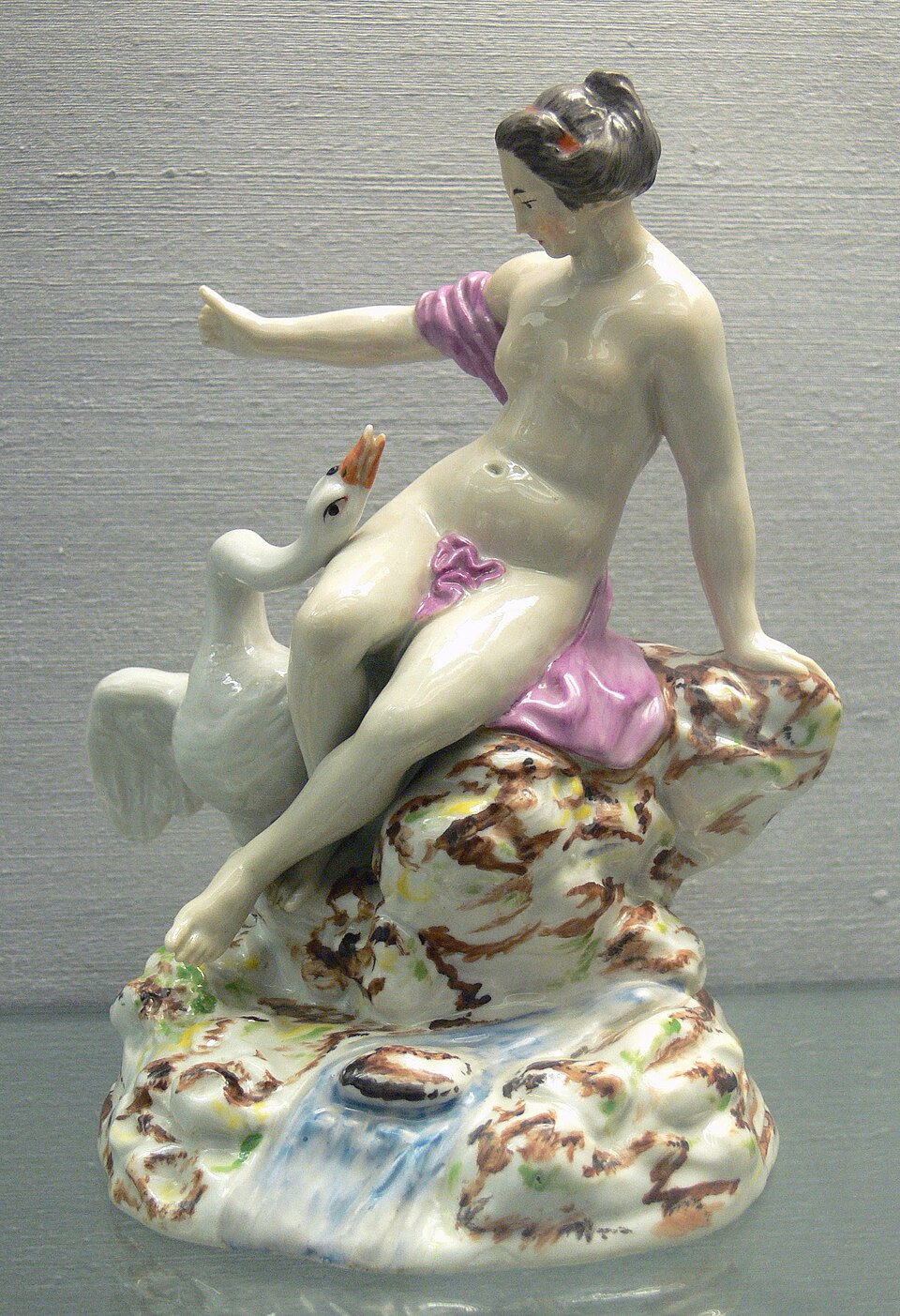
History of Volkstedt Porcelain
The origins of Volkstedt porcelain are connected with Georg Heinrich Macheleid, a Thuringian scholar and experimenter who succeeded in producing a hard-paste porcelain body around 1760. The official history of the surviving manufactory tradition records the establishment of Aelteste Volkstedt in Rudolstadt/Volkstedt in 1762.
This chronology can appear slightly differently in museum databases. For example, The Metropolitan Museum of Art catalogues the Volkstedt Porcelain Manufactory as founded in 1760, while the official manufactory history uses 1762 for its foundation. For collectors, the useful distinction is that 1760 belongs to the experimental and privilege-seeking stage, while 1762 marks the establishment of production at Volkstedt.
| Period | Historical Development | Collector Importance |
|---|---|---|
| c. 1760 | Macheleid develops a workable hard-paste porcelain composition and seeks official support. | Beginning of the Volkstedt porcelain story; not every later “1762” mark indicates an eighteenth-century object. |
| 1762 | Production is established at Volkstedt under princely privilege. | Foundation date strongly associated with Aelteste Volkstedter. |
| Late 18th century | Table wares and figurative porcelain demonstrate a mature hard-paste tradition. | Museum-documented early objects are essential comparison material. |
| 19th century | Ownership changes and the local porcelain industry expands; other businesses emerge around Volkstedt and Rudolstadt. | The regional name no longer identifies one company by itself. |
| Late 19th–early 20th century | Multiple manufacturers develop decorative wares, figures, animals, lace porcelain and export-oriented production. | Many marks encountered by modern collectors belong to this period. |
| 20th century | Companies reorganise, merge, change ownership and later experience East German nationalisation. | Factory name and mark may continue while legal ownership and production context change. |
| Post-1949 / GDR era | Volkstedt porcelain production continues within the East German industrial system. | “GDR” or related wording is strong evidence of later production, not eighteenth-century manufacture. |
| After German reunification | Historic Thuringian porcelain businesses underwent privatisation and further restructuring. | Historic models and traditions may continue in genuinely later production. |
Georg Heinrich Macheleid and the Beginning of Volkstedt Porcelain
Georg Heinrich Macheleid is fundamental to the history of Thuringian porcelain. His experiments around 1760 led to a successful hard-paste porcelain composition, and princely support enabled a manufactory to be established at Volkstedt in 1762.
This places Volkstedt within the second generation of major German hard-paste porcelain centres that followed the breakthrough associated with Meissen porcelain. The two traditions should not, however, be identified by visual similarity alone. Meissen developed its own documented crossed-swords marking tradition, models and court history; Volkstedt developed a different regional network of manufacturers and marks.
Important Volkstedt & Rudolstadt Porcelain Makers
The maker is often more important than the regional name. One of the strongest ways to avoid a false attribution is to identify which business actually used the mark found on the object.
| Maker / Tradition | Approximate Context | Collector Focus | Important Caution |
|---|---|---|---|
| Aelteste Volkstedter | Historic manufactory tradition originating in the eighteenth century. | Early hard-paste porcelain, figures, decorative wares and later sculptural production. | A later object carrying “1762” is not automatically made in 1762. |
| Triebner, Ens & related enterprises | Important nineteenth-century phase in the evolving Volkstedt factory history. | Figurative and decorative porcelain; transitional factory marks. | Company names and partnerships changed. Exact wording matters. |
| Beyer & Bock | Porcelain business developed from a decorating enterprise; factory production became important around the end of the nineteenth century. | Decorative porcelain, table wares and “Royal Rudolstadt” marked wares. | “Royal Rudolstadt” is a trade designation associated with Beyer & Bock, not a generic proof of royal manufacture. |
| Ernst Bohne Söhne | Rudolstadt manufacturer developing from a mid-nineteenth-century porcelain decorating business. | Figurines, decorative porcelain, biscuit wares and ornate historicist production. | Crowned-N marks were used on some German wares and must not automatically be attributed to original Naples/Capodimonte production. |
| Karl Ens | Separate Volkstedt factory established around the turn of the twentieth century. | Especially recognised by collectors for birds, animals and decorative figures. | Windmill-type marks occur in different colours and periods; colour alone should not determine an exact date. |
| Schwarzburger Werkstätten | A related Thuringian art-porcelain enterprise with organisational connections to Aelteste Volkstedter. | Modern artistic porcelain and important sculptural models of the early twentieth century. | It should not simply be relabelled “Volkstedt” without identifying the actual workshop and mark. |
Museum and archive material provides unusually useful evidence for the artistic network around Volkstedt. Sculptor and modeller Arthur Storch, for example, trained at Triebner, Ens & Eckert in the 1880s and later worked for Aelteste Volkstedter, Beyer & Bock, Karl Ens and the Schwarzburger Werkstätten. His career demonstrates how closely connected — yet still distinct — these businesses could be.
Volkstedt & Rudolstadt Porcelain Marks and Backstamps
Marks are one of the strongest search clues in this field, but they are also the source of many incorrect attributions. Volkstedt and Rudolstadt marks may be painted, printed, impressed or applied under the glaze, and their meaning depends on the manufacturer and period.
Collectors should photograph the entire underside. Do not crop the mark to a crown, monogram or central symbol. Secondary numbers, impressed characters, country wording and decorator marks may be equally important.
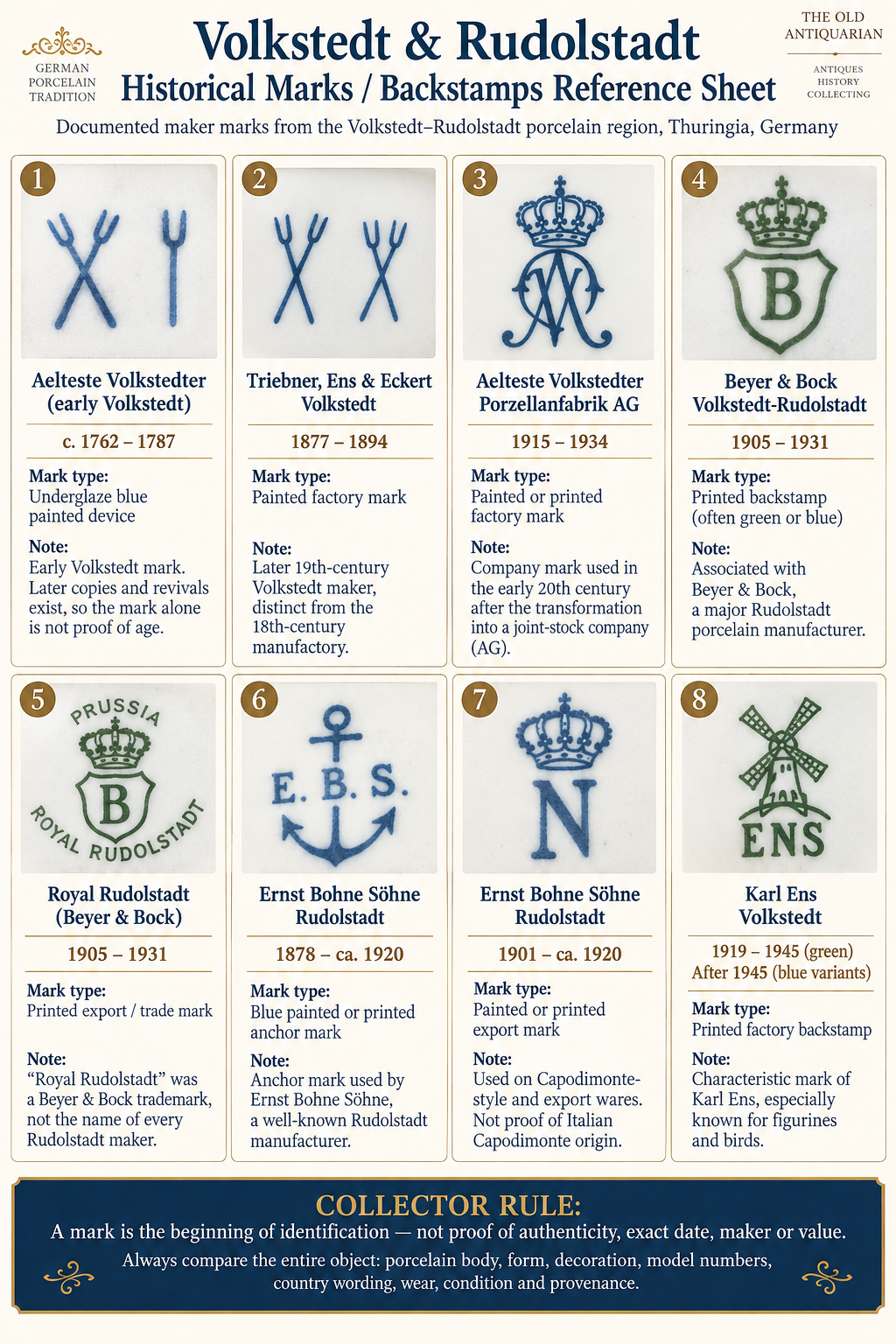
Early Volkstedt marks
Published specialist mark references record early Volkstedt devices that include fork- or hayfork-like forms, followed by changing nineteenth- and twentieth-century factory marks. These symbols must be compared with the exact object and with documented examples because related companies and later production can reuse historic visual language.
Triebner, Ens & Eckert marks
Specialist references commonly associate crossed fork-like devices with the Triebner, Ens & Eckert phase in the late nineteenth century. Because company partnerships and successor businesses changed, the precise form of the mark and any accompanying wording should be recorded rather than relying only on the symbol.
Beyer & Bock and “Royal Rudolstadt”
Beyer & Bock used several backstamps and trade marks, including crowned devices and “Royal Rudolstadt” wording. Published mark references place several familiar variants in the early twentieth century. The wording is useful evidence, but it should still be checked against body, form, decoration and secondary marks.
Ernst Bohne Söhne marks
Ernst Bohne Söhne is associated in specialist references with anchor-type marks, sometimes accompanied by initials, and with crowned-N marks on certain export and Capodimonte-style wares. This is an important warning for collectors: a crowned N is not automatically proof of original Capodimonte or Naples porcelain.
Karl Ens marks
Karl Ens is especially associated with a windmill-like factory mark on twentieth-century porcelain. Green, blue, black and other variations are discussed in specialist catalogues, but colour should not be used as the sole dating method. Registration, factory practice, later production and overlapping use can complicate narrow date ranges.
Crowns, crossed devices, monograms, crowned letters and the number “1762” are not independent certificates of authenticity. Famous porcelain symbols were reused, imitated, modified and sometimes misunderstood. Compare the mark with the whole object.
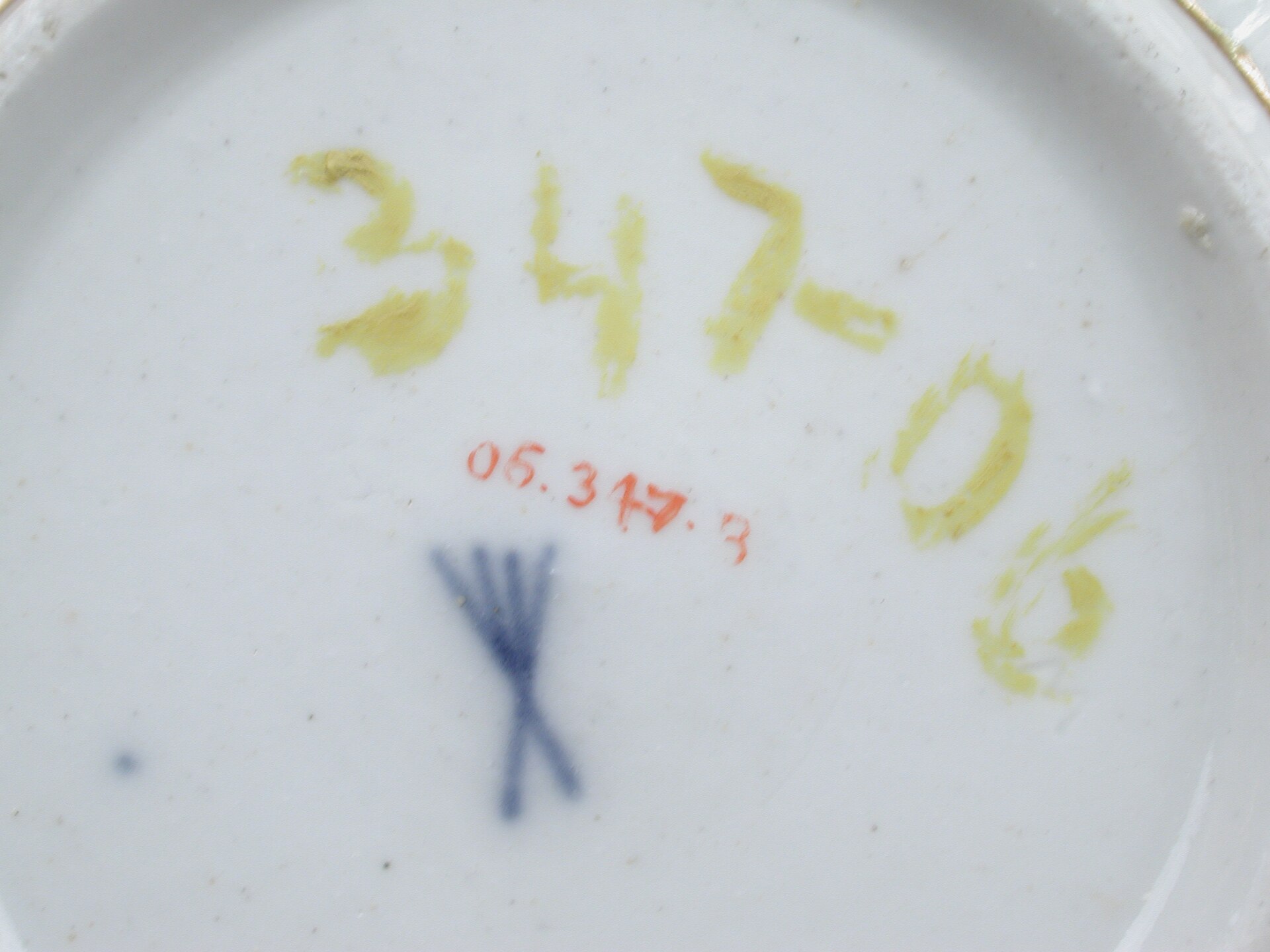
For a wider method of reading factory symbols, printed backstamps and secondary numbers, continue with our Porcelain Marks & Backstamps Identification Guide.
How to Date Volkstedt & Rudolstadt Porcelain
Dating should produce a historically defensible period or range, not a false exact year. The strongest attribution combines independent clues that agree with one another.
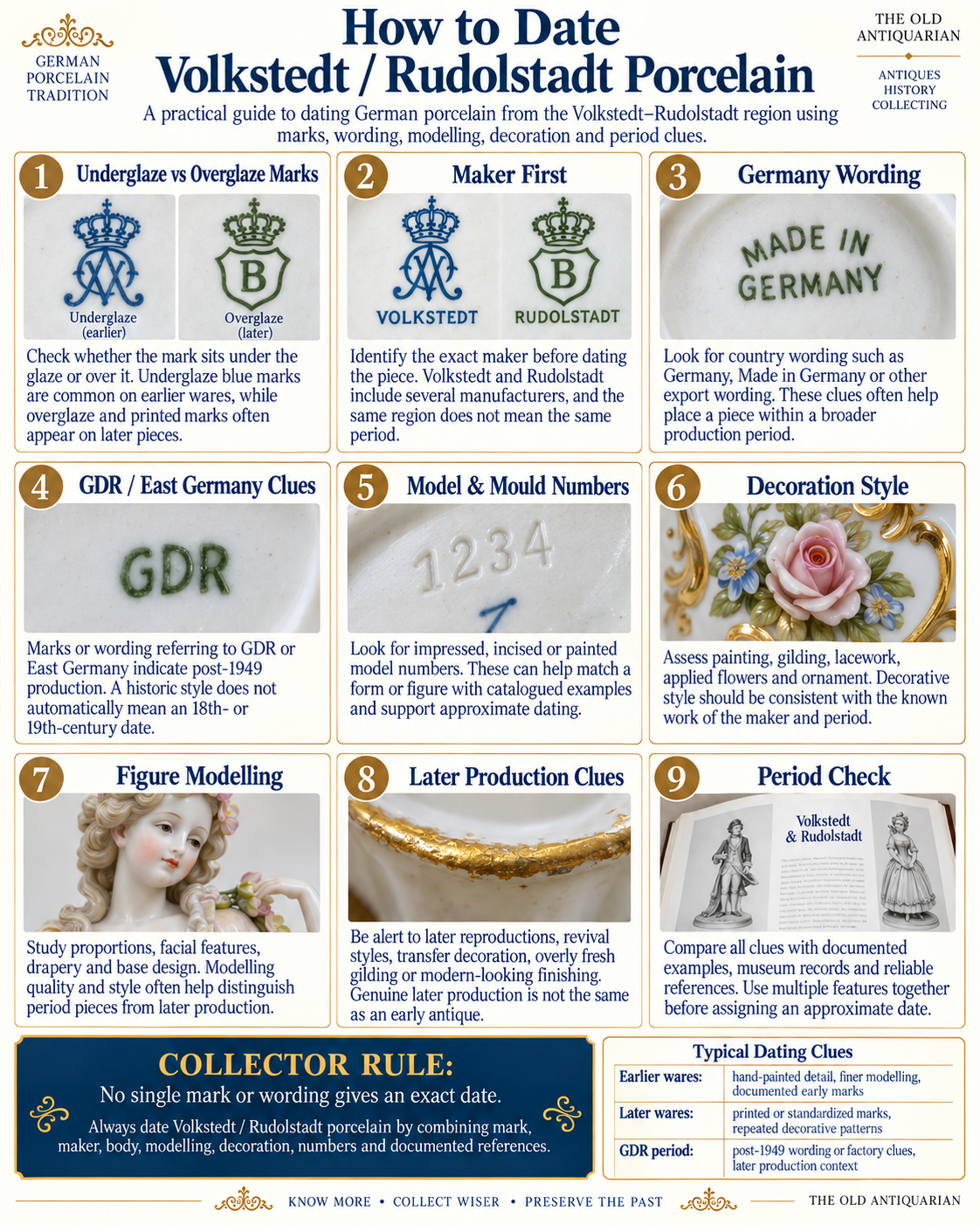
| Dating Clue | What It May Tell You | What It Cannot Prove Alone |
|---|---|---|
| Exact factory mark | Possible manufacturer and broad period. | Authenticity or exact year. |
| Underglaze / overglaze application | Production method and possible relationship to documented mark variants. | A universal early-versus-late rule. |
| Germany wording | Export or geographic context. | A single exact manufacturing year. |
| Made in Germany | Useful chronological context when matched with a known factory mark. | One fixed date valid for all manufacturers. |
| GDR / East Germany | Post-1949 East German production context. | That the model itself originated after 1949; older designs could remain in production. |
| Model / mould number | Can connect an object to a documented catalogue, shape or sculptural model. | Its function unless factory documentation confirms the numbering system. |
| Decoration | Period style, technique and workshop consistency. | Age from fashion alone, because older styles were revived. |
| Wear | May support a history of use. | Exact age; wear can be uneven, restored or artificially created. |
For a broader explanation of this evidence-based method, see How to Date Antique Porcelain.
Materials and Manufacturing
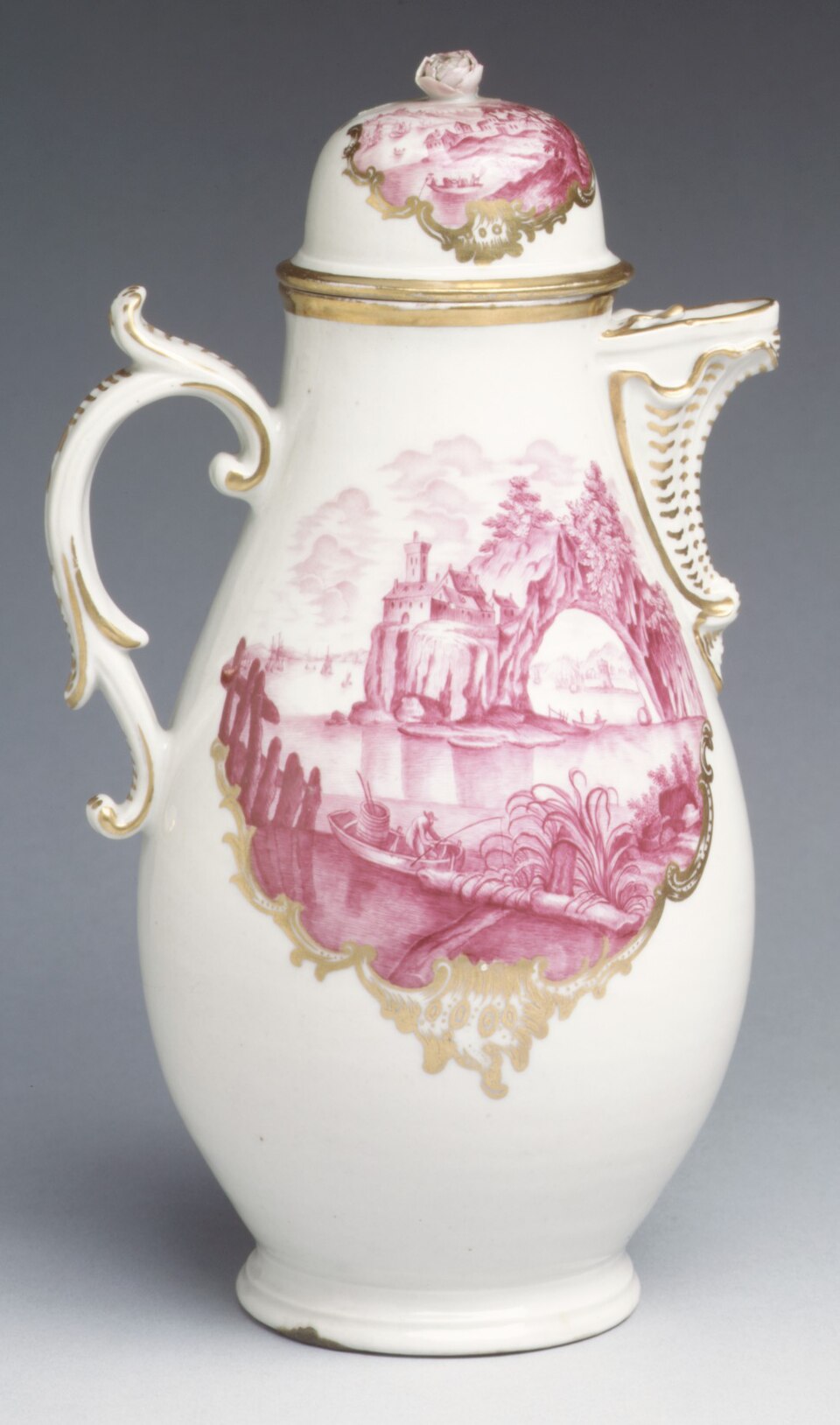
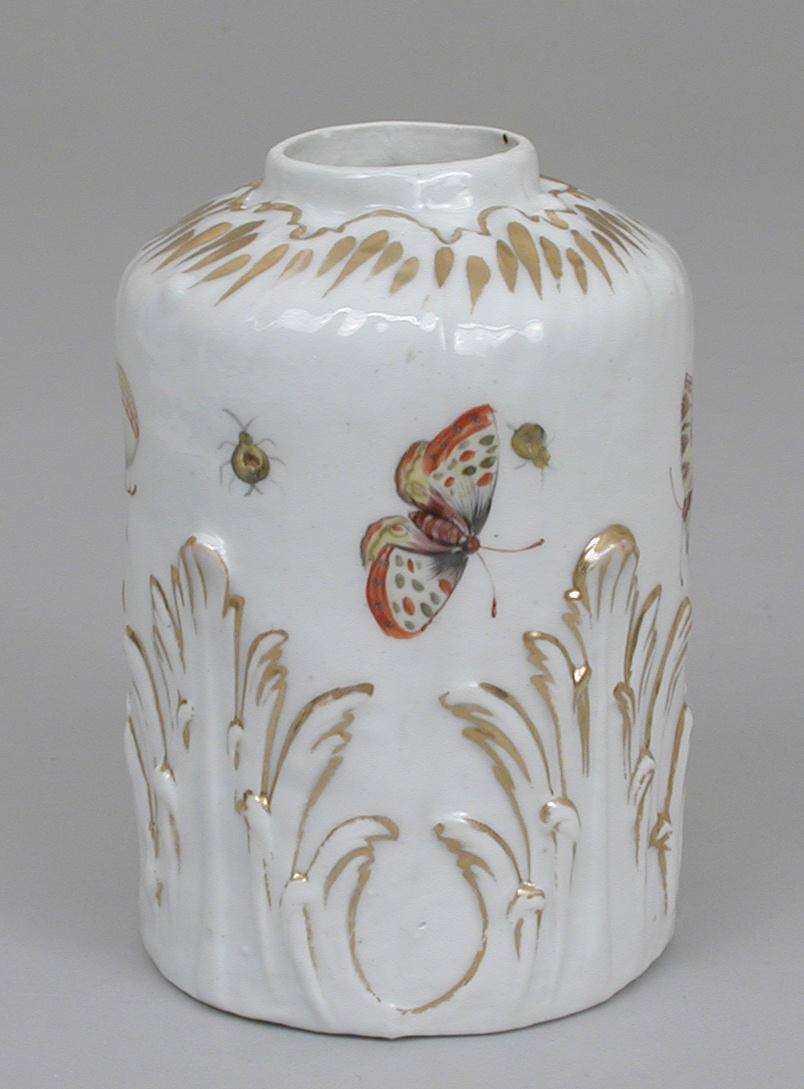
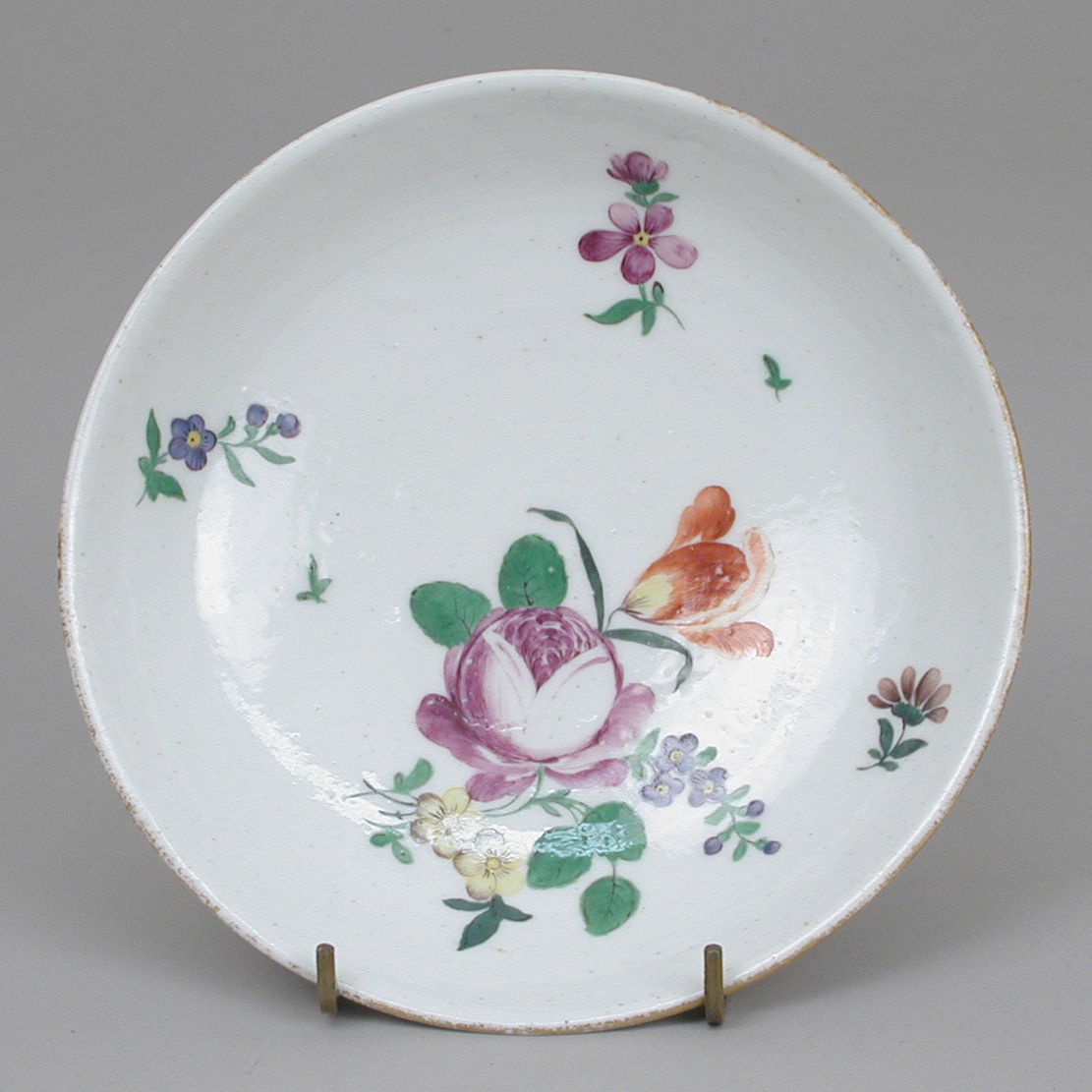
Historic Volkstedt production is fundamentally associated with hard-paste porcelain. The Met catalogues documented eighteenth-century Volkstedt examples — including a coffeepot, tea caddy and saucer — as hard-paste porcelain.
Material identification should nevertheless be made from the individual object. Look at the exposed foot, colour and density of the body, glaze, firing characteristics, joins and sculptural construction. Some later Rudolstadt-area manufacturers also produced biscuit porcelain and specialist decorative wares.
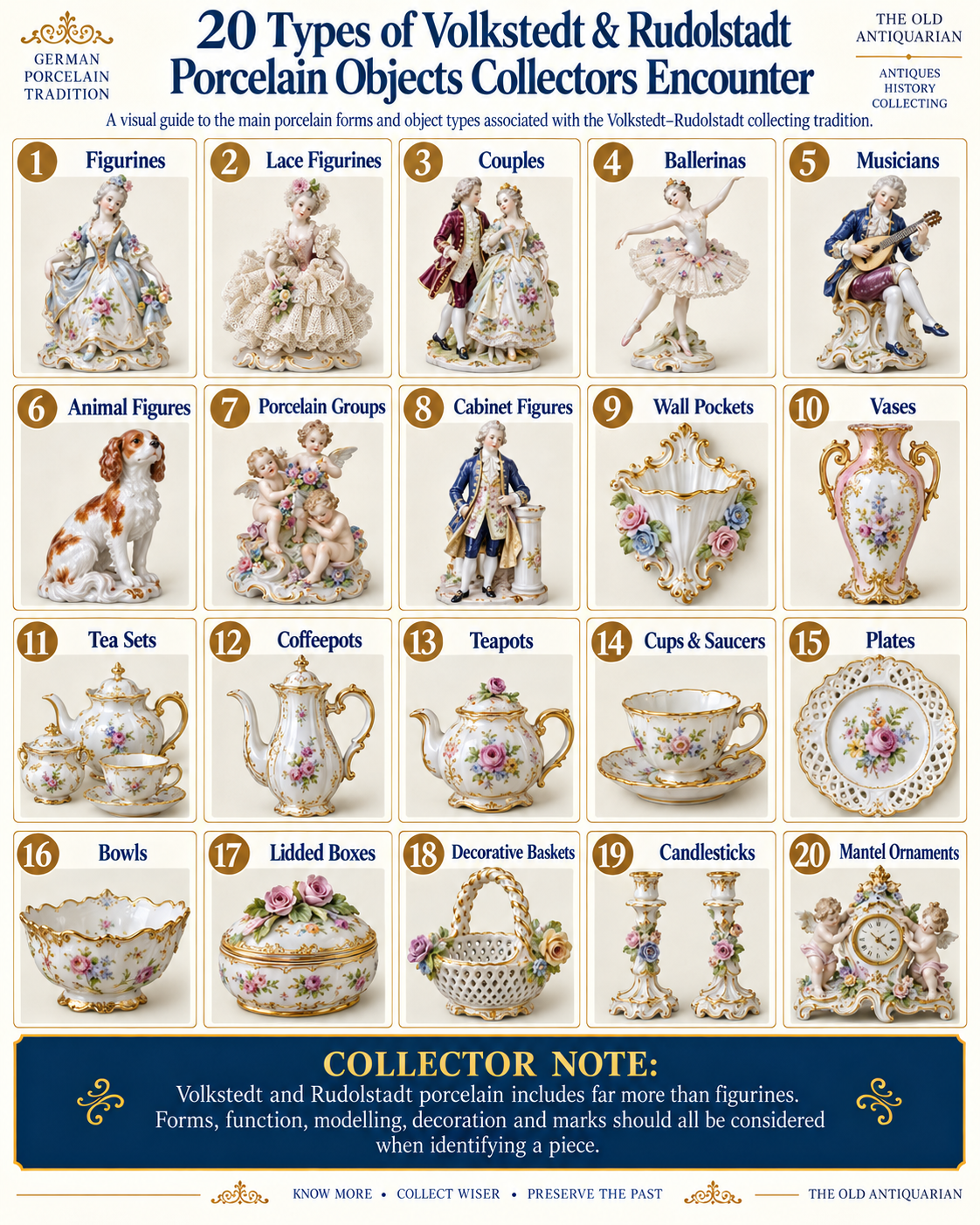
Volkstedt Figurines and the Objects Collectors Encounter
Figurative porcelain is central to modern collector interest in Volkstedt and Rudolstadt. Courtly figures, couples, musicians, dancers, animals and ornamental groups are encountered frequently, particularly in nineteenth- and twentieth-century production.
However, the regional tradition extends beyond figurines. Table wares, tea and coffee pieces, decorative vessels and other ornamental forms are also part of the history. This is important because an owner searching only for “Volkstedt figurine marks” may overlook an equally valid mark on a cup, saucer, vase or coffee service.
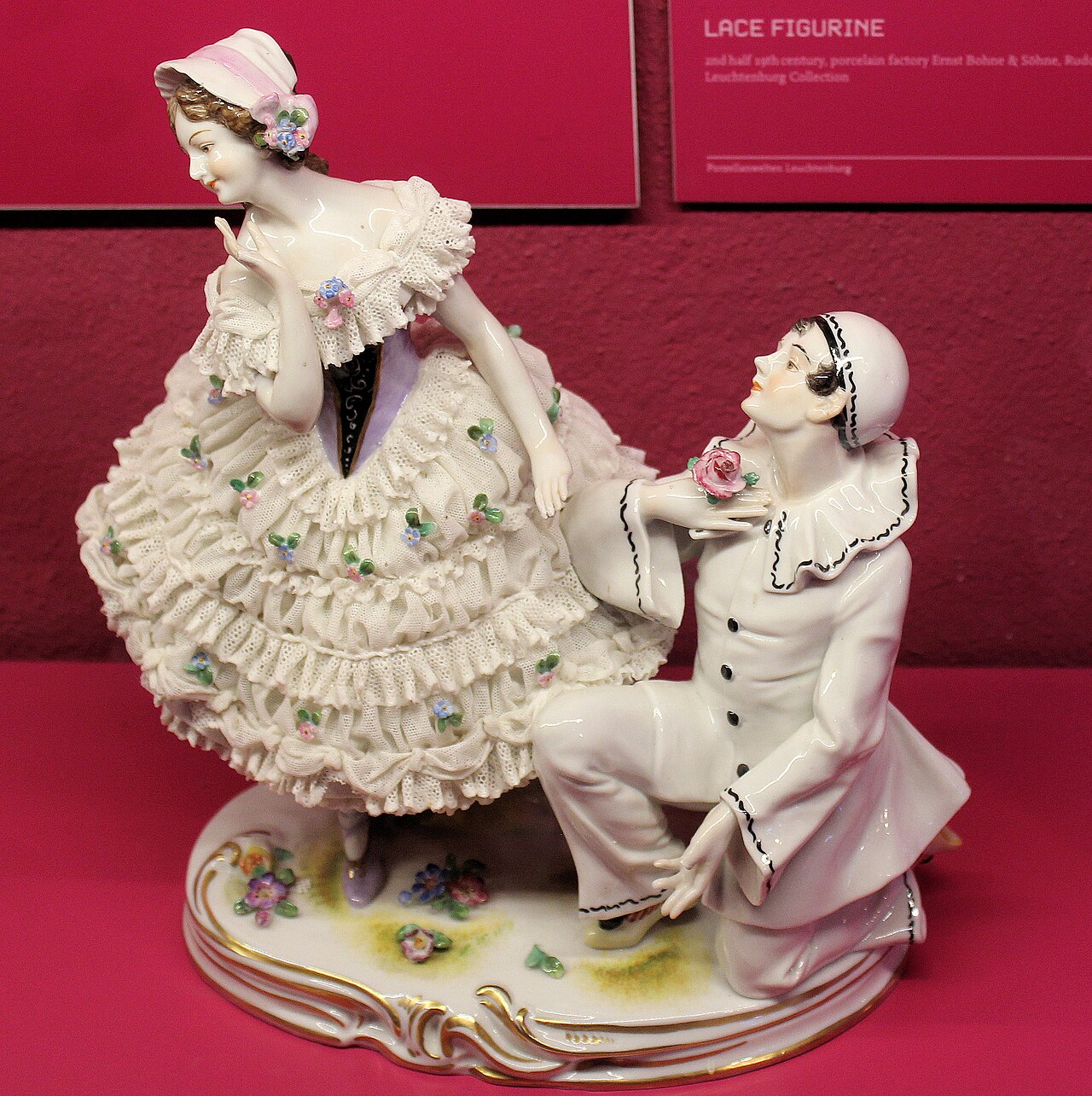
Porcelain lace figures
Lace porcelain is visually spectacular but exceptionally fragile. Fine textile-like porcelain effects, applied flowers, fingers, ribbons and other projecting elements are vulnerable to chips and repairs. When evaluating a lace figure, inspect the edges under magnification and compare suspiciously smooth or differently coloured areas with the surrounding material.
Animals and birds
Animal sculpture is especially important in twentieth-century Thuringian porcelain. Karl Ens became well known to collectors for bird and animal models, while artists working for Aelteste Volkstedter and related workshops also produced ambitious animal sculpture.
Deutsche Digitale Bibliothek material from the Thüringer Landesmuseum Heidecksburg documents large 1920s animal sculptures made at Aelteste Volkstedter from models by Arthur Storch, demonstrating that Volkstedt production should not be reduced to small Rococo revival figurines.
Decoration and Styles
| Style / Feature | What Collectors May Encounter | Identification Caution |
|---|---|---|
| Rococo and Rococo-revival figures | Courtly couples, shepherds, musicians and elaborately dressed figures. | A Rococo appearance does not mean an eighteenth-century date. |
| Porcelain lace | Textile-like skirts, ruffles and applied lace effects. | Check carefully for losses and later restoration. |
| Applied flowers | Individually modelled flowers and foliage. | Petals and leaves are among the most commonly damaged areas. |
| Polychrome enamels | Painted flowers, costumes, landscapes and naturalistic details. | Repainting can obscure original surfaces. |
| Gilding | Rims, scrolls, costume details and architectural ornament. | Fresh regilding may differ from naturally worn original gold. |
| Naturalistic animal modelling | Birds and animals, especially in later nineteenth- and twentieth-century production. | Identify the model and maker before assigning a value. |
| Historicist / Capodimonte-style relief | Elaborate modelling and historic European decorative references. | Style and crowned-N type marks do not establish Italian origin. |
How to Identify Authentic Volkstedt or Rudolstadt Porcelain
Do not begin with the assumption that the seller’s attribution is correct. Begin with the object itself.
complete mark + exact maker + porcelain body + form + modelling + decoration + model/mould number + country wording + condition + documented comparison
Step 1 — Photograph the entire object
Record front, back, sides, base and important details. A single photograph of the backstamp is not enough.
Step 2 — Photograph the complete base
Include every symbol, impressed number, painted number, letter, label and country word.
Step 3 — Identify the manufacturer
Ask whether the mark belongs to Aelteste Volkstedter, Beyer & Bock, Bohne, Karl Ens or another regional business rather than searching only for the word “Volkstedt”.
Step 4 — Examine the porcelain body
The material and glaze should be consistent with the proposed maker and period.
Step 5 — Study the form and modelling
Compare proportions, anatomy, base shape, folds, handles, rims and construction with documented examples.
Step 6 — Analyse decoration
Determine whether the decoration is hand painted, printed, transfer applied, gilded or mixed. Look for later overpainting.
Step 7 — Record model and mould numbers
Do not guess what a number means. Search for the exact number in manufacturer catalogues or documented collections when available.
Step 8 — Use country wording carefully
“Germany”, “Made in Germany”, “GDR” and similar wording may narrow the chronology, but none should be used as an exact universal date code.
Step 9 — Inspect wear and restoration
Check feet, fingers, petals, lace, tails, horns, musical instruments, finials and gilded edges.
Step 10 — Compare with documented objects
Museum collections, official factory histories, archives and credible specialist catalogues should carry more weight than visually similar marketplace listings.
Volkstedt vs Other German Porcelain
German porcelain identification becomes easier when similar traditions are kept separate. Volkstedt belongs to Thuringia; Dresden porcelain belongs to a broader Saxon manufacturing and decorating tradition; Meissen is a specific historic manufactory; and Bavaria contains its own network of manufacturers.
| Tradition / Maker | Region | Main Identification Focus |
|---|---|---|
| Volkstedt / Rudolstadt | Thuringia | Determine the actual manufacturer first; many local businesses and mark families exist. |
| Meissen | Saxony | Exact crossed-swords variant, body, model, decoration and documented factory history. |
| Dresden | Saxony | Often a regional decorating/manufacturing tradition rather than one single factory. |
| KPM Berlin | Berlin / Prussia | Factory sceptre mark, secondary decoration marks, form and model research. |
| Nymphenburg | Bavaria | Shield marks, model numbers and sculptural traditions. |
| Rosenthal | Bavaria | Changing company marks, Selb context, designers, tableware and art porcelain. |
| Hutschenreuther | Bavaria | Factory wording, lion marks, figurines and twentieth-century production. |
If you are researching a broader German backstamp rather than a clearly identified Volkstedt piece, start with the German Porcelain Guide and then move to the appropriate manufacturer-specific article.
GDR and East German Volkstedt Porcelain
The survival of historic-looking designs into the twentieth century creates one of the most common dating traps. After the Second World War and the creation of the German Democratic Republic in 1949, porcelain manufacture in Thuringia underwent nationalisation and reorganisation.
A piece carrying “GDR”, “Made in GDR” or clearly documented East German factory wording belongs to a post-1949 production context. It may still be genuine Volkstedt or Rudolstadt-area porcelain, but it is not eighteenth- or nineteenth-century production merely because the model follows a Rococo or historic design.
A later factory-made object is not automatically a fake. The important question is whether it is correctly described as later production rather than sold as an earlier antique.
Antique, Later Production, Copy or Misattribution?
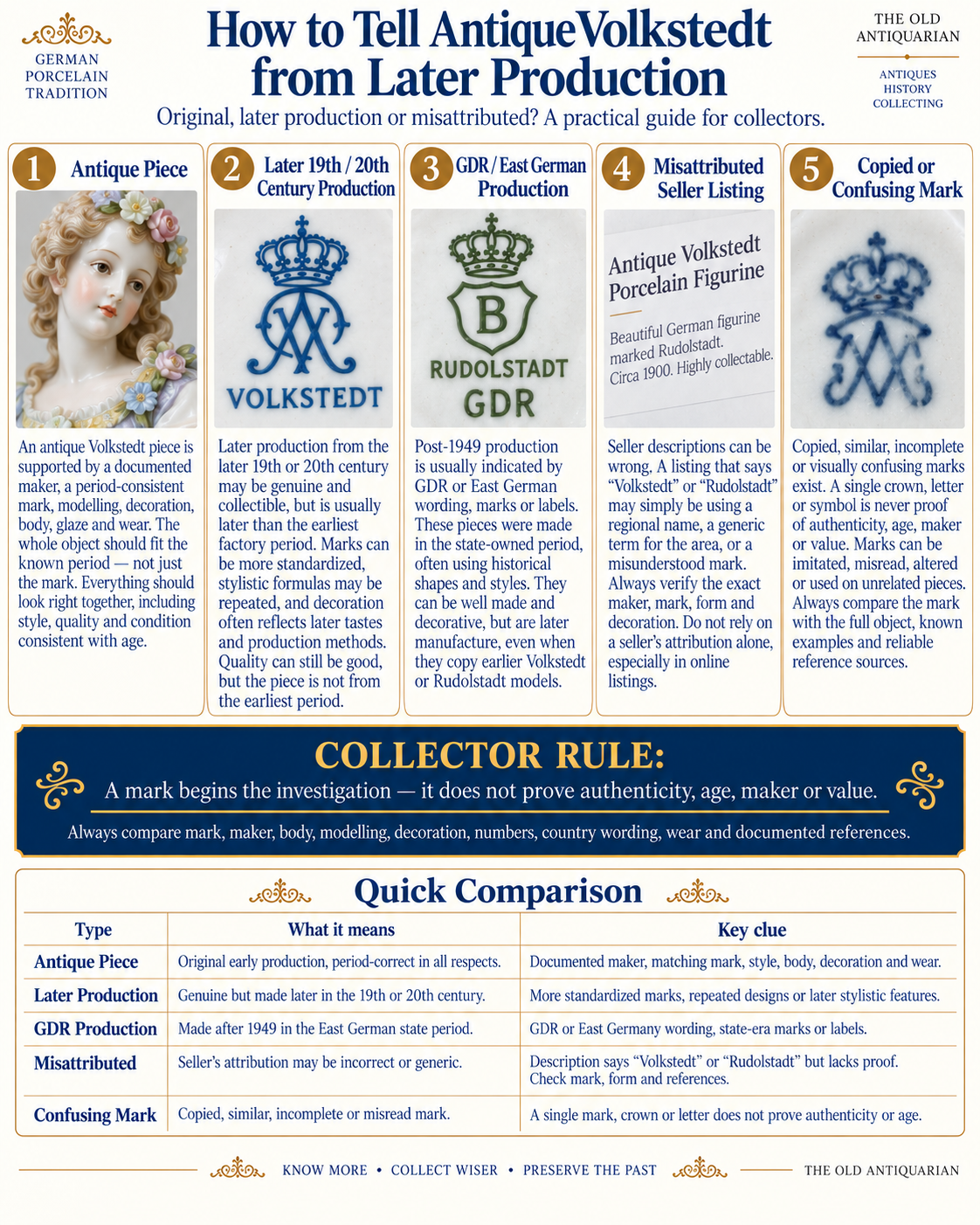
| Category | What It Means | How to Approach It |
|---|---|---|
| Antique period piece | Object genuinely produced in the historical period to which it is attributed. | Mark, material, model, decoration, technique and wear should agree. |
| Later factory production | A genuine product made later from an earlier design or tradition. | Date the actual manufacture, not merely the age of the model. |
| GDR production | Genuine East German production made after 1949. | Country wording and factory organisation are important evidence. |
| Misattributed piece | A seller or previous owner has assigned the wrong maker or period. | Ignore the listing title and reconstruct the attribution from the object. |
| Copied or confusing mark | A symbol resembles a recognised factory mark but may be copied, imitated or unrelated. | Check exact geometry, application, colour, wording and object consistency. |
The crowned N is a particularly useful example of why context matters. It is widely associated in collector culture with Capodimonte, but German manufacturers also used crowned-N marks on some wares. The mark therefore cannot establish Italian origin by itself.
Condition and Restoration
Condition is especially important with Volkstedt and Rudolstadt figurines because the very details that make them attractive — fingers, flowers, lace, feathers, musical instruments and projecting costume elements — are also the parts most easily damaged.
| Area to Check | Common Problem | Why It Matters |
|---|---|---|
| Fingers and hands | Missing fingertips, glued breaks, replacements. | Small repairs can be visually difficult to detect but materially affect condition. |
| Porcelain lace | Losses, crushed edges, replaced sections. | Original lace is extremely fragile. |
| Applied flowers | Chipped petals and leaves. | Damage may be widespread even when the figure appears complete at first glance. |
| Animal extremities | Broken ears, tails, legs, beaks or horns. | Restoration can alter both desirability and value. |
| Gilding | Natural wear, regilding or later enhancement. | Fresh gold can conceal original wear or repairs. |
| Painted surfaces | Overpainting or colour retouching. | Later paint may obscure original decoration. |
| Base | Filled chips, altered marks, labels or ground surfaces. | The underside carries crucial evidence for attribution. |
Restoration does not automatically make an important object worthless, but it must be identified, described and considered when comparing market results.
How Much Is Volkstedt Porcelain Worth?
There is no reliable universal “Volkstedt porcelain price” or “Rudolstadt figurine value”. Two visually similar figures can belong to different manufacturers, periods, models or quality levels and can have very different market histories.
Market research should use genuinely comparable completed sales rather than unsold listings or optimistic dealer asking prices.
| Value Factor | Why It Matters |
|---|---|
| Maker | A secure manufacturer attribution establishes the correct collector market. |
| Period | Early, artistically important or historically significant production may differ greatly from later production. |
| Model / form | Demand can vary dramatically between ordinary and rare models. |
| Size | Large or technically ambitious sculpture may belong to a different market category. |
| Decoration | Quality of painting, gilding, lacework and applied decoration matters. |
| Artist / modeller | A documented modeller may add art-historical importance. |
| Condition | Chips, cracks and missing fragile details can materially affect collector interest. |
| Restoration | Extent, location and quality of restoration must be disclosed and evaluated. |
| Completeness | Pairs, groups and complete services can be affected by missing components. |
| Provenance | Reliable collection history, old labels or archival documentation may strengthen an attribution. |
| Completed comparable sales | The best market evidence compares the same or closely related maker, model, period, size, condition and decoration. |
Why can two similar Volkstedt figurines have very different values?
One may be early production while the other is a later factory issue; one may be by a more collected manufacturer; one may retain complete porcelain lace while the other has extensive losses; one may have documented authorship or provenance; and one may have undergone substantial repainting or repair.
For this reason, value should be considered after identification, not before it.
Volkstedt / Rudolstadt Collector Checklist
- Photograph the complete object from several angles.
- Photograph the entire underside, not only the main logo.
- Record every letter, symbol, crown, number and word exactly.
- Identify the actual manufacturer before assigning a date.
- Distinguish Aelteste Volkstedter from other Volkstedt/Rudolstadt makers.
- Check whether a model or mould number is present.
- Examine the porcelain body, glaze and firing quality.
- Compare form and modelling with documented examples.
- Determine whether decoration is painted, printed, gilded or mixed.
- Use Germany / Made in Germany / GDR wording only as supporting evidence.
- Inspect fingers, flowers, lace, tails, handles and projecting details for repair.
- Look for repainting, regilding, glue, filler and replacement parts.
- Verify the proposed period against museum, archive or factory references.
- Use completed comparable sales only after the maker and model are reasonably secure.
Do You Have Volkstedt or Rudolstadt Porcelain?
Clear photographs of the complete object, base, every mark and number, dimensions and any visible damage or restoration are the best starting point for meaningful identification and valuation.
Frequently Asked Questions
Is Volkstedt porcelain valuable?
Some Volkstedt and Rudolstadt porcelain is collectible, but there is no single value range. Maker, model, period, artistic quality, rarity, condition, restoration, completeness, provenance and comparable completed sales all matter.
How can I identify Volkstedt porcelain?
Begin with the complete backstamp and identify the actual manufacturer. Then compare the porcelain body, form, modelling, decoration, numbers, country wording, condition and documented historical examples.
Is Rudolstadt porcelain the same as Volkstedt porcelain?
Not exactly. Volkstedt is associated geographically with Rudolstadt, and collector terminology often combines the names. Several separate manufacturers operated in the wider area, so the exact maker should always be identified.
What does 1762 mean on Volkstedt porcelain?
1762 is associated with the historic foundation of porcelain production at Volkstedt. A later mark containing “1762” usually references that heritage; it does not mean that the individual object was made in 1762.
What does a Volkstedt porcelain mark look like?
There is no single Volkstedt mark valid for every period and manufacturer. Published marks include fork-like devices, monograms, crowns, factory names and later printed backstamps. Identify the exact maker and mark version rather than matching only one symbol.
Are all Volkstedt figurines antique?
No. Historic designs remained in production and genuine later factory pieces exist. GDR-era and post-war examples can follow older styles while being much later than the original model.
Does a crowned N mean Capodimonte?
Not automatically. Crowned-N marks were also used on some German porcelain, including wares associated with Ernst Bohne Söhne. The complete object and exact mark variant must be researched before assigning an origin.
How can I date a Volkstedt figurine?
Combine the exact factory mark with the manufacturer, model or mould number, country wording, porcelain body, modelling, decoration, manufacturing technique and documented catalogue or museum comparisons.
What does “Made in GDR” mean on Volkstedt porcelain?
It indicates an East German production context after the establishment of the German Democratic Republic in 1949. It does not mean that the design itself was necessarily created during that period.
Can a Volkstedt mark prove that a figurine is authentic?
No. Marks can be copied, misread, reused or associated with later production. Authenticity requires agreement between the mark, maker, body, model, decoration, technique, condition and documented history.
Related German Porcelain Guides
Sources & Further Research
Volkstedt and Rudolstadt porcelain research is strongest when official factory history, museum collections, archives and specialist mark literature are compared rather than relying on one mark chart.
- die porzellanmanufakturen — Official History — current official history of Aelteste Volkstedter and related Thuringian manufactories.
- The Metropolitan Museum of Art — Volkstedt Coffeepot, c. 1770 — documented hard-paste porcelain object.
- The Metropolitan Museum of Art — Volkstedt Tea Caddy, late 18th century — museum-documented hard-paste porcelain.
- The Metropolitan Museum of Art — Volkstedt Saucer, late 18th century — useful comparison for form, decoration and base marking.
- Deutsche Digitale Bibliothek / Thüringer Landesmuseum Heidecksburg — Arthur Storch — documents Storch’s work for Triebner Ens & Eckert, Aelteste Volkstedter, Beyer & Bock, Karl Ens and related Thuringian porcelain workshops.
- Deutsche Digitale Bibliothek / Bundesarchiv — Aelteste Volkstedter Porzellanfabrik AG — archival corporate material and related manufacturer records.
- The Old Stuff — Volkstedt Marks — secondary specialist reference for published mark variants and approximate periods.
- The Old Stuff — Ernst Bohne Söhne Marks — secondary specialist reference for anchor, crowned-N and other Bohne marks.
- The Old Stuff — Karl Ens Marks — secondary mark reference for Karl Ens factory marks.
Historical mark chronologies can differ between specialist publications, particularly where businesses changed ownership, marks overlapped, historic designs were revived or a symbol continued in later production. For this reason, this guide uses mark dates as supporting evidence rather than treating every online date range as absolute.
About The Old Antiquarian
The Old Antiquarian combines more than 35 years of practical experience with antiques and collecting with historical, museum and comparative research. Our porcelain guides are designed to help collectors move from a broad visual clue toward a documented manufacturer, model and period without relying on a single backstamp or seller description.
For broader porcelain research, continue with our Complete Antique Porcelain Guide.
Conclusion: Identify the Maker Before You Date the Porcelain
Volkstedt and Rudolstadt porcelain reward careful research because their history is richer — and more complicated — than a single factory name or backstamp suggests. Early eighteenth-century roots, nineteenth-century expansion, specialist figurine makers, changing ownership, export markets and later East German production all form part of the story.
The most reliable approach is therefore simple: identify the exact maker first. Then determine whether the mark, porcelain body, model, decoration, numbers, country wording, manufacturing technique, condition and documented history all support the same period.
Identify the maker. Read the complete mark. Date the whole object. Check restoration. Then consider value.
