
What Is Capodimonte Porcelain? The Complete Guide to History, Marks, Identification and Value
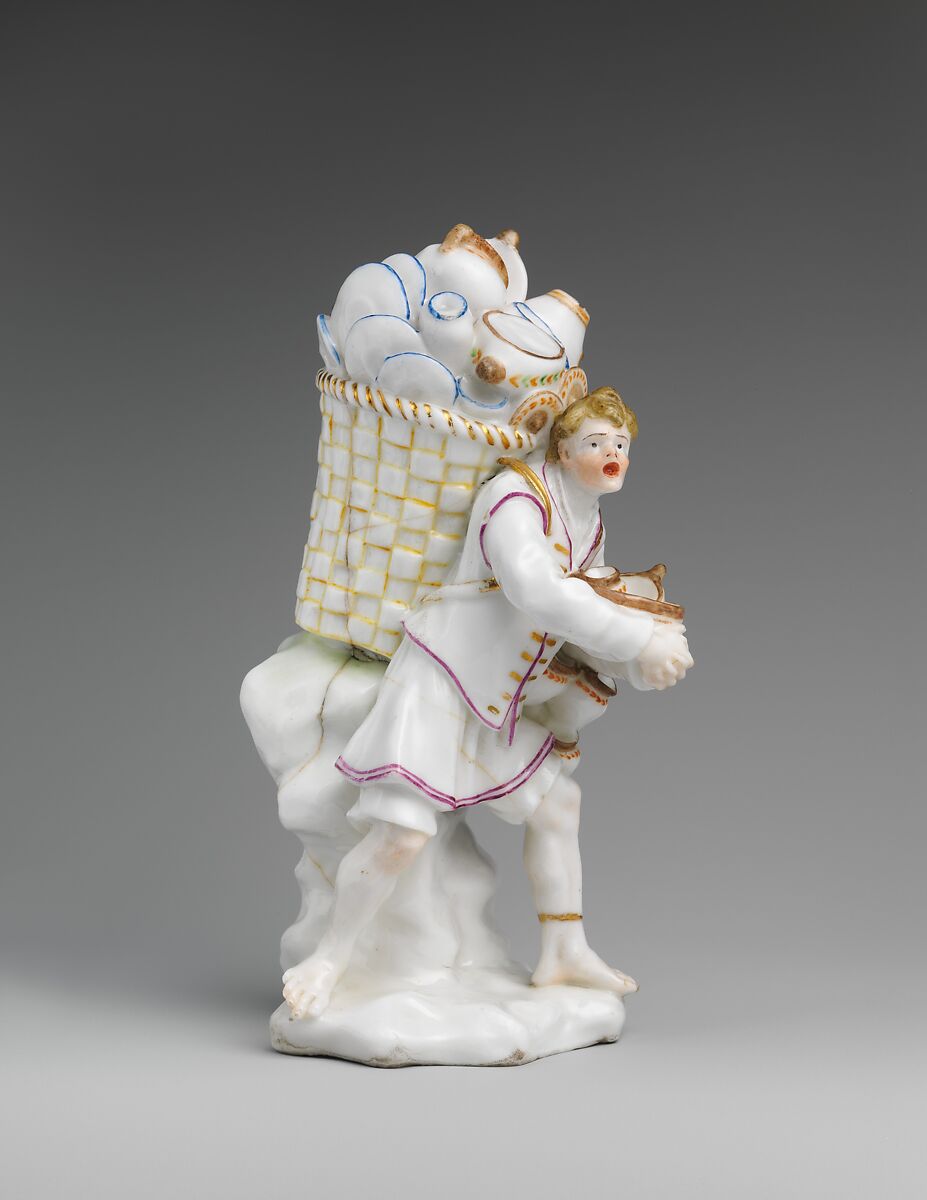
Capodimonte porcelain is one of Italy’s most celebrated artistic porcelains and one of the finest achievements in European ceramic history. Founded in 1743 by King Charles of Bourbon in Naples, the Royal Capodimonte Porcelain Factory quickly gained a reputation for exceptional craftsmanship, refined hard-paste porcelain, and remarkably realistic sculptural decoration.
Today, authentic Capodimonte porcelain is admired by collectors worldwide for its intricate hand-modelled flowers, elegant figurines, luxurious tableware, and distinctive porcelain marks. Whether you are a collector, antique dealer, or simply curious about Italian porcelain, understanding the history and identifying characteristics of Capodimonte is essential when evaluating its authenticity and value.
If you are new to antique porcelain, you may also enjoy our guides on What Is Porcelain?, How to Identify Porcelain Marks, Meissen Porcelain, Wedgwood, and Royal Copenhagen.
The History of Capodimonte Porcelain
The story of Capodimonte porcelain began in Naples during the eighteenth century when King Charles VII of Naples, later known as Charles III of Spain, decided to establish a royal porcelain factory capable of competing with Europe’s greatest manufacturers such as Meissen and Sèvres.
With the support of his wife, Maria Amalia of Saxony—the granddaughter of Augustus the Strong and a member of the family closely connected to the famous Meissen factory—the project attracted some of Europe’s finest craftsmen and artists.
Production started inside the Royal Palace of Capodimonte, where highly skilled artisans experimented with porcelain formulas until they achieved a remarkably refined soft-paste porcelain that became famous for its delicate appearance and exceptional sculptural quality.
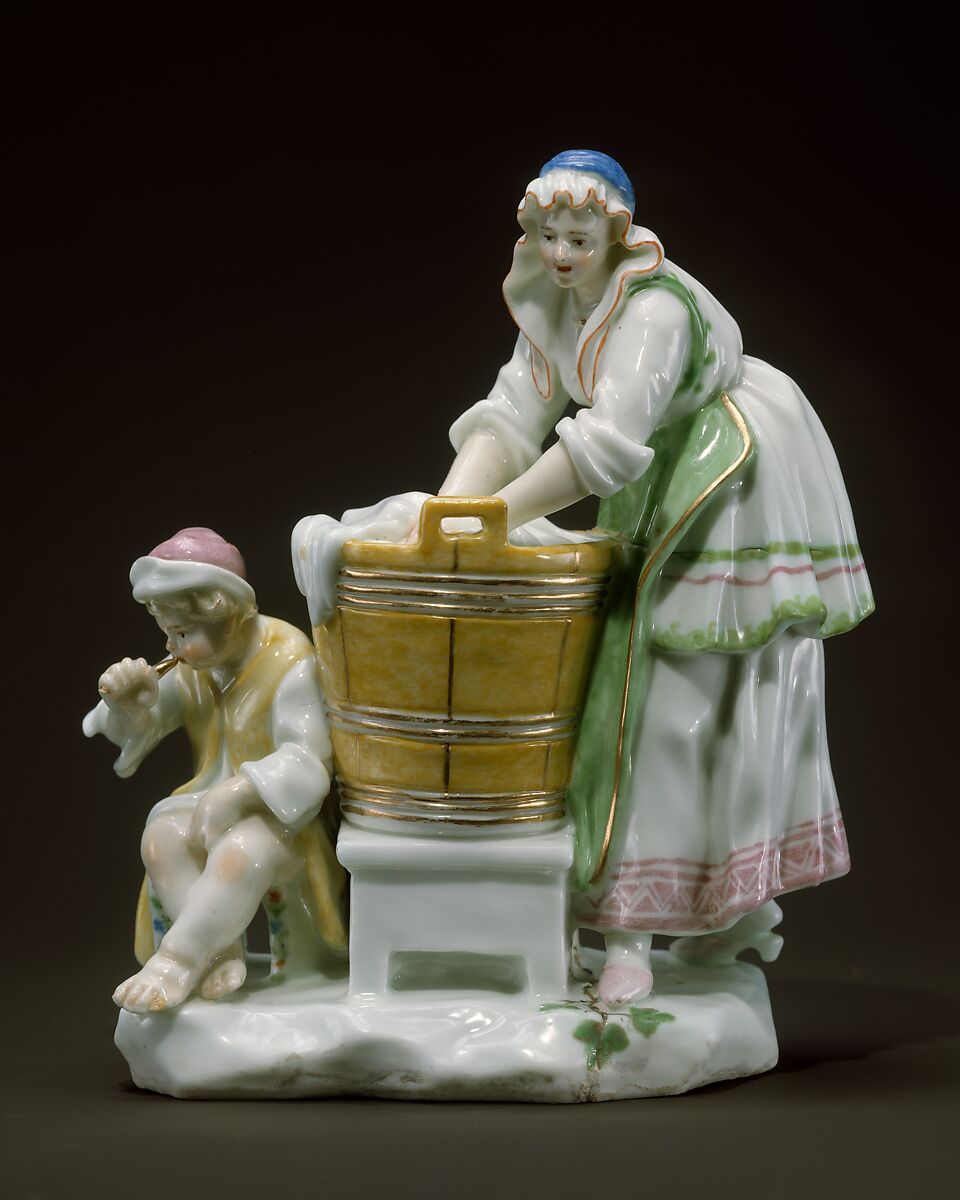
Unlike many European factories that focused primarily on tableware, Capodimonte became renowned for creating sophisticated figurines, elaborate floral arrangements, religious sculptures, decorative vases, and luxurious coffee and tea services. Every object demonstrated extraordinary modelling skills, making Capodimonte one of the most artistic porcelain traditions ever established.
When Charles became King of Spain in 1759, much of the factory’s equipment and many of its craftsmen moved to Madrid, where they founded the famous Real Fábrica del Buen Retiro. Although production at the original Capodimonte factory ended, its artistic influence continued through numerous Italian porcelain workshops during the nineteenth and twentieth centuries.
Why Is Capodimonte So Famous?
Few European porcelain manufacturers are as closely associated with sculpture as Capodimonte. Rather than relying solely on painted decoration, Capodimonte artists transformed porcelain into highly detailed three-dimensional works of art.
The factory became especially famous for realistic human figures, delicate porcelain flowers, intricate relief decoration, and scenes inspired by everyday Italian life. Many pieces required weeks—or even months—of meticulous hand craftsmanship before they were ready for firing.
What Makes Capodimonte Porcelain Unique?
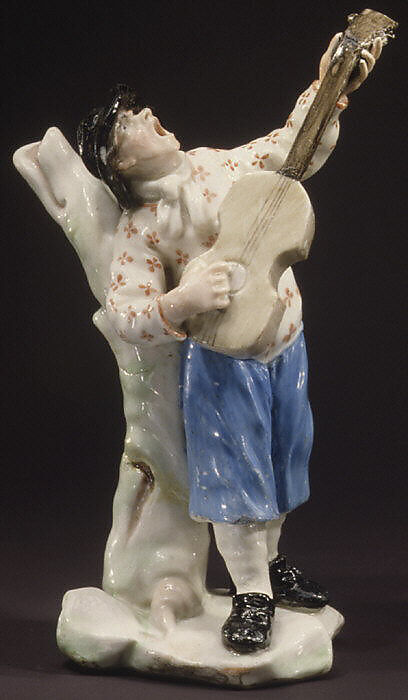
Capodimonte porcelain is instantly recognizable for its extraordinary sculptural quality and remarkable attention to detail. While manufacturers such as Meissen, Wedgwood, and Royal Copenhagen became famous for elegant dinner services and painted decoration, Capodimonte developed a distinctive artistic style centered on three-dimensional porcelain sculpture.
Every flower petal, leaf, ribbon, facial expression, and decorative ornament was individually modelled by hand before being assembled into the finished composition. This exceptional level of craftsmanship remains one of the defining characteristics of authentic Capodimonte porcelain.
Typical Characteristics of Capodimonte Porcelain
- Fine hand-crafted porcelain.
- Highly detailed sculptural modelling.
- Realistic human figures and expressive faces.
- Hand-modelled porcelain flowers.
- Rich relief decoration.
- Soft glossy glaze.
- Delicate hand-painted decoration.
- Exceptional artistic craftsmanship.
- Naturalistic scenes inspired by Italian daily life.
- Elegant Rococo and Neoclassical influences.
Rather than emphasizing symmetry alone, Capodimonte artists focused on movement, emotion, and realism. This artistic philosophy gives genuine pieces their unmistakable appearance and explains why they continue to attract collectors around the world.
The Most Popular Types of Capodimonte Porcelain
Over nearly three centuries, Capodimonte workshops have produced an extraordinary variety of decorative and functional porcelain objects. Some are museum-quality masterpieces, while others were created for wealthy European households during the nineteenth and twentieth centuries.
Collectors most commonly encounter:
- Figurines and sculptures
- Musicians and street vendors
- Religious figures
- Decorative vases
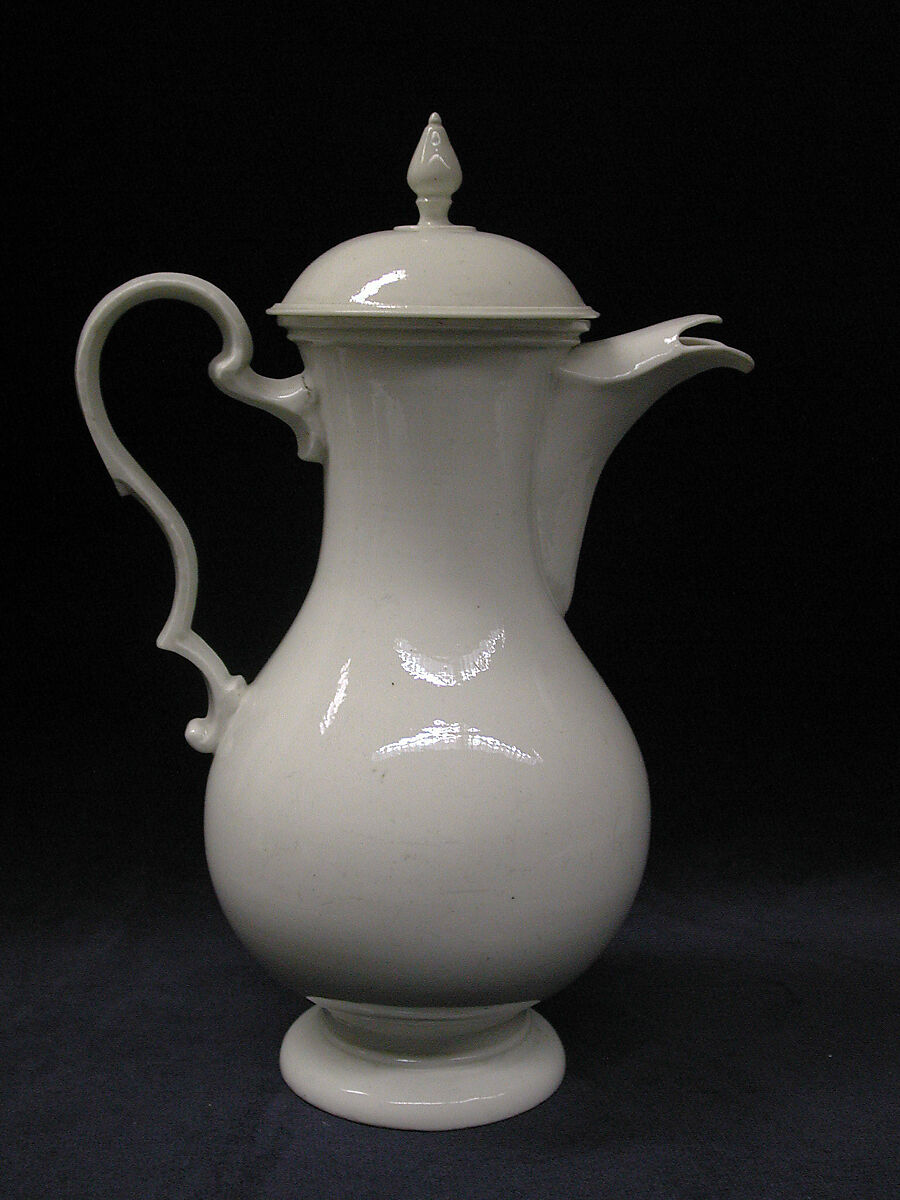
- Coffee pots and teapots
- Coffee and tea services
- Jewelry boxes
- Candlesticks
- Porcelain flower arrangements
- Large decorative centerpieces
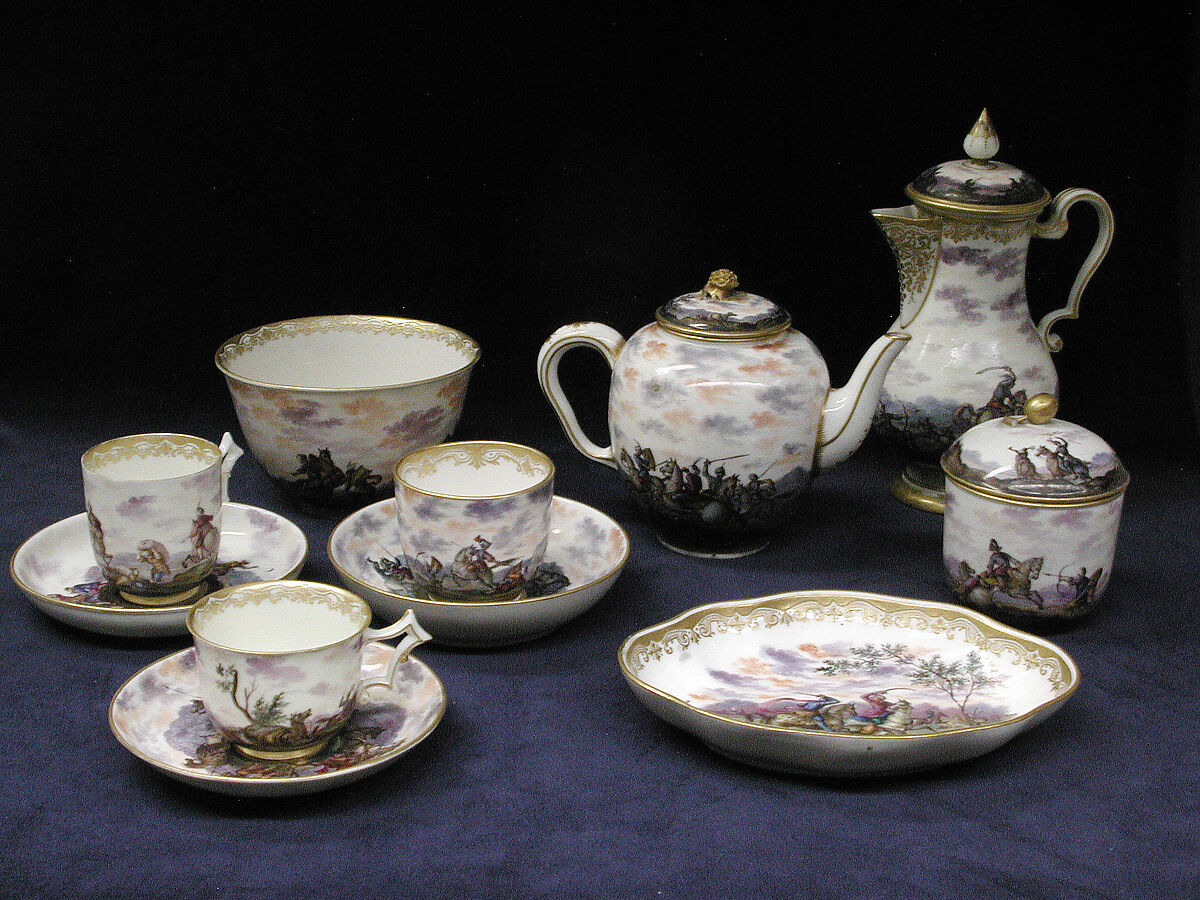
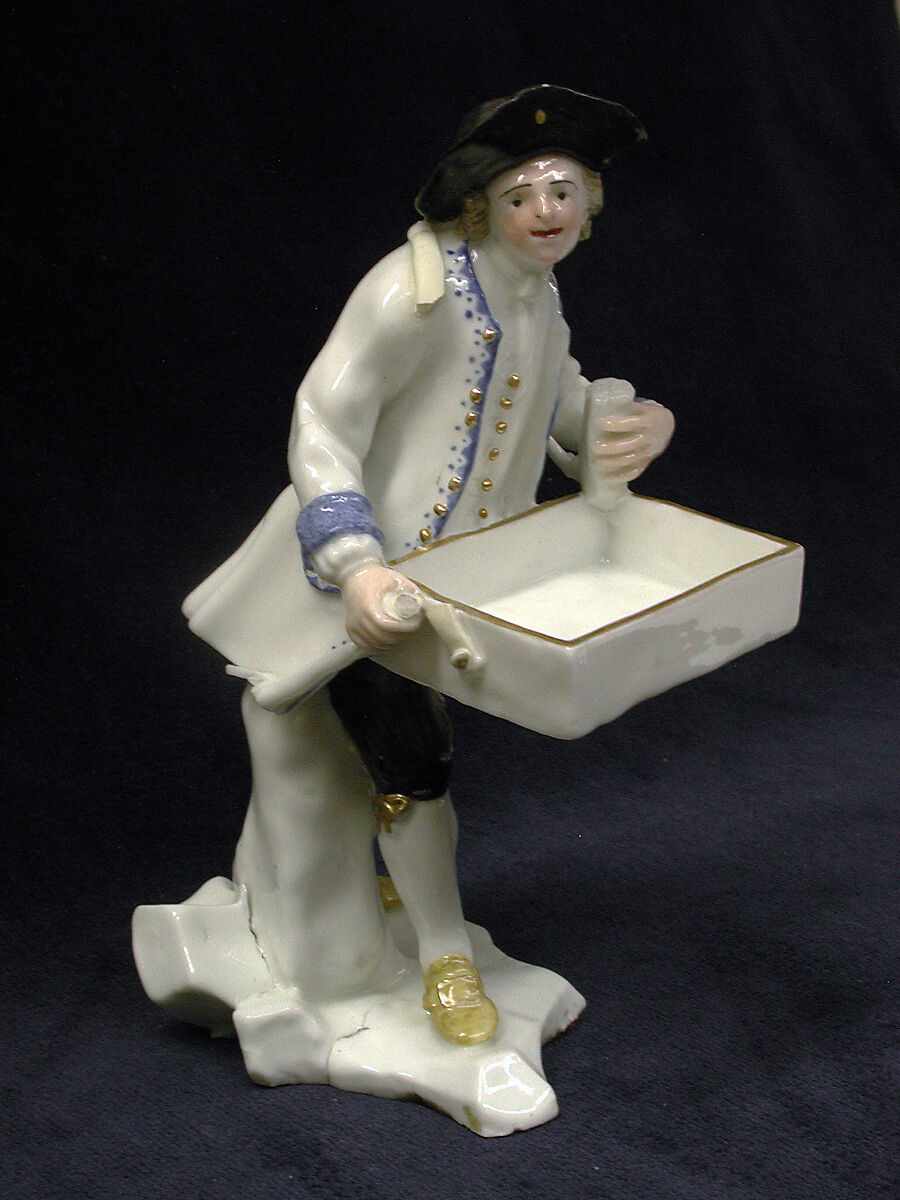
Among the most desirable examples are elaborate floral baskets, theatrical figurine groups, musicians, romantic scenes, and finely decorated tableware. Large handcrafted centerpieces featuring dozens of individually modelled flowers are considered masterpieces of Italian porcelain art.
Capodimonte Marks Through History
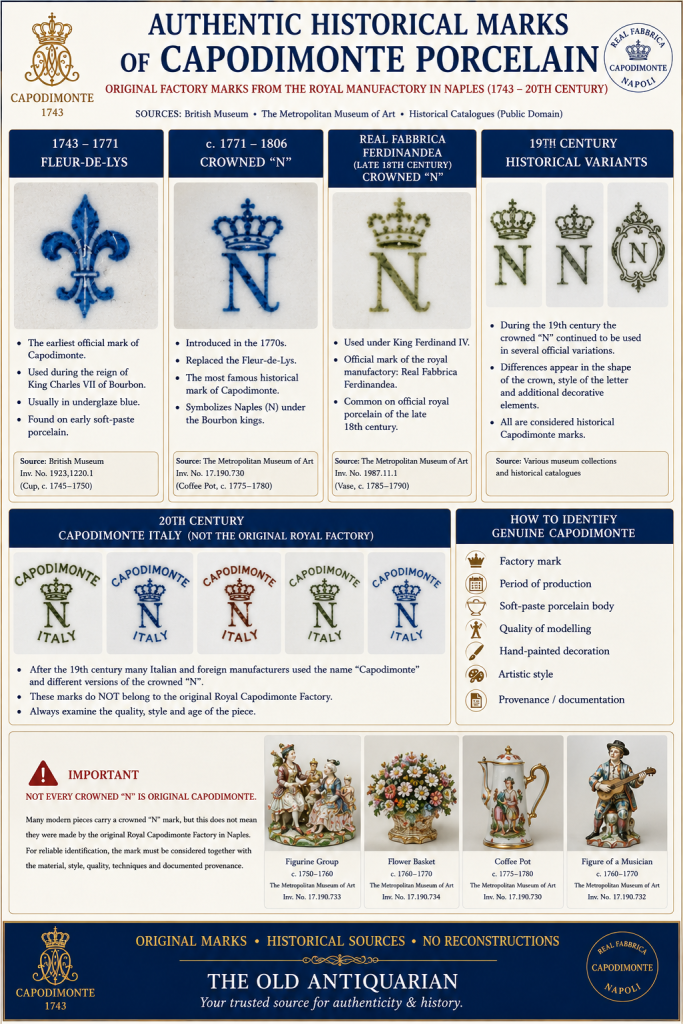
One of the most misunderstood aspects of Capodimonte porcelain is its maker’s marks. Many collectors assume that every porcelain piece bearing a crowned “N” was produced by the original Royal Factory. In reality, the history is considerably more complex.
The earliest Capodimonte porcelain (1743–1759) was marked with the famous Fleur-de-lis, the Bourbon royal emblem. After the royal factory moved to Spain, various Neapolitan manufacturers adopted different versions of the crowned “N”, while many twentieth-century companies also used similar marks inspired by the original tradition.
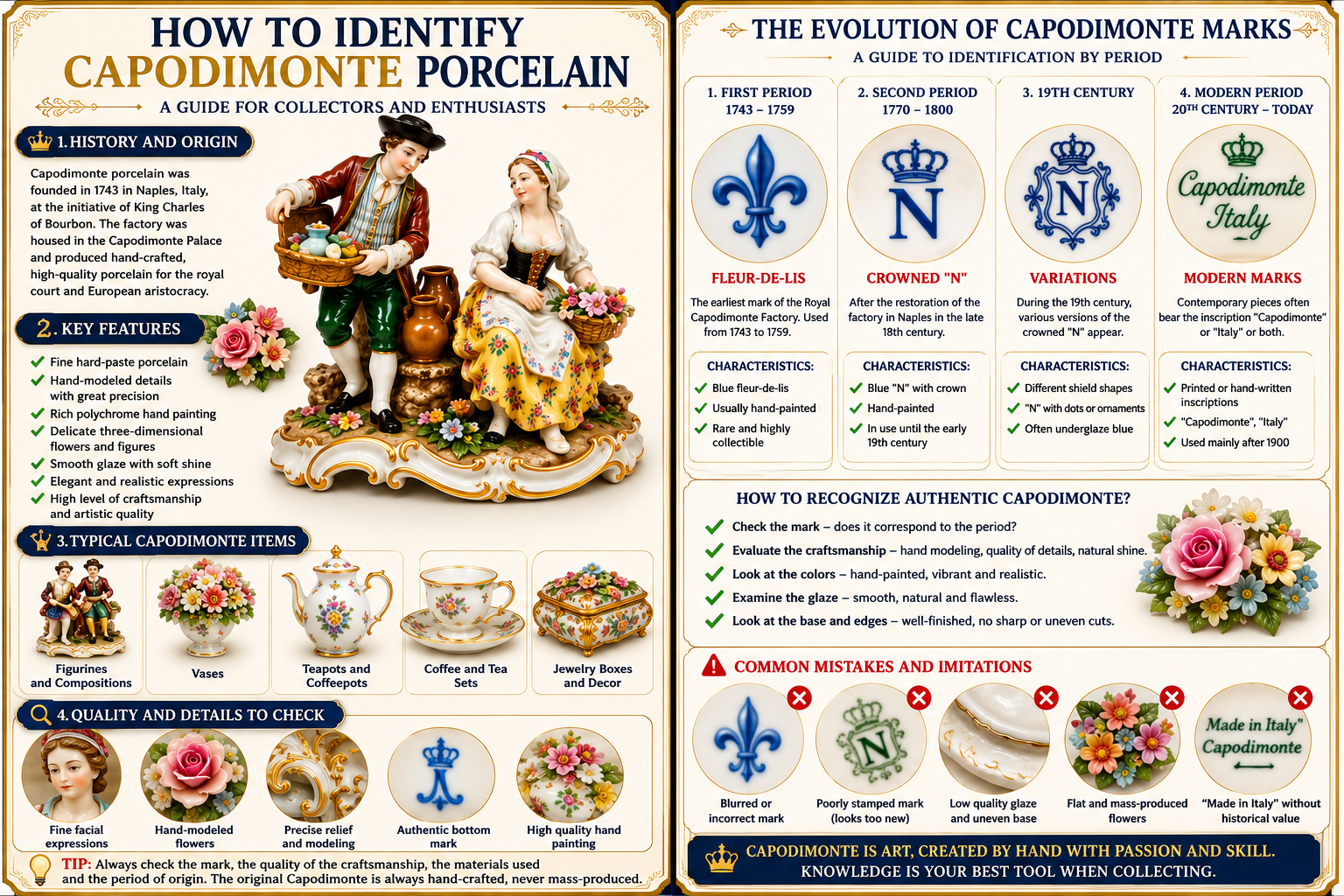
Because of this, the mark alone can never authenticate a piece. Experienced collectors evaluate the porcelain body, modelling quality, glaze, painting, craftsmanship, period, and overall artistic execution before drawing conclusions about authenticity.
If you would like to learn more about porcelain backstamps, read our detailed guide to How to Identify Porcelain Marks, where we explain how European porcelain marks evolved over time and what they reveal about a piece’s origin.
How to Identify Authentic Capodimonte Porcelain
Identifying genuine Capodimonte porcelain requires much more than checking the mark on the base. Although maker’s marks provide valuable clues, experienced collectors and appraisers evaluate the entire object before determining its authenticity and age.
Original eighteenth-century Capodimonte pieces are extremely rare and are usually found in museums, prestigious private collections, or major international auction houses. Most Capodimonte porcelain encountered today dates from the nineteenth or twentieth century, when many Italian manufacturers continued the artistic tradition established by the Royal Factory.
When examining a Capodimonte piece, consider the following:
- Overall modelling quality and artistic execution.
- The porcelain body and its translucency.
- The glaze and surface finish.
- Hand-painted details.
- Natural signs of age and wear.
- The complexity of sculptural decoration.
- The maker’s mark.
- The historical style and period.
Authentic high-quality Capodimonte porcelain displays exceptional craftsmanship. Fine facial expressions, individually modelled flowers, elegant proportions, and carefully finished details distinguish original artistic production from later mass-produced decorative pieces.
How Much Is Capodimonte Porcelain Worth?
The value of Capodimonte porcelain varies enormously depending on its age, rarity, condition, artistic quality, and manufacturer. While decorative twentieth-century pieces may be relatively affordable, museum-quality examples from the Royal Capodimonte Factory are among the most valuable Italian porcelains ever produced.
Collectors generally pay the highest prices for pieces with outstanding sculptural quality, original hand-painted decoration, excellent condition, and well-documented provenance.
Factors that influence value include:
- Production period.
- Manufacturer.
- Artistic quality.
- Complexity of modelling.
- Original decoration.
- Rarity.
- Condition.
- Size.
- Historical importance.
- Collector demand.
If you would like to learn how specialists determine market value, see our complete guide on How Is Antique Porcelain Valued?.
Common Mistakes When Buying Capodimonte
One of the most common misconceptions is believing that every crowned “N” mark represents original Royal Capodimonte porcelain. In reality, numerous Italian companies adopted similar marks during the nineteenth and twentieth centuries.
Another frequent mistake is focusing entirely on the backstamp while ignoring the quality of the porcelain itself. Experienced collectors pay equal attention to modelling, glaze, artistic execution, hand painting, and natural aging before reaching any conclusions.
Studying porcelain styles and comparing genuine examples is one of the best ways to develop confidence when buying antique Italian porcelain.
Frequently Asked Questions
Is every Capodimonte piece an antique?
No. Capodimonte-style porcelain has been produced for more than two centuries. Many examples found today were made during the twentieth century.
Is the crowned “N” always genuine?
No. Many manufacturers used crowned “N” marks, so the mark alone cannot confirm authenticity.
What is the rarest Capodimonte porcelain?
Original pieces produced by the Royal Capodimonte Factory between 1743 and 1759 are considered the rarest and most valuable.
Are Capodimonte figurines collectible?
Yes. High-quality figurines remain popular with collectors worldwide, especially examples with exceptional modelling and excellent preservation.
Can damaged Capodimonte still be valuable?
Minor wear is expected on antique porcelain, but significant chips, cracks, or poor restorations usually reduce value considerably.
Final Thoughts
Capodimonte porcelain represents one of the finest achievements of Italian decorative art. Its remarkable sculptural quality, refined craftsmanship, and rich artistic heritage continue to inspire collectors more than 280 years after the Royal Factory was founded.
Whether you are identifying a family heirloom, researching an antique purchase, or building a porcelain collection, understanding Capodimonte’s history, marks, and artistic characteristics will help you recognize genuine examples and appreciate their historical significance.
Continue Exploring Antique Porcelain
- What Is Porcelain?
- How to Identify Porcelain Marks
- How to Identify Antique Porcelain
- How Is Antique Porcelain Valued?
- How to Store Antique Porcelain and Ceramics
- How to Restore Porcelain
- What Is Meissen Porcelain?
- How to Identify Wedgwood
- What Is Royal Copenhagen Porcelain?
Need Help Identifying Capodimonte Porcelain?
If you own a Capodimonte porcelain figurine, vase, tea set, or any other antique porcelain object, our specialists with more than 35 years of experience can help you evaluate its authenticity, age, and collector value.
➡️ Contact us for a professional antique porcelain evaluation
